
Land and resource governance systems create incentives for sustainable or unsustainable land uses. Effective land and resource governance promotes careful management and can encourage restoration and stewardship of land, resources, and ecosystems more broadly, which can help to mitigate the impacts of climate change.
How tenure incentives affect natural resource management
When land tenure and resource rights are poorly defined or are poorly enforced, natural resources and ecosystems can be quickly degraded because incentives to conserve and protect the resources are weak or absent. This can lead to overgrazing of pastureland, wildlife poaching, deforestation, ineffective watershed management, degradation of mangroves and peatlands, poorly planned extractive industry investments, and other outcomes that can directly or indirectly contribute to climate change. Degradation and misuse of natural resources also limits prospects for long-term economic growth and the diversified livelihood options that might come from more effective natural resource management, such as tourism, fisheries, and forestry.
Climate-related movement and access to land
For example, in unpredictable ways, climate change will provoke adjustments in the use and value of land and other natural resources; simultaneously, climate change will intensify human migration and displacement. The World Bank’s 2018 Groundswell research projected that, without concrete climate and development action, more than 143 million people across sub-Saharan Africa, South Asia and Latin America could move within their own countries by 2050. These people will need to be integrated, for the short or longer-term in different locations, and will require clear and just pathways to land and resources for their housing and livelihoods.
Land rights, conservation and restoration
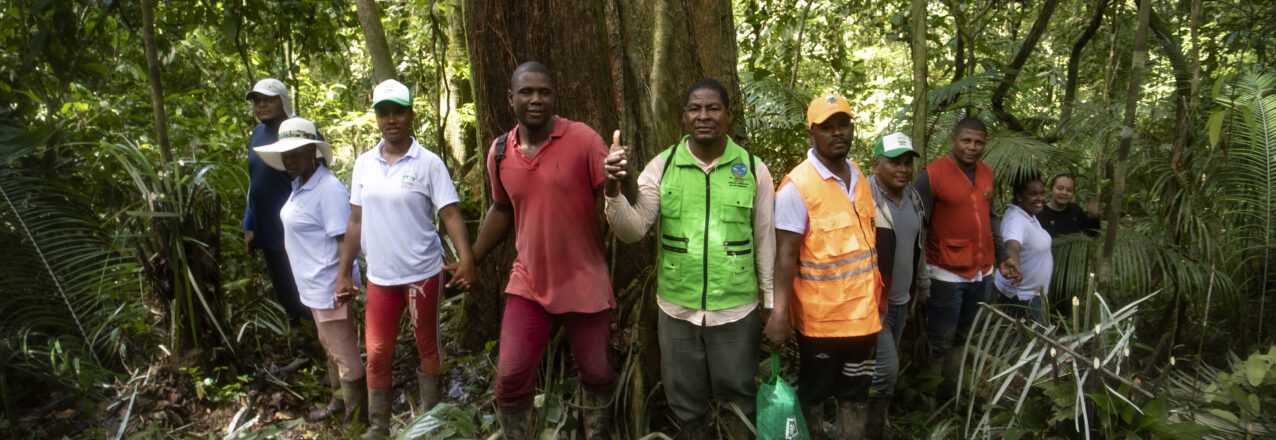
When land and resource rights are clear and secure, they can facilitate sound management and promote the conservation and restoration of natural resources and ecosystems, which can help to mitigate the impacts of climate change. Investing in the formal recognition of land rights, clarifying legal and policy frameworks related to who owns and controls carbon rights, promoting responsible land management, inclusive land use planning, and natural climate solutions (especially in tropical forests, which are some of the most effective landscapes for carbon sequestration), represent cost-effective ways to achieve significant climate mitigation, especially working in partnership with Indigenous Peoples.
Housing, displacement and the possibility of return
Effective land and resource governance systems can also address climate-related displacement and conflict at multiple scales, from local disasters to global migration frameworks. Migrants may be more resilient during relocation when they receive support to securely access land for housing or to grow food. If migrants have titles or other proof of the housing and land they leave behind, they may also be better able to protect these assets from wrongful occupation or receive compensation if their assets are destroyed. Finally, capturing land and property information as people move can facilitate a future return.
Tenure security and long-term adaptation
Helping to protect or strengthen tenure security over land and other important resources can also encourage individuals and communities to adopt practices that promote adaptation to climate change. With secure tenure rights, people are more likely to make investments that take a longer period of time to demonstrate benefits, as is the case with tree planting to support agroforestry and activities that enhance soil fertility, such as regenerative agriculture. Also, addressing tenure concerns may be increasingly important for disaster risk planning to support climate-resilient land use planning, identify areas for community relocation and provide access to equitable property insurance.
Continue exploring tenure and climate action
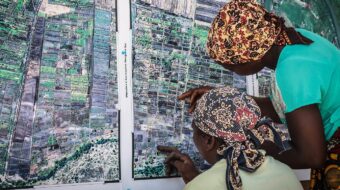
Read the issue brief on natural climate solutions and land governance, explore MAST applications in Tanzania’s natural resource management, and compare these materials with customary and community tenure.
For later migration modelling, the World Bank’s 2021 Groundswell follow-up expands the geographic coverage. Read projections with their scenarios, regions and publication dates.