


Ethiopia’s land administration sector has undergone significant improvements over the last decade. With approximately 50 million parcels of land, around 30 million have been demarcated and registered, and 25 million parcels have received Second Level Landholding Certificates (SLLC) digitized in the National Rural Land Administration Information System (NRLAIS). Despite these advancements, most rural landholders continue to rely on informal land transactions after initial registration, primarily due to the distance between kebeles (sub-district) and woreda (district) land offices. Access to formal land transactions is crucial for securing land rights, obtaining loans, and investing in agricultural improvements. Without formal documentation, landholders cannot use their land as collateral, limiting their access to financial resources necessary for improving their livelihoods.
Formal land transactions remain limited, with only 740,000 transactions executed nationally in total, despite millions of land parcels registered. The distance to woreda offices does not only affect individual landholders but also has broader implications for rural development, food security, and poverty alleviation. For many farmers, the journey is long and expensive, transport is rare, leaving people no choice but to walk. These challenges prevent many landholders from formalizing their land transactions, leaving them vulnerable and unable to fully utilize their land rights. This is also the case for the community members of Shereshera Mena and Wurib Kebeles in Meskan Woreda, a district in Gurage zone, Central Ethiopian Region. Ethiopia’s government, supported by German Cooperation, aims to address these challenges by improving the rural land registry through the Rural Land Administration System (RLAS). However, for RLAS to be effective and sustainable, landholders must register subsequent transactions formally.
S2RAI’s Approach to this situation: Mobile Back Office Centre
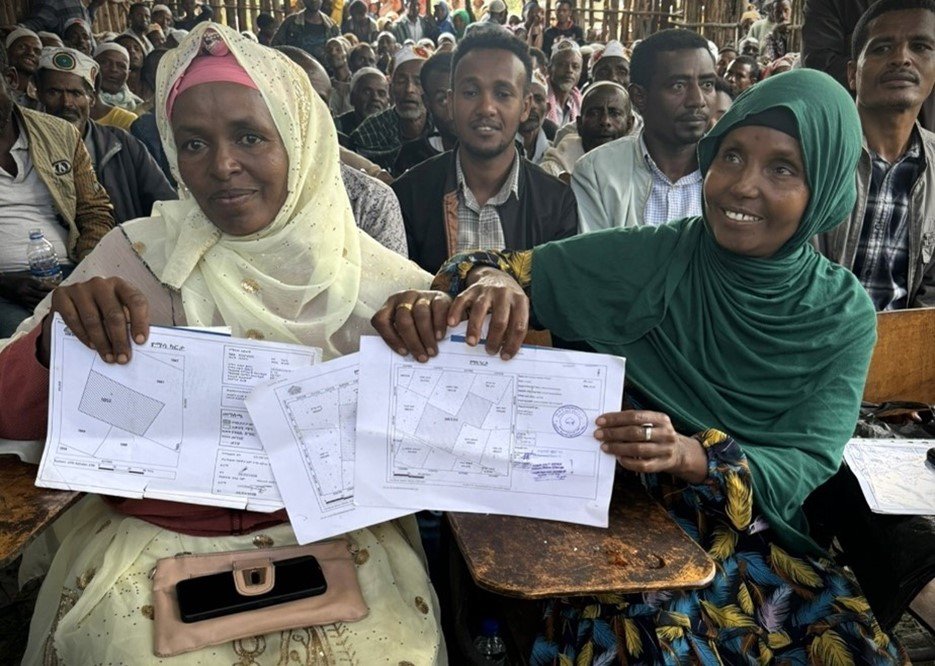 Bedria Selamu’s and Mekia Nasir’s land certificates allow them to access loans for income-generating activities, such as teff farming and cattle fattening.
To bridge the gap between the issuance of land certificates and formal land transactions, innovative solutions are needed. The Ethiopian Ministry of Agriculture, with the support of the S2RAI project, piloted the Mobile Back Office Centre (MBOC) initiative. MBOCs bring land administration services directly to the kebeles, reducing the need for landholders to travel long distances. Equipped with mobile IT equipment and power supply, woreda officers travel on motorbikes to the remote areas and set up temporary offices in the kebele once or twice a month. These mobile centres offer the same services as woreda land offices, including land registration, certification, and transaction processing. Local officers in the kebele help the farmers to fill their request forms prior, depending on their need. They also support the trip planning and ensure a critical mass of land transaction, to make the journey of the woreda land officers cost-effective. These process then the transactions on the spot within a day and changes are directly reflected in the NRLAIS. As part of the pilot, three MBOCs were established based on proximity to landholders, road access, and the willingness of kebele administrations to provide temporary office space.
The introduction of MBOCs has already shown significant positive impacts. In just three months, 266 land transactions were facilitated through MBOCs. The MBOC initiative is not only improving service delivery but also enhancing the livelihoods of landholders. With formal land certificates, farmers can access loans and invest in various income-generating activities.
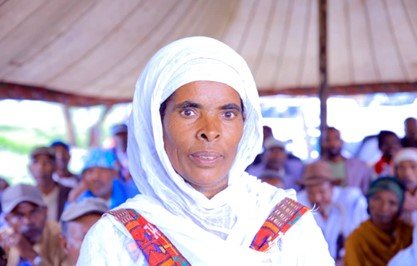
Achamyelesh Bogale, farmer in Shereshera Mena Kebele, Meskan Woreda
“I am very happy with the improved service provision. Previously we were spending so much money and time for travelling from remote kebeles to the woreda center. Now the service provision is so good. Especially for women, it enabled us to exercise our land rights. This encourages us to engage in activities focusing on generating alternative income.”
– Achamyelesh Bogale, farmer in Shereshera Mena Kebele, Meskan Woreda.
By facilitating formal land transactions, MBOCs are helping landholders secure their land rights, access financial resources, and improve their agricultural productivity. By promoting the MBOC approach among donors and providing training to woreda experts, landholders across Ethiopia can access essential land administration services close to their neighbourhoods, fostering sustainable rural development.
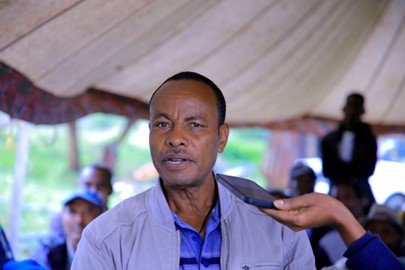
Abayneh Bogale, farmer in Shershera Mena Kebele, Meskan Woreda
“After I have received my land certificate, I applied to micro finance institutions for a loan using three of my land plots as collateral. This improved the current economic capacity of my livelihood. Apart from developing my own land, I am re-investing by renting additional land from other landholders.”
Abayneh Bogale, farmer in Shershera Mena Kebele, Meskan Woreda.
For more information visit: Global Programme Responsible Land Policy | Land Portal and Responsible Land Policy in Ethiopia | Land Portal.
Explore the Responsible Land Policy in Ethiopia project and the global programme.
Originally published on 10 March 2025 by the Global Programme Responsible Land Policy on Land Portal. Republished under Creative Commons Attribution 4.0. Photographs: GIZ, via Land Portal.