

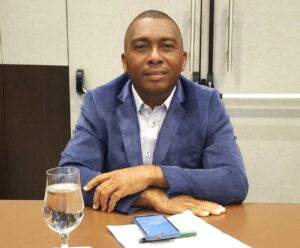
Q&A with Diomara Montañez, mayor of Sardinata, Norte de Santander.
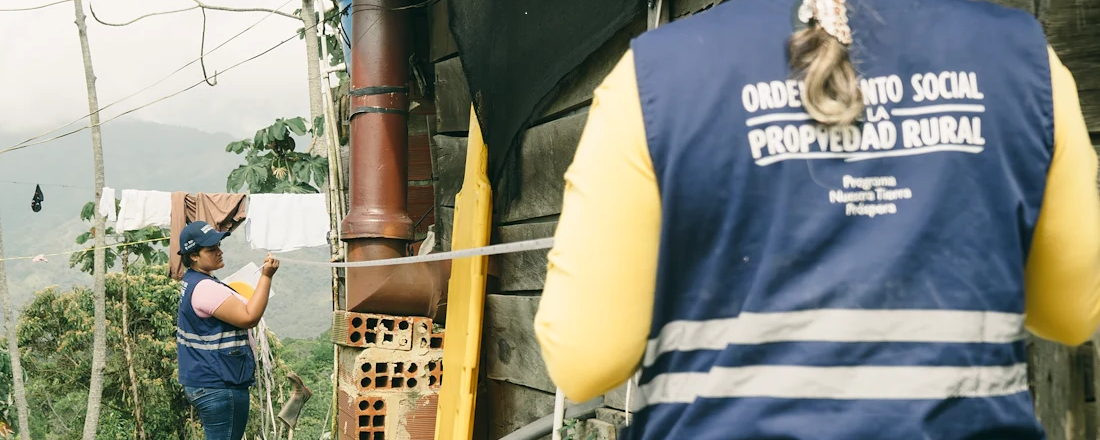
The implementation of the Rural Property and Land Administration Plan (POSPR) recently got underway in the municipality of Sardinata, located in Norte de Santander, near the border of Venezuela.
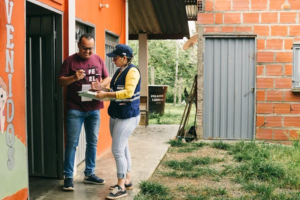
Here USAID is supporting the government of Colombia by survey thousands of rural parcels and providing land agencies with data for land formalization and land use planning. With this information, the National Land Agency (ANT) issues land titles and the national mapping authority IGAC updates the nation’s cadaster.
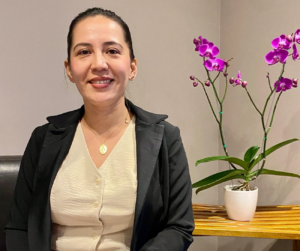 In this interview, Diomara Montañez, the mayor of Sardinata, talks about the community expectations, the transition to licit economies, and what a property title means to the people of Sardinata.
What does the Rural Property and Land Administration Plan (POSPR) mean to Sardinata?
Land administration falls under the Comprehensive Rural Reform spelled out in the 2016 Peace Accord. The POSPR is an important opportunity for our municipality to formalize all property. For the municipality, it is important, because with all the inputs and information that result from the POSPR we can update the Territorial Land Use Scheme. We want Sardinata to be a pilot municipality, a model in this process.
 What does a property title mean to the residents of Sardinata?
A property title is meaningful and it makes people feel more rooted to their land. It also allows property owners to access bank loans and other government benefits. For farmers, land is everything.
How does secure land tenure contribute to the transition away from illegal economies like illicit crops?
In the long run, land formalization is important for farmers and the eradication of illicit crops. Having their land titled gives them the opportunity to take part in the transition, a process that we have been working on for many years. It is a process to encourage farmers to believe again, to have faith in the national and departmental governments. With the support of organizations like USAID, that hope has come back to our region. With this support, farmers can transition to legal economic activities, and focus on crops like cacao, coffee, plantain, cassava, and sugar cane. Farmers can once again grow food for our entire region and contribute to food security.
What is the latest in this process of transition away from illicit crops?
With USAID Land for Prosperity, in April we made a request to the Substitution of Illicit Crops Directorate in the Ministry of Justice to include Sardinata in the government’s Planting Peace crop eradication policy. Today, we received the news from the Ministry that we were included, and this brings joy to our municipality. This strategy, which coordinates the national and departmental administrations, is important to us because it has the potential to bring significant investments to Sardianata.
 The government is designing a transformation strategy for the region that includes Sardinata. What does that strategy include?
Yes, the Agency for Territorial Renovation (ART) is making an effort to find the financial resources to start building a bridge between the village of La Paz in Sardinata and the village of Llanita in the municipality of Tibú. The governor of Norte de Santander is joining this proposal and co-financing the bridge, making the connection of these two neighboring municipalities a reality and helping to transform our region. This bridge will reduce the costs of transport and travel, allowing us to be more competitive. It will benefit hundreds of families, including cassava and palm farmers as well as businesses and the general population. We are very grateful to USAID and Land for Prosperity, because they made the effort and investment to create the studies and designs for the bridge. By the end of the year, we hope to have the financial resources to build this bridge.
 How has the USAID-supported municipal land office improved land administration and the sustainability of a formal land market in Sardinata?
The Municipal Land Office (MLO) is another big contribution from USAID. A lot of people have gone to the office to find out information. It also benefits the municipality, because we have public assets like schools, health centers, and other public lands that do not have a land title. Now, with the MLO we can process these properties ourselves and send to the National Land Agency for formalization. With titled assets, we can mobilized public funds and make an even broader impact on the community. The municipal administration will hire one person to streamline these property formalization processes, and we are committed to making sure the land office is sustainable.

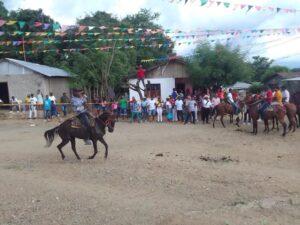
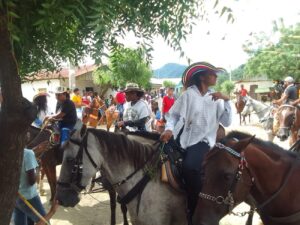 Central to the oral history of the Santo Madero community is the legend of a miraculous tree that fell in a violent storm only to reappear a few days later, upright and green. The event, which reflects the magic realism that Colombia is known for, has evolved into a vital part of local folklore and is celebrated by the Afro-Colombian community every year.
 “For black communities, the ancestral territory is an ancient issue that was not born in Colombia. The Colombian government has to guarantee land rights so that Afro-Colombian and indigenous communities can maintain their culture and carry out their traditions,” he explains.
 Santo Madero is nestled in the Montes de María region of the Caribbean where thousands of people were caught in the conflict and subjected to extreme violence and massacres. For more than a decade, residents regularly faced threats and extortion, leading to the loss of income and jobs based on agriculture and prompting many to search for a new life in nearby cities. By 2010, many feared that the traditions of the Palenque diaspora would be lost forever.
 In 2016, in the wake of the historic Peace Agreement, USAID began working with the
  USAID has designed and utilized protocols that include free, prior and informed consent (FPIC) and the designation of an ethnic liaison delegated by the community.
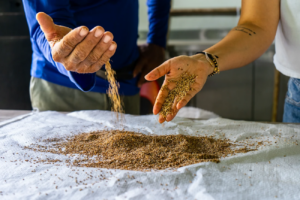 In 2018, José Hernández, the founder of gourmet exporter SumaPaz Foods, discovered the secrets of Colombia’s sesame in the hills of Montes de María in the Caribbean region. In the municipality of Córdoba Tetón, SumaPaz began working with families involved in sesame for generations. In 2023, USAID’s Land for Prosperity Activity facilitated a Public-Private Partnership (PPP) that includes SumaPaz, government agencies, and over 600 families from the region.
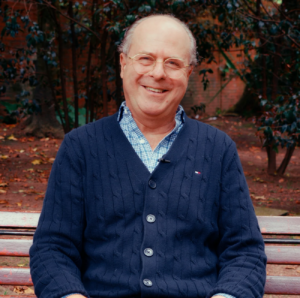 In Colombia we have special water and biodiversity conditions, and we want to preserve this wealth. We also have communities with a lot of needs, and this natural wealth can improve their quality of life. We believe that the best way to protect our ecosystems is to produce food organically.
 Colombia has different ecosystems and microclimates that give food different nuances and flavors. For example, our sesame is very well liked in Germany, where they want a sweeter and less astringent sesame for baked goods. It also works very well to make oil. The chapter of Colombian coffee has already been written, but right now we are writing the chapter on Colombian sesame.
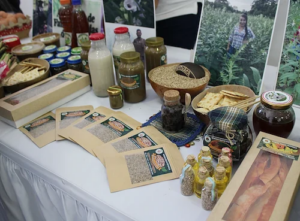 We can grow. The European market is growing and we also want to look to the USA. According to our analysis, we have the capacity to export at least 2,000 metric tons per year right now. This year, we could export 350 tons, or 18% of our annual capacity. And if one day we manage to produce and export 2,000 tons, by then the demand would have probably grown even more.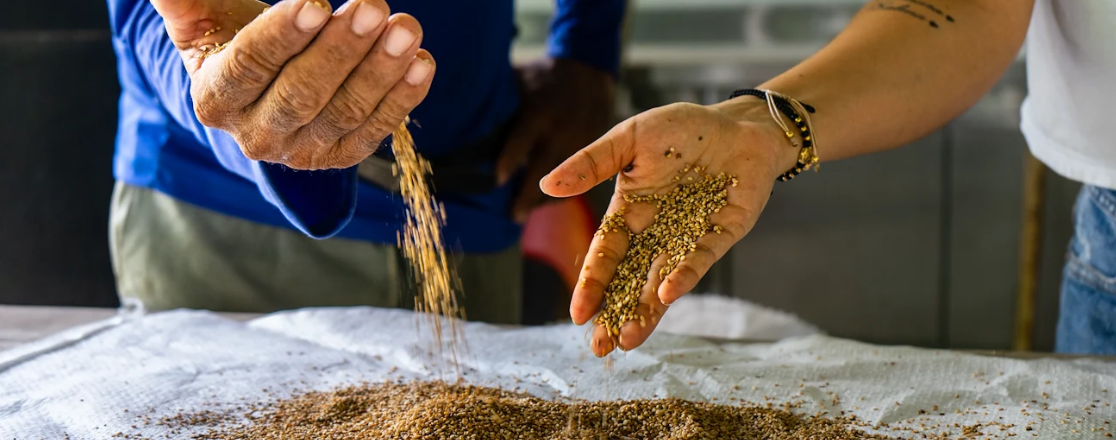
 For thousands of years, sesame seeds have been a key ingredient for a wide variety of Greek foods, from tahini to sesame bar snacks to Greece’s most popular street food, the indistinguishable, sesame-covered rings known as koulouri.
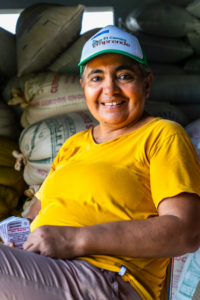 The story of sesame in this region of Colombia mirrors the ugly violence that engulfed it in the early 2000s, when the leftist group FARC expanded its control of the region and the rise of paramilitarism caught rural communities in the middle, leaving villages full of victims in its wake. Rebels and paramilitary groups moved through rural towns stealing the communities’ most important assets: livestock.
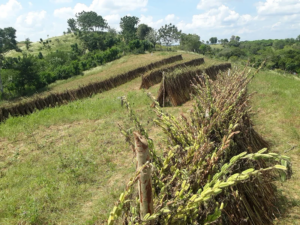 To help rebuild these communities, USAID facilitated a Public-Private Partnership (PPP) that includes SumaPaz, government agencies, and over 600 families from the region. The PPP was signed in 2023 and is valued at nearly USD $1.8 million. The PPP’s objective is to increase production and processing of artisanal sesame, promote organic certification, and establish sustainable market channels, especially in high value markets like Europe and USA.
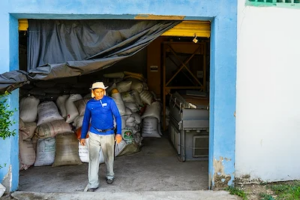 With organic certification under their belt and technical support from SumaPaz, sesame farmers have already exported four containers of high-quality sesame to buyers in the European market. Each container equals approximately 18 tons of sesame for gourmet food buyers in Greece and Germany.
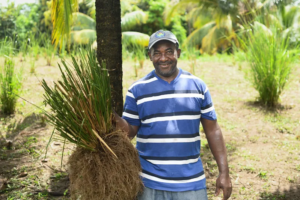


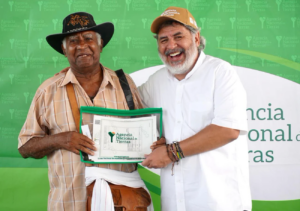
 With USAID support, Colombia’s National Land Agency delivered 83 land titles to families who have voluntarily substituted illicit crops in the municipality of Cáceres, Antioquia. The property titles correspond to over 1,200 hectares of rural land in the heart of Bajo Cauca, a zone affected by years of violence and narcotrafficking.
 Secure land tenure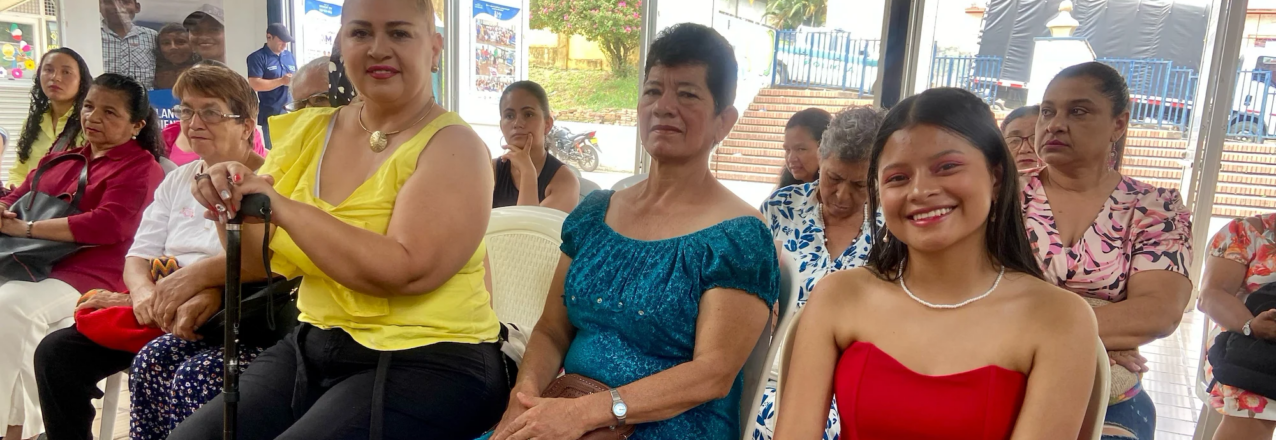
 As part of the Rural Property and Land Administration Plan (POSPR) being implemented in Chaparral, USAID Land for Prosperity (LFP) partnered with Colombia’s Land Restitution Unit to host a series of workshops to empower rural women about their property rights, land ownership, the care economy, and gender-based violence. These workshops, called nucleos de exigibilidad, were piloted first in Ataco during POSPR implementation. During the sessions, 30 female leaders who are participating in land restitution and formalization processes shared their views of their territory and learned about gender-based violence with a focus on patrimonial and economic violence. The women met three times to discuss crucial topics for their personal growth and the one of their communities, as an opportunity to strengthen their leadership and promote gender equality in Southern Tolima.
 The strategy was originally implemented in the municipality of Ataco and was recently extended to Chaparral, with the aim of building the capacity of these women so they can multiply their knowledge with their communities and neighborhoods. The work between the URT and LFP coordinates two important public policies: the one for rural property and land administration, and the one for land restitution.
 The participants showed an unbreakable commitment in this process, becoming agents of change in their communities. Edna Liliana Castro, resident of the Guanábano Brasilia village, has stood out not just as a farmer but also as an influential leader, playing a valuable role in the implementation of the POSPR as a community volunteer. Community volunteers are vital, as they encourage the communities to participate, and disseminate the POSPR methodology and objectives so that people understand the benefits of titling their land.
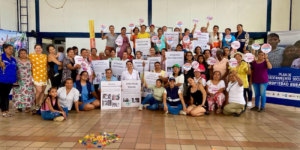 The last session of the workshops coincided with International Women’s Day, and during the event the women held a discussion with public officials from government entities such as the Agency for Rural Development, the Rural Development and the Community Development and Health Municipal Secretaries, and the Municipal Council. The women were grateful for the opportunity to advocate and take action in favor of their rights, both in rural and urban environments.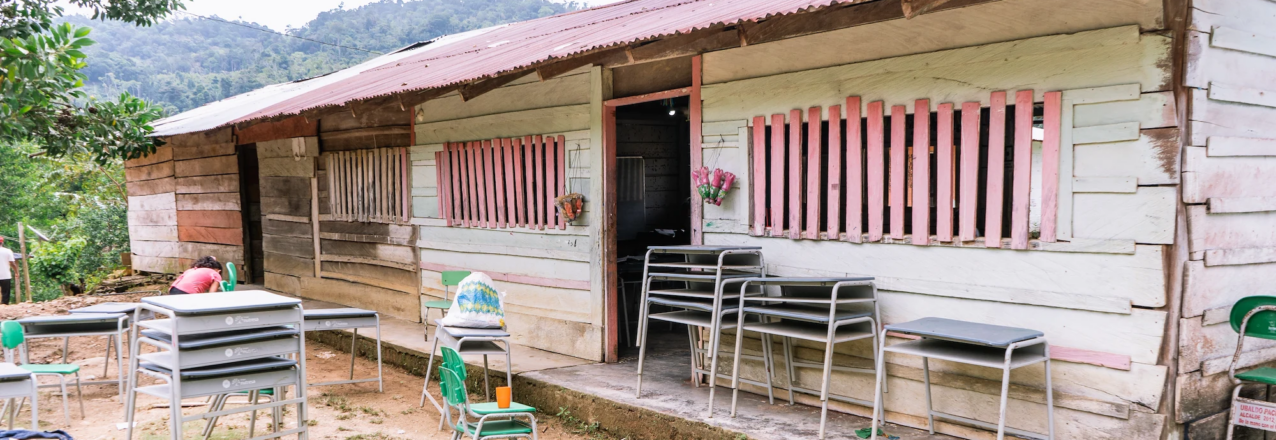
 “
“
 Despite the success, convincing the private sector to invest in rural land formalization remains a monumental challenge. Land for Prosperity examined the landscape by looking at nearly 2,000 companies in its eight target regions, and then narrowed down the list to 164 potential partners. A total of 77 companies replied to the proposal and engaged in dialogues and presentations on the subject.