

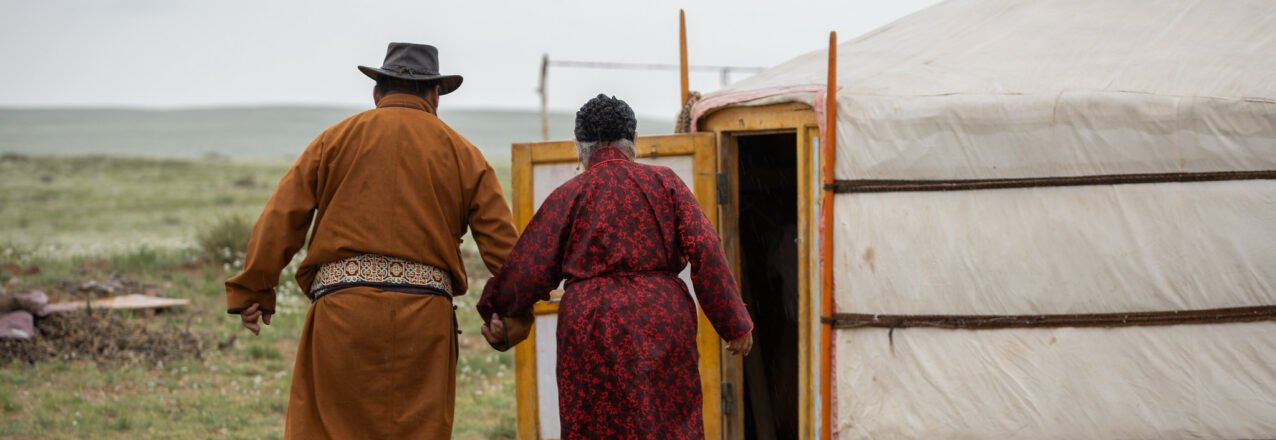
This article reflects on my experiences and lessons during the long Silk Road Caravan in Mongolia.
From August 8–15, 2026, I joined the UNCCD-supported Silk Road Caravan in Mongolia, visiting pastoralist communities, rangelands, conservation areas, and research institutions. The 6,000-km journey across Eurasia, launched for IYRP 2026, connected pastoralists, scientists, and policymakers to share solutions for healthy rangelands and resilience to drought.
According to the Government of Mongolia Yearbook 2025, the country has about 3.59 million people and 58.1 million livestock, while approximately 110.9 million hectares are classified as permanent meadows and pastures, illustrating the enormous landscape on which nomadic pastoralism depends.
One of the most memorable experiences was visiting Bulgan soum in Arkhangai Province, where herders demonstrated how seasonal mobility remains central to pastoral life. Families move according to the four seasons, using agreed grazing areas and community arrangements. One pastoralist association we visited manages about 316,000 hectares, with herders organizing grazing, negotiating access between communities, and allowing some areas to rest for up to two years. Their work also connects rangeland protection with value addition, including yak meat, milk, wool, and other products.
In Gobi Province, I experienced a very different landscape, where water scarcity, drought, strong winds, and fragile soils create serious challenges for pastoralists. Yet I was impressed by the ability of herders to adapt their livestock management to the availability of pasture and water. I saw how camels, horses, cattle, sheep, and goats remain central to household economies and culture.
“Camel milk, wool, and other livestock products are not simply commodities; they are part of a knowledge system passed from one generation to another,” says an elderly woman of Gobi.
At Husta National Park, I learned another important lesson: conservation can be strengthened when local communities are recognized as partners and collaborators. The park, covering about 50,000 hectares, is internationally known for the successful reintroduction of Przewalski’s wild horses. At the same time, discussions highlighted the importance of supporting local herders and involving them in conservation and restoration initiatives.
At Ojuii Lake, I saw how pastoralism and biodiversity conservation are closely connected. The lake supports hundreds of migratory bird species, yet drought, changing water levels, and human pressure are affecting the ecosystem. The message was clear: protecting wetlands requires cooperation between pastoralists, conservation actors, and local authorities.
The visit to the Mongolia Rangeland Research Center further strengthened my understanding of the importance of science and Indigenous knowledge. The center documents changes, species, and climate data. The researchers use satellite mapping and field data to monitor degradation, restoration, and pastoralist activities, while also working with nomads on rangeland restoration and Indigenous pasture species.
Perhaps my strongest inspiration was the Champion Herder model, a very competitive award position that recognizes outstanding herder families not only for livestock production, but also for animal health, environmental stewardship, social responsibility, knowledge sharing, and community service.
I return to Karamoja convinced that pastoralism is not simply a way of life; it is a dynamic system of food production, culture, knowledge, and land stewardship. The people who live closest to the land often understand its problems and possibilities better than anyone. Our responsibility is to listen to them, protect their rights, strengthen their knowledge, and invest in their solutions. The restoration of land will not be possible without secure land rights for those who use it.