

 Interview with a same-sex couple who requested a joint title to formalize their property in Chaparral, Tolima.
Challenging prejudices and building a more equal future where differences are respected, Mauro Julián Sánchez and Nelson Fabián Solano, a gay couple who requested the joint title of their rural parcel in Chaparral, Tolima, share their experience as part of the implementation of the Rural Property and Land Administration Plan (POSPR) led by the National Land Agency with support from the USAID Land for Prosperity Activity. To date, the large-scale land formalization initiative in Chaparral has resulted in three joint title applications that benefit same sex couples.
 What is the story of your parcel and how did you purchase it?
Mauro: We each lived in our parents’ house, but we wanted to have a joint parcel, something that belonged to both of us. We decided to buy a parcel to have something that was ours. However, we still don’t have the registered property title to our name. The parcel is two hectares and we work on it with our parents. We grow cassava, plantain and cacao in an organic way, without chemicals, to take care of the environment. We are also dabbling in aquaculture, creating ponds for fish farming.
What was your motivation to submit the joint title application to the National Land Agency?
Nelson: We are the kind of couple that is not common, that sometimes is frowned upon in some rural areas, but we are breaking stereotypes, which is beautiful. We have to start teaching communities that the world is dressing up in diversity. Our motivation is to make sure diversity is understood and respected, specifically when it comes to land formalization and access.
What does it mean to you to have your land titled as a same sex couple?
 Mauro: It means a lot to us. In rural areas, homosexuality is sometimes negatively perceived, but our idea is to settle down and to be economically stable in the countryside. We want to access benefits such as loans to continue expanding our productive project and become a business. We want to be role models, show the community that the countryside can be profitable not just through production, but also through transformation. We don’t want to be seen just through discriminatory eyes, we want to show that we are capable of doing things better than a straight couple.
Do you think this process highlights the importance of a gender and inclusion approach for the LGBTIQ+ community when it comes to land access?
Nelson: The inclusion of every person, regardless of their sexual orientation or gender identity, is fundamental to guarantee equality and respect for the rights under land use planning and administration. We participated in a registration session to promote the inclusion of the LGBTIQ+ population in the formalization process, as part of the implementation of the government’s agrarian reform outlined in the Peace Accords.
What would you say to other same sex couples that are considering applying for joint titling?
 Mauro: We want to tell them that, regardless of differences, as same sex couples we have the same rights and abilities. We should work together and show the world that homosexuality is not something out of the ordinary. Submitting an application for joint titling is a way to confirm our equality, to give visibility and promote the acceptance of diversity by the wider society, when it comes to land access.
Do you think that improved access to land and property rights helps close existing inequality gaps and reduce gender-based violence?
Nelson: Yes, access to land is an opportunity to close inequality gaps in the life projects of same sex couples. It gives us access to resources and projects offered by regional government entities, providing us with more development and improvement possibilities. We want to change the perception that some people have of us, and show society that we can achieve our goals, overcoming the obstacles that limit our objectives.
What does land mean to the LGBTIQ+ community?
Mauro: Land has an important meaning, especially for us, as we have our roots in this area that was hard hit by the conflict. Access to land means food security. Land is life, it is our origin and our destiny. From land we receive everything we need as human beings. That is why we have to work hard for its conservation, recognizing the value and respect we owe it.

 When Yudy Jiménez divorced her husband three years ago, she did not know the “rules of the game.” The couple, who was married for over 14 years, tried to divide their assets: her ex-husband kept the farm, and she kept the house.
 With the presence of social workers, Yudy felt supported as a single mother and as the owner of her parcel, and despite the pressure of her ex-husband, she completed the application to receive her property title in her name.
 In her role as a community volunteer, Yudy helped to identify conflicts like the one she had with her ex-husband. “I remember when a couple fought because the husband wanted to apply for individual titling. I was there to teach them about the care economy and the women’s rights to joint land titling,” said Yudy.
 “I am proof that women can also play this role. I have spread the message to the entire community, visited every farm, and ensured that everyone, including women, can participate and benefit from land formalization.” – Adela Méndez, Potrerito de Aguayo
 This year at the Cacao of Excellence Awards, Colombian cacao beans garnered the world’s attention. Competing with more than 220 cacao samples from over 50 countries, Workakao, a farmer-owned cooperative based in Meta, was awarded a gold medal and shared the big stage with 18 of the world’s top cacao producers.
 Workakao’s winning sample was the result of hard work to improve quality, yields, and processing through a Public-Private Partnership (PPP) that was facilitated by USAID in 2021. Motivated by the stakeholders of the PPP, Workakao has encouraged its 900+ cacao farming families to sell their “wet” cocoa beans to its collection center, enabling the cooperative to standardize post-harvest processing and achieve a consistently higher-quality bean after fermentation.
 In the wake of the historic moment, USAID’s Land for Prosperity Activity wanted to take advantage of the momentum. Farmers under additional USAID-facilitated PPPs in the cacao value chain traveled around the country for multi-day experience-sharing workshops to learn more about how Workakao and Meta-based producers are improving cacao processing and marketing as well as how to improve the integration of youth and women into the value chain.
 “We were immensely happy because the gold medal represents the work of our entire cacao community. It also has injected us with strength and hard work, because the real commitment starts now. We need to be able to sustain the quality of our cacao and give our products an added value, so the benefits reach our communities well into the future.”
 “We have learned so much on this journey. We have learned that we need to prioritize quality in order to reach buyers willing to pay a better price. Workakao is an example for all of us to continue working towards that quality,” explained Arcelia Prieto, a cacao farmer in Norte de Santander and member of Asoprocanor (Association of Cacao Producers from Norte de Santander and Catatumbo).
 The women-led strategy also takes into account other aspects of their lives and business such as who will replace them and take over their cacao plantations. The long history of illicit economies in the region and the border with Venezuela have made it difficult to keep children safe and insulated from risky behavior and illegal activities. To confront this harsh reality, the women have incorporated their children into the cacao plantations to teach them essential farming techniques and how the bean is processed.
 “If you ask me, chocolate meets all your nutritional needs. It will make you strong and improve your memory. Look at me, this is life, and I am happy,” Betsabeth said.
 It is believed that cacao first grew in the Amazon basin and then spread north and south throughout the Americas, including to the Aztec and the Mayan civilizations, who developed successful processing techniques. For them, the plant was a symbol of wealth, and its beans were used as currency.
 Over the last four years, Land for Prosperity has facilitated the creation of seven PPPs related to the cacao value chain that include over 33,600 farmers, 41% of which are women. In many parts of Colombia, such as Tumaco’s Pacific coast and the mountains of Northern Cauca, women represent half of the workforce.

 With the recent implementation of the Rural Property and Land Administration Plan (POSPR) in Chaparral, the Ivanazka Lemanyá de Calarma community is one of the seven Pijao indigenous groups who are submitting applications to the government to establish reservations. In total, the seven applications encompass 16 parcels covering 1,800 hectares.
 Before working on the applications of the seven reservations, Land for Prosperity carried out Free, Prior, and Informed Consent sessions with 11 communities that represent more than 2,500 people. After giving their consent, each community elected an Ancestral Guide to act as a point of contact for all communication and harmonization between the communities and the team implementing the POSPR, which is backed by Colombia’s National Land Agency (ANT).
 An Opportunity for Indigenous Communities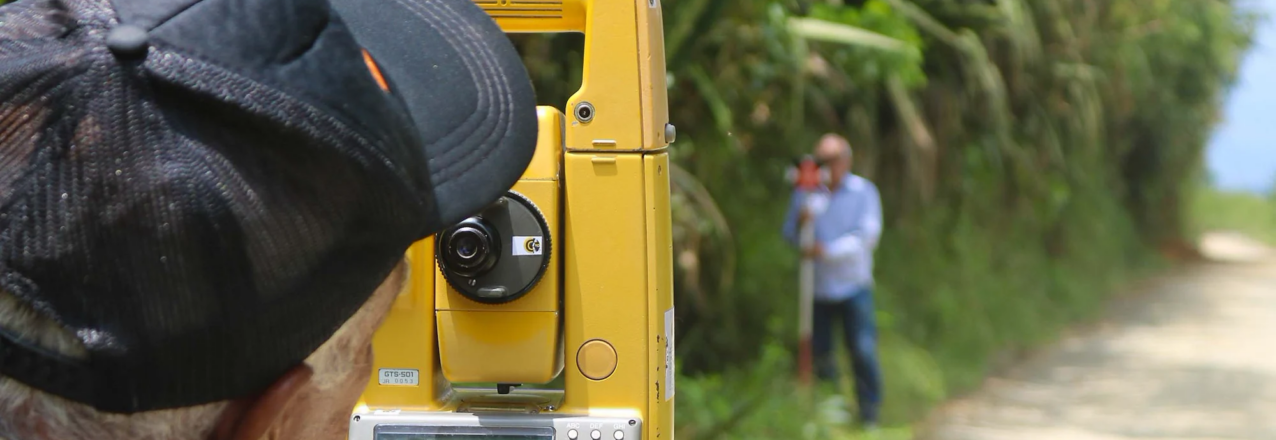
 The sleepy municipality of El Carmen was declared a National Heritage Site in 2005, but tourists did not start streaming in until 2016 when the government signed a Peace Accord with the FARC rebel group. Isolated in the lush mountains of Norte de Santander, the long-lasting conflict paradoxically served as a cushion to conserve its cobblestone streets and colonial houses, making it one of the country’s most authentic pueblos mágicos.
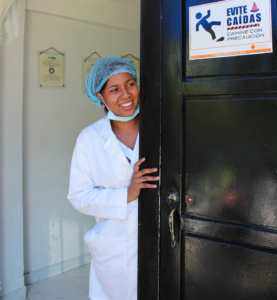 For years, the residents of Guamalito and El Carmen had to travel two hours south to Ocaña to receive professional health care services. Last year, outgoing mayor, Wilfredo Gelvez, purchased a parcel neighboring the current health clinic in Guamalito as the hospital’s new home. But without the Municipal Land Office, administering the new piece of land would not have been so straightforward. In this case, the Municipal Land Office played a key role in managing the two parcels and transferring the land in the name of State-run Regional Noroccidental Abrego, which provides health services in El Carmen.
 These stories are indicative of how land tenure issues lie below many investments in essential public services and infrastructure in Colombia’s rural municipalities. In Santander de Quilichao, the largest municipality in Northern Cauca, a region known for land conflicts and violence, land informality rates hover above 50 percent. More than half of all parcels do not have registered land titles.
 Recently, Santander de Quilichao’s Land Office and its 5 employees focused efforts on lifting a $3.5 million USD housing project off the ground. The Villa María housing complex, which is already connected to public services, is expected to provide a secure home for over 400 vulnerable families while providing a park and sports field for families. Santander de Quilichao’s Land Office already delivered the first 100 land titles to Villa María residents and expects to deliver the other 300 property titles in coming months.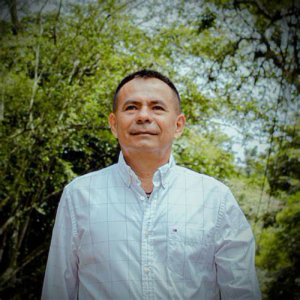
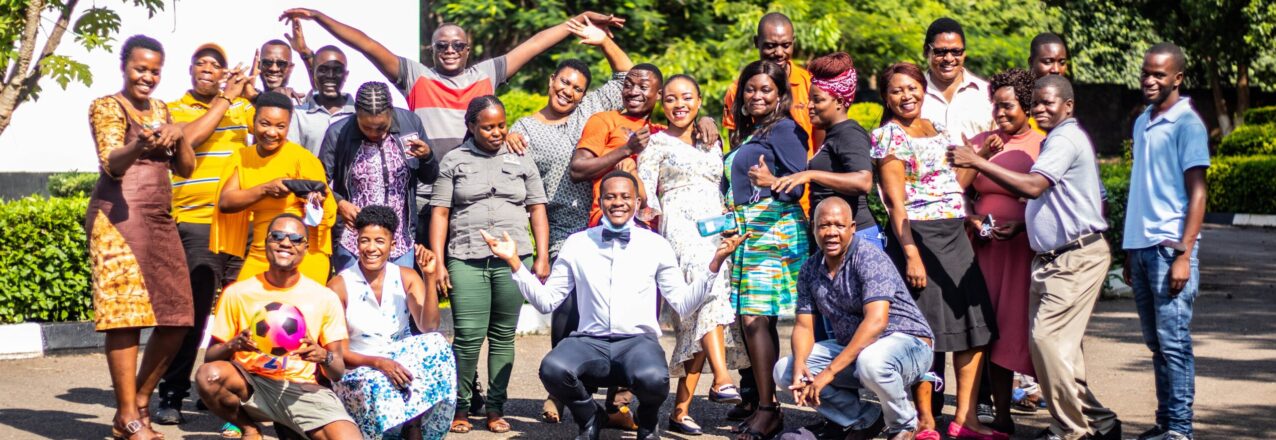
 “At an individual level, I am more confident and certain about the things I want to do with the women’s mentorship project I implement. The training helped me believe in myself and realize that I have the skills to work on women’s empowerment and I can and am learning more every day!”
  “The Women’s Leadership and Empowerment training deepened my understanding of factors that keep women out of natural resource management and how to address these challenges and increase impacts of our programs. I am now able to adapt my work and reach out to the vulnerable groups, which is allowing our program to have a broader reach.”
 “Through the training, I gained insights into the specific risks and challenges that women face in relation to land ownership and access. This knowledge enabled the National Land Titling Program to design and implement targeted strategies to mitigate these risks,
  “Before I came on the training, my challenge was how to deal with negative social norms. We saw men in uniform abuse power, which in some cases negatively affected our work, but it was difficult to find the entry points. The training was timely. It gave me the skills to engage law enforcement officers and navigate the social norms to bring in more women in our work.”
 USAID’s
 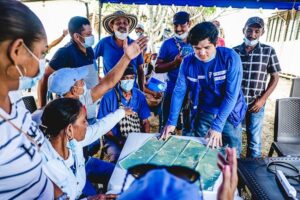 At IGAC we have a legal responsibility to know the current and allowed land uses, we have to know what each piece of land is good for and how we need to protect it. The cadaster is the map of landowners who have secure tenure rights to their property. The cadaster generates knowledge and detailed information about our rural territories and provides us with inputs that are fundamental to administer land and property in a way that is socially responsible and promotes sustainable land use and production.
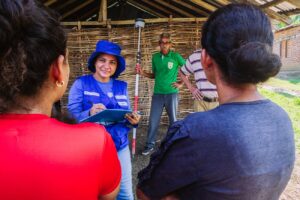 Before, the community was not actively involved and that was a problem. That is why our logic is that the cadaster is made for the people and with the people. This is advantageous, because we can explain to the public why the cadaster is useful. People say “they update the cadaster and then my taxes increase, so I will have to pay more”, but they forget that they are also supporting land formalization and will receive a property title. And without a title they cannot access loans or subsidies.
 In Colombia, the land administration trio of agencies includes IGAC, the National Land Agency (ANT) and the Superintendence of Notaries and Registers (SNR). IGAC is responsible for collecting and managing detailed information, and in areas that have been prioritized by the government, we receive support from the ANT as a cadastral operator. The ANT then administers the land that has been formalized or that will be redistributed and continues with the formalization and title delivery processes. The cycle then finishes with the SNR, which registers and issues the land titles.
 I am a Project Management Specialist in USAID’s Democracy, Rights, Governance and Conflict Prevention office in Abidjan, Côte d’Ivoire. I joined USAID in September 2021; however, my commitment to the Agency goes back nearly 10 years. Previously, I was involved as a consultant and later as an awardee under the USAID Office of Transition Initiatives, where I helped rebuild broken intercommunal relations after the 2011 post-electoral crisis. During this time, USAID produced a short
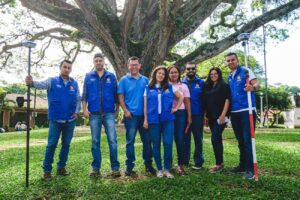
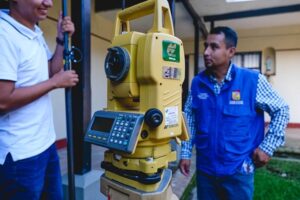
 In the last four years, the Municipal Land Office (MLO) of Santander de Quilichao has facilitated the titling of more than 700 parcels. Several of these are public parcels like parks or health centers, or have to do with improving the municipality’s roads. The land office has become a key tool for land use planning and property formalization, and with it, the administration has mobilized more than COP $50,000 million (USD $13.5 million) in public investments.
 According to the latest reports, we can say that thanks to the MLO the municipality has mobilized more than COP $50,000 million (USD $13.5 million). We are talking about impactful projects such as building roads, like the Niza road, and communal spaces such as the Plaza de Toros and the Corona Real park. We also bought the parcels for the Santander de Quilichao Hospital, which has mobilized more than COP $35 million (USD $8,750), and the regional campus for the SENA, which resulted in COP $49 million (USD $12,250). The Villa Maria housing project has mobilized COP $10,000 million (USD $2.5 million) and will provide housing for 400 vulnerable families. For Villa Maria, the MLO helped us with the purchase and division of the parcel. In December we already delivered the first 100 property titles.
 We are going to try to obtain as many titles as possible and meet our goal of 500 property titles. In addition, we have goals with two main roads: La Cañera and Calle Séptima. There are properties in the middle that now belong to private owners, and we are in the process of obtaining them and creating two-laned roads to join two large sectors of the municipality. We also have projects like the hospital and the marketplace. The land office also plays a role in the implementation of our municipal Land Management Plan.
 Now, with the parcel sweep, land issues are being promoted. The land office has been a source of information for everybody, in terms of providing advice. The MLO is like our guide, and little by little, people understand better the culture of formal land ownership that we are promoting. People are not frustrated anymore with having to contact Bogotá or a lawyer to ask for information on land or property formalization. We have a population with more opportunities and knowledge, and the MLO has given our residents many solutions.