


Overview
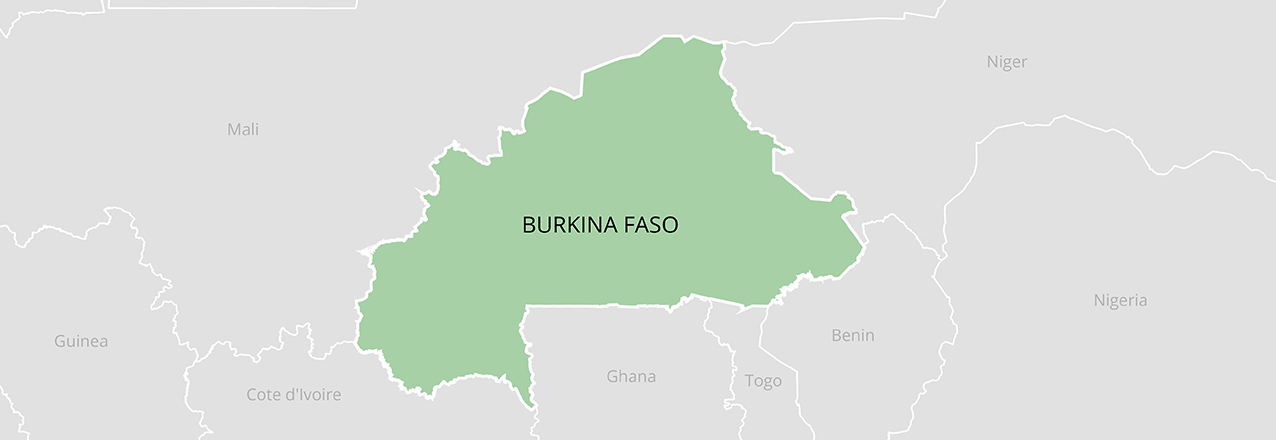
Last updated: October 2026. Burkina Faso is a landlocked West African country whose farming, herding, forest and mining economies depend on access to overlapping land and resource rights. Tenure security varies by locality, gender, livelihood and the institutions that recognize a claim. Family farms, shared grazing and water points, wooded areas and urban settlements coexist with irrigation schemes, protected areas and mining concessions.
The legal framework has changed markedly. The 2025 Agrarian and Land Reorganization Law establishes state ownership of the national land domain, while recognizing several real property and use rights. It replaced the 2012 framework and the 2018 expropriation law. The 2009 Rural Land Law provides mechanisms for documenting rural possession and establishing local land charters; its provisions must be read together with the newer law. The 2024 Mining Code and 2025 Persons and Family Code are also central to land rights. Law No. 015-2025/ALT; Law No. 034-2009/AN.
Armed conflict and displacement, the expansion of cultivation and settlement, competition over water, and mining activity make the protection of existing rights especially important. Registration can help establish a claim, but a certificate alone cannot resolve every question of overlapping rights, access to common resources or whether a person can safely return to their land. The current reform gives public authorities stronger land-management tools while requiring careful attention to due process, compensation and meaningful participation.
Historical and Political Context
Colonial land administration in Upper Volta operated alongside locally varied systems of authority and land use. After independence in 1960, customary arrangements continued to shape much rural access despite the state’s formal legal powers. The 1984 agrarian and land reorganization under Thomas Sankara established an expansive national land domain and emphasized state authority. Subsequent reforms progressively expanded avenues for private rights and the recognition of local possession. USAID, 2017.
The 2007 rural land policy, 2009 Rural Land Law and 2012 land reorganization framework emerged from efforts to reconcile statutory administration with long-established rural practices. The 2025 law again reorganized the national domain and strengthened the state’s role in managing land. These shifts are important for interpreting older certificates, grants and claims: documents and practices developed under earlier laws remain part of the social and administrative record, even as the governing framework changes.
A popular uprising ended Blaise Compaoré’s presidency in 2014. Armed insecurity intensified after 2015, and two changes of government occurred in 2022. The transitional authorities extended the transition under the amended 2024 charter. Insecurity affects access to land offices, courts, fields and pastoral routes, and it complicates local consultation and data collection. World Bank country overview.
Legal and Policy Framework
The 2025 land law. Law No. 015-2025/ALT, adopted October 21, 2025 and promulgated October 28, replaced Law No. 034-2012/AN on agrarian and land reorganization and Law No. 009-2018/AN on expropriation and compensation. It establishes state ownership of the national land domain and governs its public and private components, transfers, occupancy, real rights, land registration and involuntary transfers. It also recognizes rights including property, usufruct and rural land possession. The state’s authority over the national domain does not mean that every previously issued private title automatically disappeared. Official Gazette; UNEP/FAOLEX legal record.
The Ministry of Finance explains that specified developed agro-sylvo-pastoral, fisheries and wildlife land is to be allocated through long-term leases rather than definitive title. The law also restricts definitive transfers of rural land to foreign nationals, subject to reciprocity. Its emergency acquisition procedure is distinct from ordinary expropriation, and the ministry identifies settlement of forcibly displaced people and disaster victims among circumstances that may justify public-purpose acquisition. Ministry of Finance, 2026.
Rural and sector laws. The 2009 Rural Land Law provides procedures for recognizing individual or collective rural possession and local land charters. The 2025 law expressly repeals the 2012 and 2018 laws, not the 2009 rural law in its entirety, while also repealing contrary earlier provisions. The interaction of specific provisions therefore depends on their wording and subsequent regulations. The 2002 pastoral law, 2001 water law, 2011 Forest Code and 2024 Mining Code apply to their respective resources. 2009 Rural Land Law; 2001 Water Law; 2011 Forest Code.
Land Institutions and Administration
Land administration involves central authorities responsible for land policy, registration and cadastral records, territorial authorities and local land institutions. The Ministry of Economy and Finance and its tax and land services have prominent responsibilities, while agricultural, environment, water and mining authorities oversee related uses. Coordination matters because a parcel may be subject to land, water, forest, planning and mining decisions at the same time.
Under the 2009 rural law, communal rural land services and village bodies have roles in documenting possession and handling disputes. Village land commissions and conciliation bodies bring local knowledge into processes that must also respect statutory requirements. Their resources, staffing and ability to operate differ. In areas affected by insecurity, offices and records may be difficult to reach, and consultation with people who have left their homes is especially challenging. MCC evaluation; Justice Sira.
The 2026 constitutional amendment changed provisions on territorial organization and the authority of the national control and anti-corruption institution. It is therefore important to avoid assuming that all administrative arrangements described in older land materials are unchanged. Land records, maps, allocation decisions, fees and appeal procedures are most useful when they are accessible, consistent across institutions and open to correction. Constitutional Law No. 004-2026/ALT.
Tenure Systems and Documentation
Land rights range from titled property and long-term leases to rural possession, borrowed fields, family allocations and shared access to grazing, water and forest products. A household may hold different rights to separate plots, and an individual field can also carry obligations to family members or seasonal users. The legal form and the people who exercise rights are not always obvious from a single document.
An attestation de possession foncière rurale (APFR) records recognized rural possession. The 2009 law permits individual and collective applications and provides for local investigation and public notice. It is an administrative instrument of use or enjoyment and should not be equated automatically with an ownership title. Historical project experience shows that costs, procedures, local capacity and awareness affect whether households can obtain or maintain documentation. 2009 Rural Land Law; MCC evaluation, 2023.
Land loans and other customary transactions can support access for families without their own holdings, including migrants and women. The duration of a loan, permission to plant trees, inheritance, and the right to transfer the plot may be understood differently by the parties. Written agreements can clarify expectations if they record the rights of all involved and do not replace consultation with them.
Customary and Community Rights
Customary tenure is not a single nationwide system. Local histories, land chiefs, lineages, family heads, village institutions and negotiated arrangements can all shape who allocates or uses land. In some places the first-settler family retains a recognized role in allocating use; in others, management is exercised by households or through arrangements negotiated among residents. These institutions can provide social recognition and dispute resolution, but they can also reflect unequal power.
Rights are often layered. A lineage may claim an area, a family cultivate part of it, another family borrow a field, and herders use routes and seasonal pasture. Tree products, sacred places and water access may be governed separately from cultivation. A boundary survey that records only the most visible field holder can omit other legitimate interests. Local land charters under the 2009 law offer a mechanism for communities to articulate rules for common resources and transactions within the applicable legal framework. 2009 Rural Land Law; 2010 local land charter decree.
Participation must include people whose interests are easily overlooked: women who use family fields or trees, younger household members, borrowers, migrants, pastoralists and people displaced from the area. Recognition of community authority should not be assumed to provide equal influence or secure rights to every community member.
Women’s Land Rights
Women cultivate family and individually managed plots, gather forest products, raise livestock and participate in land markets, but rights to use a plot do not always include rights to inherit, transfer or make long-term decisions about it. Their opportunities vary with marital status, age, household relationships, wealth and local custom. Displacement can weaken access both to land left behind and to land borrowed in host communities.
Law No. 012-2025/ALT introduced a new Persons and Family Code. Government sources describe recognition of customary and religious marriages subject to transcription in civil registers, alongside changes to the rules governing family relationships and succession. The Code replaces the earlier family code. A right set out in legislation depends in practice on access to registration, evidence, advice, administrative services and remedies; the status of a particular marriage or succession depends on the relevant facts and applicable provisions. Persons and Family Code, 2025; Government information service.
The 2009 rural law calls for measures to improve women’s access to developed rural land. Yet allocation to a household head can miss women’s separate fields and uses. In the Bagré irrigation scheme, a longitudinal study describes persistent disputes over allocations and access to land and water, including claims voiced by women’s organizations. A project evaluation of rural land documentation did not find a significant positive impact on women’s property rights and empowerment. Neither finding establishes the outcome of every program; both show why counting titles alone is insufficient. Daré and colleagues, 2026; MCC, 2023.
Land Conflict, Displacement, and Return
Disputes arise over family succession, boundaries, loans, sales, multiple allocations, cultivation and livestock mobility, mining, land development and compensation. The categories overlap: farming and herding are not mutually exclusive identities, and land conflict should not be reduced to a simple confrontation between communities. Local political authority, access to justice, unequal bargaining power and armed violence affect how disputes unfold.
The European Commission’s 2026 humanitarian overview reports that consolidated official displacement figures had not been updated since March 2023, when approximately two million people were recorded as internally displaced. New displacement and returns have both occurred since then. The older cumulative figure should not be treated as an exact current count. The Commission estimates 4.5 million people need humanitarian assistance in 2026. European Commission, 2026.
Displaced families may lose documents, access to fields and herds, contact with witnesses, and the ability to maintain a claim. Hosts may grant temporary use without written terms. Return can raise questions over secondary occupation, damaged property, communal resources and whether a return is safe and voluntary. Protection requires accessible civil and land documentation, fair dispute resolution and attention to women, tenants and seasonal users as well as named titleholders. IOM, 2026.
Public Acquisition and Compensation
The 2025 land law provides for involuntary transfer of real rights for public purposes and sets out ordinary and emergency procedures. It distinguishes expropriation of ownership from withdrawal of rights of use or enjoyment. The framework includes investigation, decisions on the land concerned and compensation, with different stages and timing under an emergency procedure. The 2018 expropriation law is expressly repealed. Law No. 015-2025/ALT; UNEP/FAOLEX.
The March 5, 2026 Council of Ministers report describes implementing measures for preemption and involuntary transfer, including withdrawal of use rights whether or not represented by a title. Identification of affected people is a substantive issue: loss can involve a house, a seasonal field, a tree, access to water or a shared route, and these interests may be held by different people. Council of Ministers report.
Timely notice, transparent valuation, opportunities to challenge decisions and compensation that addresses lost livelihoods are central to the effect of the law in practice. Emergency procedures shorten the time available for administrative steps and can make accessible information and remedies particularly important.
Urban and Peri-Urban Land
Ouagadougou, Bobo-Dioulasso and other towns bring together planned neighborhoods, informal settlement, agricultural land and rapidly changing peri-urban areas. Urban expansion can transform land previously used under family or customary arrangements into plots for housing, commerce or infrastructure. The people who cultivate or borrow land may differ from those who negotiate or receive payment for it.
Subdivision, plot allocation, documentation and servicing do not necessarily occur together. A sale receipt or customary allocation may not have the same legal effect as a registered title, while a person without formal ownership can still face a serious loss if a settlement is cleared. Tenants, displaced households and women whose names are absent from records may be particularly difficult to identify in compensation or regularization processes.
Planning, drainage, safe water, sanitation and secure occupancy are connected. Clear public information on allocation, boundaries, fees and remedies can reduce the scope for duplicate sales and speculation. The 2025 framework and subsequent decrees alter the administrative context for land transfers and development. Council of Ministers, 2026.
Agriculture and Rural Livelihoods
Family farming combines food crops, cash crops, livestock, trees and off-farm income. Land use varies across the Sahelian north and the more humid south and west. Internal migration has long connected densely settled areas to agricultural frontiers; arrangements between receiving communities and newcomers have included land loans and family negotiations. Intensification of markets and changing land values can alter the duration and terms of these arrangements. USAID, 2017.
Crop productivity depends on access to inputs, labor, markets, extension and water as well as tenure. Security affects whether a farmer can invest in soil restoration, trees or irrigation, but documentation alone does not guarantee credit, investment or higher yields. The MCC’s evaluation found no statistically significant overall impact of its evaluated rural land governance intervention on investment or household assets. MCC, 2023.
Soil and water conservation practices such as stone bunds, planting pits and farmer-managed regeneration have long been used in parts of the country. Their benefits depend on local conditions and the ability of the people making improvements to retain access to the land and trees.
Pastoralism and Shared Resources
Pastoral and agropastoral households rely on grazing areas, crop residues, watering points, corridors and seasonal movement. Access can be negotiated across villages and administrative boundaries, so a map of permanent farms does not fully describe land use. Farmers may also own livestock, and herders may cultivate fields; flexible relations are important to both.
Law No. 034-2002/AN establishes a framework for pastoral development and directs public authorities to protect access to pastoral areas, equitable use of natural resources and livestock mobility. These legal principles do not mean that every route is physically open or every conflict is resolved. Cultivation, settlement, insecurity, mining and the location of water points can restrict movement. Pastoral Orientation Law; IOM, 2026.
Negotiated local arrangements can address access to water, timing of herd movement and responsibility for crop damage. Effective arrangements require participation from mobile users as well as residents and attention to the effects of regional and cross-border insecurity.
Water and Irrigation
The Volta system, including the Mouhoun, Nakambé and Nazinon, drains much of Burkina Faso; parts of the country also lie in the Niger and Comoé basins. Seasonal rainfall, storage, groundwater, livestock access and water quality all shape local availability. A legal right to land beside a water source does not necessarily settle who may draw water or move animals to it. USAID, 2017.
Law No. 002-2001/AN establishes the framework for water management, including public management and integrated approaches to the resource. Irrigation schemes can improve production but also reorganize rights when land is acquired, leveled and reallocated. At the Di perimeter in the Sourou Valley, a project developed 2,240 hectares under an earlier legal framework; its experience illustrates that compensation and allocation arrangements must be understood in their own historical and legal context. Water Law, 2001; MCC Burkina Faso compact.
Irrigation decisions should account for prior cultivators, seasonal land users, women who managed lowland plots, downstream communities and the long-term maintenance costs of canals and water points. The 2025 land law’s rules for specified developed agricultural land are relevant to the form of tenure available in new schemes. Ministry of Finance, 2026.
Forests, Trees, and Biodiversity
Woodlands and trees provide fuel, fodder, food, medicines, construction material and income. Shea, baobab and other products are particularly important to many women, while rules about harvesting, planting and selling products can differ from rights to the underlying land. Access and control are therefore as important as forest cover in assessing livelihoods.
Forest Code No. 003-2011/AN governs forest, wildlife and fisheries resources. It distinguishes types of forest domain and provides for management arrangements involving public authorities and other actors. A protected area or forest designation may impose restrictions that differ from those on a neighboring farm. Forest and pastoral laws must be applied together with land law and any site-specific rules. Forest Code, 2011.
A national forest-area statistic is not interchangeable with a measure of untouched forest, tree cover on farms or access to forest products. Sustainable management requires knowing who uses resources, who decides on rules and whether local people receive benefits or bear costs from restrictions and enforcement.
Climate, Land Restoration, and Carbon
Rainfall variability, drought, floods and rising temperatures affect crop yields, livestock mobility, water supply and settlements. Security conditions can make it harder to reach fields or move herds at the very time when climate adaptation requires flexibility. Local restoration measures can reduce vulnerability when people have durable incentives and rights to use the land and trees they protect. IOM crisis response plan, 2026.
Burkina Faso has pursued REDD+ and forest-related climate planning; FAOLEX lists a national REDD+ strategy dated December 2024. A strategy is a policy framework, not proof that a particular carbon project is operating or that communities receive a specific share of revenues. FAOLEX country profile.
Carbon and restoration projects can affect rights to cultivate, graze, collect wood or use trees for many years. Project design should make the relevant tenure and resource rights visible, provide accessible information on obligations and restrictions, identify the basis for benefit sharing, and include remedies for disputes. Climate finance does not remove the need to protect existing land and resource users.
Mining and Mineral Rights
Gold has become a major source of exports and public revenue, and both industrial operations and artisanal mining use land and water that may also support farming, grazing or settlement. An authorization to explore or mine and a right to use surface land are different legal interests. A concession boundary does not by itself show who lives, farms, travels or gathers resources within it.
Mining Code No. 016-2024/ALT replaced the 2015 code. It governs mineral activities, environmental obligations and community development. A December 2024 Council of Ministers account describes a compensation decree for affected people, including options for compensation in kind or cash and monitoring committees at commune level. The applicable law, authorization and site-specific circumstances determine the rights and procedures in an individual case. Mining Code, 2024; Council of Ministers, December 2024.
Decree No. 2025-0582 governs several mining funds, including development and mine rehabilitation funds. A Ministry of Mines report on 2025 contributions, validated with amendments in October 2026, recorded contributions from 10 of 17 industrial mines, four of 11 semi-mechanized mines and three of 44 industrial quarries. These figures show a documented implementation challenge and do not by themselves establish the causes of nonpayment. Mining funds decree; Ministry of Mines, October 2026.
Artisanal mining can provide a vital seasonal income but also involves risks of unsafe work, contamination and disputes over access. Women and men may participate in different activities and may not benefit equally from formalization, compensation or mine-site decisions. Rehabilitation and livelihood restoration require attention to both mine sites and the surrounding landscape.
Land-Based Investment and Political Economy
Public and private investments in irrigation, agribusiness, mining, housing, roads and conservation can create employment and services. They can also redistribute access to land and water. Land that appears unused at one point in a year may contain fallow fields, grazing routes, wells, sacred sites or trees used by other people.
The 2025 law gives the state a central role in managing the national land domain, and the government has linked the reform to land mobilization for development and food production. How decisions are made, who receives information and how compensation is determined will shape distributional outcomes. Investors, officials, local leaders and customary authorities can have different interests; none should be treated as automatically representing every affected user. Transitional Legislative Assembly, October 2025; Ministry of Finance, 2026.
In Bagré, research tracing successive phases of an irrigation and development scheme documents contested allocations, displacement and continuing questions about access to irrigated plots and water. It is a case study, not a national estimate, but shows why project boundaries, eligibility criteria, grievance mechanisms and actual livelihood outcomes matter. Daré and colleagues, 2026.
Land Data and Evidence
Cadastre and registry records, rural certificates, household surveys, satellite imagery and local testimony answer different questions. A title count is not the share of people with secure rights, and satellite imagery can show land cover without revealing who has a claim. Administrative totals also depend on whether records are current and whether offices are functioning.
The MCC reports that its 2009–2014 project helped establish 47 land offices and issued 2,167 rural possession certificates during the project. Its later evaluation found continuing but lower-than-anticipated issuance, with cost, procedural complexity and awareness among the constraints. Those figures describe a historical intervention, not the current national stock of certificates. MCC evaluation, 2023.
Displacement figures also have different dates and methods. The European Commission identifies the March 2023 official count as the last consolidated national figure in its 2026 overview, while reporting subsequent new movements and returns. Data should be presented with dates and coverage rather than combined into an unsupported current net total. European Commission, 2026.
Recent Developments
- 2024: Mining Code No. 016-2024/ALT replaced the 2015 code. The government described implementing measures on compensation for mining-affected people in December. Assembly; Council of Ministers.
- 2025: The Persons and Family Code and Law No. 015-2025/ALT on agrarian and land reorganization were adopted and promulgated. A decree also addressed the collection and management of mining funds. Family Code; Land Law; Mining funds decree.
- 2026: The government reported decrees on land management, preemption and involuntary transfer in March, and the Ministry of Finance held regional workshops on the 2025 land law. In October, the Ministry of Mines reported uneven contributions to the rehabilitation and closure fund. Council of Ministers; Ministry of Mines.
Challenges and Reform Priorities
Land governance must work for people whose claims do not fit a single registered parcel. Rural documentation and acquisition processes can better identify family, borrowed and seasonal rights, including access to trees, grazing routes and water. Local institutions need resources, accessible procedures and safeguards against the exclusion of women, young people, migrants and displaced people.
Clear information about the 2025 law and its implementing rules can help residents, officials and investors understand the distinction among ownership, possession, leases, transfers and public acquisition. Fair notice, valuation, compensation and accessible remedies matter particularly when decisions are made quickly or where insecurity limits participation.
Public records of land allocations, mining rehabilitation obligations and use of development funds can support accountability. Land-use planning should connect agriculture, pastoral mobility, water, forests, settlements and climate adaptation rather than treat them as separate systems. Evaluations should measure who retains access and benefits, not only the number of documents issued.
Sources
Primary legal and government sources
- Law No. 015-2025/ALT, Agrarian and Land Reorganization; Law No. 034-2009/AN, Rural Land Tenure.
- Law No. 012-2025/ALT, Persons and Family Code; Law No. 016-2024/ALT, Mining Code.
- Law No. 002-2001/AN, Water Management; Law No. 003-2011/AN, Forest Code; Pastoral Orientation Law, 2002.
- Council of Ministers report, March 5, 2026; Ministry of Finance, 2026 land-law workshops.
- Ministry of Mines, 2025 rehabilitation fund report, October 2026.
International organizations and research
- Millennium Challenge Corporation, Rural Land Governance evaluation, 2023.
- European Commission, humanitarian overview, 2026; IOM, Burkina Faso Crisis Response Plan, 2026.
- Daré and colleagues, land injustice and the Bagré irrigation scheme, 2026; World Bank country overview.
Historical reference
Update Log
October 2026: Updated the land, family and mining legal frameworks; expanded analysis of customary rights, women, displaced people, pastoralism, urban land, water, forests, climate, investment and land data. Historical figures and program results are dated, and the distinction between formal rights and implementation is maintained.
Confidence Assessment
Moderate to high for the identity and adoption of the major legal instruments; more limited for the practical effects of the 2025 land and family laws, the availability of local services in insecure areas, the current distribution of documented rights and project-level outcomes. Local studies and historical figures should not be generalized as current national estimates.