

Tools and Mission Resources

Photo Credit: Gary Hunter and Anna Soave / Tetra Tech

Land and resource tenure issues cut across climate resilience, food security, conflict, conservation, investment, urban development and livelihoods. This collection brings together practical tools, approaches, technical resources, and program materials that can help practitioners, researchers, policymakers, community organizations and others understand and address these issues.

Many of the resources were developed through USAID-supported programs and initiatives. They remain useful beyond their original context, offering approaches, lessons and evidence that can inform work on land and resource rights in different settings.

Mapping Approaches for Securing Tenure (MAST) Learning Platform

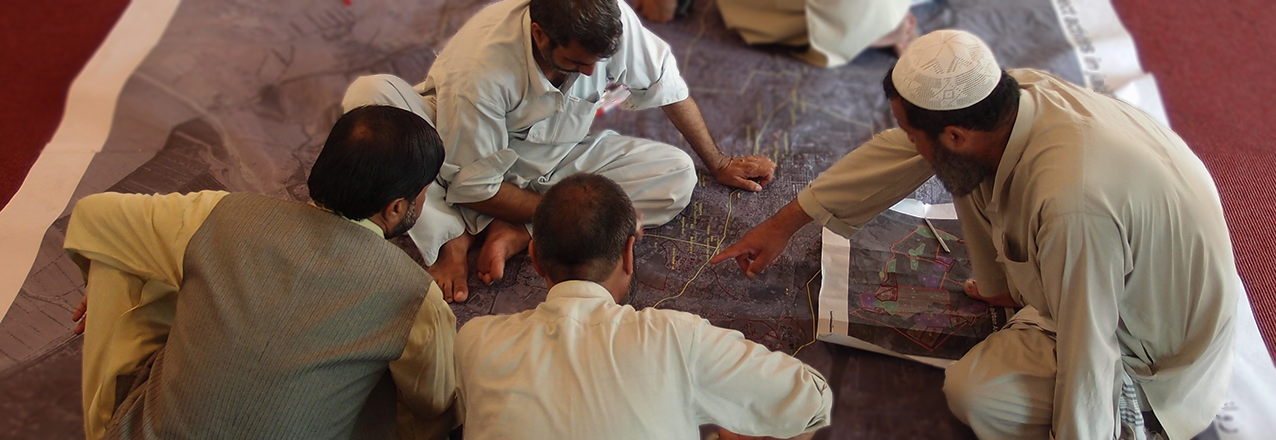
MAST blends participatory mapping approaches with flexible technology tools to help local communities who lack access to government services to document, manage and secure their land and resource rights, improving long-term governance of community land and resources. Learn more »

Funding/Contract Mechanisms

The Strengthening Tenure and Resource Rights (STARR) IDIQ was a USAID mechanism for providing technical assistance on land and resource tenure. This resource provides an overview of STARR, STARR II, and other USAID funding and contract mechanisms relevant to land and resource governance. It is intended as a practical reference for land practitioners seeking to understand how such mechanisms are structured. Learn more »

Integrated Land and Resource Governance

The Integrated Land and Resource Governance (ILRG) project explored practical approaches to strengthening land and resource governance, with work spanning land rights, tenure security, natural resource management, gender and responsible investment. The project generated tools, evidence and lessons from implementation that can inform current thinking and practice on land and resource governance. Learn more»

Geospatial Analytics

Geospatial analytics can turn land and resource data into information that helps land practitioners make better-informed decisions. This resource introduces applications ranging from satellite image analysis and land-use change modeling for risk analysis, thematic mapping and interactive online mapping. Learn how»

Land Advisors Program

The USAID Land Advisors Program expanded USAID’s cadre of land and resource governance ambassadors from Missions and across sectors by building the capacity of selected USAID staff in land and resource governance (LRG) programming. Learn more»

Tools and Guides

A suite of tools and guides provides background, guidance, and constraints to consider on a variety of land tenure and property rights related issues. Learn more »


Washington Declaration Diagnostic Framework

The Washington Declaration Diagnostic Framework (WDDF) is a self-measurement tool for use by governments. It is designed to help artisanal diamond producing countries evaluate how their legal frameworks, policies, and practices regarding artisanal and small-scale diamond mining align with the goals of the Washington Declaration to improve and monitor their progress over time. Artisanal and…Read More

Forest Carbon Rights Guidebook: A Tool for Framing Legal Rights to Carbon Benefits Generated Through REDD+ Programming

This guidebook is designed to enable development practitioners and policy makers to cultivate a deeper appreciation of carbon rights, the challenges associated with them, and their implications for REDD+ programming. Ultimately, the guidebook aims to assist practitioners to identify options for framing carbon rights in law that will yield positive outcomes for the environment and…Read More

Institutional Assessment Tool for Benefit Sharing Under REDD+

This tool is designed to help USAID staff prioritize support for capacity-building of new or existing institutions that manage and disburse equitable, efficient, and effective REDD+ benefits. STRUCTURE OF THE TOOL PART I. INSTITUTIONAL MAPPING Part I is designed to assist the researcher to map REDD+ benefit sharing institutions, in order to build an understanding…Read More

Angola: Land Rights Formalization in Rural and Peri-Urban Settings: Draft Operations Manual

This manual sets out guidelines for the formalization of land rights in rural and peri-urban settings in Angola. The Draft Operations Manual: Land Rights Formalization in Rural and Peri-urban Settings is a comprehensive document that includes considerations for the selection of communities for formalization projects, guidelines for project management and implementation, a program for sensitization…Read More

Field Test of LTPR Impact Assessment Tool: Successes, Challenges and Recomendations

Under the USAID Global Land Tenure II (GLT2) Lesson Learned: Property Rights and Natural Resource Management Task Orders, ARD has developed an impact assessment tool. This tool was crafted to assist USAID missions assess impact of land tenure and property rights (LTPR) interventions and derive important lessons that can inform future programming. Following a USAID…Read More

Strengthening Land Tenure and Property Rights in Angola: A Profile and Planning Tool for Women and Other Disadvantaged Groups in Pilot Areas

This report documents findings from a field assessment on land access of women and Other Disadvantaged Groups (ODGs) that was conducted in August–September of 2007. The field assessment involved interviews with women’s groups, men’s groups, traditional leaders (sobas), local administrators, representatives from the formal court in the pilot sites for the project, as well as…Read More

Livelihoods and Conflict: a Toolkit for Intervention 2004

Conflict arises due to a complex set of variables coming together and reinforcing each other at multiple levels and at critical junctures of a country or region’s development. It leaves in its aftermath significant development and humanitarian challenges. USAID recognizes that conflict is an inherent and legitimate part of social and political life, and is…Read More