

Tools and Mission Resources

Photo Credit: Gary Hunter and Anna Soave / Tetra Tech

Land and resource tenure issues cut across climate resilience, food security, conflict, conservation, investment, urban development and livelihoods. This collection brings together practical tools, approaches, technical resources, and program materials that can help practitioners, researchers, policymakers, community organizations and others understand and address these issues.

Many of the resources were developed through USAID-supported programs and initiatives. They remain useful beyond their original context, offering approaches, lessons and evidence that can inform work on land and resource rights in different settings.

Mapping Approaches for Securing Tenure (MAST) Learning Platform

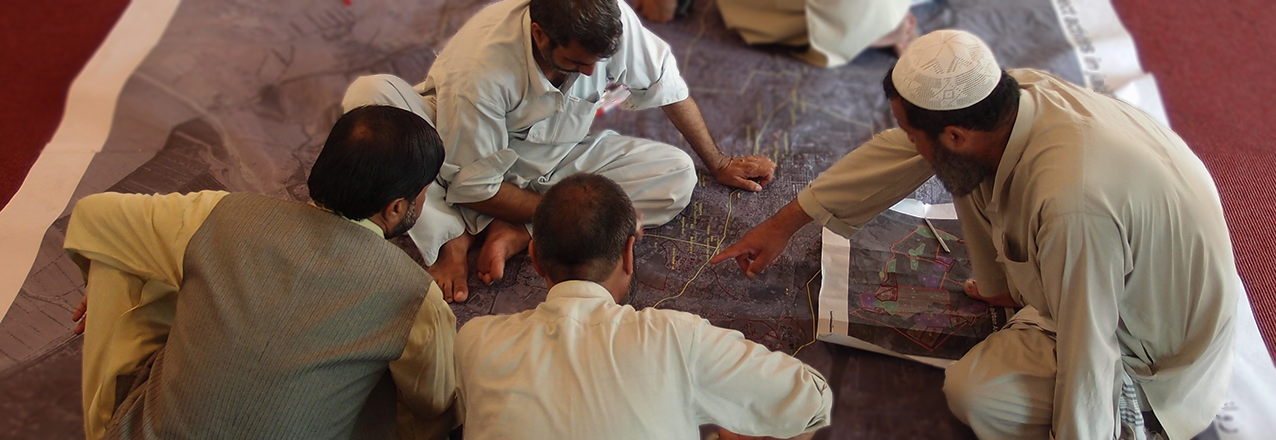
MAST blends participatory mapping approaches with flexible technology tools to help local communities who lack access to government services to document, manage and secure their land and resource rights, improving long-term governance of community land and resources. Learn more »

Funding/Contract Mechanisms

The Strengthening Tenure and Resource Rights (STARR) IDIQ was a USAID mechanism for providing technical assistance on land and resource tenure. This resource provides an overview of STARR, STARR II, and other USAID funding and contract mechanisms relevant to land and resource governance. It is intended as a practical reference for land practitioners seeking to understand how such mechanisms are structured. Learn more »

Integrated Land and Resource Governance

The Integrated Land and Resource Governance (ILRG) project explored practical approaches to strengthening land and resource governance, with work spanning land rights, tenure security, natural resource management, gender and responsible investment. The project generated tools, evidence and lessons from implementation that can inform current thinking and practice on land and resource governance. Learn more»

Geospatial Analytics

Geospatial analytics can turn land and resource data into information that helps land practitioners make better-informed decisions. This resource introduces applications ranging from satellite image analysis and land-use change modeling for risk analysis, thematic mapping and interactive online mapping. Learn how»

Land Advisors Program

The USAID Land Advisors Program expanded USAID’s cadre of land and resource governance ambassadors from Missions and across sectors by building the capacity of selected USAID staff in land and resource governance (LRG) programming. Learn more»

Tools and Guides

A suite of tools and guides provides background, guidance, and constraints to consider on a variety of land tenure and property rights related issues. Learn more »


Effective Engagement with Indigenous Peoples: USAID Sustainable Landscapes Sector Guidance Document

This sector guidance document is based on desktop research about SL related issues among Indigenous Peoples, international standards, and USAID program experiences. It is also based on interviews with USAID development professionals. This guidance complements and is informed by the programming guidance within the USAID Policy on Promoting the Rights of Indigenous Peoples (PRO-IP) and is one part of USAID’s collection of sector-specific guidance documents on engagement with Indigenous Peoples.

Climate Risk Management Toolkit

Climate risk management (CRM) improves the effectiveness and sustainability of USAID’s agriculture efforts. USAID implements CRM by systematically assessing, addressing, and adaptively managing climate risk in new strategies, projects, and activities. Climate risk management is required for nearly all USAID strategies, projects, and activities. USAID's CRM toolkit provides links to USAID's CRM tool and supporting...Read More

Leveraging Spatial Data and Analysis for Integrated Environment Programming

Geospatial analysis of landscapes can reveal important patterns and relationships between natural systems and human socio-economic systems, providing insight and evidence for more effective program design. Critical steps in environmental program design include analyzing the interlinked characteristics that comprise and shape landscapes, developing a theory of change, and clarifying intended outcomes. As the availability of…Read More

Operational Guidelines for Responsible Land-Based Investment

Download the guide (PDF). The Operational Guidelines for Responsible Land-Based Investment are now available as an e-book for tablets and e-readers. USAID is increasingly partnering with the private sector through efforts such as the New Alliance for Food Security and Nutrition (New Alliance). Some of these initiatives, particularly in the agriculture sector, involve land-based investments…Read More

Guidelines on Compulsory Displacement and Resettlement in USAID Programming

These Guidelines describe good practices regarding compulsory displacement and resettlement (CDR). This voluntary tool is intended for use by USAID Operating Units and their partners at all stages of the program cycle, whether for implementation of activities or as a good practice guide for project design. Ensuring that CDR, in particular resettlement, avoids, minimizes and…Read More

Marine Tenure and Small-Scale Fisheries: A Sourcebook on Good Practices and Emerging Themes

The Sourcebook examines the state of knowledge on small-scale fisheries and marine tenure around the world. Through its commitment to addressing extreme poverty, the United States Agency for International Development (USAID) is focused on understanding the specific role of marine tenure in achieving multiple development benefits among small-scale fisheries around the world. Marine Tenure and…Read More

LTP Toolkit: Legal Toolbox

LEGAL TOOLBOX CONTENTS 1.0 POLICY BRIEFS AND REPORTS 1.1: Burma Land Governance Issues Brief 1.2: Freedom to Farm: Agricultural Land Use, Crop Selection, Fallowing, and Recommended Changes to the Farmland Law to Strengthen Land Tenure Security 1.2.B: Burmese version 1.3: Forest Law Tenure Opportunities Analysis and Reference Guide 1.4: Shifting Cultivation Policy Brief 1.5: Donor…Read More