
By Ioana Bouvier, Senior Spatial Science and Technology Advisor, USAID DDI/EEI/LRG
Last year, the U.S. Agency for International Development (USAID) launched its new Climate Strategy, laying out an ambitious global plan to address climate change over the next decade. Critical to this effort is inclusive, sustainable, and locally-based management of land and natural resources. Effective governance of land and natural resources helps to protect natural landscapes, conserve biodiversity, and limit carbon emissions, all of which can mitigate climate change.
As USAID’s Land and Resource Governance (LRG) Division reflects on the climate crisis this Earth Day, we know that it’s crucial to continue using innovative, evidence-based, and context-appropriate approaches to address land-related challenges within the context of climate change. One such tool is Mapping Approaches for Securing Tenure, or MAST.¹
MAST is a Proven Tool for Stronger Land Rights
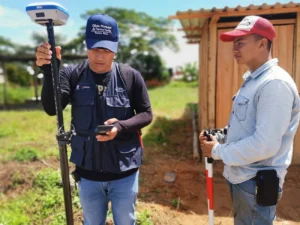
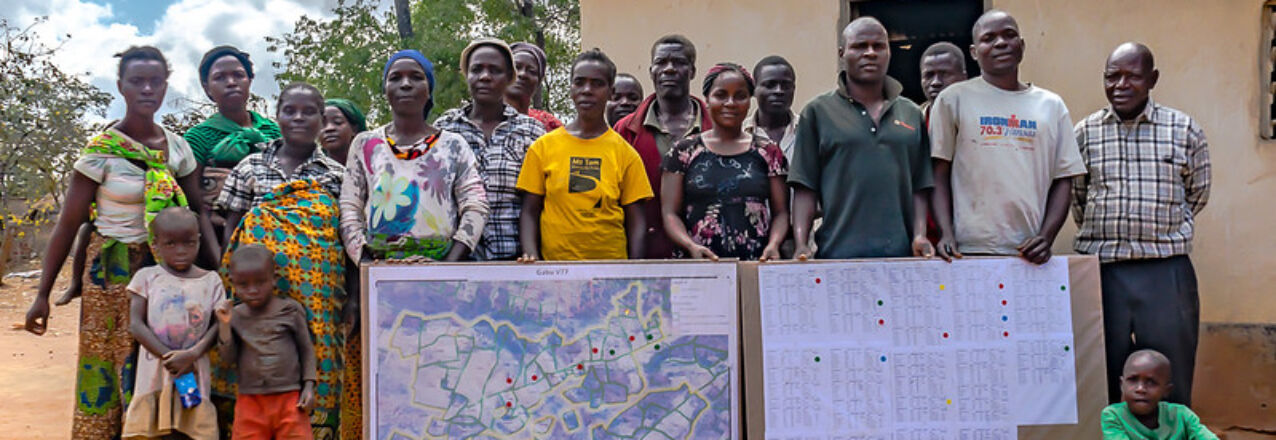
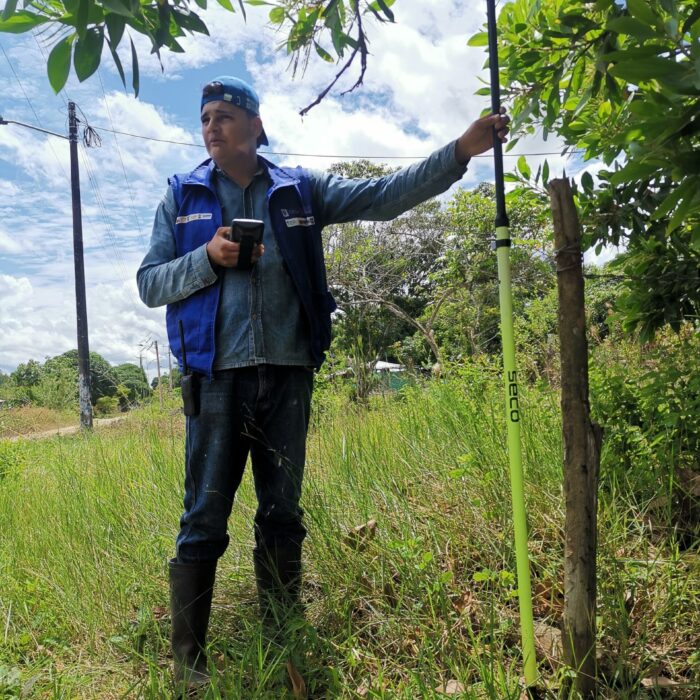
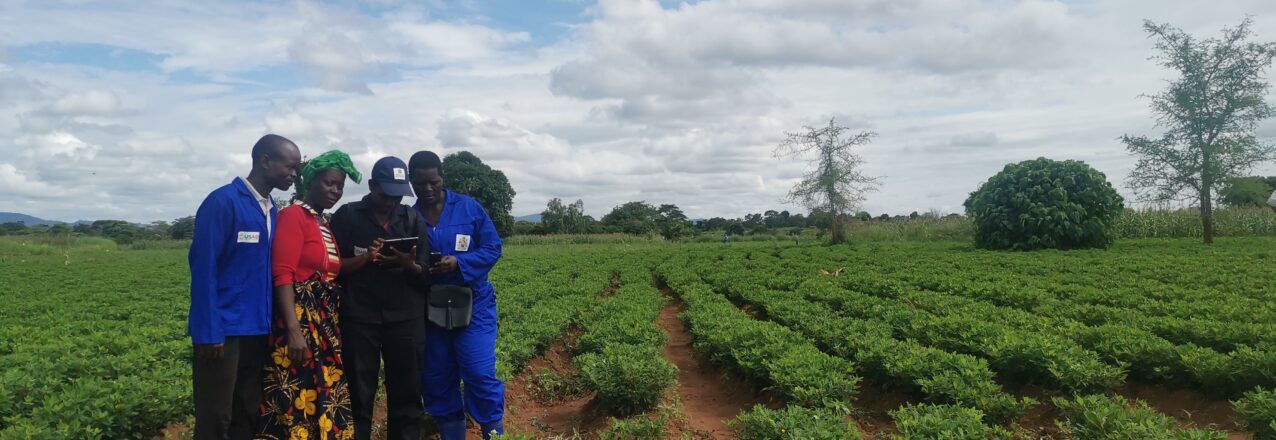
Developed and refined by USAID and development partners over the last decade, MAST is a blend of participatory mapping methods and flexible technologies that empowers local communities to document and secure their land and resource rights. It’s transparent and gender-responsive, and evidence from the past ten years of research and implementation shows that MAST allows communities to map and document their rights more quickly and for less money than traditional means. The approach supports a range of development objectives beyond LRG, including climate mitigation and biodiversity conservation.
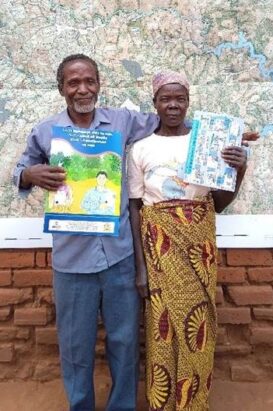
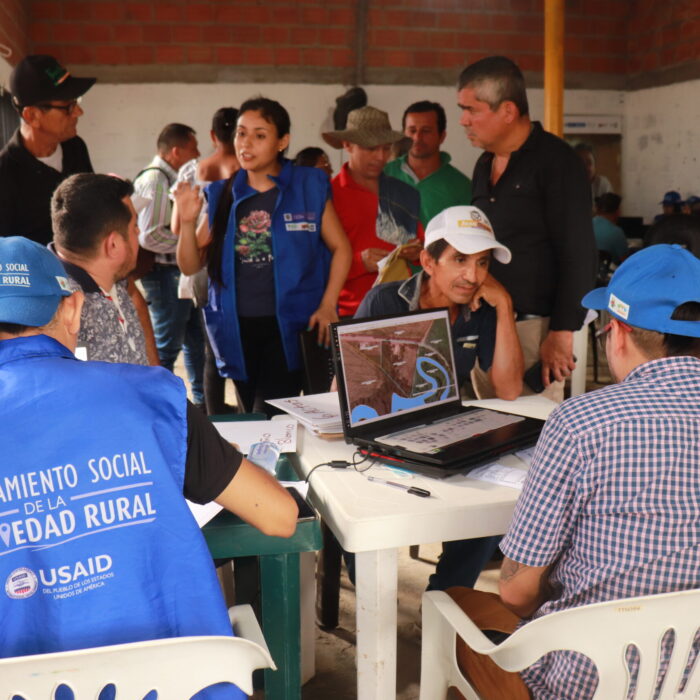
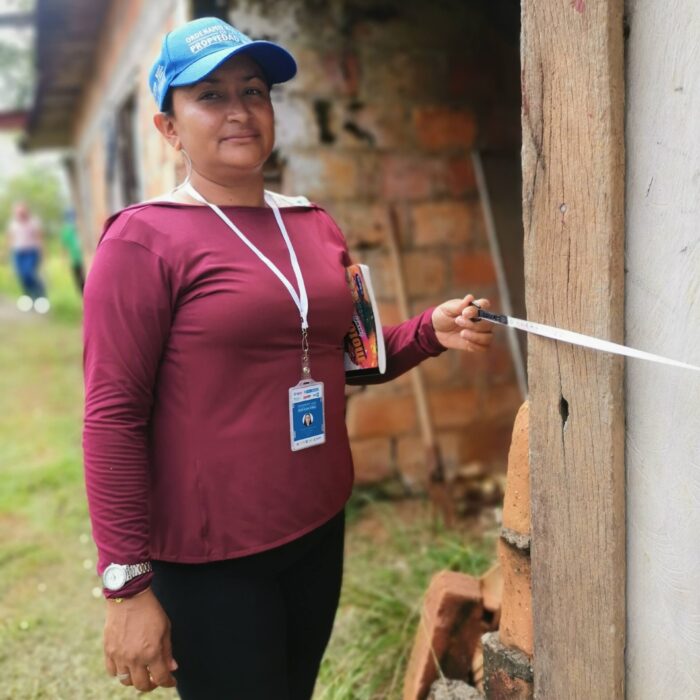
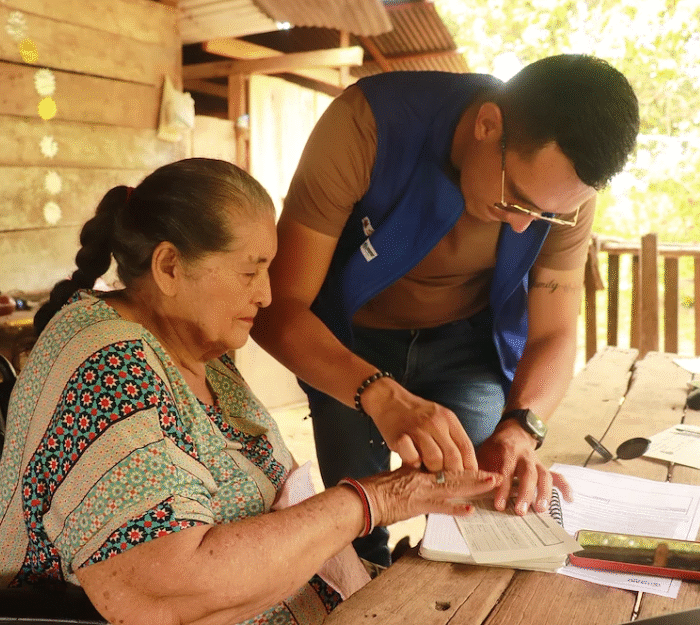
Through participatory mapping methods, MAST emphasizes on-the-ground engagement and training, entrusting community members as data collectors and building local government and community capacity to maintain land information and manage resources in the long term. Using the approach, individuals can systematically collect and verify information necessary to strengthen tenure security and use that information for different purposes, such as to obtain land ownership documents, to enforce community land use plans, and to access technical expertise and funding for new agriculture investments and soil conservation measures.
Mapping Land for Conservation and Climate Change Mitigation
Since 2014, MAST has evolved from an initial pilot in rural Tanzania to a multi-country approach that USAID and implementing partners have used to map and document hundreds of thousands of land parcels. It helps that MAST is “fit-for-purpose”—meaning it’s adaptable to different combinations of spatial, legal, and institutional frameworks. The approach has been adapted and deployed in Mozambique, Zambia, Liberia, Malawi, and Ghana.
In Tanzania especially, MAST was scaled up and adapted to support food security, women’s empowerment, conflict mitigation, among other development objectives. Local land offices and development organizations are now using the approach to improve outcomes for their programs, including biodiversity conservation and climate change mitigation.
As part of USAID’s Landscape Conservation in Western Tanzania project, for example, the Jane Goodall Institute adapted MAST to document land rights and to enforce village land use plans, with the goal to conserve and improve chimpanzee habitats while empowering local communities for sustainable and participatory land and resource management. Roughly 90 percent of Tanzania’s 2,200 chimps live outside national parks and other protected areas. Their habitat is threatened by illegal logging, settlement expansion, and land conversion for agricultural or grazing purposes. In collaboration with local communities, the project is helping to develop village land use plans and document customary land rights using MAST. Through this work, MAST has provided a systematic approach to link land use planning with land documentation in an inclusive, transparent manner, with the goal to strengthen land rights and to reduce pressure on wildlife corridors and forest buffer zones.
In southwest Tanzania, the Lawyers Environmental Action Team (LEAT), a local nonprofit, has adapted MAST for USAID’s Resilient Natural Resources Governance project. The work focuses on a biodiverse ecosystem threatened by competition between pastoralists, farmers, miners, and loggers. LEAT is helping to build local capacity to govern and conserve land, wildlife, forests, and water resources. The project is using MAST to develop sustainable land use plans, enforce these plans through customary land documentation, and to develop long-term village-level strategies for more sustainable resource management.
Elsewhere, in Zambia, USAID’s Integrated Land and Resource Governance program used MAST to map nearly 40,000 customary land parcels in over 900 villages, documenting customary land rights of over 163,000 people. Here, the MAST approach helped harmonize chiefdom and community boundaries, and implementers worked with government officials, traditional leaders, and civil society to customize MAST for local use. The project used MAST participatory methods to help develop chiefdom plans, to resolve land disputes, to empower women and youth as local leaders, and to help improve biodiversity conservation and wildlife planning.
We’ve Updated Our Learnings from a Decade of MAST
USAID and our partners have been using MAST for nearly a decade. In that time, we’ve honed the approach, learned lessons from implementation, and discovered a number of cross-sectoral use cases. To better reflect our growing body of work, we recently refreshed the MAST Learning Platform on the LRG Division’s LandLinks website. By combining in-country evidence and examples—from Tanzania, Zambia, and other countries—the learning platform clarifies the value of and opportunities to use MAST in pursuit of improved natural resource management, biodiversity conservation, climate change mitigation, and other non-land development objectives.
Earth Day reminds us that climate change is an existential global challenge. Effective land and resource governance is a powerful solution for addressing negative climate impacts. USAID’s MAST is a proven, adaptable, and efficient approach for not only strengthening inclusive land and resource rights but also for managing our natural resources and conserving biodiversity in pursuit of better protecting our planet.
¹MAST was previously known as “Mobile Applications to Secure Tenure.”
Sources and Relevant Resources:
- USAID Climate Strategy 2022-2023
- A Decade in the Making: The Evolution of Mobile Applications to Secure Tenure (MAST)
- Leveraging MAST in Natural Resource Management: Cross-Sectoral Uptake Throughout Tanzania
- Scaling and Sustaining Mapping Approaches for Securing Tenure (MAST) (USAID-approved draft)
- Press Release: USAID Commemorates Earth Day with Launch of New Climate Strategy







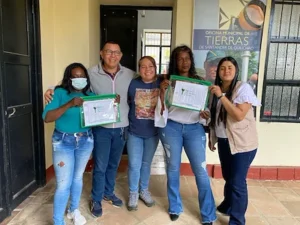
 The idea of a road and bridge across the Quilichao has been on the minds of city planners for at least twenty years but was never realized until a team of land experts from the Municipal Land Office took over the process of acquiring the land on both sides of the river.