
Online Discussion: Legitimate Land Rights

Join the discussion by answering the four questions below, sending a question or comment to the panel, or tweeting using #legitlandrights.

Question 1:
In a small rural community there are 35 households of settled farmers. These farmers and their families have been in the area for several generations. Twice a year, a pastoralist clan moves through the area, following a traditional migration route. The pastoralists have always worked with local chiefs and leaders to negotiate access to the local water source as well as access to harvested fields. Neither the farmers nor the pastoralists have any documentation of their rights over the land at issue. An investor arrives and would like to negotiate to lease some of the land that the farmers and pastoralists both use.

In this case, who has legitimate rights: the farmers only; the pastoralists and the farmers both; or no one, given that there is no documentation of rights?

Question 2:

A family of 5 people was forced, along with many others, to leave their home during a civil war. This family had acquired the rights to their home under a previous regime which favored the family’s ethnic group over another ethnic group. They have documentation to show that this transfer took place. During the conflict, the family members relocated to an internally displaced persons’ camp. While the family was living in the camp, another family moved into their home, living there for over five years, considering this home their own, this family made repairs to the house, planted a small farm, and sent their children to local schools. After a peace accord was concluded, the new government began a process to resolve land conflicts associated with the war.

In this case, who has legitimate rights: the displaced family; the family that took up residence during the war; or is it unclear in this case who would have legitimate rights given the convoluted history of the property?

Question 3:

A government, in an effort to conserve biodiversity, decides to create a new national park. This government endorsed the VGGT. The boundaries of the new park were identified using satellite imagery. When park officials arrive in a portion of the park to conduct an animal head count they encounter local indigenous people. These people explain that they have traditionally used the land to hunt, collect medicinal herbs, honey, and some firewood. The park officials tell these people that they believe the land is probably state/government land and therefore local indigenous people have no claim to the land or the resources on the land.

In this case, who has legitimate rights: the indigenous peoples; the government, because that the land was demarcated; or the government because the state’s biodiversity concerns outweigh the legitimate land rights of the indigenous people?

Question 4:

A developer has legally purchased land from a government where there is currently a city slum. The developer was informed by officials that the land was vacant at the time of purchase, but upon visiting the land finds that hundreds of people are currently living in the slum. The developer plans to invest in the land which will lead to greater economic growth within the city, However, these slum dwellers have already been pushed off of rural lands that were also used without their consent. Moreover, many occupants of the slums have been there for many years and have nowhere that they can go if the slums are destroyed.

In this case, who has legitimate rights: the developer because they purchased the land; the slum dwellers; or is it unclear, this case should be determined through the courts?

 

From Classroom to Community

How Tajikistan’s Youth are Changing the Way We Look at Land Rights

Originally appeared on Medium.

On a sunny day in June at the Financial and Economic Institute in Tajikistan’s capital city of Dushanbe, a class full of energetic young law students discusses the day’s lesson. To the southwest of the capital, in a small rural village in Khatlon Province, high school seniors tell personal stories about helping their community. Sixty-five miles apart, the students are discussing the same subject: land rights. The enthusiasm in both classrooms is impossible to ignore.

The subject of land rights is a new addition to the students’ curriculum. As part of the U.S. Government’s Feed the Future initiative, USAID’s Land Reform and Farm Restructuring project has helped support this effort by establishing the course materials, which include a textbook and a fact-sheet on ways to resolve common land disputes.

Adults may not always recognize how influential youth can be. But in Tajikistan, USAID knows that youth often serve as a bridge of information, helping their families understand and adopt new practices.

View the full photo essay on Medium.

Feeding Ethiopia’s Future

Lessons from a Decade of Land Certification

Originally appeared on Exposure.

LAND RIGHTS MATTER

In Ethiopia, where over 80 percent of the population lives in rural areas, having secure rights to land and other resources is critical. Especially for women.

LAND INSECURITY → LESS FOOD SECURITY

For decades, farmers and other landholders lacked land tenure security because of frequent land seizures and redistributions.

This insecurity meant farmers had few incentives to make investments for fear that their land would be taken away before they could reap the benefits.

This led to declining agricultural productivity, food insecurity and hunger.

Read the full photo essay on Exposure.

The Art of Starting Over

For women in Colombia, new land brings a new beginning

Originally published on Exposure.

OVER 3 MILLION WOMEN WERE DISPLACED DURING COLOMBIA’S ARMED CONFLICT.

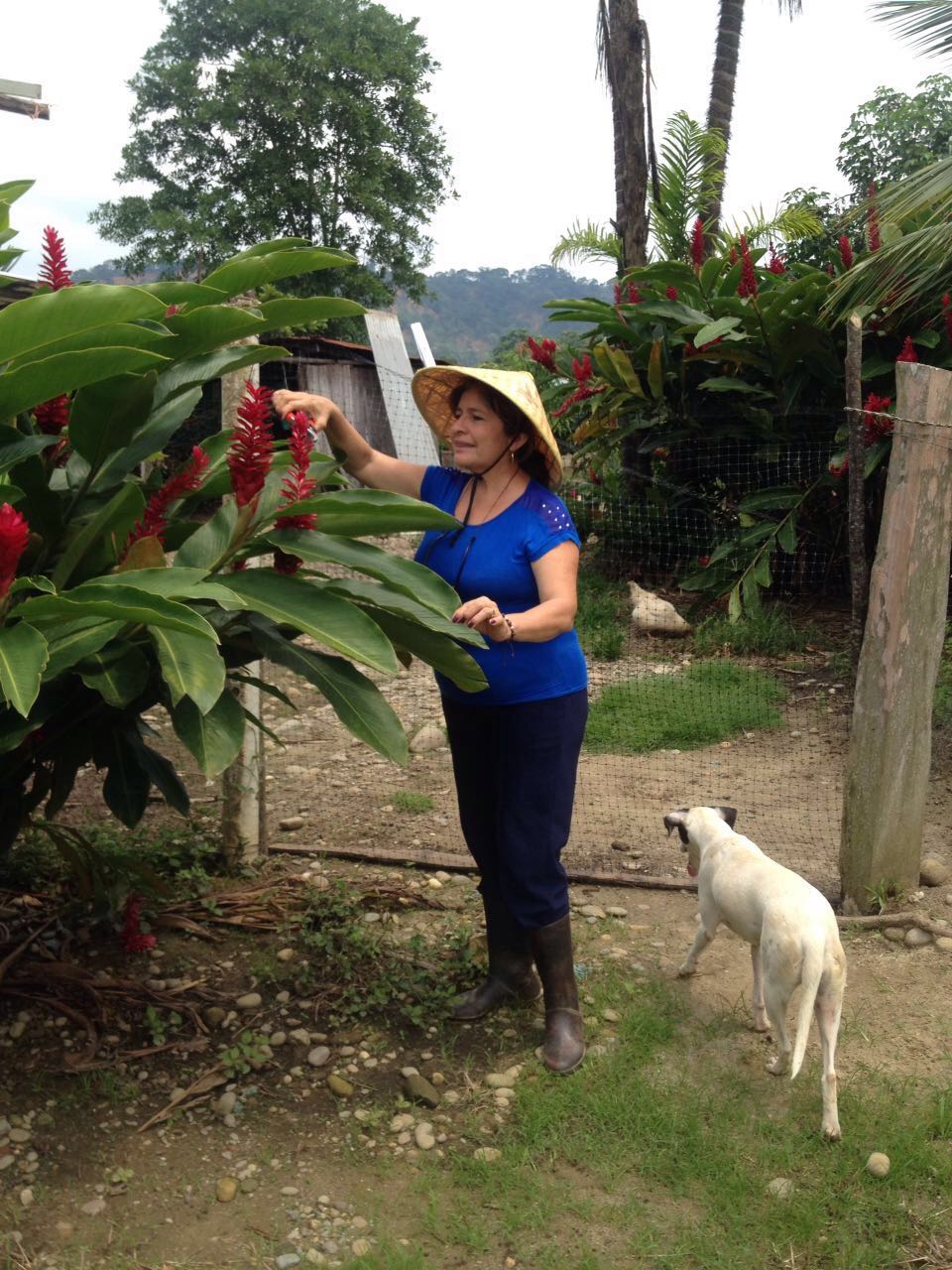
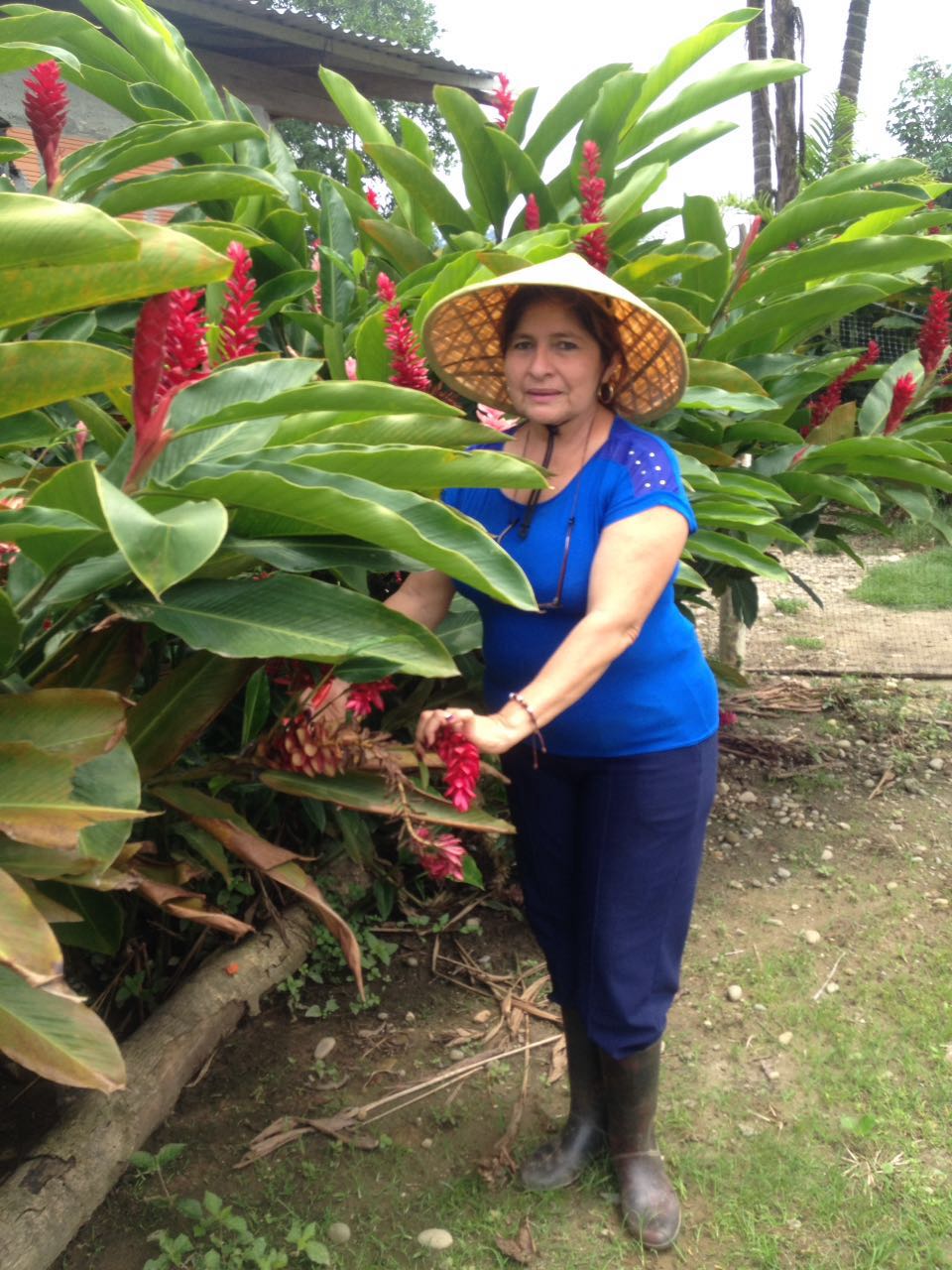
Many abandoned their land under the threat of extreme violence, leaving their possessions, homes, and farms behind. Luz Esmeralda, a 52-year-old mother of two, was one of them.

Luz and her family enjoyed a peaceful, happy life on their farm, until conflict swept through their community. Luz clearly remembers the day armed soldiers appeared on her property.

“When the guerrillas came to our village, they told us to arm ourselves and join their ranks, or leave. They stole our cattle, machinery, everything. We were forced to leave our land. It was very very hard.”

STRENGTH IN NUMBERS

Luz and her family traveled from town to town, searching for a place to call home. Eventually they landed in Meta—a region of Colombia known for its rich pasture land. In town, Luz met other displaced women, many of whom were female farmers with agriculture skills that were not being put to use. Like Luz, they were desperate for work, shelter, and income.
Luz was determined to find a way to lift these women out of poverty, and refused to let war, displacement, and poverty be the storyline that defined their lives. She knew they had the collective skills they needed to start and grow a successful farming business. The women banned together under the leadership of Luz Esmeralda, and AgroEmpo—a farming association of 21 war widows—was born.

Request for Information – Strengthening Tenure and Resource Rights (STARR) II

USAID has issued a Request for Information/Sources Sought Notice for conducting market research to identify potential sources capable of providing support services and solicit advice, knowledge, and best practices from organizations interested in participating in USAID’s technical assistance within the Land and Resource Governance (LRG) sector. Instructions on how to provide comments are contained within the Notice. Responses are due by June 30, 2016.

Land and Social Impacts: Ensuring We Do No Harm

Download the Issue Brief.

Commentary by Chad Dear, USAID, American Association for the Advancement of Science (AAAS) Science Policy Fellow.

“Do no harm”—the notion that we must consider, avoid, and mitigate the possible harm that any intervention might do—is a fundamental principle of humanitarian assistance and development. What concrete steps can you take to ensure that this principle is inviolate? Further, how can you use social impact assessments to better ensure that your intervention not only “does no harm”, but actually does good? USAID’s Land Office recently released the Land and Resource Tenure and Social Impacts Issue Brief, which describes land-related social impacts and their importance to USAID programming. Taking account of these social impacts is essential to ensuring that projects do not inadvertently cause harm, undermine USAID’s development objectives, contravene existing policy commitments, or erode public support for USAID operations.

The Issue Brief on Land and Resource Tenure and Social Impacts outlines concrete measures that USAID and others can take to safeguard against potential adverse social impacts of development interventions.

Getting It Right: Practical Tips For Evidence-Based Programming

Drawing upon the experience of USAID’s E3/Land Office managing 8 impact evaluations and providing technical assistance in the field, M.Mercedes Stickler, Senior Land Governance and Evaluation Advisor for the E3/Land Office, presents practical tips for evidence-based programming in the USAID context. This presentation was given at the USAID Environmental Officers Conference on February 25, 2016.

Mythbusting: 5 Things You Should Know About Impact Evaluations at USAID

By M. Mercedes Stickler, Senior Land Governance and Evaluation Advisor in USAID’s Land Tenure and Resource Management Office. This commentary originally appeared on USAID’s Impact Blog.

At an event marking five years since the release of USAID’s Evaluation Policy, USAID Administrator Gayle Smith noted, “Development is aspirational, but it’s also a discipline.” I couldn’t agree more.

As a researcher and practitioner, I approach development with a scientist’s eye: I draw on the best available evidence and carefully measure the impact of our programs to better serve our beneficiaries and maximize our limited funds. Together, let’s examine how USAID is learning from our experience and investing in rigorous impact evaluations in partnership with local stakeholders.

But aren’t impact evaluations difficult and expensive? Don’t they take years to show results? Is it ethical to “withhold” benefits from people in order to run a scientific experiment? I hear these questions often. For the past three years, I have managed a portfolio of eight land and resource governance impact evaluations across sub-Saharan Africa.

To learn about the 5 common misconceptions and lessons learned and, visit USAID’s Impact Blog >>

Taking Stock of the Voluntary Guidelines

By Heath Cosgrove, Director, USAID’s E3/Land Office.

Four years ago, the global community came together in historic fashion to agree, for the first time ever, on a common set of standards and practices for strengthening land and resource rights: the Voluntary Guidelines on the Responsible Governance of Tenure (VGGT). Negotiated and endorsed by a broad coalition of government, civil society, and private sector representatives at the UN Committee on World Food Security, the VGGT helped define and organize a global movement for addressing one of today’s most important development issues – land rights.

USAID is proud to be a part of that movement. Now, as both one of the largest bilateral donors working in the land sector and as the Chair of the Global Donor Working Group on Land—a network of 23 bilateral and multilateral donors committed to improving land governance worldwide—we have an opportunity to reflect on our achievements and learnings as we take stock of four years of VGGT implementation.

The Global Donor Working Group on Land—which collectively represents 678 land governance projects in 131 countries—recently released a Policy Brief outlining our joint position on the status of VGGT implementation. We believe that for the VGGT to be implemented effectively, we must understand and learn from how they are applied in different countries and contexts. For a movement as global and decentralized as ours, this is quite a challenge. Nonetheless, the Global Donor Working Group on Land is leveraging its network to help take stock of how the VGGT have been applied over the last four years, and how they can be applied moving forward. We believe the following initiatives can help:

  • Building out and analyzing the global database of land and resource governance programs known as the Land Governance Program Map
  • Developing a framework for stocktaking on VGGT and establishing a baseline
  • Tying VGGT reporting to country-level SDG reporting
  • Establishing and furthering joint monitoring or learning partnerships for responsible investment

These recommendations, along with insights from other stakeholders, will be presented and discussed at this year’s Committee on World Food Security meetings in October. We look forward to continuing the dialogue on making the promise of the VGGT a reality for women and men around the globe.

Stay up to date on the latest news and resources on strengthening land and resource governance by joining our email list.

Empowering Pastoralists

How mobile technology is protecting land and connecting communities

Originally appeared on Exposure.

MANY PASTORALISTS IN EAST AFRICA HAVE FOLLOWED NOMADIC TRADITIONS FOR CENTURIES

As the seasons change, pastoralists migrate across the semi-arid regions of Africa with their cattle, goats, camels and sheep. Some pastoralists also manage crops in addition to livestock.

With a wealth of knowledge about the local ecosystem and practices that preserve natural resources, pastoral communities are important stewards of the land.

40 percent of Africa’s land is pastoral.

But, like their land, the livelihood of pastoralists in East Africa is under pressure.

As national boundaries shift and nature reserves and agriculture use expands, there is less land for the pastoralists.

CLIMATE CHANGE IS A THREAT TO PASTORAL COMMUNITIES

Shifting weather patterns and drought—combined with restrictions on access to land and water make life difficult for pastoralists. Additionally, as demand for natural resources grows, land is degraded, jeopardizing the health of livestock.

Without documentation of their land rights, pastoralists are also at risk of being displaced from the lands they depend on for survival.

For these remote communities to adapt and be resilient, they need access to information that will help them sustainably manage their land and better respond to climate change.

Read the full photo essay on Exposure.