
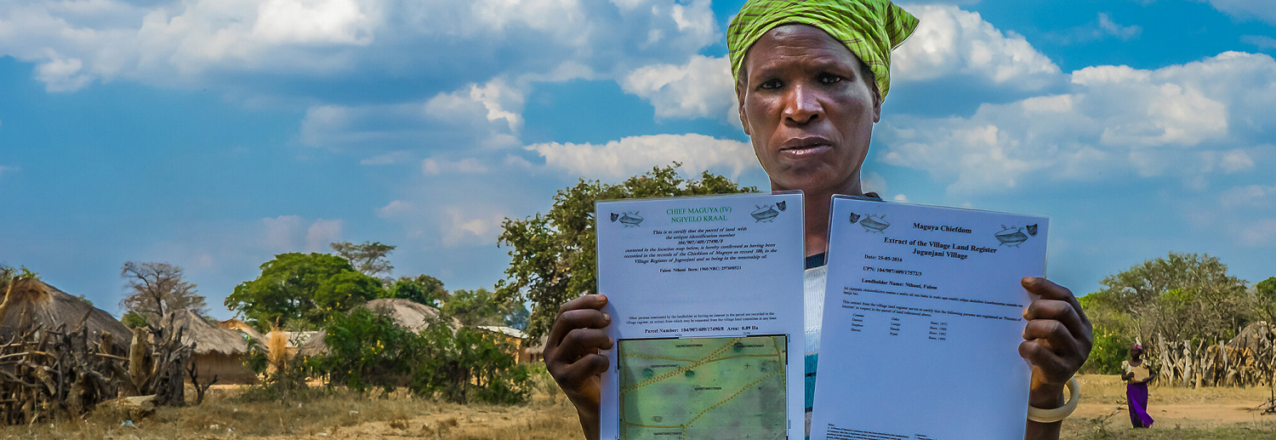
6 Ways USAID is Investing in Women’s Land Rights

By Jennifer Duncan

Secure land and resource rights are critical for household wellbeing and livelihoods in many developing countries, where land is the principal asset for the rural poor. Despite women’s vital role in food production, they are less likely than men to own and control land. Forty percent of the world’s economies limit women’s property rights, and 44 of 191 countries do not provide female and male surviving spouses with equal rights to inherit assets.

In 2020 one in five women  globally–upward of 480 million women–felt insecure about their land and property rights, and in some regions like Sub-Saharan Africa nearly one in every two women feared losing her land in the event of divorce or death of a spouse.
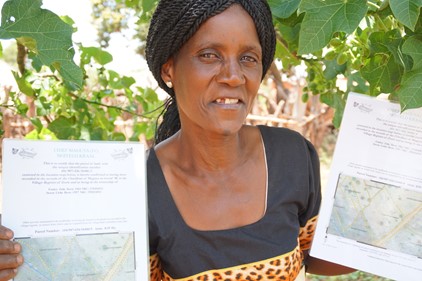
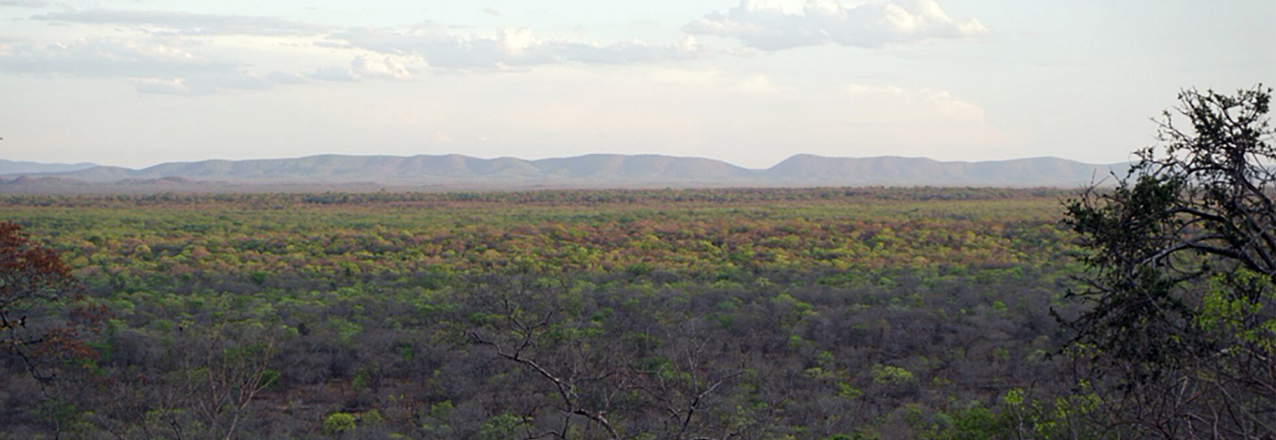
Photo credit: Sandra Coburn for USAID

The same gender biases that prevent women from holding secure land rights also exclude them from having an equal voice in decision-making about land at all levels. When women’s and men’s voices are both well-represented, on the other hand, strategies for land and resource use reflect the needs and collective wisdom of the whole community. This is especially important in the face of growing resource scarcity, and the kinds of crises spurred by climate change and the COVID-19 pandemic.

WHY WOMEN’S LAND RIGHTS MATTER

Ownership and control over assets that support income are central to women’s economic and social empowerment and their ability to contribute to their communities and countries. For many women, the most valuable of these assets are the land and natural resources they depend on to make a living, provide for their families, and invest in their communities. If women had the same access to productive resources as men, farm output would increase by 20 to 30 percent.

USAID, through the Integrated Land and Resource Governance (ILRG) program and the Communications, Evidence and Learning (CEL) project, is strengthening women’s rights to land and resources so that women may leverage these rights toward concrete economic, social, and political opportunities.

In honor of International Women’s Day, here are six ways USAID is moving forward with our partners to strengthen women’s land and resource rights:

  1. SUPPORTING LAW AND POLICY REFORMS. Reforming legal frameworks to establish women’s rights to land and natural resources is one of the most effective ways to empower women at scale. USAID is working with governments and customary leaders at the national and local levels to adopt and implement laws and policies that promote women’s land rights. USAID is also raising awareness and providing legal literacy and access to justice for women, so they are better able to claim and benefit from existing rights.
  2. GENDER INTEGRATION IN LAND DOCUMENTATION. USAID is promoting gender integration in systematic land documentation processes led by governments, civil society, and private sector actors, ensuring that women’s land rights are considered in all steps, from planning to final documentation of individual or community land. Awareness-raising and communications activities are encouraging women to register their rights.
  3. GENDER NORMS CHANGE. USAID is providing training and promoting dialogues with customary leaders and communities on harmful gender norms and biases that hinder women from gaining rights and control over land and natural resources. USAID is also promoting gender norms change within households to enhance women’s participation in decision-making, promote collaboration within families, and reduce gender-based violence.
  4. AGENCY-BASED EMPOWERMENT FOR WOMEN. USAID is providing women with the skills, knowledge, and resources to meaningfully participate in decision-making and governance related to land and natural resources and to engage in agricultural value chains. Increased agency enables women to leverage secure land rights to access financing, agricultural extension, and employment in the wildlife and forestry sectors.
  5. PRIVATE SECTOR ENGAGEMENT. USAID is partnering with national and multinational companies to develop policies for gender-responsive land-based investment and business practices that reach, benefit, and empower women in different agricultural value chains. USAID is contributing to the growing evidence base on the business case for women’s economic empowerment, which shows that including women in value chains has positive impacts not only for women, their families, and communities, but also for key business performance indicators like agricultural yield, productivity, and quality of production.
  6. GATHERING AND DISSEMINATING EVIDENCE, BEST PRACTICES, AND LESSONS LEARNED. USAID’s extensive impact and performance evaluations of past and ongoing projects are producing a rich body of evidence to inform governments, donors, and other stakeholders in developing new policies and programs to effectively strengthen women’s rights and translate them into sustainable social and economic empowerment. USAID will continue to share its research widely through new communications and learnings platforms, so as to be readily accessible by partners and stakeholders working toward better land and resource rights for women.

For more information about USAID’s work on women’s land rights, check out these key resources and more at https://tenuresecurity.org/issue/gender-equality/

About the author: Jennifer Duncan is the Senior Land Tenure Specialist on the USAID Land Evidence for Economic Rights, Gender and Empowerment (LEVERAGE) Activity. 


The Voice of Leadership: Women in Wildlife in Zambia

By Patricia Malasha

In Zambia, women and men are making the choice to challenge cultural and social barriers to women’s participation in natural resource management

When it comes to Zambia’s natural resource governance structures, the cultural perception that ‘only men can be the leaders’ excludes many capable women from leadership roles. Women’s interests and priorities are under-represented, and women can do little to change this from the sidelines. Due to gender norms, most of the work and decision-making tends to be assigned to men, who are the only ones thought to have the competencies required for wildlife operations.

Zambia’s wildlife policy entrusts power to communities to establish Community Resource Boards (CRBs) to manage their natural resources in Game Management Areas, which are protected areas buffering national parks; but with no gender focus, women community leaders continue to be ignored within community management and governance structures. To be elected to the CRB, women have to compete with men on an uneven playing field. Few are willing to stand for election, but when they do, they face many barriers limiting their chances of success, such as lack of resources for campaigns, lack of acceptance, time constraints to campaign, and risks of gender-based violence (GBV). If they succeed, the same challenges continue to impact their meaningful participation. Asserting themselves within traditionally male-dominated structures exposes them further to the risks of GBV within their family and communities.

In Zambia, there are 77 CRBs nationwide, and only a few have ever elected women to leadership positions. A similar scenario exists in the forestry sector with Community Forest Management Groups.

Strategies to increase women’s participation

In 2020, USAID partners Frankfurt Zoological Society and the Zambia CRB Association tested a pilot to use the CRB elections as an entry point to increase women’s participation in four CRBs located in the North Luangwa ecosystem: Mukungule, Nabwalya, Chikwa and Chifunda. Turns out women make really great candidates for leadership positions. Today, one out of four CRB leadership positions in the target CRBs is occupied by a woman, and the Village Action Groups (VAGs) that support CRBs increased women’s participation to 50%. Just three years ago, women barely had any representation at either level. Read more about this pilot in the Outcomes and Lessons Learned Report and Brief.

To observe International Women’s Day, USAID is profiling the community voices of those individuals who stood up to challenge existing structural barriers and gender norms to increase women’s involvement in wildlife community governance leadership roles.

Inspiring New Leaders

Nancy Mutemba, Community Liaison Assistant and Gender Focal Person, Frankfurt Zoological Society
“It seemed a difficult task to convince headpersons and women to do something that they did not believe in, and I was scared to preach to them something that seems to go against their culture. I worried about how they would receive the message and how it was going to impact our relationship going forward.”

Read More


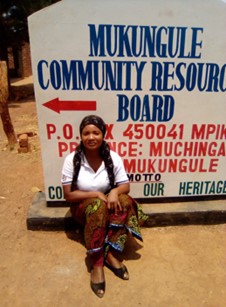
Harriet Mupeta – Mukungule CRB Board Secretary

“Before the meeting I knew very little about the role of the CRBs and that as a woman I could be involved. When I heard that Chief Mukungule was asking women to join the CRB, I decided to try because I knew the Chief’s word is respected.”

Read More


Unwilling to buy votes, Catherine Chatata – Nabwalya CRB

“I now believe that even as a woman who has no money for campaigning, I can be voted for. I will work even harder to convince people in the next round of elections and my achievements in the VAG will campaign for me.”

Read More


Without Women there is no Tradition, Chief Chikwa – Chikwa CRB Patron

“Our history and our tradition are not without women. Women have held honorable positions in our tradition system, including that of a chief; before me there were women. Discriminating against women is not from our tradition but individual selfishness. Women deserve to be leaders of our communities,” he says.

Read More

Agnes Chavula – Chikwa CRB Chairperson

“Men want to lead over you and find it difficult to respect women in top positions. If not careful, you spend time dealing with unnecessary conflicts rather than serving the people. I just have to be tactical to maintain unity,” she says.

Read More


Nancy Mutemba, Community Liaison Assistant and Gender Focal Person, Frankfurt Zoological Society

“We have cut through the barriers! We finally have more women in the Mukungule CRB,” was Nancy Mutemba’s reaction to the latest CRB election results. Nancy is the Community Liaison Assistant (CLA) and Gender Focal Person for Frankfurt Zoological Society and was among the seven CLAs who spent days prior to the election in the field speaking to traditional leaders, community members, and potential women candidates willing to risk everything to break through the cultural and gender norms that bar women from taking up leadership positions.

“The challenge is all about power and control, putting a woman in leadership means taking over control from a man. Tradition does not allow that; many men don’t want it, and women believe it shouldn’t happen,” Nancy explains.

USAID’s partners trained the CLAs to equip them with practical skills on how to facilitate conversations on gender norms and gender equality and convince communities to support aspiring women. Nancy, like other CLAs, was initially skeptical about the activities and what could be achieved.

“It seemed a difficult task to convince headpersons and women to do something that they did not believe in, and I was scared to preach to them something that seems to go against their culture. I worried about how they would receive the message and how it was going to impact our relationship going forward.”

The CLAs like Nancy work and live in the communities and are known and trusted members. Young women like Nancy are not only trusted but are seen as courageous and an inspiration to many other women.

“They see me going village to village on a motorbike and facilitating meetings, and they think I am extraordinary. I know women look up to me for knowledge and advice, and this gives me strength to do my best.”

This relationship is what makes the work of CLAs so critical. They are listened to and can influence change. Armed with information and tools, Nancy set out on a task to lobby traditional leaders in Mukungule Chiefdom to support women as leaders in the CRB while also convincing women in the community to step into leadership roles. As per tradition, the approach must first go through the Chief, and then the headpersons, who are mostly men. The support of traditional leaders encouraged CLAs like Nancy, and made it easier to deliver these messages to the community members.

“I was surprised that the traditional leaders were ready for this change. Sometimes it was the headmen who answered the difficult questions. I did not have to provide all the answers myself and in the end some women were convinced and came forward.”

The CLAs also prepared women to go through the election process, which required Nancy to inspire the women to see themselves as leaders, be confident, and develop self-esteem and resilience. For Nancy, seeing aspiring women candidates drop out of the electoral process was not an option. “I had to inspire positivity, get in their shoes, and rise up with them, and it worked, not a single woman dropped off,” she said happily.

Nancy’s hard work in the community paid off: in Mukungule CRB, women in leadership roles increased by 40%, and by overcoming cultural barriers, women are now being drafted into the committees that form customary leadership within the tribal governance structures.


Harriet Mupeta – Mukungule CRB Board Secretary

“On election day, I believed I could win but also doubted that my community would choose me over a man.”-Harriet Mupeta, Mukungule CRB Board Secretary

Harriet entered the community leadership scene through the Village Action Group (VAG) election. In order to be eligible to join the CRB a candidate, one must first be elected to a local-level Village Action Group. In October 2020, she won the Mwansabamba VAG election in a landslide and became the VAG Chairperson. In November, she was elected as the CRB Board Secretary for Mukungule CRB. Like many women of her community, she never thought of herself as a community leader who could represent the interests of others, but all that changed when the Community Liaison Assistant (CLA) went to her community to talk about gender equality and women’s rights.

“Before the meeting I knew very little about the role of the CRBs and that as a woman I could be involved. When I heard that Chief Mukungule was asking women to join the CRB, I decided to try because I knew the Chief’s word is respected.”

To encourage women to participate in community governance of their resources, USAID partners worked with traditional leaders and community members prior to the elections to break through gender barriers and promote acceptance of women’s role in leadership. Seven women in the VAG were mobilized and given information about community resource management and training on skills to go through the election process.

A housewife, Harriet said, “I was worried about my husband’s and my relatives’ reaction, but after negotiating with them they supported me. It was the other men in the community that gave me a hard time. They kept passing offensive comments like I was not capable and wouldn’t get anywhere.”

The skills training focused on working with women candidates on negotiation and communication skills, self-confidence, public speaking, campaign strategies, and networking. Most of the women that won the election did not have the financial resources to campaign but relied on family connections and their reputation in the community. Women were often seen as willing to serve in positions of leadership for the greater good, whereas men were perceived as pursuing their own interests and benefits.

“At first, I used to be affected by the mockery of men, but one day after a meeting, a group of women who witnessed one of the incidents told me that I was kind and loved by people and that they would support me to win. That changed everything for me!

When asked what winning the CRB elections means to her, Harriet said; “It’s a new world for me, I feel happy, confident, and motivated! I work within this big organization and speak for people. I am showing my community what I can do and how I can build positive relationships. I have become capable!”


Unwilling to buy votes, Catherine Chatata – Nabwalya CRB

Despite major advances, not all female candidates succeeded. In the Nabwalya CRB, despite spending days walking on foot to convince people to vote for her after her election to her Village Action Group, Catherine Chatata finished third at a local level and did not advance to the CRB.

Catherine came into the race with little more than her reputation, and it was not enough to earn her a seat on the Nabwalya CRB.

External factors, such as a funeral, also affected her campaign. As a woman, she was expected to play a role such as cooking and cleaning at the funeral house and sit and mourn with the bereaved family instead of campaigning. As a result, she could not reach some neighboring villages for her campaign.

Despite missing the top slot to represent her community, Catherine was happy and confident about her future role in leadership.

“I now believe that even as a woman who has no money for campaigning, I can be voted for. I will work even harder to convince people in the next round of elections and my achievements in the VAG will campaign for me.”

CRB elections are held every three years. The competition is stiff and often marred with malpractice which makes it very costly for women like Catherine who have few resources. These practices provide an advantage to those with financial resources, who are mostly men. The process  also has  the potential to encourage corruption in the CRB since candidates who spend a considerable amount of money during campaigns might feel encouraged to recover such expenses when in office. 

“People were demanding food and drinks and even money. Whenever you call for a meeting they would ask, what have you brought for us? Even children wanted sweets and biscuits! They wanted to know the kind of after party I would throw for them if I won,” she said. 

Without Women there is no Tradition, Chief Chikwa – Chikwa CRB Patron

Like in many chiefdoms across Zambia, tradition dictates that family care corresponds to women leadership corresponds to men. As a result, men dominate both the household and community-level decision making when it comes to natural resources. In Chikwa, however, the Chief sees a role for women in natural resource management as a way to advance development in his chiefdom. He is willing to challenge traditions in order to secure opportunities for women leaders.

As the patron of the Chikwa CRB and Chief of the Senga people in Chama District, he takes his role seriously and has committed to promoting gender equality. Prior to the CRB election, Chief Chikwa implemented an affirmative action measure requiring 50% women representation in all governance structures in his chiefdom.

“Our history and our tradition are not without women. Women have held honorable positions in our tradition system, including that of a chief; before me there were women. Discriminating against women is not from our tradition but individual selfishness. Women deserve to be leaders of our communities,” he says.


Agnes Chavula – Chikwa CRB Chairperson

Agnes got the highest number of votes in her VAG and was elected CRB Chairperson. This is not Agnes’ first term on the board, she served before as Finance Management Committee Secretary on the previous CRB Board and understands the challenges that women leaders face in her community.

“Men want to lead over you and find it difficult to respect women in top positions. If not careful, you spend time dealing with unnecessary conflicts rather than serving the people. I just have to be tactical to maintain unity,” she says.

Following the elections, Agnes attended the CRB orientation training that offered skills in gender responsive approaches for conducting CRB business. The training also involved spouses of elected female CRB members to increase their understanding of roles and the responsibilities, including time commitment.

“The orientation helped a lot and we are building on it in our quarterly meetings. The affirmative action measures are forcing us to talk about gender more, and everyone is beginning to appreciate women’s leadership and becoming positive about it,” she explains.

With the elections out of the way, the Chikwa CRB is set to deliver on its mandate. Agnes feels confident about her new role and has many plans to transform the lives of community members, especially women.

Chikwa CRB has a rolling plan and receives community share of hunting revenues from the government. The lack of transparency and accountability in the management of these resources was a big campaign issue that helped her to get elected, since women are frequently seen as less corrupt.


Becoming an Artisanal Miner According to the Law: Breakthrough Sensitization

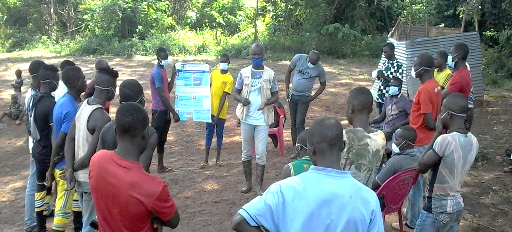
The USAID-funded Artisanal Mining and Property Rights (AMPR) project has sensitized over 1,243 (including 266 women) artisanal miners and mine site owners on how to officially become artisanal miners according to Central African law. AMPR Community Development Specialists and Community Mobilizers conducted the sensitization sessions jointly with Regional Officers from the Ministry of Mines and Geology and members of the Local Peace and Reconciliation Committees that AMPR supported the creation of in partnership with the Ministry of Humanitarian Action and National Reconciliation. The teams held focus group discussions in 63 mining communities in the Kimberley Process compliant zones of Berberati, Boda, Boganda, Carnot, Gadzi, and Nola, using a training poster and corresponding guide developed by AMPR. 400 posters titled How to Become an Artisanal Miner in Accordance with the Law were displayed at the Regional Mining Departments, town halls, markets, and mine sites in the six compliant zones.

AMPR Community Mobilizer Conducting a Focus Group Discussion for Artisanal Miners in Bossui, Boda subprecture on How to be Become an Artisnal Miner. Photo by Junior Delphin.

In May 2019, AMPR conducted a Knowledge, Attitude, and Practices (KAP) study involving 341 artisanal miners. The results revealed that only 4% (n = 341) knew the right price to obtain a license to become an artisanal miner. Some explained that they had paid more than the official price due to lack of knowledge. Others paid inflated sums to their peers to obtain the licenses since they were not aware of the formalities. On this basis, AMPR set out to produce poster and discussion guides with questions and awareness-raising messages inclusive of all points in the supply chain, such as government actors, buying houses, collectors, pit owners, and artisanal miners.

These trainings enlightened the mining communities on how, when, and where to obtain an artisanal mining license and encouraged artisanal miners to pay their licenses as required by the law without exploitation by intermediaries who drive up the price. AMPR will conduct a second KAP in Q2 of 2021 to determine whether awareness of artisanal miners about this and other laws has increased since the previous survey.


Better Together

Strong and meaningful land tenure begins with national, regional and local government coordination.

Voices of Local Leaders

Colombia’s bureaucratic public administration system is an obstacle for rural municipalities to connect with the national government, especially in the poorest and most conflict-affected regions. Communication and administrative bottlenecks prevent much needed funding from reaching Colombia’s most vulnerable, underdeveloped areas and hamper the implementation of Territorial Economic Development Plans (PDET), a key tool to boost investment and development in these regions, which also honors commitments for comprehensive rural reform in the 2016 Peace Accord.

“Let’s Click” for the PDET —an initiative created by USAID, the Agency for Territorial Renewal (ART) and the Presidential Counselor for Stabilization, Emilio Archila— seeks to link local priorities with national resources and relevant cooperation programs funded by USAID. It also helps streamline support to avoid redundancy and increase the efficiency of investments.

Last year, USAID’s Land for Prosperity Activity participated in Let’s Click meetings with ART regional officials and elected leaders from several municipalities: The Mayor of Tumaco, 11 municipalities in Catatumbo, 15 in Montes de María, 4 municipalities in Southern Tolima and the Governor of Sucre.

In a meeting with municipal leaders of Southern Tolima, USAID presented its activities and offered technical assistance which aligns with the priorities and needs expressed in their PDETs. Public officials proved eager to continue coordinating with USAID, picking up where past initiatives have left off, such as in land tenure, government strengthening, and tertiary roads.

The mayors from Ataco, Planadas, Chaparral, and Rioblanco also presented USAID-funded tertiary road inventories to the Ministry of Transportation. The ministry is currently selecting the priority tertiary roads to receive attention and funding. USAID is also partnering the the ART to improve private public partnerships in the coffee and cocoa value chains in Southern Tolima.


“We see the PDET territorial approach as the ideal long term solution to consolidate peace in Colombia because of the government’s will to push projects forward”
-Lawrence Sacks, USAID Mission Director in Colombia

The mayors of rural PDET municipalities agree that strengthening land tenure and property formalization are key drivers of stabilizing their territories. Over the past five years, PDET communities have continually requested improved land administration in order to update rural land cadasters and issue property titles. Multipurpose cadaster programs designed with USAID support and led by Colombia’s National Land Agency have become the roadmaps that align all levels of government, build the capacity, and inform the community.

In 2019, Colombia’s President Ivan Duque set lofty goals for supporting land policies and updating the country’s rural cadaster. Today a little more than 20% of the country’s cadaster is updated, and the government aims to reach 60% by 2022 and 100% by 2024.

“The Ovejas Pilot (massive land formalization) is proof that land titling, property, financial inclusion, and agriculture strengthening programs can be a reality.”

-Iván Duque, President of Colombia

For the better part of the past four years, USAID has harmonized inter-institutional coordination and partnerships with the National Land Agency (ANT), the Agustin Codazzi Geographic Institute (IGAC), the Superintendence of Notary and Registry (SNR), the National Planning Department (DNP), municipality leaders, and communities. 

Land titling serves to transform the local economy by strengthening state presence, triggering public and private investments, and providing local governments with tools for land use and administration. On an individual level, land titling is the first step toward land security and citizen property rights, decreasing people’s vulnerability to displacement. A property title also allows farmers to access subsidies and financial services.


Private Actors Making Public Efforts

The private sector can do much more than serve markets and create jobs. It is essential for a country’s development and social empowerment.

Formalizing schools allows local governments to mobilize resources towards education in their municipalities.

Many believe that the root of armed conflict in Colombia comes down to land tenure. Land is a key asset to boost economic development, rural transformation, and legal opportunities. This is why the first and most significant aspect of the Peace Accord signed between the Government of Colombia (GOC) and the former FARC guerilla calls for a comprehensive rural reform. This includes democratizing access to land and mass formalization of 7 million rural parcels, that could benefit thousands of rural families and improve their quality of life.

Given the importance of land for rural transformation, Colombia’s government has designed actions and strategies to implement multipurpose and participatory land rights management projects. However, these actions surpass institutional capacity in both human and financial resources. A task this colossal requires for all actors in society to participate, which is why the private sector’s involvement in formalization efforts is so important, not only because of the investments it can make, but mainly because its involvement in long term rural development would ensure the sustainability of formal land markets.

USAID believes in the power of private participation as a driver of social development. As such, the Land for Prosperity Activity

Land for Prosperity visited Proantioquia in February in the hopes of joining forces with the Ser + Maestro initiative, which seeks to strengthen teacher’s capacities in Bajo Cauca. Later, it met with the full board of ProAntioquia, together with USAIDs Mission Director Larry Sacks and the newly elected Governor of Antioquia, to present the Program and its goals for the Department. As a result of those conversations, and the enthusiastic support of both private and public officials, on March 3rd, USAID, the Governor’s Office of Antioquia, the National Land Agency, the private sector through Proantioquia and the Mayoral Office of Cáceres signed a Memorandum of Understanding (MOU) to join efforts to formalize public schools in Antioquia, implement massive formalization, rural development, and strengthen local capacity for land governance.

Proantioquia is a private foundation created by large companies from Antioquia, working for sustainable business development in 160 municipalities throughout several departments. It gathers some of the largest companies in Colombia, including Bancolombia (the country’s largest bank), Grupo Éxito (one of the largest retail chains) and Argos (cement producer and one of the most important players in infrastructure projects nation-wide). Its participation in formalization efforts is not only relevant but also innovative: by signing the MOU, the organization became a pioneer in private participation in a topic that has been at the forefront of peace-building efforts.

“The company must be seen as an entity whose purpose goes beyond revenue; it aims to create social capital and public value.”

-Felipe Aramburo, Proantioquia

Its engagement not only marks the possibility of funding from the private sector but also guarantees sustainability of the actions since these efforts in formalization of public schools will ultimately enable local administrations to mobilize resources to enhance educational infrastructure and the quality of the services schools provide. This is especially important in Cáceres, one of the Activity’s target territories prioritized by USAID and the Colombian government as one of the three municipalities of the high level policy dialogue between Colombia and the US government due to the large presence of illegal crops and active armed actors which, together with stagnant development, creates a cycle of poverty, violence and exclusion that is difficult to escape from.

“This is an opportunity for Cáceres. By signing the MOU, the community feels like it is taken into account and that there is willing to work towards territorial development.”-Rodolfo Bastidas, the principal of the Gaspar de Rodas school in Cáceres, Antioquia.

This MoU is the beginning of a new approach that aims to bring a key actor into the mix of socio-economic development. Helping to formalize schools and bring education to the forefront of community building is a game-changer for a complex municipality like Cáceres. “We are fully aware of the power land policies have to transform regions, and what better way to start than by formalizing schools”, said US Ambassador to Colombia, Philip S. Goldberg.

The involvement of USAID in these processes can plant the seed of sustainability for formalization efforts and encourage other private actors to join similar initiatives in Antioquia and beyond. The region of Bajo Cauca in Antioquia concentrates a number of USAID funded Programs working in a coordinated manner, with the Governor’s office to maximize impact of cooperation initiatives.

Mr. Aramburo explains it best when he says: “Signing this MOU is an invitation for the private sector to join efforts to prioritize land formalization in the public agenda. USAID can help with an initial boost so that the government, private sector and other actors join in and make these starting efforts sustainable in the long term.”

“I want to say this to other municipalities around the country: embrace these efforts and support these processes. Do what you must in your territories to improve the education of your community, so they can in turn contribute to the development of the region.”

-Rodolfo Bastidas, Principle of the Gaspar de Rodas school in Cáceres