

PINGO’s Forum’s information and communication manager explains why communities must control their stories, influence land decisions, and receive funding directly.
Interview by Neil Sorensen, November 17, 2026. Edited for clarity and length.
For pastoralist and hunter-gatherer communities in Tanzania, land sustains livelihoods, cultural identity, and sacred places. Documenting what happens in their territories can help communities defend those connections. But who decides how the evidence is shared, and who has the power to act on it?
I spoke with Kasosi Kerry Purengei, information and communication manager at PINGO’s Forum, an Indigenous-led coalition working across Tanzania. He described why community control matters in documentation, how Indigenous women and young people can influence decisions, and what direct funding should enable communities to do.
Watch the interview
Watch the full interview or the condensed version on YouTube.
Can you share an example of a pastoralist or hunter-gatherer community documenting a change in access to its customary lands, water, or grazing? What do people want decision-makers to understand?
For pastoralist and hunter-gatherer communities, land is deeply connected to livelihoods, culture, and identity. It holds cultural landmarks and spiritual sites that are irreplaceable. Decision-makers must understand that when Indigenous Peoples lose their land, they also lose part of their identity and way of life.
For us, the Maasai, our main livelihood is pastoralism, and pastoralism depends on land. Development projects, extractive industries, and conservation projects affecting Indigenous Peoples’ lands must respect their rights and ensure free, prior, and informed consent.
How can community-led maps, videos, or testimony help communities defend their rights? How can people keep control of what is shared and how it is used?
Community-led maps, videos, and testimonies document what is happening in Indigenous territories. They provide evidence communities can use for advocacy, engagement with decision-makers, and holding authorities accountable when their rights are violated. Without documentation, violations can easily be denied or forgotten.
Communities must remain in control of their stories and information. They must decide what is shared, with whom, and for what purpose. Free, prior, and informed consent should also be at the center of this documentation. That is why community-led documentation is important.
What helps Indigenous women and young people shape land-use decisions and bring their priorities into national or COP discussions? Is there an example from your work that stands out?
Indigenous women and young people must be meaningfully included in decisions affecting their lands and natural resources. Their participation should go beyond attending meetings. They must have opportunities to influence or challenge decisions without fear of reprisal.
PINGO’s Forum has been supporting Indigenous women and young people by linking them with opportunities, giving them space, and helping them speak for themselves. We also bring them into the spaces where decisions about their future are being made.
What could a donor fund in the next year to help a community act on this evidence and protect its territory? What would success look like for that community?
Donors should provide direct, flexible, and sustained funding to Indigenous communities and their organizations.
Success means communities have stronger control over their lands, their rights are respected, and they can protect their territories, cultures, and livelihoods. Indigenous Peoples should be supported as leaders and rights holders in determining their own future.
This interview is part of Global Land Alliance’s COP31 interview series, with TenureSecurity.org as communications partner.
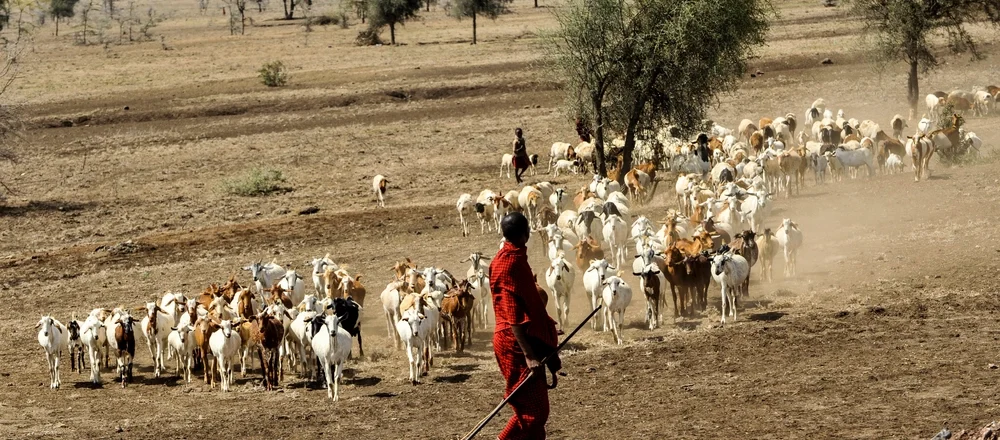
Featured photograph: Maasai pastoralists herding goats in northern Tanzania, November 2013. Eric Dietrich / U.S. Navy, public domain. Illustrative archival photograph.