Jewelers CAN Trace Their Gold

Gold from Conflict-Free Mines in Congo Sold in US Jewelry Stores

By Juliane Kippenberg Associate Director, Children’s Rights Division, Jo Becker Advocacy Director, Children’s Rights Division

People in the United States will now be able to buy jewelry made with “conflict-free” gold from Zales and Kay Jewelers, two of the nation’s largest jewelry retailers.

The RAGS (Responsible Artisanal Gold Solutions) Forum announced last week the first “conflict-free” supply chain from an artisanal mine in the Democratic Republic of Congo to US retailers. This is good news – even though the amount of gold coming this way may be small.

In the past, many mainstream jewelers have understandably avoided “conflict minerals” such as gold from the Congo because of its links with violent and abusive armed groups and elements of Congolese security forces. The RAGS initiative, supported by USAID and civil society groups, worked with a local mine in South Kivu to improve working conditions, address human rights issues, and ensure full traceability from the mine site to the retailer. The gold has been manufactured into earrings now sold by Signet Jewelers, the world’s largest diamond retailer and the parent company of Zales and Kay Jewelers.

Read the full story

Reflections from the first international gathering on artisanal and small-scale mining

By Terah U. DeJong, Country Director, Côte d’Ivoire, Property Rights and Artisanal Diamond Development (PRADD II) Project

What is formalization in the artisanal and small-scale mining (ASM) sector? Reflections from the first international gathering dedicated to ASM in over a decade.

Formalization was a key buzzword at the International Conference on Artisanal and Small-Scale Mining and Quarrying (ASM18) held Sep 11-13 in Livingstone, Zambia. But what does formalization really mean in practice?

In my remarks at the event, I tried to unpack the concept based on my experience running USAID’s Property Rights and Artisanal Diamond Development (PRADD II) project in Côte d’Ivoire over the last five years, offering the following definition:

ASM formalization is the process of collaborative rule-setting and rule enforcement across supply chain actors, governments and communities with the aim of enabling ASM to contribute to local and national peace and prosperity, both now and for future generations.

By thinking of formalization in this way, we avoid just counting licenses and miner cards, and instead look at the degree to which governments, communities, miners and buyers have a productive and collaborative relationship. This relationship must be built on a shared understanding of the legitimate role of ASM in national and local economies, and a shared strategy to regulate and promote it.

Here are 5 ways in which PRADD II tries to apply this in practice.

  1. First, we emphasize the need to develop a deep and accurate understanding of ASM supply chains – who are the miners, who are the buyers, what are differences between them, what power dynamics mark their relationships, how are they socially embedded, who are their leaders… the list goes on. Learning must be ongoing, analytical and participatory.
  2. Second, PRADD II sees collaborative and multi-level policy-making as key. By this we mean an inclusive process to define the vision, objectives and systems that will manage and promote ASM. The resulting policy must reflect the compromises and consensus about tough issues like licensing categories and revenue-sharing. Then, and only then, can resulting laws and regulations be realistic.
  3. Third, PRADD II fosters structured dialogue between all actors to build trust, share information and make necessary adjustments to rules and their enforcement. It is surprising how often actors do not talk to each other and, thus, creating spaces for dialogue is key. And it’s important to recognize that it isn’t just governments who make the rules – communities make rules, buyer networks make rules, diggers make rules. Dialogue is the only way to ensure that these rules are in harmony and effectively implemented.
  4. Fourth, PRADD II works on awareness-raising and norm-setting, so that actors have shared knowledge and a shared understanding when it comes to ASM and common challenges. Increased knowledge is beneficial not just to help actors comply with the laws, but also because it creates a shared “language.” For example, when miners and buyers both understand the principles of diamond valuation, conflict is reduced.
  5. Fifth, PRADD II focuses on incentives – both positive and negative – to make sure everyone remains involved and committed. In Côte d’Ivoire, communities have a big incentive – a 12% tax that they take on the value of the first sale – to record production and ensure the diamonds pass through the mining cooperatives. PRADD II introduced technical assistance measures as incentives to miners. Of course, incentives must be carrots and sticks. The project encouraged authorities and communities to enforce their rules, fairly and equitably, as without consequences there is little reason to comply.

ASM18 was a great forum to share PRADD II experiences and learn from the hundreds of others working on the “formalization agenda”. With a clear vision and clear strategies to achieve formalization, the decade ahead bodes well for ASM, increasing the chances that it will truly live up to its development potential.

Click here to watch the videos for the PRADD II Program

Peace of Land

Like millions of Colombians, 38-year-old Enrique and his mother Eloisa were forced to flee their farm during the country’s 50-year civil war. The Victims and Land Restitution Law, a spearhead of broader land policies contained in the peace accord signed in late 2016 between the Colombian Government and the Revolutionary Armed Forces of Colombia (FARC), calls for the restitution of land to displaced victims of conflict.

Today, USAID supports the Colombian Government in resolving these land issues, which were at the heart of the conflict. For farmers like Enrique and Eloisa, that means being able to return to the land they lost and gaining a legal land title.

With their land returned and their property rights secure, Enrique and Eloisa are now investing in their future — expanding and diversifying crop production, learning modern farming techniques to increase harvests, and selling cash crops — with USAID’s support.

For more stories of transformation, visit: https://stories.usaid.gov.
USAID is also helping to economically empower returning citizens, assisting these communities to invest and grow legal crops, boosting incomes and creating greater self-reliance. This video tells the story of a mother and son who return to their home in Balsillas, Tolima, the birthplace of the FARC, after being forced to flee during the conflict, and build a more economically secure future for themselves, their family and their country.

A Land Behind Time

Since making peace with the FARC in 2016, the Colombian government has pushed rural reform to the forefront of national dialogue by creating a new land administration authority, the National Land Agency, mandated to spearhead land formalization campaigns. Six out of every 10 parcels in Colombia are informally owned. The USAID-funded Ovejas pilot represents one of the government’s highest hopes for achieving the formalization targets set out in the Havana peace accord, which call for formalization of seven million hectares of land over the next decade.

The Ovejas pilot alleviates major time and cost burdens that prevent most rural landholders from seeking a valid title. It also gives the government an efficient tool to organize rural areas and demonstrate to the wider population that the government is behind them. The price tag: an estimated US$1.5 million, or 50% of what it would cost the government to do the same work using the old model. When the pilot wraps up later this year, it will be the government’s job to replicate it in other municipalities.

How can land investments be both sustainable and equitable?

The following is an excerpt from an article posted on Thomson Reuters Foundation PLACE. Follow the link for the full article. 

By Lukasz Czerwinski, Land Tenure Specialist, Landesa

There is no question that land is a fundamental asset for food and beverage companies growing and buying agricultural commodities in Latin America, Africa and Southeast Asia. At the same time, investments in land can threaten the rights of local populations, creating significant risk for local communities and companies and investors alike.

Consider a hypothetical investment: a multinational company has leased 10,000 hectares of land and a production facility from the government to grow and process tea. As part of the agreement, the company committed to establishing an outgrower scheme by purchasing tea directly from smallholder farmers living in the surrounding villages and investing additional capital in equipment, technology and local infrastructure.

Read the full story

Facilitating land tenure security for women through economic empowerment

By Sabine Jiekak, Deputy country Director, Côte d’Ivoire, Property Rights and Artisanal Diamond Development Project (PRADD II)

In March 2018, a women’s association in Diarabana, a village in Northern Côte d’Ivoire, met with the village chief to contest his decision to allocate their farm land to a male cashew farmer. Though at first it seemed that the farmer would prevail based on local custom, the women’s association had a hidden advantage—a detailed ledger of all the economic activity related to the land under their stewardship. Records included numbers of seeds bought and planted, yield values, and impact. In one example, the funds generated by the land were used to pay medical fees for children at the community school. By sharing this ledger, the women’s association demonstrated how their farming had benefited the village. The data was indisputable, and the women successfully retained the land.

Handling over the cereal mills to women group in Tortiya – Meite Younissa, PRADD II

From its inception in 2014, PRADD II recognized the role gender inequality plays in conflict dynamics and economic challenges within diamond mining communities. These challenges stem from women’s lack of access and rights to productive land and finance, which contributes to their inability to invest in agriculture and mining related activities. The underlying question for project implementation was how to ensure that improving livelihoods of diamond mining communities result in improved economic conditions for both men and women.

PRADD II developed a “gender integration guide” emphasizing USAID’s objectives to (1) reduce gender disparities in accessing, controlling, and benefiting from resources; (2) increase women’s capacity to realize their rights and determine their life outcomes; and (3) influence decision-making in households, communities, and societies. The guide is a practical tool for promoting gender integration at every stage of the project and has been useful to monitor progress, identify new strategies, and evaluate PRADD II’s approach.

Under PRADD II, 22 women’s groups and their village leaders publicly signed agreements to grant the women’s groups access to land for agricultural purposes, engaging the village in the process of creating a sense of security for the women. With the added support of agricultural extension services and partner NGO’s, 1,600 women among the 22 associations were trained in farming techniques to increase incomes by shifting from subsistence to commercial farming. The women’s associations that showed great promise for self-reliance developed a rental pool for various equipment granted by USAID, including farming tools and solar water pumps. This equipment served as an additional source of income for the women and a service to the community. Women in the Ténindieri Women’s Association, for example, earned as much as $780 in revenue over a year through their rental pool.

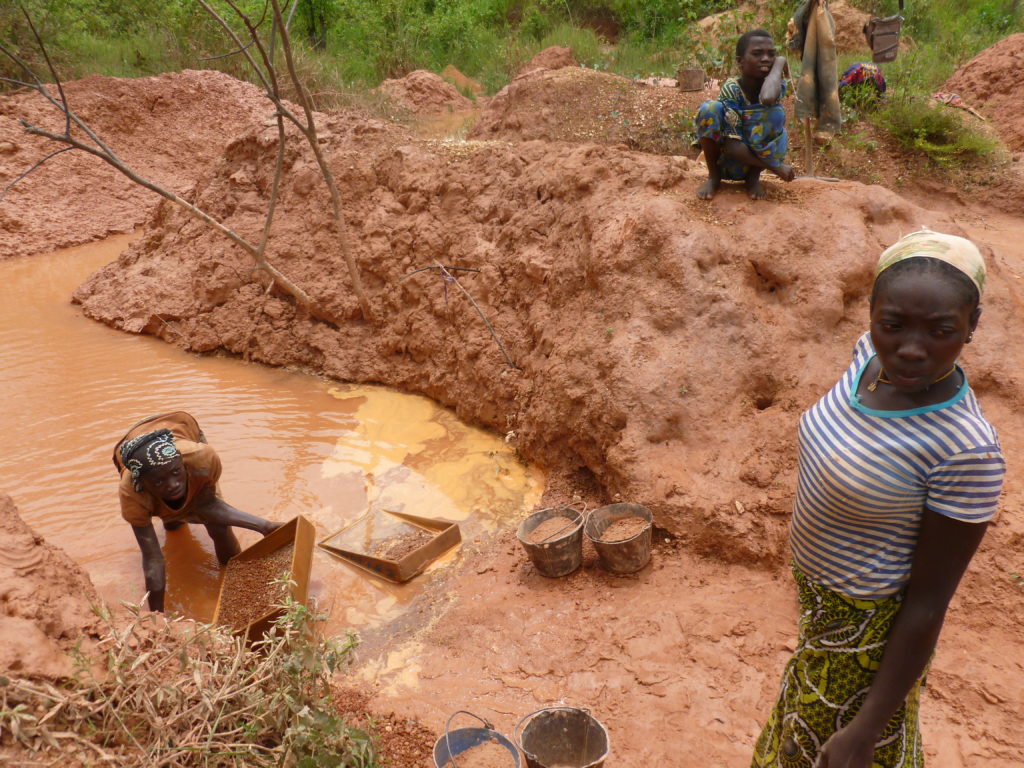
Women Washing gravel in Tortiya - Sabine Jiekak

As Mata Coulibaly, the secretary of the Ténindieri Women’s Association, put it, “We used our new skills to improve our production and harvest during the last year. We sell maize, cassava and various vegetables like cucumber, cabbage, onions, and eggplants. With that money we have been able to reinvest in creating a cashew farm. We also use the money to buy things for ourselves, without going to our husbands for everything. We didn’t think that this was possible at all three years ago.”

As a result of these empowering changes in Côte d’Ivoire, women’s associations are gaining increased recognition for their contributions to their communities. This is changing the cultural perceptions of women’s roles and relations with community leaders and decision makers, providing women with opportunities to achieve greater status and respect in their communities. PRADD II’s experiences of the Diarabana and Tenindieri communities show that customary perceptions of women’s access to land can evolve and adapt, and ultimately benefit community interests as a whole.

PLACE: Can land rights for farmers save Ghana’s cocoa sector?

The following is an excerpt from an article posted on Thomson Reuters Foundation PLACE. Follow the link for the full article. 

By Nellie Peyton

NYAME NNAE, Ghana – Since Emmanuel Agyekum took over a decade ago as chief of Nyame Nnae, a poor cocoa farming village in western Ghana, people’s incomes have fallen and his worries have increased.

The cocoa trees planted behind wood-plank houses are getting old, and produce only a fraction of what they used to.

Last year, money ran out between harvest seasons and people struggled to buy food.

“The cocoa trees are dying and it is a worry to us all,” said Agyekum, sitting in a plastic chair in a dirt yard.

Cocoa yields are declining across Ghana, the world’s second-biggest producer after neighbouring Ivory Coast, where about 800,000 family farmers supply cocoa beans to chocolate companies such as Hershey’s and Nestle, according to the government.

In Nyame Nnae, The Hershey Company, cocoa supplier ECOM and the U.S. Agency for International Development (USAID) tested a possible solution.

Read the full story

Pastoral Communities Receive 2.7 Million Hectares of Land in Ethiopia

By Zemen Haddis, PhD, Senior Agricultural Policy Advisor, USAID/Ethiopia

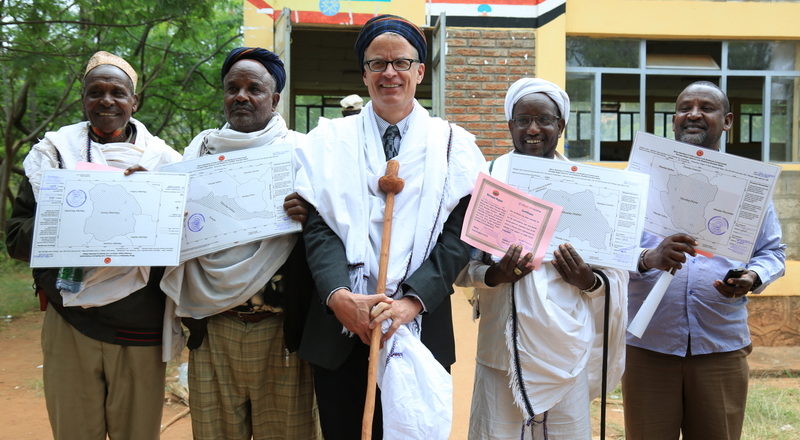
After five years of hard work, Borena pastoralists received the first ever communal land holding titles in the history of Ethiopia. In total, three communities covering over 40,000 households (over 255,000 people) now have the title to collectively use 2.7 million hectares of land – an area larger than the country of Rwanda.

Disputes over land access and grazing rights have long been a source of conflict between farmers and herders in Ethiopia. Since 2013, USAID has worked with pastoral herding communities to certify their rights to rangelands, building on previous efforts that certified farmers’ land use rights. The clarification and documentation of land rights for both farmers and herders is helping reduce tensions and create incentives for investments and economic growth.

On July 7, HE Dr. Kaba Urgessa, Ethiopian State Minister of the Federal Ministry of Agriculture and Livestock Resources, and Dr. Stephen Morin, Acting Deputy Mission Director of USAID Ethiopia handed the certificates over to community leaders in the town of Yabello in the Borena Zone. “We are proud to support the strengthening of land administration systems in general and communal land management in particular. I would like to congratulate and thank Borena communities and officials, as well as the Oromia Regional Government, and the Federal Ministry of Agriculture and Livestock Resources for their partnership in making this historic event possible,” said Dr. Morin.

Land Rights and the Journey to Self-Reliance

The demarcation and certification of grazing land helps pastoralists manage their land with a greater sense of ownership, strengthening their incentives to make investments and manage resources sustainably over the long-term. These reforms are an important step in Ethiopia’s journey to self reliance – improving governance at the local level by providing communities with decision-making rights over their most valuable natural assets: land, water, and other natural resources.

The certificates officially recognize traditional community landholdings that embrace dry and wet season grazing areas, livestock movement corridors, water points, and other natural resources. They also empower customary institutions, through the development of  written bylaws to govern land management and ensure that all members of the community benefit from the strengthened tenure security. The bylaws recognize neighboring communities’ access to grazing areas, water points and travel corridors per traditional customs – an important step in mitigating tensions over land access and use.

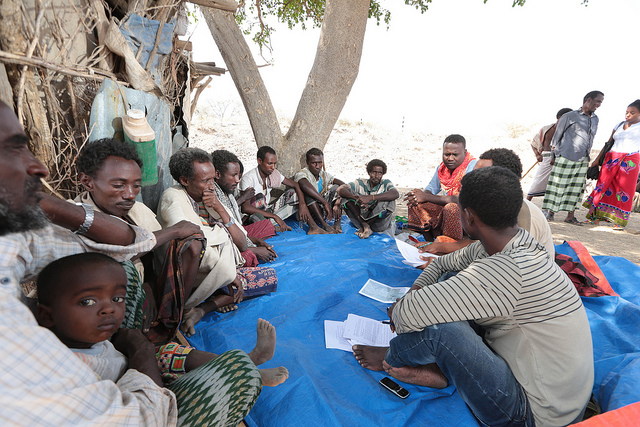
Pastoral communities in Afar, Ethiopia, where USAID piloted the communal land certification program that has been scaled in Borena. Credit: Antonio Fiorente.

The successful recognition of community land rights was the product of the collaborative efforts of USAID, the Government of Ethiopia, and local communities. Communal land certification is an entirely new process for the country. Rigorous studies were conducted and discussions and negotiations between government officials and communities were held to collect inputs in order to make evidence-based decisions. USAID’s communal land certification pilot projects in the Oromia and Afar regions helped to test, refine and expand methods for land certification to the wider pastoral communities. USAID has encouraged Ethiopian government officials to expand the best practices derived from these pilots to all pastoral and agro-pastoral areas in the country.

Laying the Groundwork

The issue of land tenure and property rights is a cornerstone for the success of Ethiopia’s growth and transformation plan. It is linked to peace and governance, agricultural and livestock productivity, food security, and conservation of natural resources. It also plays a key role in economic growth opportunities and prosperity for communities like Borena. As such, USAID has been partnering with the Government of Ethiopia on land tenure and property issues for years to lay the groundwork for this historic achievement.

Pastoral communities in Afar, Ethiopia, where USAID piloted the communal land certification program that has been scaled in Borena. Credit: Antonio Fiorente.

Starting in 2013, USAID’s Land Administration to Nurture Development (LAND) project introduced innovative land policy and land administration activities, including supporting communal land demarcation and certification. Embarking on such a new and complex task was not easy but USAID was encouraged by the needs of pastoralists and the commitment of government officials to address various challenges and undertake collaborative solutions.

Simultaneously, USAID’s Pastoralists Resilience Improvement and Market Expansion (PRIME) project and its earlier iterations supported Borena pastoralists to strengthen natural resource management and improve feed and water availability for their livestock through strengthened roles of customary institutions. There were also efforts made to map natural resources, including wet and dry grazing areas, and develop participatory management plan. The LAND and PRIME projects worked together through a coordinated approach to achieve sustainable land management.

Rights and Responsibilities

Communal land administration issues still present challenges in many parts of Ethiopia and Africa. The Borena communal land demarcation will serve as a model to showcase the possibilities of improving tenure security by introducing community-managed land administration systems. With strengthened implementation of a communal land governance system, Borena will be a place where representatives from other Ethiopian communities and even other countries from around the globe will visit to learn best practices.

It is a new day for Borena pastoralists, marking a new chapter that will allow them to exercise greater control over their land and resources. Leaders of Borena communities are now shouldering an additional responsibility to demonstrate effective and accountable land administration services to all community members. We believe that the newly reorganized land governance entities will serve all members of the community fairly, regardless of their gender, age, or ethnicity. Through greater accountability and community participation, the new communal land governance system should embrace and ensure that the poor and other disadvantaged groups and individuals will benefit.

Land Matters Media Scan – 29 June 2018

Here are the recent land tenure and resource management media items:

USAID

  1. Risky business: Tenure Issues Main Deterrent for Investment – mentions the Investor Survey On Land Rights 2018 (6/19/18)
    Source: CIFOR
  2. Are Medium-Scale Farms Driving Agricultural Transformation in Africa? (6/21/18)
    Source: Agrilinks
  3. Designing the LandPKS App: Guidelines for Developing a Global App (6/20/18)
    Source: Land-Potential Knowledge System
  4. Evaluation of the Community Land Protection Program in Liberia (6/20/18)
    Source: USAID CLPP Liberia
  5. USAID Land Champion: Stephen Brooks (6/21/18)
    Source: USAID LandLinks
  6. Farmers Need to Start Seeing their Farms as a Business (6/18/18)
    Source: USAID LRDP Colombia

Upcoming Events

  1. The Liberia Land Rights Act (7/9-30/18)
    Source: Land Portal Foundation

Reports and Publications

  1. How Land Reform Can Help Reduce Terrorism in Pakistan (6/21/18)
    Source: The Diplomat
    Related report: Punjab Land Records Management and Information Systems Project
  2. IMF Releases Paper on Foreign Direct Investment in Farm Land (6/23/18)
    Source: Devdiscourse
    Related report: The Globalization of Farmland: Theory and Empirical Evidence
  3. “Gender, Land and Mining in Pastoralist Tanzania” – New Report from WOLTS Team (6/20/18)
    Source: Land Portal Foundation
    Related report: Gender, Land and Mining in Pastoralist Tanzania

Global

  1. How to Take Forest Landscape Restoration to the Next Level (6/18/18)
    Source: CIFOR
  2. Grassroots Participation is the Key to Closing the Data and Gender Gaps (6/11/18)
    Source: Women Deliver

Indigenous Peoples

  1. 5 Ways Indigenous Groups are Fighting Back Against Land Seizures (6/20/18)
    Source: World Resources Institute
  2. Chile: ‘We Burned the Forest’: The Indigenous Chileans Fighting Loggers with Arson (6/14/18)
    Source: The Guardian
  3. Guyana: Protecting Forests by Protecting Rights (6/27/18)
    Source: Rainforest Foundation
  4. Honduras: Indigenous Garifuna Use Radio to Fight for their Land (6/25/18)
    Source: Mongabay
  5. Peru: Indigenous People in the Amazon are Using Drones to Save their Land (6/7/18)
    Source: Fast Company
  6. Thailand: Verdict a Blow to Customary Land Rights (6/16/18)
    Source: Bangkok Post

Africa

  1. Kenya: State Launches New Policy to Tackle Land Woes (6/13/18)
    Source: Daily Nation
  2. Women Call on Liberia’s Weah to Keep His Promise of Equal Land Rights (6/20/18)
    Source: Thomson Reuters Foundation
  3. South Africa: Bungled Land Claims have Created Tinderboxes in SA’s Rural Areas (6/15/18)
    Source: Business Day
  4. Uganda: Greater Rights for Women in Uganda Lead to Large-scale Reforestation Initiative (6/18/18)
    Source: GLF
  5. Uganda: A Land Eviction Portal in Uganda has been Launched to Track and Document Land Evictions (6/20/18)
    Source: Witness Radio

The Americas

  1. ‘Narco-deforestation’ May Boost Disaster Risks in Central America (6/20/18)
    Source: Thomson Reuters Foundation
  2. Brazil: Competing Claims Complicate Land Ownership for Brazil’s Slave Descendants (6/20/18)
    Source: Thomson Reuters Foundation

Asia

  1. India: Odisha is Breaking the Patriarchy, One Deed at a Time (6/23/18)
    Source: Livemint
  2. India: Caste-based Killing in India Over Land Prompts Call for Government Action (6/25/18)
    Source: Thomson Reuters Foundation
  3. Indonesia: How Corrupt Elections Fuel the Sell-off of Indonesia’s Natural Resources (6/7/18)
    Source: Mongabay
  4. Philippines: Community Takes Lead to Rebuild Philippine City after Siege (6/22/18)
    Source: Thomson Reuters Foundation

USAID Land Champion: Stephen Brooks

Tell us about yourself.

I am a Land Tenure and Resource Governance Advisor in the Land and Urban Office in USAID’s Bureau for Economic Growth, Education, and Environment (E3). Within the Land and Urban Office, I advise and manage activities that touch upon natural resource governance issues associated with a range of topics, including coastal, forest, and marine tenure, community-resource mapping and customary rights. I also serve as the Land and Urban Office’s point of contact on land governance in Asia as well as urban and water tenure issues globally.

Why is land governance important to USAID?

The consideration of land and resource governance is essential to addressing development issues globally. Understanding the complex relations between people, communities, institutions and the resources they rely on is central to responsible and transformative development. In the absence of strong resource governance systems and secure property rights, development efforts too often fail to produce lasting benefits that advance partner countries’ journeys to self-reliance.

How is land and resource tenure connected to forest and marine issues?

In the development context, the focus of tenure work has largely been associated with agriculture and rural development. Now, we are increasingly seeing the importance of applying a tenure lens to issues associated with a range of resources beyond land, including forests and marine and coastal resources. For example, in some countries, recognizing a farmer’s right to land does not necessarily confer rights over the trees growing on it (tree tenure), including trees associated with important tree crops. When the principles of tenure are taken offshore and applied to coastal and marine resources, they fit very nicely within ongoing discussions on how to improve coastal and marine-based livelihoods and the ecosystems they depend on. Specifically, using a tenure-responsive approach within coastal communities offers a framework to understand the complex layers of use rights that overlap each other in the coastal interface.

How is USAID working to transform communities through coastal resource management and mangrove forest restoration approaches that address tenure? What are some of the challenges?

Due to the dearth of information on coastal and marine tenure, USAID has worked with partners to develop a better understanding of resource governance constraints to improving coastal and marine-based livelihoods. Coastal communities are some of the most economically depressed and vulnerable in the world. Their incomes are almost entirely reliant on near- and offshore resources. With increased populations and coastlines facing greater pressures and threats, there is an increased need to understand the social and biophysical dynamics of these coastal systems. To date, the majority of research on coastal forest management focused on biophysical variables, with little consideration of the role of tenure. In partnership with the Center for International Forestry Research (CIFOR), USAID conducted a global assessment of mangrove governance, with specific deep dives in Indonesia and Tanzania. The findings from the effort provided important guidance on specific tenure-related trends and considerations to inform future programming. For example, the findings highlighted the crucial role women play in coastal resource management and their lack of access to important economic development incentive programming. The work also highlighted the important role participatory planning processes serve in informing decentralized co-governance and natural resource management arrangements.

What are some of your biggest accomplishments in the land sector?

I consider the recently completed Tenure and Global Climate Change program to represent a significant achievement. I was lucky enough to be able to actively design, manage and guide many of the sub-tasks within Zambia, Indonesia, Vietnam, Myanmar, Ghana, Nepal, Bangladesh and the Philippines. Through this experience we improved global and Agency understanding of a wide range of issues: customary and community tenure over land and resources; the role of tenure in REDD+ programming, fisheries and coastal forest management; gender, resource rights and global climate change; and linkages between strengthened resource rights and deforestation-free commodity supply chains. Additionally, the program’s contribution to the passing and recognition of the National Land Use Policy in Myanmar was a particularly exciting milestone for our work.

Final thoughts?

Over the past 30 years, USAID has served as a leader in elevating the importance of land and resource governance as a foundational consideration for successful development. And, although there are many challenges related to land, we continue to learn more every day about the necessary enabling conditions for appropriate and successful land and resource governance activities. I am truly grateful to be a part of this work and contributing to this legacy.