
Facilitating land tenure security for women through economic empowerment

By Sabine Jiekak, Deputy country Director, Côte d’Ivoire, Property Rights and Artisanal Diamond Development Project (PRADD II)

In March 2018, a women’s association in Diarabana, a village in Northern Côte d’Ivoire, met with the village chief to contest his decision to allocate their farm land to a male cashew farmer. Though at first it seemed that the farmer would prevail based on local custom, the women’s association had a hidden advantage—a detailed ledger of all the economic activity related to the land under their stewardship. Records included numbers of seeds bought and planted, yield values, and impact. In one example, the funds generated by the land were used to pay medical fees for children at the community school. By sharing this ledger, the women’s association demonstrated how their farming had benefited the village. The data was indisputable, and the women successfully retained the land.

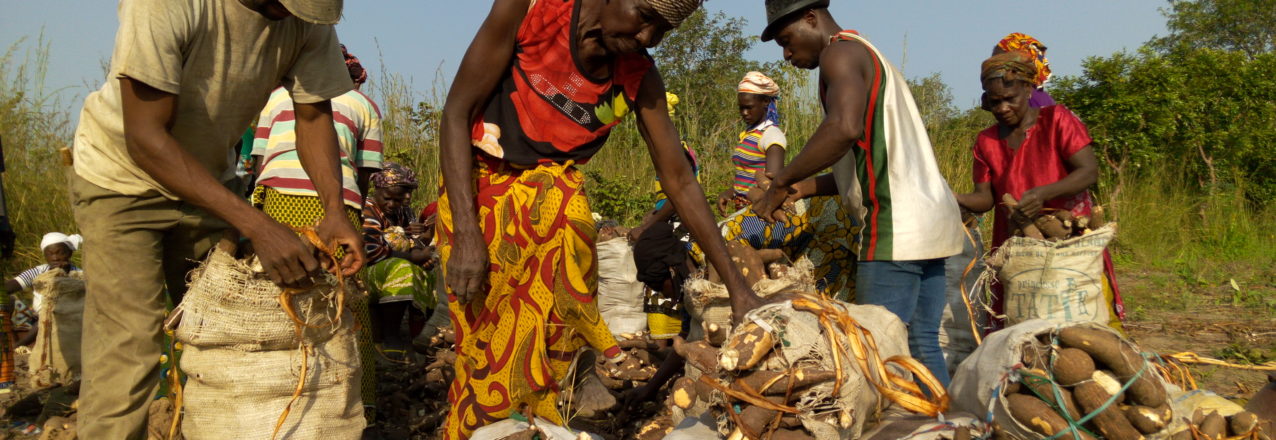
Handling over the cereal mills to women group in Tortiya – Meite Younissa, PRADD II

From its inception in 2014, PRADD II recognized the role gender inequality plays in conflict dynamics and economic challenges within diamond mining communities. These challenges stem from women’s lack of access and rights to productive land and finance, which contributes to their inability to invest in agriculture and mining related activities. The underlying question for project implementation was how to ensure that improving livelihoods of diamond mining communities result in improved economic conditions for both men and women.

PRADD II developed a “gender integration guide” emphasizing USAID’s objectives to (1) reduce gender disparities in accessing, controlling, and benefiting from resources; (2) increase women’s capacity to realize their rights and determine their life outcomes; and (3) influence decision-making in households, communities, and societies. The guide is a practical tool for promoting gender integration at every stage of the project and has been useful to monitor progress, identify new strategies, and evaluate PRADD II’s approach.

Under PRADD II, 22 women’s groups and their village leaders publicly signed agreements to grant the women’s groups access to land for agricultural purposes, engaging the village in the process of creating a sense of security for the women. With the added support of agricultural extension services and partner NGO’s, 1,600 women among the 22 associations were trained in farming techniques to increase incomes by shifting from subsistence to commercial farming. The women’s associations that showed great promise for self-reliance developed a rental pool for various equipment granted by USAID, including farming tools and solar water pumps. This equipment served as an additional source of income for the women and a service to the community. Women in the Ténindieri Women’s Association, for example, earned as much as $780 in revenue over a year through their rental pool.
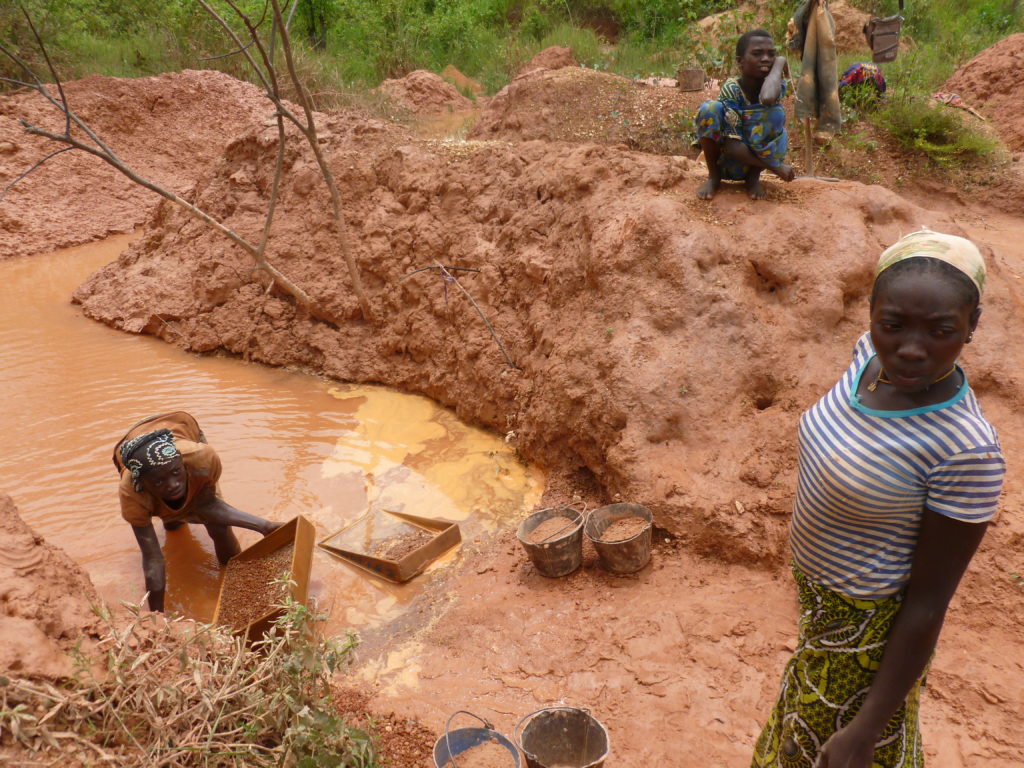
Women Washing gravel in Tortiya - Sabine Jiekak

As Mata Coulibaly, the secretary of the Ténindieri Women’s Association, put it, “We used our new skills to improve our production and harvest during the last year. We sell maize, cassava and various vegetables like cucumber, cabbage, onions, and eggplants. With that money we have been able to reinvest in creating a cashew farm. We also use the money to buy things for ourselves, without going to our husbands for everything. We didn’t think that this was possible at all three years ago.”

As a result of these empowering changes in Côte d’Ivoire, women’s associations are gaining increased recognition for their contributions to their communities. This is changing the cultural perceptions of women’s roles and relations with community leaders and decision makers, providing women with opportunities to achieve greater status and respect in their communities. PRADD II’s experiences of the Diarabana and Tenindieri communities show that customary perceptions of women’s access to land can evolve and adapt, and ultimately benefit community interests as a whole.

PLACE: Can land rights for farmers save Ghana’s cocoa sector?

The following is an excerpt from an article posted on Thomson Reuters Foundation PLACE. Follow the link for the full article. 

By Nellie Peyton

NYAME NNAE, Ghana – Since Emmanuel Agyekum took over a decade ago as chief of Nyame Nnae, a poor cocoa farming village in western Ghana, people’s incomes have fallen and his worries have increased.

The cocoa trees planted behind wood-plank houses are getting old, and produce only a fraction of what they used to.

Last year, money ran out between harvest seasons and people struggled to buy food.

“The cocoa trees are dying and it is a worry to us all,” said Agyekum, sitting in a plastic chair in a dirt yard.

Cocoa yields are declining across Ghana, the world’s second-biggest producer after neighbouring Ivory Coast, where about 800,000 family farmers supply cocoa beans to chocolate companies such as Hershey’s and Nestle, according to the government.

In Nyame Nnae, The Hershey Company, cocoa supplier ECOM and the U.S. Agency for International Development (USAID) tested a possible solution.

Read the full story

Pastoral Communities Receive 2.7 Million Hectares of Land in Ethiopia

By Zemen Haddis, PhD, Senior Agricultural Policy Advisor, USAID/Ethiopia

After five years of hard work, Borena pastoralists received the first ever communal land holding titles in the history of Ethiopia. In total, three communities covering over 40,000 households (over 255,000 people) now have the title to collectively use 2.7 million hectares of land – an area larger than the country of Rwanda.

Disputes over land access and grazing rights have long been a source of conflict between farmers and herders in Ethiopia. Since 2013, USAID has worked with pastoral herding communities to certify their rights to rangelands, building on previous efforts that certified farmers’ land use rights. The clarification and documentation of land rights for both farmers and herders is helping reduce tensions and create incentives for investments and economic growth.

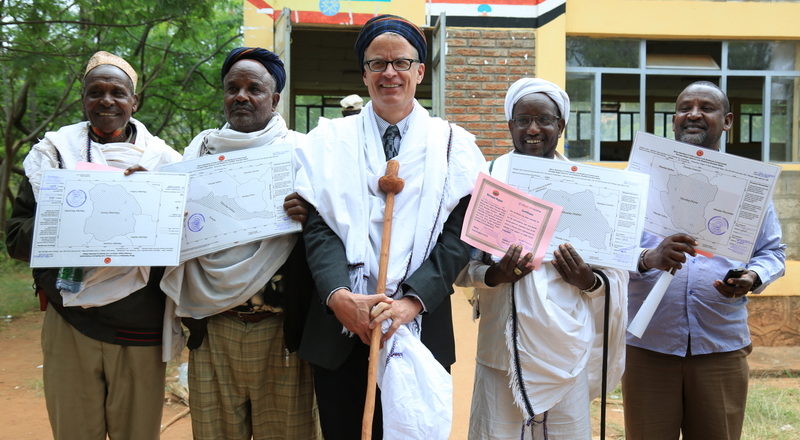
On July 7, HE Dr. Kaba Urgessa, Ethiopian State Minister of the Federal Ministry of Agriculture and Livestock Resources, and Dr. Stephen Morin, Acting Deputy Mission Director of USAID Ethiopia handed the certificates over to community leaders in the town of Yabello in the Borena Zone. “We are proud to support the strengthening of land administration systems in general and communal land management in particular. I would like to congratulate and thank Borena communities and officials, as well as the Oromia Regional Government, and the Federal Ministry of Agriculture and Livestock Resources for their partnership in making this historic event possible,” said Dr. Morin.

Land Rights and the Journey to Self-Reliance

The demarcation and certification of grazing land helps pastoralists manage their land with a greater sense of ownership, strengthening their incentives to make investments and manage resources sustainably over the long-term. These reforms are an important step in Ethiopia’s journey to self reliance – improving governance at the local level by providing communities with decision-making rights over their most valuable natural assets: land, water, and other natural resources.

The certificates officially recognize traditional community landholdings that embrace dry and wet season grazing areas, livestock movement corridors, water points, and other natural resources. They also empower customary institutions, through the development of  written bylaws to govern land management and ensure that all members of the community benefit from the strengthened tenure security. The bylaws recognize neighboring communities’ access to grazing areas, water points and travel corridors per traditional customs – an important step in mitigating tensions over land access and use.

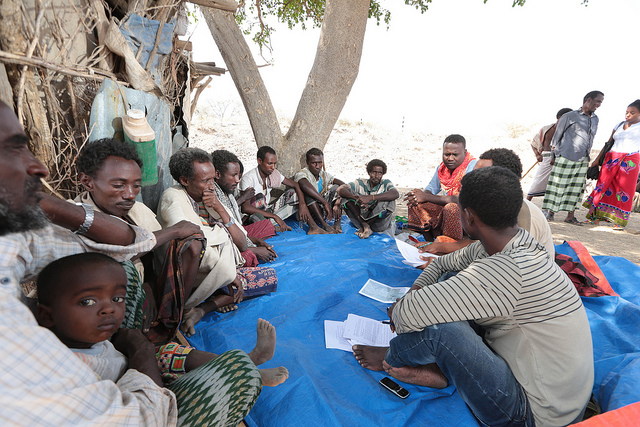
Pastoral communities in Afar, Ethiopia, where USAID piloted the communal land certification program that has been scaled in Borena. Credit: Antonio Fiorente.

The successful recognition of community land rights was the product of the collaborative efforts of USAID, the Government of Ethiopia, and local communities. Communal land certification is an entirely new process for the country. Rigorous studies were conducted and discussions and negotiations between government officials and communities were held to collect inputs in order to make evidence-based decisions. USAID’s communal land certification pilot projects in the Oromia and Afar regions helped to test, refine and expand methods for land certification to the wider pastoral communities. USAID has encouraged Ethiopian government officials to expand the best practices derived from these pilots to all pastoral and agro-pastoral areas in the country.

Laying the Groundwork

The issue of land tenure and property rights is a cornerstone for the success of Ethiopia’s growth and transformation plan. It is linked to peace and governance, agricultural and livestock productivity, food security, and conservation of natural resources. It also plays a key role in economic growth opportunities and prosperity for communities like Borena. As such, USAID has been partnering with the Government of Ethiopia on land tenure and property issues for years to lay the groundwork for this historic achievement.

Pastoral communities in Afar, Ethiopia, where USAID piloted the communal land certification program that has been scaled in Borena. Credit: Antonio Fiorente.

Starting in 2013, USAID’s Land Administration to Nurture Development (LAND) project introduced innovative land policy and land administration activities, including supporting communal land demarcation and certification. Embarking on such a new and complex task was not easy but USAID was encouraged by the needs of pastoralists and the commitment of government officials to address various challenges and undertake collaborative solutions.

Simultaneously, USAID’s Pastoralists Resilience Improvement and Market Expansion (PRIME) project and its earlier iterations supported Borena pastoralists to strengthen natural resource management and improve feed and water availability for their livestock through strengthened roles of customary institutions. There were also efforts made to map natural resources, including wet and dry grazing areas, and develop participatory management plan. The LAND and PRIME projects worked together through a coordinated approach to achieve sustainable land management.

Rights and Responsibilities

Communal land administration issues still present challenges in many parts of Ethiopia and Africa. The Borena communal land demarcation will serve as a model to showcase the possibilities of improving tenure security by introducing community-managed land administration systems. With strengthened implementation of a communal land governance system, Borena will be a place where representatives from other Ethiopian communities and even other countries from around the globe will visit to learn best practices.

It is a new day for Borena pastoralists, marking a new chapter that will allow them to exercise greater control over their land and resources. Leaders of Borena communities are now shouldering an additional responsibility to demonstrate effective and accountable land administration services to all community members. We believe that the newly reorganized land governance entities will serve all members of the community fairly, regardless of their gender, age, or ethnicity. Through greater accountability and community participation, the new communal land governance system should embrace and ensure that the poor and other disadvantaged groups and individuals will benefit.