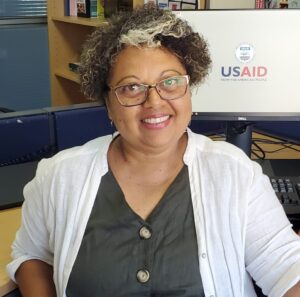
Women’s Land Rights Champion: Paula Pimentel

This series features Women’s Land Rights Champions within USAID to learn more about their work. This month’s Champion is Paula Pimentel of USAID/Mozambique.

Tell us about yourself

I am a senior agricultural specialist at USAID/Mozambique with more than 30 years of experience in agricultural development, including land rights and resource governance. I have an MSc in Animal Production from the University of Pretoria and an Honors degree in Veterinary Medicine from Eduardo Mondlane University. 

Why are women’s land rights and resource governance important to your work? And to other USAID development work?

In Mozambique and other African countries, land and natural resources are the most valuable economic asset for rural women. Being able to access and control land-related assets is critical for women’s self-reliance and a pathway to economic growth. Strengthening women’s rights to land, and women’s ability to influence resource governance, leads to better agricultural productivity and resource management. This, in turn, contributes to many USAID development goals like improved food security and climate change mitigation and adaptation.

What are some of the biggest challenges in helping women secure land rights and what are some things being done to overcome them?

A main challenge is a lack of gender equality in land legislation or weak implementation of laws and policies. But even when the legal and policy framework provides for women’s land rights, women face many other challenges like lack of knowledge about their rights and land registration processes, unequal inheritance practices, biased dispute resolution mechanisms, restrictive social norms, and vulnerability to gender-based violence. USAID  supports consultations and data analysis to improve inclusiveness in the land policy reform process in Mozambique. We are supporting programs that work directly with women, communities, and gender champions to increase women’s access to information and participation in community land governance and to shift restrictive social norms. USAID is also partnering with the private sector so that rural women in Mozambique can have secure land rights and turn these rights into concrete opportunities for economic security.

What are some of USAID’s successes in the area of women’s land rights?

USAID is partnering with one of Mozambique’s largest agroforestry companies to develop innovative business models that benefit companies and smallholder farmers. Over the past year, around 4,000 people’s land access and land use rights were formalized through the program, enabling those individuals to  engage in economically viable use of the land. Over 67 percent of those farmers are women, who are now able to access and control sustainable livelihoods.

Anything else you want to share?

Land documentation and inclusive community land governance are transformative for smallholder farmers and communities as a whole, decreasing conflict and increasing investment and overall economic growth in rural areas. The USAID Mozambique Mission is keen to pursue a pathway that will continue to support and improve the country’s land policy environment, aiming at a more gender equitable and prosperous use of land by Mozambican women. 

I have personally learned a lot by working with the USAID-funded ILRG Activity and I thank Thais Silveira Bessa, the activity’s Gender Specialist, for sharing  key field assessments with a strong gender lens on women’s land rights in  Mozambican rural communities.

Effective Knowledge Management Practices in Land Programs

By Neil Sorensen, Wytske Chamberlain – van der Werf


Knowledge management is seen as a crucial element to ensure the success of land governance programs. LAND-at-scale, a land governance support program for developing countries supported by RVO (Netherlands Enterprise Agency), has taken an integrated approach to knowledge management since its inception. We talked to experts in the field to hear first-hand what they have learned from their experiences. They underscored the importance of knowledge management for understanding monitoring & evaluation so that it can inform the effective adaptation of programs and benefits from peer learning in South-South networks. Their lessons, which we summarize in this blog, validate the LAND-at-scale approach and are valuable to the wider land governance community in setting up future programs.


Three fundamental components of the knowledge management program within LAND-at-scale are monitoring & evaluation, adaptive programming, and South-South exchange. Monitoring & evaluation improves the management of program outputs, outcomes, and impact through a continuous assessment of programs. It can inform the need for adaptive programming, which means being ready and willing to respond to changes in the political, social, and operational environment and adjusting programmatic actions accordingly. South-South exchange generally refers to technical cooperation among program partners in developing countries to share best practices and overcome shared challenges. 


As the LAND-at-scale program gets fully underway in 2022, and in order to contribute to effective knowledge management practices of LAND-at-scale program partners, we interviewed a range of experts on these subjects to get their insights.


We asked Anna Locke, the Principal Research Fellow for sustainable natural resources at ODI, whether knowledge management played a systematic role in the Land: Enhancing Governance for Economic Development (LEGEND) program, which was a £38mn program of the UK’s Foreign, Commonwealth and Development Office (FCDO) that ran from May 2015 to March 2021. Anna served as one of the principal knowledge managers for this program. 


She said that knowledge management was absolutely key for the LEGEND program, underlining the importance that it be done systematically in order to reflect on the knowledge being gathered to identify the most important questions that need to be asked to tailor project interventions. 


“We pressed pause about halfway through the project. In the first part of the project, efforts on knowledge management had been about generating a lot of new evidence. Then we felt that we needed to pivot to be able to use and apply that evidence more concretely and systematically to reach a wider set of audiences and to make sure that the evidence was relevant for those debates, and this was done in close partnership with the UK government, which was very keen on adaptive management,” said Anna. 


“We also realized that we needed to group our efforts and learning into a few more focused points.  We reflected on which products and evidence had the most impact and had been most relevant to people’s thinking and practice. We were then able to identify what we would focus on over the next two or three years. I would thoroughly recommend that there are moments for pause and reflection built into any project with the ability to actually look honestly at what you’re doing,” she emphasized.


Julian Quan is a Professor at NRI and was also leading knowledge management of the LEGEND program. We asked Julian if learning activities ever led to adapting their program strategy. Julian highlighted how the LEGEND Bulletin played a key role in communicating a wide range of up to date information from the program and from other sources to FCDO. “We tried to craft the bulletin in such a way that it would be readable and interesting to a much wider audience, with up to date reporting on developments on the ground in context. I think it produced good results on its own terms. This was one adaptation that was made,” said Julian.


We also spoke with Raymond Achu Samndong, who is the Monitoring, Evaluation, and Learning (MEL) Manager at the Tenure Facility. We asked him about the efforts of the Tenure Facility to support South-South exchange across countries to encourage learning from experiences. Raymond told us about a learning day they organized in Bogota, Colombia, where they brought all of their partners together from the Global South. The aim was to listen to and understand their partners’ capacity and knowledge about these issues, including how they engaged with projects supported by other donors, as well as the key gaps and challenges they faced and how they could be better supported.


“Partners from  Africa, Southeast Asia, and Latin America have a different understanding and experience of resource-based monitoring. With this knowledge, we were able to identify partners that have more capacity and experience, and we could also identify partners that have very limited capacity and limited experience and result-based monitoring. Then we developed support strategies on how we can strengthen the capacity and support them in their project monitoring and evaluation,” emphasized Raymond. 


We also spoke with Giulia Maria Baldinelli, Knowledge Management and Research Specialist at the International Land Coalition (ILC), about South-South exchange. The ILC is a global alliance of civil society and farmers’ organizations, United Nations agencies, NGOs and research institutes that works toward tenure security and land rights around the world. Giulia indicated that South-South learning exchanges are extremely important to the ILC network, as ILC members hold a vast amount of knowledge that they can share with their peers at the country level and also across countries. 


Giulia said “the main initiative through which this learning happens is the Land Collaborative,” which supports multi-stakeholder platforms to be more effective and responsive to emerging land governance issues. “This learning happens mainly in dedicated learning cycles or knowledge exchange sessions. We really want to promote horizontal learning between participants and support the implementation of learning so that the learning doesn’t stop when a learning event or a cycle finishes,” underscored Giulia.


We then spoke with Dunia Mennella, ILC’s Monitoring & Evaluation expert, about the need to find a balance between measuring impact in a quantitative way versus more qualitative approaches. Dunia described how the ILC takes a combined approach to monitoring and evaluation and measures impact by balancing both qualitative and quantitative information using them both to tell their stories and to analyze and monitor results. 


“Over the past three years, we have introduced a contribution analysis that we do on country level initiatives, namely, our national engagement strategies, to better map their contributions to changes in policies and practices for people-centered land governance, which is our goal. In this analysis, we present lessons learned as well as challenges. We have balanced both quantitative and qualitative descriptions, because when it comes to advocacy and policy change, numbers count, but they have to be counterbalanced by a description of those numbers,” said Dunia.


Dunia also made an excellent point, underlining that the lifespan of a project may be up to a decade, and thus undertaking a contribution analysis can show that setbacks can still be part of a successful story. “When it comes to influencing policy and making sure that those policies get implemented, it takes such a long time frame to actually see change happening, that no setback is really a setback,” suggested Dunia.


Watch our series of knowledge management videos on adaptive programming, South-South exchange and monitoring & evaluation.


The LAND-at-scale program was commissioned by the Dutch Ministry of Foreign Affairs (MoFA) and is executed by the Netherlands Enterprise Agency (RVO). This program has a budget of 32 million Euros over a period of 6 years. The aim of the program is to directly strengthen essential land governance components for men, women and youth that have the potential to contribute to structural, just, sustainable and inclusive change at scale.


Program: LAND-at-scale.

Related projects: LAND-at-scale Knowledge management: LANDac contribution, LAND-at-scale Knowledge management: International Land Coalition contribution, LAND-at-scale Knowledge management: KIT support to country partners, LAND-at-scale Knowledge management: Land Portal strategy support.

Originally published on the Land Portal. Creative Commons Attribution 4.0 International.
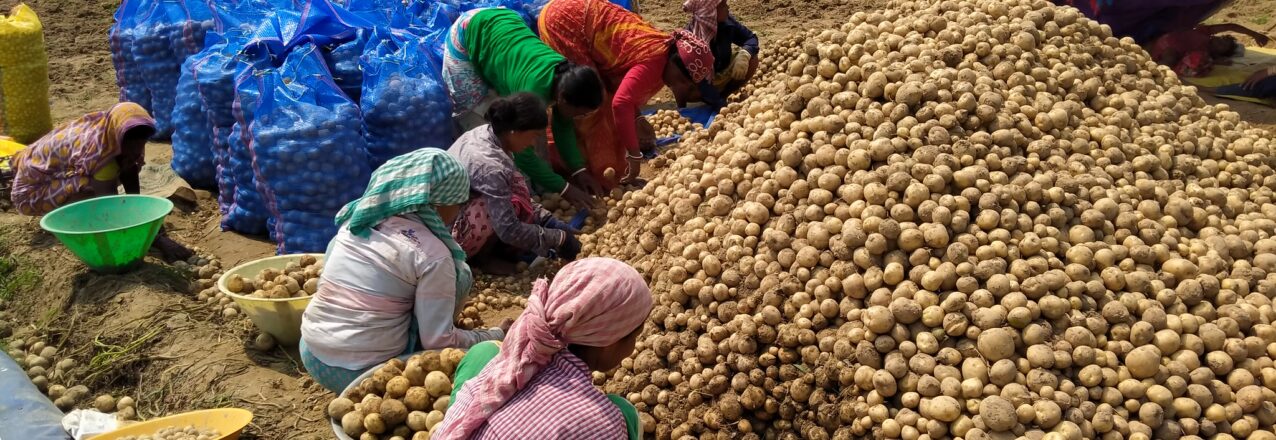
Cultivating Gender Equity

Cross posted from Span Magazine Author: Burton Bollag

Women play a central role in farming in West Bengal, but are often marginalized. Technical training and greater access to land have helped them improve yields, build skills, and promote gender equality in their communities.


In many countries, women produce 60 to 80 percent of the food. Yet women farmers remain largely marginalized and are often not recognized as farmers within their communities. Women own very little of the land they work in and receive only a small part of agricultural loans and technical assistance provided to small farmers.

A pilot project in West Bengal is trying to change that. PepsiCo, a multinational American beverage and snack company, and the United States Agency for International Development (USAID) are working to empower women potato farmers by helping them access land, providing them with training and support, and promoting acceptance of greater gender equality in the communities where they live.

Since its launch in 2019, the partnership has directly helped more than 1,000 women farmers. And although the partnership project is only slated to last four years—until 2023—several measures have been introduced to help ensure the changes produced by the project are long-lasting.

For instance, gender concerns have been added to the training given to PepsiCo’s network of field agronomists, who regularly visit villages to help farmers improve their yields and the quality of potatoes supplied to the company.

At the same time, the project is training a number of women as “community agronomists” who support other local potato growers and help shift harmful gender norms. “I have been able to prove that I can do this,” recounts Arati Besra, a potato farmer and new community agronomist trained under the program. “Initially, my husband doubted my ability to perform. Now I have acceptance and respect from other women and men farmers too. I am learning many new things and I am trying to apply those lessons at a personal level while also reaching out to other women like me.”

The project has also identified a number of men as community champions, such as aggregators and sub-vendors in the potato supply chain, who understand and value women’s empowerment. “I sincerely believe that women can do everything required for successful farming,” said Shyamal Pal, an aggregator and community champion for women’s empowerment. “With support from PepsiCo, the women’s group leased one acre of land to plant potatoes and overcame adverse weather to emerge successful with a financial return. This ‘never before seen’ phenomenon drew the attention of the entire community here and had a demonstrative effect on other women’s groups.” These men and community champions have increased their outreach to women farmers and have played a key role in convincing other men in the communities to support the women’s efforts and recognize them as farmers. They have also taken up women’s empowerment activities more broadly; for example, they have independently engaged women community agronomists in areas outside of the project’s 12 target communities.

USAID and PepsiCo both had good reasons to join forces. USAID has ambitious goals to economically empower millions of women around the globe. PepsiCo was interested in testing out a theory that helps women in their supply chain gain more knowledge and control over their farming, which could lead to increases in the amount and quality of the potatoes they produce.

PepsiCo needs a steady supply of high-quality potatoes to produce chips and other snacks for the Indian market, which it sells under various brands including Lay’s. The company also aims to improve the livelihoods of more than 250,000 people in its agricultural supply chain and sustainably source 100 percent of the company’s key ingredients by 2030.

USAID officials say the first thing they did when starting to work together with PepsiCo in West Bengal was to conduct a study of local supply challenges to gender considerations, like gender norms and access to training. The study was meant to identify social and structural problems faced uniquely by women farmers, such as discrimination in accessing agricultural extension trainings, landholding, and, services or bank loans, as well as crop cultivation issues, such as water scarcity or pests.

Training is tailored to address these issues. Measures are taken to make it easier for the women to attend. For example, sessions are scheduled at times when the women do not have to be home attending to tasks delegated to them by relatives, such as cooking family meals and when children can be cared for by other family members.

In addition to agricultural extension services for women farmers, the project has organized classes to teach them business skills and provides training in such areas as the proper use of personal protective equipment when applying pesticides. “Women staying around me are practicing what they have learned from the training quite enthusiastically. They know how to collect the potatoes properly after harvesting, spray pesticides and take care of the sprayer and much more,” said Dipika Kole, a potato farmer joining the project. “We work equally like all other male farmers out there. When we learn new things from the training, we share it with our family members. They practice it and support us in implementing those practices in our field.” And because women farmers traditionally face steep barriers to owning or even leasing the land they work, the partnership has helped associations of women farmers lease land in their own names.

The project has also focused on helping the potato farmers adapt to the climate crisis facing farmers around the world. By teaching sustainable farming methods like composting, reducing crop residue burning, soil testing, responsible pest control, and drip irrigation to conserve water, the project seeks to help farming communities mitigate some of the harmful impacts of global warming.

Officials say the partnership has been very successful. Evidence of women’s economic empowerment is emerging, as many of these farmers today have improved self-image, confidence, mobility, access to knowledge and resources, income, decision-making power, acceptance by family and community members, and collective agency.  “I manage the whole pursuit of potato farming independently and the decision on which land is to be farmed with which variety of potato is mine. That doesn’t deter me from consulting with my husband (on farming decisions) when I feel the need, but I’m left with the freedom to take final calls—which even involves hiring labor,” said Purnima Kora, a local potato farmer.

In fact, in 2020 USAID and PepsiCo established a bigger five-year project, under USAID’s Global Development Alliance for Investing partnership model, to carry out similar work to empower women potato farmers supplying PepsiCo in Uttar Pradesh, as well as in three other countries: Pakistan, Vietnam and Colombia.

Burton Bollag is a freelance journalist living in Washington, D.C.

LAND-at-scale Somalia: land governance to contribute to durable solutions for Internally Displaced People in three Somali cities

The Netherlands Enterprise and Development Agency (RVO) and the Somalia department of the Netherlands Embassy (EKN) in Kenya are pleased to announce their collaboration with the International Organization for Migration (IOM), the UN Development Programme (UNDP), UN-Habitat and the Regional Coordination Office (RCO) in Somalia in the context of the Saameynta-programme. ‘Saameynta – scaling up solutions to displacement in Somalia’ will be implemented over a period of four years (2022-2024) and the LAND-at-scale contribution amounts to 2 million euro. Saameynta is co-funded by the Swiss Development Cooperation (SDC) and the Italian Agency for International Cooperation (AICS).

Somalia’s land challenges

Somalia has over 2.9 million Internally Displaced People (IDPs) following decades of civil war and violent conflict. In addition, a significant increase of droughts and floods due to climate change have forced people away from their rural homes. Most IDPs have relocated to Somalia’s cities which has resulted in rapid urbanization, unplanned city development, and a speculation in land markets. This situation has spurred continuous displacements and forced evictions of IDPs, preventing them from building a sustainable livelihood.

LAND-at-scale intervention strategy

This LAND-at-scale project, funded jointly with the SDC and AICS, aims to contribute to a sustainable integration of IDPs in three Somali cities: Baidoa in South West State, Beletweyne in Hirshabelle State, and Bossaso in Puntland State. This will be achieved through three complementary project strategies.

Firstly, the project aims to ensure stronger involvement and engagement of displacement affected communities (IDPs, returnees and host community) in a process of inclusive urban development. This will be achieved by working with local governments (municipalities) as well as the displacement affected communities directly. For the local authorities, the project will focus on strengthening both technical and institutional capacities to perform their land governance mandates, as well as developing relevant land-related policies. The involvement of the displacement affected communities is foreseen by enabling them to engage in a process of inclusive urban development. Finally, their engagement is foreseen to be strengthened by applying land value capture for infrastructure development and basic services. 

Secondly, the project aims to improve the tenure security for displacement affected communities by providing them with land documentation for a reduced risk of forced eviction. An adaptation and tailoring of the Social Tenure Domain Model (STDM) to each project location and context will assure informal and formal rights to be recognized and managed in a fit-for-purpose land administration system.

Following the technical and institutional capacity building and the tenure registration activities, authorities in the three cities will then be supported to apply an approach of land value capture to secure public-private sector partnership (PPP) investments in social and public infrastructure and basic services for IDPs. Communities will be engaged along the way through a community planning process to ensure that their priorities remain an integral part of the plans to be development.

Saameynta: a multi-donor and multi-year programme

The LAND-at-scale project is a part of ‘Saameynta’, a larger governance programme of 18 million USD in total. Besides RVO and the EKN, SDC and the AICS are contributing financially to this 4-year running programme. The Dutch contribution to this governance programme aligns closely with the embassy’s programming priorities for Somalia: “Addressing root causes of displacement and finding durable solutions for the millions of internally displaced populations is a key priority for Somalia. Netherlands’ investment under Saameynta is critical because the programme interventions offer a holistic approach towards land governance by enhancing capacities of Somali authorities and leveraging on investments from the private sector towards sustainable land-based solutions. This enables displaced populations to be sustainably (re)integrated,” says Maarten Brouwer, Ambassador of the Netherlands to Kenya.

Expected outcomes

LAND-at-scale will contribute an important land element to the wider Saameynta governance programme. The expected outcomes of the LAND-at-scale intervention are:

  • Institutions, governance mechanisms and tools are developed in the areas of land as well as inclusive and accountable governance.
  • Technical knowledge of authorities and IDPs is enhanced.
  • Improving tenure security for IDPs to reduce risks of displacements and forced evictions using the Social Tenure Doman Model (STDM).

This LAND-at-scale project in Somalia contributes to SDG1 (no poverty), SDG5 (gender equality), SDG8 (decent work and economic growth), SDG10 (reduced inequalities), SDG11 (sustainable cities and communities), and SDG16 (peace, justice and strong institutions).

Want to know more about LAND-at-scale?

The Dutch Ministry of Foreign Affairs funds LAND-at-scale. To stay updated on this LAND-at-scale project and others, please sign up for our quarterly newsletter.

Program: LAND-at-scale.

Related projects: LAND-at-scale Somalia: Saameynta – Scaling up solutions to displacement.

Originally published on the Land Portal. Creative Commons Attribution 4.0 International.

“Scaling up Land Governance for Food Security in Burkina Faso”: Introducing a new LAND-at-scale project

Nitidae, l’Observatoire National du Foncier Burkina Faso (ONF-BF), Oxfam Burkina Faso and the Netherlands Enterprise & Development Agency (RVO) are excited to announce their partnership for a LAND-at-scale project in Burkina Faso. Starting this year, the project will run for three years focusing on strengthening land governance for women and youth for increased food security, focusing on the Liptako Gourma region.

Burkina Faso’s land challenges

Burkina Faso is a country dealing with many crises: food insecurity, climate vulnerability and massive population displacement. Land plays a critical factor in all these crises. The fast-growing population, degradation of land as well as widespread migration of the population across Burkina Faso are putting pressure on land. The country is heavily dependent on agriculture, which employs 80% of the population. Despite this, the country deals with significant food security issues. With emerging patterns of high temperatures and pockets of drought, the country is very vulnerable to climate shocks.

As is observed in many crises, vulnerable groups are hit hardest by the consequences. Women and youth particularly, suffer disproportionality. Together, the two groups constitute a large majority of the entire rural population and reportedly make up the main food producers in the country. However, they suffer from marginalization through customary practices, which leads to increased vulnerability to the factors above and has led to decreased access to land, or even land dispossession.

LAND-at-scale objectives

This LAND-at-scale intervention aims to improve food security and the resilience of women and youth in the country by securing their access to land and by strengthening land governance and management practices. This will be done through implementation of four interconnected components of the project, namely:

  1. Raising awareness on land rights among relevant stakeholders;
  2. Participatory registration of land titles with special reference to women and youth;
  3. Optimizing land management practices of secured land of women and youth to address challenges related to land degradation and/or food insecurity; and
  4. Monitoring and learning on the experiences of the other components and formulating recommendations for more sustainable land governance.

The project will build on experiences from previous projects in Burkina Faso, learning from their experiences in setting up land registrations at the local level combined with tried and proven methods of social inclusion of women and youth in patriarchal communities with traditional norms and practices. Subsequently, the capacities of women and youth with secured land rights to sustainably use their land will be strengthened, leading to more effective food production and mitigation of farmland degradation.

“All three project partners bring their own expertise to the project,” says Mr. Jules Gaye from Nitidae. “ONF-BF  has a longstanding and strong reputation in the area of land registration and capacity strengthening at local level, whereas Oxfam has worked extensively with the target groups and Nitidae brings in expertise with regard to sustainable use of agricultural land”. The project partners are well-connected with the land actors in the country, both government and otherwise, and will ensure embeddedness of the project in ongoing dialogues and processes.

This project has been developed in close cooperation with the Embassy of the Kingdom of the Netherlands (EKN) in Ouagadougou, and will build further on other EKN-project in the Liptako Gourma region.

Want to know more about LAND-at-scale?

The Dutch Ministry of Foreign Affairs funds LAND-at-scale. This project in Burkina Faso is funded for two million Euros. The project will start in February 2022 with an inception phase of six months, during which several baseline studies and needs assessments will be conducted to inform the intervention strategy. To stay updated on this LAND-at-scale project and others, please sign up for our quarterly newsletter.

Program: LAND-at-scale.

Related projects: LAND-at-scale Burkina Faso: Scaling up land governance for food security.

Originally published on the Land Portal. Creative Commons Attribution 4.0 International.

Advancing Ethical Mineral Supply Chains in the Democratic Republic of the Congo

The U.S. government-supported Public-Private Alliance for Responsible Minerals Trade (PPA) offers a successful model for advancing responsible mineral sourcing in the Democratic Republic of the Congo (DRC) and Great Lakes Region of Central Africa.

Minerals needed for our electronic devices such as computers and cellphones and renewable technologies such as electric vehicles are often sourced from conflict-affected countries with weak governance systems including the Democratic Republic of the Congo.  For these countries, mineral wealth can be a double-edged sword. Mining is a crucial economic sector and a direct source of livelihoods for an estimated two million artisanal and small-scale miners, but the sector is also known for its damaging effects: it can finance armed group activity, fuel corruption, and cause vast environmental damage, labor violations, and human rights abuses. 

Global demand for minerals is surging, especially for those minerals needed for low carbon technologies. More than ever before, we need better models to support responsible sourcing of minerals from high-risk areas. Responsible sourcing of minerals is an umbrella term used to describe sourcing designed to be “socially responsible,” “green,” or “sustainable” by implementing supply chain due diligence and sustainability schemes (Brink et al., 2019). For the last decade, the Public-Private Alliance for Responsible Minerals Trade (PPA) has advanced responsible sourcing of minerals from the DRC and the Great Lakes Region of Central Africa. 

The Alliance is a multi-stakeholder effort that brings together leaders from the private sector, government, and civil society to advance supply chain solutions to the issue of conflict minerals. It focuses on minerals linked to conflict and instability in the region and prioritizes tin, tantalum, tungsten, and gold. Jointly founded in 2011 by USAID and Department of State, the the Alliance offers funding and coordination support to organizations working in the Great Lakes region to develop verifiable conflict-free supply chains; align chain-of-custody programs and practices; encourage responsible sourcing; promote transparency; and bolster in-region civil society and governmental capacity. The  Public-Private Alliance for Responsible Minerals Trade Secretariat is managed by the civil society organization RESOLVE.

After ten years of supporting responsible sourcing, the leaders and influencers that make up the Alliance are assessing how to best address the next generation of challenges in responsible sourcing.  Since its inception, the Alliance has raised more than $2.5 million in private sector contributions, with an additional $36 million in parallel funding from USAID for mining governance and traceability projects.  Public-Private Alliance for Responsible Minerals Trade-supported projects include early support for the development of a conflict-free artisanal gold supply chain that led to the first export of conflict-free gold from the DRC to the United States, piloting community-based interventions to mitigate human rights abuses and increase women’s leadership in mining communities, and identifying and addressing barriers to responsible finance for the artisanal sector. Successful PPA projects such as conflict-free gold supply chains, may be scaled-up by large donors such as USAID. 

Virtual Delegation and the Next Generation

In December 2021, the Alliance held a virtual delegation to the Great Lakes Region of Central Africa, where nearly 70 attendees from the private sector, civil society, and the U.S. government discussed shared objectives and alignment and U.S. Embassy priorities. 

Lucy Tamlyn, U.S. Ambassador to the Central African Republic; Michael Hammer, U.S. Ambassador to the Democratic Republic of the Congo; and Marcia Eugenio, Director of the Office of Child Labor, Forced Labor, and Human Trafficking at the U.S. Department of Labor, opened the virtual delegation. PPA speakers included representatives from Apple, Google, Intel, and the civil society organization, IMPACT, among others.

“With its abundance of natural resources, the DRC is at the heart of the critical minerals discussion and will play a central role in the future of green energy,” Ambassador Hammer said in the opening remarks.

The Alliance members expressed continued commitment to responsible sourcing and identified shared challenges that would benefit from deeper engagement and collaboration with U.S. embassies in the region.  Alyssa Newman of Google reiterated that the Alliance, “is an important platform for connecting minerals governance to other issues and projects Google is investing in” and that Google would like it to continue to advance “due diligence and ethical supply chains, human rights, labor rights, and strengthen civil society and inclusive economic development.” Other potential areas of future collaboration that were raised included tax harmonization, the simplification of legal export processes, public-private co-investment opportunities, and the importance of tackling systemic issues including fiscal and governance reforms and land tenure.

As consumers and governments increasingly demand sustainable and ethical sourcing of minerals, public-private partnerships like the Public-Private Alliance for Responsible Minerals Trade are playing an invaluable role in bringing stakeholders from across the mineral supply chain together to discuss roadblocks and advance key objectives. The Alliance brings large private sector players to the table with civil society organizations and allows members to collectively support promising projects to ensure that increased demand for critical minerals does not come at the expense of local communities. As Intel’s Adam Schafer reflects, “As a downstream company,  Intel’s partnership with the PPA [the Alliance] has been a crucial connection to engage with in-region programs and stakeholders to allow a responsible path for mineral sourcing. We look forward to continued collaboration as we work towards our goal to responsibly source all of our critical minerals.” 

—

The Public-Private Alliance for Responsible Minerals Trade has a tripartite membership from across 47 partners representing private sector, civil society, and government. Private sector members represent several sectors, including electronics and communications, automotive, aerospace and jewelry. There are 25 member companies, which include Amazon, Apple, Ford, Google, Intel, Microsoft, Signet, and Verizon. PPA’s civil society and academic members come from 16 organizations and trade groups, including Global Communities, IMPACT, IPIS, Pact, Solidaridad, and The Sentry. Government representatives include USAID, US Department of State, US Department of Labor, GIZ, and the International Conference on the Great Lakes Region. The OECD Centre for Responsible Business Conduct is an observer. 

Photo credit: Mike Loch

“Amahoro @ Scale” – Achieving peace at scale in Burundi by scaling up land governance approaches

The Netherlands Enterprise & Development Agency (RVO) is pleased to announce its collaboration with the Embassy of the Kingdom of the Netherlands (EKN) in Bujumbura, ZOA, VNG International and MiPAREC for the implementation of a LAND-at-scale project in Burundi “Amahoro @ Scale – An integrated approach towards improved tenure security and land governance in Burundi”. The intervention will run until 2025 and has a budget of 2.8 million Euros.

Burundi’s land challenges

Burundi has the world’s highest Global Hunger Index Score and around 45 percent of the population is affected by food insecurity. The country is confronted with increasing scarcity of land as a result of population growth, large numbers of returnees and IDPs and the effects of climate change. With the majority of Burundians depending on agriculture for their food and livelihoods, land scarcity makes this reliance on agriculture precarious.

The pressure on land gives rise to many land disputes with over 55% of all court cases being related to conflicts over land. The outcomes of these disputes are often highly uncertain, as land is commonly not registered and no good records of ownership or use rights exists.

Scaling Land Tenure Registration (LTR) approaches to national level

ZOA has worked in Makamba Province on land tenure registration since 2014. The sustainability of the district land offices (SFCs) remains a challenge, as well as guaranteeing gender equality in land governance. Amahoro @ Scale will build on these experiences, with a view of completing the LTR-activities in the remaining Nyanza Lac district, as well as scaling up the holistic LTR-approach to a national level through the development and adoption of a business plan to be adopted by all SFCs in the country. Ultimately, the LAND-at-scale project aims to improve tenure security of women and men, to improve conflict resolution and to create the basis for improved agricultural production, access to justice and sustainable, climate-smart agri-businesses.

Successfully scaling LTR approaches at a national level requires effective, cost-efficient and conflict sensitive processes to be defined and agreed upon by all relevant stakeholders. This will be captured in a business plan for SFCs that takes into account the lessons from other LTR initiatives, the national legal framework as well as international standards for LTR.

“For land tenure registration to be sustainable, it needs to facilitate the resolution of land-related conflicts that are rooted in, among other things, refugee flows and repatriation, the great pressure on land for subsistence, and the lack of effective local land administration services”, says Herman Kamphuis, Country Director at ZOA Burundi. “With our partners VNG International and MiPAREC, we ensure that the business plan for land tenure registration will not only cover land registration activities, but will also integrate essential elements regarding sustainable local governance as well as conflict resolution and gender equality”.

Strengthening land governance has been a priority of the EKN in Bujumbura for several years. “The embassy considers security of land tenure to be an essential prerequisite for local livelihoods and food systems to function in an efficient, sustainable and equitable way,” says Jan Willem Nibbering from the EKN. “We believe this LAND-at-scale project will complement other ongoing EKN-supported interventions, both in the area of food security as well as in the area access to justice”.  

Over the course of 4 years, Amahoro-at-scale aims to achieve the following outcomes:

  • The tested LTR approach is implemented in Nyanza Lac through the operationalization of the SFC.
  • Local land conflict resolution mechanisms are effectively resolving land conflicts in Nyanza Lac.
  • The development of a business case will result in the rollout of financially sustainable and technically functional SFCs around the country.

Want to know more about LAND-at-scale?

The Dutch Ministry of Foreign Affairs funds LAND-at-scale. This project in Burundi is funded for 2,8 million Euros and commenced in December 2021. To stay updated on Amahoro-at-scale and other LAND-at-scale projects, please sign up for our quarterly newsletter.

Program: LAND-at-scale.

Related projects: LAND-at-scale Burundi: Amahoro at Scale.

Originally published on the Land Portal. Creative Commons Attribution 4.0 International.
Join us at the Global Forum for Food and Agriculture (GFFA) 2022 for the Expert Panel 12 – Beyond Policy Change: using the VGGT to secure tenure rights for farmers!

Location: Livestream on the GFFA website (https://www.gffa-berlin.de/en/). If you want to participate actively in the Global Forum on Food & Agriculture and receive information about all events, please register here: https://2022.gffa-berlin.de/#signup.html?

Languages: German, English, French

Organised by: FAO, GIZ, International Land Coalition (ILC) and Welthungerhilfe


Since their adoption in 2012, the VGGTs have been the key framework guiding significant progress in reforming national land policies, legislative frameworks and regulations. However, the impact of those changes on the ground has remained limited, with tenure insecurity continuing to be widespread. More recently, efforts to promote the implementation of the VGGT have moved beyond the national level: working with multiple actors at regional and local levels and jointly identifying pathways for implementing key VGGT provisions to address land conflicts, regulate land-based investments, and strengthen the rights of legitimate land-owners and users. The Expert Panel will showcase innovative practices from three countries that exemplify how the VGGT have been used to strengthen the tenure rights of resource-poor farmers.


Source: Global Programme Responsible Land Policy, Land Portal, January 21, 2022. Republished with attribution.

Women’s Land Rights Champion: F. Mulbah Zig Forkpa, Jr.

This series features Women’s Land Rights Champions within USAID to learn more about their work. We’re pleased to share this interview with F. Mulbah Zig Forkpa, Jr., the Land Governance Specialist at USAID/Liberia.

Tell us about yourself.

My name is F. Mulbah Zig Forkpa, Jr. I am currently the Land Governance Specialist at USAID/Liberia. I have served in this capacity for five years, helping to implement the Mission’s land and resource governance programs-first the Land Governance Support Activity, a  $15.6 million activity which ended in August 2020, and now the Land Management Support Activities, a $9.4 million activity which continues until 2025. I also serve as one of the focal persons on gender in the Mission’s Office of Democracy, Rights, and Governance. I am a proud graduate of USAID’s inaugural Land Advisors Program. I hold both BA and LLB degrees from the University of Liberia. I am finalizing my LLM in Transnational Criminal Justice. Throughout my LLM studies, I have endeavored to explore the linkages between land reform and transitional justice, as well as how land reform can sustain peace and prevent the recurrence of conflicts that were primarily provoked by land disagreements.

Why are women’s land rights and resource governance important to your work? And to other USAID development work?

Liberia has a predominantly rural population that primarily derives its livelihood from land. This means that land is placed at the center of everything that matters, including social and economic security. Where insecure land and resource governance affect an entire population, women tend to suffer the most because of the critical role they play in farming and caring for the family. There is an important relationship between improved women’s land rights and a better society. Since the essence of USAID’s work is to ensure an improved and more secure society, the obvious choice must be made to enhance women’s secure access to land and resources.

What are some of the biggest challenges in helping women secure land rights and what are some things being done to overcome them?

To the best of my knowledge, all women’s land rights assessments have shown that despite the central role women play in agricultural production, their rights and access to land are often hindered. In a male-dominated society like Liberia, these hindrances have long roots and have evolved as an acceptable social norm. In most cases, discriminatory social norms are supported by existing legal frameworks that relegate women’s land and natural resource rights to a status that is less important than those of men. In instances where discriminatory gender norms are outlawed through formal laws, the entrenched adherence to those norms, as well as powerful men’s unwillingness to lose their control over land resources makes it extremely difficult to enforce new reform laws. To offset these challenges, we have ensured that gender issues are constantly highlighted in policies and regulatory formulations, in order to streamline and amplify the gender equality provisions of the 2018 Land Rights Act of Liberia. Our land and resource governance programs have constantly embarked on strong behavioral change education and publicity campaigns. In these endeavors, we have collaborated with, and empowered, influential stakeholders including traditional leaders who are now championing the fight for gender empowerment. These strategies must become sustainable and live on even after donor support ends. In that regard, the USAID supported the establishment of a Gender Unit within the Liberia Land Authority (LLA), the central land regulatory agency in Liberia. The Gender Unit is driving the gender empowerment agenda of the LLA.

What are some of USAID’s successes in the area of land rights?

USAID has supported the enactment, establishment, and operationalization of the LLA. Initially, land services were scattered across different government entities and also marked by huge bureaucracy. The LLA has now become the single one-stop-center to access land services. USAID has ensured that the LLA has the proper tools to oversee the implementation of the Land Rights Act adopted in 2018 as the country’s primary land reform agenda. To do so, a USAID-supported consultant worked with the LLA in 2019 to create an implementation strategy for the Land Rights Act. The strategy has been effective, making it possible for stakeholders to avoid duplication in programming aimed at safeguarding rights. I firmly believe the most significant provisions of the Land Right Act are those that require the formalization of customary land. These provisions restored customary land rights, which were denied for over 100 years, and placed women’s rights  on par with those of men, both in terms of land access and management. These customary land formalization provisions have been piloted by USAID in communities across three of Liberia’s 15 counties, and lessons learned are being rolled out.

Anything else you want to share?

Let me take the moment to talk briefly about the USAID/Liberia Land Management Activity, awarded in July 2021 with the intent to support at least 100 communities to own and manage their customary land efficiently. It is a continuation of USAID’s investment in the Liberian land space and has a component that places exclusive emphasis on empowering women and minority groups to participate in decision-making around land by getting elected to governance bodies. The program encourages different donors to co-locate and leverage efforts. Because of these opportunities, the communities who will secure their land rights through USAID’s activity will likely utilize their titles for various private sector commercial engagements.

Opportunity: Baseline Study Amahoro @ Scale in Burundi

Amahoro @ Scale (Peace-at- Scale) is the Burundi country project of the larger “LAND -at- Scale” program funded by RVO (The Netherlands Enterprise Agency) which is currently active in 14 countries in Africa, Latin America, the Middle East and Asia.

Amahoro @ Scale has two distinct aims. The first aim is to use the experience of current and previous Land Tenure Registration (LTR) activities in Burundi to prepare the scaling up of LTR across Burundi. This requires cost-efficient, conflict sensitive and effective processes to be defined and agreed upon by all relevant stakeholders. In essence, a business model for LTR needs to be developed that takes into account the lessons from other districts and to the national legal framework and international standards for LTR. Sustainable LTR needs to facilitate the resolution of land related conflicts that are rooted in, among other things, divergences between statutory and customary land governance, migration and return as well as the discrimination of particular groups and gender discrimination. A second, practical aim of the project is to finalize LTR in Makamba province. This is a crucial step in preparing the scaling up of LTR. It provides an opportunity to find solutions to remaining challenges, e.g. related to the financing of the Communal Land Services (SFC). Read more about the project here.

ZOA is looking for a consultant to conduct a baseline study for the project. This baseline study is an important element of the 6 months inception phase of the project which serves  to generate the necessary knowledge to start the activities and to prepare for the implementation. The baseline study has the purpose to generate the baseline data for the project’s indicators which will serve as reference for the mid-term and final evaluation. The study will further help to set more realistic projects targets for the indicators. Conflict mapping and a legal framework analysis should be realized in the inception phase. The study is expected to take 40 consultancy days.

The consultant has to fulfil the following qualifications to be eligible for the task:

  • Master’s degree in a branch of law or other relevant field with at least 10 years of experience;
  • Experience working in East-Africa, preferable experience in Burundi;
  • Demonstrated strong experience in conducting project baseline studies and evaluations;
  • Have a good command of evaluation tools and quantitative and qualitative methodologies;
  • Good knowledge of the land tenure security process and its challenges in Burundi and solid knowledge in the land tenure field in general;
  • Have relevant experience in gender, conflict and legal framework analyses;
  • Have a satisfactory experience of collaboration with the technical services of the State, the courts, the United Nations system, NGOs.
  • A perfect command of English and French is essential. 
The deadline for the first round of applications is January 28th, 2022. 


You can find more information in the Terms of Reference attached. 

Program: LAND-at-scale.

Related projects: LAND-at-scale Burundi: Amahoro at Scale.

Originally published on the Land Portal. Creative Commons Attribution 4.0 International.