

Photo Credit: Gary Hunter and Anna Soave / Tetra Tech
Use these land rights tools to connect practical methods with country-specific evidence and program experience.
Land and resource tenure issues cut across climate resilience, food security, conflict, conservation, investment, urban development and livelihoods. This collection brings together practical tools, approaches, technical resources, and program materials that can help practitioners, researchers, policymakers, community organizations and others understand and address these issues.
Many of the resources were developed through USAID-supported programs and initiatives. They remain useful beyond their original context, offering approaches, lessons and evidence that can inform work on land and resource rights in different settings.
Choosing land rights tools for your work
Start with the question you need to answer: documenting rights, reviewing policy, assessing land use, or designing an intervention. Check each resource’s publication date, geography, intended users, and implementation assumptions before applying it in a different setting.
Human Rights 4 Land Monitoring Tool
This monitoring tool consists of an indicator framework and a national and a local questionnaire that can be used to assess responsible land governance from a human rights perspective. The tool can be used to monitor implementation of the Voluntary Guidelines on the Responsible Governance of Tenure (VGGT) both in terms of alignment of legal frameworks, efforts undertaken to effectively implement policies and the actual results of these efforts, for example, in terms of secured legitimate tenure rights, as experienced by disadvantaged groups and individuals. Learn more »
Mapping Approaches for Securing Tenure (MAST) Learning Platform
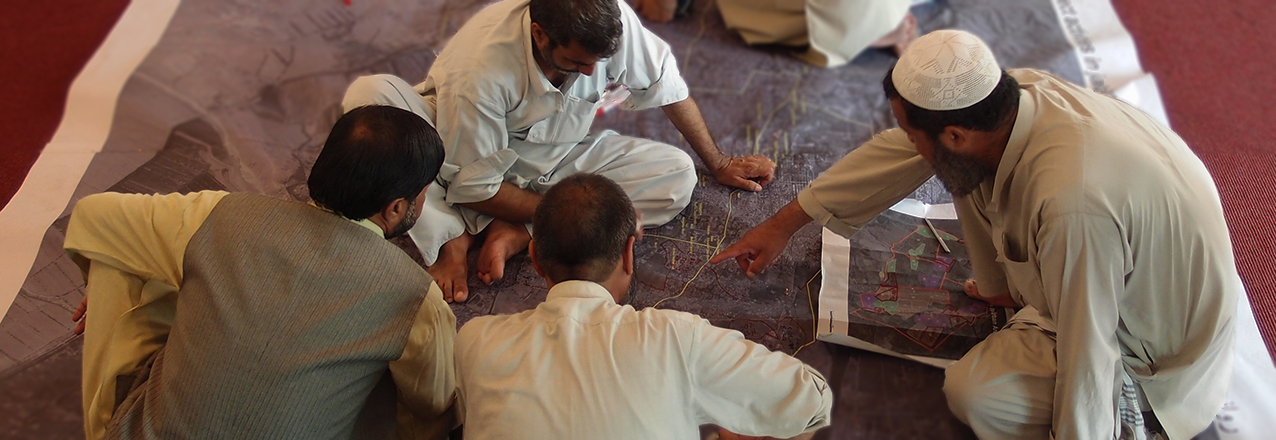
MAST blends participatory mapping approaches with flexible technology tools to help local communities who lack access to government services to document, manage and secure their land and resource rights, improving long-term governance of community land and resources. Learn more »
Funding/Contract Mechanisms
The Strengthening Tenure and Resource Rights (STARR) IDIQ was a USAID mechanism for providing technical assistance on land and resource tenure. This resource provides an overview of STARR, STARR II, and other USAID funding and contract mechanisms relevant to land and resource governance. It is intended as a practical reference for land practitioners seeking to understand how such mechanisms are structured. Learn more »
Integrated Land and Resource Governance
The Integrated Land and Resource Governance (ILRG) project explored practical approaches to strengthening land and resource governance, with work spanning land rights, tenure security, natural resource management, gender and responsible investment. The project generated tools, evidence and lessons from implementation that can inform current thinking and practice on land and resource governance. Learn more»
Geospatial Analytics
Geospatial analytics can turn land and resource data into information that helps land practitioners make better-informed decisions. This resource introduces applications ranging from satellite image analysis and land-use change modeling for risk analysis, thematic mapping and interactive online mapping. Learn how»
Land Advisors Program
The USAID Land Advisors Program expanded USAID’s cadre of land and resource governance ambassadors from Missions and across sectors by building the capacity of selected USAID staff in land and resource governance (LRG) programming. Learn more »
Tools and Guides
A suite of tools and guides provides background, guidance, and constraints to consider on a variety of land tenure and property rights related issues. Learn more »