


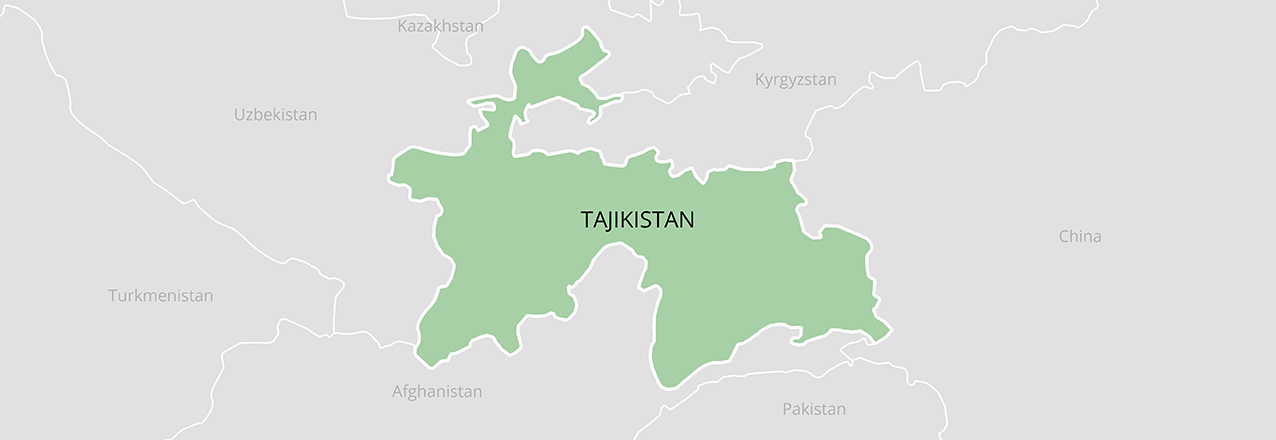
Overview
Tajikistan’s land governance reflects a mountainous landscape, irrigated valleys, seasonal pastures and the transition from Soviet collective agriculture. Households depend on a combination of gardens, farming, livestock, wages and migration. Control over water, roads and grazing routes is often as important as the location of a field.
The Constitution makes land and natural resources the exclusive property of the state. Individuals and organizations can hold forms of land-use rights under law; a transferable or inheritable use right is not private ownership of the land itself. Rights on paper and control in practice can differ, particularly where documentation, finance or local influence are unequal.
History and Political Economy
Soviet agriculture relied on state and collective farms, large irrigation systems and production targets, particularly for cotton. After independence in 1991, civil war delayed reform and displaced many people. Subsequent restructuring created dehqan farms and other enterprises, while household plots remained important for food and income.
Reform has not produced a single uniform farming system. Some households manage their own holdings; others work within larger farms or hold shares whose location and practical use may not be clear. Land allocation and local administration can be influenced by political and economic power. Remittances from work abroad support many households but can leave women managing farms without the same access to documents, finance or decisions.
Legal Framework
Article 13 of the Constitution establishes state ownership of land, water and other natural resources. The 1996 Land Code, as amended, governs land allocation, use and protection. A 2023 amendment changed aspects of registration terminology. Users should check the current text and conditions applying to the specific right.
Some land-use rights can be transferred, inherited, leased or used in financial transactions where the applicable law and certificate permit. These transactions concern the right of use, not ownership of the underlying state land. Restrictions on purpose, time limits, documentation and official registration may apply; it is inaccurate to assume that every certificate carries the same powers.
Land Tenure and Dehqan Farms
Land-use arrangements include household plots, dehqan farms, organizational holdings and fixed-term rights over certain state land. Dehqan farms can involve one person or multiple members. A share in a farm, an identifiable parcel and a registered use certificate are different things. Members who wish to exercise an individual share can face costs, difficulty identifying boundaries or resistance from influential managers.
The 2025 amendment to the dehqan farm law changed several provisions, including a provision on transfers of a land share to eligible family members with the consent of the farm members’ meeting. It should be read with the full law rather than treated as unrestricted private ownership or an automatic transfer in every case.
Household gardens near homes and additional plots have historically provided a measure of subsistence alongside employment on larger farms. These arrangements should not be confused with a dehqan farm share. When a family member migrates, the person cultivating the plot may differ from the person named in official records, making decisions about use, inheritance and disputes more complicated.
Community and Customary Practices
Local neighborhoods and villages organize practical access to irrigation, grazing, seasonal migration and shared infrastructure. These arrangements may rest on longstanding practice, local agreements or collective action as well as formal permits. Their operation varies by valley and community, and land law does not automatically convert all shared use into a collective ownership title.
Documentation should identify actual users and seasonal activities, including people who rely on a field or pasture but are not named as the principal certificate holder. A boundary drawn around one holding can overlap a route, canal or customary access point used by others. Inclusive local negotiation and transparent records help prevent exclusion.
Land Administration and Records
National land management and registration bodies work alongside district authorities, local self-government institutions and courts. Allocation, surveying, cadastral mapping, registration and dispute resolution are related but distinct functions. The real-estate registration law establishes a framework for registering real estate, rights and restrictions; registration does not turn state-owned land into private land.
People may face travel, survey fees, incomplete records and unequal access to officials. A certificate should be read for its holder, boundaries, permitted use, transferability and any restrictions. Digital systems can improve transparency only when records are accurate, corrections are accessible and women and other users can participate in documenting rights.
Women and Land
The Constitution guarantees equality and equal rights in family relations. Women cultivate land, manage livestock and maintain households, often while relatives work abroad. Formal rights do not ensure that women are named on documents or can make independent decisions about a farm, inheritance, credit or water.
Social expectations, limited knowledge of legal procedures, documentation costs and pressure within families can impede claims. A FAO account of a woman farmer illustrates the importance of training and local support, while not representing every woman’s experience. Legal information, accessible registration and women’s participation in farm and water-user institutions can strengthen effective rights.
Agriculture and Food Security
Arable land is limited by topography, and much productive farming depends on irrigation in river valleys. Cotton, wheat, fruits, vegetables and livestock contribute to livelihoods in different areas. Household gardens and additional small plots can be important for food security even when their contribution is not captured by the size of a commercial farm.
Agricultural rights are affected by access to water, inputs, machinery, credit and markets. Where farmers have limited influence over crop selection or output sales, a certificate alone may not provide meaningful autonomy. Policies should assess the capacity of small producers and farm members to exercise their rights, not simply count certificates issued.
Different farm structures also affect bargaining power. A farm member who holds a nominal share may have less control over planting, employment and proceeds than an independently managed household. The cost of water, equipment and fertilizer can make formal independence difficult to sustain. Support for land rights should therefore be linked with practical access to advice, markets and inputs.
Pastures and Mobility
The 2019 pasture law, amended in 2024, governs pasture management and protection. Pastures, livestock routes and water points may cross administrative boundaries. Short seasonal movements by village herds and longer-distance movements can require different arrangements.
Pasture access on paper does not always match use on the ground. Grazing areas may be shared in practice even when parcels are separately allocated, while users with large herds or greater influence may control access elsewhere. Pasture-user groups need effective rights, representation, information and resources, not only formal registration. Degradation and grazing pressure vary by location and season; national claims should not be assumed to describe every pasture.
Pasture law recognizes routes and infrastructure such as watering points and roads. A functioning route depends on passage through every part of the journey: fencing or a change of use at one point can block access to a much larger grazing area. Agreements should address the costs of maintenance, the timing of movement and the interests of smaller livestock owners as well as large herds.
Water and Irrigation
The Amu Darya and Syr Darya systems connect Tajikistan’s glaciers, mountains and valleys to downstream countries. Water supports household supply, irrigation, livestock and electricity. Ageing canals, drainage problems, seasonal scarcity and the costs of pumping and maintenance can reduce the value of a land-use right.
Water-user organizations and public agencies have distinct roles in operation and maintenance. Farmers’ access depends on functioning infrastructure and fair allocation, especially at the ends of canals. Water withdrawals and hydropower operations also have cross-border implications; agreements and basin cooperation are important alongside local water governance.
Conflict and Borders
Disputes may concern farm shares, allocation, boundaries, irrigation, grazing and inheritance. Access to impartial procedures and clear records is especially important where one party has greater resources or political influence. Community mediation can be useful but should not prevent people from seeking administrative or judicial remedies.
On March 13, 2025, Tajikistan and Kyrgyzstan signed a state border treaty. It is a significant diplomatic development after years of border tensions. Its signing does not by itself resolve every local issue of access, recovery, water or trust; affected communities’ rights and livelihoods remain relevant during implementation.
Hydropower and Displacement
The Rogun hydropower project links national electricity ambitions with land acquisition and resettlement. In December 2024 the World Bank approved financing for a first phase; a December 2025 project document describes continuing construction and financing for activities including resettlement.
The World Bank’s project information describes consultation, resettlement and livelihood restoration arrangements. Moving a house is only one part of restoration: affected households may also lose gardens, farmland, pasture, income networks and access to services. Compensation, replacement rights, meaningful consultation and monitoring over time are necessary to assess outcomes for different groups.
For resettled families, the quality and location of replacement land matter as much as its area. Irrigation, soil, grazing access, transport and the ability to rebuild community networks influence whether livelihoods recover. Vulnerable households may need assistance to understand documents and raise complaints; tracking only the number of houses constructed gives an incomplete picture.
Urban Land and Housing
Urban growth and migration place pressure on housing, services and land in Dushanbe and other cities. Land remains state-owned while buildings and specified use rights can be held under applicable law. Informal occupation, unclear documentation, redevelopment and infrastructure projects can create different risks for owners of buildings, tenants and other residents.
An Asian Development Bank urban assessment examines housing and urban development pressures. Secure records, fair notice, accessible compensation procedures, safe housing and affordable services are particularly important when neighborhoods are redeveloped.
Forests and Conservation
Forests are limited and important for fuel, erosion control, biodiversity and local livelihoods. Land administered as state forest can include grazing and other uses; an administrative land category is not necessarily a measure of tree cover. Cutting, grazing and restoration must be assessed in their local ecological and legal context.
The World Bank’s landscape restoration program supports work on forests, pasture and protected areas. Restoration and conservation plans should identify existing users and the costs of restrictions, and include communities in management and benefit sharing.
Climate and Disasters
Glacier change, floods, mudflows, landslides and drought affect homes, fields, grazing and irrigation. Mountain hazards can make some settlements unsafe and disrupt access to markets or services. Climate adaptation includes maintaining infrastructure, managing watersheds and ensuring that affected people can document and exercise their rights after a disaster.
Restoration and carbon projects can create opportunities but may also change access to pasture or forest. Project agreements should clarify the rights being used, the duration of restrictions, monitoring, benefit sharing and grievances. Carbon payments should not be assumed to confer ownership of state land.
Mining and Natural Resources
Mining and quarrying can support employment and public revenue, but permits and surface land-use rights are separate questions. Access roads, waste storage, water withdrawals and processing may affect fields, pastures and settlements beyond the extraction site. Natural resources are state-owned under the Constitution, while the treatment of affected land users depends on applicable permits and acquisition procedures.
Project assessments should examine water, health, local livelihoods, rehabilitation and downstream effects. Consultation and accessible remedies are important for residents who lack strong documentation as well as registered users. Monitoring should continue through closure and restoration.
Investment and Land Acquisition
Hydropower, roads, agriculture and mineral development can create infrastructure and income while increasing competition for scarce usable land. An investor should establish which use rights exist, their legal conditions, the status of buildings and crops, shared resources and the presence of competing claims before agreeing to a project.
Good practice includes clear notice, independent advice, valuation, compensation where due, replacement access, a grievance process and monitoring of livelihood outcomes. Consultation with women, tenants, farm members and mobile herders is needed because the person named on a certificate may not be the only person affected.
Sources
Constitution and law: Constitution; Land Code; 2023 Land Code amendment; 2025 dehqan farm amendment; Pasture law; Real-estate registration law.
Institutions, livelihoods and environment: FAO, women in agriculture; ADB urban assessment; World Bank landscape restoration; World Bank Rogun project information; UN statement on the border treaty.
Update Log
October 2026: Updated state ownership and use rights, registration, dehqan farms, pasture management, women’s rights, the 2025 border treaty and Rogun-related resettlement.
Confidence Assessment
Confidence is highest for the cited Constitution and dated legal and institutional sources. The practical exercise of rights varies among districts and households, and the legal treatment of an individual holding depends on its documents and applicable provisions.