


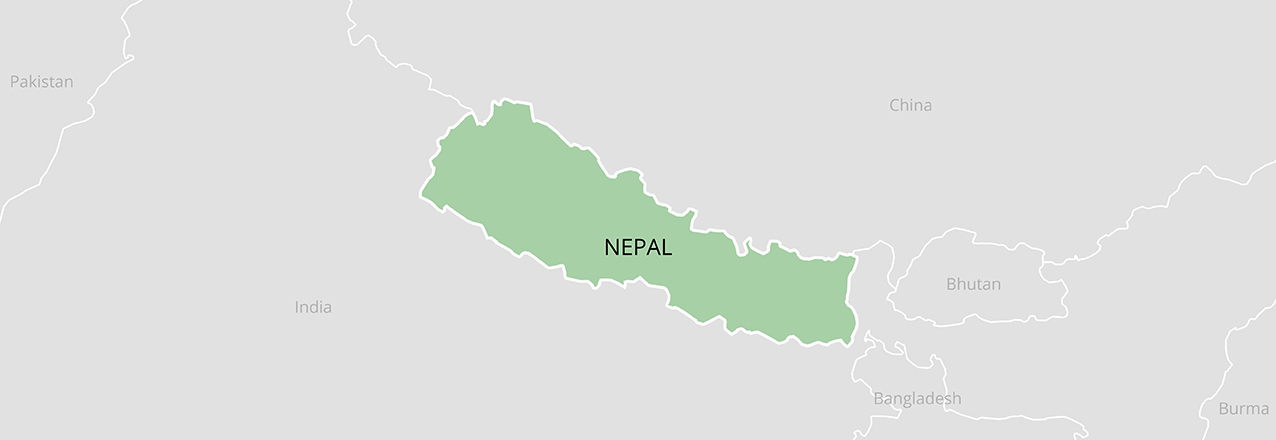
Overview
Nepal’s land governance reflects the country’s varied geography and social history. Farms in the Terai, terraced hills, high mountain pastures, forests and rapidly growing towns are governed through a combination of statutory rights, local institutions and customary practices. Landlessness and small holdings are closely associated with caste, gender, location and unequal access to political and economic power.
The 2015 Constitution recognizes property rights and directs the state to provide land once to landless Dalits in accordance with law. The Lands Act, land-use legislation and forest rules provide different mechanisms for ownership, tenancy, planning and resource management. A legal commitment is not the same as a delivered plot, and a community forest agreement is not automatically ownership of the underlying land.
History and Land Systems
Nepal’s land reforms followed a history of grants, tenancy and unequal control over land. The Lands Act of 1964 established a framework for ceilings and tenancy reform, amended repeatedly since. Private raikar land, state land and guthi land associated with religious or charitable purposes have distinct histories and rules. A family’s current holding may reflect inheritance, earlier grants, tenancy or a later transaction.
The 1996–2006 conflict and the 2015 earthquakes affected land and housing as well as lives and livelihoods. The Comprehensive Peace Accord and the 2015 Constitution established a new political context, but longstanding inequalities and unresolved claims remained. Nepal’s federal system gives local governments important planning and service responsibilities while national law and institutions continue to shape land administration.
Constitution and Land Law
Article 25 of the Constitution of Nepal protects property subject to law and provides for compensation in specified acquisition circumstances. Article 40(5) directs the state to provide land once to landless Dalits in accordance with law, and article 40(6) addresses housing for Dalits without shelter. These provisions are specific constitutional commitments, not a guarantee that every landless household has already received land.
The Lands Act, 1964 and its amendments address landholding, tenancy and landless groups. The Land Use Act, 2019, and Land Use Regulations, 2022, as amended, address classification, plans and changes of use. The regulations were amended in 2025; local implementation and land-use maps matter to individual transactions.
2026 Land and Forest Ordinances
On October 13, 2026, Nepal’s President issued separate ordinances amending land-related and forest-related laws under article 114 of the Constitution. The President’s Office announcement confirms issuance; an ordinance is a legal instrument with a constitutional process distinct from a bill awaiting enactment.
The Land Problem Settlement Committee publishes the land ordinance. Its text amends the Lands Act to address provision of land to eligible landless Dalits and squatters, committees or task forces, records and certain public-land conditions. It also addresses alternative settlement for specified people living in hazardous locations. Its provisions include conditions and exclusions; the issue of the ordinance does not itself establish eligibility or demonstrate that land has been allocated.
The earlier land-amendment bill followed a separate parliamentary process. The October 2026 ordinances should not be described as that bill having been authenticated. Implementation, identification of applicants and the treatment of public and forest land remain consequential for both landless households and existing community users.
The official land-ordinance text provides for central and district committees or task forces to identify eligible people and land and collect evidence. It also allows specified land recorded as grazing or market space to be considered in limited circumstances, including a local executive decision that it is no longer used for its recorded purpose. This makes accurate local assessment important: a place recorded as unused may still serve seasonal grazing or community gatherings.
Landlessness and Tenancy
Landless Dalits, informal settlers and tenant farmers are distinct groups, although a household can experience more than one form of insecurity. Some occupy public land without a formal title; others rent privately or work land controlled by another household. Caste discrimination, the cost of land and the difficulty of documenting tenancy can restrict access to both farmland and housing.
Sharecropping arrangements often divide output between a landholder and cultivator, while fixed-rent arrangements place different risks on the farmer. Written or registered tenancy can help establish a claim, but informal agreements may be difficult to prove. Policies to resolve landlessness need transparent eligibility rules, access to information, recognition of women’s interests and protection against allocations to ineligible or better-connected applicants.
A plot’s location and quality matter. A title on land without water, safe access or employment may not provide a viable livelihood. Where relocation is necessary because of hazards, residents need a meaningful role in choosing an alternative and restoring their social and economic connections.
Repeated changes in the institutions responsible for land distribution can interrupt applications and create uncertainty about earlier decisions. The committee’s published notices and records can help applicants follow a process, but an application, a survey and the delivery of an ownership document are separate stages. People should be able to find out which stage their claim has reached and challenge a mistake without losing their place in the process.
Customary and Indigenous Tenure
Indigenous peoples and local communities use forests, pastures, water and land through institutions that differ across regions. Customary rights may include collective or seasonal uses that a map of individual parcels does not show. Mountain grazing, collection of forest products and cultural sites can extend beyond the boundaries of a village or privately registered field.
Nepal has ratified ILO Convention No. 169, and participation of Indigenous peoples is an important consideration in decisions affecting their lands and resources. A joint Amnesty International and Community Self-Reliance Centre report documents alleged rights violations affecting Indigenous communities around Chitwan and Bardiya national parks. These findings concern particular sites and practices; protected-area rules and community rights must be examined in each case.
Women’s Land Rights
Nepal’s Constitution protects equality, and the National Civil Code’s property-partition provisions recognize daughters and sons among family coparceners. The applicable facts and legal provisions matter to an individual inheritance or partition. The older assumption that marriage generally eliminates a daughter’s right to a share should not be treated as the current general rule.
Formal rights and ownership in practice differ. Women may farm land registered to male relatives, face family pressure not to claim a share, or lack information and money to complete a transfer. Migration for work can leave women managing farms while decisions and documents remain elsewhere. A World Bank gender-data profile reports lower dwelling ownership among women than men in the 2022 survey it cites; this is a survey measure for a defined age group, not a census of all land rights.
Registration incentives and joint ownership can help when they reflect genuine control, but a name on a document is only one part of tenure security. Women need access to records, credit, family decision-making and remedies in the event of separation, widowhood or a dispute.
Land Administration and Data
Land revenue and survey offices maintain records and maps, while local governments have roles in planning and identification of landless households. A deed, cadastral map, tax record and evidence of occupation serve different purposes. Boundaries may be unclear after inheritance, disasters or informal subdivision, and an error in one record can be repeated in another.
The Survey Department’s MeroKitta portal provides online access to specified survey services. Its published requirements include documents identifying the landholder and parcel. Digital access can reduce travel and preserve records, but people without documents, connectivity or digital skills still need accessible assistance and a way to correct errors.
The 2026 land ordinance also addresses land-administration procedures and the role of local land-management branches under specified conditions. A statutory change does not by itself establish that all local offices have the staff, systems or records to deliver the service immediately.
Land-Use Planning
The Land Use Regulations provide for land-use maps, local plans, classification and procedures for changing use or managing fragmentation. These tools can protect agricultural land and support orderly development, but the classification of a parcel also affects its value, possible transfer and use.
Plans should be based on current local evidence, disclosed to affected households and accompanied by a process for correcting errors. A map that labels a field, forest or settlement without recording its users can intensify a dispute. Federal, provincial and local roles need coordination, particularly where land crosses an administrative or ecological boundary.
Disputes and Acquisition
Disputes arise over inheritance, tenancy, boundaries, registration, public land and compensation for infrastructure. Courts and administrative institutions have different responsibilities, and proceedings can be costly or slow. A person who is absent for work, has lost documents or belongs to a marginalized group may have difficulty presenting a claim.
The Land Acquisition Act, 1977, and the Constitution provide a framework for acquisition and compensation. The legal interest, project and applicable procedure determine the remedy. A government safeguard-information summary identifies several laws relevant to acquisition and forest use. Project-specific resettlement commitments can supplement national rules and should be read as commitments for that project, not automatic benefits in every acquisition.
Compensation processes should identify tenants, sharecroppers, users of common resources and people whose livelihoods depend on a site as well as registered owners. Notice, valuation and accessible grievances are important to a fair outcome.
Urban Land and Housing
Kathmandu and other towns face demand for affordable housing and serviced land. Informal settlements, rental housing and peri-urban subdivision accommodate people whose incomes or documents do not fit the formal market. Residents can face eviction, insecure rental terms or exposure to flooding and landslides.
Planning along rivers and roads must balance public safety, environmental protection and housing rights. The October 2026 ordinance addresses alternative settlement for specified landless residents in hazardous areas. Whether relocation succeeds depends on the safety and affordability of the destination, access to work and services, and the participation of residents. A plan should not assume that a household can immediately replace its livelihood after moving.
Agriculture and Pastoralism
Farm households combine rice, maize, millet, vegetables, livestock and other production across very different elevations. Small plots may be divided among heirs or cultivated under tenancy. Migration and remittances can support households while changing who manages the land and whether it is farmed. A field left fallow may reflect labor shortages, water constraints or a livelihood strategy rather than an absence of rights.
Pastoral and agropastoral households use seasonal grazing routes, forest edges and water. Access may be governed by local arrangements as well as formal rules. Conservation, roads, cultivation or fencing can interrupt movement. Land-use plans should identify routes and seasonal users alongside permanent fields, and provide mechanisms for resolving crop damage and access disputes.
Forests and Community Forestry
The Forest Act, 2019, and Forest Regulations, 2022, provide a framework for community, collaborative and leasehold forest management. User groups operate under approved plans and can manage and benefit from resources, subject to law. The government’s safeguard-information system summarizes these arrangements and participation provisions.
Community forestry has strengthened local management in many places, but membership, leadership and benefit sharing are not automatically equitable. Women, Dalits, Indigenous peoples, landless households and tenants may depend on forest products while having less influence over decisions. Fees or restrictions that appear modest to a wealthier household can be significant to a poorer one. Plans and budgets should reflect those differences and provide an accessible grievance process.
The October 2026 forest ordinance is a recent legal development. Its issuance should not be confused with proof that all forest management plans or local practices have changed. Specific decisions require the relevant ordinance, regulations and approved plan to be read together.
Forest user groups can also be important in disaster response, maintaining local networks and resources when roads or other services are disrupted. Their management plans should clarify who can collect fuelwood, fodder and other products, what fees apply and how income is spent. Where protected-area restrictions overlap with a community’s traditional use, the applicable park rules and opportunities for participation and remedy require separate attention.
Water and Hydropower
Rivers, springs, irrigation canals and groundwater support household use, agriculture, ecosystems and hydropower. A farmer’s land right may depend in practice on a reliable irrigation turn, while downstream communities can be affected by a dam or diversion. Local water-user arrangements and formal permits need to be considered together.
Hydropower and road projects can acquire land and alter access to water, fishing, forests and cultural sites. Consultation and compensation should include affected users beyond the construction footprint. The World Bank’s September 2026 statement notes that the August flood affected a hydropower project as well as homes and livelihoods, illustrating the importance of assessing risks across a river system.
Farmer-managed irrigation systems depend on collective work to maintain canals and allocate water. A damaged intake or a change in a river channel can undermine many holdings at once. Recovery should document existing arrangements, include downstream users and restore access without treating a temporary interruption as abandonment of a field.
Climate, Disasters and Carbon
Nepal’s third nationally determined contribution addresses mitigation, adaptation and loss and damage. Floods, landslides, earthquakes and glacial hazards can destroy homes and records or make land unsafe. Climate plans are commitments; the capacity to implement them and protect affected rights must be assessed separately.
The UN Development Programme describes the August 26, 2026, Bhote Koshi flood and preliminary recovery assessments. Disaster reconstruction should preserve evidence of former holdings, identify tenants and occupants as well as owners, and ensure that a safer site has access to livelihoods and services.
In November 2025 the World Bank reported a $9.4 million results-based payment for emission reductions in the Terai Arc Landscape. The payment is to be distributed under a benefit-sharing plan; receipt by the government is not the same as a payment already received by every forest user. Land and forest users need clear information on restrictions, benefits and grievances.
Mining and Investment
Mining, quarrying, tourism, energy and infrastructure can create jobs and revenue while affecting farms, forests, water and settlements. The Mines and Minerals Act, 1985, and related rules govern mineral activities. A mineral authorization and a surface land interest are different; the relevant permit, environmental approval and land arrangements must be considered together.
The U.S. Geological Survey describes Nepal’s mineral production and legal framework. For any project, a fair process identifies affected rights holders and users, discloses the area and duration, assesses environmental and livelihood impacts, and establishes compensation and rehabilitation obligations.
Political Economy
Land reform has repeatedly been shaped by changes of government, competing claims over public land and the interests of landholders, tenants and communities. Caste, gender and access to officials affect whose evidence is accepted and who can wait through an administrative process. A commission or committee can be created or reorganized without resolving the underlying claims.
The 2026 ordinances offer a new framework for specific land and forest issues, but their consequences depend on eligibility decisions, public oversight and implementation. Secure tenure requires institutions that can distinguish genuinely landless households from speculative claims while protecting public spaces, forests and existing community uses.
Sources
Constitution, legislation and administration
- Constitution of Nepal; Lands Act, 1964.
- President’s Office, October 2026 ordinances; Land Problem Settlement Committee, ordinance and notices; Land Use Regulations, 2022, as amended.
- Survey Department, MeroKitta; Mines and Minerals Act, 1985.
- National Civil Code, 2017, English translation.
Rights and resource governance
- Government of Nepal, forest safeguards and tenure; Amnesty International and Community Self-Reliance Centre, conservation and Indigenous rights.
- World Bank, Nepal gender data; U.S. Geological Survey, Nepal minerals.
Climate and disasters
Update Log
October 2026: Updated the legal framework, October land and forest ordinances, land-use planning, women’s rights, community forestry, climate finance and disaster context.
Confidence Assessment
High confidence: The constitutional provisions and issuance of the October 2026 ordinances are supported by official sources. Moderate confidence: Local implementation, eligibility decisions and the practical effects of recent legal changes depend on procedures and conditions that vary by location. Program payments and national commitments do not establish outcomes for every household.