Announcing the LAND-at-scale project in Rwanda

The Rwanda Land Management & Use Authority (RMLUA), the Netherlands embassy in Kigali (EKN) and the Netherlands Enterprise and Development Agency (RVO) are delighted to announce a LAND-at-scale project in Rwanda. Together with Kadaster International and the International Development Law Organization (IDLO), the RMLUA, EKN and RVO will be collaborating on an ambitious project over the coming four years.

In 2009, the Government of Rwanda launched the Land Tenure Reform Programme. The programme gained international recognition regularizing land tenure at an unparalleled scale. Over eleven million land parcels were demarcated, and eight million land titles were issued to their rightful owners. A land administration information system was set up in a relatively short time. However, the journey to accomplish just and sustainable land governance is not yet over. Rwanda’s rapidly growing population combined with the effects of climate change have amplified the need for agricultural transformation and land use planning. At the same time, reducing the number of land disputes in the country would ease pressure on the courts.

The LAND-at-scale project will address these challenges while building on the rich history of land tenure improvements in the country. Further to the Government of Rwanda’s amendments to the National Land Policy and the enactment of the 2021 Law Governing Land, the LAND-at-scale project will contribute to improving the land registration and management systems and their implementing institutions. “The Government of Rwanda is committed to becoming a high income-country in 2050. We believe efficient land management is essential to realize this transformation and are pleased to be collaborating with LAND-at-scale partners to work towards achieving this,” says Esperance Mukamana, the Director General and Chief registrar of land titles at RMLUA.

Commencing this month, the LAND-at-scale project will focus on making the process, systems and institutions (financially) sustainable, while at the same time expanding the focus by integrating sustainable and climate-resilient land use planning as well as improving local dispute resolution. “Kadaster has been working with the RMLUA since 2008 to set up systems, procedures and institutions. We are happy that the LAND-at-scale project will allow us to move this collaboration to the next phase,” says Christelle van den Berg, regional coordinator for Africa at Kadaster International. “During this project, we will focus on strengthening capacities and assist the RMLUA to continue to deliver and improve their land services autonomously and in a sustainable way”.   

IDLO’s contribution will focus local dispute resolution. The 2021 Law Governing Land in Rwanda together with the National Land Policy have established a new land dispute resolution mechanism which aims to reduce the pressure on the courts. “Through targeted activities, IDLO looks forward to working with the project partners to strengthen the legal capacity of the local mediators, Abunzi, and Cell Land Committees. Thereby, IDLO will be contributing to a more just decision-making process in land dispute cases nationwide,” says Romualdo Mavedzenge, IDLO’s Regional Program Manager for Africa.

The LAND-at-scale project in Rwanda is a joint effort between the Government of Rwanda and the Kingdom of the Netherlands. “This partnership fits well with the Netherlands’ policy to ensure sustainability of the previous investments in development cooperation, while building stronger economic relations with Rwanda. An effective and reliable land governance system is a crucial element for private sector investment,” says Martin Koper, Deputy Head of Mission at the Netherlands Embassy in Kigali. He adds that the project has a strong focus on sustainability. “Activities revolve around strengthening local capacities to allow them to sustain and continuously improve land governance nationally and locally.”

Ultimately, the following five long-term outcomes are envisioned from the project:

  1. A resilient and sustainable Land administration, information and management system institutionalized.
  2. Enhanced, climate-resilient land use planning.
  3. Improved conflict management and dispute resolution mechanisms.
  4. Strengthened academic capacity to assist in further development of a fair and just land governance system
  5. Enhanced services to the people of Rwanda that boosts formal and reduces informal transactions.

Astrid Broekaart, programme coordinator at RVO believes the Rwanda project is a great example of LAND-at-scale’s vision: “Besides the strong focus on sustainability, the intervention promotes a holistic approach to land governance: not only focusing on land demarcation and registration but also leveraging it as a tool for combatting climate change or strengthening the position of women. We look forward to seeing what the collaboration with these great partners will bring about”.

The Dutch Ministry of Foreign Affairs funds LAND-at-scale. This project in Rwanda is funded for 2,1 million Euros. To stay updated on this LAND-at-scale project and others, please sign up for our quarterly newsletter.

Program: LAND-at-scale.

Related projects: LAND-at-scale Rwanda: Land administration and management systems, LAND-at-scale Rwanda: Access to justice and land dispute resolution.

Originally published on the Land Portal. Creative Commons Attribution 4.0 International.

Commonalities between Ethiopian smallholder farmers and agricultural investors

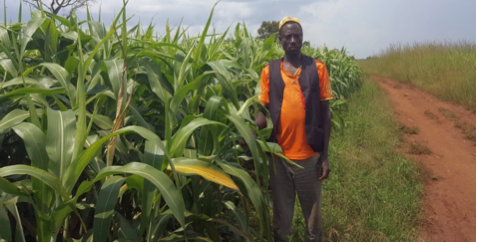
There are 278 smallholder farmers in Selama Kebele in the Benishangul-Gumuz Region of western Ethiopia. On average, these farmers own 2 – 10 hectares of land. Smallholder farmer Abdulahi Mohammod, age 48, is one of them. To provide for his thirteen children and two wives, he cultivates 6 hectares of crops which include corn, sorghum, soybean and red peppers. With the earnings derived from his land he is able to meet his family’s basic needs, which includes paying school fees for seven of his children.

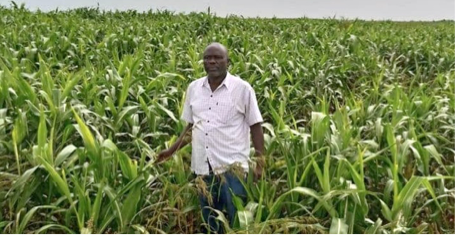
There are also 11 agricultural investors in the Kebele such as 61-year-old Abdulmohammod Ibrahim, who grows cash crops such as corn, sorghum and soybean on 250 hectares of land.

Despite the disparity of circumstances among local smallholder farmers and investors in the region, both actors require certain preconditions to fully benefit from their respective farmlands: Abdulahi and Abdulmohammod agree that dispute-free boundaries backed through Land Use Right Certificates are one of the key-prerequisites to be able to sustainably increase their agricultural productivity.

Before commencing agricultural development, investors must lease the land from the regional government which is providing Certified Land Use rights. Meanwhile, the majority of smallholder farmers cultivate land without official land use rights, such as Second Level Land Certification, which means that they suffer from insecure land use rights and tenure insecurity.

For smallholder farmers, land is traditionally passed down from one generation to the next without adhering to any legal transaction procedures. Consequently, overlapping farmland claims are common, as boundary demarcation and confirmation of use rights is only evidenced by word of mouth. This practice is ubiquitous among many sub-Saharan countries where only 10 per cent of the agricultural land is formally documented. These traditional and customary systems do not ensure formal land use rights, and disputes over boundaries and access to natural resources occur frequently. In Benishangul-Gumuz Region, such land disputes were further exacerbated through the government launching of the private agricultural investment project in 2010/11. Even if investors have well documented leases, these are not always strictly adhered to and illegal encroaching on smallholder farmland takes place. Inevitably, this will continue to lead to land disputes until and unless adjacent smallholders can also be provided with legal land use rights.

As insecure land tenure rights prevent long-term investments for both smallholders and investors alike, without formal land use rights, it is challenging to access necessary financing mechanisms such as loans to legally rent plots of land and to ensure legal ownership of the agricultural produce derived from the cultivated land. Hence, land tenure insecurity for smallholder farmers and investors directly translates into insecure livelihoods and inputs for downstream processes.

Solutions to mediate existing land disputes among smallholders and investors and to prevent future disputes are needed urgently. In this regard, the Support to Responsible Agricultural Investments project has been instrumental in addressing these issues. Since 2019, the project funded by the German Federal Ministry for Economic Cooperation and Development (BMZ) has been implemented by the Deutsche Gesellschaft für Internationale Zusammenarbeit (GIZ) in the Region with the aim of ensuring land access and benefits from responsible agricultural investments for smallholders and marginalized people.

To date, approximately 2000 smallholder households have had their land demarcated through the project and are waiting to collect their Second Level Land Certificates from the respective district offices. Abdulahi benefits from this Land Use Right Certificate already.


Smallholder Farmer Abdulahi Mohammod 48, cultivating sorghum on his land
Photo 1: Smallholder Farmer Abdulahi Mohammod,48,
cultivating sorghum on his land


“My land situation has improved compared to the one my father had. I now have a legal land use right; I do not have to fear boundary disputes with my neighbors; I can rent out my land; I can take out a loan and my children and wives also have inheritance rights.”


Land Use Right Certificates not only resolve and prevent conflicts, but they also serve as the means to boost confidence related to investment decisions. Investor Abdulmohammod believes that secured and documented Land Use Right Certificates make it easier to avert investment risks and mitigate boundary conflicts.


Commonalities between Ethiopian smallholder farmers and agricultural investors
Photo 2: Investor Abdulmohammod Ibrahim, 61,
inspecting and monitoring his sorghum field


“My land under cultivation was transferred to me by adhering to a thorough land identification, verification and certification procedure. Hence, claims occurring over the land can be resolved efficiently.”


Quarterly consultation meetings with smallholder farmers such as Abdulahi, investors like Abdulmohammod and government representatives are now organized by the districts and the regional Land Administration and Investment Bureau. The demarcation of land together with the consultations and the dialogue fora have become a gateway for cooperation: knowledge and technology is transferred, smallholders gain better access to certain inputs and investors are confident about investing in the long-term, as adjacent smallholder farmers guard their vast land and assets.

With the Second Level Land Certificate for his six hectares, Abdulahi experienced land tenure security for the first time; he is able to legally cultivate his land without any fear of the land being expropriated. In addition, he generates extra income by renting out land which he does not utilize.

Similarly, Abdulmohammod has gained confidence through community-investor dialogue fora and the support provided by community elders to invest in tree planting and undertaking conservation agriculture. The cooperation with smallholders is beneficial for Abdulmohammod since they protect the investment and are happy to work on his farm.

Explore the Responsible Land Policy in Ethiopia project and the global programme.

Originally published on 17 August 2021 by the Ethiopia Project Responsible Land Policy on Land Portal. Republished under Creative Commons Attribution 4.0. Photos via Land Portal.

Securing Women’s Land Rights: Challenges and Solutions

This blog was originally published on Agrilinks. 

By Beth Roberts 

Secure land tenure is key to eradicating poverty, increasing agricultural investment and ensuring food security, and is an essential element of climate action and climate resilience. Yet women have far weaker rights to land than men. These disadvantages exist broadly and with few exceptions globally, and are especially limiting to the well-being of women and their families in rural areas, where land is the basis for livelihood, identity, social standing and social security.

In USAID agricultural programming, this question becomes particularly relevant for fulfilling commitments to gender equality and for the success of programs overall. This blog post provides an overview of the challenges to women’s secure land rights, why those challenges matter in the context of agriculture and approaches USAID and its partners can employ to overcome them.

Why do these barriers to women’s land rights matter in the context of agriculture?

Agricultural productivity and food security: For women, lack of secure rights to land is also associated with lack of access to credit, extension services and inclusion in agricultural programming. These factors limit not only women’s agricultural productivity, but also overall household agricultural productivity and food security, given that women are extensively engaged in on-farm work and are frequently the primary producers of food for household consumption. With greater control over land, women can invest in more nutritious crops, more productive and sustainable practices and have more influence on how the family leverages land for both food and income. Evidence on the relationship between women’s land rights and agricultural productivity is still incomplete. However, the evidence that exists clearly shows women’s land rights supporting women’s bargaining power, decision-making over consumption and investments in children’s well-being, and suggests a positive relationship with food security.

Ripple effects for sustainable development: There is strong evidence that land rights for women are central to the question of women’s empowerment. A wealth of development literature also demonstrates that when women have greater control over assets and a higher income, more money is reinvested into the family and community. This results in better health outcomes for women and children and more spending on education — two foundational contributors to development. It can also result in reduced levels of gender-based violence and exposure to HIV. Finally, stronger land rights for women can mean better investment in climate-smart agriculture and other measures crucial for both adaptation to and mitigation of climate-related events.

Gender equality and women’s economic empowerment: Gender equality is a development goal in and of itself. Without equal power over humanity’s most basic assets — land and natural resources — gender equality cannot be achieved. Without squarely addressing inequalities in land rights and governance, women’s economic empowerment efforts may unintentionally contribute to a world where women have more opportunities than before, but still lack substantive equality with men.

What are the barriers to strong land tenure rights for women?  

Legal barriers: While significant progress has been made over the last several years to enact gender-responsive reforms in laws and policies related to land, discrimination in law still limits women’s rights in at least 75 countries. Even where laws are aimed at furthering gender equality, or are at the very least gender neutral, lack of implementation, awareness and enforcement severely hampers women’s ability to claim and protect their rights.

Multiple legal systems: In many countries, there are parallel legal structures in formal and customary or religious law. Customary law is often the prevailing legal framework in rural areas. While it can be flexible and contextually appropriate, customary law is often not codified and frequently disadvantages women. Customary law and formal legal frameworks often contradict each other, or the relationship between them is simply unclear. Marital property and inheritance regimes often make women’s land rights dependent on women’s relationships with men, but do not limit men’s rights in the same way. These complexities mean that clarifying — let alone protecting — woman’s legal rights may be difficult.

Social norms about land: Land is still considered a male purview globally and can be strongly linked to a man’s identity as the breadwinner. This, in turn, is related to inheritance practice — land is often reserved for sons or families of deceased men (as opposed to their widows), even if laws on inheritance are gender equitable. These norms can also limit access to land for single women, whether divorced or unmarried. Women tend to hold less land, of lesser quality, and their access to and rights over their land are often secondary, contingent on their relationship to a male family member. Norms about types of work, including plowing land, may limit women’s ability to make land productive, even if they own it. Women also face hurdles to obtaining credit, which can limit both their access to land (via the market) and their control over land (e.g., their ability to leverage land as collateral).

Social norms affecting women’s ability to make most of the land: Entrenched gendered norms related to care work make it difficult or impossible for women to participate in agricultural trainings, projects and investments. Expectations for women and girls to cook, clean and care for children and elderly family members mean that they have little time to engage in income-generating activities or learning opportunities, even when the intent of programming is to include women. Social norms also mean women are less likely to have access to information. Often, male elders or men in the community hold radios or mobile phones, or are gatekeepers for information shared by visitors to the community. Women may also be limited in their ability to travel freely outside a community or to travel alone. This can hinder women’s access to markets and government services related to land.

Access to justice: Customary and informal justice systems remain the primary mode for land dispute resolution and access to justice in low- and middle-income countries, particularly in rural areas. Like customary law, these systems provide culturally appropriate venues and can sometimes provide a more favorable environment for women than formal systems. However, customary and informal justice systems frequently reflect the norms that discriminate against women with regard to land and may leave women without recourse. Formal systems tend to be inaccessible for most rural people — geographically, financially and even culturally — and gender bias, as well as discriminatory laws, can often mean women do not get a favorable hearing or result. Finally, land disputes in formal systems often face backlogs of months to several years.

How can USAID investments address these issues? 

Invest in inclusive and socially responsible land governance: Agricultural systems should be inclusive, sustainable and a path out of poverty. To achieve this, women must have an equal voice and their priorities must be reflected in how people, communities, companies and governments access, use, make decisions about and benefit from land. Supporting agribusinesses and governments (including local governments) to uphold standards for responsible land governance and agricultural investments, implement existing gender-equitable land or agricultural policies, or register land rights and plan land use and management through gender-responsive processes, can increase women’s secure access to land and foster a more stable environment for farmers and companies to invest and grow.

Work with partners to identify “project-sized” land-related barriers: Bringing together partners from different sectors — along with actors like community leaders, local officials, producer organizations and women’s organizations — can identify concrete challenges and solutions that can enhance both project impact and women’s land rights. For example, removing land ownership requirements for cooperative membership can increase access to agricultural inputs, services and information for women and youth. Gender and social inclusion analyses before or during projects can identify barriers and solutions.

Invest in social norms and behavior change strategies: Without shifts in gendered norms, women will continue to face disadvantages in access to land and in agriculture programming. Good practices for changing gendered norms are increasingly being researched and documented. In the state of West Bengal in India, recent USAID programming to increase women’s participation in PepsiCo’s potato supply chains has been accompanied by changes in social norms — with promising results. Challenging gender norms can put women and girls at greater risk of gender-based violence (GBV). Practitioners should conduct risk assessments at the outset of any community engagement, directly engaging with both women and men to identify and mitigate the potential for and incidences of GBV.

Design interventions with an intersectional lens: Women are not a homogenous group, and benefiting women overall requires applying intersectional analysis to avoid excluding or causing unintended harm to women who are most marginalized, including indigenous and migrant women, and women from ethnic, religious or other minority identities. Women’s partnership status and whether a partnership is legally or socially recognized are often important determinants of women’s land tenure. USAID has produced several sectoral intersectional analysis frameworks, and the global public health sector provides numerous examples as well.

Rely on national and local gender experts: Gender norms are complex and contextual in nature, and practitioners should rely on and learn from local gender experts and organizations. Strong partnerships with local organizations also allow for the long time horizons needed to gain trust and make progress on shifting norms within communities.

Support capacity building for USAID staff and partner organization staff: Gender skills building is frequently needed for practitioners to gain the knowledge and confidence needed to address gender issues adequately. Providing time and resources to enable reflection and growth will yield better and more long-lasting impacts for gender equality.

Strong governance of land is foundational to sustainable agriculture and sustainable development: Strengthening women’s rights to land is key to both. Ready solutions and promising practices are available to overcome the challenges women face to claim secure tenure rights.

Further resources to support integrating gender-equitable tenure approaches into agriculture and gender interventions.

COVID19, Food & Nutrition Security, and Gender Equality

This blog was originally published on Agrilinks. 

How women, gender equality, and social norms are critical to recovering from the COVID19 crisis — and building back better.

The World Food Program says that the number of people facing food crisis will likely double as a result of COVID19. A combination of disrupted markets, lack of international trade, lower travel, and mobility restrictions are going to impact people’s ability to grow, buy, sell, or prepare the food they need to stay healthy. By the end of 2020, 265 million people are likely to face starvation.

These numbers are dire, and the picture for women is worse. Women already bear the brunt of hunger. 60% of the hungry people and 76% of displaced people in the world are women and girls. Women-headed households are the most likely to suffer from food crisis. Add that to the incredible burden COVID19 is putting on women, rising rates of GBV, and the other gender implications of COVID19, and the potential impacts are staggering.

Women are also a core part of the solution. They are leaders, innovators, farmers, caretakers, and saleswomen who can help solve this problem. Investing in women works. CARE’s research shows that every $1 we invest in a woman farmer turns into $31 of benefits to herself, her family, and her community.

For women to further unleash their leadership, we need to transform the social norms and barriers that stand in their way as they respond to crises, feed their families, influence markets, and negotiate a better future. Laws, assumptions, data gaps, and traditional gender roles all put additional barriers on women’s ability to respond to crisis. If global responses to COVID19 perpetuate those inequalities—such as by releasing gender blind data about food security and COVID19—we will lose the chance to build back inclusively and equitably.

This review examines how COVID19 will especially challenge women and their food and nutrition security. It also shows women can be a part of the solution if they have a seat at the table and a greater voice in decisions.

Women grow food

Women are a key—and yet often invisible—part of our food systems. Women are 43 % of the farming workforce in developing countries. More than 60% of employed women in sub-Saharan Africa are working in agriculture—for half the wages men make. How is COVID19 challenging women growing food?

  • Increasing the burden of care: Even in a regular year, women are already working 1.5 times more hours a day than men are. Caring for children, collecting water, preparing food, cleaning house—women do 76% of that unpaid care work. COVID19 is increasing women’s caregiving burdens because children and the elderly are at home more and women are much more likely to be caring for the sick. That extra time makes it challenging to spend the time they need on farming, and productivity will suffer. All guidance must aim to reduce burdens on women’s time and encourage men to share the caregiving burden.
  • Reducing access to information: Many women rely on informal, person-to-person networks to get access to information. COVID19-related mobility restrictions and social distancing are compromising this kind of information sharing. As agriculture extension services move to digital platforms to accommodate social distancing, women will get left behind in the widening digital divide. Globally, 327 million fewer women have access to smartphones than men. In Sub-Saharan Africa, only 58% of women own a mobile phone compared to 71% of men. Men are more likely to control radios and other means of communication. Access to technology is not gender neutral, and we must not assume this in guidance, advisories, and response plans.
  • Closing access to markets: Normally, women’s lower access to resources means they produce 20-30% less than men do. COVID19 is likely to widen that gap. As markets close and cross border trade deteriorates with COVID19 quarantines, women struggle to access the seeds, tools, and fertilizer they need to plant crops this year. In addition to the challenges men face, mobility restrictions and caregiving burdens make it harder for women. When input prices rise, women—who already have lower incomes—will get priced out of the market for seeds, tools, and labor before men do. It is imperative that our guidance, investments, and technical support do not neglect this reality.

Women buy, sell and prepare food

Globally women do 85 – 90% of the cooking. They also do most of the grocery shopping. Women invest more of their money in buying food than men do. In most contexts, women are also almost entirely responsible for child nutrition. Cooking and feeding the family are often considered to be a profound part of a woman’s worth; that’s why standard questionnaires about GBV ask if it is acceptable to hit a woman who has burned the food. How is COVID19’s impact on food systems likely to have a bigger impact on women?

  • Lowering mobility: In many countries, women already have lower mobility than men, often requiring permission to leave the house. Some policy decisions in the COVID19 crisis restrict women more than men. Malaysia famously only allowed heads of household to leave the home. Caregiving burdens also keep more women at home.
  • Decreasing immunity: When a crisis hits, women are usually the first to start eating less, or eating last, to make sure that the rest of their families can get enough to eat. They are also 3 times more likely to be anemic than men. Not only does this mean more women than men are likely to go hungry when the COVID19-related “hunger pandemic” hits, it also means that women will have fewer of the nutrients so vital for boosting the immune system to fight disease. High rates of anemia for pregnant women and children increase these risks.
  • Raising risk: Women are also facing higher risk of Gender-Based Violence and sexual exploitation as food quantity and quality decreases and stress goes up—especially when many men consider inadequate food preparation a justifiable reason to abuse their wives. Where women can be more mobile and continue their role of buying food for the household, that may put them at higher risk of exposure to COVID19. Women are spending more time collecting water to meet higher handwashing needs, which increases women’s and girls’ risk of COVID19 exposure and GBV.

Women face social barriers and harmful norms

The COVID19 crisis risks rolling back women’s rights and economic gains, as so many crises have before. CARE’s research in Ethiopia and Zimbabwe nutrition programs showed that gains in women’s decision-making power at home regressed when crisis hit. In Mali and Niger, women are the first to lose access to land and income when crisis puts pressure on resources. The Arab Spring was catastrophic for women’s rights in the Middle East, as people seized a moment of crisis to roll back social progress—a pattern that is already repeating in COVID19.

The 2008 financial crisis rolled back women’s rights and employment. In the wake of COVID19, millions of women are losing their jobs in female-dominated industries like garment factories in Asia or domestic work in Latin America. Women who own small businesses in West Africa are now putting all of their capital into buying food for their families. For the poorest and most vulnerable women, losing these economic gains may also risk the empowerment and decision-making roles that women have been able to claim for themselves.

Women are not at the table when key decisions are made and are often invisible in the datasets leaders use to guide decisions. The current data around COVID19 and food crisis is replicating this pattern, putting women at risk of losing the gains they had made around rights, agriculture, financial inclusion, and decision-making.

Women are an essential part of the solution

COVID19 is putting unprecedented pressure on women, their rights, and their food security. But women can also be powerful actors to solve the problem. Their ingenuity, solidarity, adaptive capacity, and key role in food systems means that if we keep women at the core of COVID19 response, we may see better results. How can we work with women to mitigate the coming food crisis?

  • Treat women and girls as leaders: CARE Zimbabwe’s Masvingo El Nino Recovery Project, funded by USAID’s Office of Foreign Disaster Assistance, encouraged women to be in leadership roles during crises to ensure that women’s needs are met, and that women have a voice in community decision-making on crisis response, to find long-term solutions to agro-input market disruptions. Women have different needs in a crisis and need to be a part of shaping the solutions.
  • Build all guidance, data, and policies with reference to women’s rights and needs.  As development and humanitarian actors adjust plans and programs, it is imperative that all plans address different needs and vulnerabilities of women. Much current technical and policy guidance in the food and nutrition security arena is gender-blind. These omissions risk reinforcing existing biases in the way services, incentives, and information are delivered to women—further eroding women’s rights.
  • Ask women and girls what they need: All data collected in COVID19 should be sex-disaggregated, and include specific questions that ask women themselves what they need because women, men, and youth have specific needs. The current data on COVID19 and food crisis has a significant gap around the experiences and needs of women and girls—a gap we should urgently fill. Understanding how this shock is affecting women’s food security is key to finding solutions to the looming food crisis.
  • Work with women’s groups: Women’s groups—savings groups, farmer groups, producer groups, and social groups—exist all over the world. With savings groups alone, CARE reaches 10.3 million women. These groups are already taking steps to react to COVID19. In Niger, women savings groups negotiated with a local energy company to get handwashing equipment they could install in their community. In the 2012 crisis in Mali, savings groups took charge of helping refugee families get access to resources.
  • Get women cash and food now: Because of quarantines during Ebola, 60% of people in Sierra Leone ate their entire seed reserve and could not plant crops the following year. 26% of people sold off all their livestock, and 40% had used up all their savings. Depleting assets this way can depress agricultural production when farmers—especially women—can’t afford to buy seeds, fertilizer, or other tools they need to grow food. The effects can last for years, with below average production as families struggle to rebound. A combination of seed vouchers, cash transfers, and support to savings groups helped keep Sierra Leone’s crops growing, and 84% of people were eating more meals.
  • Recognize women as farmers and producers: Any COVID19 agricultural support, programs, and subsidies should explicitly target women producers. That means not only setting specific targets for at least 50% of support to reach women farmers, but also designing interventions that meet women’s needs. When we aim to keep inputs flowing, we need to consider what women need. One example from Ethiopia includes packaging inputs in smaller bags so women can afford and carry them.
  • Think of women as market players: Women are critical players in many markets and help keep economies flowing. In Haiti, 43% of female vendors in the social safety net program hired additional labor to help with their businesses. Women entrepreneurs in Rwanda created nearly 100,000 jobs and increased business profitability by 75%. Every COVID19 food security response should explicitly consider how to support women in markets, agricultural value chains, and business to support recovery.
  • Support women to build connections to markets: In Bangladesh in 2014, political unrest shut down markets in some areas for several weeks at a time. Communities were not able to tap into normal market activities. Women who had built links with market buyers bounced back from crisis faster. They saw production drop by 3.8% and were able to return to pre-crisis levels in 2 weeks compared to 7 weeks and 7.1% drop for disconnected women. Connecting these women to markets was only possible by convincing private sector actors to change the way they thought about women as market players.
  • Enable women (and men) to access information: In Ghana, Talking Books and radio were used to convey seasonally appropriate key recorded messages. As one male Gender Champion put it, “The talking book was a very powerful gender tool. (…) Women would bring the talking book home and play it. The talking book had a significant impact on hard to reach men in the village.” Radio programs and WhatsApp groups are also used to broadcast shows and information on nutrition, agriculture, and child health. When conflict and insecurity in Mali made it difficult to reach farmers, CARE worked with in partnership with Farm Radio International and local radio stations to host shows on nutrition, agriculture, and child health, and the intersections between them.
  • Allow as much mobility as possible: Social distancing is a critical tool to contain the spread of COVID19, and quarantine measures are designed to support that. These measures should still allow as much mobility as possible, and particularly support women’s mobility. Restricting travel between communities while ensuring that small-scale women farmers can get to their fields, encouraging men to take on child care responsibilities while women leave the house, keeping markets open with adequate social distancing measures, and investing heavily in public handwashing facilities can reduce the spread of COVID19 without crippling markets or making it impossible for women to access food.
  • Engage men to support women: Working with male leaders who can advocate for women’s rights and speak out against GBV is one key to success. Another is getting men to support women with caregiving work, household chores, fetching water, and other traditional roles for women. This gives women time to tend their crops and ensure food security in the long run. Men should also ensure women get equal access to food.

Build back equal

We must consider women’s rights and empowerment as an essential element of the COVID19 response and long-term resilience—not a trade-off between immediate crisis response and a longer-term goal of women’s rights. Women and their rights are at risk in the COVID19 crisis. Gender-blind policies now will risk not only women’s rights now, but also our global food and economic systems where women are critical actors. Women have the skills and abilities to lead in crisis, and our programs must empower them to do so. It is only by leveraging every resource available in the world—including the incredible, often ignored and oppressed—skills women bring that we can overcome the crisis we all face.

New Newsletter on GIZ Land Governance

In August 2021, a newsletter covering various land governance programmes of GIZ was launched. This newsletter is available for everybody who is interested and informs about current development within GIZ land governance and beyond. The three main programmes responsible for the newsletter are: 

The Global Programme Responsible Land Policy,

The new Sector Programme Rural Development and

The Global Programme Strenghtening Advisory Capacities for Land Governance in Africa (SLGA). 

However, the newsletter will not be limited to content from these three programmes, but also inform about further developments in the GIZ land sector and in partner organizations, including new publications, upcoming events, scholarships and job opportunities. It will be issued 3 times a year and unsubscription is possible at any time. 

If you are interested to receive the newsletter, please click here to subscribe. Our newsletter is the 8th in the list of Thematic Newsletters. 

Source: Global Programme Responsible Land Policy, Land Portal, August 11, 2021. Republished with attribution.

Young Women Stand Their Ground in Zambia’s Wildlife Sector

Zambia’s protected area system is home to abundant wildlife, including species like elephant, giraffe, lion, leopard, and rhino. Zambia’s wildlife brings millions of dollars from the tourism sector each year into the country, some of which trickles down into the extremely poor rural communities adjacent to the protected areas. These investments can help to incentivize the protection of species and habitat that would otherwise be susceptible to poaching or conversion to agriculture. Wildlife law enforcement offers one of the few employment opportunities for young people in these rural communities and is an important benefit of conservation. For many young women, however, social and cultural norms make these employment opportunities largely out of reach. Wildlife law enforcement is a male-dominated field, and society  perceives women as lacking the ability and skills to be employed in positions that require being away from home for extended periods of time. Few women are employed in the sector, even in entry level positions such as community scouts. Presently, women make up only 14 percent of community scouts employed nationally.

But perceptions are beginning to shift with Zambia’s first ever all-women team of community scouts, who are mostly under 25 years old. The USAID-funded Integrated Land and Resource Governance (ILRG) worked with the Department of National Parks and Wildlife (DNPW) and Conservation Lower Zambezi (CLZ) to recruit and train a cadre of female scouts working in the communities surrounding Lower Zambezi National Park, and encouraged other conservation partners to increase the number of women recruits they support. This initiative is demonstrating that women excel in wildlife protection when offered the chance. With formal employment comes increased status, independence, and confidence, as well as cultural acceptance for these women to decide if and when they would like to start a family. It shows that formal employment in the wildlife law enforcement sector can change the lives of young women for the better, and it impacts the perceptions of the broader communities on the value of conservation and the role of women in its protection. The women who have participated note the family and cultural pressure to get married and start families once they have finished with formal school. But with employment, the women are able to chart their own paths and take control of their futures.

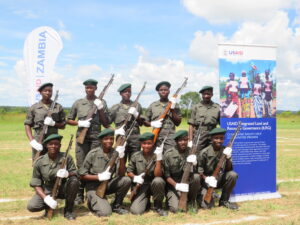
Zambia's first all female unit from Lower Zambezi National Park during the Community Scout Graduation at Chunga Graduation Ceremony, March 2021
Zambia’s first all female unit from Lower Zambezi National Park during the Community Scout Graduation at Chunga Graduation Ceremony, March 2021. Photo credit: Matt Sommerville, ILRG


Breaking these social barriers requires a range of support mechanisms and review of business as usual. To encourage women to apply, USAID partners disseminated messages about this career opportunity in secondary schools, clinics, churches, and by word of mouth. Recruitment is a competitive and physically demanding process. When the young women arrived at the co-ed training, many had never participated in endurance tests or even run in heavy boots. To address gender biases in the recruitment process, physical endurance standards were adapted for the women and men recruits.

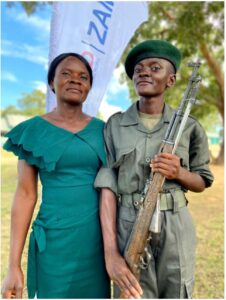
Rosemary Chimeza, 21, was one of the 46 people recruited for the intensive three-month residential training at the Chunga Wildlife Training School in Kafue National Park.

Rosemary, right, and her mother, Lilian, left, celebrate at the graduation ceremony Credit: Francesca Cooke, Consultant
Rosemary, right, and her mother, Lilian, left, celebrate at the graduation ceremony
Photo Credit: Francesca Cooke for USAID

Half of the cohort was female, which was the highest ever proportion of women recruited in a single selection. USAID ILRG supported the adaptation of the curriculum so that training was women-inclusive and gender-responsive. An eight-hour gender-specific session was held during training, covering both the challenges and benefits of women’s participation in natural resource management, and the prevention and response of gender-based violence (GBV). Women and men trainees also received training on socio-emotional skills like assertiveness, self-confidence, and leadership.

Training was physically and mentally demanding.  It was the first time many young women were away from home. Building physical fitness and learning wildlife field operation also required perseverance and endurance. Rosemary and her colleagues recounted their experiences, “Every day there was a new physical activity for us to train in. We would be woken up unexpectedly in the middle of the night to start a long run through the rain. It was difficult but we supported each other. This made the training less stressful and actually it became a fun challenge. After the first few weeks, we knew that we could complete this course.”

Rosemary still remembers with joy the day she returned to her village following her graduation as a community scout. She says she was received “like a chief” by everyone. “People look at me differently, I look at myself differently,” she said. “The young men of the village show me respect, and others now fear me, because I’ve been trained in handling firearms. They call me ‘officer.’”

Breaking gender barriers

On patrol, the all-women team of community scouts are doing everything their male counterparts do. Young women still face challenges though, as deep-seated gender norms and traditional beliefs persist in the local communities. When they patrol remote areas, community scouts must spend extended periods of time away from their homes and families, which is often socially perceived as incompatible with women’s reproductive roles and with their disproportionate share of unpaid caring responsibilities.

On the other hand, the community scout job offers a well-respected employment pathway for young women and supports gradual shifts in gender norms. The women community scouts said that many of their female friends in their villages are already married, while the scouts feel they could wait more years to get married and spend their time investing in their careers and future. In many ways, the work of community scouts is redefining the role of young women in conservation and raising their value within the community. 

“We had accepted that the scout job is too tough for women but these young women have shown us that it’s not,” explained Chimusambo, the village Head Person from Rosemary’s village.

As the only woman in her village with a job that is typically reserved for men, Rosemary feels like she is  inspiring young women and men in her community. “They see my life as serious and focused, and they want to join and become community scouts. Even some parents now think they can send their girls to join,” said Rosemary.

“Scaling community legal literacy, land rights certification and climate resilience”: Introducing the LAND-at-scale Mozambique project

Centro Terra Viva, Terra Firma Lda and the Netherlands Enterprise Agency (RVO) are excited to announce their partnership for a LAND-at-scale project in Mozambique. Starting this year, the project will run for three years focusing on three components, namely scaling community legal literacy, land rights certification and increasing climate resilience.

Poverty in Mozambique is concentrated in rural areas and thus associated with a high dependency on agriculture and natural resources, including land. Mozambique has a legal framework recognizing this dependency through a progressive Land Law. However, main obstacles to the proper implementation of the law include communities’ lack of formalized land tenure, limited knowledge regarding land rights, low participation in decision-making among community members, and a lack of capacity among local government officials. The situation is further hampered by the severe impacts of climate change.

The main objective of the LAND-at-scale project in Mozambique is to increase community legal awareness and strengthen the security of land tenure rights, creating capacity at local level to implement and leverage the progressive provisions of the Mozambican legal framework. “Considering the ongoing large-scale rural land titling campaign of the Mozambican government in collaboration with the World Bank, this is an opportune moment to start this project” says Ernesto Sechene from the Dutch embassy in Maputo. By enriching a land titling process with legal literacy building as well as incorporating effects of climate change, the LAND-at-scale project helps ensure a holistic and sustainable approach to land certification efforts.

The idea submitted to LAND-at-scale by the Dutch embassy builds on more than a decade of experience with building legal literacy and community land rights registration. Through legal empowerment of local communities by means of a legal literacy campaign, the project will contribute to community preparation to intervene in an informed manner. “Community paralegals training and technical support represent the pillar of the social preparation and legal literacy intervention” says Alda Salomão from Centro Terra Viva. “Participation and inclusion are the main vectors, particularly the inclusion of local actors (citizens and institutions), in order to give body to the United Nations SDGs motto ‘Leave No One Behind’.”

Besides building legal literacy, the project will also contribute to the delimitation of community and individual land-use rights based on good faith occupation and customary rights, and their integration into the formal land administration system. “There is a real momentum and concrete opportunity for integrating community-driven land registration into national systems and procedures”, says Simon Norfolk from Terra Firma. As a part of the government’s rural land titling campaign, a redesign is planned for the national land registration system SiGIT. At the same time, the Mozambican government has started a process of revising the 1995 Land Policy. The main objective of this effort is to close the gap between the law on paper and implementation in practice. Bottom-up community-driven land registration can play a crucial role there.

The Dutch Ministry of Foreign Affairs funds LAND-at-scale. This project in Mozambique is funded for 1,7 million Euros and will be rolled out in selected districts from all three regions of the national territory. Read more about the project here. To stay updated on this LAND-at-scale project and others, please sign up for our quarterly newsletter.

Program: LAND-at-scale.

Related projects: LAND-at-scale Mozambique: Community land rights and climate resilience, LAND-at-scale Mozambique: Community land rights certification in municipal areas.

Originally published on the Land Portal. Creative Commons Attribution 4.0 International.

Sharing land governance knowledge within the Dutch government through LAND-at-scale

By Maaike van den Berg

The main objective of the LAND-at-scale program is to directly strengthen essential land governance components for men, women and youth that have the potential to contribute to structural, just, sustainable and inclusive change at scale. An ambitious objective, that cannot be achieved in isolation. Alignment is, therefore, a key factor in all LAND-at-scale activities – be it at project level for our country interventions or through our collaborative approach to knowledge management. Besides alignment with the land sector, an important aim for LAND-at-scale is to align and connect with ongoing processes within the Dutch government and to raise awareness on land governance issues there.

LAND-at-scale is funded by the Dutch Ministry of Foreign Affairs. The Netherlands Enterprise Agency (RVO, according to our Dutch abbreviation) manages the program. RVO is a separate organization within the Dutch government and, among many other mandates, manages international development programs for the Ministry of Foreign Affairs. Our IATI database holds over 4,000 different development cooperation projects. Many of these projects focus on private sector development, agricultural value chains, or (financial and knowledge) support to Dutch enterprises working abroad. In several of these projects, land plays an important role. The LAND-at-scale program can therefore make a difference by raising awareness and strengthening the capacities of our colleagues at RVO on how to deal with land governance issues if and when it plays a role in their projects or programs.

The Dutch Good Growth Fund (DGGF) is one of these programs where land sometimes plays a role. The DGGF program aims to assist entrepreneurs working in emerging markets and developing economies by helping them find financing for their interventions, among other aspects. An important criteria is that these entrepreneurs have to ensure their activities contribute to economic and social improvements in the country. This includes guidance to entrepreneurs on how to adhere to their Corporate Social Responsibility (CSR).  

The LAND-at-scale Team at RVO provided a basic land governance course for the CSR team within the DGGF program, tailored to their needs and the land-related challenges they encounter in their projects. This included tips and tricks for assessing applications for loans and providing useful contacts within the land governance field, for instance local CSOs or consultants. This course resulted in an adaptation of the DGGF CSR intake form and in a shortlist of helpful sources which are now used by the DGGF advisors, but which can also be used by small and medium-sized enterprises or other private sector parties.

The DGGF training is just the beginning: LAND-at-scale is committed to increase knowledge of land governance within RVO programs, among colleagues as well as implementing partners. We look forward to learning from our country projects and sharing our knowledge inside and outside RVO.  

If you have any questions about this training or others that RVO plans to organize, please do not hesitate to contact Maaike van den Berg (Maaike.vandenberg@rvo.nl).

Program: LAND-at-scale.

Originally published on the Land Portal. Creative Commons Attribution 4.0 International.

Traditional Leaders in Zambia Shift Gender Norms and Strengthen Women’s Land Rights

Originally published on the International Institute for Environment and Development blog.  

By Patricia Malasha

Across much of Africa, land is not allocated and inherited under statutory law but through customary practices rooted in kinship. In patrilineal systems, land belongs to men’s families and is inherited through the paternal line.

In Zambia, many ethnic groups follow a matrilineal system, where women own land and pass it down the maternal line.

But ownership does not necessarily translate into access, use and control of land. Even in matrilineal societies, social and gender norms undermine women’s decision-making power. Traditionally – regardless of patrilineal or matrilineal systems − men have authority over household resources, including land − so when it comes to land rights, women are left out.

In Zambia’s customary systems chiefs and their advisors – known as indunas – and village headpersons allocate land. These customary leaders are usually men and, as custodians of tradition and culture, heavily influence whether harmful gender norms and practices persist or change.

Recognizing their influence, the United States Agency for International Development (USAID)-funded ‘Integrated Land and Resource Governance (ILRG)‘ program piloted an approach to engage these traditional leaders in shifting harmful gender norms and strengthening women’s land rights in Zambia’s Eastern province, to support a parallel systematic land documentation process. Ninety-six indunas and village headpersons (32% women) from seven chiefdoms participated in a year-long three-part dialogue series.

The dialogues provided indunas with a safe space to reflect and take positive action. The first session analyzed gender inequalities in ownership, access and control of land. The second session envisioned the change indunas wanted and their role to bring about that change. In the final session, indunas discussed achievements and challenges over the year.

Dialogue Leads to Action

Through the dialogues, the indunas made promising steps to shift gender norms that hinder women’s land rights. In five chiefdoms, indunas facilitated local discussions about harmful traditions, such as sending divorcees and widows away from the villages.

These discussion forums triggered an upsurge in the number of women bringing their cases to the chief’s attention. In four chiefdoms, indunas drafted by-laws supporting women’s land rights and banning property grabbing.

Some indunas who now support changing land records to reflect land given to women reached out to traditional courts to raise awareness about the shift. In the patrilineal Nzamane chiefdom, a woman – for the first time in history – was appointed as village headperson with full authority and decision-making power.

A woman headperson in the Nyamphande chiefdom addressed a pressing form of gender-based violence related to land: the use of traditional funeral rites to deny widows’ access to their deceased spouse’s land.

Indunas and village headpersons who participated in the dialogues encouraged men in their communities to include their wives in land documentation. And the indunas led by example, committing to share their own land with their wives and children, both boys and girls.

Induna Jacob Phiri, from Mnukwa chiefdom, was the first to share his land after the first dialogue session, saying “My wife had access to my land and planted crops of her own choice, but I never thought about what could happen to her if I died. I knew I needed to act while I was still alive, so I gave her a portion of land to be her own. After that, I felt empowered to tell people in my village to do the same.”

Not All Indunas Embrace Change

Despite promising shifts in behaviors and gender norms, many indunas did not support change − taking a backseat or even attempting to block and discourage those willing to drive it forward.

Although bringing together indunas from different chiefdoms intended to foster collaboration, the pilot initiative found that individual action by the indunas was much more successful than collective action.

Some of the indunas resisted changes in social norms, and it is important to invest more time in supporting the indunas and headpersons to have a deeper understanding of existing gender norms that should be changed before moving to planning and implementation.

Change Starts with Community

The pilot showed that shifting harmful gender norms at the community level is crucial in supporting women to access land rights. Given their role in regulating local culture and advising the traditional authority on land administration, customary leaders like indunas and village headpersons are a key entry point for that shift.

Change can be slow. But spaces for dialogue, critical reflection, and support for action-planning enabled the indunas to not only change their own beliefs, but also begin to see their role and their communities in a different light.

Climate Change is Not Gender Neutral

A Q&A with PepsiCo and USAID on making the business case for women’s empowerment and combating climate change in West Bengal, India

Cross-posted from the USAID Medium blog

Margaret Henry, PepsiCo’s Director of Sustainable Agriculture; Sarah Lowery, Economist & Public-Private Finance Specialist in USAID’s Land and Resource Governance Division; and Corinne Hart, Senior Gender Advisor for Energy and Environment at USAID’s Gender Equality and Women’s Empowerment Hub, discuss how USAID and PepsiCo are working together to equip women farmers with skills to adapt to the effects of climate change.

Why did PepsiCo and USAID partner in India?

Margaret: PepsiCo and USAID came together in West Bengal, India, to form a partnership to demonstrate the business case for women’s empowerment. PepsiCo has had a long-standing commitment to sustainability and to farmer livelihoods, but we knew we couldn’t solve all the problems alone. We partnered with USAID to expand our ability to influence and benefit the women of West Bengal, who are an integral part of our farming communities.

seated group of women
USAID and Pepsico sponsor training for Eid Mubarak group members. Photo credit: Subarna Maitra, ILRG

Women are often ignored in the agricultural sector. How can the USAID-PepsiCo partnership change that?

Sarah: Women produce 60 to 80 percent of food across the world, but they own a mere fraction of the land that they farm. They are also less likely to control resources, receive technical training, and enjoy the financial benefits from commercial farming. In West Bengal, women have important roles throughout the potato supply chain, and this partnership ensures that women have access to land and the knowledge and skills they need to excel in these roles.

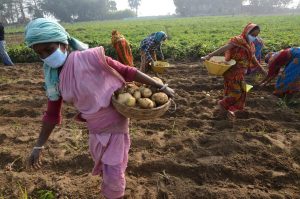
woman harvesting potatoes
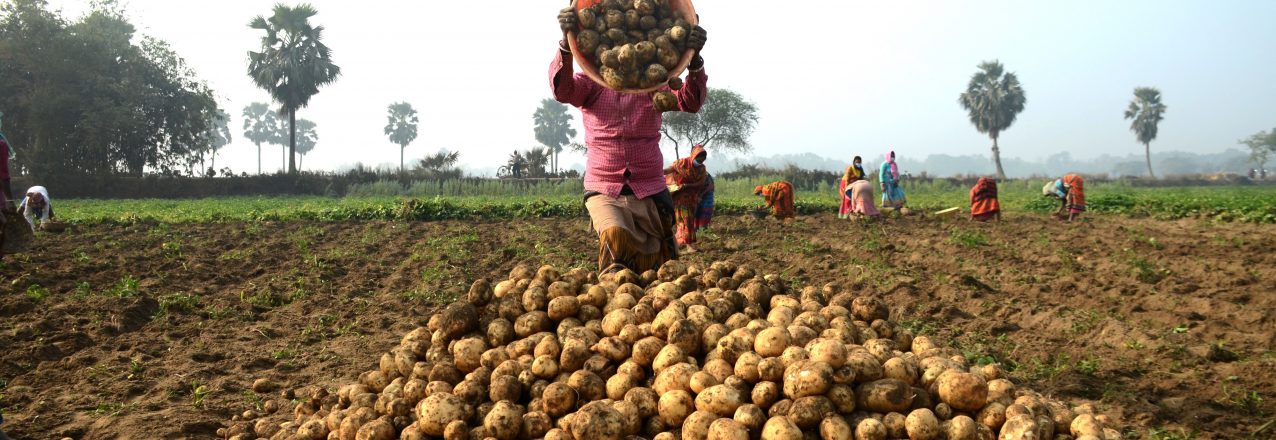
Women harvesting potatoes. Photo credit: Subarna Maitra, ILRG

What are some of the results you have seen from this partnership for women farmers and PepsiCo?

Corinne: In addition to greater access to land and productive resources, the partnership in West Bengal is engaging all members of household and local champions like potato aggregators to shift gender norms that limit women’s participation and benefit sharing. Over the past two years we have seen women gain mobility, decision-making power over farming decisions and household income, and confidence as lead farmers and community agronomists. Women’s families and communities increasingly acknowledge their roles and the skills they bring to potato farming.

How can empowering women increase productivity and mitigate the effects of climate change on agricultural supply chains?

Margaret: Every day, farmers face critical challenges from climate change, and we want to work with them to not only reduce the impact of agriculture on climate change, but to help them adapt to the changes that are coming. By empowering women, we empower our supply chains to do better. Not only in terms of productivity, but with environmental performance and adaptation to the kinds of events associated with climate change.

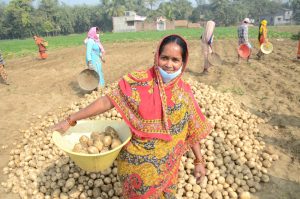
woman farmer with potatoes
Mafuja, member of Eid Mubarak Group, at harvest in Moloypur, Hooghly. Photo credit: Subarna Maitra, ILRG

How are USAID and PepsiCo scaling this partnership in West Bengal to meet global gender equality and climate goals?

Corinne: In 2020 USAID and PepsiCo began a Global Development Alliance, a five-year, $20 million co-funded partnership to demonstrate that investing in women in PepsiCo’s supply chains can lead to greater profitability and sustainability, as well as development outcomes, like gender equality and economic growth. Evidence-based approaches to improve women’s access to resources, land, skills, and employment, alongside robust data collection, will make a compelling business case for scaling to additional PepsiCo markets and influencing other global companies sourcing from rural communities. By integrating gender equality and women’s empowerment into PepsiCo’s global sustainable agriculture strategy, the GDA is directly contributing to climate change mitigation and adaptation efforts throughout their agricultural supply chains around the world.