
Securing women’s land rights means finishing the work and staying involved

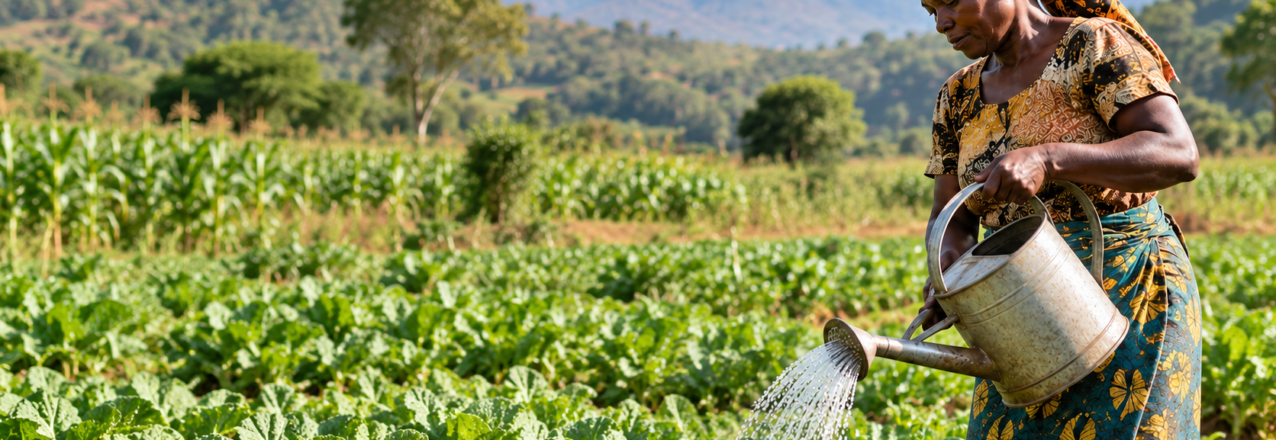
A woman can take part in a land registration program, have her land surveyed, and have a title issued in her name, yet still have no document she can use to defend her rights. Sometimes she cannot afford the final fee. Sometimes the document remains in a government office. Sometimes she receives it and still faces a relative who refuses to recognize that the land belongs to her.

These were concrete situations described during From Rights on Paper to Rights in Practice: What It Takes to Secure Women’s Land Rights, the webinar TenureSecurity.org convened with LandBridge International on October 15, the International Day of Rural Women.

I chose women’s land rights as the subject of TenureSecurity.org’s first webinar because this is an issue I care deeply about and have prioritized in my work for many years. We examined what happens between recognizing a right and being able to rely on it. The experiences shared from Tanzania, Uganda, and Zambia showed how much can depend on steps that land programs leave unfinished.

My strongest conclusion is that we need to take responsibility for the whole process women encounter. Targeted assistance can make an immediate difference when a fee or an administrative requirement is preventing someone from obtaining her document. The same work also exposes weaknesses that governments and development partners need to address. A woman should be able to complete registration, understand what has been registered, and find effective help when her rights are challenged.

Why LandBridge focuses on the final steps

Rania Ahmed, one of LandBridge’s three co-founders, began with her own family. Her grandmother had bought property for her daughters in Sudan, but the ownership had not been registered in their names. Watching the emotional strain of completing that process helped her understand the consequences of a gap that can look administrative from a distance.

Later, discussing land titling in Zambia with fellow co-founder Ailey Kaiser Hughes, she encountered a similar problem: women had participated in registration but had not received their titles.

“How many other women have a recognized claim to land and have even begun the documentation process, but couldn’t complete the final steps needed to secure legal ownership?” Ahmed asked.

LandBridge’s response is to work through local partners to identify women facing those obstacles and provide targeted support. As Kaiser Hughes explained, the organization enters where a legal pathway already exists and governments, communities, and other organizations have done much of the groundwork. Its assistance builds on that investment.

That focus has practical value. I have seen land programs reach the end of their funding with crucial work still incomplete. The survey or registration exercise may have advanced, while the person whose rights it was supposed to strengthen is still waiting.

But Kaiser Hughes also cautioned against assuming that the remaining problem is always money: “A fee is rarely the entire story.”

She illustrated this through earlier work she supported in Liberia, where obtaining an official identity document cost about US$5 and required travel to a government office. Without identification, people could not enter the land titling process. Bringing identification services into the community helped more people participate.

The lesson I draw is that support needs to follow the actual obstacle. A grant for a registration fee will accomplish little if the woman also needs identification, transport, information, or someone to help navigate an office that repeatedly sends her away. Local partners matter because they can identify those differences.

Tanzania and Zambia show what an unaffordable fee can do

Mustapha Issa, CEO of Tanzania Land Tenure Assistance, described work to help women obtain Certificates of Customary Right of Occupancy, or CCROs. In the communities where his organization works, he reported substantial progress in women’s awareness of their land rights and interest in documentation. The continuing difficulty was paying for it.

Issa described a cost-recovery approach intended to sustain registration services, with charges rising from about US$10 toward US$20 per certificate. For women with very limited income, especially older women and widows, that remained a serious barrier.

“We only issue the certificate to those who can manage to pay,” he said.

That sentence deserves attention. A fee can be modest in relation to the technical cost of registration and still determine who receives the benefit of the investment. If a woman cannot pay, her willingness to participate and the work already completed do not get her across the final step.

In Zambia, Kamiji Malasha, LandBridge’s gender specialist, described a similar interruption in the government’s land titling process. Households move through information sessions, enumeration, verification, and an offer letter setting out the payment needed for a certificate of title. Women can complete the earlier stages and become stuck when payment falls due.

Malasha put the initial payment at approximately 1,000 kwacha, or US$50, with a total cost of about US$150 in the cases she described. These were her estimates during the webinar, rather than a uniform fee schedule for every applicant. Her central point was the pressure such costs place on households already struggling to cover daily needs.

I find it difficult to regard the resulting failure to complete registration as a lack of commitment. A woman choosing food or school expenses over a title fee is making a decision under severe constraints. The design of the service needs to account for that reality.

Issa proposed a targeted fund for women unable to afford documentation, with support progressively incorporated into local government financing. That is a useful direction: immediate assistance can address exclusion now while helping establish a more durable way to finance access.

Uganda shows why paying the fee may still leave women waiting

Christine Kajumba, Research Manager at Associates Research Trust Uganda, described a different obstacle in Oyam District. Freehold titles had already been produced through a government program, but women still needed to complete payments and an administrative process to remove the fee-related caveat recorded against their titles.

The sums involved were approximately US$28–30, she reported. Yet even when her organization paid, the documents could remain unavailable for months.

“For six months, the titles were not coming out,” Kajumba said of one batch.

Her account made the administrative burden tangible. Women could face journeys between district and regional offices, including a trip of around 70 kilometers to Lira after collecting a title from the district office. Some traveled farther from their own villages. Repeated visits competed with farming, care responsibilities, and other demands on their time.

Digitization had not removed those difficulties. Kajumba described delays involving electricity, internet access, and a broken scanner. A digital process still depends on an office being equipped and able to complete the work.

For me, this was one of the webinar’s clearest lessons about institutional capacity. We need to assess improvements through the experience of the person using the service. How many visits are required? How much does transport cost? Can she find out what is happening? Does paying actually lead to receiving her document?

A system that transfers these costs and uncertainties to women is making access depend on much more than the official fee. Targeted assistance can help them navigate that system, but resolving persistent delays remains a public responsibility.

What changes when women receive their documents

The discussion also offered encouraging accounts of what documentation can make possible.

Lungowe Chintu, a women’s land and resource rights advocate working in Zambia, urged us to examine the changes in women’s lives: “We really have to look at what actually shifts in a woman’s everyday life once she holds that title.”

She reported that seven of nine women surveyed were generating steady rental income. She described women expanding rental accommodation, improving their homes, and reinvesting income in businesses and savings activities. One woman, Miriam, had added a rental unit and improved her home. Chintu also described women expressing greater confidence that they could answer someone who challenged their ownership, and plans among women surveyed to pass land to their daughters.

These accounts matter. They suggest how greater confidence in a property claim can connect with investment, household security, and expectations about inheritance.

They also need to be understood at their scale. A follow-up involving nine women provides valuable experience to investigate further; it cannot establish the average effect of titling or demonstrate that documentation alone caused the changes reported. I would like to see these experiences followed over time, including women whose circumstances improve less, whose rights are challenged, or who encounter new difficulties.

Kajumba was similarly careful about Uganda. She reported that 340 titles had been delivered through the work she described, while emphasizing that it was too early to make claims about changes in income or longer-term impact.

What she could describe was women’s relief at having evidence of their rights, including women with ongoing disputes. Her organization had also begun spending time at distribution meetings explaining what a title means, how transactions must be handled, and how the document can support a claim.

Some women were beginning to assert greater authority over decisions about their land. Kajumba called this an emerging “veto voice.” That is an observation worth following closely: whether a woman can refuse a proposed use or transfer of her land tells us something important about her ability to exercise her rights.

Issa also reported changes in women’s participation in decisions in Tanzania, while warning that family relationships, social norms, and control over money continue to influence whose voice counts. Documentation can strengthen a woman’s position within those relationships. Its effect still depends on how others respond and what support she can access.

A title needs institutions willing to uphold it

Kajumba’s account of a woman called Maureen brought this difficulty into sharp focus. Land had been registered in Maureen’s and her mother’s names, but her mother died before the title arrived. An uncle then allocated the land to his son. Maureen feared confronting him.

The document provided evidence. It did not remove the fear or resolve the dispute.

This is where the question of women’s land rights becomes inseparable from power. A woman may know her rights and possess documentation while facing someone able to intimidate her, ignore her claim, or make seeking help costly and unsafe.

Kajumba called for sustained engagement with men and cultural leaders so that they understand and respect women’s documented rights. Chintu described work with traditional leaders in Zambia, using discussions about what happens to widowed daughters to challenge practices that leave women without land. Some traditional leaders were becoming advocates for women’s land rights themselves.

The audience discussion raised the relationship between women’s rights and customary governance. The country experiences showed why we need to understand the institutions and relationships involved rather than treat customary systems as uniform. The documents under discussion also differed: CCROs in Tanzania and certificates of title in the Uganda and Zambia interventions.

My conclusion is that community engagement and accessible remedies need to reinforce each other. Dialogue can help change expectations and practices. Women also need somewhere effective to turn when dialogue fails or when someone refuses to respect their rights. Their security cannot depend indefinitely on maintaining a relative’s goodwill.

Measure completion and follow what happens afterward

Amanda Richardson, LandBridge co-founder and founder of Resource Equity, offered a useful starting point for assessing results.

“Our first responsibility is to measure completion, not just participation,” she said.

She recalled evaluating an earlier project in India that reported substantial numbers of women’s land registrations. On visiting, she found that many documents remained in government offices and women did not know they were waiting there.

Counting participation would have missed that failure. So would counting documents produced without checking whether women received them.

Richardson identified immediate questions that programs can answer: Was the correct document issued? Are its details accurate? Does the woman understand it? Does she know where to seek help?

She also drew a distinction that should guide the longer-term assessment: “Documenting a woman’s right is not the same as her being able to exercise that right fully.”

Those further questions require follow-up. Does she retain control of the land? Can she defend her rights in a dispute? What changes in household decisions? Does she feel secure? Are there livelihood benefits?

I was glad that the discussion left room for security and peace of mind as meaningful outcomes. Being able to remain in one’s home or pass land to one’s children matters in its own right. Access to credit may be useful for some women, but borrowing should remain a choice, with its risks understood. It is a poor universal test of whether a land right has become more secure.

Audience questions about mapping added another consideration. Knowing how many documents bear women’s names can help identify gaps and track progress. Understanding whether those women can use and defend their rights requires evidence beyond the registry.

What I would like practitioners and funders to do differently

The discussion strengthened my view that land programs should plan and budget for completion from the outset. That includes getting accurate documents into women’s hands, helping them understand those documents, and ensuring that the institutions responsible for the remaining steps can carry them out.

Malasha expressed a practical principle for making services accessible: “Services must come to the women, other than requiring the women to come to the system.”

She proposed mobile titling clinics, community outreach, and trusted local women trained to explain procedures. These approaches respond directly to the distance, time, and information barriers described across the discussion.

Local organizations also need resources for the work that continues afterward: following up with offices, explaining documents, identifying disputes, and helping women reach appropriate support. During the discussion on scaling, Kaiser Hughes identified funding as LandBridge’s immediate constraint. The country accounts showed why financing needs to recognize the time and knowledge involved in making assistance work.

I would also like governments and development partners to treat repeated obstacles as evidence for improving the service itself. If women consistently need outside help to pay the same fee, make the same journey, or obtain the same response from an office, that experience should inform budgets and administrative reform.

LandBridge and its partners are addressing a concrete gap that can otherwise leave years of work unfinished. The webinar showed the value of that contribution while making clear how much remains after a document is delivered.

For me, the next question is whether a woman can rely on the right that document records. Can she make decisions about her land, remain on it when challenged, and determine its future? Following those questions over time is how we will understand whether the work is delivering the security women are entitled to expect.

This article reflects the discussion at the October 15, 2026 webinar convened by TenureSecurity.org and LandBridge International. Country figures and examples are attributed to the speakers who presented them.
Watch the webinar recording

Breaking Down Employment Barriers In Zambia: Increasing Opportunities for Female Community Scouts

By Patricia Malasha

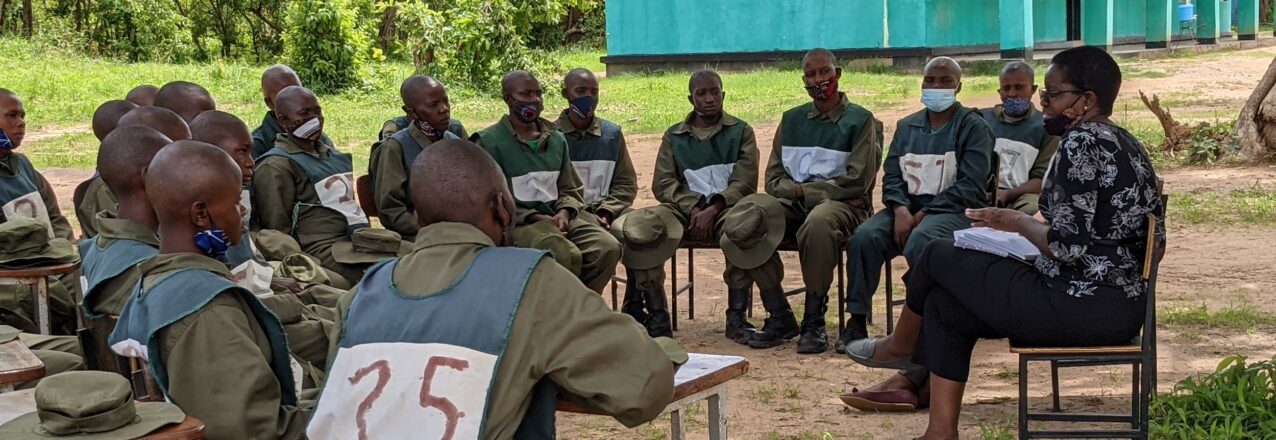
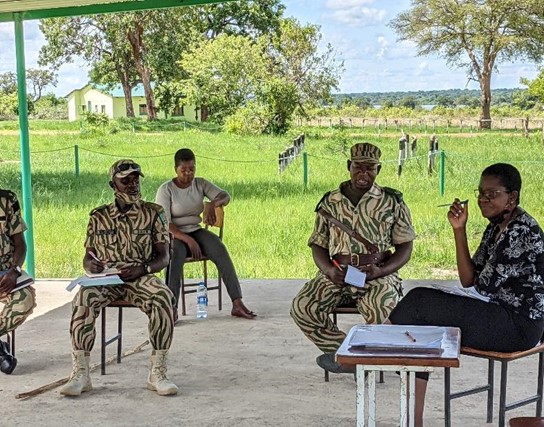
Every day, Zambia’s Game Management Areas are patrolled by joint teams of Department of National Parks and Wildlife (DNPW) Wildlife Officers and Community Scouts sourced from local communities. These Community Scout jobs are disproportionately held by men due in part to gender stereotypes that only men are capable of performing the duties of protecting wildlife and forest law enforcement.

To change this perception, USAID Zambia is working with conservation NGOs, the DNPW, community resource management groups, and the private sector to change the gender balance, and create a pipeline of female Community Scouts who can demonstrate the leadership role that rural women can play in effective natural resource management.

With USAID support, the DNPW is examining and adapting its training program and practices to increase the opportunities for women to become Community Scouts, while maintaining course rigor. USAID worked with DNPW trainers to analyze physical fitness requirements, as well as challenge stereotypes that can disadvantage women on the job; for example, assumptions that female scouts will take on an increased proportion of cleaning and cooking work during operations. Scouts and DNPW trainers are also encouraged to reflect on the risks that women face, such as retribution from their families or communities for leaving their home responsibilities while on two-week patrols.

Zambia’s conservation community is getting behind the initiative. In the past two training courses, the number of female Community Scouts sponsored by Zambia’s conservation NGOs and private sector game ranches has increased dramatically. In the latest group of 46 scouts, 50% were female, which is a first for the DNPW.  “Wildlife protection is often perceived to be a man’s role. At Conservation Lower Zambezi (CLZ), we believe in equality and recognize the value women bring in protecting our natural resources. For this reason CLZ is currently investing in the training of Zambia’s first all-female Community Scout Unit,” says Ian Stevenson from CLZ. Hassan Sachedina from BioCarbon Partners notes: “We see women leading, pioneering, and catalyzing at all levels in the critical fight for biodiversity protection and wildlife habitat conservation in Zambia. Across 13 Chiefdoms, BCP has supported the training of 29 female Community Scouts out of 105 Community Scouts that BCP funds. We are really proud to be striving for and creating strong female role models for future generations.”

These efforts are not only changing gender perceptions but putting rural women on a new career path: becoming a Community Scout is the first step towards increasing the number of women taking up employment in the male-dominated wildlife sector. Community Scouts who excel in the job have higher chances of becoming a government Wildlife Police Officer.

“We are of the opinion that we need to reorient mindsets towards the concept that being a Community Scout is a career in itself for motivated young men and women, with opportunity for development, no matter what their education level,” explains Moses Nyoni from the Nature Conservancy.

USAID will continue following the progress of the Community Scout selection and training process over the coming years to support gender integration at the DNPW and ensure the young women community scouts advance in their careers.

A Community Scout Spreads her Wings
“At first I thought I couldn’t do it, but I have done it! I am excited with great expectations! And I am soaring higher and higher!”

After dropping out of college due to financial difficulties, 23-yearold Lisa Siamusantu had no job and started selling vegetables at the community market with hopes of raising enough money to go back to college one day. One day, she saw an advertisement in the community newspaper for Community Scout training and she applied.

“All my friends discouraged me and said that I was not strong enough, but the advert said they wanted women too,” Lisa says.

She joined a scout training camp sponsored by Conservation Lower Zambezi in December 2020 in the Lower Zambezi National Park and is expected to graduate in March, three months later. Coming from a community where people believe Community Scout jobs are only for men, Lisa began to see herself as a trailblazer. She is excited about the opportunity to be part of the conservation team, and the experience has readjusted her views of traditional gender roles.

“The way I viewed the Community Scout career and the way I viewed myself have changed. I used to see it as a career for men, only those who are very strong, but being here makes me realize that anyone can do it. This changes everything, my mindset and attitude,” she explains. And for those friends who discouraged her and for Zambia’s young women, she has a message.

“Do not accept or embrace beliefs that downgrade you as women and discourage you from trying. The reality is a woman can do anything a man can. If I have done it, so you can.”

All Photos: ILRG for USAID


Land Ownership, Tumaco’s New Hope

The pandemic has shown the Colombian government how structural land issues continue to hamper rural development.

Many rural health clinics in Colombia do not have registered land titles.

Colombia’s hospitals have been challenged due to Covid-19, and while the government rushes to strengthen the country’s healthcare system, intensive care unit occupancy remains high throughout the pandemic.

The crisis has led many leaders to recognize that behind the draconian measures to curb infection, there are fundamental problems that undermine Colombia’s public service delivery and prosperity, such as issues with land administration and property formalization.

In the midst of a health crisis, the nation’s rural health centers are becoming more and more crucial as the virus reaches isolated areas. Thousands of families are a one or two-day trip from a hospital, so rural health clinics play a vital role in providing intermediate care as well as ambulance services to regional centers with specialized professionals. But many of these rural clinics, which belong to municipal governments, have never been formalized or indexed in Colombia’s national property registry.

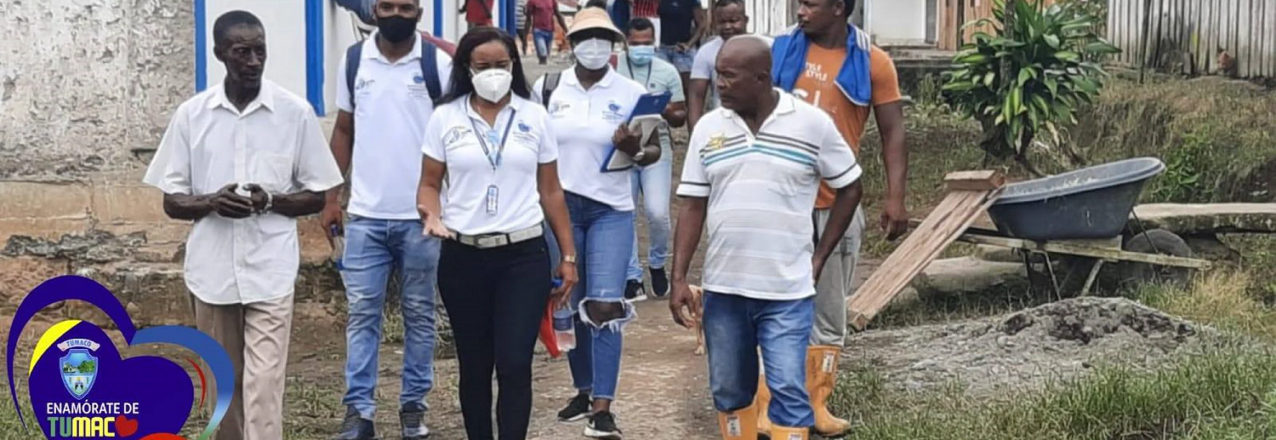
In Tumaco, where Covid-19 made headlines early on in the pandemic, there are 80 rural health clinics. But 80% of Tumaco’s parcels are informal and unregistered, so Tumaco’s mayor, María Emilsen Angulo, who has been working hard to mobilize support for Tumaco’s hospitals, can do little for health clinics in rural areas that do not even have a registered land title. This year, USAID and the Colombian government have scheduled to begin massive formalization efforts in Tumaco.

Titling Rural Health Clinics

The USAID-funded Land for Prosperity Activity is assisting Tumaco’s mayor to make land issues a priority over the next four years. With USAID support, the municipality’s Territorial Development Plan has earmarked funds to push land formalization to the forefront of public policy. Tumaco is also strengthening its Municipal Land Office, where a team of legal experts specialized in land have begun looking at which parcels can be formalized in the name of the municipality without having to hire expensive professional services.

“USAID has the funds that we don’t have. Plus, they already has the experience of rolling out a massive formalization and cadaster update pilot in Ovejas, Sucre, so here in Tumaco, we won’t have to improvise. USAID already knows the best way to do it, Angulo says.

The lack of information about which parcels are formalized is just the tip of the iceberg. The majority of Colombia’s rural municipalities have never analyzed the situation to discover what properties—schools, clinics, parks, and utilities—are informal or why.

“As we embark upon improving our health clinics, the formalization of municipal property is a requirement for any investment.” María Emilsen Angulo, Mayor of Tumaco

A Strategy for the Nation

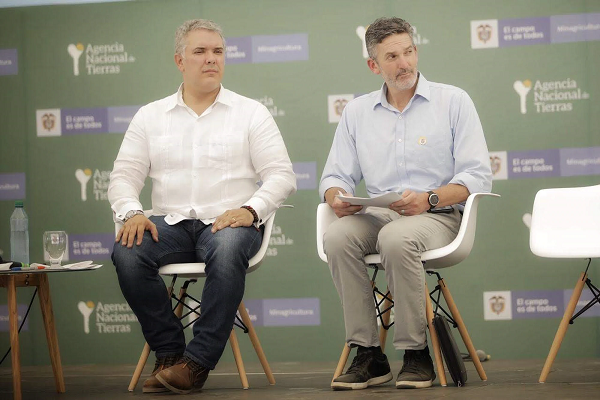
Over the next three years, USAID and the Colombian government are employing similar strategies in Cáceres, Antioquia; Sardinata, Norte de Santander; and Ataco, Tolima, among dozens more. By building on the previous five years of the USAID-funded Land and Rural Development Program, which strengthened Colombia’s land-related agencies and institutions, USAID believes Colombia’s government has the tools and determination to expand land formalization efforts to strategic regions, while updating the national cadaster. Colombia’s leaders are hopeful. Just last year, Colombian President Duque announced his plan to update at least 60% of the nation’s cadaster by 2022.

USAID’s goal is to create and support Municipal Land Offices in 12 municipalities in seven target regions, where more than 90 rural clinics could be prioritized for formalization and titling.

“The Municipal Land Offices are fundamental for the implementation of land policies, since they allow the municipality to attend to the formalization of urban properties with a gender focus and support social investment in basic services such as education and health.”Lawrence Sacks, USAID Colombia Mission Director.


Community Building from the Land

USAID promotes land titling and land administration to help resolve the social conflicts facing the population of Cáceres

The town of Caceres was already living in a sort of lockdown long before the coronavirus became an international health crisis. Just a year ago, a self-imposed curfew had curtailed business hours and streets were empty for most of the day and night. Territorial disputes, heedless violence, and constant threats have kept Caceres’ inhabitants always on the verge of abandoning their homes.

Nearly 80% of the municipality’s 11,000 parcels are informally owned, and unregulated gold mining has become the municipality’s principal lure for crime syndicates.

Official figures claim there are 30,000 people living in this historic town, founded over 500 years ago on the banks of the Cauca river in Antioquia, but over the last two years, thousands of those people have left the municipality, unable to face another day of uncertainty. And although these conditions would be ideal for containing a highly contagious virus, they do little to promote rural development, reduce crime, and improve the quality of life.

In addition to being one of three municipalities prioritized by high-level dialog between the U.S. and Colombian governments, Caceres is also a PDET municipality within the Bajo Cauca region. Thus, it is the target of coordinated investments from donors and government entities.

In today’s Caceres, land administration is nearly nonexistent. Nearly 80% of the municipality’s 11,000 parcels are informally owned, and unregulated gold mining has become the municipality’s principal lure for crime syndicates. Also, illicit crops still cover about 1,100 hectares in the municipality. As threats continue to affect rural farmers, formal documentation of land ownership is more important than ever.

Emphasizing Land

In late 2019, the USAID-funded Land for Prosperity Activity began operating in the municipality and offering innovative actions that can increase land security, prevent displacement, and create an environment for sustainable rural development. The mayor of Caceres accepted the challenge and quickly mobilized a team to help create Caceres’ first Municipal Land Office (MLO). Here, a localized team of experts works directly with judges and the National Land Agency (ANT) to formalize public properties and urban properties. The MLO provides valuable information to citizens, promotes a culture of formal land transactions, and is essential in strengthening the coordination between national and rural leaders.

“Land formalization is a way to stimulate the economy, generate a culture of peace and legality, and allow communities to put down roots. Formalized property guarantees legal security and makes it easier for farmers to access credits, subsidies, and government programs to finance their agriculture projects.” -Mayor Juan Carlos Rodriguez

Building Alliances

Building on the Mayor’s motivation, in 2020, USAID facilitated a partnership aimed at increasing resources to formalize urban and rural plots and create incentives for illicit crop substitution. Through a memorandum of understanding, the ANT, Proantioquia, Antioquia’s regional government, the municipality, and USAID agreed to increase local and national coordination and enhance the private sector’s role in rural development. With a broad spectrum of partners, farmers who substitute coca for new crops like cocoa, rubber, or ranching, will have the opportunity to use land titles to access financial services and investment capital.

“By partnering with USAID, our municipality can strengthen land governance, increase resources mobilization, and make larger investments in the communities,– Juan Carlos Rodriguez, Mayor of Caceres

The memorandum will allow the government to test the concept of using land titles as an incentive for illicit crop substitution while strategic private public partnerships mobilize resources for new, licit economic opportunities. In addition, with USAID’s support, the ANT will work with the regional and municipal government leaders to formalize parcels where public entities operate, such as schools, health centers, and parks. Property titles for public lands allow local governments to pull down national-level resources to improve public services like education and health.

“When mayors know how many properties there are, how many people live there, and what projects they can implement, they can plan for the development of their municipalities and improve their citizens’ quality of life.” -Myriam Martínez, Director of Colombia’s National Land Agency

The first step of the Cáceres MLO is to perform a municipal-wide diagnostic study of the municipality’s parcels, including the location of public properties which are untitled, and what services are being provided on each parcel.

Since 2015, USAID has established 20+ Municipal Land Offices in Colombia.


Private Actors Making Public Efforts

The private sector can do much more than serve markets and create jobs. It is essential for a country’s development and social empowerment.

Formalizing schools allows local governments to mobilize resources towards education in their municipalities.

Many believe that the root of armed conflict in Colombia comes down to land tenure. Land is a key asset to boost economic development, rural transformation, and legal opportunities. This is why the first and most significant aspect of the Peace Accord signed between the Government of Colombia (GOC) and the former FARC guerilla calls for a comprehensive rural reform. This includes democratizing access to land and mass formalization of 7 million rural parcels, that could benefit thousands of rural families and improve their quality of life.

Given the importance of land for rural transformation, Colombia’s government has designed actions and strategies to implement multipurpose and participatory land rights management projects. However, these actions surpass institutional capacity in both human and financial resources. A task this colossal requires for all actors in society to participate, which is why the private sector’s involvement in formalization efforts is so important, not only because of the investments it can make, but mainly because its involvement in long term rural development would ensure the sustainability of formal land markets.

USAID believes in the power of private participation as a driver of social development. As such, the Land for Prosperity Activity

Land for Prosperity visited Proantioquia in February in the hopes of joining forces with the Ser + Maestro initiative, which seeks to strengthen teacher’s capacities in Bajo Cauca. Later, it met with the full board of ProAntioquia, together with USAIDs Mission Director Larry Sacks and the newly elected Governor of Antioquia, to present the Program and its goals for the Department. As a result of those conversations, and the enthusiastic support of both private and public officials, on March 3rd, USAID, the Governor’s Office of Antioquia, the National Land Agency, the private sector through Proantioquia and the Mayoral Office of Cáceres signed a Memorandum of Understanding (MOU) to join efforts to formalize public schools in Antioquia, implement massive formalization, rural development, and strengthen local capacity for land governance.
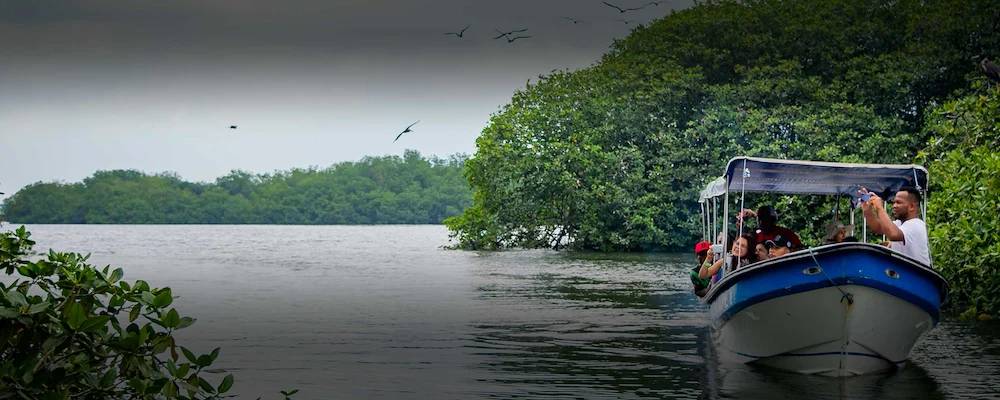
Proantioquia is a private foundation created by large companies from Antioquia, working for sustainable business development in 160 municipalities throughout several departments. It gathers some of the largest companies in Colombia, including Bancolombia (the country’s largest bank), Grupo Éxito (one of the largest retail chains) and Argos (cement producer and one of the most important players in infrastructure projects nation-wide). Its participation in formalization efforts is not only relevant but also innovative: by signing the MOU, the organization became a pioneer in private participation in a topic that has been at the forefront of peace-building efforts.

“The company must be seen as an entity whose purpose goes beyond revenue; it aims to create social capital and public value.”

-Felipe Aramburo, Proantioquia

Its engagement not only marks the possibility of funding from the private sector but also guarantees sustainability of the actions since these efforts in formalization of public schools will ultimately enable local administrations to mobilize resources to enhance educational infrastructure and the quality of the services schools provide. This is especially important in Cáceres, one of the Activity’s target territories prioritized by USAID and the Colombian government as one of the three municipalities of the high level policy dialogue between Colombia and the US government due to the large presence of illegal crops and active armed actors which, together with stagnant development, creates a cycle of poverty, violence and exclusion that is difficult to escape from.

“This is an opportunity for Cáceres. By signing the MOU, the community feels like it is taken into account and that there is willing to work towards territorial development.”-Rodolfo Bastidas, the principal of the Gaspar de Rodas school in Cáceres, Antioquia.

This MoU is the beginning of a new approach that aims to bring a key actor into the mix of socio-economic development. Helping to formalize schools and bring education to the forefront of community building is a game-changer for a complex municipality like Cáceres. “We are fully aware of the power land policies have to transform regions, and what better way to start than by formalizing schools”, said US Ambassador to Colombia, Philip S. Goldberg.

The involvement of USAID in these processes can plant the seed of sustainability for formalization efforts and encourage other private actors to join similar initiatives in Antioquia and beyond. The region of Bajo Cauca in Antioquia concentrates a number of USAID funded Programs working in a coordinated manner, with the Governor’s office to maximize impact of cooperation initiatives.

Mr. Aramburo explains it best when he says: “Signing this MOU is an invitation for the private sector to join efforts to prioritize land formalization in the public agenda. USAID can help with an initial boost so that the government, private sector and other actors join in and make these starting efforts sustainable in the long term.”

“I want to say this to other municipalities around the country: embrace these efforts and support these processes. Do what you must in your territories to improve the education of your community, so they can in turn contribute to the development of the region.”

-Rodolfo Bastidas, Principle of the Gaspar de Rodas school in Cáceres


Mobilizing to address COVID-19 in vulnerable diamond and gold mining communities

By Terah U. DeJong, Technical Deputy, USAID Artisanal Mining and Property Rights project

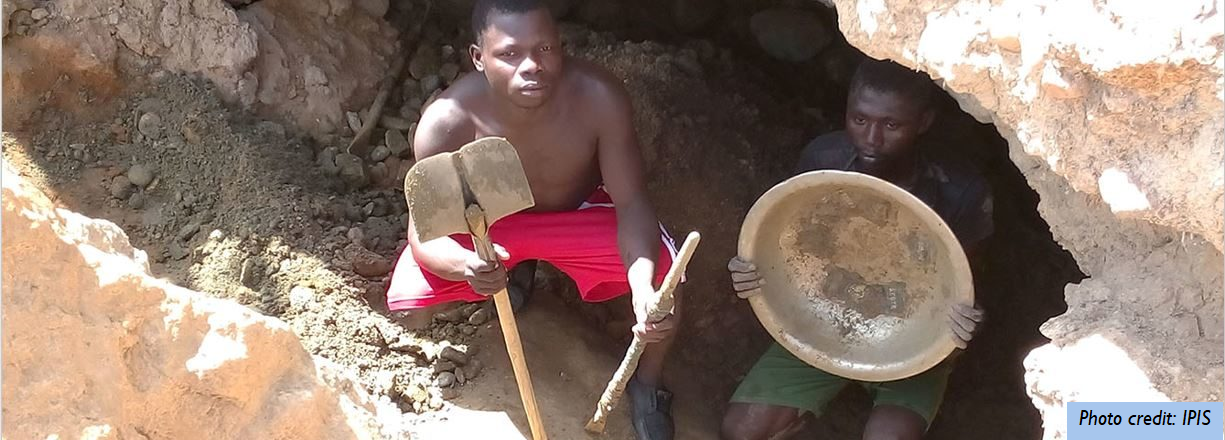
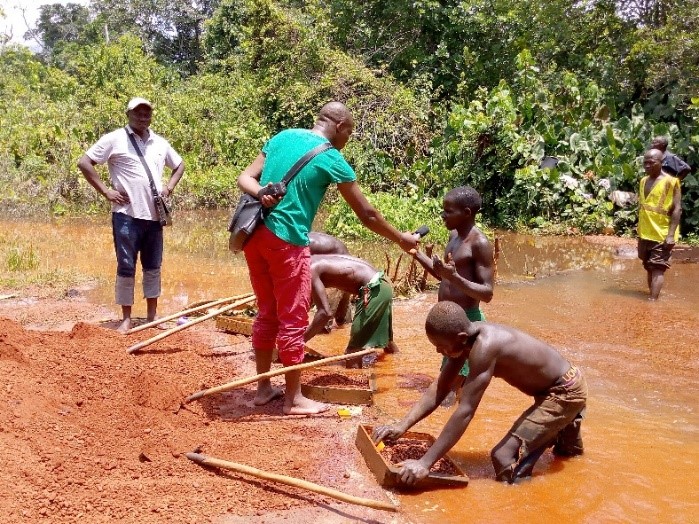
“Look at how we work,” said Sylvain, an artisanal diamond miner in Sama near Carnot in the Central African Republic (CAR). “If the coronavirus comes to this site then we’re all going to get it.”

Figure 1 Artisanal diamond miners near Carnot, CAR, being interviewed by a local journalist. Photo: Benjamin Ndongo.

That concern is shared by Central African authorities and its partners, including USAID, as the country responds to the worldwide COVID-19 pandemic. While the disease has been slow to take hold in CAR, cases have gone from less than a dozen to more than 700 in just a few weeks, according to May 2020 figures from the Health Ministry.

Artisanal and small-scale mining (ASM) communities are particularly vulnerable given close proximity of diggers at work, extreme poverty, lack of access to health care, and limited understanding of the virus.  Additionally, ASM communities are suffering financially since they depend on fluid international trade in order to sell their minerals and receive financing.

The USAID Artisanal Mining and Property Rights (AMPR) project supports mining communities and promotes legal, responsible supply chains for minerals including diamonds and gold. With USAID support, local NGO Réseaux des journalistes pour les Droits de l’homme (RJDH) teamed up with Mining Ministry authorities to raise awareness on COVID-19 in major mining areas in southwest CAR. The USAID AMPR program is also expanding women’s soapmaking associations in mining communities to fight the virus and support women’s livelihoods.

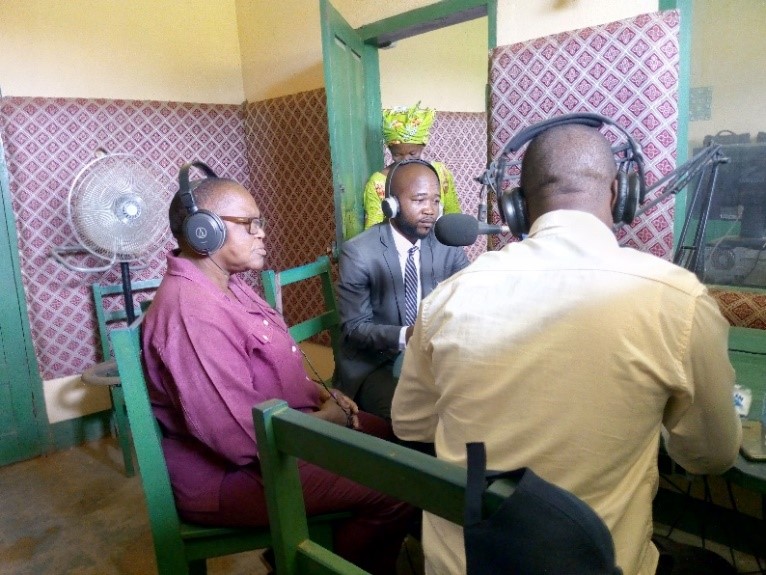
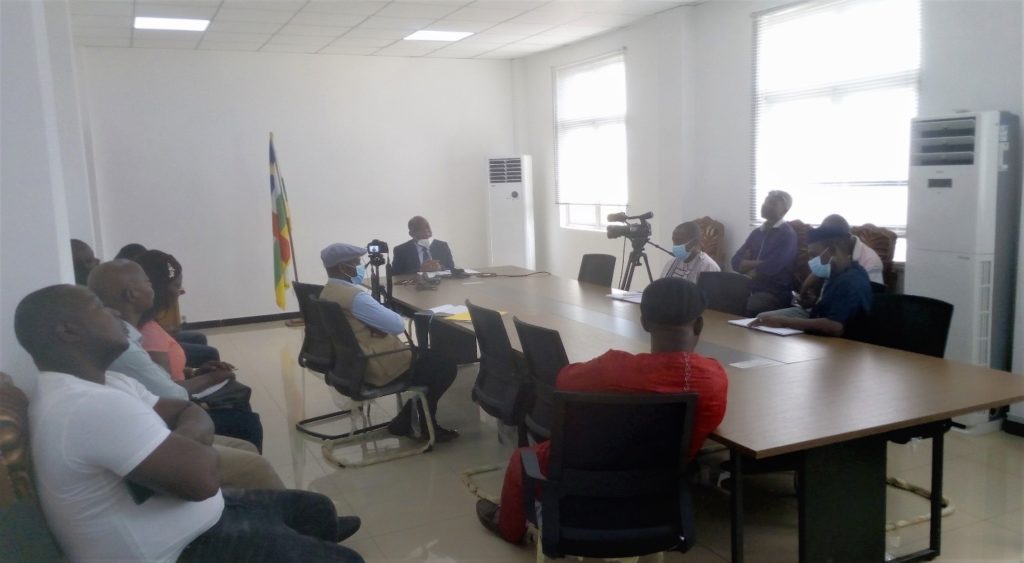
From May 6 to 14, RJDH and the Mining Ministry organized a series of radio roundtables with local health and mining officials, passing along key messages on hand washing and social distancing.

“We’re worried that artisanal miners have not yet fully understood the threat of this disease,” said Dr. Patrick Ouango, a regional health official in Berberati. “Local radio is essential to reach them.”

The experts also exhorted miners and traders to play their part in combatting mineral smuggling to neighboring Cameroon, which research funded by USAID AMPR found was the primary transit hub for illegal diamonds and gold.

Figure 2 USAID AMPR supported the organization of radio roundtables with local health officials in order to reach miners in remote areas. Photo: Benjamin Ndongo

The fear is that smuggling could seed infections in Western CAR where health facilities are few and far between. Indeed, with the international airport in the capital Bangui closed since March 27, the land border with Cameroon – a vital economic lifeline to land-locked CAR – has been the main source of new infections.

The economic fallout in mining communities due to COVID-19 is of equal concern. Up to a quarter of CAR’s impoverished population depends on mining, and with the global disruption to the gold and diamond supply chains, local prices have dropped 30% and the legal chain of custody is paralyzed.

Meanwhile food prices have increased 25 to 30% compared to the same period last year. In this context, mining will not only continue, but may increase as newly unemployed people turn to digging in order to survive, despite unfair prices and predatory behavior by smugglers.

Prior to COVID-19, the diamond sector was showing signs of recovery after years of challenges due to smuggling and armed group involvement in the minerals trade and subsequent trade restrictions put in place by the Kimberley Process. The gold sector has also been looking up, with legal exports having increased 350% in the last 4 years.

The government and its partners are worried that the crisis could undo progress and play into the hands of illegal actors and armed groups, which are increasingly active in mining areas. There has also been renewed violence from armed groups in Ndélé, another diamond-rich area.

Figure 3 CAR Minister of Mines and Geology briefing members of the press in Bangui on April 17, 2020. Photo: Hervé Pouno

“There is a risk that fraud and smuggling will increase due to COVID-19,” said the Mining Minister Leopold Mboli Fatran at a April 17 press conference on COVID-19 and the mining sector. “I therefore invite mining sector actors to avoid bringing the disease into our country through illegal transactions in neighboring countries.”

Partners working on the mining sector in CAR – USAID AMPR, the European Union Strengthening Governance in the Gold and Diamond Sector (GODICA) project, and the World Bank Programme de Gouvernance des Ressources Naturelles (PGRN) – have convened bi-weekly calls to exchange information and coordinate.

USAID AMPR and EU GODICA are supporting Kimberley Process national and local committees in charge of monitoring diamond mining zones to begin reporting on the COVID-19 situation at mining sites. The committees have helped the Ministry produce brochures on COVID-19 prevention targeting mining stakeholders.

For Maxie Muwonge, the USAID AMPR Chief of Party coordinating the project’s response, the support to the government and communities is a vital part of the project’s mission.

“We aim at supporting good governance and development in mining communities,” he said from his Bangui office, where they have been without electricity for the past 13 weeks. “COVID-19 is a threat we have to adapt to, but also an opportunity to step up our actions.”

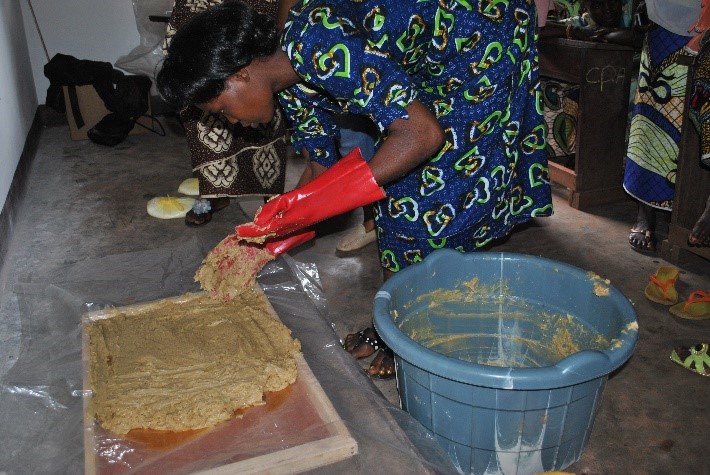
Figure 4 Photo from 2010 showing soap-making training of women’s associations under USAID PRADD project being revitalized for COVID-19 response. Photo: Prospert Yaka Maïde

For example, USAID AMPR reached out to women’s associations trained in soap-making by predecessor USAID project Property Rights and Artisanal Diamond Development (2007-2013). Several were still making and selling soap nearly 7 years since the end of the previous project.

As part of its portfolio of activities supporting women’s livelihoods in mining communities, USAID AMPR is funding one of the ongoing soap-making groups to train new associations. The aim is to increase the local supply of soap to help fight the virus while also enabling women’s groups to seize a new market opportunity during a precarious time.

While it remains to be seen how the crisis will play out in CAR with upcoming presidential elections and risks of instability, the mobilization of mining sector actors gives hope that men and women in the country’s mining communities will once again demonstrate their resilience.


Tackling Threats from Illegal Mining

By: Jeffrey Haeni, Deputy Assistant Administrator, USAID Bureau for Economic Growth, Education and Environment

Around the world, at least 40 million people, mostly poor, work in artisanal and small-scale mining (ASM). Though it is typically informal in nature and workers often labor under difficult conditions, ASM accounts for approximately 20 percent of the world’s production of gold, diamonds, tin, and tantalum, and 80 percent of colored gemstones.

The conditions can be dangerous and the pay low. Still, ASM is an important source of livelihoods for millions of people and tends to pay more than other options in many developing countries.

While a country’s mineral wealth can translate into widespread prosperity and social progress, too often this wealth leads to a downward spiral of corruption and violent conflict. In many developing countries, illegal and unregulated mining, particularly ASM, contributes to armed conflict, funds criminal networks, and damages the environment.

To help address these challenges, USAID is working with governments, civil society, communities, and the private sector to reduce the negative impacts of ASM, and ensure that the wealth generated contributes to more inclusive economic growth and development.

Read the full story


What’s new with MAST?

USAID’s Mobile Applications to Secure Tenure (MAST) initiative started small. Launched in 2014 in three pilot villages, the initial goal was to test a simple but powerful idea: with some training and support, could underserved communities use mobile phone mapping technology and participatory approaches to document and secure their land rights? Five years and four countries later, that initial idea has grown into a powerful suite of tools and programs that are achieving remarkable results, from women’s economic empowerment in Tanzania to forest conservation in Liberia.

Here are the latest updates on MAST from around the globe.

Land Certification and Access to Credit in Tanzania

In Tanzania, USAID’s Land Tenure Assistance (LTA) program has now used MAST to map and document almost 63,000 land parcels. With their property rights secure, people – particularly women – are more empowered in the economy.  “The certificates issued by LTA have paved the way for rural Tanzanians to improve their farms and start small businesses by leveraging their land to access credit. The project is working with local banks to encourage the acceptance of certificates as collateral and with villages to raise awareness of the new loan opportunities. Farmers have already begun using their land-backed loans to purchase fertilizer, high-quality seeds, tractors, and other agricultural inputs to raise their productivity and their incomes.” LEARN MORE.

Supporting Community Forest Management in Liberia

Liberia depends on its forests. The forestry sector contributes 10 percent of the country’s GDP. One in three rural Liberians (1.5 million people) live in forested areas and rely on forests for a significant source of their livelihoods. Under a new pilot program, USAID/Liberia is using MAST to help communities define, map, record, and document their resources to enhance biodiversity conservation while improving community forest management. MAST provides a participatory framework and flexible tools that empower citizens in the process of documenting and managing their forest resources. The end result is clearer, stronger rights and greater incentives to invest and conserve resources.

New Results and Data Visualizations

As MAST’s implementation has grown in scale, so has the volume of data amount its impacts. Check out the latest data visualizations on key findings related to reductions in the time and cost to register land, as well as improvements in women’s economic empowerment. For example, MAST allows citizens to map and document their land and resources in less time than traditional land administration methods. MAST leverages innovative methods and tools to engage citizens in inclusive approaches that increase efficiencies over time. In Zambia, the time from land demarcation to certification decreased from 550 to 100 days during the course of MAST implementation. In Tanzania, MAST reduced the cost of registering land from $40 per parcels to under $8 dollars. LEARN MORE.

Want to learn more about MAST? Visit the MAST Learning Platform at:

Her Land Rights

By USAID PUBLICATIONS

How documented property rights gave a Tanzanian widow financial stability


Asiah Samila is a farmer with five children. She lives in Mlanda, a village located outside Iringa in central Tanzania.

When Asiah’s husband died, their youngest child was just a newborn. He left her with their house and farmland in Mlanda village. However, she did not have a title deed for the property, putting her in a difficult position.

In rural villages like Mlanda, women typically are not involved in family decisions. A woman is seen as a caregiver to children, a homemaker, and someone who is responsible for taking care of the needs of the husband. Few women own land.

Lacking Land Rights

Widowed women face many challenges when they don’t have official paperwork proving ownership of their land. In some cases, a widow’s in-laws may forcefully claim the land, displacing her.

Without documented property rights, widows can’t buy or sell their land, nor can they obtain access to bank loans.

In Asiah’s case, the neighboring school claimed that she was occupying part of their land, and Asiah was unable to show the paperwork needed to defend herself and her right to the property.

But with USAID’s help, Asiah was able to find a solution to the conflict.

Through the Lens


Read the full story


Promoting Land Tenure and Property Rights in Zambia

The majority of land in developing countries is not documented, impacting the ability of millions of households to make long-term investments in their property. Countries where property rights are perceived as insecure are also less attractive for investors and more reliant on donor funding. USAID recognizes that strengthening rights to land and natural resources is central to achieving a broad range of development goals on the journey to self-reliance. Through the Integrated Land and Resource Governance (ILRG) program, USAID provides both short  and long term assistance across a range of land and property rights issues including natural resource management, inclusive economic growth, agricultural productivity, and women’s economic empowerment.

Learn more about USAID’s ILRG program in Zambia in the series of short videos below:

Partnerships
Women’s Empowerment
Through partnerships, USAID is building self-sufficient and sustainable organizations to achieve key development goals in Zambia such as food security, conflict mitigation, and improved governance.

“The support that has come from USAID is very critical because it helps COMACO [Community Markets for Conservation] to drive these programs to the communities.”

Women with strong inheritance rights and land in their own name are likely to be more prosperous and have healthier families. In eastern Zambia, USAID is working with traditional leaders and local partners to put women at the center of the land certification process.

“I can plant anything I want to put on my land. I am free because I am confident it is really mine.”

Land and Agriculture
Tradition and Tenure
Without access to recognized and secure property rights, farmers in Zambia face barriers to long term investments in their land. USAID is working with farmers to document their land through low-cost, locally available tools, as well as teaching techniques to improve agricultural productivity.

Customary land tenure traditions in Zambia are not locked in time. Rather, they are adapting to new needs and finding new technologies to help communities. USAID is supporting tradition leaders with low cost processes to document land rights of their people. USAID and its partners have already helped traditional leaders generate more than 15,000 customary land certificates.