
LAND-at-scale Somalia: land governance to contribute to durable solutions for Internally Displaced People in three Somali cities

The Netherlands Enterprise and Development Agency (RVO) and the Somalia department of the Netherlands Embassy (EKN) in Kenya are pleased to announce their collaboration with the International Organization for Migration (IOM), the UN Development Programme (UNDP), UN-Habitat and the Regional Coordination Office (RCO) in Somalia in the context of the Saameynta-programme. ‘Saameynta – scaling up solutions to displacement in Somalia’ will be implemented over a period of four years (2022-2024) and the LAND-at-scale contribution amounts to 2 million euro. Saameynta is co-funded by the Swiss Development Cooperation (SDC) and the Italian Agency for International Cooperation (AICS).

Somalia’s land challenges

Somalia has over 2.9 million Internally Displaced People (IDPs) following decades of civil war and violent conflict. In addition, a significant increase of droughts and floods due to climate change have forced people away from their rural homes. Most IDPs have relocated to Somalia’s cities which has resulted in rapid urbanization, unplanned city development, and a speculation in land markets. This situation has spurred continuous displacements and forced evictions of IDPs, preventing them from building a sustainable livelihood.

LAND-at-scale intervention strategy

This LAND-at-scale project, funded jointly with the SDC and AICS, aims to contribute to a sustainable integration of IDPs in three Somali cities: Baidoa in South West State, Beletweyne in Hirshabelle State, and Bossaso in Puntland State. This will be achieved through three complementary project strategies.

Firstly, the project aims to ensure stronger involvement and engagement of displacement affected communities (IDPs, returnees and host community) in a process of inclusive urban development. This will be achieved by working with local governments (municipalities) as well as the displacement affected communities directly. For the local authorities, the project will focus on strengthening both technical and institutional capacities to perform their land governance mandates, as well as developing relevant land-related policies. The involvement of the displacement affected communities is foreseen by enabling them to engage in a process of inclusive urban development. Finally, their engagement is foreseen to be strengthened by applying land value capture for infrastructure development and basic services. 

Secondly, the project aims to improve the tenure security for displacement affected communities by providing them with land documentation for a reduced risk of forced eviction. An adaptation and tailoring of the Social Tenure Domain Model (STDM) to each project location and context will assure informal and formal rights to be recognized and managed in a fit-for-purpose land administration system.

Following the technical and institutional capacity building and the tenure registration activities, authorities in the three cities will then be supported to apply an approach of land value capture to secure public-private sector partnership (PPP) investments in social and public infrastructure and basic services for IDPs. Communities will be engaged along the way through a community planning process to ensure that their priorities remain an integral part of the plans to be development.

Saameynta: a multi-donor and multi-year programme

The LAND-at-scale project is a part of ‘Saameynta’, a larger governance programme of 18 million USD in total. Besides RVO and the EKN, SDC and the AICS are contributing financially to this 4-year running programme. The Dutch contribution to this governance programme aligns closely with the embassy’s programming priorities for Somalia: “Addressing root causes of displacement and finding durable solutions for the millions of internally displaced populations is a key priority for Somalia. Netherlands’ investment under Saameynta is critical because the programme interventions offer a holistic approach towards land governance by enhancing capacities of Somali authorities and leveraging on investments from the private sector towards sustainable land-based solutions. This enables displaced populations to be sustainably (re)integrated,” says Maarten Brouwer, Ambassador of the Netherlands to Kenya.

Expected outcomes

LAND-at-scale will contribute an important land element to the wider Saameynta governance programme. The expected outcomes of the LAND-at-scale intervention are:

  • Institutions, governance mechanisms and tools are developed in the areas of land as well as inclusive and accountable governance.
  • Technical knowledge of authorities and IDPs is enhanced.
  • Improving tenure security for IDPs to reduce risks of displacements and forced evictions using the Social Tenure Doman Model (STDM).

This LAND-at-scale project in Somalia contributes to SDG1 (no poverty), SDG5 (gender equality), SDG8 (decent work and economic growth), SDG10 (reduced inequalities), SDG11 (sustainable cities and communities), and SDG16 (peace, justice and strong institutions).

Want to know more about LAND-at-scale?

The Dutch Ministry of Foreign Affairs funds LAND-at-scale. To stay updated on this LAND-at-scale project and others, please sign up for our quarterly newsletter.

Program: LAND-at-scale.

Related projects: LAND-at-scale Somalia: Saameynta – Scaling up solutions to displacement.

Originally published on the Land Portal. Creative Commons Attribution 4.0 International.
“Amahoro @ Scale” – Achieving peace at scale in Burundi by scaling up land governance approaches

The Netherlands Enterprise & Development Agency (RVO) is pleased to announce its collaboration with the Embassy of the Kingdom of the Netherlands (EKN) in Bujumbura, ZOA, VNG International and MiPAREC for the implementation of a LAND-at-scale project in Burundi “Amahoro @ Scale – An integrated approach towards improved tenure security and land governance in Burundi”. The intervention will run until 2025 and has a budget of 2.8 million Euros.

Burundi’s land challenges

Burundi has the world’s highest Global Hunger Index Score and around 45 percent of the population is affected by food insecurity. The country is confronted with increasing scarcity of land as a result of population growth, large numbers of returnees and IDPs and the effects of climate change. With the majority of Burundians depending on agriculture for their food and livelihoods, land scarcity makes this reliance on agriculture precarious.

The pressure on land gives rise to many land disputes with over 55% of all court cases being related to conflicts over land. The outcomes of these disputes are often highly uncertain, as land is commonly not registered and no good records of ownership or use rights exists.

Scaling Land Tenure Registration (LTR) approaches to national level

ZOA has worked in Makamba Province on land tenure registration since 2014. The sustainability of the district land offices (SFCs) remains a challenge, as well as guaranteeing gender equality in land governance. Amahoro @ Scale will build on these experiences, with a view of completing the LTR-activities in the remaining Nyanza Lac district, as well as scaling up the holistic LTR-approach to a national level through the development and adoption of a business plan to be adopted by all SFCs in the country. Ultimately, the LAND-at-scale project aims to improve tenure security of women and men, to improve conflict resolution and to create the basis for improved agricultural production, access to justice and sustainable, climate-smart agri-businesses.

Successfully scaling LTR approaches at a national level requires effective, cost-efficient and conflict sensitive processes to be defined and agreed upon by all relevant stakeholders. This will be captured in a business plan for SFCs that takes into account the lessons from other LTR initiatives, the national legal framework as well as international standards for LTR.

“For land tenure registration to be sustainable, it needs to facilitate the resolution of land-related conflicts that are rooted in, among other things, refugee flows and repatriation, the great pressure on land for subsistence, and the lack of effective local land administration services”, says Herman Kamphuis, Country Director at ZOA Burundi. “With our partners VNG International and MiPAREC, we ensure that the business plan for land tenure registration will not only cover land registration activities, but will also integrate essential elements regarding sustainable local governance as well as conflict resolution and gender equality”.

Strengthening land governance has been a priority of the EKN in Bujumbura for several years. “The embassy considers security of land tenure to be an essential prerequisite for local livelihoods and food systems to function in an efficient, sustainable and equitable way,” says Jan Willem Nibbering from the EKN. “We believe this LAND-at-scale project will complement other ongoing EKN-supported interventions, both in the area of food security as well as in the area access to justice”.  

Over the course of 4 years, Amahoro-at-scale aims to achieve the following outcomes:

  • The tested LTR approach is implemented in Nyanza Lac through the operationalization of the SFC.
  • Local land conflict resolution mechanisms are effectively resolving land conflicts in Nyanza Lac.
  • The development of a business case will result in the rollout of financially sustainable and technically functional SFCs around the country.

Want to know more about LAND-at-scale?

The Dutch Ministry of Foreign Affairs funds LAND-at-scale. This project in Burundi is funded for 2,8 million Euros and commenced in December 2021. To stay updated on Amahoro-at-scale and other LAND-at-scale projects, please sign up for our quarterly newsletter.

Program: LAND-at-scale.

Related projects: LAND-at-scale Burundi: Amahoro at Scale.

Originally published on the Land Portal. Creative Commons Attribution 4.0 International.
Join us at the Global Forum for Food and Agriculture (GFFA) 2022 for the Expert Panel 12 – Beyond Policy Change: using the VGGT to secure tenure rights for farmers!

Location: Livestream on the GFFA website (https://www.gffa-berlin.de/en/). If you want to participate actively in the Global Forum on Food & Agriculture and receive information about all events, please register here: https://2022.gffa-berlin.de/#signup.html?

Languages: German, English, French

Organised by: FAO, GIZ, International Land Coalition (ILC) and Welthungerhilfe


Since their adoption in 2012, the VGGTs have been the key framework guiding significant progress in reforming national land policies, legislative frameworks and regulations. However, the impact of those changes on the ground has remained limited, with tenure insecurity continuing to be widespread. More recently, efforts to promote the implementation of the VGGT have moved beyond the national level: working with multiple actors at regional and local levels and jointly identifying pathways for implementing key VGGT provisions to address land conflicts, regulate land-based investments, and strengthen the rights of legitimate land-owners and users. The Expert Panel will showcase innovative practices from three countries that exemplify how the VGGT have been used to strengthen the tenure rights of resource-poor farmers.


Source: Global Programme Responsible Land Policy, Land Portal, January 21, 2022. Republished with attribution.

Opportunity: Baseline Study Amahoro @ Scale in Burundi

Amahoro @ Scale (Peace-at- Scale) is the Burundi country project of the larger “LAND -at- Scale” program funded by RVO (The Netherlands Enterprise Agency) which is currently active in 14 countries in Africa, Latin America, the Middle East and Asia.

Amahoro @ Scale has two distinct aims. The first aim is to use the experience of current and previous Land Tenure Registration (LTR) activities in Burundi to prepare the scaling up of LTR across Burundi. This requires cost-efficient, conflict sensitive and effective processes to be defined and agreed upon by all relevant stakeholders. In essence, a business model for LTR needs to be developed that takes into account the lessons from other districts and to the national legal framework and international standards for LTR. Sustainable LTR needs to facilitate the resolution of land related conflicts that are rooted in, among other things, divergences between statutory and customary land governance, migration and return as well as the discrimination of particular groups and gender discrimination. A second, practical aim of the project is to finalize LTR in Makamba province. This is a crucial step in preparing the scaling up of LTR. It provides an opportunity to find solutions to remaining challenges, e.g. related to the financing of the Communal Land Services (SFC). Read more about the project here.

ZOA is looking for a consultant to conduct a baseline study for the project. This baseline study is an important element of the 6 months inception phase of the project which serves  to generate the necessary knowledge to start the activities and to prepare for the implementation. The baseline study has the purpose to generate the baseline data for the project’s indicators which will serve as reference for the mid-term and final evaluation. The study will further help to set more realistic projects targets for the indicators. Conflict mapping and a legal framework analysis should be realized in the inception phase. The study is expected to take 40 consultancy days.

The consultant has to fulfil the following qualifications to be eligible for the task:

  • Master’s degree in a branch of law or other relevant field with at least 10 years of experience;
  • Experience working in East-Africa, preferable experience in Burundi;
  • Demonstrated strong experience in conducting project baseline studies and evaluations;
  • Have a good command of evaluation tools and quantitative and qualitative methodologies;
  • Good knowledge of the land tenure security process and its challenges in Burundi and solid knowledge in the land tenure field in general;
  • Have relevant experience in gender, conflict and legal framework analyses;
  • Have a satisfactory experience of collaboration with the technical services of the State, the courts, the United Nations system, NGOs.
  • A perfect command of English and French is essential. 
The deadline for the first round of applications is January 28th, 2022. 


You can find more information in the Terms of Reference attached. 

Program: LAND-at-scale.

Related projects: LAND-at-scale Burundi: Amahoro at Scale.

Originally published on the Land Portal. Creative Commons Attribution 4.0 International.

“Boosting local capacity to manage land conflicts and protect customary rights” – Introducing the LAND-at-scale project in Mali

The Netherlands Agency for Enterprise and Development (RVO) is pleased to announce its collaboration with the Embassy of the Kingdom of the Netherlands (EKN) in Bamako, SNV, the Royal Tropical Institute (KIT), the University of Legal and Political Sciences of Bamako and the National Coordination of Peasant Organizations for implementation of a LAND-at-scale project in Mali “Strengthening local capacities to manage land conflicts and protect customary rights”. The intervention will run until 2023 and has a budget of €1.3 million.

Tensions and land conflicts have always existed in Mali. Formal law and customary law coexist, causing legal duality and ambiguity. Competition for land and natural resources is increasing, as are land disputes, especially in rural areas. Contested fields and pastoral resources cannot be used, while conflict resolution is costly and undermines social cohesion. Conflict resolution requires a lot of time and resources, especially when it is brought before the courts and can exacerbate tensions between communities. More than 80% of smallholder farmers and pastoralists access land through customary land tenure systems. Given the important role that Customs plays in rural areas, formal legal recognition of these customary rights is important. At the same time, customary patrilineal systems do not grant inheritance or property rights to women, while women officially have the same citizenship status as men. Young people depend on the permission of their elders, which also undermines their position. All this is part of the context of a country in violent conflict since 2012.

The LAND-at-scale project focuses specifically on land commissions, which are a key structure of the Agricultural Orientation Law (LOA) and the Agricultural Land Law (LFA). These commissions are responsible for implementing the LFA in support of conflict mediation and local land security for all. However, only 30% of Mali’s communes have set up a Land Commission.  By establishing and strengthening the capacity of land commissions, LAND-at-scale aims to contribute to a transparent and sustainable legal and institutional framework for the management of customary land tenure. The establishment of functional, inclusive, legitimate and accountable land commissions at the local level will increase conflict resolution capacity.  Ultimately, the objective of the large-scale LAND intervention is to promote stability, food security, climate-resilient agricultural development and natural resource management by strengthening security of tenure and improving access to land and natural resources, paying particular attention to the inclusion of women and pastoralists.

“Considering that land security is a basis for agricultural productivity, food stocks, income generation and social protection, inclusive and transparent land management institutions will contribute to the resilience and food security of households, as well as the well-being of different user groups, including women, youth and other secondary rights holders. ” said Boukary Guindo, Project Manager at SNV. “The Land Commissions, which bring together various state, civil and peasant, statutory, formal and customary, informal stakeholders, belong to the main institutions to achieve these objectives.“

Specific project strategies to strengthen the role of land commissions include:

  • Formalization of a coordination mechanism for capacity building for sustainable, inclusive and transparent land commissions.
  • Provide a thematic approach for validating and sharing the capacities of land commissions, with a focus on mediation and inclusion.
  • Establishment of an independent monitoring and evaluation system for land commissions
  • Establishment of a network and an exchange organization for land commissions.

Moumouni Damango, Head of Food Security Policy at the Embassy of the Netherlands in Bamako, stresses the importance of land governance interventions in Mali:“In 7 of our ongoing programmes, land governance is addressed from different thematic angles: it is essential for development efforts in water and food security programmes,  because land disputes are a key factor in Mali’s instability. Support for land governance and the strengthening of land commissions is a key mechanism for securing rural land resources and maintaining stability and social cohesion.

The Dutch Ministry of Foreign Affairs finances LAND-at-scale. To stay up to date on this land-at-scale project and others, please  sign up for our quarterly newsletter.

Program: LAND-at-scale.

Related projects: LAND-at-scale Mali: Managing land conflicts and protecting customary rights.

Originally published on the Land Portal. Creative Commons Attribution 4.0 International.

LAND-at-scale Chad: Land reform based on rapid evolutions and present crisis

The Netherlands Enterprise & Development Agency (RVO) is pleased to announce its collaboration with the Embassy of the Kingdom of the Netherlands (EKN) in N’Djamena, Kadaster International, Oxfam Chad and Oxfam Intermon for the implementation of a LAND-at-scale project in Chad “Land Reform based on rapid evolutions and present crisis”. The country intervention will run until 2025 and has a budget of 2 million Euros.

Chad is at the verge of an emerging land tenure crisis. As observed in many countries in Africa, formal and customary tenure systems overlap. Customary tenure systems, that generally prevail in rural areas, differ from region to region, with each its own needs and practices. Land conflicts are abundant, caused by degradation and transformation of land surfaces caused by climate change, as well as land investments by domestic investors with disputed legitimacy. Women, particularly, struggle in practice to obtain the same rights to land as men, even though country’s constitution enshrines gender equality.

These land challenges play against a backdrop of a country in which internal conflicts take place. A land tenure crisis could lead to more disputes over land, weakened land productivity, uncontrolled urban development, and result in further social unrest of the country if not adequately addressed. Within this context, the LAND-at-scale project aims to contribute to more inclusive and just land governance, and more transparent and adequate land administration in Chad, especially for tenure insecure groups (women and youth), which creates security for rural communities to protect their rights over productive resources they depend on, and invest in sustainable income generating activities.

The LAND-at-scale project consists of the following project strategies:

  1. Finalizing of the Land Code: review and rewrite, combined with a multi-stakeholder validation workshop.
  2. Supporting socio-economic land reform, with special attention to inclusion of women and youth, strengthening civil society organizations, capacity building on agricultural practices and dispute resolution mechanisms.
  3. Improving the land registration system in Chad by developing a blueprint and roadmap towards the preferred future situation, together with the relevant government and non-government authorities in Chad.

Oxfam Chad has been working on the topic of land for several years in the country. “We are at a critical point for land governance in Chad. Finalizing the Land Code is essential and must be done in an inclusive way. The implementation of this project will contribute to the objective of reducing inequalities, especially for women and young people, which Oxfam is promoting in Chad,” says Ramatou Adamou Ousmane from Oxfam Chad. “Ignoring or shortcutting land-related challenges in Chad, would mean that other development challenges will emerge in an even more violent way in the next decades”. Oxfam organized a launch of the project in N’Djamena in on 16 and 17 November, which was attended by representatives from ministries, civil society organizations, land governance professionals and donor organizations.

Kadaster International will be responsible to implement the third strategy. “The land registration system in Chad has not been strongly developed over the last years” says Christelle van den Berg, regional coordinator for Africa for Kadaster International. “This LAND-at-scale project requires close collaboration with the relevant government authorities in Chad. Only then can we develop a roadmap to a strong and sustainable land registration system in the country”.

The Netherlands Embassy Office in Chad was opened three years ago. Governance, development, stability and peace are key themes in the work of the Office. “This LAND-at-scale projects responds to a real need, that is what I hear from government actors but also civil society and the private sector”, says Chargé d’Affaires Mark Rutgers van der Loeff from the Embassy Office. “By addressing policy reform at national level and supporting smallholder farmers in adopting climate-responsive agriculture, the project contributes to sustainable development — but will hopefully also reduce a big source of disputes and conflicts, which conflicts over land ownership currently is’.

“For the LAND-at-scale portfolio, the project in Chad is a great example of how cadastral efforts at national level are combined with lobbying and advocacy-activities at local level,” says Astrid Broekaart, program coordinator for LAND-at-scale at the Netherlands Enterprise Agency. “Connecting the two is critical for just, inclusive and effective land governance and it is great to see this happening in this partnership between Kadaster International and Oxfam”.

The Dutch Ministry of Foreign Affairs funds LAND-at-scale. To stay updated on this LAND-at-scale project and others, please sign up for our quarterly newsletter.

Program: LAND-at-scale.

Related projects: LAND-at-scale Chad: Land reform and tenure security, LAND-at-scale Chad: Towards inclusive land governance.

Originally published on the Land Portal. Creative Commons Attribution 4.0 International.

Securing land tenure in Uganda: A collaborative approach to address root causes of food insecurity

By Lisette Meij

There is an immense pressure on land in Uganda. The country has a rapidly growing population and is host to the world’s third largest refugee population. Particularly poor people struggle to get access to healthy food. Agriculture practices need to become more efficient and focused on the domestic market. The Embassy of the Kingdom of the Netherlands (EKN) in Uganda works to improve food security in selected areas in the country. Among several food security projects, the EKN works with the LAND-at-scale program to improve land governance. But how does LAND-at-scale contribute to the strategy of improving food security?

Land governance is strongly linked to food security. Yet, food security interventions generally focus on land use practices, and don’t always address land governance. Improvements on land use have a direct effect on food production. The effects of improvements in land governance take more time to become clear. The link between land and food is strong, but indirect. For example, Uganda grants small plots to refugees to produce their own food. But the more refugee population grows, the smaller these plots become. This fragmentation into smaller plots, makes land use less efficient.

At the same time, because the national cadaster is outdated, it is not clear who owns the land. Over 80% of land in Uganda is still governed through customary systems. This means that the government does not have the complete picture of who owns or uses which plot of land. When previous owners return to the land granted to refugees, for example, a conflict emerges over who has the right to use the land. Across rural areas, it is estimated that almost 1 in 4 farms is in some sort of dispute over land. Land conflicts also hamper food production.

By addressing these issues, LAND-at-scale plays an important part in the EKN’s strategy to improve food security. The LAND-at-scale project will formalize land rights, so it becomes clear who has the right to use the land. By using new technologies and involving local communities, this process is efficient and can be done at great scale and speed. Because formalizing land rights does not automatically lead to improved land use, these activities take place in the same areas as other food security projects by the EKN. The farmers in these selected areas will have more secure land rights because of LAND-at-scale and will benefit from other EKN projects.

The LAND-at-scale project will also focus on climate-smart land use planning. Natural disasters resulting from climate change have caused major crop losses in the affected areas. By planning land use more efficiently, the land can become more resilient to such natural disasters. If new natural disasters hit, it will not have such a disastrous effect on food production. Land use planning is also an important instrument for urbanization. As more people move to the cities, these urban areas need to be expanded. Such expansions require careful planning, so the cities can grow in a sustainable way and the inhabitants of the cities have access to sufficient healthy food.

Weak land governance is one of several root causes of food insecurity. Through collaboration with other projects, LAND-at-scale contributes to the overall strategy of the embassy to improve food security in the country. Read more about the LAND-at-scale programme here or sign up for the quarterly newsletter to stay updated.

Program: LAND-at-scale.

Related projects: LAND-at-scale Uganda: Community-based land registration and land use planning.

Originally published on the Land Portal. Creative Commons Attribution 4.0 International.

Scaling up community-based land registration and land use planning on customary land in Uganda

The Netherlands Enterprise & Development Agency (RVO), the Netherlands Embassy in Kampala (EKN), the United Nations Human Settlements Programme (UN-Habitat) and the Global Land Tool Network (GLTN) are pleased to announce their collaboration for a LAND-at-scale project in Uganda. In a virtual signing ceremony on September 9th, the partnership was made official. The project aims to contribute to the development of a structured and scalable approach towards improved tenure security and sustainable land use for men, women, and youth on customary land, in a fit-for-purpose and participatory way.

Uganda has an ambitious agenda to improve tenure security, aiming to title all land by 2040. This ambition is part of Uganda’s aim to transform from a predominantly low-income agricultural economy to a modern and prosperous country in 2040. Land is a pivotal element of this economic and social transformation. Even though the government has developed a modern legal framework for land governance, it remains a challenge to implement it in an accessible, context-sensitive and flexible way. Over 80% of the land is still accessed through customary land tenure systems. Processes to formalize land rights are unaffordable, time consuming and unattainable for majority of Ugandans. Across rural areas, it is estimated that almost 1 in 4 farms is in some sort of dispute over land. This land tenure insecurity particularly affects women and young people. Meanwhile, the pressure on land is increasing as the population of Uganda continues to grow. With lagging land productivity and climate change negatively affecting land use potential, the urgency of improving land governance and land use practices is high.

Against this background, the LAND-at-scale project in Uganda will contribute to developing a structured and scalable approach to improve land governance. The project will use a participatory and fit-for-purpose approach to land registration in selected areas and will develop procedures to facilitate the scaling of this approach in other districts of Uganda. “Even though formalization of tenure is the main goal, the approach is tailor-made to customary norms and practices in different areas of Uganda,” says Robert Lewis-Lettington, Chief, Land, Housing and Shelter Section of UN-Habitat. “We’ve been successfully applying this approach in various districts. It has proven to be a very effective method to strengthen customary land rights of smallholder farmers. We are excited to be able to scale-up this approach to the national level through this LAND-at-scale project.” GLTN as facilitated by UN-Habitat has a long-standing history in the country, not only working with smallholder farmers but also with the national government through the Ministry of Lands, Housing and Urban Development on the implementation of the National Land Policy, as well as in developing a National Land and Gender Framework.

The project will also focus on communal and climate-smart land-use planning. “Improving land-use practices has positive outcomes in a myriad of different ways,” says Josephat Byaruhanga from the Embassy of the Netherlands in Kampala. “Besides increasing productivity and protecting natural resources, this will provide people with a sense of value to their land, which goes beyond simply being a surface of certain square meters.” The LAND-at-scale project contributes to the Embassy’s efforts to improve food security conditions and the rule of law through the establishment of a responsible land governance system in the country.

Key to the project’s success is its embeddedness in ongoing processes and building on long-standing partnerships. Not only does the LAND-at-scale project build on the work done by GLTN and the Dutch embassy on this topic, collaborations with the Government of Uganda, IFAD, World Bank, FAO, ZOA and GIZ are envisioned as well. “Within LAND-at-scale we believe that partnership and alignment are essential to achieving maximum impact with our interventions,” says Astrid Broekaart, program coordinator for LAND-at-scale at RVO. “The project in Uganda is a great example of actively applying the principle of complementarity, coordination and synergy with ongoing processes in the country”.

Over the course of 4 years, the LAND-at-scale project aims to achieve the following three objectives:

  1. Improved tenure security for men, women and youth
  2. Inclusive, climate-smart and sustainable land use planning
  3. Improved capacities and awareness of key land stakeholders on customary land registration and land use planning

The Dutch Ministry of Foreign Affairs funds LAND-at-scale. The project in Uganda will be implemented in two consecutive phases, starting with a consolidation phase (1.5 years) followed by the complementary ‘scaling up’-phase (2.5) years. The project is funded for 3 million Euros. To stay updated on this LAND-at-scale project and others, please sign up for our quarterly newsletter.

Program: LAND-at-scale.

Related projects: LAND-at-scale Uganda: Community-based land registration and land use planning.

Originally published on the Land Portal. Creative Commons Attribution 4.0 International.

Announcing the LAND-at-scale project in Rwanda

The Rwanda Land Management & Use Authority (RMLUA), the Netherlands embassy in Kigali (EKN) and the Netherlands Enterprise and Development Agency (RVO) are delighted to announce a LAND-at-scale project in Rwanda. Together with Kadaster International and the International Development Law Organization (IDLO), the RMLUA, EKN and RVO will be collaborating on an ambitious project over the coming four years.

In 2009, the Government of Rwanda launched the Land Tenure Reform Programme. The programme gained international recognition regularizing land tenure at an unparalleled scale. Over eleven million land parcels were demarcated, and eight million land titles were issued to their rightful owners. A land administration information system was set up in a relatively short time. However, the journey to accomplish just and sustainable land governance is not yet over. Rwanda’s rapidly growing population combined with the effects of climate change have amplified the need for agricultural transformation and land use planning. At the same time, reducing the number of land disputes in the country would ease pressure on the courts.

The LAND-at-scale project will address these challenges while building on the rich history of land tenure improvements in the country. Further to the Government of Rwanda’s amendments to the National Land Policy and the enactment of the 2021 Law Governing Land, the LAND-at-scale project will contribute to improving the land registration and management systems and their implementing institutions. “The Government of Rwanda is committed to becoming a high income-country in 2050. We believe efficient land management is essential to realize this transformation and are pleased to be collaborating with LAND-at-scale partners to work towards achieving this,” says Esperance Mukamana, the Director General and Chief registrar of land titles at RMLUA.

Commencing this month, the LAND-at-scale project will focus on making the process, systems and institutions (financially) sustainable, while at the same time expanding the focus by integrating sustainable and climate-resilient land use planning as well as improving local dispute resolution. “Kadaster has been working with the RMLUA since 2008 to set up systems, procedures and institutions. We are happy that the LAND-at-scale project will allow us to move this collaboration to the next phase,” says Christelle van den Berg, regional coordinator for Africa at Kadaster International. “During this project, we will focus on strengthening capacities and assist the RMLUA to continue to deliver and improve their land services autonomously and in a sustainable way”.   

IDLO’s contribution will focus local dispute resolution. The 2021 Law Governing Land in Rwanda together with the National Land Policy have established a new land dispute resolution mechanism which aims to reduce the pressure on the courts. “Through targeted activities, IDLO looks forward to working with the project partners to strengthen the legal capacity of the local mediators, Abunzi, and Cell Land Committees. Thereby, IDLO will be contributing to a more just decision-making process in land dispute cases nationwide,” says Romualdo Mavedzenge, IDLO’s Regional Program Manager for Africa.

The LAND-at-scale project in Rwanda is a joint effort between the Government of Rwanda and the Kingdom of the Netherlands. “This partnership fits well with the Netherlands’ policy to ensure sustainability of the previous investments in development cooperation, while building stronger economic relations with Rwanda. An effective and reliable land governance system is a crucial element for private sector investment,” says Martin Koper, Deputy Head of Mission at the Netherlands Embassy in Kigali. He adds that the project has a strong focus on sustainability. “Activities revolve around strengthening local capacities to allow them to sustain and continuously improve land governance nationally and locally.”

Ultimately, the following five long-term outcomes are envisioned from the project:

  1. A resilient and sustainable Land administration, information and management system institutionalized.
  2. Enhanced, climate-resilient land use planning.
  3. Improved conflict management and dispute resolution mechanisms.
  4. Strengthened academic capacity to assist in further development of a fair and just land governance system
  5. Enhanced services to the people of Rwanda that boosts formal and reduces informal transactions.

Astrid Broekaart, programme coordinator at RVO believes the Rwanda project is a great example of LAND-at-scale’s vision: “Besides the strong focus on sustainability, the intervention promotes a holistic approach to land governance: not only focusing on land demarcation and registration but also leveraging it as a tool for combatting climate change or strengthening the position of women. We look forward to seeing what the collaboration with these great partners will bring about”.

The Dutch Ministry of Foreign Affairs funds LAND-at-scale. This project in Rwanda is funded for 2,1 million Euros. To stay updated on this LAND-at-scale project and others, please sign up for our quarterly newsletter.

Program: LAND-at-scale.

Related projects: LAND-at-scale Rwanda: Land administration and management systems, LAND-at-scale Rwanda: Access to justice and land dispute resolution.

Originally published on the Land Portal. Creative Commons Attribution 4.0 International.

Commonalities between Ethiopian smallholder farmers and agricultural investors

There are 278 smallholder farmers in Selama Kebele in the Benishangul-Gumuz Region of western Ethiopia. On average, these farmers own 2 – 10 hectares of land. Smallholder farmer Abdulahi Mohammod, age 48, is one of them. To provide for his thirteen children and two wives, he cultivates 6 hectares of crops which include corn, sorghum, soybean and red peppers. With the earnings derived from his land he is able to meet his family’s basic needs, which includes paying school fees for seven of his children.

There are also 11 agricultural investors in the Kebele such as 61-year-old Abdulmohammod Ibrahim, who grows cash crops such as corn, sorghum and soybean on 250 hectares of land.

Despite the disparity of circumstances among local smallholder farmers and investors in the region, both actors require certain preconditions to fully benefit from their respective farmlands: Abdulahi and Abdulmohammod agree that dispute-free boundaries backed through Land Use Right Certificates are one of the key-prerequisites to be able to sustainably increase their agricultural productivity.

Before commencing agricultural development, investors must lease the land from the regional government which is providing Certified Land Use rights. Meanwhile, the majority of smallholder farmers cultivate land without official land use rights, such as Second Level Land Certification, which means that they suffer from insecure land use rights and tenure insecurity.

For smallholder farmers, land is traditionally passed down from one generation to the next without adhering to any legal transaction procedures. Consequently, overlapping farmland claims are common, as boundary demarcation and confirmation of use rights is only evidenced by word of mouth. This practice is ubiquitous among many sub-Saharan countries where only 10 per cent of the agricultural land is formally documented. These traditional and customary systems do not ensure formal land use rights, and disputes over boundaries and access to natural resources occur frequently. In Benishangul-Gumuz Region, such land disputes were further exacerbated through the government launching of the private agricultural investment project in 2010/11. Even if investors have well documented leases, these are not always strictly adhered to and illegal encroaching on smallholder farmland takes place. Inevitably, this will continue to lead to land disputes until and unless adjacent smallholders can also be provided with legal land use rights.

As insecure land tenure rights prevent long-term investments for both smallholders and investors alike, without formal land use rights, it is challenging to access necessary financing mechanisms such as loans to legally rent plots of land and to ensure legal ownership of the agricultural produce derived from the cultivated land. Hence, land tenure insecurity for smallholder farmers and investors directly translates into insecure livelihoods and inputs for downstream processes.

Solutions to mediate existing land disputes among smallholders and investors and to prevent future disputes are needed urgently. In this regard, the Support to Responsible Agricultural Investments project has been instrumental in addressing these issues. Since 2019, the project funded by the German Federal Ministry for Economic Cooperation and Development (BMZ) has been implemented by the Deutsche Gesellschaft für Internationale Zusammenarbeit (GIZ) in the Region with the aim of ensuring land access and benefits from responsible agricultural investments for smallholders and marginalized people.

To date, approximately 2000 smallholder households have had their land demarcated through the project and are waiting to collect their Second Level Land Certificates from the respective district offices. Abdulahi benefits from this Land Use Right Certificate already.


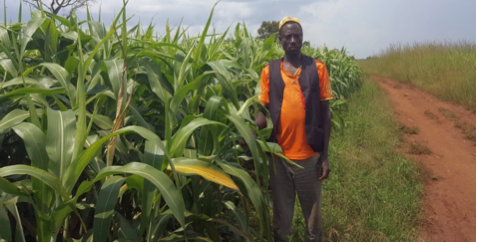
Smallholder Farmer Abdulahi Mohammod 48, cultivating sorghum on his land
Photo 1: Smallholder Farmer Abdulahi Mohammod,48,
cultivating sorghum on his land


“My land situation has improved compared to the one my father had. I now have a legal land use right; I do not have to fear boundary disputes with my neighbors; I can rent out my land; I can take out a loan and my children and wives also have inheritance rights.”


Land Use Right Certificates not only resolve and prevent conflicts, but they also serve as the means to boost confidence related to investment decisions. Investor Abdulmohammod believes that secured and documented Land Use Right Certificates make it easier to avert investment risks and mitigate boundary conflicts.


Commonalities between Ethiopian smallholder farmers and agricultural investors
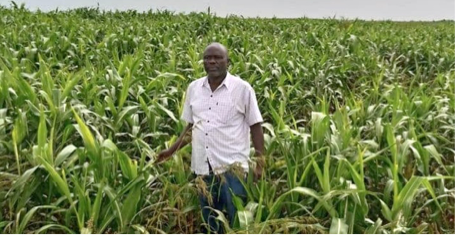
Photo 2: Investor Abdulmohammod Ibrahim, 61,
inspecting and monitoring his sorghum field


“My land under cultivation was transferred to me by adhering to a thorough land identification, verification and certification procedure. Hence, claims occurring over the land can be resolved efficiently.”


Quarterly consultation meetings with smallholder farmers such as Abdulahi, investors like Abdulmohammod and government representatives are now organized by the districts and the regional Land Administration and Investment Bureau. The demarcation of land together with the consultations and the dialogue fora have become a gateway for cooperation: knowledge and technology is transferred, smallholders gain better access to certain inputs and investors are confident about investing in the long-term, as adjacent smallholder farmers guard their vast land and assets.

With the Second Level Land Certificate for his six hectares, Abdulahi experienced land tenure security for the first time; he is able to legally cultivate his land without any fear of the land being expropriated. In addition, he generates extra income by renting out land which he does not utilize.

Similarly, Abdulmohammod has gained confidence through community-investor dialogue fora and the support provided by community elders to invest in tree planting and undertaking conservation agriculture. The cooperation with smallholders is beneficial for Abdulmohammod since they protect the investment and are happy to work on his farm.

Explore the Responsible Land Policy in Ethiopia project and the global programme.

Originally published on 17 August 2021 by the Ethiopia Project Responsible Land Policy on Land Portal. Republished under Creative Commons Attribution 4.0. Photos via Land Portal.