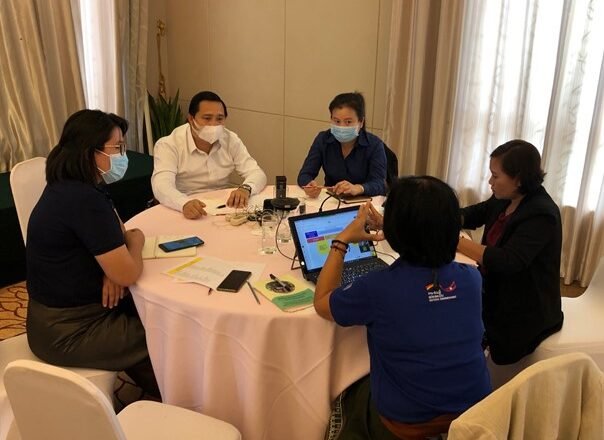
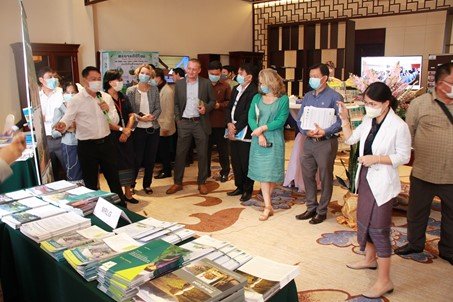
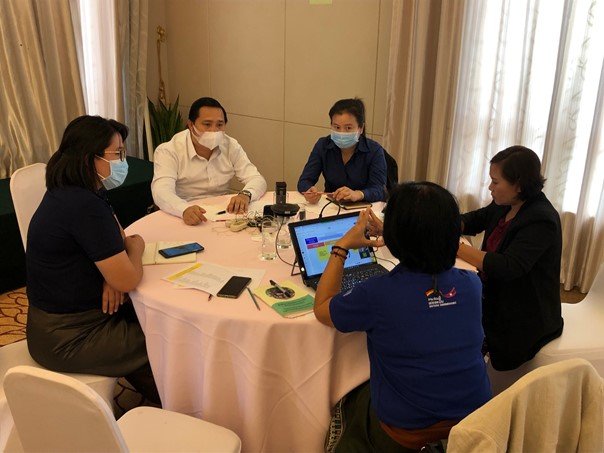
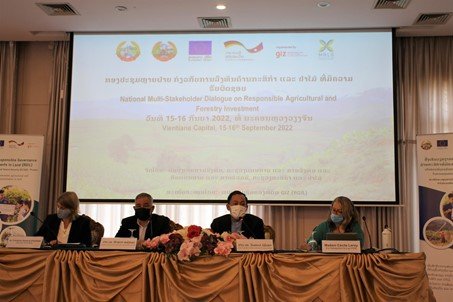
On 15-16 September, the second National Multi-Stakeholder Dialogue on Responsible Agriculture and Forestry Investment took place in Vientiane. Building on the success of a first Dialogue in 2021, this year’s event convened various stakeholders from the sector with the aim to review the progress of implementation of responsible investments in agriculture and forestry in Lao PDR, exchange experiences and discuss responsibilities to foster collaboration efforts.
Representatives from national and local government, the private sector, local communities, civil society organisations, academia and the international donor community shared perspectives on suitable approaches to strengthen responsible governance and implementation of land investments and reflected on arising opportunities and challenges and the changing investment environment in Laos. Special focus was put on local level awareness raising, participatory and inclusive consultation processes, investors engagement and capacity building, land allocation for investments, contractual arrangements, grievance redress mechanisms and tools for investment project monitoring.
The dialogue took place as physical event with the option to participate online, garnering over 220 participants in total at peak times. It also included an exhibition on good practices on responsible agricultural and forestry investment and a reflection session on lessons learned from 10 years of implementing the Voluntary Guidelines on the Responsible Governance of Tenure (VGGT).
The event was jointly hosted by the Ministry of Planning and Investment (MPI) and the Ministry of Agriculture and Forestry (MAF) and supported by GIZ. Thematic contributions were made by MPI and MAF, the Luang Prabang and Vientiane provincial branches of MPI-IPD, the Lao National Chamber of Commerce and Industry (LNCCI), the Food and Agriculture Organisation of the United Nations (FAO), the Mekong Region Land Governance (MRLG) project, Village Focus International, GIZ and selected discussants.
The event was organised in the context of the “Promoting Responsible Governance of Investments in Land” (RGIL) project, which is implemented by GIZ and co-funded by the German Federal Ministry for Economic Cooperation and Development (BMZ) and the European Union. Further cooperation partners of the event were MRLG, LNCCI and FAO.
Transforming agri-food systems to combat climate change, halting and reversing natural resources degradation and feeding a growing population makes land a focus of interest. The pressure on land is growing and comes with a magnitude of implications. The intersectionality of climate change, population dynamics, and external shocks like the pandemic constitute a major challenge. The session will address the potential and challenges of inclusive land governance as a lever to enhance local resilience and maintain a healthy and productive environment. Practical examples from African countries will be presented and discussed to inspire action for sustainable landscapes that “leave no one behind.” Different marginalized population groups like women, refugees, pastoralists and IPLC will be at the center of the discussion.
Scaling is at the heart of both the name as well as the strategy of LAND-at-scale (LAS). Scaling and scaling potential are key in the way the program was designed and is reflected in the three pillars chosen to realize the aim of the program. The first pillar is about scaling successful initiatives and projects; the second pillar focuses on land governance innovations with scaling potential; and the third pillar covers knowledge management, with a focus on gaining a deeper understanding on the conditions required to make scaling successful. In this blog, we explore how scaling is approached by the project partners and what challenges they experience and envisage in scaling their initiatives. These insights, which are based on interactions between the project partners during the LAND-at-scale exchange event in June 2022, will guide the knowledge management partners in supporting scaling at project and program level.
Definition
Scaling in the context of the LAND-at-scale program is defined as increasing the application of a successful strategy or innovation that has contributed to an improvement in land governance. This is place in a wider context that includes elements such as structural and sustainable change; attention for the enabling environment; adding value to ongoing processes; incorporation into inclusive and multi-stakeholder approaches; and/ or following and adhering to global standards and best practices (e.g. VGGT, Fit-for-purpose land administration). [1] This can be done in different geographies, contexts an/or with regards to other target groups. During the LAS exchange, project partners agree that scaling is about more than numbers, such as hectares registered or community members reached. Crucial for project partners is the sustainability of the intervention, making sure that the structures established or supported are resilient, and that impacts bring about structural change. Scaling and sustainability need to incorporate the interests of different groups, such as women, youth but also traditional leaders or refugees.
The pertinent role of government
LAND-at-scale partners are unanimous in recognizing the central role of government to achieve better land governance at scale: in particular for the implementation of legal reforms, the development of a supporting policy and institutional framework, and ensuring a capable cadre of civil servants. Buy-in from government for the interventions is essential for institutional embedding to achieve sustainable results at scale. But, whereas project partners are conscious of the importance of government, they also identify potential challenges. These relate in particular to institutional complexity with overlapping jurisdictions, and limited resources and capacity within (local) government institutions. Training of officials is often a temporary stop-gap as skills development could also spur a brain drain. IT-professionals, required for the sustained operation and maintenance of land administration systems are a particular example of this.
LAND-at-scale projects focus an important part of their activities on local level processes. This approach aligns with decentralization reforms, and allows for higher levels of inclusion by local communities. Local authorities are capacitated as part of the interventions, promoting their legitimacy and service delivery. But, “the success of such an approach depends largely on progress made in the reform of national framework conditions. Local authorities cannot be expected to become trusted and legitimate institutions if they lack basic levels of autonomy and reliable funding (fiscal resources) nor can they be expected to deliver social accountability to citizens ”.[2] To scale initiatives with local authorities, it needs to be clear what the motivation behind the approach is: enabling local authorities to implement national policies, or empower them to conceive and implement a set of local public policies?
Challenges
The local level approach poses other scaling challenges to project partners. Interventions can be adapted to the local reality, for example in community mapping activities. But, this immediately poses the question, how to implement such locally adapted interventions in other localities? Local adaptation is time-consuming, and requires resources. A project implementation period of 3 years often allows for adaptation to a limited number of contexts and realities. Although bottom-up approaches can in theory be designed with a scaling vision, the practicality of scaling such interventions is more difficult.
A second challenge, which again speaks to the local realities, is that of legal pluralism. Most LAND-at-scale interventions take place in a situation where statutory and customary law co-exist. Not only does this complicate the implementation of LAND-at-scale interventions, it may also hamper the scalability as customary legal practices differ across locations. The inclusion of traditional systems of governance can increase the legitimacy of an intervention, e.g. in dispute settlement, but aligning traditional and formal justice systems remains a challenge. Such elements of power and legitimacy need to be carefully addressed, and will differ according to the locality.
Strategies by LAND-at-scale
In the design of the LAND-at-scale program, the above aspects have been considered carefully. This has led to elements that aim to address the identified challenges. LAND-at-scale interventions have incorporated scaling as an objective from their inception and first insights into scaling opportunities are emerging. Some interventions build on successful pilots, such as in Burundi and Uganda. In other countries approaches that have proven themselves are being combined for increased impact, for example linking land registration with dispute resolution (Rwanda), legal empowerment (Mozambique) or land-use planning (Colombia) activities. A thorough inception phase, to map the context and establish links with a range of stakeholders forms part of most LAND-at-scale interventions, together with a transparent approach[3].
Project partners have built different scaling strategies into their projects. Capacity building is a key tool implemented by many project partners. Civil servants, community leaders, and local dispute resolution organizations are often identified as target groups, but also surveyors in Colombia, and IT professionals in Rwanda. A train-the-trainer approach is applied as a strategy to reach a large number of people in an efficient manner. “Beneficiaries” of the interventions are also organized into collectives, in order to reach a higher number of people efficiently.
As mentioned, the first pillar for scaling within the LAND-at-scale program is to build onto successful initiatives. Lessons from these initiatives have been integrated into the formulation of the LAND-at-scale intervention. They are also captured and documented as part of the knowledge management program to make them available for other stakeholders. Similarly, several project partners will compile Standard Operating Procedures, manuals and other documents for other actors to use when rolling out similar interventions.
A third strategy is engagement with multiple stakeholders to share lessons and scale tested approaches. This goes beyond implementors, and involves other donors and community organizations. National government is considered a key actor to reach land governance improvement at scale. In the LAND-at-scale projects, engagement with local authorities is motivated by national policy frameworks. Through close collaboration with Dutch embassies, communication with host governments is kept open.
LAND-at-scale knowledge management partners will engage in desk research on existing knowledge regarding scaling in international development and natural resource management. It will look into aspects identified in this blog, such as different scaling strategies, contextualization vs generalization, how to shift from donor funding to more diversified funding strategies, how to create an enabling environment for scaling, and what are the risks related to scaling? This will not only inform LAND-at-scale partners, but also the wider land governance community. If you have an interest in exchanging with us on this topic, please send an email to landatscaleKM.landac.geo@uu.nl. And keep an eye out for our future events and publications on scaling land governance!
[1] LAS Internal scaling document based on initial LAS interventions in countries.
[3] Vintges, T. and Meij, L. (2021): Where bottom-up and top-down meet: Challenges in shaping sustainable and scalable land interventions. Paper presented at FIG e-working week 21-25 June 2021. Available on Land Portal
The LAND-at-scale program aims to apply gender transformative approaches to land governance in its projects. Gender was thus one of the discussion themes during the LAS exchange days in June, when project partners from across the world gathered in Utrecht, The Netherlands. Project partners from the different countries shared contexts, challenges, and tools to bring about better land rights for women (and youth) through their interventions. This blog describes the common trends and actions across the projects, and is enriched with additional insights from the LANDac Annual Conference 2022, the LANDac Summer School on Land Governance, and an earlier webinar on gender transformation.
Contexts of plurality
There are important differences between public land and customary land, and between formal/legal and informal tenure systems. Customary and informal tenure systems based on common ownership and use rights in essence are gender just. However, in combination with (legal) systems that institutionalize ownership, these ownership rights tend to be accorded to men. For example, Mozambique has a progressive constitution in which land under customary tenure is owned by the state. Under this constitution men and women have equal rights to land. In practice however, women’s rights to own land are hindered by customary practices. In Rwanda, the project partners found that only a few women recur to formal justice to remedy injustice in the traditional system. In the Somali context it is observed that there are many female-headed IDP households in the urban areas targeted by LAS, but that in the local land administration structures, there are no women. Whereas women might have certain informal land rights, ownership often remains with men.
A mapping exercise in Ghana, that was presented during the LANDac Summer School by the LAS knowledge management gender focal point, visualized how these unequal positions play out on the ground (see Figure 1). The yellow lines represent land rights by women, the red lines by men, with partial land rights on the left and exclusive rights on the right. The picture clearly shows that women have some right to many parcels, but that for only a small number of these plots they have exclusive rights, without interference by men. This illustrates that traditional and cultural norms in practice can turn women into land users, as opposed to men who usually are the owners and decision-makers.
These findings are important for the LAND-at-scale program. Land delimitation and registration interventions that build on national laws provide spaces for asserting the male roles of power and authority – as heads of family – according to their customary traditions. Institutionalization, delimitation, and registration processes of land rights in contexts of plurality thus pose a potential risk to marginalize women’s rights to land.
Tools and strategies
To address gender inequalities in access to land and access to (land) justice, the LAND-at-scale project partners have designed several strategies and tools. Training is an important avenue to build capacity among women, and men, to enable meaningful participation by women towards more equal rights. In Uganda, the project partners roll out both the Gender Evaluation Criteria and Social Norms Transformation training from GLTN, whereas in Mozambique a key component of the LAS intervention is the training of female paralegals. Engagement with universities to build local knowledge on legal aspects is also implemented. The Knowledge Management team adds to insights on inclusion of women, and other vulnerable groups, in local conventions through local research in Mali.
A second approach is to actively include women in land mapping and registration activities. Joint land titles naming both husband and wife, or family land titles, are handed out to acknowledge and register the rights of women and youth. This is the case in for example Uganda and Burundi. Despite these initiatives, there are concerns over the longer-term impact of such joint registrations. Subsequent land transactions remain largely informal, potentially undermining the rights of women. The Knowledge Management team has started research into the longer-term effects of land registration on women’s land rights and tenure security.
Meaningful engagement – with women and men
Project partners across the LAND-at-scale program highlight that separate engagement with women is essential to provide these women with a safe space to voice their ideas, needs and concerns. In Burkina Faso it is observed that women will not talk if men are present, with the Burundi partners adding that there is little benefit in trying to engage with women in a public debate. These sentiments were also echoed in the Mozambique context. One of the LAS partners in Colombia experienced that in two communities it was difficult to get women to participate in project activities.
At the same time, men need to be included in sensitization efforts on the importance of improved rights for women. As decision-makers they play an important role to bring about change on the ground. This holds for traditional authorities, government agencies, judges, or informal family/village councils. But, women empowerment can be threatening for men as they stand to lose some of their power. As one of the participants from the LAS exchange remarked, the key question is how to make gender interventions attractive to men?
Beyond land
Overall, gender transformative approaches to land governance link into a much wider system of tradition, customs and religion. In order to achieve change, project partners indicate that there is a need for a complex cultural transformation where deeply rooted prejudices and historical practices need to be tackled, and mindsets of both men and women altered. This is a process that requires time, stretching far beyond the LAND-at-scale projects. The LAND-at-scale program strives to contribute to these deeper transformations through the interventions on the ground, and through building and sharing new insights on gender and land with stakeholders beyond the program.
About the Land-at-Scale Blog Series
LAND-at-scale is a land governance support program for developing countries funded by the Ministry of Foreign Affairs of the Netherlands and implemented by Netherlands Enterprise & Development Agency. LAND-at-scale aims to contribute to fair and just tenure security and access to land and natural resources for all. This blog series showcases insights from the LAND-at-scale programme and learning from the project countries.
On 27-28 June 2022, RVO organized the first annual LAND-at-scale exchange, bringing together over fifty LAND-at-scale project partners, knowledge management partners, Committee members as well as representatives from the Dutch Ministry of Foreign Affairs for an in-depth introduction of all LAND-at-scale stakeholders and facilitate a learning exchange.
Learning is an integral part of the LAND-at-scale program. The aim of learning exchanges among LAND-at-scale project partners is to share experiences and learn from each other, to better understand the various approaches and the different effects – what works, what doesn’t and why. Through this increased understanding, we can design more effective and efficient interventions and thereby increase the scale and impact of the country projects and the LAND-at-scale program as a whole.
RVO was inspired by other land governance programs, such as the Tenure Facility, GIZ as well as the former LEGEND program in explicitly devoting time and space for its partners to come together and exchange on topics and challenges of common interest. Following those examples, RVO hopes to bring together the entire LAND-at-scale partnership once a year, linking to an international land governance event. In 2022, the annual LAND-at-scale exchange was held in Utrecht, ahead of the LANDac conference. Next years, other locations (preferably in the Global South) will be explored.
The objectives of the 2022 exchange were to:
Familiarize all partners with projects of LAND-at-scale portfolio.
Kickstart culture of learning and exchange within LAND-at-scale portfolio.
Facilitate interactive and in-depth learning among project partners.
Gather feedback and strengthening set up of LAND-at-scale program.
Create a sense of community among LAND-at-scale partners.
After two days of exchange among the LAND-at-scale partners, the need and relevance for an exchange between partners was confirmed. Particularly after two years dominated by the pandemic, people appreciated being able to exchange face-to-face rather than behind our laptops. There are many common approaches and challenges in the portfolio, even among unlikely matches where, for example, project partners from Palestine Territories, Colombia and Mali were able to exchange on common issues experienced in their projects. LAND-at-scale hopes to continue these exchanges regularly, and hopefully this face-to-face event now provides a good basis to continue these exchanges online.
Another undeniable take-away from the exchange was how all LAS projects are extremely diverse, have different types of partners and approaches, implemented in different contexts and at various stages of implementation, but share many commonalities and struggle with the same challenges. We started with the knowledge management themes such as scaling, gender, tenure security and conflict, but many other themes were raised by the partners: involvement of government and the governance structure of projects in general; conflict resolution mechanisms; continuation strategies (rather than ‘exit’-strategies); regional exchanges; involvement of local communities; and more. It would be an interesting consideration for future exchanges to invite other stakeholders, such as government, since their role is so crucial in the failing or success of our collective objectives.
Stay tuned through LAND-at-scale’s communication channels and here on the Land Portal for more of our exchanges, as we all firmly believe this is not something that should happen within the confinements of our program, but we should learn and exchange with the entire sector!
LAND-at-scale is funded by the Ministry of Foreign Affairs of the Kingdom of the Netherlands and managed by the Netherlands Enterprise and Development Agency (RVO). Read more about LAND-at-scale here or sign up for our quarterly newsletter.
The LAND-at-sale project in Colombia was the first LAND-at-scale project to kick off. With its mid-term review just concluded, the project provides interesting insights into the challenges of not only achieving tenure security but sustaining it over time within a complex context. LAND-at-scale interviewed Piet Spijkers at Kadaster International, to learn more about their approach to achieve and sustain tenure security in Colombia through the LAND-at-scale project.
What are the challenges in Colombia when it comes to achieving tenure security?
“Challenges in Colombia with regard to achieving [land] tenure security cannot be seen without looking at tenure security from a “helicopter view” towards Colombian society. As in all Latin American countries, land tenure is related to historical developments since colonial times. When 19th century independent Colombia defined its land tenure rules, and land property became more clearly defined in the central Andean and inter Andean regions, indigenous lands became to be seen as privately owned, occupied or possessed lands. During the 20th century the indigenous peoples have been assigned so-called Resguardos Indigenas, indigenous reserves, now totalling nearly 30 % of Colombia´s territory. The remainder is privately owned land, mostly without legal property documents, and state domain land, so-called tierras baldías. How much either category covers, is unknown. For most rural land property, tenure security tends to be fragile; while informal property rules and documents are respected within the rural communities, banks do not accept those as collateral for a loan or mortgage.
The LAND-at-scale project aims at achieving improved land governance, including sustainable economic empowerment for collectively held lands by indigenous (and afro colombian) peoples. One particular challenge is to find an acceptable balance between “modernist” economic growth with its associated social improvements, and indigenous appreciation and holding to traditional values, which may question those modernists’ ways.”
What will your strategy be in the LAND-at-scale project to address these challenges? How do you ensure the solutions proposed are sustainable?“
“By doing fieldwork in resguardos indigenas we are learning how to approach those value definitions and finding practical solutions. We also address cases of deficient definitions of resguardos borders and possible consequent disagreements with neighbouring peasant lands. We are making some progress with the Arhuaco indigenous ethnicity in the Sierra Nevada de Santa Marta on the North Coast region of Colombia, and also in the Coreguaje and Makaguaje ethnic groups in the Colombian Amazon region.
We also made a contract with the Law Faculty of a reputable Colombian University, to find a legal base for our land administration methodology.”
The LAND-at-scale project in Colombia has just completed its mid-term review. Are there any lessons learned with regards to sustainability of tenure that emerged from this review, that could also benefit other project implementers?
“One positive conclusion from the mentioned mid-term review was that a combination of our strategies on upscaling of results was worthwhile. These are combining bottom up results obtained by field work in indigenous reserves together with trying to adjust administrative and legal rules with respect to the Fit for Purpose methodology from the national government, i.e. top down. “
To learn more about Kadaster’s approach to involve indigenous communities and particularly youth groups, have a look at this video:
This project in Colombia is part of the LAND-at-scale program. LAND-at-scale is funded by the Ministry of Foreign Affairs of the Kingdom of the Netherlands and managed by the Netherlands Enterprise and Development Agency (RVO). Read more about LAND-at-scale here or sign up for our quarterly newsletter.
The Global Land Tool Network (GLTN) has a lot of experience across the world in implementing tenure security projects. Like no other, they understand the threat insecurity of tenure has on people’s livelihoods and food security and have made it their mission to secure tenure rights for all. LAND-at-scale is working with GLTN in Uganda to design a scalable approach towards improved tenure security and sustainable land use for men, women and youth on customary land. Learn more about their experiences and approach in this interview with Simon-Peter Mwesigye from the GLTN Secretariat.
What are the challenges in Uganda when it comes to achieving tenure security?
“In Uganda, over 80 percent of the land is accessed through customary land tenure system and most of the communities and families who access land through this tenure do not have any formal documentation. Despite having in place a progressive and good land policy and legislation in place for many years, Uganda still struggles to address many land challenges mainly due to failure to implement the provisions in the existing policy and laws. For example, Uganda was one of the first African countries to recognize customary land tenure system in the law and provide legal instruments to improve tenure security on customary lands. In this regard, registration of customary land rights, incorporation of collective users into Communal Land Associations (CLAs) and issuance of Certificates of Customary Ownership was provided for in the 1998 Land Act. The communities are often unaware of what options exist in the law to secure their land rights and if they do – cannot afford the processes. Tools, processes and structures needed to register land, including customarily held land on a large scale, are at times unclear or even contradictory. Recent research suggests a strong demand for land registration among communities. Land disputes between neighbors and among family or clans are high in rural Uganda. It is estimated that more than 60% of all court cases are related to land disputes; and this is just the “tip of the iceberg”. Across rural Uganda, it is estimated that almost 1 in 4 farms is in some sort of dispute. Women, young people and other vulnerable groups such as PwDs are particularly affected by land-related challenges. Women are vulnerable because their land and natural resource rights are typically obtained through kinship relationships with men or through marriage. Socially prescribed gender roles, unequal power dynamics, discriminatory family practices, unequal access to institutions and land administration processes, traditional norms and local tenure relationships frequently deny women the chance to adequately access land.
Rapid urbanization, continued population growth, climate change and environmental degradation place ever more pressures on agriculture, natural resources and environmental systems. For many of the poor in Uganda, access is becoming more tenuous than ever as competition for land grows. Increasing commercialization of land has resulted in some cases to increasing land fragmentation and in other cases to land degradation. In many parts of Uganda, the poorest people often have weak or unprotected tenure rights. They, therefore, risk losing land and access to natural resources they depend on to more powerful neighbors, to private companies – domestic or foreign – and even to members of their own family.”
2. What will your strategy be in the LAND-at-scale project to address these challenges?
“The LAND-at-scale Uganda project aims to contribute to the development of a structured and scalable approach towards improved tenure security and sustainable land use for men, women and youth on customary land, which is obtained using fit-for-purpose and participatory tools and approaches.
The project combines land use planning with improving tenure security. In this way, it enables local communities to take charge of their development vision in a more participatory, gender-sensitive, and tenure responsive way, using practical, local processes and fit-for-purpose approaches to strengthen their knowledge, capacity, and development through land and wetland use planning. The project goal will be achieved through the following strategies:
Tools implementation: Conventional approaches and tools have been unfordable to majority of people and therefore slow to deliver tenure security at required scale. Hence, the need for new and pragmatic tools and approaches. The project customizes and implements fit-for-purpose, gender responsive and pro-poor land tools and approaches.
Capacity building and multi-stakeholder engagement: capacity development for the land administration institutions at local level, traditional and community leaders to implement the processes of securing customary land rights and participatory land use planning. Existing multi-stakeholder platforms engaging on land issues are being supported.
Scaling up: prepare and implement systematic registration of customary land rights and land use planning in the four project regions namely Kyoga plains, Elgon, West-Nile and South Western Uganda.
Standardization, learning and Communicating: developing Standard Operational Procedures to be used for scaling up this approach in other regions and documenting and sharing lessons learned.”
3. How do you ensure the solutions proposed are sustainable?
“Building from the approaches tested and lessons learnt during the pilot project, the project interventions are anchored towards supporting implementation of existing land policy, national development plan and land law in this way the project is focused on addressing both local and national needs and priorities in Uganda. Ensuring ownership of the processes by all stakeholders in particular government, community and traditional authorities is key for the sustainability.
Secondly, the project also utilizes and builds capacity of existing local government and other community based structures such as traditional and faith based institutions to implement and continue the activities after the project. Furthermore, the youth volunteers (data collection clerks/para-surveyors) are selected from the communities -their participation in the project not only builds their capacity to participate in land governance processes but also ensures they continue to support community based land registration and land use planning beyond the project.
In addition, the project is advocating for strengthening of capacity at sub-county level to support land registration, maintaining and updating of land records as well as integrating the customary land rights register with National Land Information System.
Furthermore, the project will develop a self-financing (cost-recovery) model which will enable sustainable financing of land services at sub-county level and scaling- up of customary land registration to cover the entire country.”
GLTN has a lot of experience on mapping initiatives in Uganda and other countries for many years. What are lessons learned with regards to sustainability of those experiences that you are incorporating in your strategy for the LAS project?
“It is not enough to have good policies and laws. It is equally important to build capacity of land institutions (both formal and traditional) at all levels to implement the existing legal and policy provisions. Through LAS Uganda project, GLTN is working in 4 regions with local governments, traditional authorities and community leaders at all levels to build their capacity to support land registration and land use planning processes on customary lands.
Land issues are complex and therefore strong partnerships are needed to find sustainable solutions and should involve various stakeholders including government, Civil Society organizations, traditional authorities and; research and academia. The LAS Uganda project brings together CSOs, national and local governments, traditional authorities and academia to work together to support community based land registration and land use planning on customary lands in Uganda.
Use of ‘Fit-for-Purpose’, gender responsive and other GLTN land tools are effective and can get the job done. The tools provide low-cost and effective approach to secure land rights. Contrary to conventional systems, the pilot project demonstrated that this is an accessible (affordable) approach to secure land rights on customary land tenure in Uganda.
There is need for intensive and continuous awareness raising and sensitization of the local communities. One-off meetings are simply not enough. It takes time to create change for example changing social and cultural normal to be gender responsive. Therefore, investment in improving land governance systems should not be short term but rather allow adequate time for intended change to happen. If rushed, there is always risk that unintended harm rather than positive effects will occur, for example it could lead to leaving women and vulnerable groups’ rights worse off.
There is need for robust dispute resolution mechanisms; Alternative Dispute Resolution mechanisms provide much faster, nearer and cheaper justice for the poor and marginalized members of the community. Land tenure security interventions should develop and adopt flexible and robust ADR mechanisms to support in resolving of the land conflicts which arise during land adjudication and mapping of land rights.”
Mr. Simon-Peter Mwesigye, from the Global Land Tool Network, introduces the LAND-at-scale project in Uganda while at the LANDac conference in Utrecht, last June:
This project in Uganda is part of the LAND-at-scale program. LAND-at-scale is funded by the Ministry of Foreign Affairs of the Kingdom of the Netherlands and managed by the Netherlands Enterprise and Development Agency (RVO). Read more about LAND-at-scale here or sign up for our quarterly newsletter.
Burkina Faso has a long history of land interventions aiming to achieve tenure security at the local level. The “Observatoire National du Foncier au Burkina-Faso” (ONF-BF) is one of the key players in the country working on mapping land rights within communities at commune-level. How does ONF-BF address the challenge of not only attaining tenure security through mapping, but ensuring these tenure rights last over time? LAND-at-scale interviewed Issifou Ganou and the technical team members of ONF-BF, to learn more about their approach in the LAND-at-scale project in Burkina Faso.
Mr. Issifou Ganou, Executive Secretary of ONF-BF, introduces the LAND-at-scale project in Burkina Faso while at the LANDac conference in Utrecht, last June:
1. What are the challenges in Burkina Faso when it comes to achieving tenure security?
“After fifteen years of adopting the national policy on rural land tenure security, ten years of implementing Law #034-2009 of June 16th,2009 on rural land tenure and two evaluations in 2014 and 2020, these main challenges remain:
The generalization of the land tenure security process in all communes of Burkina Faso. Only around sixty (60) communes that benefited from the technical and financial support of externally funded projects have the ability to secure their land out of a total of 351 communes.
The equitable access to rural land for all rural stakeholders, individuals and legal entities under public and private law (women, youth and internally displaced persons).
The promotion of investments, the increase of productivity in the agro-sylvo-pastoral sector in order to reduce poverty in rural areas, particularly for women, youth and internally displaced persons (IDPs).
The rational and sustainable management of natural resources.
The contribution to the preservation and consolidation of social peace through the prevention and management of land conflicts.”
2. What will your strategy be in the LAND-at-scale project to address these challenges? How do you ensure the solutions proposed are sustainable?
“The implementation strategy of the LAS program in Burkina Faso is based on the appropriation of the process by the stakeholders at the local level along with three axes of intervention:
The establishment of a communication, information/awareness and training system on land laws for the benefit of rural populations and particularly vulnerable people (namely women, youth and internally displaced persons) in 25 communes in two regions of Burkina Faso to strengthen their knowledge in order to improve equitable access to land.
The development of the technical and legal capacities of the agents of the rural land services and domanial offices, the local land management bodies such as the village land commissions (VLC) and the village land conciliation commissions (VLCC) of the 25 communes for a perfect understanding of the procedures to secure rural lands in compliance with the law.
The promotion of modern, innovative technologies adapted to Burkina Faso’s land legislation, such as the Mobile Application to Secure Tenure (MAST) for a participative, low-cost and accessible land tenure security for vulnerable groups.
The assistance of vulnerable groups, particularly women, youth and internally displaced persons (IDPs) in the acquisition of secured lands for their “agro-sylvopastoral” production needs in order to contribute to the reduction of poverty.”
3. The LAS project in Burkina Faso scales up experiences from the ASTER project funded by USAID. What are lessons learned with regards to sustainability on that project that you will incorporate in your strategy for the LAS project?
“The ASTER project has a good experience in securing lands in the rural areas for women and youth using the MAST tool and the acquisition of secured land for IDPs in the form of loans.
Important lessons that LAS will consider are:
The security context to adapt the interventions;
Conduct a broad campaign of communication, information, and sensitization of the population in their local languages for a better understanding of land issues, laws and regulations;
Involve directly the village actors in the use of simplified and low-cost technological tools;
Take into account in the direct support to vulnerable populations (women, youth and internally displaced persons) the acquisition of secured land or the formalization of their associations in accordance with the OHADA law.
Emphasize the acquisition of land tenure security documents, primarily on a collective basis, for the benefit of women, youth and internally displaced persons’ groups;
Demarcate and formalize in a participatory way the natural resources of common use for a better protection.
LAS will effectively incorporate these experiences acquired in the Central North, in the Sahel and in the East of Burkina Faso and will adapt its intervention to the context of each of the 25 communes in the two regions located in the western part of the country (Hauts Bassins and Boucle du Mouhoun).
In addition to the experiences learned from the ASTER project, LAS plans to develop capacity building sessions in agro-sylvopastoral production for vulnerable groups, particularly women, youth and internally displaced persons, on secured sites.”
To learn more about the experiences and lessons learned from the ASTER project funded by USAID, have a look at this video:
This project in Burkina Faso is part of the LAND-at-scale program. LAND-at-scale is funded by the Ministry of Foreign Affairs of the Kingdom of the Netherlands and managed by the Netherlands Enterprise and Development Agency (RVO). Read more about LAND-at-scale here or sign up for our quarterly newsletter.
Mozambique has a progressive land law that came into place through a historically inclusive process. However, there are many obstacles to the proper implementation of the law, including the communities’ lack of formalized land tenure. Terra Firma, one of the LAND-at-scale partners in Mozambique, has worked on achieving tenure security for communities in Mozambique for a long time. To learn more from their experiences and strategies on how to do this in a sustainable way, LAND-at-scale interviewed Maria Muianga from Terra Firma.
What are the challenges in Mozambique when it comes to achieving tenure security?
“One of the main challenges to achieving tenure security is the lack or reduced institutional capacity. Even though a strong legal framework is available, the insufficient implementation of the legal framework or their enforcement led to weak land governance and institutional capacities at all levels. Local communities lack knowledge about the legal framework which makes very difficult for them to defend their rights. Formal land registration and land administration systems are not available in rural areas, which makes the engagement of rural people with the agencies at provincial level extremely difficult, expensive, and bureaucratic. The land information systems are not available for public consultation, not updated and not operational in most provinces, and are marred by a lot of bureaucracy, procedures take too long, and survey and mapping requirements are not cost effective. Lack of interaction between the different government institutions involved in land management and administration. There is little involvement of local communities in the processes of land registration and administration, the community is seen as a participant and not as the owner of the process, there is little or no community consultation and communities are not properly informed about the objectives and implications of agreeing to establish investment projects, which leads to conflicts between communities and private actors.”
What will your strategy be in the LAND-at-scale project to address these challenges? How do you ensure the solutions proposed are sustainable?
“The strategy is to provide the communities with information, means and tools so that they can establish a simple, low-cost, and easy-to-maintain community cadastre that can complement the formal cadastre system. This includes, help them organise themselves into community associations of land and natural resources management. These associations will be the basis for the establishment of the community cadastre, in which each association will be responsible for delimiting its community area, delimiting the areas of individual parcels, developing land use plans and procedures for the use and conservation of natural resources, and establishing a community cadastre of this information. To ensure sustainability, the process will be based on inclusiveness, and will be economically and technically feasible. And we need to search for ways to coordinate and collaborate with government and other policy makers in a constructive way to ensure that these actions can be upscaled in a sustainable way.”
Terra Firma has a lot of experience on mapping initiatives in Mozambique for many years. What are lessons learned with regards to sustainability on that project that you are incorporating in your strategy for the LAS project?
“The process needs to start from the inside out, the community must want to participate in the process on a voluntary basis and must be empowered so that they can take ownership of the process. No project will succeed if people’s concerns and expectations are not heard and addressed, doing a concise baseline study helps adjust the project so that those concerns are addressed. The process must be inclusive, gender issues must be addressed at all stages of project implementation with all members of the community, regardless of sex and age, and opportunities must be created so that other vulnerable groups (disabled, elderly, orphans, etc.) also feel involved and covered. The process must be economically and technically feasible, based on opensource software’s and mobile land rights registrations tools that are easy to learn and use.”
Ms. Maria Muianga, from Terra Firma, introduces the LAND-at-scale project in Mozambique while at the LANDac conference in Utrecht, last June:
This project in Mozambique is part of the LAND-at-scale program. LAND-at-scale is funded by the Ministry of Foreign Affairs of the Kingdom of the Netherlands and managed by the Netherlands Enterprise and Development Agency (RVO). Read more about LAND-at-scale here or sign up for our quarterly newsletter.
Within the LAND-at-scale (LAS) program, tenure security is seen as a central land governance component to bring about structural, just, sustainable and inclusive change: through secure tenure, land right holders will increase their land use, and thus improve their livelihood. This is particularly the case for vulnerable groups. Tenure security also allows for community level land-use planning for more sustainable land use. And it stimulates a working land market. Land registration is implemented in numerous LAND-at-scale projects as one of the tools to bring about tenure security. In this blog we reflect on some critical aspects brought up by the implementing partners during the LAND-at-scale exchange event, and embed them in the wider insights on the relationship between land registration and tenure security that came forward from the LANDac conference.
Land registration driven by legal frameworks – with frictions
LAS interventions are often built on national laws that require land registration. International NGOs implement pilots that adhere to these legal requirements. Burkina Faso, Uganda, Colombia and Rwanda are some of the examples. Whereas the main narrative is that formal systems provide tenure security, it also raises the question: whose needs are met by land titling? In practice, LAS implementers mention two specific challenges with rolling out land registration driven by national legal directives. The first concerns conflicts between statutory and customary systems relating to rights and use practices, for example in Burundi[1], but also to broader governance systems. The second challenge relates to the implementation by the government of its own laws. This was illustrated by the cases of Uganda and Mozambique, where communities are stimulated to register their rights on communal land against external pressure on their land, but at the same time investors are encouraged by government to invest in such communal areas.
Rights for one is exclusion for another
Formalization of land rights needs to take into account the diversity of these rights. Multiple actors have rights to the same piece of land: individual and collective rights, ownership and use rights, temporary rights for pastoralists, and overlapping rights from historical periods. Formalization of rights in many cases in general means that a single actor becomes the single right holder. More informal or secondary right holders, in particular women and internally displaced persons, risk losing their rights as a consequence.[2] To tackle this challenge a registration approach that takes into account the continuum of land rights[3] and a legal framework that supports the diversity of rights are essential. This extends to clarity on situations where former refugees return to their homes where incumbents occupy “their” land as experienced in Rwanda and Burundi.
Security is not a piece of paper
Registration results in documents that record people’s land rights. Handing out these documents is seen as an important milestone on the road to tenure security. And indeed, ownership documentation is crucial in many contexts. But, this does not hold everywhere. In Burundi, less than 40% of certificates were collected by right holders after mapping1. In Colombia, members of indigenous communities remarked that they felt more insecure after their land was being mapped, fearing that their neighbors can now sell their land. Formalization for them only has value at the edges of their collective lands, where they experience encroachment by small-scale farmers. It illustrates that “pre-existing informal tenure arrangements are not necessarily insecure”.
Security as construct
These observations from the ground tie in with the messages by Laura German, key-note speaker at the LANDac conference. She argues that land, tenure and security are known and practiced in a diversity of ways which are radically different from the concept used in the international land governance community.[4] For example, the practice of excluding unmarried women from inheriting land can be seen as a manner to increase security of tenure for the core family. Daughters with land rights who subsequently move to their husband’s land open up avenues to outsiders to claim these rights. She also put side by side the term “rights” as used by the international land governance community and “duties” that underlie local community practices. Indeed, over time the concept of rights has been broadened to Rights, Restrictions and Responsibilities in the field of land administration. Anne Larson (CIFOR) effectively illustrated that tenure security indeed is multi-dimensional, connected and complex in the experience of the community[5].
Strategies by LAND-at-scale
The LAS program has put into place strategies to mitigate the challenges identified by the LAS implementing partners. Adaption to local contexts is enabled through registration in a Fit-for-purpose[6] manner, which continues to evolve. Parallel training of para-legals in the communities and conflict resolutions mechanisms, as well as building capacity of government officials at local and national level aim to contribute to institutional security. And interventions are embedded with local actors, and aligned with in other initiatives. Through embedding a Knowledge Management component from the outset, LAND-at-scale puts in a considerable effort to learn from the lessons in the past, and will document new insights over the coming years. A state-of-the-art study that questions the main assumptions underlying land registration approaches is forthcoming, make sure to follow us on the Land Portal[7] and RVO[8]
[2] Lengoiboni, M., Richter, C., van Asperen, P. & Zevenbergen, J.A. (2021): Initial insights on land adjudication in a fit-for-purpose land administration. In: Land 10 (4) p1-16
[5] Drawing by Lesky Zamora Rios, published in Zamora A, Monterroso I. 2017. Una visión regional y local sobre la seguridad de tenencia comunal de la tierra y el bosque en Madre de Dios. Infobrief 228. Bogor, Indonesia: CIFOR.
To provide the best experiences, we use technologies like cookies to store and/or access device information. Consenting to these technologies will allow us to process data such as browsing behavior or unique IDs on this site. Not consenting or withdrawing consent, may adversely affect certain features and functions.
Functional
Always active
The technical storage or access is strictly necessary for the legitimate purpose of enabling the use of a specific service explicitly requested by the subscriber or user, or for the sole purpose of carrying out the transmission of a communication over an electronic communications network.
Preferences
The technical storage or access is necessary for the legitimate purpose of storing preferences that are not requested by the subscriber or user.
Statistics
The technical storage or access that is used exclusively for statistical purposes.The technical storage or access that is used exclusively for anonymous statistical purposes. Without a subpoena, voluntary compliance on the part of your Internet Service Provider, or additional records from a third party, information stored or retrieved for this purpose alone cannot usually be used to identify you.
Marketing
The technical storage or access is required to create user profiles to send advertising, or to track the user on a website or across several websites for similar marketing purposes.