

Originally published .
Conference on Land Policy in Africa — 12 November, Addis Ababa
Session Summary
Introduction and Context
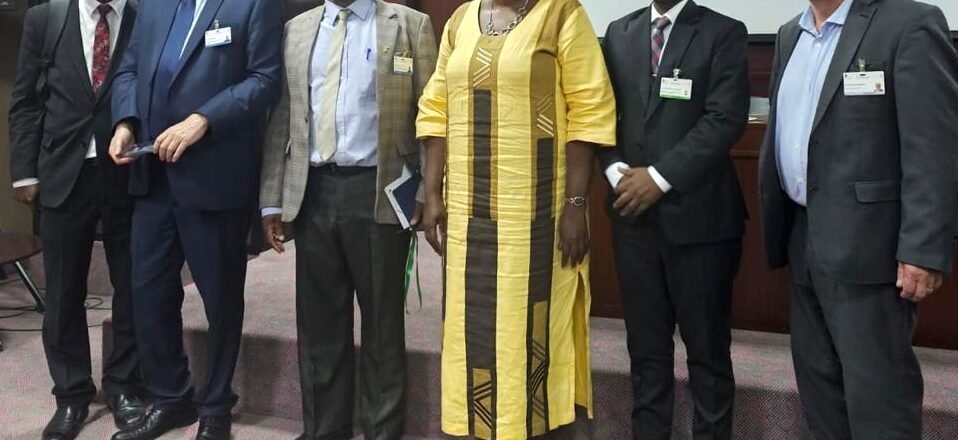
The side event “Strengthening the Capacity of African Land Governance Systems Through Sustainable Financing” brought together government leaders, development partners, and technical specialists to examine how African countries can finance long-term land governance reforms. The session was chaired by Robin Bloch (Team Leader, FCDO Land Facility Decision Support Unit (DSU)) and moderated by Esther Obaikol (Land Governance Advisor, DSU). The discussion centered on practical financing models, political economy strategies, and lessons emerging from Rwanda, Malawi, Ethiopia, and international practice.
Robin Bloch welcomed participants and set out the purpose of the session as exploring “how African governments can strengthen their land governance systems through sustainable financing approaches.” He emphasized the relevance of the topic given shifting aid landscapes, noting that the sector must increasingly rely on domestic solutions. He thanked partners and introduced the speakers, highlighting the DSU’s role in supporting analytical and operational work on land sector financing.
Richard Baldwin opened by connecting the session to the conference’s earlier plenary discussions, noting that the Right Honorable Minister Mzwanele Nyhontso had spoken about “the need for sustainable transformations and the importance of additional sources of financing.” He added: “We know how difficult it is to reform land governance. Existing systems are not well established, and development funding sources are reducing.”
During his keynote presentation, Baldwin argued that sustainable financing must be built into land programmes from the beginning, rather than introduced as an afterthought:
“Often we only think about sustainable financing once land administration systems have matured. Can we bring that conversation more upstream into the planning of the land governance reform programme?”
He outlined the three main areas of land administrations that require financing:
- Administrative infrastructure and system development
- Registration processes
- Operations and service delivery
He explained that costs vary enormously for establishing infrastructure, system development and deployment, and capacity development, depending on scope, functionality, and organisational/institutional factors. For first-time registration of land parcels, costs depend on the model used (e.g. systematic, individual, and voluntary registration that includes a contributory model). Baldwin also commented that comparing expenses across countries requires a standardised step-based costing approach to be sure we are accurately comparing all steps in the registration process—from initial programme design to final registration in a national land administration system.
When looking at operational and service delivery, he emphasised the need to undertake robust financial analysis of the existing land administration system, which may include non-government organisations or businesses.
On revenue mobilization, he emphasised:
“If we have better coverage and better quality of land administration data, then land-related revenue collection rates can be increased. There is a wide net of potential land-related revenues including own-source, tax and non-tax revenues.”
Baldwin put forward a conceptual model that combines supply and demand-side factors with sustainable financing in a Theory of Change that explicitly includes financial analysis and developing incentives and benefits for citizens when using land administration services. He also presented three case studies, illustrating different approaches to more sustainable financial solutions:
Rwanda: Cost recovery through land-transaction revenues
Rwanda’s initial land registration programme cost approximately USD 70 million; at present, the country has nearly recovered the whole cost of that investment in land-transaction revenues. Baldwin showed that “by 2025, the cumulative income from land transactions is around USD 66 million,” adding that the country has largely achieved an annual operational break-even due to large increases in transactions and strong digitisation of land records.
Malawi: A promising financial model
A detailed financial model, generated from existing government budget baselines, demonstrated that Malawi’s land reforms could generate substantial revenues. Baldwin highlighted that ground rent alone was projected at “USD 38 million over nine years,” compared to a cost of roughly USD 28 million.
Ethiopia: Access to microfinance loans through land certification
Ethiopia’s land certification programme supports access to finance for rural producers and small business operators:
“Over four billion birr has been generated as of November this year through microfinance loans backed by land certificates.”
Baldwin closed his presentation by noting an emerging shift globally:
“There is a lot more interest recently in thinking about sustainable financing at the country level and building it into land governance reform programmes on both the demand and supply sides – it can take many different forms.”
Esther Obaikol reflected on the evolution of financing debates in African land governance and the promising case studies presented in Baldwin’s keynote, saying:
“So many years ago, we started talking about improving financing for land administration. These were real discussions in different member states, and these [promising early results in Rwanda, Malawi and Ethiopia] are real things that have happened.”
She underscored that hearing directly from governments and development partners was essential to understanding practical pathways forward.
Panel Reflections
Following the keynote presentation and reflections, the session invited panelists to weigh in with their own experience working with land administrations and development programmes across Africa. They communicated advances in land administration technical capacity, funding sustainability, and gender-balanced ownership, setting an optimistic tone for the work ahead.
1. Rwanda — Sylvain Muyombano
Sylvain Muyombano, Head of Land Administration and Registrar of Land Titles in Rwanda, traced the country’s land reform back to 1998, explaining the pressures of population growth, scarcity, displacement, and informality. He said:
“Before 1994 all the land belonged to the government. After the war the government changed the policy and decided that the land should be a common heritage to all Rwandans, and that the state would manage the land in the interest of everyone. The citizen could own and enjoy rights on land.”
“Land is part of the common heritage of all Rwandans, the ancestors, present and future generations”, he said. The government is mandated to oversee that the landowners are using their land efficiently for the general interest, which is different from government ownership.
Key achievements since that position shift have included a complete legal and policy reform, creation of a national land institution, and the landmark Land Tenure Regularisation (LTR) programme.
“We registered 10.4 million parcels in a short period of time,” said Muyombano “Today we have 11.9 million parcels registered.”
He drew attention to gains in gender-balanced land ownership:
“Nineteen percent [of land parcels] are owned in the names of women, twelve percent by men, and forty-nine percent jointly by couples.”
On technical capacity to enact large-scale land registration, he said:
“[When we began,] We didn’t have any surveyor who could measure land. By now we have more than 306 private surveyors and more than 200 private notaries.”
Rwanda has integrated its land administration system with 17 other national systems for data sharing purposes, including banking, agriculture, and finance. It has also registered over 153,000 mortgages valued at USD 16.7 billion.
On sustainability, he reported:
“We are sure that by the end of this month we shall be recovering all the investments made [in improving the national land administration system].”
He explained that Rwanda is continuously striving to keep services affordable and accessible, which has reduced informal land ownership and use and tripled annual transactions.
“The law now allows us [land administrators] to generate our own revenue to sustain our systems,” he said.
He stressed the ongoing need for a comprehensive strategy to demonstrate the total national benefits of land governance, which would help secure more domestic investment.
2. Malawi — Devie Chilonga
Devie Chilonga, Former Permanent Secretary of the Ministry of Lands in Malawi described the country’s long land reform process, starting in 1994.
“It took a long time —over 22 years—to develop the consensus on the review of land-related legislation. But we just had to be patient.”
Since that consensus, major reforms have included the 2002 National Land Policy, the 2016 legislation, 2022 amendments, and alignment with decentralization. The country also made important advancements in recognising and developing capacity for customary land holders:
“Every Traditional Authority now has a land clerk trained for one year on land administration,” said Chilonga.
Additionally, Malawi developed a national Land Information Management System (LIMS) with support from multiple partners:
“The system is robust. It issues inheritances, subdivision approvals, and certificates for customary estates. It is rolling out nationwide.”
The breakthrough on sustainable financing came from negotiations with the Ministry of Finance:
“Treasury said no. They said all revenue must go into Account Number One. But after demonstrating the risks if the system collapsed, they were convinced. We agreed that twenty-five percent of the resources collected from LIMS would be retained for sustaining the system.”
He stressed performance and credibility:
“We were given a target by the Treasury. We delivered. That opened the whole conversation.”
On gender, he noted:
“Most of the land parcels have been registered in favor of joint tenants or tenants in common. Even in patriarchal societies, women are able to register land in their favor.”
3. Ethiopia — Rahel Hailu (GIZ)
Rahel Hailu, Deputy Project manager at Support to Responsible Agricultural Investment (S2RAI) II Project, GIZ Ethiopia & Djibouti, described the Government of Ethiopia’s collaboration with GIZ to continue the rural land administration programme after external funding ended.
“With a budget of EUR 600,000, we managed to issue more than one million certificates.”
She highlighted the country’s investment in mobile back-office centers (e.g. vans that provide land services to rural communities) that reduce informal transactions and build trust:
“The service is provided closer to the citizens, so they can transact formally and build trust in the system.”
Other national accomplishments include:
-
Establishing an economic empowerment unit linking land rights to access to finance;
-
Formalising land rental services;
-
Building youth skills through technical colleges teaching surveying technologies.
On financing models, she emphasised:
“Sustainable financing [for land administrations] does not come from a single model. It should be a linkage of different mechanisms.”
She highlighted four pathways to achieve more sustainable financing:
- Enhancing land-based revenue systems
- Improving service quality to build willingness to pay (e.g. the cost of land registration)
- Results-based financing (e.g., Ethiopia’s land governance pay for results system (PforR)
- Linking communal land titling with climate and ecosystem financing
4. International Perspective — Christelle van den Berg (Kadaster International)
Christelle van den Berg, Regional Manager for Kadaster International, stressed that first-time registration is not sufficient for sustainability.
“What is really killing for land administration is data that is not up-to-date. If the data is not reliable, the system will not be used.”
She explained that sustainable systems require investment in registration, system development, and the institutions responsible for maintaining data.
“Do not allow all the benefits of land administration to flow back to the national treasury. A portion must return to the organizations responsible for managing the data.”
She highlighted the example of the Netherlands, where the land agency retains revenues to provide ongoing services:
“Our annual turnover is three hundred million euros, while land-related taxes amount to twelve billion euros. It is worth investing in these institutions.”
Audience Insights
Joan Kagwanja, Coordinator, African Land Policy Centre (ALPC)
Joan emphasized that evidence is essential for securing political support:
“We have to sustain if the government sees value. Document the value, package it in a way that can be communicated, especially to ministries of finance and planning.”
Jonathan Ochom, Land Governance Specialist, Transparency International:
Jonathan raised two political economy questions:
“Money politics determines where the money goes. What exactly did you do to convince your government to prioritise this issue?”
He also asked how land reforms in Rwanda avoided reproducing “injustices, fragility and exclusion” in a post-genocide context.
Ward Anseeuw, Senior Land Tenure Officer, Food and Agriculture Organization of the United Nations (FAO)
Ward emphasized revenue retention:
“Most of our countries send all revenues to the Treasury. You need a clear policy that restricts a certain percentage to go directly to your agencies.”
Esther Mwaura-Muiru, Stand for Her Land Global Advocacy Director, Landesa
Esther stressed financing constraints:
“Ministries of Lands have been crippled because of limited financing.”
She asked whether the session’s insights could become “a continental recommendation,” and encouraged Rwanda to expand analysis of how women’s land rights translate into socioeconomic gains.
Christian Mesmer, Project Lead, GIZ
Christian reflected on the broader economic significance of land governance:
“Land is the foundation for economic development. Would it not be good to onboard Ministries of Finance directly into these programmes?”
What works – in the panelists’ words
Richard Baldwin
Baldwin advised engaging Ministries of Finance using their tools and formats:
“Speak their language and use Ministry of Finance spreadsheets, not development project files.”
He warned that full revenue retention can trigger central government pushback and suggested phased models.
Sylvain Muyombano (Rwanda)
He explained that Rwanda established credibility through results:
“We started by showing government that our system cannot work properly if they do not invest in it.”
Annual transactions rose from around 100,000 to over 700,000.
On post-conflict justice, he noted:
“We had land-sharing programmes, and model villages for vulnerable groups. If a landowner was not around, their land was registered and protected until they came back.”
Devie Chilonga (Malawi)
Chilonga described how Malawi’s land authority built trust with the Ministry of Finance:
“We worked as a team. We delivered on targets. That opened up the conversation.”
Conclusion
This session demonstrated that sustainable financing for land governance is not only possible but already underway across African countries. Rwanda’s revenue-generating land information system, Malawi’s negotiated revenue-retention model, Ethiopia’s low-cost high-impact service delivery innovations—as well as international examples—underscore the feasibility of building self-financing, resilient land administration systems.
A shared set of lessons emerged:
-
Sustainable financing must be built upstream into programme design—before the actual programme work has begun. Sustainability is not an afterthought.
-
Reliable, up-to-date land data increases both service uptake and revenue.
-
Ministries of Finance respond to evidence packaged in their own formats.
-
Revenue retention or reinvestment is essential for operational resilience.
-
Inclusive tenure practices, especially for women, strengthen legitimacy and demand.
-
New opportunities such as climate finance and results-based financing expand the resource base.
At its core, the session showed that investing in land governance is a strategic national priority that yields high returns in economic development, social inclusion, climate resilience, and public trust. African governments are increasingly demonstrating that sustainable financing is a cornerstone of strong, long-lasting land governance systems.
Related project: The Land Facility.
Republished from the original Land Portal article under Creative Commons Attribution 4.0 International.
Photograph from the original Land Portal article. No individual photographer was named.