

By RELAPU and ZOA
Tenancy Agreements transform Prospects of South Sudanese Refugees in West-Nile, Uganda
Some interventions might look small at first sight but can bring lasting benefits to individuals and their respective communities. This story illustrates how the introduction of standardized (short-term) rental agreements improved both social cohesion and food security in refugee settlements in Uganda’s West-Nile region.
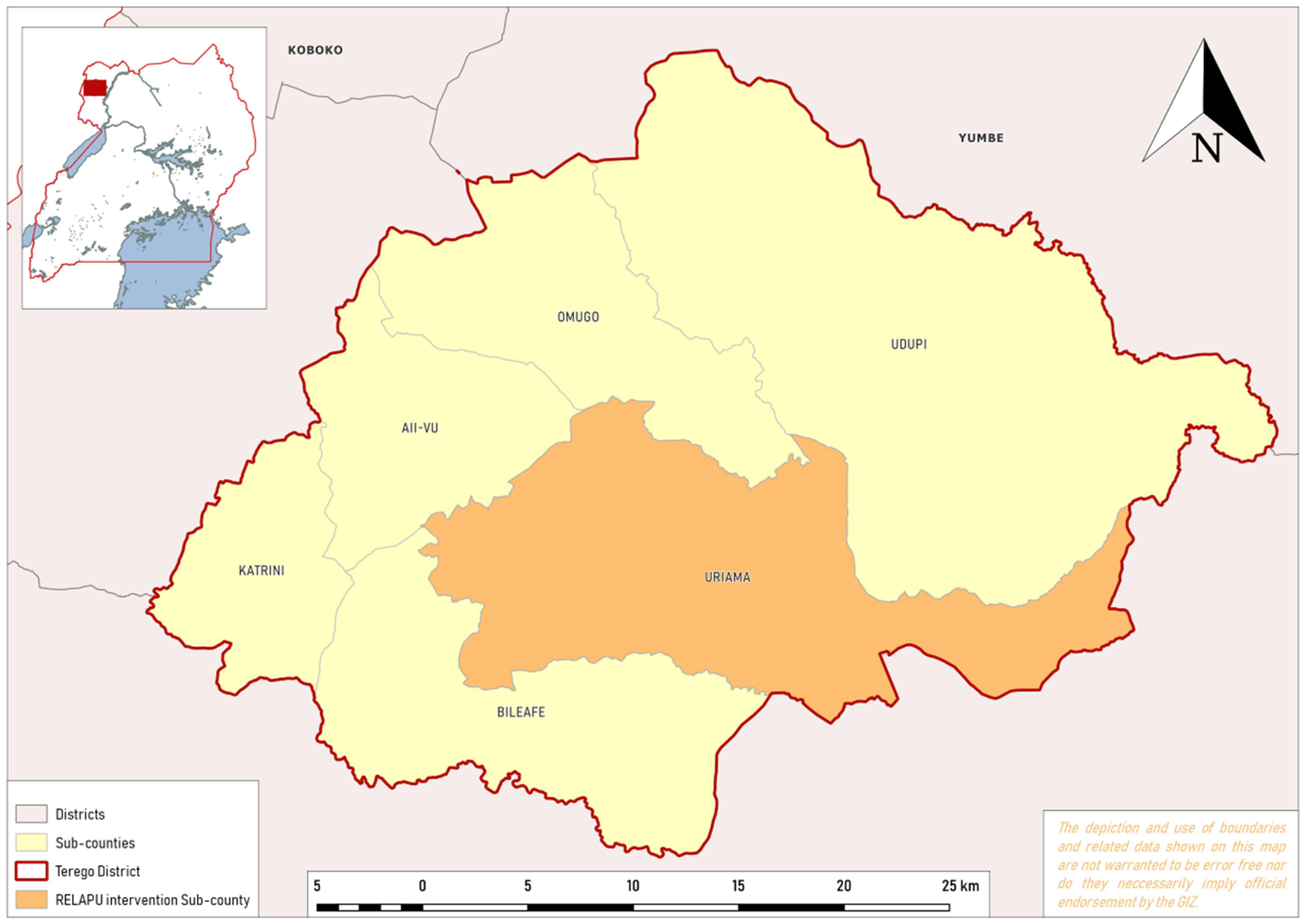
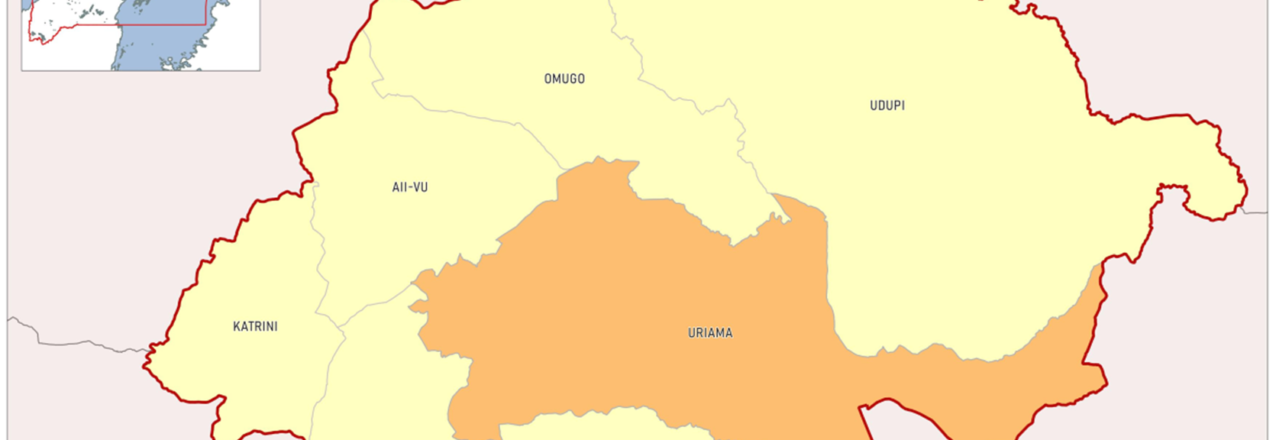
Map of the West-Nile Region in Northern Uganda. CC@GIZ, all rights reserved.
Reliable land use rights are a key factor for enabling a population to engage in small-scale agricultural investment and achieve economic independence and food security. This can be well illustrated with the story of Noel W. (58 years) and his family of eleven, who fled to Uganda from South Sudan in 2017 and were settled in the Rhino Camp in North-Western Uganda. Here, thanks to Uganda’s favourable refugee policy, every refugee family is given a plot of 30m by 30m of land for subsistence farming. While this was initially sufficient to sustain themselves, they soon had to look for additional land to work on. They sought out the local communities to rent land for cultivation but found that some landlords take advantage of the lack of formal agreements to engage in exploitative behaviour towards land renters. To address this issue, the Project for Responsible Land Policy in Uganda (RELAPU) developed and distributed tenancy agreement forms in cooperation with the Dutch NGO ZOA.
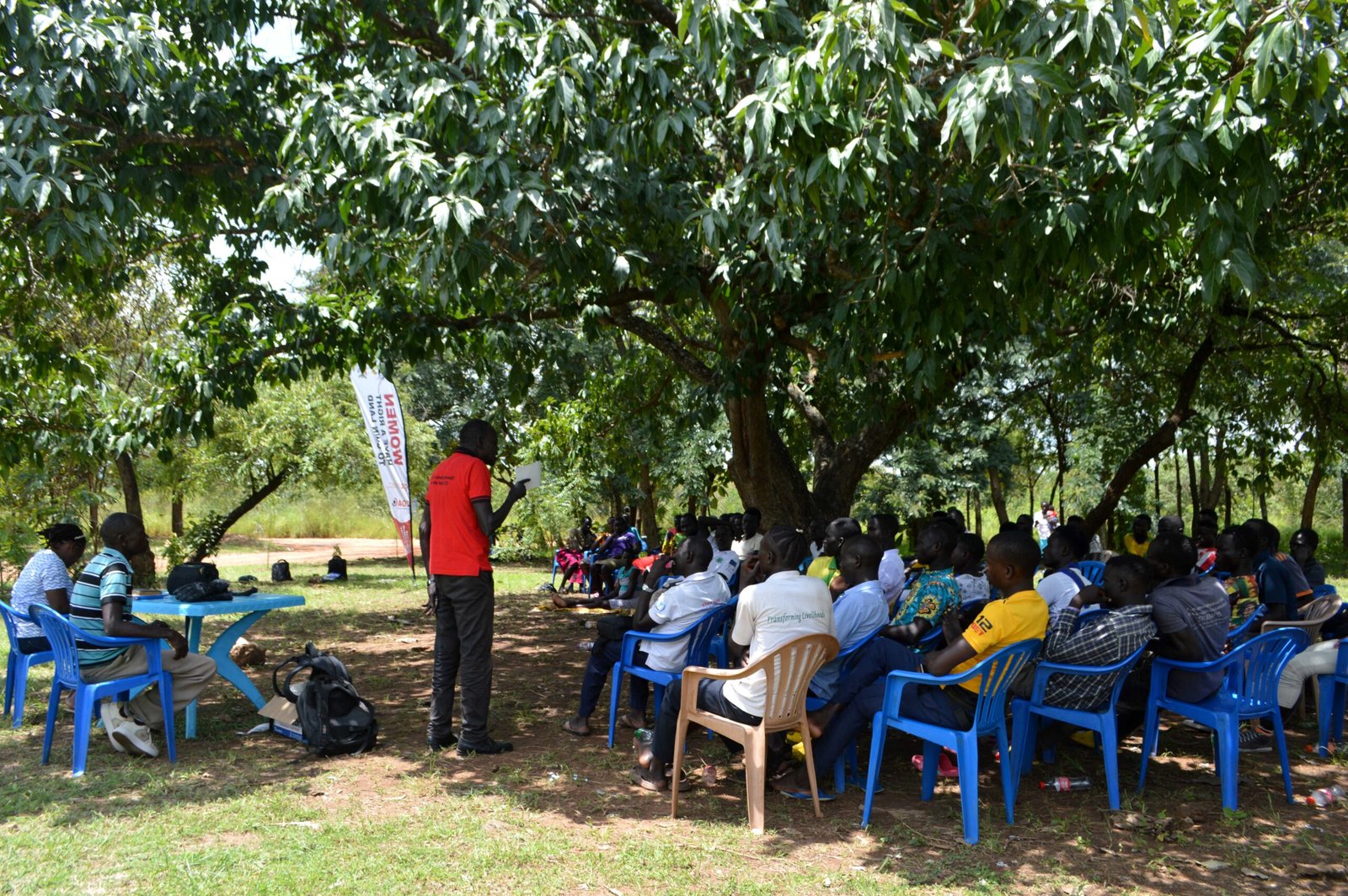
Awareness Raising Meeting facilitated by members of ZOA where they introduce the tenancy agreements. CC@GIZ, all rights reserved.
The predicament faced by Noel W.’s family is a common story among refugees in settlements. Limited resources and small plots of land have left numerous families dependent on food rations and vulnerable to losing crops they grow. This challenging environment makes the temporary access to land and the ability to cultivate it with confidence a crucial requirement for survival and self-sufficiency within refugee settlements. In their communities, refugees often engage in short-term rentals of land to carry out agricultural activities like growing cash crops such as sesame or groundnuts. Unfortunately, these land rentals often lack formal documentation, which leaves refugees vulnerable to exploitation. This ranges from illegitimate rental agreements to pre-mature evictions that result in a loss of agricultural produce and investments. These illicit practices that occur within informal land rental do not only threaten livelihoods but are also a source of many conflicts and hostilities between the refugees and their host-communities.
The Project’s Approach: Formalising Land Rental Agreements to reduce conflicts while increasing confidence
To address these re-occurring issues and to facilitate the peaceful co-existence of refugees and their host communities, RELAPU together with ZOA developed tenancy agreement forms. These forms, representing legal contracts, clearly stipulate the terms of the rental such as duration and type of use, and clearly draw out the rights and limitations of each party. This results in increased security on both sides for the duration of land rentals. Refugees are protected from premature eviction, while landlords are guaranteed through written agreement, that their tenants will not overstay after their harvest or use the plots in other ways than the agreed form. Based on such a tenancy agreement, Noel W. was able to rent nearly an acre of land from a local landlord. Now relying on the formal agreement to protect his agricultural investments, Wani and his family thus moved from a state of dependency on limited food rations and a small plot of land to a level of self-sufficiency. This shift has not only improved their immediate nutritional intake but also provided a sense of stability and hope for the future.
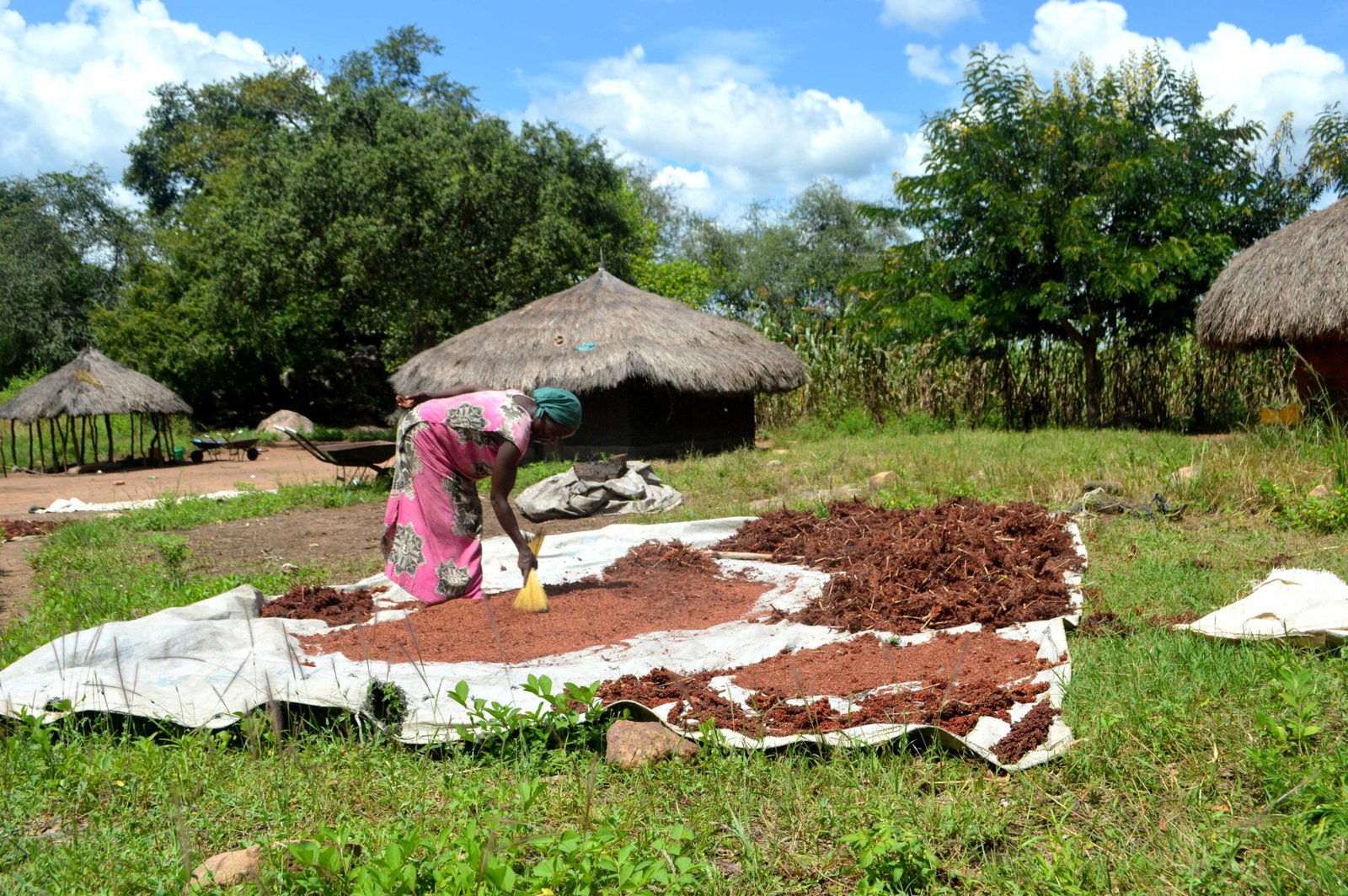
Noel W.’s wife as she lais out millet fromt heir own harvest to dry. CC@GIZ, all rights reserved.
Throughout RELAPU’s implementation in the West-Nile area, a total of 901 agreements came into effect. These have benefited a wide array of tenants, including 419 women and 475 men and their respective families. Additionally, 7 farmer groups also benefited, highlighting the project’s outreach to collective agricultural initiatives. Overall, 89.4% of participants reported enhanced land security following the signing of tenancy agreements, which increases their confidence to engage in for-profit farming. This story underscores the transformative power of legally backed land-access and the impact of secure tenancy agreements for refugees. RELAPU works to find local sustainable solutions that can alleviate food insecurity and empower refugee families to build a more stable and hopeful future for themselves while engaging peacefully with their host communities.
Find here more projects of the Global Programme for Responsible Land Policy: Global Programme Responsible Land Policy.
Explore Responsible Land Policy in Uganda and the global programme.
Originally published on 28 January 2025 on Land Portal. Authors: RELAPU and ZOA. Images: GIZ, via Land Portal.