

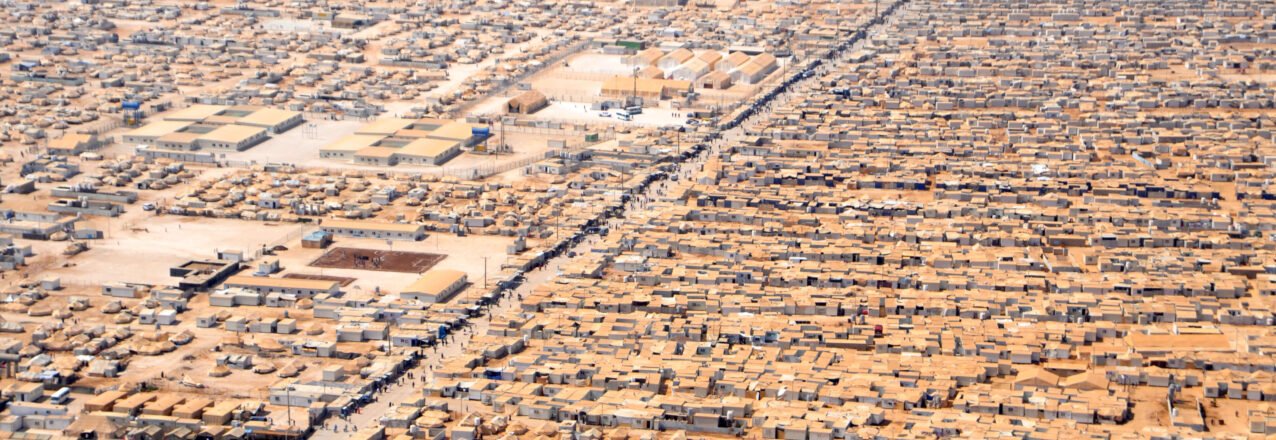
When people are forced to leave their homes, the land they leave behind remains part of their future. So does the land where they find safety. Decisions in both places determine whether displacement becomes a temporary interruption, a lasting loss of rights, or an opportunity for others to consolidate control.
That relationship between forced displacement and land rights was the focus of the October 1, 2026 meeting of the Comité Technique « Foncier et Développement », held at the French Development Agency in Paris. Having been a member of the committee for more than ten years, I see this new collective work as an opportunity to connect knowledge that too often remains divided between humanitarian protection, rural development, and land governance.
The morning’s contributions from Barbara McCallin of the Danish Refugee Council and Jacobo Grajales, professor of political science at Université Paris 1 Panthéon-Sorbonne, offered two particularly useful perspectives. Barbara examined the rights and practical responsibilities involved in humanitarian responses. Jacobo traced how land, return, and restitution became priorities within international peacebuilding.
Read together with the discussion that followed Barbara’s presentation, their contributions suggest a demanding agenda: protect displaced people’s rights while understanding how displacement changes the institutions, relationships, and economic interests governing land. A response can deliver shelter or restore a property claim and still leave the conditions for further exclusion intact.
The rights that disappear when we look only for a title
Barbara began with the humanitarian concept of housing, land, and property rights, often abbreviated as HLP. It covers a much wider set of concerns than ownership: the ability to occupy a home safely, cultivate land, access water and other resources, and sustain a livelihood without the constant threat of removal.
Her explanation of overlapping rights was especially relevant. The same land may support cultivation, seasonal grazing, access to a well, the collection of wood, and claims rooted in family or community membership. Different institutions may recognize these rights. A land registry, a customary authority, and the people using the land may give different answers to the question of who is entitled to do what.
Barbara illustrated the problem through a drawing: one person presents a property document; another points to a tree planted by an earlier generation as evidence of an established relationship with the land. The illustration exposes an operational weakness. An organization that recognizes only the document may assist one claimant while making other legitimate users invisible.
This is where land specialists have something essential to contribute. Humanitarian teams need ways to identify rights that exist without formal registration and to understand how those rights interact. The Voluntary Guidelines on the Responsible Governance of Tenure provide a useful foundation because they address multiple forms of tenure, including communal, customary, and informal arrangements.
For women, this problem can be particularly consequential. A woman’s cultivation rights may be recognized through family relationships while a document names someone else. Displacement can separate her from the people, institutions, and evidence through which she previously exercised those rights. Recognizing a household claim therefore requires examining who within that household can actually use, inherit, and make decisions about the land.
My concern is that an administrative shortcut can become a substantive decision about whose rights matter. Recording the most visible claim does not resolve the others. It may simply strengthen the person best placed to produce paperwork.
Humanitarian assistance changes the value and use of land
One of Barbara’s most practical observations concerned the consequences of assistance itself.
Installing water infrastructure, improving shelters, or supporting cultivation can change the value of a site. If the terms of occupation are unclear, those improvements may give a landholder an incentive to raise rents, reclaim the land, or replace the people whom the intervention was intended to support.
The implication is immediate. Before investing, organizations need to establish who holds which rights, who can authorize the proposed use, how long people can remain, and how disputes will be handled. Barbara described this as housing, land, and property due diligence: a responsibility to investigate the tenure situation and anticipate harm before an intervention proceeds.
She also described an example from Colombia in which displaced landholders feared that clearing mines could expose their land to appropriation while they remained unable to return safely. The example shows why mine action and land protection need to be planned together. Making land physically accessible changes who can enter and use it; the safety benefits need to be accompanied by measures protecting legitimate claims.
These observations extend beyond humanitarian programming. Rural development investments also change access, land values, and bargaining power. A new borehole, road, or agricultural scheme can alter the arrangements through which displaced people and their hosts share resources.
I would therefore make tenure analysis part of the initial design of any such investment in a displacement-affected territory. Agreements should address duration, permitted uses, improvements, rent changes where relevant, and procedures for renegotiation. They also need a credible means of enforcement. A written promise provides limited protection if the person relying on it cannot challenge a breach.
International standards provide tools and require precision
Barbara’s presentation was candid about the distance between international standards and implementation. Their value lies partly in identifying responsibilities that can otherwise disappear beneath the urgency of a response.
The legal status of those standards matters. Treaty obligations bind the states that are parties to them. Principles and voluntary guidelines provide guidance and may draw on binding law, but they do not acquire treaty status simply because humanitarian agencies use them.
The Pinheiro Principles on housing and property restitution are an important example. They set out standards for restoring housing, land, and property following arbitrary or unlawful deprivation. They recognize tenants and other legitimate users, address women’s equal rights, and provide safeguards for people occupying property after its original occupants were displaced. These are international principles, rather than a binding treaty in their own right.
Those safeguards matter because a person currently occupying a displaced family’s home may also have fled violence. Restitution procedures must uphold legitimate claims while protecting current occupants against arbitrary eviction and addressing the risk of homelessness. Barbara’s account resisted treating every competing occupant as a deliberate land grabber.
The African Union’s Kampala Convention, by contrast, is binding on its states parties and concerns internal displacement. Article 11 requires conditions for voluntary return, local integration, or relocation, and mechanisms for resolving property disputes. Its provision on restoring community land refers specifically to communities with a special dependency and attachment to that land upon their return, reintegration, and reinsertion. Article 12 addresses remedies, compensation, and other reparations.
These distinctions should guide country-specific analysis. A regional treaty’s obligations cannot be assumed to apply identically to every country or to every category of displaced person. Refugees crossing a border and people displaced within their own country also face different legal and institutional situations.
Barbara also highlighted procedural barriers that can make an existing right impossible to exercise. A short deadline for contesting a land claim, or a requirement to submit it in a place that remains unsafe, may exclude someone displaced for years. Lost identity, marriage, or property documents can create further obstacles. Reviewing those procedures and providing safe ways to submit evidence should be part of the response from the outset.
There is an additional resource worth bringing into this conversation. The UN Committee on Economic, Social and Cultural Rights’ General Comment No. 26 on land, adopted in 2022, explains how access to, use of, and control over land relate to rights under the Covenant, including food, housing, water, and cultural life. It is an interpretation of treaty obligations, rather than a new treaty creating a universal entitlement to a particular parcel.
For practitioners, this helps connect land access to concrete responsibilities while preserving the distinctions between legal obligation, policy guidance, and implementation.
Jacobo’s contribution puts return and restitution in political context
Jacobo asked a question that deserves sustained attention: how did land become a problem that international peacebuilding actors believed they should address, and why did particular approaches gain authority?
He situated this development within the expansion of international peacebuilding after the Cold War. He argued that the growing emphasis on refugee return also reflected changing political incentives in Western receiving countries, including reduced willingness to offer lasting settlement to refugees.
That is a historical interpretation of how a policy priority emerged. It invites scrutiny of the relationship between protection objectives and the interests of the states supporting them. Once return becomes a central objective, recovering homes and land becomes a practical requirement, and restitution gains prominence within the international response.
For me, the implication is that we should always ask whose preferred solution a program is organizing. A government may want people to return. An agency may have a mandate built around return. A family may judge that its safety, livelihood, or children’s future lies elsewhere.
Barbara’s reflections on Bosnia reinforced this concern. She described the strong commitment to reversing the effects of ethnic cleansing through return, alongside the need to respect people’s own decisions about where to rebuild their lives.
The Pinheiro Principles make an important distinction here: restitution is a right that should not depend on whether someone physically returns. Their preference for restitution also means that compensation should not become a convenient way to avoid restoring rights; the principles specify conditions for its use. See Principles 2 and 21.
This distinction allows us to defend restitution while questioning policies that treat return as the expected outcome for everyone. Recovering a right and deciding where to live are connected decisions, but displaced people must retain agency over both.
War transforms the land economy
Jacobo also examined the effects of war on land relations. Agrarian tensions can contribute to armed mobilization, but violence also changes who controls land, how it is exchanged, and which interests can profit from it.
He drew attention to the ways conflict can facilitate land concentration, deepen the role of markets, and weaken claims held by people with less political influence. In a period of reconstruction, land may then be promoted as a resource for attracting investment and restarting economic activity.
His published research provides further context for this relationship between violence, economic change, and peacebuilding. His account of “peace technologies of land” examines community governance in Liberia, formalization in Côte d’Ivoire, and restitution in Colombia.
The question this raises for the land sector is uncomfortable and necessary. When a reconstruction program recognizes the present distribution of land, what history is it accepting? Have forced sales, intimidation, displacement, or the destruction of evidence contributed to that distribution? Can the people who lost access contest it?
A technically orderly registry can preserve an unjust outcome if the process behind the recorded claims remains unexamined. Investment can generate economic activity while consolidating gains made through violence. These are risks that require investigation in each context.
Barbara’s warning about transferring lessons from Bosnia belongs here too. The international presence there had exceptional powers, including the High Representative’s ability under the Bonn powers to impose laws and remove obstructive officials. Approaches developed under those conditions require careful adaptation elsewhere.
For me, Jacobo’s contribution strengthens the case for examining the political and economic conditions of implementation alongside the legal design of a reform.
Commons and pastoral mobility belong at the center
The exchange after Barbara’s presentation brought a productive tension into the room. Several participants challenged the prominence of individual property in humanitarian language and asked how collective resources and shared use rights fit within the response.
Their concern was practical. In pastoral areas, welcoming displaced people and their livestock may depend on negotiated access to grazing, water, and routes through a wider territory. Establishing who owns one plot will not explain how that system works or how additional users can be accommodated.
One participant’s reminder about wells was particularly useful. In some pastoral settings, the history of establishing a well, organizing labor, and attracting other households helps explain settlement and authority. Understanding access requires attention to those relationships as well as to the infrastructure itself.
Commons are resources governed through shared rights and rules. Their capacity to accommodate newcomers depends on how those rules can be negotiated, who participates, and how competing uses are managed. The discussion suggested that collective governance can offer possibilities that a narrow focus on individual ownership overlooks.
Barbara acknowledged the difficulty of bringing these dimensions into humanitarian practice. Teams under pressure may understand the need to establish ownership more readily than the need to investigate collective rights and social relationships. That institutional constraint is a reason to build sustained partnerships with people who know the territory.
Her point about pastoral displacement deserves equal attention. People accustomed to mobility can still be forcibly displaced. Violence, loss of livestock, or exclusion from grazing and water may prevent them from accessing the spaces on which their livelihood depends. IDMC’s conceptual study of pastoral displacement in Kenya examines precisely this problem.
Drought and environmental degradation also feature in that study. Barbara urged greater attention to the interaction between environmental pressures, resource access, and displacement. This calls for examining how access rules respond when familiar grazing areas or water sources become less reliable, alongside the effects of violence. Negotiating a route or temporary access agreement can address an immediate need; sustaining those arrangements requires institutions able to adapt as conditions change.
Recognizing pastoral displacement requires understanding the loss of a functioning livelihood territory. Assistance organized only around residence in a camp can miss that loss.
We should also examine inequalities within collective institutions. Women, younger people, and households regarded as outsiders may have limited influence over access decisions. Supporting commons requires protecting shared resources and ensuring that the people depending on them can participate in their governance.
Temporary arrangements become part of territorial governance
The morning repeatedly returned to time. Agreements made during an emergency can shape occupation and land use long after the circumstances in which they were negotiated have changed.
The discussion of Mauritania’s Mbera camp raised the wider territorial effects of displacement: activity inside the camp, settlement nearby, and uses extending beyond it. It points toward a useful unit of analysis: the territory affected by displacement, including its existing residents and institutions.
Barbara described the value of approaches that support an area and its residents, including displaced people and host communities. Her example from Yemen involved extending protective green barriers to benefit a neighboring village as well as a displacement site, and including local residents in cultivation training.
For land governance, the principle is consequential. Water, access routes, grazing, sanitation, and markets connect people whose administrative categories differ. Planning these systems together can address shared needs while preserving attention to the specific rights violations associated with displacement.
The IASC Framework on Durable Solutions for Internally Displaced Persons offers a useful test. A durable solution concerns the ability to enjoy rights without discrimination and overcome needs linked to displacement. It may involve return, local integration, or settlement elsewhere in the country. Moving people does not, by itself, demonstrate that those conditions have been achieved.
The policy task is to build arrangements that can evolve as displacement continues, households make different choices, or new arrivals and returns change demand. That requires public institutions and resources capable of supporting revision over time.
An agenda for the committee’s collective work
The committee has already identified displacement-related changes in receiving territories as a priority for its current work program. The morning’s discussion provides a basis for making that work operational.
I would put five priorities at the center of the inquiry.
First, document the rights that interventions recognize and the rights they leave out. Examine cultivation, grazing, water access, inheritance, rental arrangements, and collective claims alongside registered ownership. Follow what happens to women’s rights and to people absent when agreements are made.
Second, trace how emergency arrangements change over time. Who authorized settlement? What was agreed about duration and improvements? How have land values, resource access, and bargaining power changed? Temporary permission should be examined as a process whose consequences develop over years.
Third, connect protection in places of origin with security in places of refuge. Families may need help preserving a claim they cannot safely exercise while also securing land and housing where they currently live. Supporting one should not require abandoning the other.
Fourth, examine institutions and power as carefully as legal instruments. A participant warned that documented local rights can be deliberately disregarded when political or economic interests take precedence. Knowledge gaps and deliberate exclusion require different responses. The latter demands scrutiny, usable remedies, and accountability, alongside better information.
Fifth, assess outcomes through people’s ability to exercise rights. Useful measures include protection from arbitrary eviction, reliable resource access, fair dispute resolution, meaningful participation, and the ability to make informed choices about the future. Counting titles, agreements, or returns provides only part of that picture.
These are my proposed priorities, rather than a statement of committee consensus. They build on the distinct strengths of the morning’s contributions: Barbara’s attention to protection and operational harm, Jacobo’s examination of the history and political economy of intervention, and participants’ insistence on collective governance and territorial context.
I believe the committee’s value lies in bringing these perspectives into sustained conversation with practice. The next step is to examine how particular decisions change people’s rights, and which institutions can keep those decisions open to challenge.
Displaced people need secure options where they are now, protection for claims they can no longer safely exercise, and a meaningful say in what comes next. Land governance has to support these needs across the territories that displacement connects.