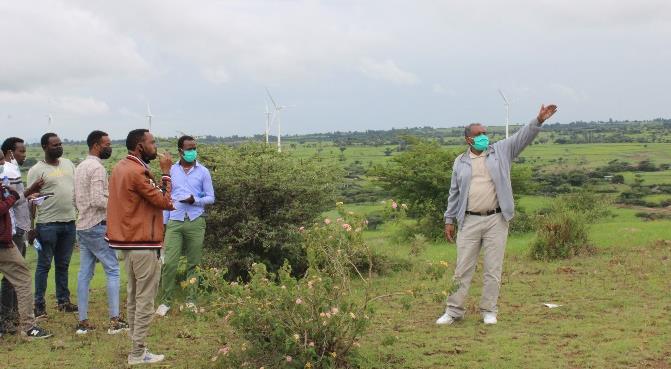
Quarterly Activity Progress Report No. 6 Quarter 4, Fiscal Year 2020 (July 1 – Sept. 30, 2020)

Introduction

United States Agency for International Development (USAID)/Ethiopia contracted Tetra Tech as the prime contractor to implement the five-year, $10.9 million Feed the Future Ethiopia Land Governance Activity (Activity) Task Order (TO) under the Strengthening Tenure and Resource Rights (STARR) II Indefinite Delivery Indefinite Quantity (IDIQ) Contract. Tetra Tech will implement the Activity over a five-year period from May 2019 to May 2024. This Quarterly Report No. 6 summarizes implementation progress made during the period of July 1- September 30, 2020 (Quarter 4, FY 2020).

The Activity’s purpose is to provide support to the GoE, its regions, and citizens to strengthen land governance, increase incomes, reduce conflict, and support well- planned urbanization, thereby contributing to the country’s economic development plans. To help achieve these goals, the Activity will work in close partnership with relevant institutions in the GoE, Ethiopian universities and research institutions, and other development partners operating in the land sector to implement activities under two components:

Component 1: Strengthening the land governance system

  1. Facilitate policy reforms and strengthen land administration and land use institutions by promoting structural reforms of rural and urban institutions and the land information system.
  2. Improve technical capacity for suitable land administration and land use planning activities to address emerging issues, such as urbanization, industrialization, and youth.
  3. Conduct policy-oriented research on land governance and provide scalable solutions to improve land governance.

Component 2: Expanding communal land tenure security in pastoral areas

  1. Expand communal land tenure security in pastoral areas through improved policy and legal reform.
  2. For pastoral community lands, develop a scalable approach for land demarcation and certification in collaboration with community institutions.


Quarterly Activity Progress Report No. 5 Quarter 3, Fiscal Year 2020 (April 1 – June 30, 2020)

Introduction

A large herd of cattle stands near a river bend.United States Agency for International Development (USAID)/Ethiopia contracted Tetra Tech as the prime contractor to implement the five-year, $10.9 million Feed the Future Ethiopia Land Governance Activity (Activity) Task Order (TO) under the Strengthening Tenure and Resource Rights (STARR) II Indefinite Delivery Indefinite Quantity (IDIQ) Contract. Tetra Tech will implement the Activity over a five-year period from May 2019 to May 2024. This Quarterly Program Report No. 5 summarizes implementation progress made during the period of April 1- June 30, 2020 (Quarter 3, FY2020).

The Activity’s goal is to assist the Government of Ethiopia (GoE), its regions, and its citizens in strengthening land governance, increasing incomes, reducing conflict, and supporting well-planned urbanization, thereby contributing to the country’s Second Growth and Transformation Plan. To help achieve these goals, the Activity will work in close partnership with relevant institutions in the GoE, Ethiopian universities and research institutions, and other development partners operating in the land sector to implement activities under two components:

Component 1: Strengthening the land governance system

  1. Facilitate policy reforms and strengthen land administration and land use institutions by promoting structural reforms of rural and urban institutions and the land information system.
  2. Improve technical capacity for suitable land administration and land use planning activities to address emerging issues, such as urbanization, industrialization, and youth.
  3. Conduct policy-oriented research on land governance and provide scalable solutions to improve land governance.

Component 2: Expanding communal land tenure security in pastoral areas

  1. Expand communal land tenure security in pastoral areas through improved policy and legal reform.
  2. For pastoral community lands, develop a scalable approach for land demarcation and certification in collaboration with community institutions.


Integrated Land and Resource Governance (ILRG) Quarterly Report October – December 2020

Key Accomplishments and Challenges
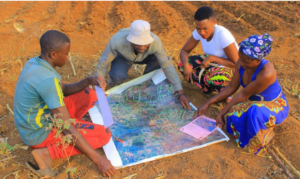
During this first quarter of fiscal year (FY) 2021, ILRG increased the pace of activities following six months of general slowdown due to the coronavirus disease 2019 (COVID-19) pandemic. While COVID-19 impacts in the United States and Europe meant that all staff based there were working from home, teams in project countries were able in some cases to start working out of the office and engaging with beneficiaries, albeit with increased vigilance, particularly related to limiting travel and ensuring the use of facemasks, distancing measures, limiting participant numbers and handwashing for all meetings. USAID mission staff were also increasingly able to interact both with the project and government staff under differing conditions in each country.

Mozambique: ILRG launched subcontracts and training of implementation partners for field activities with Novo Madal, Portucel, and Green Resources in this quarter. These partners subsequently carried out gender assessments and initial registration of individuals in participating communities, particularly around women who will be engaged in economic empowerment activities. National coordination with the USAID Supporting the Policy Environment for Economic Development (SPEED+) program continued on policy and law. ILRG distributed 100 tablets to the Ministry of Land and Environment to carry out a national level survey on land tenure security to inform the policy process. Advancement of activities in Sofala continued with the hiring of a coordinator and agreements with local government partners.

Zambia: lLRG’s land rights documentation engagements with three partners neared completion with the validation of records across four chiefdoms. Partners’ focus will begin to move towards administration and long-term capacity building. Within the wildlife and natural resource management sectors, ILRG community partners increased the quality of their monthly reporting and finalized a governance baseline assessment. ILRG agreed on future priorities with the Department of National Parks and Wildlife (DNPW), and one community game ranch was launched. The House of Chiefs adopted a set of national customary gender guidelines, a pilot for increasing women’s participation in community wildlife governance elections was finalized, gender issues were included in the training of newly recruited wildlife community scouts, and gender integration in the National Land Titling Programme operations manual was advanced. Thirty-five chiefs began a two-year distance learning diploma course on governance and leadership.

Ghana: ILRG activities in Ghana this quarter were largely suspended awaiting COVID-19 due diligence reports. The team still moved forward planning with Ecom Agroindustrial Corp. (ECOM) on payment for ecosystem services activities; finalization of signing for FarmSeal land documentation; finalization of collaboration with ECOM on farm rehabilitation; and revisions to a comprehensive report on tree tenure and forest law in Ghana.

India: With the beginning of the potato season in West Bengal, ILRG made progress towards supporting women farmers to cultivate potatoes and to lease land. During this quarter over 500 PepsiCo women farmers were trained in potato agronomy and sustainable farming. Two land leasing groups were established and are now producing PepsiCo potatoes. One of these groups is leading a demonstration farm, showcasing different farming technologies and practices, as well as women’s empowerment approaches. ILRG developed alternative strategies to reach and empower PepsiCo women farmers throughout the potato season, including video clips and text messages (though these have not been approved by PepsiCo as of the end of the quarter). The main challenges remain the COVID-19 pandemic, which continues to delay certain activities.

W-GDP: ILRG continued to disseminate learning and impact from W-GDP funded activities, publishing and disseminating outcomes and lessons learned briefs and blog posts about impact in India and Zambia. In coordination with the Communications, Evidence and Learning (CEL) program’s Land Evidence for Economic Rights, Gender and Empowerment (LEVERAGE) activity, ILRG developed a two-page and a four-page brief about women’s land rights, women’s economic empowerment, and W-GDP. ILRG initiated collaboration with the USAID-funded Passages Project for technical assistance on gender norms change in its five countries and to develop a strategic framework on gender norms and women’s land rights. In Ghana, the government halted cocoa-related sustainability programs in the country, negatively impacting the potential partnership with chocolate brands Hershey and Mars. Following consultation with USAID, ILRG will continue to work with ECOM to strengthen its capacity on gender equality and women’s empowerment, which has a high sustainability and scalability potential. ILRG advanced recruitment for field staff in Malawi, expecting the program to be launched in country next quarter.

Madagascar: The COVID-19 pandemic and the arrival of the rainy season affected the timing of field assessments planned for this quarter. Despite these hurdles, the coalition of actors supporting the Climate Resilient Cocoa Landscapes (CRCL) initiative have greatly appreciated the role of the ILRG team in bringing complex land governance issues to the forefront – the original intent of Lindt & Sprüngli AG. The future of the ILRG work in the Ambanja District and the Sambirano Valley hinges on whether CRCL lead implementer Helvetas can establish an effective multi-stakeholder platform in a timely fashion to guide future policy making and field level activities.

Other Activities: ILRG awaits USAID/Democratic Republic of Congo (DRC) feedback on advancing a new partnership with IPIS. Progress continues within work plans for support to USAID’s Indigenous Peoples portfolio, Liberia, and PPA. With respect to work on Prindex collaboration, ILRG shifted countries of interest from Zambia to Colombia. ILRG remains open to engagement with USAID Washington on analytical support.


Artisanal Mining and Property Rights Quarterly Progress Report January 1 – March 31, 2020

Executive Summary

This quarterly performance report describes achievements realized under USAID’s AMPR project in the CAR between January 1 and March 31, 2020. The AMPR team made significant advancements as summarized below.

Objective 1: Assist the Government of the CAR to Improve Compliance with KP Requirements to Promote Licit Economic Activities:

  • Technical support provided for preparing the Terms of Reference (TOR) for a field visit and technical workshop in Cameroon to present the results of the smuggling diagnostic (Rapport Diagnostic Sur La Contrebande Des Diamants En Republique Centrafricaine [Diagnostic Report on Smuggling of Diamonds in CAR]) and identify opportunities for cross-border coordination and experience sharing.
  • Produced an action plan for strengthening diamond supply chain governance, including regulatory and institutional changes completed and shared with the Ministry of Mines and Geology (MMG).
  • Provided technical and logistical support to designing legal texts for the CAR Kimberley Process Permanent Secretariat (KPPS).
  • Supported joint missions with the CAR KP National Monitoring Committee (CNS PK) to reconstitute the Kimberley Process Local Monitoring Committees (Comités Locaux de Suivi, CLS).
  • Trained six CLS on the use of the AMPR-developed meeting agenda and reporting tools.
  • Carried out the second field mission in Carnot and Nola sub-prefectures with an enlarged team of experts from the MMG, Ministry of Habitat and Urbanism, and spatial planners from the University of Bangui to gather additional information and get buy-in from communities in the ZEAs.
  • Participated in the CAR International Mines, Quarries, and Petroleum Exhibition (SEMICA).
  • Started filming training videos on the Kimberly Process, CLS, CLPR, and pastoralism.
  • Participated in technical inter-donor coordination meetings among USAID, World Bank Appui à La Professionnalisation des Coopératives Minières de la République Centrafricaine (APCM), and EU Renforcement de la Gouvernance dans les Secteurs de l’Extraction Artisanale du Diamant et de l’Or en République Centrafricaine (GODICA) projects providing support to the MMG.

Objective 2: Strengthen Community Resilience, Social Cohesion, and Responses to Violent Conflict in the Central African Republic:

  • Completed a rigorous and participatory evaluation of the model of peacebuilding committees (CLPRs), including its impact, activities, successes, failures, legitimacy, lessons learned, and recommendations.
  • Completed the official installation ceremonies of the 11 CLPRs in Carnot and Nola sub-prefectures.
  • Conducted a literature review on pastoralism and transhumance, focusing on CAR and its neighbors.
  • Organized master classes in Berberati, Nola, and Bangui to identify key issues, knowledge gaps, and lessons learned on addressing violent conflicts related to pastoralism in the southwest of CAR.
  • Trained 21 livelihoods groups on agricultural production, working effectively as associations, village savings and loans, and basic literacy.
  • Assisted 21 women’s and mixed-gender groups in setting up nursery beds and demonstration sites for the agricultural activities.

Objective 3: Increase Awareness and Understanding of the Opportunities and Challenges of Establishing Responsible Gold Supply Chains in the Central African Republic:

  • Organized two national workshops for government, civil society, and private sector on: a) restitution of IPIS’ gold mining diagnostic and b) training in RESOLVE’s Code of Risk Mitigation for Artisanal and Small-Scale Miners Engaging in Formal Trade (CRAFT).
  • Produced a gold sector Market Readiness Report, drawing on the gold diagnostic study’s findings.
  • IPIS finalized the interactive digital map based on data gathered from 322 mine site visits and presented the map to relevant CAR authorities during a restitution workshop in Bangui in January 2020.

Objective 4: Improve USAID Programming through Increased Understanding of Linkages Between Artisanal and Small-Scale Mining and Key Development Issues:

  • Prepared an ASM Issue Brief on best practices from USAID-supported projects worldwide.
  • Responded to a request for technical assistance from the USAID Colombia Mission related to their artisanal gold sector.

This quarterly report presents descriptions and results of each activity in AMPR’s approved Annual Work Plan for the period of January–March 2020. It should be noted that on March 14, 2020 AMPR field activities began to be restricted due to the arrival of coronavirus disease (COVID-19) in CAR.


Artisanal Mining and Property Rights Quarterly Progress Report April 1 – June 30, 2020

Executive Summary

This quarterly performance report describes achievements realized under USAID’s AMPR project in the Central African Republic (CAR) between April 1 and June 30, 2020. The implementation of project activities during this quarter was challenging due to the Government of the Central African Republic (GoCAR) COVID-19 guidelines restricting movements between the capital Bangui and the provinces as well as restricting large gatherings due to the increase in cases of Coronavirus Disease 2019 (COVID-19) in CAR. GoCAR had confirmed 3,745 COVID-19 cases at the end of the reporting period, of which, 3,205 were local transmissions. AMPR management in Bangui, nonetheless, successfully coordinated the implementation of activities through its regional offices. The AMPR Chief of Party (COP) held regular consultative meetings with senior leadership of the Ministry of Mines and Geology (MMG), including meetings with the Minister, the Kimberley Process Permanent Secretariat, (KPPS), and the Chargé de Mission to discuss AMPR activities in light of evolving COVID-19 guidelines. MMG senior officials supported AMPR’s integration of COVID-19 awareness-raising in its communications and outreach engagements. Achievements are summarized below.

Objective 1: Assist the Government of the CAR to Improve Compliance with KP Requirements to Promote Licit Economic Activities:

  • The MMG validated the Action Plan for Strengthening Diamond Supply Chain Governance (Plan d’action pour le renforcement de la chaîne légale du diamant centrafricain). This action plan was drafted by AMPR and reviewed and endorsed by the MMG during a working retreat in Boali. MMG’s participants, including the Minister of Mines and members of the National Committee for Official Texts reviewed the plan line-by-line, and reworked the French and the format before validating. By validating the proposed regulatory and institutional changes, the MMG demonstrated commitment to leading this reform.
  • The project provided technical and logistical support to the MMG in the drafting of a decree for the formal nomination of the KPPS and Chef de Service for KPPS.
  • The project analyzed technical reviews of the CAR Mining Code conducted by the African Development Bank (ADB) and provided technical analysis and feedback to the MMG.
  • AMPR drafted the strategic implementation plan for the Société Centrafricaine d’Exploitation Diamantifère (SCED)-Ndéléngué pilot decentralized artisanal mining zone (ZEA) in Nola subprefecture. The plan encompasses revenue generation, management, technical assistance, and land tenure clarification.
  • AMPR video subcontractor, Elie Numerique Centrafrique (ENC), completed scripts for training videos on the Kimberly Process for monitoring committees, peace and reconciliation committees, and pastoralism. ENC also translated and dubbed into Sango training videos on valuation and Sustainable Mining by Artisanal Miners (SMARTER) mining techniques.
  • The project completed and printed a lexicon of artisanal mining terms in French and Sango.
  • AMPR communications subcontractor Réseau des Journalistes pour les Droits de l’Homme (RJDH) completed scripts to produce 20 radio programs (30-minute duration) on the KP and ASM for local and national diffusion.
  • AMPR trained the Comité Local de Suivi (CLS) of Boganda and M’Baïki on the use of the AMPR-developed meeting agendas and reporting tools. Six of the eight CLS in the KP compliant zones are trained to date.
  • The project supported the organization of quarterly information, sharing and coordinating meetings under the auspices of the sub-prefecture in the compliant zones of Berberati, Boda, Boganda, Carnot, Nola, and M’Baïki.
  • The project provided technical input to the reporting template for evaluating KP priority zones and participated in the evaluation mission for the KP priority zones of Abba, Bouar, Baoro, and Sosso-Nakombo.
  • AMPR drafted a scope of work (SOW) for training relevant government technicians on techniques for analyzing and compiling statistics to aid in fraud detection.
  • The project provided technical support to the MMG in drafting a Ministerial decree for the Technical Reflection and Exchange Committee for the CAR Extractive and Mining Sector (CTRE-RCA).
  • Finally, AMPR represented USAID AMPR in MMG-convened COVID-19 donor coordination meetings with the World Bank’s Projet de Gouvernance des Ressources Naturelles (PGRN) and the EU-funded Renforcement de la Gouvernance dans les Secteurs de l’Extraction Artisanale du Diamant et de l’Or en République Centrafricaine (GODICA).

Objective 2: Strengthen Community Resilience, Social Cohesion, and Responses to Violent Conflict in the Central African Republic:

  • The Ministry of Humanitarian Action and National Reconciliation (MHANR) validated the “Evaluation des activités de promotion de la cohésion sociale: Résumé exécutif des conclusions et recommandations,” a summary of research findings of AMPR consultant Olivier Karana on the evolution of conflict dynamics, and the role of CLPR’s and AMPR’s social cohesion strategy.
  • The project developed scripts for a short educational video on the roles and lessons learned by the CLPRs in dealing with social tensions around land, property, housing, and pastoralism for institutional communication and training purposes.
  • AMPR regional offices conducted biweekly visits to each CLPR to monitor and collect data from the conflict and activity registers.
  • AMPR provided technical support to MHANR to develop a protocol for the collection, analysis, transmission, and digitization of CLPR activity reports.
  • AMPR partner Concordis drafted a study report on pastoralism and transhumance, which identifies key issues, knowledge gaps, and lessons learned on addressing violent conflicts related to pastoralism in the southwest of CAR.
  • AMPR subcontractor Action for the Promotion of Entrepreneurship (AFPE) continued training for 21 livelihoods groups on agricultural production, working effectively as associations, village savings and loans, basic literacy, and continued technical assistance in setting up demonstration sites.

Objective 3: Increase Awareness and Understanding of the Opportunities and Challenges of Establishing Responsible Gold Supply Chains in the CAR:

  • AMPR is working with subcontractor RESOLVE to develop guidelines for the CAR government and other technical partners to support the development of a national artisanal gold mining action plan.

Objective 4: Improve USAID Programming through Increased Understanding of Linkages Between Artisanal and Small-Scale Mining and Key Development Issues:

  • AMPR participated in periodic international teleconferences organized by the World Bank and the ASM Delve Database on the impact of COVID-19 on the ASM sector.
  • The project finalized USAID’s Gender Issues in the Artisanal and Small-Scale Mining Sector Issue Brief.
  • Finally, AMPR drafted an SOW for possible technical assistance to the USAID Colombia Mission related to their artisanal gold sector.
  • COVID-19: AMPR Interventions and the Impact in CAR:
  • AMPR organized a press conference for the CAR Minister of Mines to address mining sector actors on COVID-19.
  • The project designed, printed, and distributed 1,000 MMG brochures on COVID-19 risks in the mining sector and mining communities.
  • The project supported the airing of community radio debates on COVID-19 in the mining communities in southwest CAR, reaching more than 20,000 listeners.
  • AMPR trained mining communities in Carnot and Nola on techniques for making water filters using local materials.
  • AMPR organized a soap-making Training of Trainers (TOT) course for 21 AMPR-supported women’s groups in Boda, Carnot, and Nola.
  • AMPR assisted in designing an MMG COVID-19 poster on COVID-19 risky behaviors in the mining sector and communities.
  • The project co-convened six biweekly teleconference discussions on COVID-19 considerations and implications on ASM in CAR with USAID AMPR implementing partners Concordis, Levin Sources, and representatives from GODICA and the World Bank.
  • Finally, AMPR published a blog on USAID’s LandLinks on AMPR COVID-19 interventions entitled, “Mobilizing to address COVID-19 in vulnerable diamond and gold mining communities.”


Quarterly Activity Progress Report No. 4, Quarter 2, Fiscal Year 2020 (Jan. 1 – Mar. 31, 2020)

Introduction

Several men and women stand in the front of a conference room for a group photo.United States Agency for International Development (USAID)/Ethiopia contracted Tetra Tech as the prime contractor to implement the five-year, $10.9 million Feed the Future Ethiopia Land Governance Activity Task Order (TO) under the Strengthening Tenure and Resource Rights (STARR) II Indefinite Delivery Indefinite Quantity (IDIQ) Contract. Tetra Tech will implement the Activity over five-year period from May 2019 to May 2024. This Quarterly Program Report No. 4 summarizes implementation progress made during the period of January 1-March 31, 2020 (Quarter 2, FY2020).
The goal of the Activity is to assist the Government of Ethiopia (GoE), its regions, and its citizens in strengthening land governance, increasing incomes, reducing conflict, and supporting well-planned urbanization, thereby contributing to the country’s Second Growth and Transformation Plan. To help achieve these goals, the Activity will work in close partnership with relevant institutions in the GoE, Ethiopian universities and research institutions, and other development partners operating in the land sector to implement activities under two components:

Component 1: Strengthening the land governance system

  1. Facilitate policy reforms and strengthen land administration and land use institutions by promoting structural reforms of rural and urban institutions and the land information system.
  2. Improve technical capacity for suitable land administration and land use planning activities to address emerging issues, such as urbanization, industrialization, and youth.
  3. Conduct policy-oriented research on land governance and provide scalable solutions to improve land governance.

Component 2: Expanding communal land tenure security in pastoral areas

  1. Expand communal land tenure security in pastoral areas through improved policy and legal reform.
  2. For pastoral community lands, develop a scalable approach for land demarcation and certification in collaboration with community institutions.


Integrated Land and Resource Governance (ILRG) Quarterly Report April – June 2020

Key Accomplishments and Challenges

During the third quarter of fiscal year (FY) 2020, ILRG operations slowed down and pivoted in the face of global impacts of the coronavirus disease 2019 (COVID-19). ILRG onboarded a new Global Gender Advisor and continued preparing the groundwork for new partnerships/activities, particularly in Mozambique, Madagascar, and Malawi and with the cocoa sector.

Mozambique: At the policy level ILRG advanced a memorandum of understanding (MoU) with the Ministerial Commission for Revision of the Land Law. With a new director in place, ILRG has the opportunity to positively engage on policy work moving forward. A scope of work for field implementation of activities with Novo Madal was finalized, including both agriculture and gender support as well as land delimitation. Agreements with Green Resources management and board were finalized on the process for moving forward with land delimitation work. Portucel engagements are also being finalized with a draft request for proposals under development. Activities related to disaster relief funding on land rights in Sofala Province moved relatively slowly as relationships are being established with the National Institute for Disaster Management and travel to the districts has been restricted for the ILRG team. These will be prioritized in the coming quarter. Funding commitments this quarter and agreements with private sector partners have meant that Mozambique activities should be well placed to advance in the coming months, though COVID-19 impacts threaten to slow this progress.

Zambia: ILRG engaged with the Ministry of Lands and Natural Resources (MLNR) on the virtual validation of the draft Land Policy this quarter, consolidating input from across donors. Agreements with the Department of National Parks and Wildlife and MLNR for continued partnership were advanced this quarter though leadership has evolved in both institutions. ILRG completed the recruitment for a new Country Coordinator to replace Dr. Emmanuel Mutale who passed away in March 2020. ILRG field partners continued with land documentation work, land administration and district planning. ILRG launched new partnerships with Madison Finance Limited (MFinance) on microfinance in Eastern Province and with the Wildlife Producers Association of Zambia (WPAZ). The Zambia National Community Resources Board Association (ZNCRBA) and Frankfurt Zoological Society (FZS) both worked with ILRG to prepare for future work on gender integration and community resources board governance. ILRG’s support for a Prindex sub-national deep dive is being folded into the Zambia portfolio.

Ghana: Ghana field activities planned for this quarter were largely suspended due to COVID-19 related restrictions. The team prepared a remote climate change training program and worked with Ecom Agroindustrial Corp. (ECOM) to develop a concept note for a potential payment for ecosystem services (PES) scheme. The fee-for-service FarmSeal uptake has been extremely low with only 70 farmers out of 842 mapped farms (766 farmers availed themselves of the service) agreeing to pay for the initial fee-for-service program. With respect to farm rehabilitation models, data has demonstrated that cash crop returns to date do not demonstrate a business case for the farm rehabilitation service, as currently designed. This will be updated in the next season.

India: COVID-19 restrictions prevented the ILRG India team from visiting target communities this quarter; the team remained in touch with partners and community representatives by phone. Several planned activities, such as the training module on potato agronomy record keeping, gender-based violence (GBV) training for PepsiCo field staff, Project-level Women’s Empowerment in Agriculture Index (PRO WEAI)/Prindex baseline data collection, the roll-out of mini-study findings, and Empowered Entrepreneurship training for women’s group members and PepsiCo farmers families could not be completed due to the COVID-19 lockdown. Instead, work focused on activities that could be completed while the team worked from home, including a land policy study and land leasing group report, work plan development, collection of yield data from participants in potato agronomy training, and adaptation of training materials related to norms change, Empowered Entrepreneurship, and GBV to the local context.

W-GDP: In Zambia, ILRG launched the customary gender guidelines processes, and at the field level negotiated gender integration opportunities with wildlife and natural resource management partners. W-GDP integration in Mozambique focused on preparations of requests for proposals related to new multi-year partnerships. In India, W-GDP work related to taking stock of the first growing season impacts and preparation of the next country work plan. In Malawi, ILRG received approval from both USAID and the Malawian government to advance documentation work. Activities with the cocoa sector involved the development of a concept note with ECOM and emerging partnership commitments from two major chocolate brands.

Other Activities: ILRG launched a new set of completion activities around responsible mineral trade with a subcontract to support the Public-Private Alliance for Responsible Minerals Trade (PPA) and is preparing additional partnerships around mapping of conflicts in the Democratic Republic of Congo (DRC). ILRG advanced partnerships in Madagascar with Helvetas related to a private sector co-financed activity in the Sambirano Valley. This activity is expected to go through a two-year assessment/activity development phase. ILRG continued advancements with USAID on guidance for USAID’s Policy on Promoting the Rights of Indigenous Peoples, completing drafts on regional and technical themes. ILRG’s two grants to carry out community land protection activities in Liberia were on hold this quarter due to COVID-19.

Quarterly Activity Progress Report No. 3, Quarter 1, Fiscal Year 2020 (Oct. 1 – Dec. 31, 2019)

Background and Introduction

United States Agency for International Development (USAID)/Ethiopia contracted Tetra Tech as the prime contractor to implement the five-year, $10.9 million Land Governance Activity (USAID LGA) Task Order (TO) under the Strengthening Tenure and Resource Rights (STARR) II Indefinite Delivery Indefinite Quantity (IDIQ) Contract. Tetra Tech will implement USAID LGA over a five-year period from May 2019 to May 2024. This Quarterly Program Report No. 2 summarizes implementation progress made during the period of October 1-December 31, 2019 (Quarter 4, FY2019).
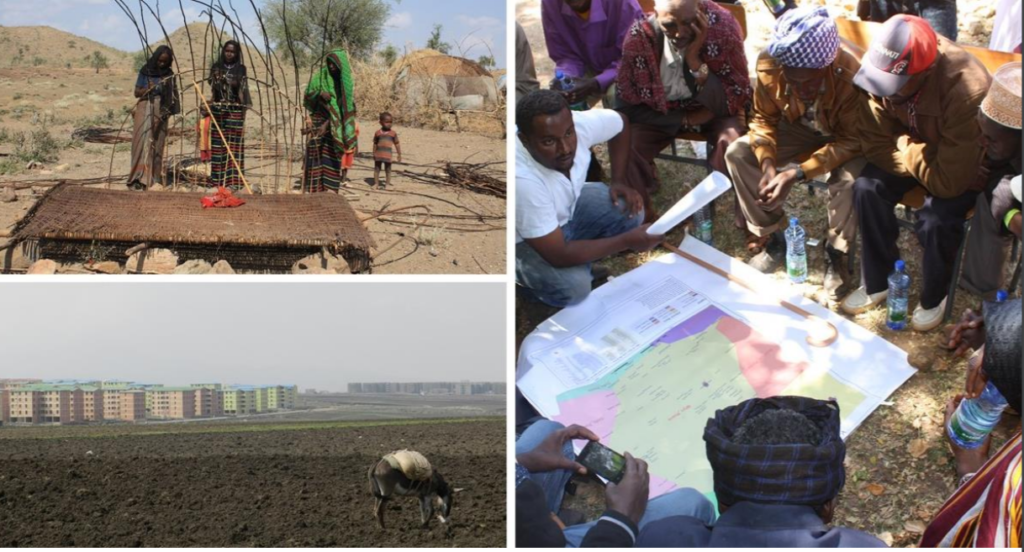
The goal of USAID LGA is to assist the Government of Ethiopia (GOE), its regions, and its citizens in strengthening land governance, increasing incomes, reducing conflict, and supporting well-planned urbanization, thereby contributing to the country’s Second Growth and Transformation Plan. To help achieve these goals, USAID LGA will work in close partnership with relevant institutions in the GOE, Ethiopian universities and research institutions, and other development partners operating in the land sector to implement activities under two components:

Component 1: Strengthening the land governance system

  1. Facilitate policy reforms and strengthen land administration and land use institutions by promoting structural reforms of rural and urban institutions and the land information system.
  2. Improve technical capacity for suitable land administration and land use planning activities to address emerging issues, such as urbanization, industrialization, and youth.
  3. Conduct policy-oriented research on land governance and provide scalable solutions to improve land governance.

Component 2: Expanding communal land tenure security in pastoral areas

  1. Expand communal land tenure security in pastoral areas through improved policy and legal reform.
  2. For pastoral community lands, develop a scalable approach for land demarcation and certification in collaboration with community institutions.


Quarterly Activity Progress Report No. 2, Quarter 4, Fiscal Year 2019 (July 1 – Sept. 30, 2019)

Background and Introduction

United States Agency for International Development (USAID)/Ethiopia contracted Tetra Tech as the prime contractor to implement the five-year, $10.9 million Land Governance Activity (USAID LGA) Task Order (TO) under the Strengthening Tenure and Resource Rights (STARR) II Indefinite Delivery Indefinite Quantity (IDIQ) Contract. Tetra Tech will implement USAID LGA over a five-year period from May 2019 to May 2024. This Quarterly Program Report No. 2 summarizes implementation progress made during the period of July 1-September 30, 2019 (Quarter 4, FY2019).

The goal of USAID LGA is to assist the Government of Ethiopia (GOE), its regions, and its citizens in strengthening land governance, increasing incomes, reducing conflict, and supporting well-planned urbanization, thereby contributing to the country’s Second Growth and Transformation Plan. To help achieve these goals, USAID LGA will work in close partnership with relevant institutions in the GOE, Ethiopian universities and research institutions, and other development partners operating in the land sector to implement activities under two components:

Component 1: Strengthening the land governance system

  1. Facilitate policy reforms and strengthen land administration and land use institutions by promoting structural reforms of rural and urban institutions and the land information system.
  2. Improve technical capacity for suitable land administration and land use planning activities to address emerging issues, such as urbanization, industrialization, and youth.
  3. Conduct policy-oriented research on land governance and provide scalable solutions to improve land governance.

Component 2: Expanding communal land tenure security in pastoral areas

  1. Expand communal land tenure security in pastoral areas through improved policy and legal reform.
  2. For pastoral community lands, develop a scalable approach for land demarcation and certification in collaboration with community institutions.


Artisanal Mining and Property Rights: Quarterly Progress Report October 1 – December 31 2019

This quarterly performance report describes achievements realized under USAID’s Artisanal Mining and Property Rights Project (USAID AMPR) in the Central African Republic (CAR) between October 1 and December 31, 2019.

In general, the USAID AMPR project is on solid footing after a year spent in setting up the national and three regional offices while also meeting all complex host-country registration and labor law compliance requirements. By the end of the year, nearly all in-country staff had been hired and placed on long-term contracts. Guided by the Year I Work Plan, the project met nearly all deliverables on time. While Year I activities may be viewed as setting the programmatic foundations for subsequent years through background applied research and consultation with stakeholders, the USAID AMPR team made significant advancements on many programmatic issues summarized below.

Objective 1: Assist Government of the Central African Republic to Improve Compliance with Kimberley Process Requirements to Promote Licit Economic Activities

  • Draft road map completed for strengthening diamond supply chain governance, including regulatory and institutional changes.
  • Technical support provided for revision of the decree for the CAR Kimberley Process National Monitoring Committee (CNS PK). Revised decree signed by Minister of Mines and Geology in November. Action plan now in place for USAID AMPR support to the CNS PK.
  • Field mission carried out in Carnot and Nola sub-prefectures to judge community interest in artisanal mining zones (Zones d’exploitation artisinal, or ZEAs) with exchanges providing the basis for preparing a plan for the pilot ZEA implementation phase in the next quarter.
  • Field mission and trainings successfully carried out by the nongovernmental organization INDIGO on how to prepare “capsule” videos to promote social dialogue. Subcontractor Société Elie Numérique worked with the INDIGO consultant to document the trainings that will form part of the content of five short videos that USAID AMPR plans to produce in the coming work plan year.
  • Inter-donor coordination structure set up with complementary programming now occurring between USAID, World Bank, and European Union projects providing support to the Ministry of Mines and Geology (MMG).

Objective 2: Strengthen Community Resilience, Social Cohesion, and Responses to Violent Conflict in the Central African Republic

  • 11 peace-building committees (Comités Locales de Paix et de la Réconciliation, or CLPRs) prepared for official recognition, but ceremonies were delayed because of heavy flooding in Bangui that required emergency government humanitarian responses.
  • CLPR peace-building activities in Carnot unfolded supporting the reintegration of refugees returning from Kentzou, Cameroon, with the support of the Ministry of Humanitarian Action and National Reconciliation (MHANR) and United Nations High Commissioner for Refugees.
  • Preparations advanced for applied field research and public consultations on the root causes of armed pastoralism in the southwest leading to an action plan for multi-stakeholder interest groups.
  • Procurement completed with the nongovernmental organization Women Action for the Promotion of Entrepreneurship for a two-year subcontract to implement agricultural and organizational support to women’s groups.
  • Pisciculture fish farming assessment carried out jointly by the European Union Renforcement de la Gouvernance dans les Secteurs de l’Extraction Artisanale du Diamant et de l’Or en République Centrafricaine (GODICA) project and USAID AMPR completed for 413 fishponds in the project’s operational zones of Nola, Carnot, and Boda. Promising results suggested continued support for this income-generating activity could equal the value of diamond mining efforts.

Objective 3: Increase Awareness and Understanding of the Opportunities and Challenges of Establishing Responsible Gold Supply Chains in the Central African Republic

  • Artisanal gold diagnostic report drafted and online interactive web map disseminated internally by subcontractor International Peace Information Service (IPIS) to summarize situation around 322 mine sites employing approximately 62,000 artisanal miners.
  • Technical and administrative preparations finalized for restitution of gold mining diagnostic workshop by IPIS and Code of Risk Mitigation for Artisanal and Small-Scale Miners Engaging in Formal Trade (CRAFT) training by USAID AMPR subcontractor RESOLVE in early January.

Objective 4: Improve USAID Programming through Increased Understanding of Linkages Between Artisanal and Small-Scale Mining and Key Development Issues

  • Discussions completed with USAID and Levin Sources, Artisanal Pathways, and the Tetra Tech home office to finalize the technical scope and contract for the Responsible Artisanal Diamond Sourcing initiative expected to be launched in the next quarter.
  • Component 4 Coordinator attended the Kimberley Process Plenary held in November in New Delhi, India, leading to the successful adoption by the Kimberley Process of limited changes to the Operational Framework. Most significant change was switching to a “notification” system whereby Government of CAR (GoCAR) can authorize exports from compliant zones at will rather than first requiring pre-authorization from the CAR Monitoring Team. General update on USAID AMPR activities provided to the Working Group on Alluvial and Artisanal Production.
  • Component 4 Coordinator attended a two-day workshop organized by the Organization of Economic Cooperation and Development and European Union in Brussels on minerals-related crimes. The coordinator organized and facilitated a panel on the situation in CAR in collaboration with the European Union GODICA project’s Technical Advisor, IPIS, and the United Nations Panel of Experts Coordinator.

This quarterly report presents descriptions and results of each activity in USAID AMPR’s approved Annual Work Plan for the period of October through December 2019.