
Integrated Land and Resource Governance (ILRG) Quarterly Report October – December 2021

Key Accomplishments and Challenges
During this quarter, the coronavirus disease 2019 (COVID-19) pandemic continued to impact the countries in which ILRG operates. Despite this constraint, field activities continued to move forward and country teams marked some significant accomplishments.

Mozambique: The ILRG activity supporting smallholder timber production ended during the period, having met all targets. The activity reached 72 participants, of whom 48 (69 percent) were women (compared to the target of reaching 50 participants). Over 5,000 saplings were planted and are thriving, with growers already harvesting products, such as leaves used for medicinal purposes. The five service providers carrying out work in Green Resources and Grupo Madal areas all requested no-cost extensions into the next quarter. By the end of the period, 81 communities around Green Resources AS (GRAS) and Grupo Madal plantations had delimited over 391,000 hectares. In the 14 communities around Madal plantations, all fieldwork was finished for 3,979 parcels, leaving only the final four public adjudication processes and production of Declarations of Land Rights. GRAS service providers are finalizing the last community delimitations and preparing contracts to legally pass improvements (infrastructure and existing trees) over to communities. ILRG’s inability to find agreement with the Ministry of Lands and Environment led to a cancellation of the anticipated support to internally displaced people from Cabo Delgado; USAID/Mozambique agreed to reprogram those funds to increase the scope of the Sofala work with families displaced by floods from cyclones.

Zambia: The first year of the diploma course for traditional leaders with over thirty chiefs was completed alongside the launch of gender guidelines for traditional leadership in partnership with the Ministry of Gender and Minister of Local Government. These guidelines will be piloted during the coming year. ILRG started work in four USAID priority districts around gender-responsive land allocation and engaged in the Kafue and Luangwa landscapes with the Department of National Parks and Wildlife (DNPW), traditional leaders and district government on controlling land allocation and expansion within game management areas (GMAs). ILRG natural resource management partners led a coordination process to communicate joint priorities from civil society, private sector, and communities to the new government minister. ILRG also hosted a joint meeting between DNPW and the Forestry Department (FD) to navigate issues around forest carbon legislation. ILRG continued successful engagement with civil society on gender integration in natural resource management and land documentation. Finally, ILRG launched new agreements with Community Markets for Conservation (COMACO), Frankfurt Zoological Society (FZS), Wildlife Producers Association of Zambia (WPAZ), and the Zambia Land Alliance (ZLA), and began negotiations for a new agreement with the Zambia Community Resources Board Association (ZCRBA).

Ghana: Field work on land governance and community land use planning continued and two field trips finalized key aspects of the payment for ecosystem services (PES) scheme being developed. Work continues to secure more diverse tree species to be planted in the next round of tree planting under the PES in 2022. The economic analysis of tree tenure reform continued and is undergoing final internal quality review.

India: The 2021 – 2022 potato season began this quarter. ILRG delivered training on Sustainable Farming Practices (SFPs) and started delivering agronomy training for PepsiCo women farmers. Women farmers were identified to lead land leasing groups (LLGs) and demonstration farms. The number of Community Agronomists was expanded to 18, covering all 12 target communities. Uptake of women’s empowerment activities was observed, as aggregators/vendors independently recruited and engaged Community Agronomists in areas outside of ILRG communities. The COVID-19 pandemic continued to affect project activities, impacting the number of people reached by various trainings and requiring some activities to be postponed, including gender norms change sessions, entrepreneurship training for women farmers, and gender-based violence (GBV) training for PepsiCo staff. An untimely rain and flooding in early December have deeply affected potato farmers in West Bengal who had just planted or were about to plant potatoes for the season. Substantial loss and low yield are expected.

Liberia: ILRG grantees continued to support customary land documentation in 36 communities in Lofa,
Maryland, Nimba, and River Gee Counties. Sustainable Development Institute (SDI) began to collect community boundary data and harmonize the boundaries with neighboring communities. Green Advocates resumed work in Nimba County after receiving guidance from the Liberia Land Authority. Land and resource by-laws were adopted, and land committees elected in the five ILRG-supported communities.

Malawi: ILRG completed the gender assessment in Traditional Authority (TA) Mwansambo in Nkhotakota District. ILRG supported the Government of Malawi to sensitize the leadership and men and women in TA Mwansambo on the land legal framework and the forthcoming land documentation efforts in up to 18 group village headpersons (GVHs). ILRG also supported the elections of community land committees in 17 of the 18 GVHs; newly elected members include equal numbers of men and women.

WEE: ILRG developed a communications and learning strategy with key messages and planned products and events on women’s land rights and women’s empowerment for Years 4 and 5. Information on key GBV concepts and the linkage between GBV and land, natural resources governance, and agricultural value chains was shared with all ILRG staff and in-country partners, subcontractors, and grantees during the 16 Days of Activism against Gender-Based Violence. ILRG supported the delivery of an update on women’s land rights and WEE to USAID operating units and missions. ILRG also co-led a coffee chat for members of the USAID WEE Community of Practice on engaging men to advance women’s land rights and empowerment. The final two blog posts in partnership with the International Institute for Environment and Development (IIED) were published, sharing USAID’s best practices and lessons learned from Zambia and Liberia. ILRG signed a subcontract with Ecom Agroindustrial Corp.’s
(ECOM’s) Sustainable Management Services (SMS) in Ghana. SMS recruited a Gender and Sustainability Specialist to start in the next quarter. This 18-month activity will strengthen ECOM’s capacity on gender equality and women’s empowerment, which has a high sustainability and scalability potential, and reach 2,290 farmers (50 percent women) with gender-responsive social and agricultural training and opportunities for income diversification.

Madagascar: The Comité de Gestion de Bassin Sambirano (COGEBS) is now fully functional and legally recognized and has an initial work plan in place. The ILRG Madagascar team played a key role in advocating to the Region of Diana for legal recognition of this innovative landscape governance institution. Among the top initial COGEBS priorities was a request for ILRG to provide training on land tenure issues confronting the Sambirano Valley, which led to a highly acclaimed two-day training program in November for the COGEBS Executive Committee. A consultant also completed a short document spelling out the processes and steps for identifying the location, extent, and procedures to sell state-owned lands, once labor reserves during the colonial period, to current occupants or those with the means to pay the high costs of land transfers. The procedures for carrying out the government-sponsored opération domaniale concertée (ODOC) are now well known and the costs have been documented.

Other Activities: ILRG supported the PPA in strategic planning for a second phase of its activities, the facilitation of a virtual United States government (USG) delegation to the Great Lakes Region to discuss key issues in the responsible minerals trade, and the recruitment and onboarding of new and prospective member organizations. ILRG continued to support subcontractor International Peace Information Service (IPIS) in mapping artisanal mine sites and conflict financing dynamics in eastern DRC. IPIS continued to cooperate with the DRC Small-Scale and Artisanal Mining Assistance and Support Service (SAEMAPE) to facilitate data collection visits by IPIS field team members to key mining sites.
Quarterly Activity Progress Report No. 10, Quarter 4, Fiscal Year 2021 (July 1 – Sept. 30, 2021)

Introduction

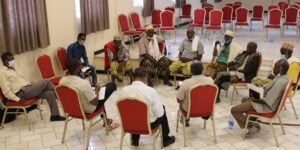
A group of men sit facing each other in a large room filled with red chairs.United States Agency for International Development (USAID)/Ethiopia contracted Tetra Tech as the prime contractor to implement the five-year Feed the Future Ethiopia Land Governance Activity (LGA) Task Order under the Strengthening Tenure and Resource Rights II (STARR II) Indefinite Delivery Indefinite Quantity (IDIQ) Contract. Tetra Tech will implement the LGA over a five-year period from May 2019 to May 2024. This Quarterly Report No. 10 summarizes implementation progress made during the period of July 1 – September 30, 2021 (Quarter 4, FY 2021).

LGA’s purpose is to support the Government of Ethiopia (GOE), its regions, and citizens to strengthen land governance, increase incomes, reduce conflict, and support well-planned urbanization, thereby contributing to the country’s Ten-Year Development Plan. To help achieve these goals, LGA is implementing interventions under two components:

Component 1: Strengthening the land governance system

1. Facilitate policy reforms and strengthen land administration and land use institutions by promoting structural reforms of rural and urban institutions and the land information system.
2. Improve technical capacity for suitable land administration and land use planning activities to address emerging issues, such as urbanization, industrialization, and youth.
3. Conduct policy-oriented research on land governance and provide scalable solutions to improve land governance.

Component 2: Expanding communal land tenure security in pastoral areas

1. Expand communal land tenure security in pastoral areas through improved policy and legal reform.
2. For pastoral community lands, develop a scalable approach for land demarcation, registration, and certification in collaboration with community institutions.

Quarterly Activity Progress Report No. 9, Quarter 3, Fiscal Year 2021 (April 1 – June 30, 2021)

Introduction

Men and women in a classroom setting pose for a group photo.United States Agency for International Development (USAID)/Ethiopia contracted Tetra Tech as the prime contractor to implement the five-year Feed the Future Ethiopia Land Governance Activity (LGA) Task Order under the Strengthening Tenure and Resource Rights II (STARR II) Indefinite Delivery Indefinite Quantity (IDIQ) Contract. Tetra Tech will implement the LGA over a five-year period from May 2019 to May 2024. This Quarterly Report No. 15 summarizes implementation progress made during the period of April 1 – June 30, 2021 (Quarter 3, FY 2021).
LGA’s purpose is to support the Government of Ethiopia (GOE), its regions, and citizens to strengthen land governance, increase incomes, reduce conflict, and support well-planned urbanization, thereby contributing to the country’s Ten-Year Development Plan. To help achieve these goals, LGA is implementing interventions under two components:

Component 1: Strengthening the land governance system

1. Facilitate policy reforms and strengthen land administration and land use institutions by promoting structural reforms of rural and urban institutions and the land information system.
2. Improve technical capacity for suitable land administration and land use planning activities to address emerging issues, such as urbanization, industrialization, and youth.
3. Conduct policy-oriented research on land governance and provide scalable solutions to improve land governance.

Component 2: Expanding communal land tenure security in pastoral areas

1. Expand communal land tenure security in pastoral areas through improved policy and legal reform.
2. For pastoral community lands, develop a scalable approach for land demarcation, registration, and certification in collaboration with community institutions.

Integrated Land and Resource Governance (ILRG) Quarterly Report April – June 2021

Key Accomplishments and Challenges

During this third quarter of fiscal year (FY) 2021, despite widespread vaccination in the US, the coronavirus disease 2019 (COVID-19) pandemic continued to negatively impact ILRG project countries. Southern Africa began to experience a third wave of COVID-19 following large outbreaks in India. While many members of the ILRG team have been able to gain access to vaccines, partners and community members remain at high risk.

Mozambique: ILRG’s six implementing partners are all in the main phase of their implementation with
over 100 communities. The work includes land delimitation, planning for community delimitation, and
support to agricultural production on previously delimited land. National coordination with the USAID Supporting the Policy Environment for Economic Development (SPEED) program continued on policy and law. ILRG provided various types of support to the National Land Commission and the Ministry of Land and Environment, including the launch on Earth Day 2021 of a portal with details of over 20,000 interviews done as part of the national consultation on the review of the land policy. Planning to support land administration in areas of internal displacement due to disasters and conflict moved ahead, with new agreements in Sofala and Cabo Delgado Provinces.

Zambia: Zambia’s National Lands Policy was launched this quarter following over seven years of USAID support to the process. This was complemented by ILRG assistance to the Ministry of Lands and Natural Resources on a communications strategy. ILRG shared the policy widely including with a presentation to the heads of mission for cooperating partners (donors). ILRG’s partnerships on community-based natural resource management continued with a leadership training with the Zambia Community Resources Board Association (ZCRBA) executive leadership, as well as continued support to engendering elections with the Department of National Parks and Wildlife (DNPW). DNPW opened a process for making amendments to the Wildlife Act of 2015, and ILRG helped civil society coordinate among themselves. With respect to learning, ILRG hosted a series of webinars on community forest management, as well as private wildlife estates; and carried out the second two-week residential course for customary leaders with Chalimbana University. Land documents were finalized for thousands of households and ILRG received positive feedback from the Ministry of Local Government on local area planning processes.

Ghana: The payment for ecosystem services (PES) component and associated field work was delayed due to issues finalizing corporate commitments to fund the PES. Direct engagement between USAID and the corporate partners helped address the issue, which is expected to be resolved shortly. Meridia produced an online and hardcopy database of all the FarmSeal documents produced under ILRG and the Tenure and Global Climate Change program (TGCC) and shared it with the stool. Ecom Agroindustrial Corp. (ECOM) shared the latest season’s crop yields for the cash crops planted as part of the cocoa rehabilitation program. Yields of chili had increased substantially compared to the prior season, but all crops produced less yields overall than forecasted. The implications of this for the rehabilitation program will be discussed with ECOM in early July.

India: The 2020 – 2021 potato season ended during this quarter. ILRG provided agronomy training to a total of 602 women PepsiCo farmers in 12 communities, as well as a refresher training for 230 women that had been trained during the previous potato season. Six modules of training provided women with information and skills on land preparation, seed treatment, and plantation; safe use and storage of agro-chemicals; soil health and nutrient management; common pest and diseases; harvesting, sorting, and grading; and record keeping and record analysis. Both land leasing groups had a successful season and
experienced above average productivity in their areas. Communications products showcasing women’s land rights and the connection with climate change goals were published. The continued farmers’ protests in India, state elections, and a sudden increase in the number of COVID-19 cases have impacted the ability to deliver planned activities like part of the final phase of the package of practices (POP) training, sustainable farming practices (SFP) training, and gender norms change training for farmers, as well as gender-based violence (GBV) training and land literacy orientation for PepsiCo staff. Land law and policy advocacy work was also impacted by these challenges.

WEE: ILRG developed and consolidated a series of guidance tools and training materials in Portuguese
and English on women’s land rights, women’s economic empowerment, and GBV. Informed by the gender assessment findings and in coordination with ECOM, ILRG submitted a draft detailed implementation plan and budget to work on gender and cocoa sector issues. It is expected that field activities will begin over the next quarter upon approval of the implementation plan. The activity will strengthen ECOM’s capacity on gender equality and women’s empowerment, which has a high sustainability and scalability potential, and increase women’s access to productive resources in the cocoa sector. In Malawi, ILRG finalized the choice of a traditional land management area (TLMA) in which to work. This was complemented by start-up activities with ILRG’s small, Lilongwe-based team, including office rental, procurement and presentations with the Land Reform Implementation Unit (LRIU).

Liberia: ILRG continued to wait for guidance from the Liberia Land Authority (LLA) on how to proceed after it was discovered that six of the seven communities one of the ILRG grantees was collaborating with had been part of another organization’s customary land formalization program in Nimba County. The LLA met with the two civil society organizations on March 30, 2021, traveled to Nimba County in mid-May 2021 to meet with community leaders and members, and presented initial findings at a June 3, 2021 meeting. ILRG is ready to proceed with working with the Nimba communities once the go-ahead is received from the LLA. Concurrently, the other grantee drafted community land and resource governance bylaws and elected members of the community land development and management committees across its 31 communities in Lofa, Maryland and River Gee Counties.

Madagascar: ILRG presented its status updates to USAID on opportunities to improve private sector and tenure dynamics across the Sambirano Valley. Given the long-term horizon for the multi-donor program, ILRG has identified “light touch” activities for the program to pursue over the coming two years in support of the program, particularly around addressing historical tenure issues and ensuring that the partnership platform has a strong base on land and resource rights.

Other Activities: ILRG launched a new field support activity with USAID/DRC on investigating conflict financing, due diligence, and socioeconomic dynamics in the artisanal mining sector. Progress continued within the current work plans for support to USAID’s Indigenous Peoples portfolio and PPA. With respect to work on Prindex collaboration, ILRG is approaching completion of data collection in Colombia. ILRG continued discussing opportunities to coordinate with USAID on aligning research and analytical needs associated with the new administration.

Quarterly Activity Progress Report No. 8, Quarter 2, Fiscal Year 2021 (Jan. 1 – Mar. 31, 2021)

Introduction

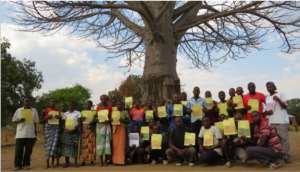
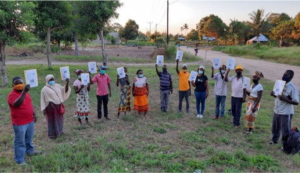
A group of men and women holding certificates in their hands are gathered for a group photo.United States Agency for International Development (USAID)/Ethiopia contracted Tetra Tech as the prime contractor to implement the five-year Feed the Future Ethiopia Land Governance Activity (LGA) Task Order under the Strengthening Tenure and Resource Rights II (STARR II) Indefinite Delivery Indefinite Quantity (IDIQ) Contract. Tetra Tech will implement the LGA over a five-year period from May 2019 to May 2024. This Quarterly Report No. 15 summarizes implementation progress made during the period of January 1 – March 31, 2021 (Quarter 2, FY 2021).
LGA’s purpose is to support the Government of Ethiopia (GOE), its regions, and citizens to strengthen land governance, increase incomes, reduce conflict, and support well-planned urbanization, thereby contributing to the country’s Ten-Year Development Plan. To help achieve these goals, LGA is implementing interventions under two components:

Component 1: Strengthening the land governance system

1. Facilitate policy reforms and strengthen land administration and land use institutions by promoting structural reforms of rural and urban institutions and the land information system.
2. Improve technical capacity for suitable land administration and land use planning activities to address emerging issues, such as urbanization, industrialization, and youth.
3. Conduct policy-oriented research on land governance and provide scalable solutions to improve land governance.

Component 2: Expanding communal land tenure security in pastoral areas

1. Expand communal land tenure security in pastoral areas through improved policy and legal reform.
2. For pastoral community lands, develop a scalable approach for land demarcation, registration, and certification in collaboration with community institutions.

Artisanal Mining and Property Rights Quarterly Progress Report October 1 – December 31, 2020

EXECUTIVE SUMMARY

This quarterly performance report describes achievements realized under USAID’s AMPR project in CAR between October 1 and December 31, 2020. As the COVID-19 pandemic continues, the implementation of project activities during this quarter was successfully adjusted to consider the measures of the AMPR COVID-19 Contingency and Response Plan in Bangui and three regional offices. This plan is updated regularly to ensure compliance with new directives from GoCAR and USAID. Discussions with USAID continue on how to respond to the COVID-19 situation given GoCAR’s stance that the pandemic is no longer a threat and life should get back to normal. The project engaged International SOS to prepare a due diligence report and COVID-19 protocols, which have been reviewed by USAID. The project also produced a fieldwork checklist, which aims to ensure that staff understand and comply with AMPR COVID-19 protocols while on field missions. AMPR is currently in the process of responding to USAID feedback, as well as integrating feedback from a local Central African public health expert.

The AMPR Chief of Party (COP) held regular consultative meetings with senior leadership of the Ministry of Mines and Geology (MMG), including meetings with the Minister, the Kimberley Process Permanent Secretariat (KPPS), and the Chargé de Mission to discuss AMPR activities in light of evolving COVID-19 guidelines. He also engaged with WHO and Red Cross CAR to discuss COVID-19 measures at the workplace. WHO provided several documents to sensitize the AMPR team, including information on the risks of COVID-19, the importance of wearing face masks, how to reduce COVID-19 stigmatization of health workers and families, and communicating with COVID-19 patients. AMPR has established direct contacts with WHO to obtain COVID-19 updates and documents pertinent to CAR. WHO also put AMPR in touch with the District Health Officers/doctors in AMPR operations zones to share developments from our regional offices.

The achievements of the AMPR team for the period are summarized below

Objective 1: Assist the Government of the CAR to Improve Compliance with KP Requirements to Promote Licit Economic Activities:

  • Provided technical support to the MMG to implement proposed interventions to strengthen diamond supply chain governance, including regulatory and institutional changes.
  • Cameroon’s Ministry of Mines, Industry, and Technological Development (MINMIDT) approved the CAR MMG request for a cross-border mission to present the results of the smuggling diagnostic on diamonds in CAR and identification of opportunities for cross-border coordination and experience sharing. The mission will take place in 2021, subject to the prevailing COVID-19 conditions.
  • The project provided technical and logistical support to the MMG in the training, induction, and installation of the KPPS, directors, and chefs de services for the new KP structure in CAR.
  • The project analyzed a technical review of the CAR Mining Code conducted by the African Development Bank and provided technical analysis and feedback to the World Bank consultant.
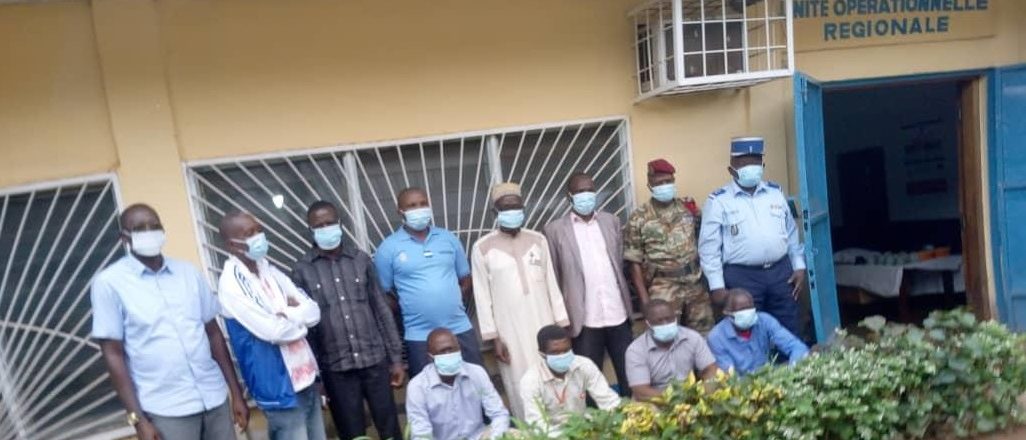
  • AMPR coordinated with the Support for the Professionalization of Mining Cooperatives (APCM) project to deploy its community mobilizers to Société Centrafricaine d’Exploitation Diamantifère (SCED)-Ndéléngué pilot Zone d’Exploitation Artisanale (ZEA) in Nola to start preparatory work with cooperatives. MMG and AMPR held consultations in the Carnot subprefecture on setting up similar pilot ZEAs.
  • AMPR video subcontractor, Elie Numerique Centrafrique, filmed and produced seven short videos and two documentaries. The documentaries focused on the Kimberley Process and peacebuilding committees (CLPR).
  • Printed and distributed 200 copies of a French-Sango lexicon of mining terms used by artisanal miners and stakeholders in the supply chain.
  • Produced and distributed 400 posters on the KP supply chain in CAR. The posters were used to sensitize over 1,200 artisanal miners in the KP compliant zones.
  • The project provided technical and logistical support to reconstitute the KP. Local Monitoring Committees (CLS) in Gadzi and Boganagone. The CLS have been reconstituted in all the eight KP compliant zones.
  • AMPR participated and co-chaired 16 bi-weekly virtual discussions on considerations and implications of COVID-19 on ASM in CAR.

Objective 2: Strengthen Community Resilience, Social Cohesion, and Responses to Violent Conflict in the Central African Republic:

  • The project held coordination meetings with the Ministry of Humanitarian Action and National Reconciliation (MHANR) to finalize strategies for the CLPR local coordination frameworks and Y3 work plan activities on social cohesion.
  • AMPR, in coordination with the technical team of the MHANR, developed a template for reporting CLPR activities and training the CLPRs on how to record conflict and activities in local registers.
  • The project developed a short educational video on the role of CLPRs and lessons learned in dealing with social tensions around land, property, housing, and pastoralism for institutional communication and training purposes.
  • AMPR regional offices conducted biweekly visits to each CLPR to monitor and collect data from the conflict and activity registers.
  • AMPR provided technical and logistical support for joint missions with MMG and the National Union of Mining Cooperatives of Central Africa (UNCMCA) Gender Focal Points to identify opportunities to strengthen women’s role in the mining sector.
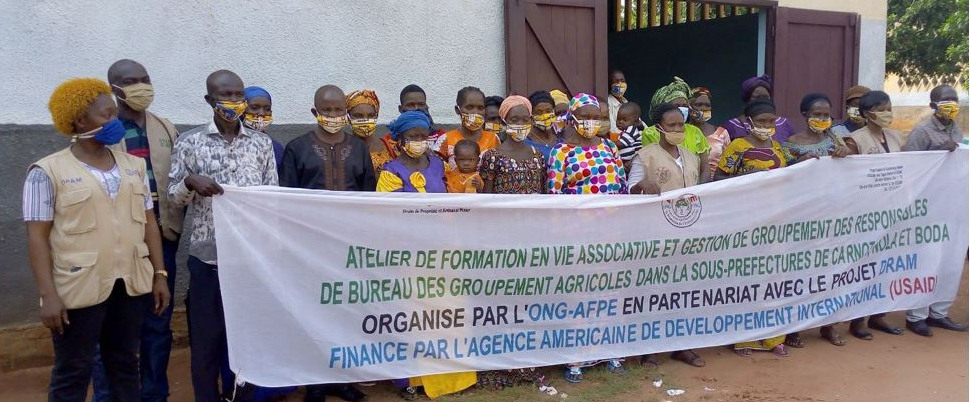
  • AMPR subcontractor Association of Women for the Promotion of Entrepreneurship (AFPE) continued training 21 livelihoods groups on agricultural production, working effectively as associations, village savings and loans, basic literacy, and continued technical assistance in setting up demonstration sites.

Objective 3: Increase Awareness and Understanding of the Opportunities and Challenges of Establishing Responsible Gold Supply Chains in the CAR:

  • AMPR held several consultative meetings with the Bureau of Evaluation and Regulation of Diamonds and Gold (BECDOR) to discuss support for gold evaluation and exportation.

Objective 4: Improve USAID Programming through Increased Understanding of Linkages Between Artisanal and Small-Scale Mining and Key Development Issues:

  • AMPR presented on the diamond supply chain disruptions in CAR as part of the World Bank virtual forum “Rethinking ASM Formalization: How COVID-19’s disruption can be catalyzed for development”.
  • Completed CAR ASM country profile for the ASM DELVE database covering the country’s policies, regulations, production, and other information drawing from available resources.
  • The journal Resources Policy published a paper on the Société pour le Développement Minier de la Côte d’Ivoire (SODEMI) model of diamond co-management between the government and customary landowners in Côte d’Ivoire, co-authored by the Component 4 Coordinator based on research conducted under PRADD II. USAID AMPR covered the fees to make the article open access. It is available HERE.


Artisanal Mining and Property Rights Quarterly and Year 2 Annual Progress Report October 1, 2019 – September 30, 2020

EXECUTIVE SUMMARY

The AMPR team successfully implemented the second year of the project. AMPR supports the USAID Land and Urban Office and the USAID DRC Mission Central Africa Program in improving land and resource governance and strengthening property rights for all members of society, especially women. It serves as USAID’s vehicle for addressing complex land and resource issues around ASM in a multidisciplinary fashion with a focus on diamonds and, to a lesser extent, gold production in the CAR. The project also provides targeted technical assistance to other USAID missions and OUs in addressing land and resource governance issues within the ASM sector. The project builds upon activities and lessons from the PRADD I and II projects. The AMPR contract was signed on September 28, 2018 and will run for five years (the two option years were approved in 2020).

Some highlights from Year 2 include:

  • Year I Work Plan Advancements: The AMPR team carried out a vast majority of work plan activities successfully by the end of the year despite the widespread impacts of the COVID-19 pandemic. The project implementation process is now well-established thanks to strong teamwork between the project field and home offices and impressive support from government partners. Details of project implementation successes are described below. All component activities are being implemented on schedule, and “scope creep” has been minimal—a recurrent issue for project implementation during the initial phases of work plan implementation where new needs emerge, but at a time when contractual obligations need to be scrupulously respected.
  • New Hires: Despite the death of the Component I Coordinator, the departure of the Component II Livelihood Coordinator, and the resignation of some Community Mobilizers, the project recruited and trained new staff successfully. To ensure knowledge and information continuity, the new staff were granted access to the online backup of the project documents and resources of their predecessors.
  • Strengthened Relations with Host-Country Partners: Thanks to the concerted push by the project to involve all AMPR stakeholders in the preparation and monitoring of the annual work plan, collaboration throughout the year was excellent. Teamwork between government partners and the project led to innovative responses to the COVID-19 pandemic, such as the dissemination of posters and radio programs describing precautions to be taken at the local level and promotion of local soap-making by women’s groups and handwashing.
  • MMG-AMPR COVID-19 Innovations: AMPR actively participated in the CAR Ministry of Mines and Geology’s (MMG) COVID-19 Task Force meetings, enabling partners to prioritize activities reinforcing the Government of CAR’s (GoCAR) COVID-19 prevention measures in mining communities. AMPR set up a bi-weekly call with other donor-funded projects in the ASM domain to share information about how COVID-19 was impacting international and national market dynamics, internal production, security, and coordination among projects. This led to the support by the WB for the Delve platform to carry out field research on COVID-19 impacts. To mitigate the transmission of COVID-19, the project developed and printed 1,200 copies of MMG COVID-19 brochures and posters on coronavirus risks in the mining sector, which were distributed to key actors, notably, private sector, trading houses, civil society in Bangui and the KP compliant zones; supported the airing of community radio debates on the COVID-19 risks in mining communities, reaching more than 20,000 listeners; trained mining communities on techniques for making water filters using local materials; and soapmaking Training of Trainers course for 21 women’s groups in southwest CAR.


Integrated Land and Resource Governance (ILRG) Quarterly Report January – March 2021

Key Accomplishments and Challenges

During this quarter, the coronavirus disease 2019 (COVID-19) pandemic continued to require adaptive management. Southern Africa experienced its highest level of COVID-19 impact to date in January and February, while India began to return to normal. Vaccinations became available in some ILRG countries and widely in the United States, requiring a new set of considerations around how ILRG team members interact with one another and in the field.
Mozambique: ILRG’s six implementing partners all moved from planning and initial engagements with local government authorities into active fieldwork during the quarter, ranging from land delimitation, planning for community delimitation, and support to agricultural production on previously delimited land. National coordination with the USAID Supporting the Policy Environment for Economic Development (SPEED+) program continued on policy and law. ILRG provided various types of support to the National Land Commission and the Ministry of Land and Environment, including significant levels of technical support to the national consultations process under the land policy reform process. This culminated in the design and deployment by ILRG of a digital portal to share the results of this exercise, which will be formally launched by the Minister of Land and Environment on Earth Day 2021. Planning for the Sofala intervention in resettlement areas has continued to be a challenge. After much discussion and the reaching of an agreement with the national partner, the National Institute of Disaster Management (INGD), on the concept and on detailed design for the Sofala activity, ILRG was in the advanced stages of planning a joint planning trip when the INGD indicated that they would be withdrawing, since they had no mandate in “formalizing land rights of people.” ILRG has made arrangements to identify an alternative implementing partner, but this late and unexpected decision has led to an additional delay. However, a site visit to Sofala is still planned for early April.

Zambia: Five of lLRG’s six main field implementation subcontracts or grants ended this quarter with partners summarizing lessons learned on land documentation/administration, community forest management, and game ranching. The Chipata and Petauke District Land Alliances and Frankfurt Zoological Society (FZS) completed the production of almost 15,000 certificates, expected to be signed and distributed over the coming quarters. ILRG engaged with the Ministry of Lands and Natural Resources (MLNR) on both women’s rights in the National Land Titling Programme and supporting the ministry’s communication strategy. Within the wildlife and natural resource management sectors, ILRG supported the first gender-equitable community scout recruitment and training, as well as materials for communities to improve their negotiating positions with the private sector. Furthermore, material development for upcoming community resources board (CRB) and gender leadership trainings were launched. While ILRG agreed on future priorities with the Department of National Parks and Wildlife (DNPW) in previous quarters, there was limited advancement this quarter. World Wide Fund for Nature (WWF) adopted ILRG’s CRB gendered election materials and with DNPW is integrating them into this quarter’s elections. With respect to district planning, ILRG partners delivered the two most complete local area plans to Chipangali and Chipata Districts from Mnukwa and Maguya Chiefdoms respectively.

Ghana: The Ghana team resumed field work in January after a ten-month suspension due to COVID-19. The 14-day field work consisted of community training on climate change mitigation and adaptation, community education and engagement on climate-smart land use decision making via the ECO Game, and initial engagement on tree nurseries and the concept of payments for ecosystem services (PES) tied to maintaining shade trees on farms. ECOM will distribute shade tree seedling at no cost to the communities or ILRG.

India: During this quarter ILRG continued to provide agronomy training to over 700 PepsiCo women farmers in 12 communities, as well as a refresher training for 230 women reached in Year 1. Six modules of training are providing women with information and skills on land preparation, seed treatment and plantation; safe use and storage of agro-chemicals; soil health and nutrient management; common pest and diseases; harvesting, sorting, and grading; and record keeping and record analysis. A seventh module on land literacy will be delivered to men and women farmers over the next months, alongside training on sustainable farming practices. Harvesting for the 2020 – 2021 season has been completed in most communities and production data is being collected. The two women’s land leasing groups had a successful season and data on profitability is being finalized. ILRG also started to implement gender norms change interventions, piloting two methodologies – Gender Action Learning System (GALS) and Nurturing Connections – in six communities each. GALS sessions started in February and have reached almost 200 farmers so far, out of which 70 percent are women and 30 percent men. Feedback is positive, and ILRG is monitoring shifts in harmful norms that hinder women’s participation in the potato supply chain and economic empowerment.

WEE: ILRG continued to build the capacity of in-country staff and partners on gender equality, women’s land rights, women’s economic empowerment, and gender-based violence (GBV), including a virtual capacity building training for partners in Liberia. On International Women’s Day, ILRG disseminated learning and impact from WEE funded activities, publishing blog posts, factsheets, reports, and briefs on LandLinks, AgriLinks, and social media. The USAID-funded Passages Project is providing technical assistance on social norms change to ILRG and partner staff in five countries through a series of capacity-building workshops. In Ghana, ILRG finalized data collection and drafted the initial gender assessment report, also advancing coordination with ECOM and Hershey to begin implementation over the next quarter. The activity will strengthen ECOM’s capacity on gender equality and women’s empowerment, which has a high sustainability and scalability potential, and increase women’s access to productive resources in the cocoa sector. ILRG recruited and onboarded field staff in Malawi, who started coordination with the Government of Malawi and USAID/Malawi, as well as selection of a target traditional land management area for documentation.

Liberia: With USAID approval of ILRG’s Liberia COVID-19 mitigation protocols in January, the two grantees were able to resume fieldwork, including completing community self-identification validation with the Liberia Land Authority and starting to draft community land and resource governance bylaws. In this quarter, one grantee realized that six of the seven communities that it was collaborating with had been part of another organization’s customary land formalization program. While the other organization, funded by the Tenure Facility, had worked with the communities to self-identify at the clan level, ILRG’s grantee communities chose to self-identify at a more decentralized town level. Both organizations are currently working with the Liberia Land Authority on how to resolve the overlap.

Madagascar: The coalition of actors supporting the Climate Resilient Cocoa Landscapes (CRCL) initiative continued to meet on a regular basis to set up the new multi-stakeholder consultative platform; CRCL lead implementer Helvetas has not yet succeeded in obtaining a regional decree needed to formalize the new consultative structure. The ILRG team participated actively in two preliminary consultative meetings in Ambanja and used these occasions to carry out other applied research activities focusing primarily on the role of cooperative enterprises in the cocoa economy and their perceptions of land tenure problematics. Following discussions with USAID about the future course of the activity, it was decided to focus analysis on complex ownership issues around the ex-indigenous reserves, prepare a training program on land tenure, but otherwise move slowly for the next few months until funding priorities become clear. The team prepared a synthesis paper on what is currently known on landtenure in the Sambirano Valley that has been shared for comment.

Other Activities: ILRG submitted a scope of work (SOW) and budget for a new field support activity with USAID/DRC on investigating conflict financing, due diligence, and socio-economic dynamics in the artisanal mining sector. Progress continued within work plans for support to USAID’s Indigenous Peoples portfolio and PPA. With respect to work on Prindex collaboration, ILRG finalized its subcontract for data collection in Colombia. ILRG remains open to engagement with USAID Washington on analytical support and began working with USAID to align activities and messaging with the new administration

Quarterly Activity Progress Report No. 7, Quarter 1, Fiscal Year 2021 (Oct. 1 – Dec. 31, 2020)

Introduction

A large group of people sit in an auditorium-like room.United States Agency for International Development (USAID)/Ethiopia contracted Tetra Tech as the prime contractor to implement the five-year Feed the Future Ethiopia Land Governance Activity (LGA) Task Order under the Strengthening Tenure and Resource Rights II (STARR II) Indefinite Delivery Indefinite Quantity (IDIQ) Contract. Tetra Tech will implement the LGA over a five-year period from May 2019 to May 2024. This Quarterly Report No. 15 summarizes implementation progress made during the period of October 1 – December 31, 2020 (Quarter 1, FY 2021).

LGA’s purpose is to support the Government of Ethiopia (GOE), its regions, and citizens to strengthen land governance, increase incomes, reduce conflict, and support well-planned urbanization, thereby contributing to the country’s Ten-Year Development Plan. To help achieve these goals, LGA is implementing interventions under two components:

Component 1: Strengthening the land governance system

1. Facilitate policy reforms and strengthen land administration and land use institutions by promoting structural reforms of rural and urban institutions and the land information system.
2. Improve technical capacity for suitable land administration and land use planning activities to address emerging issues, such as urbanization, industrialization, and youth.
3. Conduct policy-oriented research on land governance and provide scalable solutions to improve land governance.

Component 2: Expanding communal land tenure security in pastoral areas

1. Expand communal land tenure security in pastoral areas through improved policy and legal reform.
2. For pastoral community lands, develop a scalable approach for land demarcation, registration, and certification in collaboration with community institutions.