Integrated Land and Resource Governance (ILRG) Quarterly Report January- March 2020

Introduction and Background

The Integrated Land and Resource Governance (ILRG) task order under the Strengthening Tenure and Resource Rights II (STARR II) Indefinite Delivery/Indefinite Quantity (IDIQ) contract provides support to the United States Agency for International Development’s (USAID) Land and Urban Office in the Bureau for Economic Growth, Education, and Environment (E3/LU). ILRG develops and implements targeted interventions in select USAID countries, providing technical assistance to improve land and resource governance, strengthen property rights, and build resilient livelihoods as the foundation for stability, resilience, and strong economic growth. The task order has four primary objectives:

  • To increase inclusive economic growth, resilience, and food security;
  • To provide a foundation for sustainable natural resource management and biodiversity conservation;
  • To promote good governance, conflict mitigation, and disaster mitigation and relief; and,
  • To empower women and other vulnerable populations.

To achieve this, the task order works through four inter-related components with diverse stakeholders:

  • Component 1: Support the development of inclusive land and property rights laws and policies;
  • Component 2: Assist law and policy implementation, including clarifying, documenting, registering, and administering rights to land and resources;
  • Component 3: Support the capacity of local institutions to administer and secure equitable land and resource governance; and
  • Component 4: Facilitate responsible land-based investment that creates optimized outcomes for communities, investors, and the public.

The ILRG contract has two mechanisms for providing support on land and natural resource governance: 1) term activities; and 2) completion activities. Under the term portion of the contract, the project implements technical assistance in Mozambique and Zambia. Work in Mozambique focuses on clarifying, documenting, registering, and administering rights to land and resources through collaboration on responsible land-based investment, while work in Zambia includes support to land policy, customary land administration and service delivery, as well as natural resource governance and tenure around protected areas. Under the completion portion of the contract, USAID missions, bureaus, and offices can support additional field scopes of work in locations to be determined. Activities pursued under this portion of the contract include: 1) support around USAID’s draft Policy on Promoting the Rights of Indigenous Peoples; 2) support to deforestation-free cocoa in Ghana through the creation of a sustainably-financed farm rehabilitation and land tenure strengthening model; 3) collaboration with PepsiCo on gender and women’s empowerment within the potato value chain in West Bengal, India; 4) support for completion of Customary Land Protection Program activities in approximately 35 communities in Liberia; 5) a land tenure and property rights assessment in Indonesia; and 6) activities related to the Women’s Global Development and Prosperity Initiative (W-GDP).

ILRG was awarded on July 27, 2018 and the task order has a three-year base period (through July 2021) and two one-year option periods.


Artisanal Mining and Property Rights (AMPR) Quarterly and Annual Progress Report October 1, 2018–September 30, 2019

Executive Summary 

The first complete year of the Artisanal Mining and Property Rights (AMPR) project was implemented successfully. The project supports the USAID Land and Urban Office in improving land and resource governance and strengthening property rights for all members of society, especially women. It serves as USAID’s vehicle for addressing complex land and resource issues around artisanal and small-scale mining (ASM) in a multidisciplinary fashion with a focus primarily on diamonds and, to a lesser extent, on gold production in the Central African Republic (CAR), as well as targeted technical assistance to other USAID Missions and Operating Units in addressing land and resource governance issues within the ASM sector. The project builds upon activities and lessons from the Property Rights and Artisanal Diamond Development (PRADD I and II) projects. The AMPR contract was signed on September 28, 2018 and will run for three base years, with the possibility of two option years.

The highlights of the year include the following:

  • Start-Up: The project start-up process was effective and quite efficient thanks to the experience Tetra Tech gained from carrying out PRADD I and II in the Central African Republic. While the Chief of Party and Director of Administration and Finance did not arrive in country until January 2019 much of the programmatic and administrative groundwork was in place thanks to the experience of the core Central African staff who had been retained from PRADD II.
  • Staffing Hiring: Nearly all staff were recruited and trained by the end of the work plan year. Core administrative staff are in place and fully equipped in a comfortable and safe office space. Six Community Mobilizers were hired and trained in part through assisting the project to carry out a KAP survey in the interior of the country. All but two land tenure specialists remain to be hired. Staff now all work under long-term contracts and receive a full suite of health care, life insurance, and other benefits as required under national labor law. The Chief of Party and Director of Finance and Administration each attended training in the Tetra Tech Home Office in Burlington, Vermont.
  • Year I Work Plan Advancements: The vast majority of Year I work plan activities were carried out despite the challenges confronted with the US Federal Government temporary shut-down, the challenges of obtaining country registration for the project, and the many other administrative challenges of working in the country. While the project implementation team confronted some difficulties in timely delivery of select contract deliverable studies at the beginning of the project, the pace of submission of key reports improved as Year 1 progressed. Most importantly, the AMPR team was able to travel to proposed intervention sites through assessments and consultations without any security incidents. The Monitoring and Learning Plan was set up thanks to the hard work of the highly skilled MEL Specialist. The details of the advancements and challenges confronted by each component are listed below with highlights for each component summarized at the beginning of each section. Technical assistance was also provided to the USAID/Sahel Regional Mission and Burkina Faso Country Office as well as the US Embassy in Accra.
  • Relations with Host Country Partners: The AMPR team placed a premium on strengthening relations of trust and confidence with its two principal government partners – the Ministry of Mines and Geology and the Ministry of Humanitarian Action and National Reconciliation. Close working relations were built with these ministries. Participation in all project activities requiring their assistance was very high. Both ministries participated actively in the preparation of the Year II Work Plan. Relations with civil society still need to be strengthened. Inter-donor coordination mechanisms were built. Support from the US Embassy in Bangui has been excellent. AMPR has also established a strong working relationship with USAID/DRC and primarily through the preparation of the annual work plan.

Integrated Land and Resource Governance (ILRG) Quarterly Report October- December 2019

Key Accomplishments and Challenges
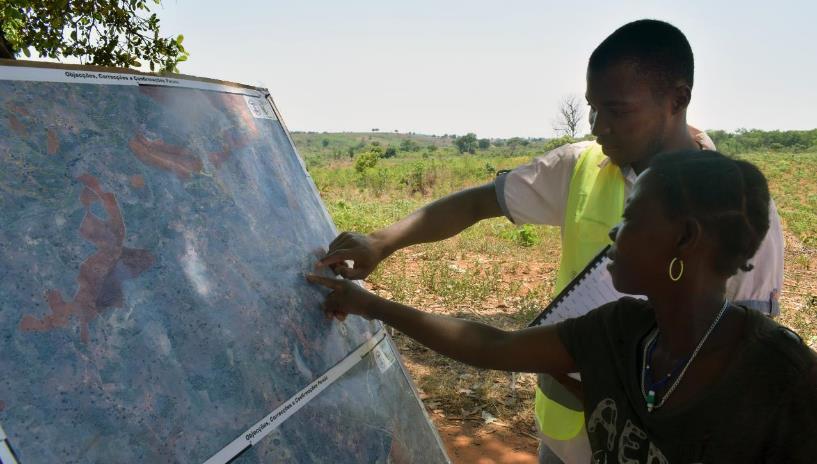
During the first quarter of fiscal year (FY) 2020, ILRG clarified obligations through July 2021, which allowed for broad planning of the majority of funds across ILRG countries. This exercise has been particularly important as ILRG works between the term and completion portions of the contract within a total budget ceiling for the contract’s base period.

W-GDP: ILRG obligations for W-GDP were confirmed in October, which led to the rapid development of a work plan across five countries. Activities were defined for Mozambique, Zambia, and India, while ILRG launched a dialogue on W-GDP in Ghana with private sector partners Hershey and Ecom Agroindustrial Corp. (ECOM) and performed an assessment of gender integration in implementation of Malawi’s 2016 Land Act. Completing work plans and launching activities in each of these countries is a major priority for the coming quarter.

Mozambique: ILRG completed field implementation grants on community land regularization and land readjustment with the Associação Rural de Ajuda Mutua (ORAM) in five communities in the province of Zambézia, and the Hluvukani Cooperative’s work in areas near Illovo’s sugar factory outside of Manhiça in Maputo Province. ILRG documented land conflicts in the Illovo area and shared the results with the relevant district and municipal authorities responsible for resolution/mediation. Within the area supported by ORAM, district authorities took on the responsibility for leading the land readjustment process using the maps and data produced with ILRG support. These products will continue to be used as the community considers internal readjustment, as Portucel has provided a consultant leading the design of the irrigation approach.

Mozambique challenges: Elections in October 2019 slowed fieldwork and opportunities to carry out field assessments for a short-while. This quarter was used to negotiate plans for FY 2020 and FY 2021 with respect to W-GDP, as well as emergency/disaster relief programming. Building trust with senior management of private sector partners and understanding their relative commitments and constraints slowed progress, but also created a strong basis for moving forward over the next eighteen months.

Zambia: Policy engagements continued with the National Land Policy, as ILRG supported the Ministry of Lands and Natural Resources (MLNR) to engage with stakeholders for an early 2020 pre-validation and (hopefully) subsequent validation meeting. The House of Chiefs worked closely with ILRG in the development of a traditional leadership and governance course, expected to be rolled out in 2020, through participation in the African Land Policy Conference, and in strategizing on W-GDP support for a House of Chiefs Policy on Gender and Women’s Empowerment. ILRG worked with the Zambia National Community Resource Board Association (ZNCRBA) to carry out the National Community-Based Natural Resource Management (CBNRM) Conference with almost three hundred participants from across government, community-based organizations, conservation organizations, and traditional leaders, as communities seek access to benefits legislated under wildlife legislation. With respect to field implementation, both the Chipata and Petauke District Land Alliances have established strong relationships with district planners on integrated development planning for new districts, including piloting a complete village census across five chiefdoms in Petauke District. Basemaps have been prepared and finalized for the parcel demarcation and claims process, which are expected to be largely completed over the next quarter for two large chiefdoms. Natural resource management partners continued with community governance activities and processes for registration of forest areas. Partners are working on mapping boundaries and examining opportunities for community wildlife economy activities.

Zambia challenges: ILRG has yet to gain policy traction with the Department of National Parks and Wildlife (DNPW), and with the addition of W-GDP funds risks stretching itself too thin across land, natural resource management, agriculture, gender, and district planning. ILRG is at a stage of identifying whether its partners are likely to be self-sustaining post-grant activities. Nevertheless, there is substantial progress and doors are opening to engage with customary leaders on governance and with the MLNR.

Ghana: ILRG continued deepening experiences in Asankrangwa, alleviating concerns and rumors from some community leaders, and embarking on a land use planning process, through the ECO Game, informed by a land use planning diagnostic. ILRG’s partner Meridia carried out community boundary mapping and parcel mapping in three villages during the quarter, testing a range of mapping models. The cost recovery model for selling FarmSeal documents to farmers performed much weaker than hoped. ILRG’s partner ECOM continued with its farm rehabilitation services across almost 100 acres of cocoa farms and food crops, with an unfortunate loss of significant maize crop due to army worms. ILRG has engaged effectively on the policy dialogue around tree tenure policy reform, integrating itself into the Legal Working Group on tree tenure. Toward the end of the quarter, ILRG’s participation in W-GDP became a focus of rapid planning, and ILRG launched a dialogue with Hershey and ECOM to program funds associated with W-GDP without compromising the original objectives of the partnership.

Ghana challenges: The program continues to grow organically, testing a range of hypotheses, but lacks a full-time team in country. Given the diversity of activities, a full-time team may not be advised, as a broad range of skills are required. As noted above, interesting results continue to emerge that highlight the challenges of making a cost-recovery model for land documentation work, as well as private sector supported cocoa farm rehabilitation.

India: ILRG India is providing support to members of 49 selected women’s groups across 12 pilot communities, including PepsiCo potato farming families. Within these 49 groups, two women’s land leasing groups are cultivating PepsiCo potatoes as part of an innovative pilot to facilitate access to land for women in West Bengal. The project developed participatory, gender-sensitive training modules for a package of PepsiCo-recommended technical practices for potato cultivation. The entire training program is being delivered in six phases. As of the end of the quarter, two modules had been designed, translated into Bengali, and delivered in all 12 pilot communities. In this quarter, ILRG provided another round of the gender sensitization/women in agriculture training to PepsiCo field agronomists, this time with female agronomists in Maharashtra, at PepsiCo’s request. ILRG also began preparations for a training module and toolkit on gender-based violence, which is being prepared in both English and Bengali.

India challenges: Common challenges of low literacy and education level, as well as limited time to attend trainings, affect the full participation of women in the program. Similarly, fewer than expected PepsiCo farmers are within the women’s groups. ILRG is adapting the program by ensuring that additional outreach is done specifically for PepsiCo farmers’ wives.

Additional activities: ILRG is carrying out a range of additional activities that are either fairly small or under development. The team is piloting and adapting a capacity assessment framework, and it is supporting global learning around Mobile Approaches to Secure Tenure (MAST). It is also engaging with USAID on sector guidance for USAID’s Indigenous Peoples’ Policy, and it is supporting a grant to New America to finalize E3/LU’s learning agenda. ILRG is also in the process of awarding two grants to carry out community land protection activities in Liberia. The team is developing a relatively small completion activity to support a property rights indicator sub-national deep dive. During this quarter, ILRG also finalized a land tenure assessment for USAID/Indonesia, and it began considering a potential completion activity in Madagascar.




Artisanal Mining and Property Rights: Quarterly Progress Report September – December 2018

Executive Summary 

The USAID AMPR project entered into force on September 28, 2018 through the signature of the contract between Tetra Tech and USAID Washington. For purposes of work planning and project implementation, the Annual Work Plan cycle is from October 1 – September 31st of each year. For this Quarterly Progress Report, the reporting period is from September 28 – December 31, 2018.

The project commenced with an Inception Phase focused on various launch events and work planning activities. This consisted of initial meetings in early October in Washington DC with the CO and the COR. The project start-up activities this quarter were focused primarily around preparing the Work Plan for October 1, 2018 – September 30, 2019 (hereafter Year 1 Work Plan). Following project launching activities with USAID in Washington DC in mid-October 2018, the project hired its core technical staff as short-term consultants. These staff members were primarily those from PRADD II in the Central African Republic. Temporary offices were loaned out by the Kimberley Process Permanent Secretariat for the first two months until new office space was located and a lease agreement signed.

In early November, a week-long work planning session was held in Bangui, the Central African Republic. The project brought to Bangui the Project Manager, the Senior Advisor, the Chief of Party and Director of Administration designates, and a consultant, resource person, Mr. Armel Nganzi. During the week of November 6-12, the technical team developed the programmatic orientations spelled out in the sections below. A two-day workshop was held with Ministry of Mines and Geology and Ministry of Humanitarian Action and National Reconciliation senior staff to review the USAID AMPR contract with Tetra Tech, but then to propose specific programmatic orientations for the project. During the second day of the workshop, the specific activities spelled out below were validated by this inter-ministerial workshop. Civil society organizations were also invited to participate in the second day of the workshop.

During the week of November 26-30, 2018 two formal Launch Events were held in Bangui. The project was introduced initially on November 28th to the top-level Ministry of Mines and Geology and the Ministry of Humanitarian Action and National Reconciliation staff, the US Embassy, the diplomatic corps, and representatives of major multilateral and bilateral development organizations. The USAID COR for USAID AMPR attended these launch events. A protocol agreement was signed between the Minister of Mines and Geology and the Tetra Tech Project Manager for the USAID AMPR project. On November 29th, a similar session was held with mid-level ministerial staff, representatives of civil society, and representatives of Buying Houses.

For the rest of the month of December, the USAID AMPR project core team of consultants focused on preparing a lexicon of key terms used in the artisanal mining sector in French, Sango, and English. In addition, the team began the process of identifying videos from the PRADD II project in Côte d’Ivoire useful for translation into Sango. The administrative team advanced with the complex process of registering Tetra Tech in the Central African Republic, renting out a new office, and purchasing office equipment and supplies. At the time of writing this Quarterly Report, the COP and Director of Finance and Administration had arrived in Bangui on the weekend of January 5th and quickly began work.


Artisanal Mining and Property Rights Task Order Under the Strengthening Tenure and Resource Rights II (STARR II) IDIQ Quarterly Progress Report January – March 2019

Executive Summary 

This quarterly performance report describes achievements realized under USAID’s Artisanal Mining and Property Rights Project (USAID AMPR) in the Central African Republic (CAR) between January 1 and March 31, 2019. Key accomplishments include the establishment of the project office in Bangui and a series of assessments intended to inform the design of subsequent project activities. While the Bangui program is still in the learning and design phase, cross-cutting activities were launched to expand understanding of artisanal diamond and gold mining in other countries of interest to USAID.

Throughout the quarter, AMPR expanded its relations with local and international actors working on conflict minerals and peace and reconciliation. The project team met with Search for Common Ground to explore collaboration, coordination and information sharing regarding support to Local Peace and Reconciliation Committees (CLPR). During an evaluation by the International Conference on the Great Lakes Region (ICGLR) of CAR advancements in implementing the Regional Certification Mechanism (RCM), the project team met with mission team. Both parties explored ways to continue sharing information with the IGLR especially with regards to recommendations for setting up a certification and the artisanal gold Chain of Custody (CoC) scheme for the Central African Republic. Meetings were held with the World Bank task manager to review coordinated approaches to supporting the Ministry of Mines and Geology.

Objective 1: Assist Government of the Central African Republic to Improve Compliance with Kimberley Process Requirements To Promote Licit Economic Activities

  • Launched a rigorous and participatory diamond fraud diagnosis to identify root causes for the uptake in smuggling and identified ways to improve the enhanced monitoring mechanisms required under the Kimberley Process Operational Framework.
  • Provided technical support to the Ministry of Mines and Geology to set up a technical committee chaired by the ministry and comprising donors, the private sector and other relevant stakeholders to coordinate programs and projects in the mining and petroleum sectors of the CAR.
  • Initiated direct engagements with the World Bank to contribute to regulatory and institutional reform efforts of the Ministry of Mines and Geology. Tetra Tech submitted to the World Bank a proposal for a single-source procurement intended to complement and strengthen AMPR by supporting capacity building for pre-cooperatives and cooperatives in the recommended site of Boda and Boganagone.
  • Drafted lexicon of artisanal mining terminology in French and Sango for eventual incorporation into the Mining Code and to avoid confusions over word choices.
  • Launched translation of communication and outreach videos used in Côte d’Ivoire into Sango.

Objective 2: Strengthen Community Resilience, Social Cohesion, and Responses to Violent Conflict in the Central African Republic

  • Completed the assessment, in collaboration with the Ministry of Humanitarian Action and National Reconciliation and the Ministry of Mines and Geology of the Peace and Reconciliation committees set up under PRADD II as well as the Kimberley Process Local Monitoring Committees in the compliant zones of Berberati, Bania, Yamalé, Nandobo, Wapo and Nassolé.
  • Launched preparations for field missions with the Ministry of Humanitarian Action and National Reconciliation and the Ministry of Mines to evaluate and validate the proposed extension of sites for the Peace and Reconciliation Committees and the Kimberley Process Local Monitoring Committees in the sub-prefectures of Gadzi, Carnot, Nola and Boganangone.
  • Completed consultations with stakeholders including representatives of women’s groups in the Kimberley Process compliant zones in Carnot, to develop the project Gender Action Plan and identify economic diversification activities for women. This included a diagnostic of women’s roles in the diamond economy in three villages near Carnot.

Objective 3: Increase Awareness and Understanding of the Opportunities and Challenges of Establishing Responsible Gold Supply Chains in the Central African Republic

  • Contracts put in place with IPIS and RESOLVE to analyze the possibilities of implementing responsible supply chains for the gold sector in CAR. IPIS completed the training of the KP Focal Points, AMPR Community Mobilisers and Civil Society representatives on research methodologies, mobile data collection tools using ODK software, participatory methodologies for mine site identification, best practices of conducting field research, and practical exercises on how to use the new generation of ‘GPS InReach’ data tracking hardware.

Objective 4: Improve USAID Programming through Increased Understanding of Linkages Between ASM and Key Development Issues

  • Carried out in Ghana a rapid artisanal gold mining assessment combined with a field visit in the Wassa Amenfi West District and the Asankrangwa Stool chieftancy. This assessment identified options for US government programming in the gold sector.
  • Launched debate on the dynamics of armed pastoralism in the diamond mining areas of the southwest of the Central African Republic.


Artisanal Mining and Property Rights: Quarterly Progress Report April – June 2019

Under the Strengthening Tenure and Resource Rights II (STARR II) IDIQ

The Artisanal Mining and Property Rights (USAID AMPR) project supports the USAID Land and Urban Office in improving land and resource governance and strengthening property rights for all members of society, especially women. It serves as USAID’s vehicle for addressing complex land and resource issues around artisanal and small-scale mining in a multidisciplinary fashion with a focus primarily on diamond and less so on gold production in the Central African Republic (CAR), as well as targeted technical assistance to other USAID Missions and Operating Units in addressing land and resource governance issues within the artisanal and small-scale mining sector. The project builds upon activities and lessons from the Property Rights and Artisanal Diamond Development (PRADD I and II) projects. The USAID AMPR contract was signed on September 28, 2018 and will run initially for three base years and with two optional years. Most project activities will be carried out in the CAR.

Executive Summary

This quarterly performance report describes achievements realized under USAID’s Artisanal Mining and Property Rights Project (USAID AMPR) in the Central African Republic (CAR) between April 1 and June 30, 2019. Throughout the quarter, the project implemented successfully it’s Work Plan requirements that focus on carrying out various studies and developing strategies intended to inform the design of subsequent project activities. AMPR also conducted several trainings for government stakeholders, civil society partners, field agents, and the key beneficiaries, notably, the Comité Locales de Paix et de Réconciliation (CLPR) and Antennes Locales de Suivie (ALS). AMPR expanded its relations with local and international actors working on conflict minerals, pastoralism, and peace and reconciliation. The project team met with Enabel, the Belgian cooperation agency mandated to carry out an EU-funded good governance project for the mining sector in CAR. Together the meeting explored strategies for coordination and information sharing, especially on the support for the Kimberley Process Secretariat in the Central African Republic, AMPR also met with the Central African Federation for Herders (Fédération Nationale des Eleveurs Centrafricains) (FNCE), with whom they discussed the increasing incidents of armed pastoralism, and proposed measures to address this problem before it undermines further security in the KP compliant zones.

The USAID AMPR project strengthened strategies to improve the participation, coordination and communication with key project stakeholders, notably the Ministry of Mines and Geology (MMG) and the Ministry of Humanitarian Action and National Reconciliation (MHANR). AMPR shared the technical aspects of the weekly reports with a wide array of stakeholders, involved the technical officers of both ministries in developing terms of references for field missions, and undertook joint field missions. After every mission, AMPR organized meetings to restitute the findings, and obtain feedback from the technical officials of both ministries. In June 2019, AMPR agreed with the MMG to establish a joint technical coordination committee comprised of all AMPR project components coordinators and selected experts of the MMG. The committed started reviewing all studies and strategies developed by AMPR in order to propose concrete interventions that could be considered under the AMPR year two Annual Work Plan. These initiatives were welcomed by both ministries. AMPR continued the interface with senior officials of the US Embassy and USAID in Bangui. Several meetings were organized to brief the officials, and to explore their views in relation to the various interventions carried out by the AMPR project. AMPR management was invited to attend several social events organized by the US Ambassador in Bangui. Below are the highlights of the progress realized under each component.

Objective 1: Assist Government of the Central African Republic to Improve Compliance with Kimberley Process Requirements to Promote Licit Economic Activities
Completed a rigorous and participatory diamond fraud diagnosis on the root causes of smuggling and ways to improve the enhanced monitoring mechanisms required under the Kimberley Process Operational Framework. A draft report was shared with key stakeholders for feedback including USAID, the World Bank and the US Embassy in Bangui. The final report from the diagnosis, summarizing the fieldwork, observations and the recommendations adopted by all stakeholders at the national workshop, was shared with USAID for final approval.

  • Former PRADD II Deputy Country Director in Côte d’Ivoire Sabine Jiekak was recruited by the end of June 2019 by AMPR to carry out the Land Certificate Study. She will travel to Bangui in early July 2019 to undertake a study on the impact, relevance/utility and weaknesses of PRADD I certificates of customary land tenure delivered to nearly 3,000 miners between 2007 and 2012.
  • Specialist in local revenue management, Sébastien Pennes was recruited by AMPR at the end of last quarter to carry out a study on whether a decentralized revenue management model might work in the mining zones in Carnot, Berberati and Nola. The study focused on whether the SODEMI model of Côte d’Ivoire might be applicable to CAR. The study findings concluded that the model is not transferable. However, a number of other recommendations will inform the AMPR project in developing a workable system to be piloted in one of two local communities covered by the project in CAR in the years to come.
  • AMPR launched the first phase of the Knowledge, Aptitude and Practice (KAP) survey in early April with a representative sample of mine claim holders (341). The study focused on the artisanal miner or chef de chantier, drawn from active mining sites in select priority zones of Boganangone, Carnot, Gadzi, Nola, Boda, Sosso-Nakombo and Dede-Makouba. Through the Component II sub-contract with IPIS, the AMPR team also included a form for mapping diamond sites as well as gold. This initiative is right on schedule despite the difficulty of reaching gold mining sites in the middle of the rainy season.
  • Communication specialist, Souleymane Ouattara, who prepared the Communication Strategy for the PRADD II project in Guinea worked with the field office team this past quarter to design a comprehensive AMPR project communication strategy that includes key strategies, messages, and tools. The strategy was presented for approval to USAID, but after commentary, it will be subsequently revised by the field office team.
  • Worked closely with the World Bank Natural Resources Project mining component team to put in place a policy to support the Kimberly Process Focal Points, the field agents recruited by KP secretariat itself. The Focal Points benefited from various technical training organized by the project and participated in relevant field activities like the collection of data for the Component III gold site mapping initiative. Tetra Tech presented a proposal for a $1 million single-source contract to carry out field support to cooperatives in one to two sites, but final negotiations over the contract terms were still underway at time of quarterly report writing.
  • Discussions initiated with the US Ambassador in Bangui, the Political and Economic Officer and the USAID Development Program Specialist on the importance of setting up a Friends of CAR. Relevant documentation of the proposed structure for the Friends of CAR was shared with the US Embassy officials for their review and to provide input.

Objective 2: Strengthen Community Resilience, Social Cohesion, and Responses to Violent Conflict in the Central African Republic

  • Participatory assessment of Local Peace and Reconciliation Committees (CLPR) and the Kimberley Process Local Monitoring Units (ALS) in the pilot sites of Balégo, Yamalé, Bania, Wapo, Nassolé and Nandobo now in place for the roadmap spelling out the strategies and actions needed to strengthen the CLPR set up under PRADD II.
  • Project team worked closely with the Ministry of Humanitarian Action and National Reconciliation (MHANR) to establish new CLPRs in the sub-prefectures of Carnot and Gadzi. This included supporting the process of voting for members, carrying out initial training for members, and setting up a monitoring system.
  • Supported in partnership with MHANR and the MMG, the preparation of the Annual CLPR Action Plans in the 6 pilot CLPR sites of Berberati region, Balégo, Yamalé, Bania, Wapo, Nassolé and Nandobo.
  • Consultant Sabine Jiekak worked closely with the project team to complete a diagnostic on the role of women in the diamond mining sector. This included a literature review and a participatory field research phase to identify the gender dynamics and opportunities to support women’s economic empowerment with a focus on promising livelihoods and an entrepreneurial/value chain approach in Nola, Gadzi, and Boganagone.
  • Consultant Sabine Jiekak worked with the field team to design the project’s Gender Action Plan with a focus on mainstreaming gender dynamics into all activities. The plan includes the AMPR strategy for gender mainstreaming, the findings from the gender diagnostic, and the proposal for specific activities to promote economic and social inclusion of women.
  • Organized the first technical consultative meeting on armed pastoralism and transhumance between the MMG, MHANR, Ministry of Livestock and the General Secretary of FNEC (Fédération Nationale des Eleveurs Centrafricains). The meeting discussed strategies for monitoring, documenting and reporting violent attacks by the armed pastoralists.
  • Supported thanks to the collaboration with the CLPR and the ALS, the establishment and signing of a joint declaration with the KP monitoring committees and anti-fraud police (USAF) to commit all actors to jointly fight fraud in the Berberati region, and share in a timely fashion information on security and violent incidents in the compliant zones of Balégo, Bania, Yamalé, Wapo, Nassolé and Nandobo.

Objective 3: Increase Awareness and Understanding of the Opportunities and Challenges of Establishing Responsible Gold Supply Chains in the Central African Republic

  • IPIS completed the first cycle of field missions required to collect detailed information on 201 mining sites. IPIS carried out a debriefing workshop and prepared for the second cycle of data collection. Throughout the process, IPIS conscientiously downloaded for review draft questionnaires, shared results of a first round of data analysis and interpretation, worked with the local sub-contractor on data cleaning, and uploaded the initial dataset into the IPIS database.

Objective 4: Improve USAID Programming through Increased Understanding of Linkages Between ASM and Key Development Issues

  • Carried out in Ghana a rapid artisanal gold mining assessment combined with a field visit in the Wassa Amenfi West District and the Asankrangwa Stool chieftaincy. This assessment identified options for US government programming in the gold sector.
  • Finalized the ASGM Ghana scoping mission report. Shared with the World Bank, US Embassy Accra and the USAID ILRG project team.
  • Technical Deputy / Component 4 Coordinator attended the OECD Responsible Minerals Forum in April 2019, where he moderated a panel discussion on diamonds and the new Responsible Jewelry Council’s standards. He also participated and presented on best practices in mining cooperatives at the KP Intersessional and provided technical assistance to the US Delegation.
  • Technical Deputy participated in the Kimberley Process Intersessional in Mumbai, India where he gave a well-received presentation on lessons learned from mining cooperatives and especially focused on examples from PRADD II.

Kosovo Property Rights Program (PRP) Annual Report: 2016

USAID’s Property Rights Program (PRP) is a four-year activity that aims to address the property rights challenges and to develop a plan for the stabilization of the property rights regime in Kosovo. The program will work in partnership with the Government of Kosovo (GOK), selected municipalities and other relevant local and international stakeholders. USAID has allocated $8.5 million for the implementation of the Property Rights Program.

EXECUTIVE SUMMARY

The rule of law in Kosovo is constrained by poorly defined and enforced property rights, especially the property rights of women and members of minority communities. The absence of an effective property rights regime weakens democratic governance, impacts human rights, disempowers women and impedes economic growth.

The Property Rights Program (PRP) is a four-year USAID project implemented under four objectives:

Objective 1: Better Coordination and Policy Priorities

Objective 2: Improved Court Procedures Related to Property Claims

Objective 3: Enhance Women’s Rights to Use Property in Practice

Objective 4: Improved Communication, Access to Information and Understanding of Property Rights

The PRP promotes sustainable solutions by building capacity within Kosovo’s institutions and civil society to take ownership of and direct the reforms to strengthen property rights and the rule of law that are required for Euro-Atlantic integration and economic development. PRP facilitates effective donor and government stakeholder coordination such as supporting the Ministry of Justice (MoJ) to lead development of the National Strategy on Property Rights through an inclusive and participatory process. PRP provides technical assistance to the Kosovo Judicial Council (KJC) to develop, pilot, and test improved court procedures to efficiently adjudicate property claims and disputes.

PRP is carrying out extensive and varied public outreach activities to spark public discussion of the challenges women face in exercising their property rights and to prompt change in social attitudes and behaviors. PRP is also working with USAID’s E4E partner and sub-grantees to help them support and undertake activities that reinforce PRP’s public outreach efforts.

In addition, PRP is working directly with municipal administrations to enable them to make it easier for their citizens to register their property and exercise their property rights, by streamlining procedures; encouraging the sharing of information among local institutions and making legal information readily available to the public.

Kosovo Property Rights Program (PRP) Quarterly Report: October – December 2016

USAID’s Property Rights Program (PRP) is a four-year activity that aims to address the property rights challenges and to develop a plan for the stabilization of the property rights regime in Kosovo. The program will work in partnership with the Government of Kosovo (GOK), selected municipalities and other relevant local and international stakeholders. USAID has allocated $8.5 million for the implementation of the Property Rights Program.

EXECUTIVE SUMMARY

SUMMARY OF RESULTS FOR THE REPORTING PERIOD AND KEY ACHIEVEMENTS

This Quarter was very productive for PRP: it saw important developments in major initiatives in progress – the National Strategy on Property Rights; caseflow management reform in Kosovo courts; the national media campaign and local grassroots activities on women’s property rights; and activities in the municipalities of Viti/Vitina and Shtërpcë/Štrpce designed to help municipal administrations in Viti/Vitina and elsewhere improve their practices and procedures related to property rights and enable their citizens to exercise their property rights more easily and efficiently.

Kosovo Property Rights Program (PRP) Quarterly Report: January – March 2017

USAID’s Property Rights Program (PRP) is a four-year activity that aims to address the property rights challenges and to develop a plan for the stabilization of the property rights regime in Kosovo. The program will work in partnership with the Government of Kosovo (GOK), selected municipalities and other relevant local and international stakeholders. USAID has allocated $8.5 million for the implementation of the Property Rights Program.

EXECUTIVE SUMMARY

SUMMARY OF RESULTS FOR THE REPORTING PERIOD AND KEY ACHIEVEMENTS

This Quarter was very productive for PRP: it saw important developments in major initiatives in progress – the National Strategy on Property Rights; caseflow management reform in Kosovo courts; the national media campaign and local grassroots activities on women’s property rights; and activities in the municipalities of Viti/Vitina and Shtërpcë/Štrpce designed to help municipal administrations in Viti/Vitina and elsewhere improve their practices and procedures related to property rights and enable their citizens to exercise their property rights more easily and efficiently.

Kosovo Property Rights Program (PRP) Quarterly Report: April – June 2017

USAID’s Property Rights Program (PRP) is a four-year activity that aims to address the property rights challenges and to develop a plan for the stabilization of the property rights regime in Kosovo. The program will work in partnership with the Government of Kosovo (GOK), selected municipalities and other relevant local and international stakeholders. USAID has allocated $8.5 million for the implementation of the Property Rights Program.

EXECUTIVE SUMMARY

SUMMARY OF RESULTS FOR THE REPORTING PERIOD AND KEY ACHIEVEMENTS

This Quarter saw PRP advance its initiatives significantly under all four Objectives. Under Objective 1, implementing legislation for the National Strategy on Property Rights was developed at a steady pace, despite the call for national elections and the resulting caretaker status assumed by the national government. Under Objective 2, PRP began piloting its improved case management reforms in its three Courts of Merit. Under Objective 3, PRP unveiled for broadcasting a new series of PSAs on women’s property rights, launching them with a visibility event featuring remarks by the USAID Mission Director; and prepared for dissemination its Report on the results of the Mid-Term National Survey on Property Rights in Kosovo. Under Objective 4, PRP produced information products for citizens on registering property and moved forward a number of other initiatives in partner municipalities that are designed to improve municipal governments’ services to their citizens.