
Overview
Mozambique’s land belongs to the state, while individuals, communities and organizations can hold a right of land use and benefit, known as a DUAT. Rural livelihoods depend on fields, fallows, forests, grazing, fisheries and water. Commercial agriculture, forestry, mining, gas and infrastructure can create opportunities while overlapping with these uses.
The 1997 Land Law recognizes rights acquired through customary occupation and certain good-faith occupation even without a formal title. The challenge is to make those rights effective when land is mapped, allocated or acquired. Community consultation, accessible records and fair remedies matter as much as the legal text. Land Law No. 19/97.
Key Issues
- Protect existing customary and community DUATs before allocating land for investment or public projects.
- Ensure women’s rights to use, inherit and document land are recognized in practice.
- Make consultations representative, informed and capable of influencing decisions and negotiated terms.
- Safeguard land and livelihoods of displaced people and host communities.
- Link forest, water, coastal and climate policies to secure and equitable resource rights.
Country Context
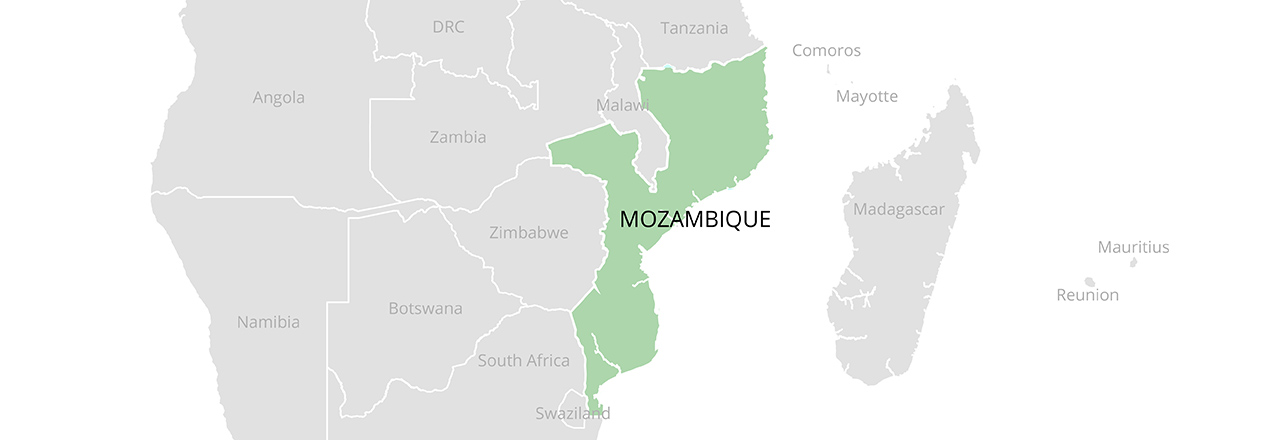
Mozambique extends along the Indian Ocean and shares major river basins with neighboring countries. Smallholder agriculture, fishing and forest products support many families, while large investments in plantations, minerals, gas and infrastructure shape local land use. Colonial land alienation, the civil war and subsequent displacement have left a complex legacy of overlapping claims and disrupted livelihoods.
Climate shocks and insecurity create additional pressures. The World Bank notes the importance of agriculture to employment and the economy’s exposure to cyclones, floods and conflict. A sparsely settled landscape is not necessarily unused: fallows, seasonal resources and community areas can be essential to livelihoods.
Legal Framework
The 1997 Land Law states that land is state property and cannot be sold, mortgaged or otherwise alienated. A DUAT may arise through occupation under customary norms consistent with the Constitution, good-faith occupation by a Mozambican individual for at least ten years, or authorization. The law provides that lack of a title does not prejudice rights acquired by the first two forms of occupation.
Rights can be proved by title, testimony from women and men in local communities, expert evidence or other lawful means. The law provides for community consultation in relevant applications and permits inheritance without gender distinction. The FAOLEX country record lists the 1998 Land Law Regulations and the 2022 Land Policy among related instruments.
Land Policy and Reform
The Council of Ministers approved a new land policy in 2022. In October 2025 the government approved a proposed replacement for the 1997 Land Law for submission to Parliament. The government communiqué describes a proposal, not a law already enacted.
Parliament has published the proposed revision and consultation materials. As of October 2026 the proposal was under parliamentary consideration. The existing law’s protections and the proposed changes must be evaluated separately; the outcome depends on the text ultimately enacted and its implementation.
Land Tenure
A DUAT is a right to use and benefit from land, not ownership of the land itself. Rights acquired through occupancy can be held by individuals or communities; authorized rights may be subject to development plans and time limits. The Land Law allows transfer by inheritance and regulates transfers of improvements, with special provisions for urban property. It is important to distinguish transfer of a building or authorized improvements from sale of the land.
Community rights and individual household rights can coexist. Delimitation records a community’s area and can support negotiation and planning, while individual documentation identifies particular plots. Neither exercise should erase shared grazing, water, sacred sites or seasonal uses. Land Law, Articles 12–16.
Customary and Community Tenure
Local communities manage land through diverse customary rules and institutions. Fields, fallows, forests, water sources and sacred sites can form an interconnected livelihood area. A community DUAT acquired through customary occupation does not depend on a certificate, although delimitation can provide useful evidence and make boundaries more visible to administrators and investors.
The legal requirement for consultation should not be reduced to a meeting with a few leaders. Women, younger people, users of shared resources and neighboring communities need accessible information and opportunities to express their views. Agreements should specify land areas, benefits, access arrangements and dispute procedures, and be monitored after investment begins.
Women’s Land Rights
The Land Law allows women and men to hold and inherit DUATs. Actual access depends on family and local institutions, marriage, inheritance and the ability to participate in allocation and consultation. In matrilineal areas, lineage affiliation can support women’s claims, but decision-making power varies; in other areas women’s access may be mediated by husbands or male relatives.
The World Bank reports that women were 44 percent of more than 686,000 beneficiaries of the 2018–2024 Terra Segura project. This is a project-level beneficiary share, not the proportion of all land held or controlled by women. World Bank, 2026. Documentation and consultation should identify women’s independent and shared rights and make space for women to negotiate and raise objections.
Land Administration
Land administration combines national and provincial services, local authorities, cadastral institutions and community representatives. Community delimitation and systematic regularization can clarify boundaries and record rights, but both require accessible information, competent local staff and mechanisms for correcting errors.
The government’s Terra Segura project description lists goals for individual DUAT regularization, community delimitation and improved land administration in selected districts. These are project targets, not completed national totals. Sustainable services also require registers to be updated when rights change and disputes arise.
Land Data and Registration
The national cadastre and land information system can help identify overlap among DUATs, community areas, concessions and public projects. Data are useful only when boundaries are accurate, current and accessible to affected people. A record showing no title must not be treated as proof that no customary right exists.
Public mapping should include a process for objections, corrections and community review. It should also protect sensitive personal and cultural information. Monitoring should distinguish certificates issued, community areas delimited and actual resolution of competing claims; they measure different outcomes.
Land Conflicts
Disputes may involve boundaries, inheritance, competing DUATs, inadequate consultation or promises made during investment negotiations. Communities can lack the maps, legal advice or resources needed to challenge a powerful applicant. Local dispute resolution is valuable when it is impartial and open to women and less influential users; serious disputes may require administrative or judicial remedies.
Clear records of consultations, agreements and compensation help make commitments enforceable. Grievance procedures should provide reasons for decisions, access to independent advice and protection against retaliation. A project’s economic value does not by itself settle who holds the underlying land rights.
Displacement and Resettlement
Conflict in northern Mozambique, cyclones and floods have displaced communities and disrupted access to fields, fishing grounds and services. UNHCR’s Mozambique data reported 663,769 internally displaced people as of August 31, 2026. Return to a district does not necessarily mean return to an original home or field.
Displaced households may lose documents or find their land occupied. Recovery should protect claims during absence, support safe and voluntary return where possible and clarify land access in resettlement and host areas. Development-related resettlement likewise requires fair compensation, replacement resources and long-term livelihood support, including for people using communal resources.
Urban and Peri-Urban Land
Growth around Maputo, Beira and other towns creates demand for housing, transport, industry and services. Peri-urban customary land can be converted into urban plots, and informal residents or tenants may have weaker documentary evidence than formal holders. Flooding and coastal hazards add risk in low-lying settlements.
Urban planning should recognize existing occupants, provide accessible registration and notice, and coordinate drainage and infrastructure with land-use decisions. Relocation without affordable services or access to work can shift rather than solve vulnerability. The 2024 urbanization policy is listed among the country’s policy instruments.
Agriculture and Pastoralism
Smallholders grow food and cash crops using fields, fallows and access to common resources. Livestock and grazing are important in some regions, particularly where households combine cultivation with cattle, goats or other animals. Seasonal movement, water access and crop residues should be included in land-use plans.
Investments in irrigation and commercial agriculture can raise output, but a project may affect more than the cultivated plot. Replacement land needs suitable soils, water, access and secure rights. The evaluation of a responsible land-based investment pilot provides evidence on approaches to community engagement and livelihoods.
Investment and Land Acquisition
Investors seeking land should identify existing rights and negotiate with affected communities before using land. Consultation is a legal and practical safeguard, but its quality depends on who participates, whether information is understandable and whether commitments are documented and enforced. Community rights acquired through occupation are not extinguished simply because an investor obtains approval.
Land-based agreements should address boundaries, continued access to water and forests, employment, compensation and grievance procedures. The responsible investment pilot illustrates efforts to improve negotiations and documentation. Results from one pilot should not be assumed for all investments.
Water and Fisheries
Mozambique’s rivers cross national borders and support irrigation, hydropower, drinking water and fisheries. Seasonal floods and drought affect access, while upstream withdrawals or pollution can change downstream livelihoods. Lake Niassa and coastal waters support fishing communities whose rights include access to landing sites and markets as well as fishing areas.
Ports, tourism, gas infrastructure and conservation may restrict shore access even without acquiring a household’s field. Planning should identify fishers, women in processing and trade, and seasonal users. The World Bank’s landscape portfolio includes fisheries management and support for rural livelihoods.
Forests and Trees
Miombo woodlands, mangroves and other forests provide fuelwood, charcoal, timber, food, medicine and habitat. People may use different parts of the same landscape for agriculture, grazing and gathering. Commercial logging, farm expansion and infrastructure can change access and forest condition; protected areas can also restrict customary uses.
Community forest management works best when users can participate in decisions, monitor exploitation and share benefits. Forest classification and tree cover are distinct: a legal designation alone does not show who uses a place or the condition of its vegetation. World Bank landscape program.
Climate and Carbon
Cyclones, coastal flooding, drought and erosion threaten homes, fields and infrastructure. Adaptation requires secure access to suitable land and water, disaster preparedness and the ability to restore livelihoods after displacement. World Bank climate risk profile.
In 2021 Mozambique received a first Forest Carbon Partnership Facility payment for verified emissions reductions in Zambézia. The World Bank reported a $6.4 million payment and a benefit-sharing plan. Carbon programs should make restrictions, payment allocation and grievance procedures clear to communities. A payment for emissions reductions does not by itself establish a DUAT.
Minerals and Natural Gas
Coal, graphite, heavy mineral sands, gemstones and natural gas are important resources. Extraction and associated roads, pipelines and ports can affect agricultural land, fisheries, water and settlements. Large investments may produce national revenues while imposing local costs that require separate attention.
Land-use rights, environmental approvals and resource licenses are distinct. Project assessments should include cumulative impacts, livelihood restoration, independent monitoring and remedies for affected people. In conflict-affected northern areas, security, displacement and development pressures interact; durable solutions require safe access to land and services for both displaced and host communities. UNHCR; World Bank.
Political Economy
State ownership of land coexists with legally protected use rights and strong demand for land by public and private actors. Authorities control approvals and land information, while rural users may lack legal support or influence. The way consultation and compensation are implemented can determine whether formal protections have practical force.
Reform involves choices about investment, local authority, public access to records and the protection of community rights. Transparency about who receives land and benefits, together with accountable institutions and functioning remedies, is essential to fair outcomes.
Priorities for Action
- Recognize customary DUATs and community boundaries before approving overlapping investments.
- Strengthen women’s participation, documentation and inheritance rights.
- Make consultations, agreements and compensation transparent and enforceable.
- Support displaced people and host communities with secure land and livelihood options.
- Coordinate land, water, forest and coastal planning and monitor environmental and social impacts.
Sources
Laws and policy
- Land Law No. 19/97, FAOLEX English translation.
- Land Law Regulations and Land Policy records, FAOLEX.
- Council of Ministers communiqué on the proposed land law, October 2025.
- Land law revision proposal and consultation materials, Parliament.
Projects, research and statistics
- Terra Segura project description, National Fund for Sustainable Development.
- Women’s land rights project results, World Bank, 2026.
- Mozambique displacement data, UNHCR.
- Mozambique country overview, World Bank.
- Integrated Forest and Landscape Management Portfolio, World Bank.
- Mozambique climate risk profile, World Bank.
- Zambézia emissions-reduction payment, World Bank, 2021.
- Responsible land-based investment pilot endline evaluation.
Historical reference
Update Log
October 2026: Updated the land law and policy process, community and women’s rights, registration, displacement, investment, forests and climate.
Confidence Assessment
High confidence in the cited 1997 law, dated government proposal and project figures. Moderate confidence in generalizations about customary practice and implementation, which vary by location. Displacement data and the status of legislative proposals are time-sensitive.