Envision a world in which climate action is equitable and propels us towards a resilient, low-carbon future. Enter climate finance, a promising emerging pathway to help achieve a just transition for all people. However, a critical piece of the puzzle for achieving this future is missing–existing climate finance efforts have overlooked the essential roles and unique needs of women, girls, and gender-diverse individuals.
Research shows these populations are more vulnerable to climate impacts and face an additional risk of discrimination in their communities. But they also have unique knowledge and skills that are key to unlocking effective climate solutions.
Climate change impacts differ across genders; so should approaches to climate finance.
How to Improve Gender-Responsive Climate Finance
International development practitioners working in climate finance, including private sector actors, can adopt direct financing mechanisms and strengthen the enabling environment to enhance equitable access to finance.
Convene for Direct Financing
USAID activities currently support several methods of direct financing that have proven to be effective at reaching women and girls, offering lessons learned for future efforts:
Use small grants and local-level financing to provide accessible solutions for community organizations, local non-governmental organizations (NGOs), and gender equality groups. For example, take the Climate Gender Equity Fund (CGEF), a public-private partnership launched by USAID and Amazon with initial conceptualization support from the USAID Integrated Natural Resource Management Activity. The CGEF aims to increase access to climate finance for gender-responsive, women-led, and women-benefiting organizations that address climate change. The fund harnesses USAID’s convening power to bridge the gender-climate finance gap. Amazon, Reckitt, Visa Foundation, and UPS Foundation are founding members, and 2X Global manages the grantmaking process.
Link local NGOs and community organizations to special funding opportunities provided by global climate finance institutions. USAID is expanding partnerships with local organizations to better support climate actions that consider the needs and roles of women, girls, and gender-diverse individuals. The growing list of global leaders in gender-responsive climate finance now includes: U.S. International Development Finance Corporation’s 2X Women’s Initiative, Global Affairs Canada’s Gender-Responsive Climate Finance Design Funding Window, UN Women, and UN Capital Development Fund’s Local Climate Adaptive Living Facility (LoCAL).
Develop innovative financial products, like climate insurance. These products can be designed in ways that support inclusive access and address gender issues and systemic barriers in finance. Investing in intermediaries that have direct ties to local women’s groups is one effective strategy for tailoring financial products to the needs of women. For example, the InsuResilience Investment Fund, a blended finance fund that provides climate insurance, has worked with the Kashf Foundation in Pakistan to provide climate-linked cattle insurance loans to women farmers whose livestock were affected by extreme climate shocks.
Strengthen the Enabling Environment
Strengthening the enabling environment means supporting the governance, policy, and institutional conditions to help make gender-responsive climate finance more feasible and accessible to women, girls, and gender-diverse individuals. Specific actions to strengthen the enabling environment for inclusive climate finance include:
Create stronger networks among local gender-focused organizations and accredited entities to bolster accredited entities’ ability to directly finance gender-focused organizations that meet the needs of local individuals. Explore USAID’s list of local gender-focused partners and a list of Green Climate Fund Accredited Entities.
Engage local women and gender-diverse individuals as decision makers and key consultants. Aligning climate finance activities with local needs and priorities can make them more inclusive and effective.
At a higher level, advocate for equal gender representation and leadership within global financial institutions, which can lead to better addressing the needs of more diverse populations and drive meaningful, lasting change. Resources to support women and gender-diverse individuals as leaders, such as leadership training and development programs, will help achieve this goal.
Finally, eliminate gender biases in government budget decisions and in the allocation of funds. This action will require promoting gender equality within governing bodies involved in climate financing, and making sure finance decisions consider the needs and interests of women and gender-diverse individuals.
Some of the practical steps and examples shared above can also be found in USAID’s Gender Equality and Climate Finance Technical Brief.
USAID Gender Equality and Climate Finance in Action
USAID’s global reach, national- and local-level partnerships, and leading climate and gender expertise help create and sustain equitable climate action, like gender-responsive climate finance.
The Resilient, Inclusive, and Sustainable Environments (RISE) grants challenge is a groundbreaking initiative aimed at addressing gender-based violence in the environment and climate sectors. Through a call for proposals, USAID and the International Union for Conservation of Nature select RISE grantees, promote their work at this intersection, and provide technical assistance to support the proposed activity in achieving measurable results. RISE builds capacities, cross-sector cooperation, and learnings on promising strategies to contribute to global learning and advocacy through its peer-learning community.
Meanwhile, the CGEF, mentioned above, is part of USAID’s Climate Finance for Development Accelerator (CFDA), which mobilizes investments for climate change mitigation and adaptation activities. The fund is also a flagship program under the new U.S. Government-led Women in the Sustainable Economy (WISE) Initiative, launched by Vice President Harris in November 2023. The WISE Initiative aims to increase women’s access to employment, training, leadership roles, and financial resources in the industries critical to our future and the future of our planet. In August 2022, USAID announced the selection of the CGEF Grant Manager, 2X Global. 2X Global is globally recognized as a thought leader at the nexus of gender and climate and will manage CGEF’s portfolio of grants focused on increasing access to finance for women and girls on the front lines of climate mitigation and adaptation.
Another notable USAID-supported program in gender-responsive climate finance is INVEST, which mobilizes private capital to drive inclusive development and focuses on women’s economic empowerment.
Connect with USAID Gender and Environment Experts
Get in touch with the following USAID experts to continue the discussion:
Corinne Hart ????
Corinne Hart is a Senior Gender Advisor for Energy, Environment, and Climate with USAID’s Gender Equality and Women’s Empowerment Hub
Read Corinne’s article on investing in women-led climate solutions.
 Madison Allen ????
Madison Allen is a Gender and Climate Program Analyst with USAID’s Gender Equality and Women’s Empowerment Hub.
 Georgia Hartman ????
Georgia is a Senior Gender Advisor for Environment and Climate and former AAAS Science and Technology Policy Fellow with USAID’s Gender Equality and Women’s Empowerment Hub.
Read Georgia’s blog on harnessing data to empower women and girls as change agents in climate change.
 Sashi Jayatileke ????
Sashi is a Senior Climate Finance Advisor with USAID’s Center for Environment, Energy, and Infrastructure. Read Sashi’s blog on USAID’s efforts to close the climate funding gap.
This blog was originally published by Climatelinks.


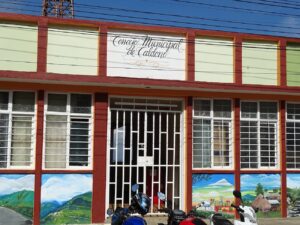 Nobody in Caldono’s Planning Department was surprised to learn that half of City Hall was sitting on a property with no land title. In the municipality of Caldono, six out of 10 parcels are informally owned, and this also applies to schools, health clinics, and municipal assets.


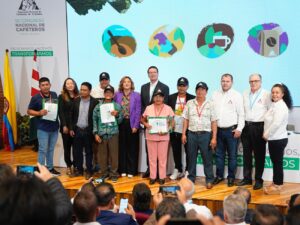 The end of the year brought good news for coffee growers in Northern Cauca. Seven families from Caldono received property titles to their coffee farms. Some of the families had initiated proceedings 10 years ago and had given up hope of ever obtaining a registered land title.
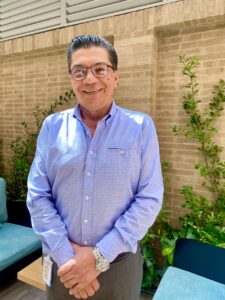 “The most important thing that we can do for our coffee growers is protect their property. My recommendation is to move forward with companies and the government, seeking policies that facilitate land formalization through taxes. Coffee growers pay taxes, with this strategy, we can find several actors that can help.”
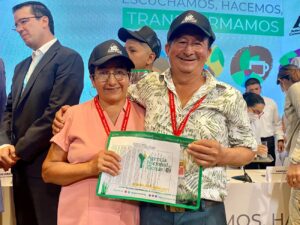 In Caldono, 66 percent of parcels are informally owned, indicating that some 1,900 coffee-growing families do not have a property title. Alba Ituyán and Ameiro Mosquera are coffee growers who started the land titling process almost ten years ago. Thanks to USAID and the National Coffee Federation, in 2023, they received a joint land title to their coffee farm.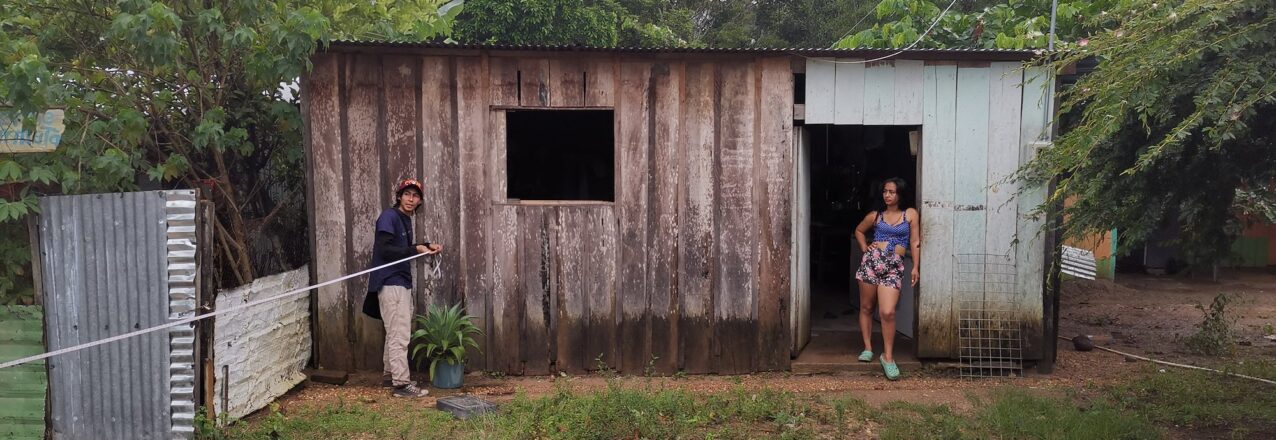
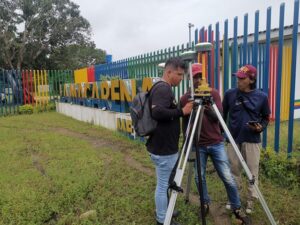 In each of the nine participating municipalities, USAID has trained public officials to give residents information about land titling and property issues. Jhojan Smith is an engineer working in La Macarena’s municipal administration, and when Meta’s regional team comes to work, he helps them reach the community.
 Now that Raúl Moreno is the official owner of his property and has a registered land title backed by the government, he can support his family in other ways.
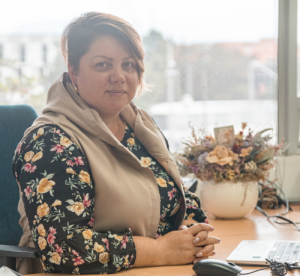 Since signing the 2016 Peace Accords, the government of Colombia has transformed rural land administration by adopting a model that puts the onus of formalizing rural property on government land agencies like the National Land Agency (ANT). With the support of USAID’s
  We have already used it, for example in the units that LFP delivered in Fuentedeoro and Puerto Lleras, we have already delivered land titles. In Santander de Quilichao we are going to identify the people and parcels that need to be formalized, that need land administration or legal tenure. We are going to make the processes quicker, more consistent, and especially produce results faster. What we aspire to is to avoid what happened to us in previous parcel sweeps, which were very long processes, too long for a single municipality, so we can gradually make progress.
 Yes, we have implemented many changes, not only in the processes but also in simplifying forms, consolidating information collection tools, and issuing guidelines that are clear, not just for ANT employees but also for the parcel sweep operators. For example, before the ANT had 32 attention routes for land formalization, and we simplified the processes to 24 routes. Everything LFP has done to support the ANT with Rural Property and Land Use Planning translates to the possibility for a dignified life for rural Colombians.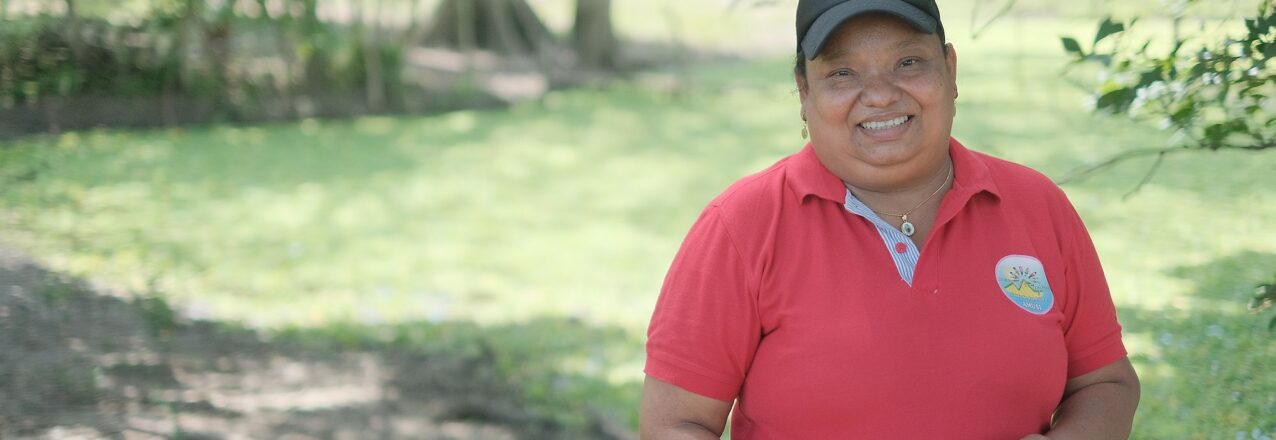
 Luz Mery Valdez is an iconic woman, who is defying gender stereotypes through her work as a cassava and yam farmer in the Montes de María region of Colombia. She works with the Association of United Women of San Isidro (AMUSI) in the municipality of El Carmen de Bolívar.
 What have been the most visible changes since women have participated in farming activities?
 What would you say to other women?
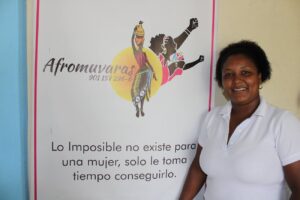 As part of the 16 days of activism to end violence against women and girls, LFP talked to Judith Rodríguez, a member of
  In the Community Council, you share the land between members. Do you think the women who own land individually or jointly with their partners are as protected as you?
 There are laws to stop men from selling common properties without the consent of their partners. Do you think there is a need to talk about these laws more widely?