

USAID, Hershey’s and ECOM Help Cocoa Farmers Increase Production, Strengthen Land Rights, and Protect Forests

Everybody loves chocolate.

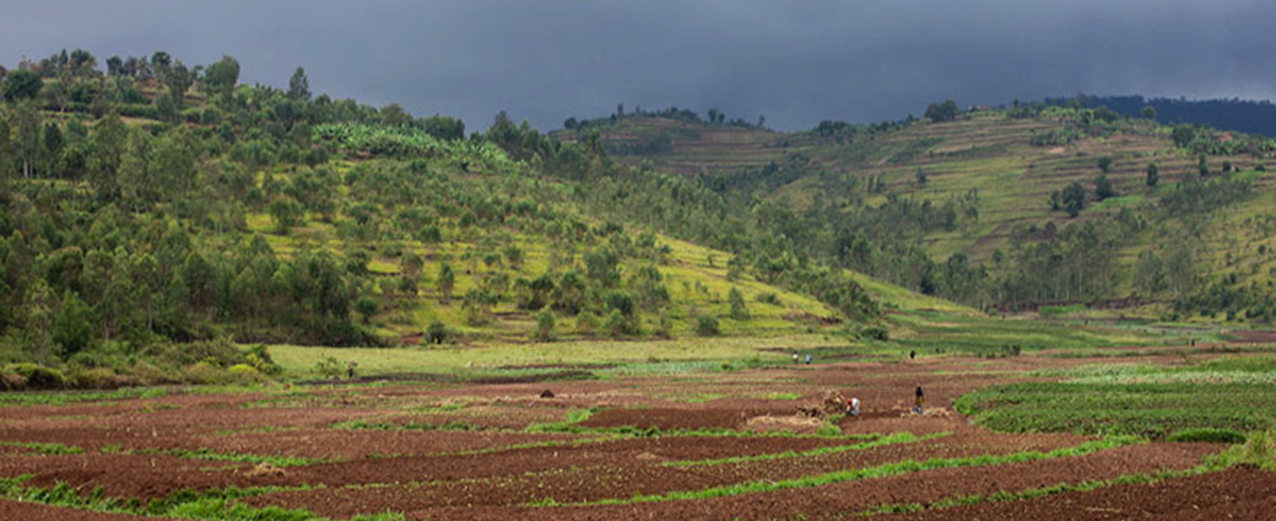
The beans that form the basis of chocolate are sourced from tropical cocoa trees, which are grown commercially in only a few developing countries. West Africa alone is responsible for over two-thirds of global production. In these countries, chocolate supports local livelihoods and incomes. But there is a bitter side to the chocolate industry: from the mid-1980s to 2004, global production of cocoa doubled primarily through expansion into naturally forested areas. This is the case in Ghana, the world’s second largest producer of cocoa, where cocoa farms have been driving deforestation and forest degradation, and a significant contributor to the country’s greenhouse gas emissions.

Cocoa is not the only commodity that contributes to tropical forest loss. Since 2014, over 400 businesses have made pledges associated with the New York Declaration on Forests to reduce the impacts of agricultural commodity supply chains on forests and forest communities, whether cocoa, palm oil, soy, or others. The Tropical Forest Alliance 2020 (TFA 2020)—a global public-private partnership between governments, the private sector and civil society—is working with many agribusinesses to support them in their goals to achieve deforestation-free supply chains.

One of the important challenges in making supply chains deforestation-free, and thus more sustainable, is land rights. Farmers who do not have secure land and tree rights have few incentives to invest in sustainable agriculture. Recognizing this, TFA 2020 is addressing constraints related to land rights, agricultural land use, and landscape-level planning and management in places like Ghana.

The Government of Ghana has pledged to reduce forest loss and cut greenhouse gas emissions by 45 percent in the cocoa forest landscape by 2030. To help make this a reality, Ghana is participating in the Forest Carbon Partnership Facility and proposing an ambitious Cocoa Forest REDD+ (Reducing Emissions from Deforestation and Forest Degradation) Program to reduce deforestation and forest degradation while increasing cocoa yields. Cocoa companies and international non-governmental organizations are partnering with the Government of Ghana and farmers to implement these programs.

New research from USAID shows that one of the key challenges to rehabilitation of aging farms is insecure land and tree rights of farmers. Cocoa production is dominated by smallholder farms, many of which have old cocoa trees with low yields—Ghana’s yields are half that of neighboring Cote d’Ivoire and one third of the yields seen in Southeast Asia. The obvious solution is to replant old farms with new trees to increase yields and farmer income, while reducing the need to clear more forest for new farms. In practice, however, a mix of barriers create a system of disincentives to this simple solution. Insecure customary land rights prevents many farmers from cutting and replanting old farms due to fear of eviction once the farm is cleared. Unclear tenure of shade trees results in removal of these trees, which reduces carbon stocks, biodiversity and the productive life of cocoa trees (though yields are boosted in the short term). The insecurity over land and tree rights is compounded by a lack of access to financing to clear and replant old farms, as well as lack of knowledge on best practices for replanting.

These problems are not insurmountable. For example, customary land rights arrangements can be mapped and documented with local authorities to clarify and strengthen rights, encouraging farmers to replant. Microfinance packages can be better targeted, based on the knowledge of where and how much non-forested land smallholders have access to. Cocoa agroforestry best practices already exist in Ghana but can be integrated into broader extension services. Many possible solutions exist but finding the right mix of policies, incentives, and support services can be challenging. Approaches should be studied in practice and the experiences widely shared.

The U.S. government, a founding member of TFA 2020, is partnering with the U.S. business Hershey’s, and local agricultural supplier ECOM, which supplies Hershey’s with Ghanaian cocoa, to test methods and generate empirical insights into strengthening land and tree rights within the Ghanaian cocoa supply chain to boost yields and improve sustainability. USAID’s partnership with Hershey’s and ECOM is implementing a small pilot in 2017 that will test a public-private approach to strengthen land and tree rights and help farmers replant their cocoa farms along with shade trees. The clearer rights and stronger incentives will help farmers grow and sell more cocoa, increase chocolate production, and, in the long run, reduce deforestation and degradation as well as increase forest carbon stocks. The pilot is also expected to provide supportive learning and practical experience for the Government of Ghana’s Cocoa Forest REDD+ Program that can also be broadly shared in the broader West African cocoa sector.

The lessons and experiences from this public-private partnership are likely to be relevant to other supply chains and perennial tree crops around the world, and USAID will share experiences among partners, including the World Cocoa Foundation and TFA 2020 members, globally over the coming years.

Strength in Numbers

A visionary information-sharing platform promises to reshape the Colombian government’s approach to land restitution.

Originally appeared on Exposure.

The tide is turning. Ten government agencies responsible for Colombia’s land-related issues are meeting regularly, bringing their engineers, their lawyers, and their administrators to do something that Colombia has never done: allow the real-time exchange of information among a group of institutions working on a common issue.

This ambitious endeavor, dubbed the Land Node, is the government’s official response to Colombia’s Victims Law, which requires that certain land-related agencies share information in real time to facilitate the land restitution process for victims of the armed conflict.

“I can’t imagine a future where people have to wait in lines to have their rights recognized, when we have the technology to avoid that,” says Luis Alberto Clavijo, director of technology at the Land Restitution Unit (LRU). “In the commercial and financial worlds, people often don’t even have to leave their houses. Why can’t it be the same for land services? Either we change the way things are being done, or the state isn’t doing its job.

The “end users” Clavijo is referring to are the thousands of victims of dispossession or displacement who need to fill out their applications in paper at a local land restitution office to initiate the process for getting their land back. This is one of the things the Land Node seeks to change.

But the real headaches are the silent and agonizing ones on the “provider” side: the onerous delays involved in the requesting, mailing, authorizing, and exchanging of information between agencies. This is where the Land Node seeks to be a pioneer.


Stand and Deliver

How Nasa leaders in Jambalo’s local govt are improving delivery on rural development initiatives.

Originally appeared in Exposure.

Every day, as Mayor Flor Ilva Trochez walks to her office, she passes the portrait of one of the most important heroes of the Nasa indigenous community in the municipality of Jambaló. Marden Betancur Conda was halfway through his four-year mandate when he was gunned down in 1996 by a leftist guerrilla group. The community’s first indigenous mayor had been pushing forth Jambaló’s Municipal Development Plan, which set out to strengthen indigenous land rights and give the community a larger say in local government.

Jambaló is unlike other Colombian municipalities: its population is nearly 100 percent indigenous, and for the past 25 years, political leadership has been intertwined with Nasa tribal leadership.

“Our most important weapon is community mobilization. After our mayor was assassinated, we never stopped carrying out development plans,” explains Trochez, Colombia’s first indigenous woman to become mayor.

Today, Trochez—who stepped into her role in January 2016—is building on nearly 30 years of Nasa collective memory to bring better infrastructure, agricultural projects, and culture and identity to the more than 17,000 people living in Jambaló. As she sees it, thanks to the ongoing peace process, Jambaló finally has the opportunity to improve the lives of its residents without fear of reprisal from the guerrilla and paramilitary groups that once patrolled the region’s hinterlands.

“After our mayor was assassinated, there was a 15-year period in which Jambaló was stagnant. We received no visitors. We were disconnected,” explains Trochez. “The conflict got deeper and deeper into our society. Children were recruited, and people were disappearing.

Today, the community’s overall objectives remain unchanged: unite Nasa tribal lands and ensure the people living on them are at the forefront of shaping the community’s future. To do this, community mobilization is critical. And nothing better reflects the community’s priorities than the Municipal Development Plan. Every four years, the mayor and her staff work with the community to revise the plan, which always reflects a broader 20-year indigenous “Life Plan” that spells out the community’s values and overall development vision.

The problem is that without technical expertise in development planning, the municipal government has seen its work double in size every four years as unfinished tasks accumulate from previous administrations.

In 2016, the USAID-funded Land and Rural Development Program began partnering with Trochez and her administration to restructure the Municipal Development Plan and carve out realistic goals based on the administration’s capacity.

“Today, we have set annual goals for each of the next four years. By creating a realistic development plan, we also win credibility with our community and no longer suffer the anxiety of not being able to complete our plans,” according to Trochez.


Land Rights Mark a New Frontier for Tanzania’s Rural Women

Originally appeared on USAID’s website.

In many ways, Kinywang’anga is a typical Tanzanian village. Located in the central region of the country, it is home to quiet countryside and to hospitable locals, most of whom earn their living from the land. This small community, however, has big changes on the horizon.

Whereas most rural Tanzanians lack documented rights to their land, residents of Kinywang’anga are, for the first time, claiming such rights to their land—and local women like Anita Mfilinge are benefitting as a result.

Like most women in her village, Mfilinge was once unaware of her rights as a landholder. Her ability to hold land, she suspected, was merely a privilege. And surely, she told herself, this privilege must depend on the will of her husband and male relatives.

Mfilinge learned the extent of her rights when the Feed the Future Tanzania Land Tenure Assistance activity visited her community in September 2016. With the goal of registering claims on over 800 plots, the project got to work teaching men and women alike how to claim their land formally. Inspired, Mfilinge and her husband discussed their options, ultimately choosing joint tenancy. This gives her an equal stake in the couple’s properties. It also would secure her claim to them if her husband were to pass away.

Feed the Future is the U.S. Government’s global hunger and food security initiative. The project, which is implemented by USAID, is designed to reduce risks related to land tenure and pave the way for future agricultural investment in Tanzania’s rural heartland.

“This opportunity is a blessing for me. I now understand my right to access, own, use and transfer land,” Mfilinge said. “This gives me a reason to focus more on agricultural activities because I am a certified owner.”

These advances increase gender equality and economic growth alike. For women like Mfilinge, ownership spells greater security and independence; for communities, reduced conflict and better use of resources; and on a national scale, greater investment and agricultural productivity.

As the first community to participate in USAID’s land registration efforts in Tanzania, Kinywang’anga residents are also among the first to reap the rewards of this process. To date, over 350 villagers have registered land claims; more than half are women. What’s more, 68 percent of these women chose single occupancy, making them independent landholders.

“I now understand women’s land rights are fundamental human rights,” said Mfilinge. “Everyone has the right to own land alone or in association with others.”

The Feed the Future Tanzania Land Tenure Assistance activity, which runs from 2015 to 2019, aims to benefit over 14,000 villagers in 41 villages, registering an estimated 50,000 plots.

Land Matters Media Scan – 28 February 2017

Here are the recent land tenure and resource management media items:

USAID

  1. Group urges improved land policies – mentions USAID’s SURGE project (2/17/17)
    Source: The Manila Standard
  2. Call for nominations: Equator Prize 2017 launches global search for nature-based solutions for local development (2/9/17)
    Source: UNDP

Upcoming and Recent Events

  1. Recognition of Customary Tenure in the Mekong Region: a Dialogue (2/27/17)
    Source: Land Portal
  2. Urban Land Conflicts in Latin America and the Caribbean (2/24/17)
    Source: Land Portal
  3. Enhancing Open Access to Knowledge, Information & Data in the Mekong: Open Data Festival and Regional Capacity-building Workshop (2/28/17)
    Source: Land Portal

Reports and Publications

  1. Groups urge ECOWAS to wade into communities’ land rights (2/20/17)
    Source: The Guardian
  2. Related: Securing communal lands and forests (2/23/17)
    Source: FIAN
  3. No end in sight for land rows pitting owners and squatters (2/19/17)
    Source: Daily Nation
    Related World Bank report: Opening Doors to the World (2/9/17)

Global

  1. Pope says indigenous people must have final say about their land (2/20/17)
    Source: The Guardian
  2. IASS, FAO and UNDP Highlight Resources to Protect Global Commons (2/21/17)
    Source: IISD
  3. Land Update: Global, National Partnerships and Projects Focus on SLM and Governance (2/14/17)
    Source: IISD

Africa

  1. The Dynamics Of Land Deals in Africa (2/3/17)
    Source: PLAAS
  2. The future of medium-scale commercial farms in Africa: lessons from Zimbabwe (2/20/17)
    Source: The Zimbabwean
  3. Uganda: Bring Back Land Cases to Clan Leaders, Emorimor Tells Soroti Chief Magistrate (2/15/17)
    Source: All Africa
  4. Sierra Leone News: Obliterating Legal Rights in Large Scale Land Deals in Sierra Leone (2/13/17)
    Source: Awoko
  5. South Africa: Land restitution without compensation would spell disaster for SA (2/17/17)
    Source: Biz Community
  6. Kenya: Land question: The elephant in the room (2/14/17)
    Source: Daily Nation
  7. Zimbabwe: Illegal settlers threaten Zimbabwe’s timber industry (2/21/17)
    Source: Place
  8. Nigeria: Controversy trails Cross River’s plan to overrule EIA on UN conservation site (2/27/17)
    Source: The Guardian

Americas

  1. Jamaica: Gov’t funds LAMP land titling project through 2017/18 (2/20/17)
    Source: Jamaica Observer
  2. Brazil pushes on with plan to open farmland sales to foreigners (2/16/17)
    Source: Reuters
  3. This Land is Your Land: Patagonia and the Property Rights Fight (2/15/17)
    Source: The Huffington Post
  4. Colombia death toll rises as gangs fill vacuum left by Farc rebels (2/18/17)
    Source: The Guardian

Europe and Asia

  1. Caucasus “land grab” feared in remote UNESCO heritage site (2/20/17) Source: Reuters
  2. Israel’s Lieberman insists land swaps key to two-state solution (2/20/17)
    Source:Your Middle East
  3. China’s Massive Farming Potential Could Be Unlocked by Mortgages (2/30/17)
    Source: Bloomberg News
  4. Cambodia: Land feuds get top-level airing (2/23/17)
    Source: Khmer Times
  5. China: A Million People Live in These Underground Nuclear Bunkers (2/16/17)
    Source: National Geographic

Pacific

  1. Australia: Indigenous land rights could halt Australia’s largest coal mining project (2/16/17)
    Source: The Ecologist
  2. Indonesia: Wilmar grabbed indigenous lands in Sumatra, RSPO finds (2/16/17)
    Source:Mongabay

Land Matters Media Scan – 15 February 2017

Here are the recent land tenure and resource management media items:

USAID

  1. Land security to boost PH economy – US envoy – quotes Heath Cosgrove (2/8/17)
    Source: The Manila Times
  2. Related: Overhaul land policy to stop ‘urban nightmare’ (2/9/17)
    Source: The Manila Times
  3. Kosovo launches drive to encourage women to claim property rights – mentions USAID’s country profile and work in Kosovo (1/20/17)
    Source: Thomson Reuters Foundation
  4. U.S. launches new program to support land reform in Tajikistan – mentions the new Feed the Future Tajikistan Land Market Development Activity Project (2/9/17)
    Source (requires subscription): The Times of Central Asia
  5. Philippines: Coalition seeks overhaul of land governance policies – mentions USAID’s SURGE project (2/14/17)
    Source: Philippine Daily Inquirer

Reports and Publications

  1. Related: Forced evictions fuel African land disputes, hit investments – activists (2/9/17)
    Source: Thomson Reuters Foundation
  2. Related: Investors learning to pay heed to community land rights (2/13/17)
    Source: Mongabay

Global

  1. Four tourist hotspots hit by land rights disputes (2/8/17)
    Source: Thomson Reuters Foundation
  2. Land Rights and Global Development (2/7/17)
    Source (registration required): Foreign Affairs

Africa

  1. Land Policy Initiative: Generating African-led policies and strategies on land issues (2/8/17)
    Source: IFAD
  2. Kenya: Maasai and Kipsigis elders to meet, iron out land dispute (2/10/17)
    Source: The Star
  3. DRC: Does ‘conflict free mineral’ compliance really help the DR Congo? (2/12/17)
    Source: Africa Times
  4. Nigerian land conflict sharpened by religious divisions (2/13/17)
    Source: Deutsche Welle
  5. Ethiopia dam causes Kenya water shortage: rights group (2/14/17)
    Source: AFP

Asia

  1. Cambodia: Land Dispute a Litmus Test for Ruling Party Ahead of Vote (2/8/17)
    Source: Voice of America
  2. Cambodia: Three Years On, Government, EU Still at Odds Over Sugar Evictions (2/10/17)
    Source: The Cambodia Daily
  3. India: Powered by Aadhaar, Chandigarh set to be India’s first city to have conclusive land titling system (2/10/17)
    Source: The Financial Express

Pacific

  1. Philippines: ‘Land registration woes setting back Philippine economy’ (2/7/17)
    Source: ABC-CBN News

Having Titled Property Allows Us to Make Investments

Q&A with the Mayor of Fuentedeoro, a rural municipality located in Meta, Colombia.

Originally appeared in Exposure.

DURING THE AGRARIAN REFORM OF THE 1990S, THE NOW-DEFUNCT INCORA AWARDED COLLECTIVE LAND TITLES TO GROUPS OF CITIZENS IN THE MUNICIPALITY OF FUENTEDEORO, LOCATED IN META IN CENTRAL COLOMBIA. TODAY, MANY OF THESE LAND OWNERS FEEL POWERLESS AND ARE UNWILLING TO MAKE PROPER INVESTMENTS IN THEIR LAND. IN THIS INTERVIEW, ANTONIO LONDOÑO, THE MAYOR OF FUENTEDEORO, DISCUSSES THE MUNICIPALITY’S NEW LAND OFFICE AND ITS JOINT WORK WITH USAID, WHICH SEEKS TO “INDIVIDUALIZE” THESE COLLECTIVELY HELD LANDS, STRENGTHEN CITIZENS’ LAND RIGHTS, AND FOSTER GREATER OPPORTUNITIES FOR RURAL COMMUNITIES.

Q: Were Fuentedeoro residents displaced during the conflict?

A: Yes. Fuentedeoro has more than 1,800 displaced people. The municipality was the object of various guerrilla incursions. In 1997, guerrillas planted a bomb that destroyed four blocks in the urban area. They destroyed the police station in Puerto Limón and assassinated more than five police officers. The guerrilla wreaked a lot of damage, and we were forced to go elsewhere. I was kidnapped twice by guerrillas.

Q: Many years ago, the now-defunct INCORA awarded collectively owned territories to residents in Fuentedeoro. Why wasn’t that effort successful?

A: INCORA practically forced these people to become members of community businesses, but it didn’t provide support for productive projects. It didn’t offer orientation or training. It left people to their fate, and each person ended up going their own way.

Q: What other problems does this model present?

A: Let’s say you have a parcel with 15 users. If one of these users doesn’t pay taxes, everyone is affected when it comes to requesting a loan. The bank will ask for a certificate of good standing, and no one will be able to get it. And, for example, if one of the users doesn’t pay back a loan, the entire parcel is embargoed, and everyone has to pay for that person. That is serious. These are examples of things that have happened to us many times.

Q: How is the municipality planning to resolve this situation?

A: USAID is helping us formalize these parcels at an individual level. We have seven parcels covering about 1,100 hectares, where about 150 families live and which are important for agriculture. With USAID, we’re helping the community formalize their lands and become true owners of this land. This helps them with many things: to be able to take out a loan, to mortgage, to make development and economic plans. Without a land title, they don’t have anything, just the possession of their lands, which makes it hard for them to improve if they lack the resources.


Land Matters Media Scan – 7 February 2017

Here are the recent land tenure and resource management media items:

USAID & U.S. Government

  1. Where the land meets the sea: Governing mangrove forests – discusses USAID’s mangrove tenure report (2/2/17)
    Source: CIFOR
    Related report: Where Land Meets The Sea: A Global Review of the Governance and Tenure Dimensions of Coastal Mangrove Forests (12/15/16)
  2. The human element of mangrove management – republication of Stephen Brooks’ Medium piece (1/30/17)
    Source: CIFOR
  3. Philippines: USAID to stage sustainable land use conference – mentions USAID’s SURGE project (2/7/17)
    Source: Business World Online
  4. An Open Platform for Documenting Property Rights – mentions USAID’s MAST project (1/26/17)
    Source: GIM International
  5. Liberia: LLA Hosts Meeting On Land Rights Bill Today – mentions USAID’s LGSA project (1/26/17)
    Source: AllAfrica / Daily Observer
  6. Extension As Resource In Land Tenure And Transition Matters (2/7/17)
    Source: USDA Radio Podcast

Reports and Publications

  1. Honduras land rights activists hit by “epidemic” of violence, watchdog says (1/31/17)
    Source: Thomson Reuters Foundation
    Global Witness report: Honduras: The deadliest place to defend the planet (1/31/17)
  2. Whose Crops, At What Price? Agricultural investment in Myanmar (2/4/17)
    Source: Oxfam

Global

  1. LEGEND Land Policy Bulletin #6 (2/6/17)
    Source: DFID
  2. Related: 2016 DFID Land Portfolio Overview (February 2017)
    Source: DFID / Land Portal
  3. Young change makers using tech to solve land corruption (2/6/17)
    Source: Transparency International

Africa

  1. Cote d’Ivoire: 3,000 land certificates issued through EU cooperation (1/31/17)
    Source: Ecofin Agency
  2. Senegal : Paralegals trained at Kaolack ready to teach women and youth about land tenure (1/23/17)
    Source: Ecofin Agency
  3. Mali: New law a glimmer of hope for women’s land rights in Mali (1/30/17)
    Source: Thomson Reuters Foundation
  4. Tanzania: Interview: “Pastoralist women have the capacity to lead” (12/19/16)
    Source: Ileia

Americas

  1. Guatemala: Give women land to build lasting peace in Guatemala – Nobel laureate (2/3/17)
    Source: Thomson Reuters Foundation
  2. Brazil alters indigenous land demarcation process, sparking conflict (2/2/17)
    Source: Mongabay
  3. Brazil slum dwellers shun home ownership, fearing gentrification (2/2/17)
    Source: Thomson Reuters Foundation
  4. Half of Brazil’s population lack full property rights, govt says (1/27/17)
    Source: Thomson Reuters Foundation
  5. Nicaraguan women ‘like farm animals’ despite promised land reform (1/27/17)
    Source: Thomson Reuters Foundation
  6. US: Facebook’s Mark Zuckerberg drops case to acquire Hawaiian land (1/28/17)
    Source: BBC

Asia

  1. Cambodia: Boeung Kak: A Disastrous Decade (2/3/17)
    Source: Phnom Penh Post
  2. Cambodia: Communities protest sugar disputes (2/1/17)
    Source: Phnom Penh Post
  3. Burma: Consultation on investment rules highlights land issues (1/30/17)
    Source: Myanmar Times

Pacific

  1. Indonesia’s land transfer a breakthrough for indigenous rights: activist (1/11/17)
    Source: Thomson Reuters Foundation

When Paper is Not Enough

Strengthening Land Tenure Security in Rural Colombia.

Originally appeared on Exposure.

ON A MISSION TO FORMALIZE PRIVATE PROPERTY AND STRENGTHEN LAND TENURE SECURITY IN CONFLICT-AFFECTED AREAS IN COLOMBIA, THE NATIONAL LAND AGENCY AND USAID PARTNER TO DELIVER INTEGRATED RURAL DEVELOPMENT AND LAND GOVERNANCE SOLUTIONS.

When Derly Jomar and her husband bought 1.5 hectares from her father-in-law in the village of Calarma, they made the uncommon decision to travel to a notary two hours down the mountain in Chaparral–located in Southern Tolima–to make the purchase official. Most people in this isolated corner of Central Colombia tend to make business deals with a firm handshake, a person’s word, and perhaps a scribbled contract on a spare piece of paper. Five out of every ten land parcels in Calarma are informally owned.

This decision to notarize their purchase agreement, although laudable, still represented just part of the formalization process. Completing the process requires additional steps before government land-entities. However, as Derly explains, “We couldn’t afford to completely formalize our property with the nation because it’s very expensive. But we needed proof of purchase in case my father-in-law dies. We don’t know if all of his children are going to respect our purchase.

Once the papers were notarized, Derly and her husband embarked on their plan. They used the notarized papers to take out small loans from the bank, building equity and credit. In 2015, she took out a loan for US$2,400 (6 million pesos) to buy an oven and set up the first official bakery in her village.

Jomar’s story is now an example for her neighbors, small-scale coffee farmers, of what can be achieved when property moves along the spectrum from informal to formal ownership.

TO FORMALIZE OR NOT TO FORMALIZE?

The Colombian Institute for Rural Development, USAID and the newly-created National Land Agency have been working to secure land rights in this coffee-producing district since 2014. USAID, through its rural development programs, first went to Calarma to introduce the idea of formalization to campesinos who never had considered it a priority or had the opportunity to learn about it.

“It was difficult because very few people knew anything about formalization, and there was little interest,” says Juan Carlos Padilla, a land formalization expert from the National Land Agency. “But that is the advantage of doing it this way—the contact with the users. It’s more than land governance, it is social work.

The government has had little presence in this mountainous area of the country ever since the Revolutionary Armed Forces of Colombia, or FARC, emerged in Southern Tolima in the mid-sixties. Some say these leftist rebels brought order to what was an otherwise chaotic time in Colombia’s rural areas, where families and neighbors were pitted against each other by virtue of political preference. But FARC control also meant that government services and investments were kept out of the region for decades.