By Krystyna Solarana, Communications Specialist, USAID’s Tajikistan Country Office
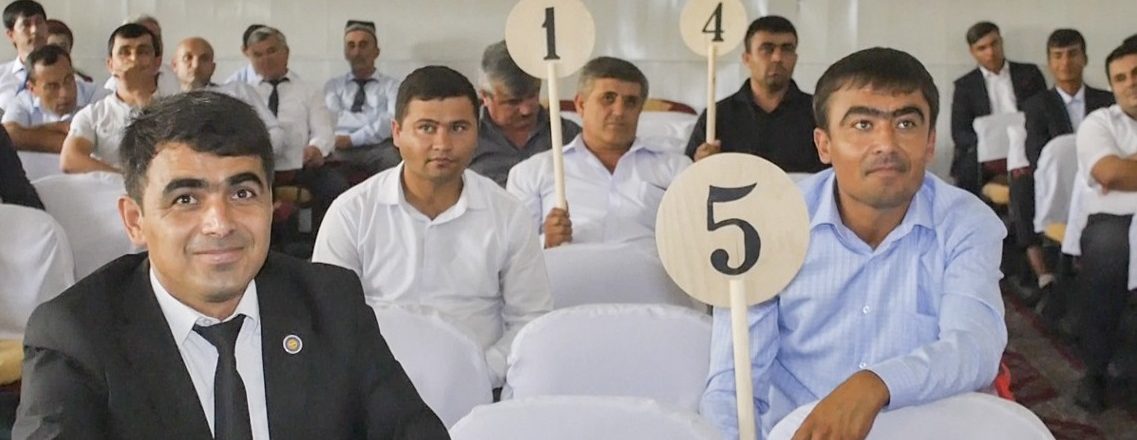
In a brightly-lit room in southwest Tajikistan in late September, 30 men and women gathered to bid on land use rights in the country’s first-ever public land auction.
Transferring land use rights from the state to private individuals, in a transparent and fair process, marks a major milestone on Tajikistan’s journey to self-reliance.
When Tajikistan declared independence in 1991, all of its agricultural lands were part of large-scale Soviet-era collective farms. Since then, the Government of Tajikistan’s land reform efforts have made tangible progress, but up to 35 percent of the country’s agricultural lands remain under state control.
Land use rights auction advertisements attract hopeful bidders. / Rustam Sharipov for USAID
Land reform is essential for the development of the agricultural sector, and critical to this is securing land rights for farmers to empower them to feel ownership over the land they cultivate.
Although there is still no legal mechanism for buying land in Tajikistan, public and transparent land auctions give any interested Tajik citizen the ability to purchase a three-year lease on a land plot and the autonomy to decide what they will do with the land and what crops to grow.
With the confidence that the land they work on belongs to them for a certain time period, farmers are more willing to make long-term investments that ultimately increase land productivity and profitability.
USAID is an ardent supporter of land reform, helping to strengthen land-related laws and policies so farmers can become more productive. In Tajikistan, the Feed the Future Land Market Development Activity works to strengthen land use rights for farmers and establish a land market where farmers can buy leases on agricultural land in a transparent and fair process.
Increased agricultural productivity will, in turn, lay the groundwork for improved food security and economic development.
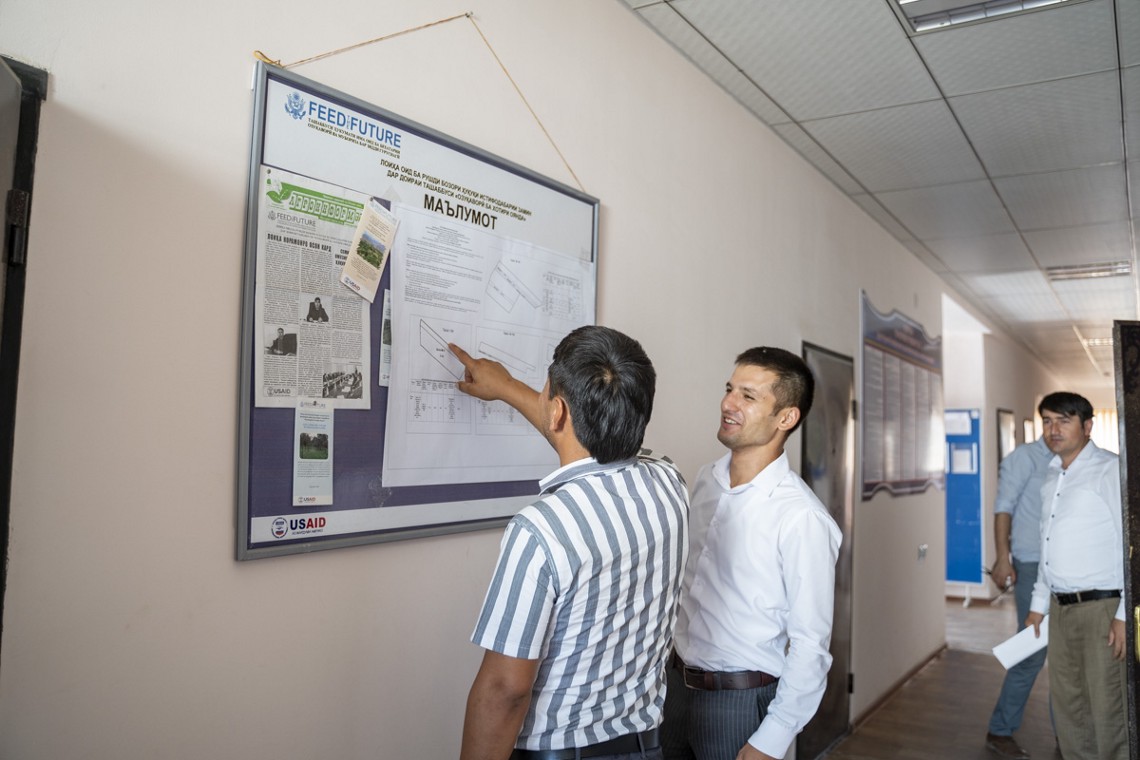
One month before the auction, information advertising the auction was published and posted on public sites to raise awareness. Notices included details of the lots up for auction (size, location, starting price) and auction procedures.
Five land plots totaling almost 16 hectares were up for auction, with seven active bidders. Government representatives of Yovon district, the U.S. Ambassador to Tajikistan, and USAID staff also attended the auction.
All participants in attendance had open and equal access to bid in the auction and the opportunity to lease agricultural land plots from the Land Reserve Fund, the government entity that holds state-owned land.
Winning bidders signed lease agreements with the local government and secured land use rights for the next three years.
USAID helps Tajikistan reach a key milestone on its journey to self-reliance. The first land auction on the leasing of agricultural lands emphasizes the importance of the new procedures for transparent and easy access to lands. Over the past 28 years, the Government of Tajikistan’s land reform efforts have made tangible progress; however, up to 35% of the country’s agricultural lands remain under state control. To address this, the Feed the Future Tajikistan Land Market Development Activity has supported the Government of Tajikistan’s efforts to establish a market system that allows for the transferability of land rights (buying, selling, and leasing rights). These auctions will also raise additional revenue for local governments for infrastructure restoration and maintenance.
Mounting evidence suggests that sub-Saharan Africa has undergone profound rural transformation since the early 2000s, though progress has been highly uneven across countries. Conventional views of African agriculture are in many respects becoming obsolete. Our review highlights the evidence of farm-level transformation in the region, identifies the key sources of dynamism in the sector, and proposes an updated typology of farms that reflects the evolving nature of African agriculture. We underscore the rising importance of an entrepreneurial class of African commercialized medium-scale farmers, and examine the causes and consequences of this phenomenon.
The size distributions of farms in many African countries are rapidly changing. In most of the countries for which national rural household surveys exist, and particularly those with substantial potential for cropland expansion, it is no longer true that the vast majority of farmland in Africa is under small-scale cultivation. The national shares of area under cultivation, the value of production, and marketed crop output on farms under five hectares has been declining over time, with corresponding increases in shares among medium- and large-scale farms. Medium-scale farms (defined here as farm holdings between 5 and 100 hectares) account for a rising share of total farmland, especially in the 5- to 25-hectare range where the number of these farms is growing especially rapidly. Medium-scale farms control roughly 20 percent of total farmland in Kenya, 32 percent in Ghana, 39 percent in Tanzania, and more than 50 percent in Zambia. Medium-scale farmers are a diverse group, reflecting several distinct pathways into medium-scale farming, including (1) the successful expansion of small-scale farms into medium-scale farms, generally in the 5- to 25-hectare range, through new land acquisition made possible because of increasingly active land markets; (2) the diversification into farming by rural nonfarm businesspeople and wage earners; and (3) land acquisitions by urban-based professionals, retirees, and rural elites. The relative importance of these pathways varies by country according to differences in potentially available cropland, the economic potential of that land, the ease of acquiring land through customary and statutory tenure systems, and the degree of farm scale bias of agricultural policies. The rapid development of land rental, purchase, and long-term lease markets has encouraged the growth of each of these pathways.
This trend is not happening everywhere. In densely populated countries such as Kenya, Malawi, Uganda, and Rwanda, land scarcity and high land values are impeding the pace of medium-scale farm acquisitions, and the share of land under medium-scale farms is growing slowly if at all. However, as we establish in Section 2, the population-based Living Standards Measurement Survey (LSMS)-type data utilized in this study may underrepresent medium- and large-scale farm holdings, based on comparisons of larger farm censuses and LSMS data from the same year. Therefore, the share of cultivated land, farm production, and marketed output accounted for by medium-scale farms as reported in this review most likely are underestimated.
Causes and consequences of the rise of medium-scale farms
Farm size distributions in Africa have been changing for four reasons: the rise of land markets, the recent era of relatively high global food prices, agricultural policy reforms, and the growing influence of relatively wealthy and politically influential “emergent farmer” interests. The rise of medium-scale farms is affecting the region in diverse ways that are difficult to generalize. Many such farms are sources of dynamism, technical change, and commercialization of African agriculture. They attract private investment in crop buying and input suppliers, and in doing so they improve market access conditions for all surrounding farms regardless of scale. They also may make it more feasible for governments to raise taxes from the farm sector. However, medium-scale land acquisitions may exacerbate land scarcity in favorable rural areas, raise land prices, and crowd out young peoples’ access to land for farming.
Medium-scale farmers tend to dominate farm lobby groups and influence agricultural policies and public expenditures to agriculture in their favor. Nationally representative Demographic and Health Survey (DHS) data from six countries (Ghana, Kenya, Malawi, Rwanda, Tanzania, and Zambia) show that urban households own 5 to 35 percent of total agricultural land, and that this share is rising in all countries where DHS surveys were repeated. This change suggests a new and hitherto unrecognized channel by which medium-scale farmers may be altering the strength and location of agricultural growth and employment multipliers between rural and urban areas.
African states seem to be generally supportive of such changes. They are keen to increase food production and marketed farm output to feed their rapidly swelling cities and reduce dependence on food imports. Putting land into the hands of capitalized, educated, and entrepreneurial African farmers may be viewed as supporting this objective. Medium-scale farms are attracting major new private investment by input suppliers that improve market access conditions for nearby smallholders. Farming areas with a high concentration of medium-scale farms attract greater investment by large-scale grain buyers. In Tanzania, small-scale farms are much more likely to rent mechanization services in areas with a high concentration of medium-scale farms. Other evidence from Tanzania indicates that smallholder household incomes are positively and significantly associated with the share of land in the district controlled by 5- to 10-hectare farms, after controlling for market access, rainfall, and other local conditions.
However, there are warning signs as well. The acquisition of land by outside investors certainly reduces the stock of land under customary tenure that will be accessible to current and future generations of local people. As traditional authorities sell land to outside investors based on willingness-to-pay criteria, their actions are raising the price of land, making it more difficult for young people to acquire land, and raising the likelihood that young people will exit farming and migrate out of the area. The rise of land markets is creating a new class of landless workers in Africa; having sold their land informally to others, they become dependent on the local nonfarm economy for their livelihoods.
Implications for agricultural and land tenure policies
A major policy question for African governments and international development partners concerns the future role of smallholder farms in Africa. While opinions are divided, our interpretation of available evidence is that governments may most effectively achieve their national development goals by explicitly promoting the productivity of smallholder farms to achieve agricultural and economic transformation with poverty reduction. Inclusive forms of rural income growth are likely to accelerate the pace and equity of structural transformation processes. Where competition for land is not intense, new investment in medium-scale farms can be a powerful source of economic dynamism, attracting private sector investments in input and output markets that improve market access conditions and the commercialization potential of small-scale farms. In such areas, questions of “either/or” might be misplaced.
However, in densely populated areas where small-scale farms predominate and where only limited additional land remains available for area expansion, the priority is clear: focus on promoting the productive potential of small farms, realizing that success in this endeavor will lead to progressive movements of individuals and households out of farming and into off-farm jobs as part of the structural transformation process. In short, a successful smallholder-led agricultural strategy will result in a declining share of the labor force in farming over time.
Inclusive forms of rural transformation will require greater attention to supporting smallholder farms even as larger farms gain greater traction in the region. Given the diverse nature of extant customary land tenure systems in Africa and of the threats to tenure security facing different landholders and regions, policies to strengthen tenure security and regulate land transactions in Africa will need to be carefully tailored to the local tenure context and needs of different landholders to affect perceived tenure security and agricultural outcomes. Where land rights derive primarily from community membership, customary tenure systems effectively regulate within-community transactions, and external actors pose the primary threat to land rights, land registration at the community level accompanied by formal recognition of customary tenure institutions may be sufficient to reduce insecurity. In other areas where land rights are already individualized and internal actors pose the greatest tenure security threat, and especially where informal transactions involving outsiders are common, a more costly and time-consuming investment in registering individual land rights and transactions may be needed to secure existing rights and avoid conflicts that customary institutions will not be able to manage.
Implications for national statistical agencies
We do not yet know how generalizable these trends are across the region. However, existing population-based data collection platforms may systematically underreport a dynamic segment of African agriculture: the medium-scale farms. This omission, however understandable, has profound implications. Under the status quo, African governments cannot accurately monitor, much less understand, how farm structure is changing over time. Similarly, policymakers cannot adequately address such routine questions as the magnitude and location of marketed agricultural surplus. These questions are important for guiding strategic policy decisions aimed at stimulating agricultural growth, reducing rural poverty, and managing strategic food reserves and trade policies.
Redressing this informational blind spot will require new modes of data collection. We advocate for the expansion of agricultural sample census surveys to better capture the magnitude, location, and other characteristics of this growth of medium and large farms that currently structured LSMS-type surveys cannot adequately capture. We also advocate for the systematic collection of data on nonlocal land control—that is, ownership or other usufruct rights over rural agricultural land held by urban or other nonlocally residing households. This data collection demand will require new approaches to sampling, listing, and enumeration, as well as questionnaire designs that explicitly capture nonlocal holdings.
This blog was originally published onClimateLinks.
In Ghana, a changing climate is affecting the production of cocoa, one of the country’s major cash crops and its second leading foreign exchange earner. USAID and Winrock International worked together to produce ECO Game: Northern Ghana to provide communities with a better sense of land use planning and ecosystem services. The purpose of the game is to show players that more sustainable land uses lead to better long-term outcomes. A follow-up, called ECO Game: Ghana Deforestation-Free Cocoa, is currently under development and scheduled for release in late 2019.
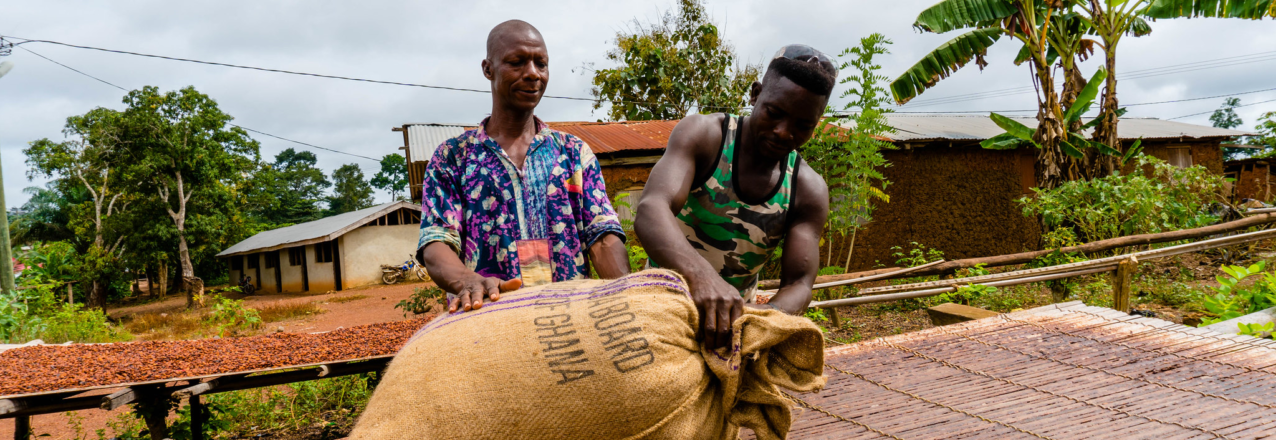
Once an indulgence reserved for Mayan rituals or European high society, chocolate has become a treat that millions of people around the world delight in every day. The basis of this enormous industry is the small Theobroma cacao tree, which produces pods along its trunk whose seeds are processed into chocolate. These trees dominate Ghana’s once heavily forested Western Region. The country supplies 20% of the world’s cocoa. The commodity forms the backbone of its economy, and is the primary livelihood of over 800,000 Ghanaians.
Yet cocoa yields in Ghana are declining, with already aging farms suffering from exposure to higher temperatures and drier conditions associated with climate change, as well as pests and diseases. Sustaining the cocoa industry in Ghana, and all those who rely on it, requires a landscape-scale approach to rehabilitate farms, protect natural forests to mitigate climate change and bolster resilience, and empower communities to invest in long-term solutions.
Addressing Threats to Ghanaian Cocoa
USAID’s Supporting Deforestation-Free Cocoa in GhanaActivity is working to accomplish these objectives by combining the financial resources, political will, and public participation to reduce deforestation and promote reforestation by improving tenure security, rehabilitating old and diseased cocoa farms, and promoting participatory community land use planning.
While improving tenure security and the benefits of rehabilitating cocoa farms offer clear, direct benefits to participating communities, the role of natural forests in enhancing long-term mitigation of and resilience against climate change is a harder message to effectively convey. And given the tantalizing draw of gold mining, despite devastating environmental impacts, the imperative to bring to light the value of natural systems is even more critical.
USAID’s Agriculture and Natural Resource Management (AgNRM)project faced this dilemma in northern Ghana, where Winrock International worked to improve sustainable community land use planning. The project completed a technical study on economic benefits and ecosystem services associated with common land uses in the region, yet deep down, we knew that few would read it – not least farmers in rural communities for whom the information was intended.
From informal social norms that inhibit inheritance rights to inconsistencies in law regarding marriages, women in Kosovo face numerous barriers that limit their property rights. The United States Agency for International Development (USAID), through its Property Rights Program in Kosovo, made great strides over the past 5 years increasing women’s property ownership and land rights. In addition to working with the Government of Kosovo to develop a National Strategy and adopt legislation to improve property rights, USAID’s Property Rights Program launched a national behavior change campaign, which resulted in a positive behavior shift with the percentage of women who initiate inheritance proceedings rising from 0.3 percent in 2015 to 14 percent in 2018.
Traditionally low levels of property ownership by women in Kosovo
In Kosovo, the cultural traditions of informality and patriarchy have created multiple challenges to property rights administration and women’s access to property. In 2014, the Kosovo Cadastral Authority reported only 15 percent of women owned immovable property. Low levels of property ownership indicated that women are limited in their ability to be full economic actors. USAID conducted a baseline survey in 2015 and discovered that the percentage of women who initiate inheritance proceedings was shockingly low at 0.3 percent. Additionally, the percentage of women reporting that they inherited property was only 3.8 percent. While tradition and accepted social attitudes partly explain these statistics, a lack of information and sensitization about women’s property rights also contributed to these numbers.
Snapshot: After learning about her rights through USAID-supported trainings, Valbona Ajeti and her husband registered their property in both of their names instead of just his. This ensured that Ajeti would not be rejected for a loan from the local bank to develop her food production business.
“My business was not always this big, I had some machines and a small number of people engaged. Now, having a parcel carried in my name from my husband’s inheritance will be a boost to my success as a businesswoman,” declares Ajeti. She now has no limitations on getting loans and expanding her business in terms of space, larger equipment and an additional workshop for her staff.
Overcoming cultural barriers to increase women’s land and property rights
To address traditional concepts of property and inheritance, USAID, in close collaboration with the Government of Kosovo, civil society, schools, and media, developed and carried out a far-reaching social and behavioral-change communications campaign to shift societal attitudes toward acceptance of women to inherit and own property. The campaign, paired with building safeguards for women into legislation, produced results. The percentage of women who initiate inheritance proceedings rose 46-fold, from 0.3 percent to 14 percent, and the percentage of women reporting that they have inherited property tripled, from 3.8 percent to 13.7 percent.
Even though these numbers remain low, the interventions demonstrated that societal norms, culture, and traditions do not present an insurmountable obstacle to women’s property rights. These numbers also suggest that going forward women will likely continue to benefit through increasing levels of inheritance and property ownership.
Property ownership represents a basic right and a foundational basis for economic growth. But in Kosovo, the right to property ownership is not always guaranteed, especially for women. For the past five years, the United States Agency for International Development (USAID) has supported robust legal reforms and behavior change to significantly advance land and property rights in Kosovo through USAID’s Property Rights Program (PRP), which concluded in June.
USAID’s Property Rights Program was far-reaching in scope and impact. Through this program USAID supported the development of the first-ever National Strategy on Property Rights in Kosovo. The program reduced the time for disposition of civil cases, including property cases, by 29 percent. The time to schedule the first court appearance decreased by 72 percent. The program also launched a national behavior change campaign, which together with the amended legislation, in three years, resulted in a positive behavior shift: the percentage of women who initiate inheritance proceedings rose from 0.3 percent in 2015 to 14 percent in 2018. Citizens’ access to municipal property services also improved with electronic issuance of property rights certificates and property tax documents.
USAID and the Government of Kosovo clarify the rules of the game
Layers of contradictory law from past regimes (Yugoslavia, Serbia, and then the UN Mission in Kosovo), inconsistent judicial decisions, long delays in case processing, discrimination against women and minorities, and informal and complicated procedures resulted in a chaotic property rights situation. Informal transactions, failure to transfer titles from the deceased — sometimes for generations — intentional disregard of female heirs, and lack of proper notifications have interfered with the proper functioning of Kosovo’s property rights system. It is estimated that 40 -50 percent of land parcels are owned informally. Without clear titles, property cannot be transacted, used as collateral, invested into, or inherited.
USAID started to address some of these issues in 2014 by bringing together the Government of Kosovo, civil society, and the private sector in a working group to develop the first-ever National Strategy on Property Rights. The strategy provided a framework for interventions and outlined the responsibilities for every actor in the government and society. USAID and other working group members collaborated closely with the Government and the Assembly of Kosovo to amend and develop the necessary legislation. As a result, Kosovo adopted seven laws recommended in the Strategy and drafted nine additional laws.
USAID also helped the Government develop modern notification procedures for property rights proceedings. The Official Gazette, an existing e-government platform, was upgraded to provide online notifications to parties. The Government, with USAID support, also instituted legal safeguards for women in inheritance proceedings, where judges and notaries have the role of ensuring all heirs are present and are not acting in duress.
Improving Case Management, Speeding Up Non-Contested Case Resolution
Property cases in Kosovo courts suffered from long delays due to poor case management and inconsistent and unpredictable decisions in property rights cases. USAID worked with three courts to pilot a case management system for property rights cases. USAID through the project provided mentoring for judges and training for legal associates to take over more tasks related to processing cases. As a result, the time for initial preparation of a case before the first court hearing decreased by 72 percent, from 1,058 to 297 days. The time to complete property cases decreased by 29 percent, from 1,220 to 872 days. To promote standardized procedures in all Kosovo courts, USAID produced a manual on civil litigation that includes specific guidance for property cases. To improve the quality and consistency of decisions, USAID and Kosovo’s Supreme Court produced guidelines for lower courts on property rights practices.
During its work in courts, USAID found that a large number of cases are considered “non-contested,” where parties were only seeking to formalize their rights (through formal recognition of rights, registration, etc.). To speed resolution of these relatively uncomplicated cases, a USAID proposal which was included in the draft law, allowed for the creation of a simplified mechanism to resolve non-contested property requests.
Women’s Property Ownership Increases
In Kosovo, the cultural traditions of informality and patriarchy have created multiple challenges to women’s property rights. Read the blog “Increasing women’s property ownership” to learn how USAID’s Property Rights Program tripled women’s property ownership in Kosovo.
Building capacity at the municipal level
Since property rights are often a gateway to essential municipal services, Kosovo citizens often seek documentation at the municipal level. USAID worked with Municipal cadastral offices to streamline steps for citizens’ access to services. In many municipalities, USAID helped eliminate the municipal transaction tax and the requirement to pay property tax prior to receiving a property certificate, thus removing one of the disincentives for registering property. USAID also introduced modern, electronic access to some property documents in seven Kosovo municipalities. USAID and select municipalities upgraded e-kiosks to issue property certificates and property tax documents, making it easier for citizens to obtain official documents.
Next steps on USAID’s engagement in land rights
The work on land and property rights advancement remains critical for Kosovo’s social and economic development. With the close in June of USAID’s first Property Rights Program in Kosovo, USAID continues to work on improving case processing and management through its other judicial-system activities. With the adoption of laws foreseen in the National Strategy for Property Rights, the key to success remains the proper and timely implementation of laws for all Kosovo citizens regardless of ethnic background. USAID is continuing to urge for Government of Kosovo leadership in the further execution of the National Strategy and for civil society organizations to advocate for and monitor the implementation of property-related laws.
Individualization of Collectively Held Lands To deliver individual land titles to rural families
What is the Context?
Between 1996 and 2000, the Colombian government awarded collective land titles to approximately 150 families in the municipality of Fuentedeoro (Meta), under the condition that they would become members of community-run agricultural businesses.
However, many of the groups were unable to make the cooperatives work to build sustainable enterprises, and today, collective ownership has become a major source of frustration. For example, it has led to conflicts among the joint landholders, known as parceleros, disputes over the boundaries of communal areas, and liens that affect all parceleros when just one of them fails to pay taxes, thus inhibiting everyone’s ability to access credit and other financial tools to make their land more productive.
To remedy this, USAID collaborated with the municipal government of Fuentedeoro to design and implement an individualization methodology. The objective is for the National Land Agency to replicate this methodology for tens of thousands of families living on collectively owned parcels throughout Colombia.
Who is involved?
Municipality
Notary
Judges
National Land Agency-ANT
Agustin Codazzi Geographic Institute-IGAC
Superintendence of Notary and Registry-SNR
Long Term Impacts
Legal security of land: Property titles for people living on collectively held parcels for more than two decades
Land governance: Empowers the local administrators to improve land management planning and increases the possibility of collecting taxes.
Rural development: Enable rural farmers to make autonomous decisions over their property and gives them property that can be used to access financial services.
Inclusion of Women: Create guarantees for rural women to access property and land.
Changing property and inheritance laws “may be the most critical” step in ensuring “women’s full and free participation in local economies.”
The right to own property is a key necessity to fully integrate women into a nation’s economy. Speaking on a Women’s Global Development and Prosperity Initiative panel, better known as W-GDP, to announce new projects, Advisor to the President Ivanka Trump noted that changing property and inheritance laws “may be the most critical” step in ensuring “women’s full and free participation in local economies.”
USAID Administrator Mark Green also affirmed the importance of land rights in women’s economic empowerment: “We talk about the journey to self-reliance and helping countries lead themselves. No country is self-reliant if it isn’t tapping into more than half of its population.”
CEO Chris Jochnick from Landesa, an NGO that is implementing a land rights project, said W-GDP funds put in Liberia, Mozambique, Zambia, Tanzania, and Ethiopia will ensure women’s property rights through revised laws and regulations. The project will affect the ability of millions of women to own, inherit, or use land across Africa. “Approximately 100 million women live in these five countries,” said Mr. Jochnick, “and this project should go a long way to bolstering their entrepreneurship and economic opportunities.”
There are 90 countries where, either by law or by custom, women can’t own, inherit, or manage land. As a consequence, these women are relegated to second class citizenship and life in a constant state of vulnerability:
If we want to empower women we have to start with this fundamental inequity. . . .mostly women living in poverty live off the land. Land to them is a home, survival, an income, a chance to feed and clothe and house and educate their children. Land is also a chance for entrepreneurship.”
A recent success story is Cote D’Ivoire, where a new marriage law will now enable women to inherit and acquire property, said Advisor Trump:
“This is great work being done on a local level, actually, through funding with local NGOs and advocates in Cote d’Ivoire and [Millennium Challenge Corporation]. I visited there this spring and reinforced the essential nature of changing this law.”
Learn More about other USAID’s works on Women’s Empowerment
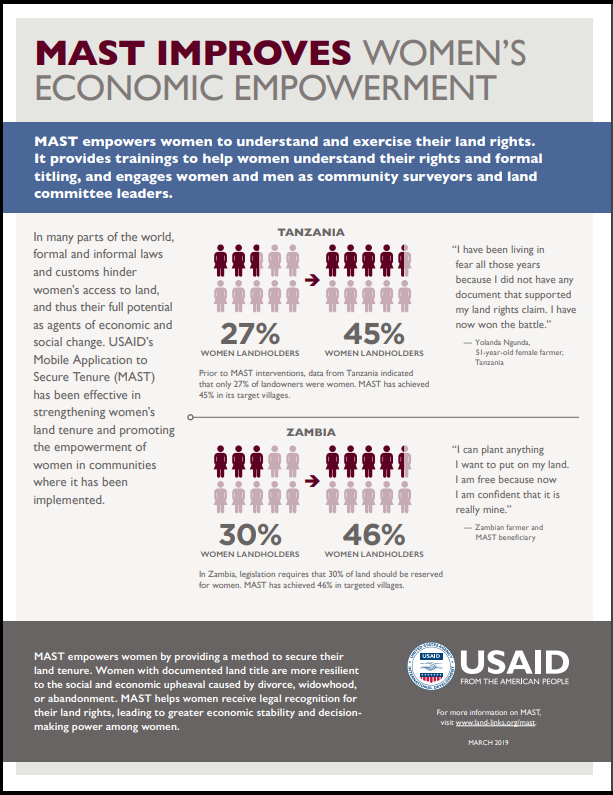
MAST IMPROVES WOMEN’S ECONOMIC EMPOWERMENT
MAST empowers women to understand and exercise their land rights. It provides trainings to help women understand their rights and formal titling, and engages women and men as community surveyors and land committee leaders.
The Ovejas pilot is facilitating property rights for around 2,900 campesinos, more than half of whom are rural women, while simultaneously updating the cadaster information for 5,600 land parcels.
Colombian President Iván Duque attended a historic event to witness the delivery of 1,058 land titles to rural landowners from the municipality of Ovejas (Sucre), the majority of whom are women.
Myriam Martínez, Director of Colombia’s National Land Agency, was on hand to celebrate the achievement in massive land formalization while reiterating the importance of women and their leadership in land titling and administration.
The titles, which are the result of a massive land formalization pilot designed by USAID, clearly show the “utter importance” of rural women, according to Martínez. More than half of the land titles delivered went to women-led households.
“Today we have 474 women-led households and an additional 154 women as part of joint land titles with their husbands. We are asserting the rights of women and recognizing that through their labor as heads of families as well as laborers and growers, they too, can be landowners.”
-Myriam Martínez, Director of the National Land Agency.
The Rural Woman
According to statistics from the National Land Agency, the rural women of Ovejas have played an important role in the titling process, taking into account that of the 763 adjudicated government-owned parcels (known as baldíos), 627 (82%) were titled in the name of women-led households or joint titles.
In addition, of the 295 formalized private parcels, 140 (47%) were titled in the name of women-led households. In total, the government ajudicated 1,395 hectares of Ovejas municipality, and this was the first time the government has delivered this many titles in one municipality.
The Ovejas pilot was designed by USAID with input from the National Land Agency and Colombia’s other land-related entities, and for the last 18 months has collected property data across the entire municipality, resolved land conflicts, and pioneered a path through the confusion and intricacies of land formalization in Colombia. The pilot is proving that a massive approach that combines titling and cadaster, reduces redundancy. And when government entities work together, it also reduces costs by 60% and the time it takes to formalize a property and update the rural cadaster.
At 6 a.m., Gloria Esperanza is already out back in the kitchen, stoking the fire. It’s Tuesday morning, her daughter-in-law is up, and it has been raining since 3 a.m. Gloria is an energetic 70-year-old woman who shares her homestead with her five grown children and their families. She has lived on the corner of 2nd Street and Main in the village of Flor de Monte for as long as she can remember, but she has never received a land title or any other documentation that says the land is hers.
After sips of coffee, Gloria and one of her sons walk down the street to the town’s main square, where a downpour has created a momentary torrent. The village has no paved roads, no cemented sports center, and no sewage system. Here, where mud is the norm in May’s rainy season, Colombia’s land titling authority, the National Land Agency, has already set up tents for the day’s activity: public exposition of land titles.
The exposition is the first time the government has ever come to Gloria’s village to administer land and property. Over the last 1.5 years, the government—supported by USAID—has applied a massive land formalization pilot to the entire municipality of Ovejas in order to test an innovative methodology to improve land titling and property in Colombia.
“The best thing about this pilot is that we don’t have to travel long distances just to learn how to do the paperwork and processes,” says Gloria. “Now the government is here and doing all the work with us in our homes.”
Demand-driven
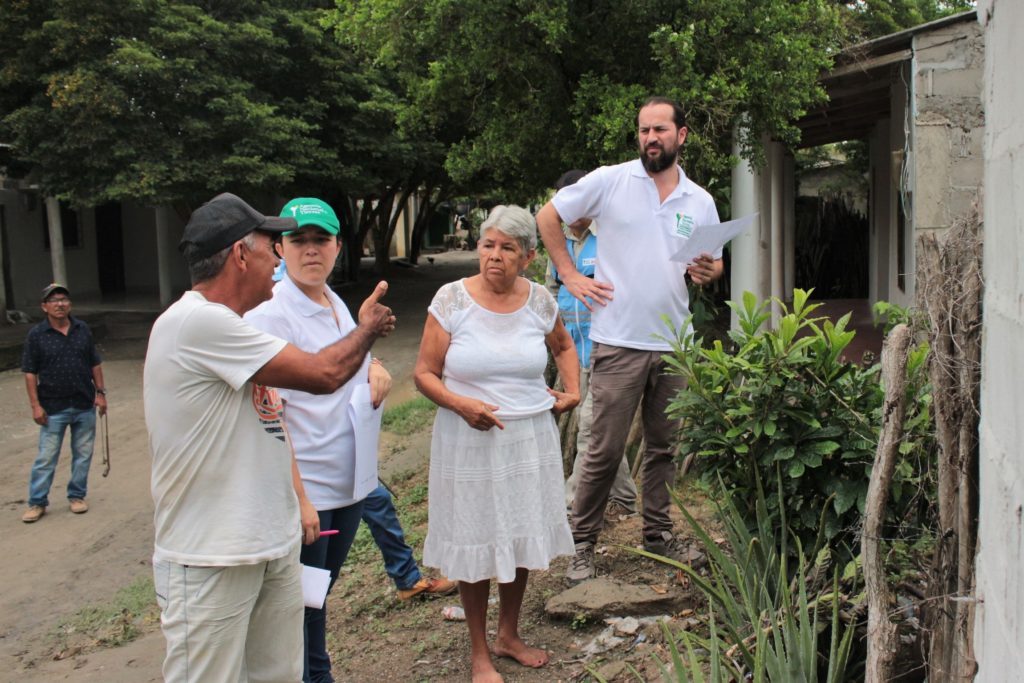
With USAID’s support, the government is also paying for the entire process. The public exposition is one of the final steps before people like Gloria receive a land title. Each landowner walks through the “exposition” process with representatives from the National Land Agency, confirming the information about his or her property, including the size and the neighboring landowners. The exposition is a final opportunity for landowners to raise issues, complaints, doubts, or opposition to the massive titling process.
“In my family, we don’t have the money to pay for the process of land title,” says Gloria.
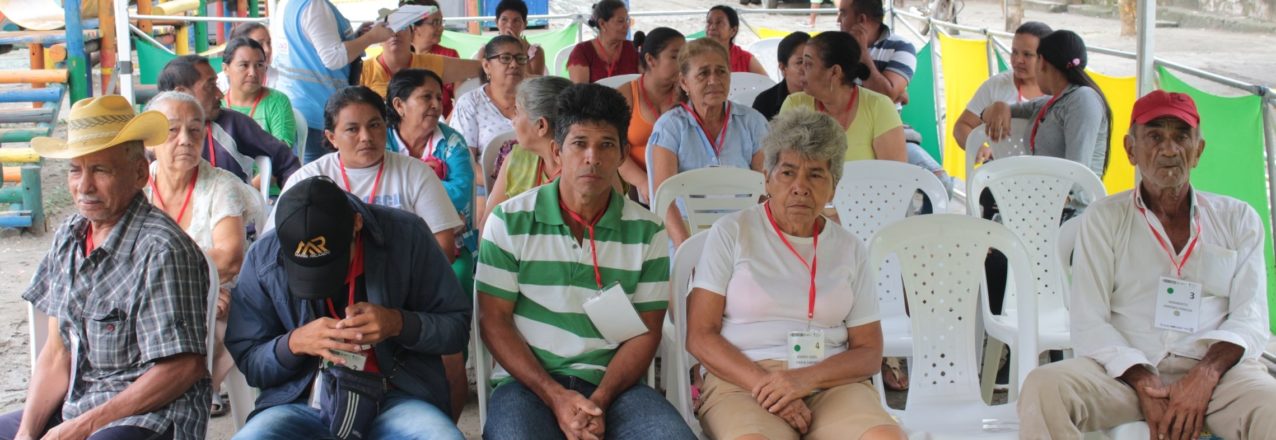
After registering, Gloria sits down in the waiting tent, among 20 other landowners from Flor de Monte. Each person wears a nametag; some visibly clutch an identity card, which for many of Colombia’s poor is the only government-issued document they own. Here the National Land Agency’s exposition leaders give a short speech about the meaning behind the expositions and the expected results. Today, the agency is attempting to finalize 118 land titles, more than it has ever done in one day.





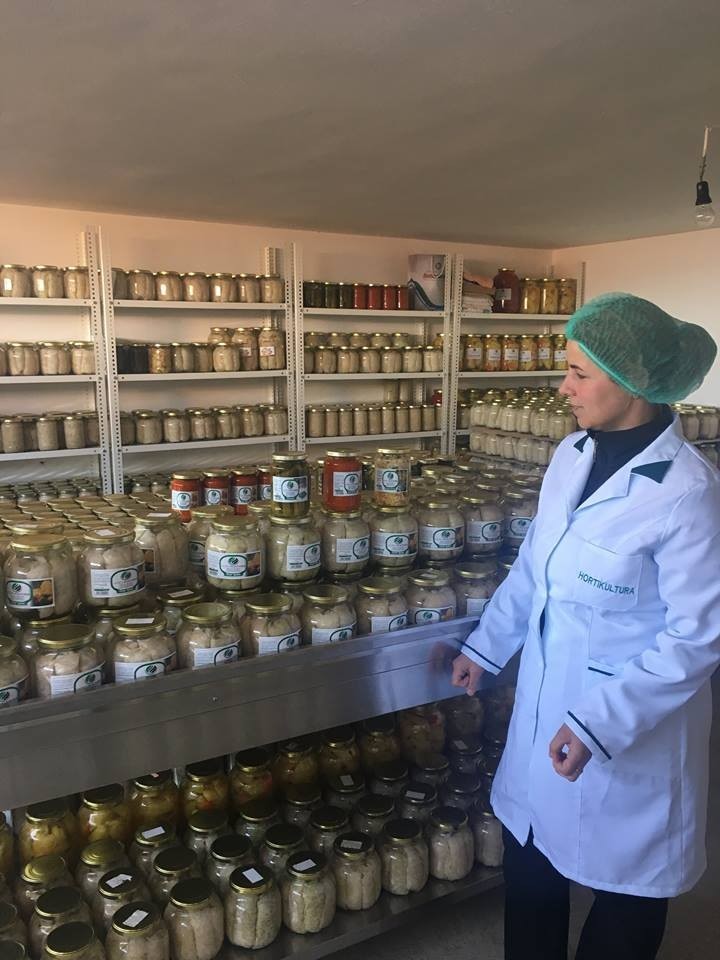 Snapshot: After learning about her rights through USAID-supported trainings, Valbona Ajeti and her husband registered their property in both of their names instead of just his. This ensured that Ajeti would not be rejected for a loan from the local bank to develop her food production business.