
By Berta Rafael, Wytske Chamberlain – van der Werf
From 6-18 November, Egypt will host the COP27 Climate Summit. This year marks the 30th anniversary of the adoption of the UN Framework Convention on Climate Change. Despite this long trajectory and the progress made, climate change has increasingly severe effects across the world. The LAND-at-scale program acknowledges the central role of climate change. In a short series of blogs, the knowledge management team highlights the diverse impact that climate change has on communities across the world, and how LAND-at-scale projects contribute to adaptation and mitigation measures on the ground. In this blog we talk to Berta Rafael, Gender and Climate Change Officer with CTV, the LAND-at-scale partner in Mozambique.
LAND-at-scale in Mozambique works in a number of geographic locations across the country. How has climate change affected the communities in these different locations?
Climate change is a fact in Mozambique given the geographical location of this country which places it in a position of vulnerability. The most recorded effects in communities are prolonged drought, floods, strong winds and cyclones jeopardizing livelihoods due to low production and productivity. Crops are destroyed due to flooding or lack of water, and livestock die of hunger and thirst.
Figure 1: Expected change in magnitude of floods (2010-2045)
Source: Ministry of Foreign Affairs (2018): Climate change profile Mozambique
Floods and cyclones cause families to move, abandoning their productive land, and houses. Families who remain are deprived of basic services such as drinking water, education, health, and roads due to the destruction of infrastructure such as schools, health posts, bridges, and roads.
One of the objectives of the LAND-at-scale intervention in Mozambique is “climate-resilient land governance”. Can you tell us what this means?
For us, climate-resilient governance means supporting the country to prepare planning instruments that integrate climate change issues. We do this through promoting debates on climate change concepts, causes and effects, and capacity building at all government levels. We also assist in the identification of local climate change adaptation and mitigation measures. Climate-resilient land government means that the government, the private sector and communities become aware of the need to implement projects that lead to climate resilience, actions that lead to reduced vulnerability from individual households to the country as a whole. It means equipping people with capacities for response and preparedness.
Climate-resilient land governance is still in its infancy in Mozambique. During the inception phase, we found that none of the districts we visited has integrated a climate resilience component in their land-use plans. Those climate resilience measures formulated by government institutions were all reactive measures such as the resettlement of victims from the flooding caused by cyclone Idai in 2019. Where natural disaster mitigation plans are available, the capacity of district governments to implement these measures is very weak.
At community level, climate adaptation actions are very limited. For example, in Gaza province communities located along the Limpopo River have gained experiences in addressing floods over the years. But the community members have mainly resorted to building houses on higher grounds as preventative measure against future floods.
How does the LAND-at-scale intervention aim to achieve this objective of climate-resilient land governance?
At district and community level, we support District governments in the improvement and updating of land use plans to consider areas prone to droughts, floods, and erosion. These land use plans must integrate aspects of climate change by indicating the different types of land use according to the characteristics of each location. Through such an approach the resettlement of people on marginal, unproductive land, or in places prone to flooding will be avoided. Another important climate-related aspect in drawing up land use plans is the identification of activities that represent mitigation and adaptation measures. Working together with the local governments and communities, recommendations are made, such as the reduction of indiscriminate felling of trees and uncontrolled burning.
Within the LAND-at-scale intervention, capacity building on climate change issues for members of governments, communities and civil society organisations and emphasizing the need for sustainable land use planning is a core activity. This is combined with para-legal training and community land registration. These components jointly work to increase awareness and strengthen capacity at local level to deal with and implement land governance practices to mitigate and adapt to climate change.
What is the main outcome you want to see from the upcoming COP27 and why?
For us, we want to see discussion on actions how industrialised country will effectively reduce their greenhouse gas emissions. And we want greater adherence of countries to the COP27 agreements, especially the most polluting ones.
Program: LAND-at-scale.
Related projects: LAND-at-scale Mozambique: Community land rights and climate resilience, LAND-at-scale Mozambique: Community land rights certification in municipal areas.
Originally published on the Land Portal. Creative Commons Attribution 4.0 International.

 USAID provided the mayor and his council with expertise and consulting to get the ordinance across the finish line. As part of the negotiation, the council agreed that newly formalized landowners would be exempt from taxes in 2022 and will only begin paying property taxes in 2023.
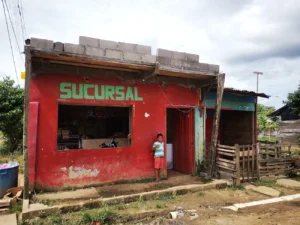 The Story of Tax Collection
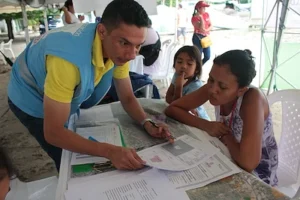
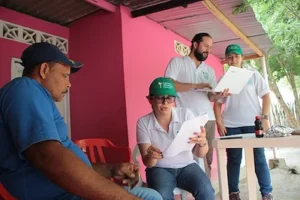
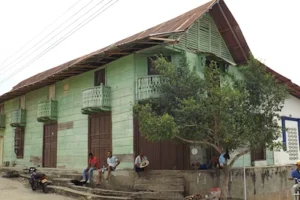
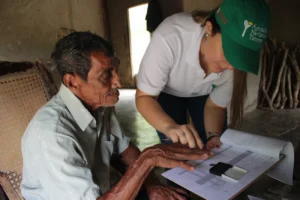 Foundational Diagnostics
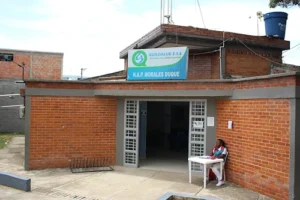
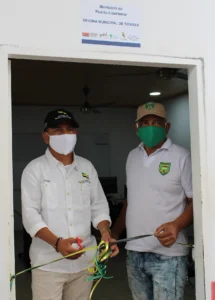 The Municipal Land Office’s first task is carrying out a diagnostic of Puerto Libertador’s existing properties. The analysis has revealed that at least 3,600 parcels are able to be formalized by the office, including 240 public parcels that should be formalized in the name of the municipality, such as schools, health clinics, municipal parks, and city buildings.
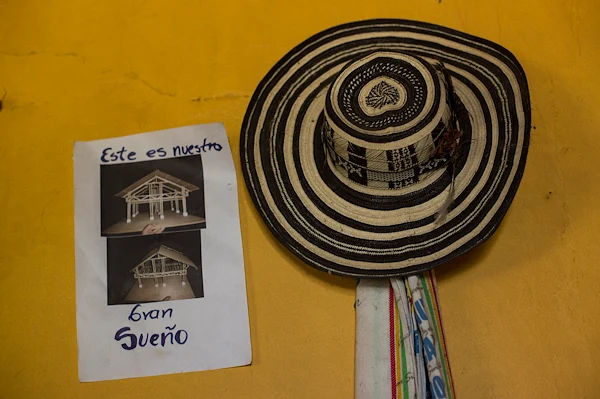
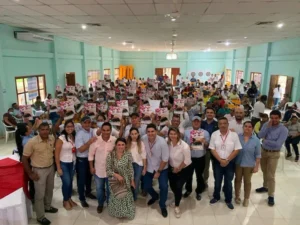
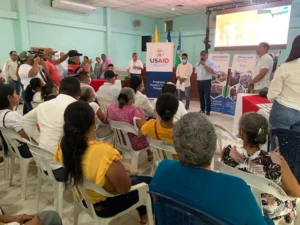
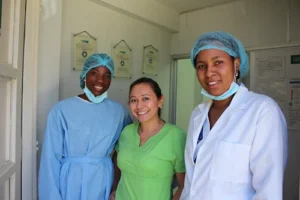
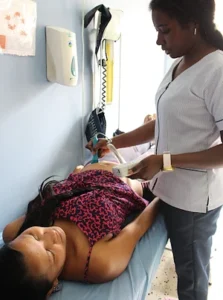
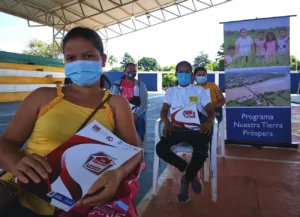 “By supporting the Municipal Land Office and land formalization, USAID is also supporting rural development, a in this particular case, improving the local health clinic,” said Héctor Sepúlveda, LFP’s Regional Coordinator of Bajo Cauca Antioqueño, where Valencia is located.
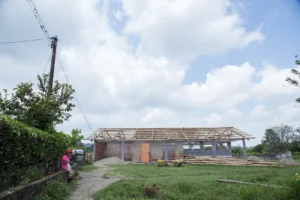
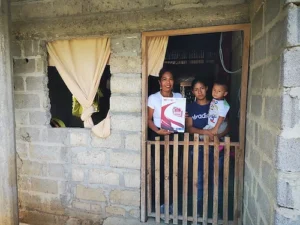


 “Fuentedeoro is the kind of place where people won’t open the door to strangers or give out personal information. People do not feel safe, and with the recent presidential elections, there is still a lot of uncertainty in the air.


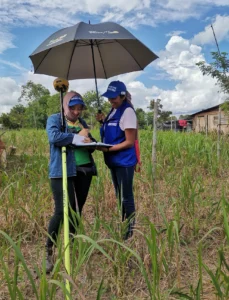
 Large land formalization campaigns rely heavily on social workers and outreach, and community liaisons like Luz Estela Velandia are one of the most effective ways to ensure participation. Trusted and motivated neighbors can fill the spaces where the government has been absent. Many in Fuentedeoro have long distrusted the government and believe land titling is just a ploy to take their land away. To overcome this information barrier, Velandia mobilizes her neighbors through neighborhood Whatsapp groups, where she can quickly reach 150 families living in her village.


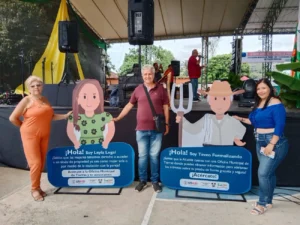
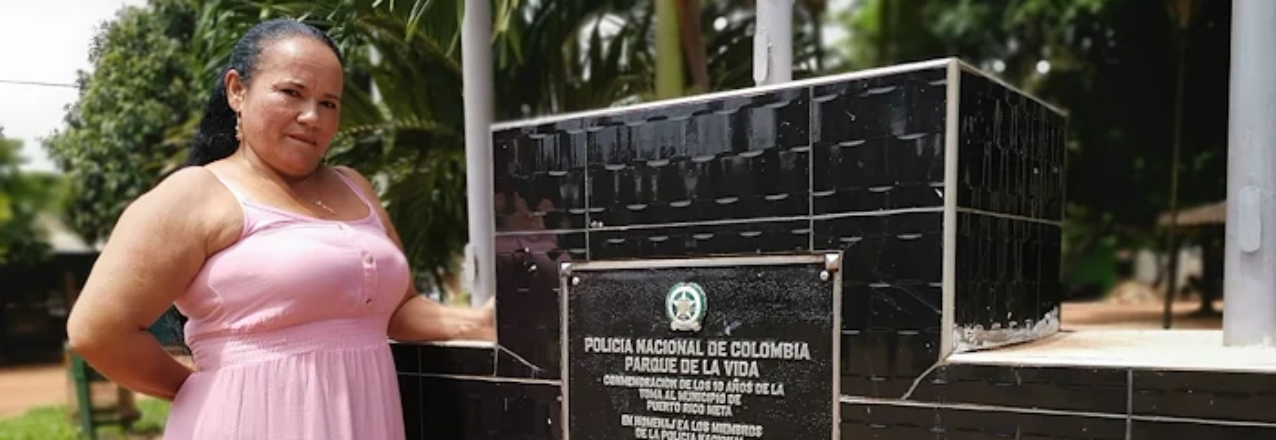

 “Legalizing property is fundamental. If not, we find ourselves in this bottleneck that, if they are not legalized, no investment can be made in them. Historically, no one cared about legalizing property, and the land administration process was poorly executed. This is an example of a mistake from the past that brings us consequences today.”-Diana Navarro, Mayor of Puerto Rico
 In the Municipality’s Name


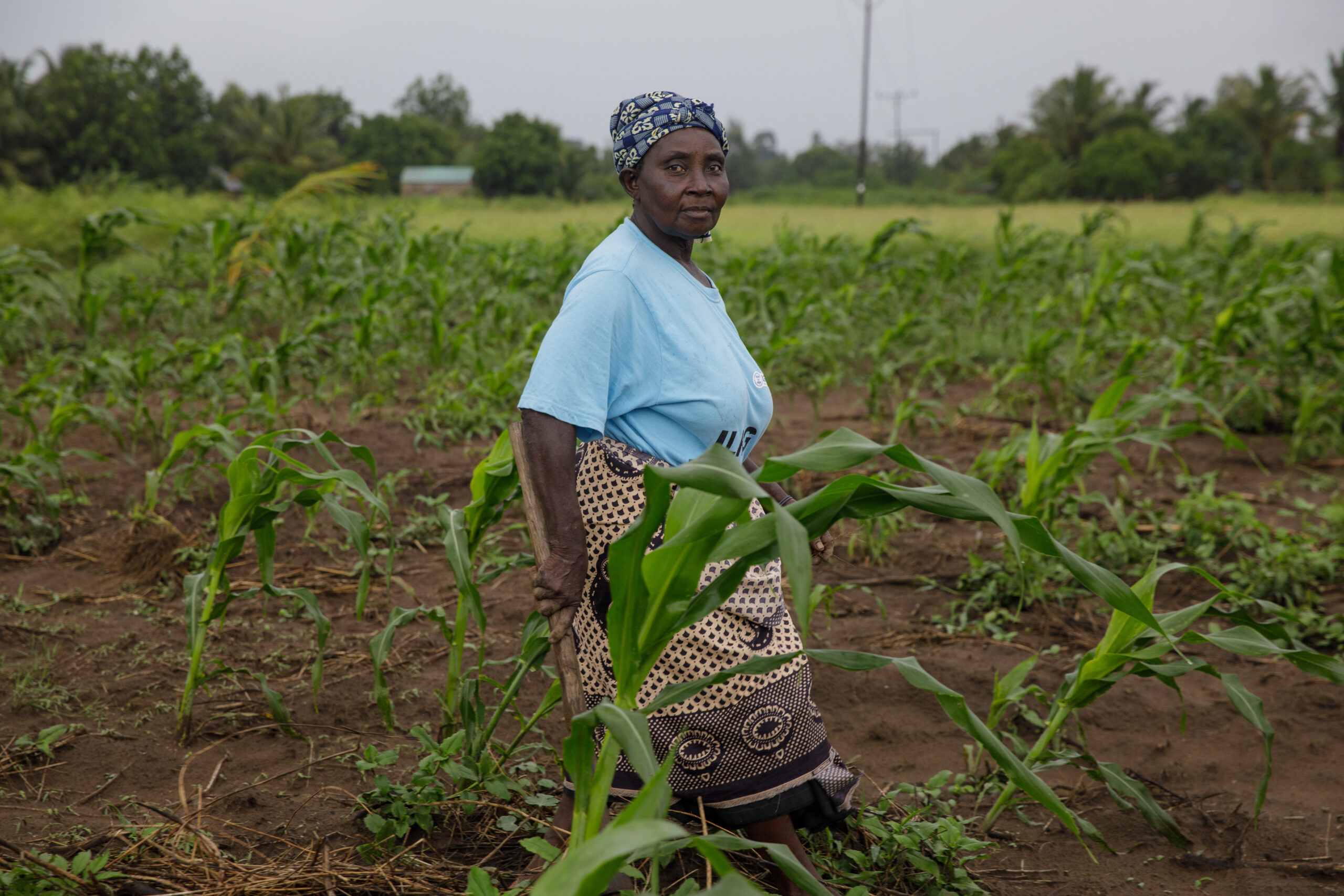
 Floriana Mariano Jose, 69, never had her own land. Last year, she received the long-term right to use a half-hectare plot in Inhangulue, Mozambique, from local agroforestry company Grupo Madal. This was revolutionary for Floriana: her plot allowed her to move beyond subsistence farming and enter commercial value chains, growing coconuts and beans to sell. She signed a commercial farming agreement with Madal, which is providing her with seeds, guidance on how to care for these crops, and a guaranteed market for her produce. She feels confident having her land use rights documented on paper, knowing that her daughters and granddaughters will be able to continue to work this land in the years to come. As she said: “In addition to a guaranteed buyer and support to increase our production, there is a lot of work within the community to support women, to decrease violence against women, and to ensure that our husbands know they can’t take the money we make selling coconut and beans.”
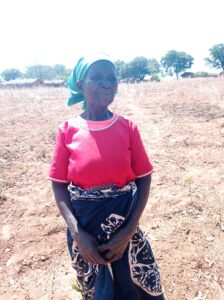 Joyce Daimoni is a 70 year old woman with physical disability who raised seven children and over 30 grandchildren in Chinthankhwa, Malawi. Following custom, she moved to her husband’s village when they married. Custom also dictates that once she left her maternal home, she was not allocated land there and would rely on his land for life. She has farmed the land her whole life, growing groundnuts and maize for the family to eat and sell. When a customary land documentation program started in her village this year, others in the community tried to stop her family from registering their land, saying the land belonged to the clan. Joyce sought help from the local Customary Land Committee and was referred to the Customary Land Tribunal, who decided in favor of Joyce and her husband. They were able to finally register their land, in both their names, and Joyce is relieved. “This means we are still going to be using the land. I am happy we can still cultivate the land and our children will be able to use this land too.”
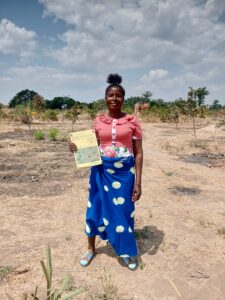 When her husband passed away 15 years ago, Mary Nkhowani, 55, and her 5 children returned to her home village of Muzumbwa in Chifunda Chiefdom, Zambia, to grow maize for subsistence. She went from cultivating her husband’s land to cultivating her father’s land, never imagining women could hold land in their own right. When her father died, she inherited his land. But in rural Zambia, it is often not easy for women – especially widows – to hold land. Twice Mary experienced land grabbing by members of her extended family. Once a USAID-supported land documentation program began working in her village, Mary attended sensitization meetings and learned that women can own land; she then registered her land. Motivated by this life-changing experience, Mary volunteered to serve on the village land committee to help other women have land documented in their own names. “The certificate puts a seal on the land that it is mine and no one can grab it. It means peace for me in life and in death because there were a lot of conflicts over land. Everyone wants land and if you are not a man, no one thinks you are entitled. I feel very happy that the future of my children and grandchildren is now secure.”
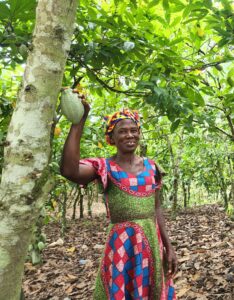 When Grace Annison, 60, got married, she moved to her husband’s cocoa farm in Asorefie, Ghana. Over the past 40 years, Grace has worked on this land every day: during the cocoa season she prunes the trees, harvests the cocoa pods, and dries the beans. Throughout the year she plants pepper, cassava, plantains, and tomatoes for her family to eat and to sell, a crucial source of income in the cocoa off-season. The land and the fruits of her labor enabled Grace to raise her six children. However, as it is customary in the area, the land is registered in her husband’s name only. Grace hopes that if something happens to her husband, nobody will take the land away from her. “I hope to continue to farm the land to achieve my next dream to build a comfortable house for my family.”
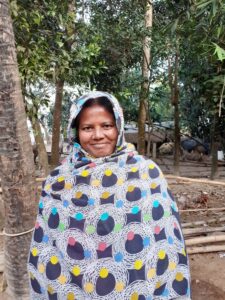 Land is the most important asset for farmer Sumsurnehar Begam. Early in her marriage, Sumsurnehar and her husband farmed two plots of land in West Bengal, India: a small piece of land that he had inherited and another small plot they purchased. However, they never updated their land records, and continued to farm without any formal proof of ownership for years, unaware of the risks. After saving for many years, in 2020 they decided to buy a third plot. By this time, Sumsurnehar had attended land literacy training supported by USAID and PepsiCo and knew the importance of formalizing the land transaction. As the only member of the family who is literate, she took charge and was able to complete the registration process by herself, ensuring that her name was included on the title. This gave her economic independence and made her future more secure. For the past two years she has been cultivating rice and potatoes on this land, independently managing the small farming business. With her increased confidence as a farmer, she joined other women to lease land to grow potatoes and formally enter into the potato supply chain for PepsiCo. “I feel confident that I have my own land and the proper documents to prove it. This is an asset for my good and bad days.”
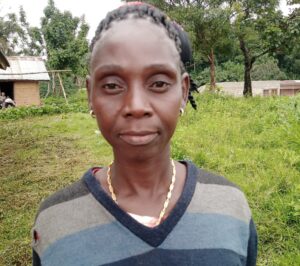 Like most rural women in Zor-Ganaglay community in Liberia, Mamie Kpahn depends on the land and natural resources around the Blei Community Forest for her livelihood. Responding to increasing pressure over natural resources, the Liberian government has enacted legislation and processes to allow communities to self-identify, create communal governance structures, and obtain formal documentation of their community lands. Mamie notes that even though women often use the land more than men, they have been traditionally excluded from decision making around land in the community. After hearing about the importance of inclusive participation, she decided to run for her local land governance committee and was elected as chairperson. Today she participates in every step of the decision-making process related to the community land. Recently she attended a boundary harmonization meeting and helped resolve boundary conflicts between hers and a neighboring community. “As a woman, I was proud to be in this meeting and be part of the decision making to bring us together as neighbors. I am happy that the two communities can be in peace and work together. This will help our children manage our land in the future.”