This blog was originally published on Agrilinks.
By Beth Roberts
Secure land tenure is key to eradicating poverty, increasing agricultural investment and ensuring food security, and is an essential element of climate action and climate resilience. Yet women have far weaker rights to land than men. These disadvantages exist broadly and with few exceptions globally, and are especially limiting to the well-being of women and their families in rural areas, where land is the basis for livelihood, identity, social standing and social security.
In USAID agricultural programming, this question becomes particularly relevant for fulfilling commitments to gender equality and for the success of programs overall. This blog post provides an overview of the challenges to women’s secure land rights, why those challenges matter in the context of agriculture and approaches USAID and its partners can employ to overcome them.
Why do these barriers to women’s land rights matter in the context of agriculture?
Agricultural productivity and food security: For women, lack of secure rights to land is also associated with lack of access to credit, extension services and inclusion in agricultural programming. These factors limit not only women’s agricultural productivity, but also overall household agricultural productivity and food security, given that women are extensively engaged in on-farm work and are frequently the primary producers of food for household consumption. With greater control over land, women can invest in more nutritious crops, more productive and sustainable practices and have more influence on how the family leverages land for both food and income. Evidence on the relationship between women’s land rights and agricultural productivity is still incomplete. However, the evidence that exists clearly shows women’s land rights supporting women’s bargaining power, decision-making over consumption and investments in children’s well-being, and suggests a positive relationship with food security.
Ripple effects for sustainable development: There is strong evidence that land rights for women are central to the question of women’s empowerment. A wealth of development literature also demonstrates that when women have greater control over assets and a higher income, more money is reinvested into the family and community. This results in better health outcomes for women and children and more spending on education — two foundational contributors to development. It can also result in reduced levels of gender-based violence and exposure to HIV. Finally, stronger land rights for women can mean better investment in climate-smart agriculture and other measures crucial for both adaptation to and mitigation of climate-related events.
Gender equality and women’s economic empowerment: Gender equality is a development goal in and of itself. Without equal power over humanity’s most basic assets — land and natural resources — gender equality cannot be achieved. Without squarely addressing inequalities in land rights and governance, women’s economic empowerment efforts may unintentionally contribute to a world where women have more opportunities than before, but still lack substantive equality with men.
What are the barriers to strong land tenure rights for women?
Legal barriers: While significant progress has been made over the last several years to enact gender-responsive reforms in laws and policies related to land, discrimination in law still limits women’s rights in at least 75 countries. Even where laws are aimed at furthering gender equality, or are at the very least gender neutral, lack of implementation, awareness and enforcement severely hampers women’s ability to claim and protect their rights.
Multiple legal systems: In many countries, there are parallel legal structures in formal and customary or religious law. Customary law is often the prevailing legal framework in rural areas. While it can be flexible and contextually appropriate, customary law is often not codified and frequently disadvantages women. Customary law and formal legal frameworks often contradict each other, or the relationship between them is simply unclear. Marital property and inheritance regimes often make women’s land rights dependent on women’s relationships with men, but do not limit men’s rights in the same way. These complexities mean that clarifying — let alone protecting — woman’s legal rights may be difficult.
Social norms about land: Land is still considered a male purview globally and can be strongly linked to a man’s identity as the breadwinner. This, in turn, is related to inheritance practice — land is often reserved for sons or families of deceased men (as opposed to their widows), even if laws on inheritance are gender equitable. These norms can also limit access to land for single women, whether divorced or unmarried. Women tend to hold less land, of lesser quality, and their access to and rights over their land are often secondary, contingent on their relationship to a male family member. Norms about types of work, including plowing land, may limit women’s ability to make land productive, even if they own it. Women also face hurdles to obtaining credit, which can limit both their access to land (via the market) and their control over land (e.g., their ability to leverage land as collateral).
Social norms affecting women’s ability to make most of the land: Entrenched gendered norms related to care work make it difficult or impossible for women to participate in agricultural trainings, projects and investments. Expectations for women and girls to cook, clean and care for children and elderly family members mean that they have little time to engage in income-generating activities or learning opportunities, even when the intent of programming is to include women. Social norms also mean women are less likely to have access to information. Often, male elders or men in the community hold radios or mobile phones, or are gatekeepers for information shared by visitors to the community. Women may also be limited in their ability to travel freely outside a community or to travel alone. This can hinder women’s access to markets and government services related to land.
Access to justice: Customary and informal justice systems remain the primary mode for land dispute resolution and access to justice in low- and middle-income countries, particularly in rural areas. Like customary law, these systems provide culturally appropriate venues and can sometimes provide a more favorable environment for women than formal systems. However, customary and informal justice systems frequently reflect the norms that discriminate against women with regard to land and may leave women without recourse. Formal systems tend to be inaccessible for most rural people — geographically, financially and even culturally — and gender bias, as well as discriminatory laws, can often mean women do not get a favorable hearing or result. Finally, land disputes in formal systems often face backlogs of months to several years.
How can USAID investments address these issues?
Invest in inclusive and socially responsible land governance: Agricultural systems should be inclusive, sustainable and a path out of poverty. To achieve this, women must have an equal voice and their priorities must be reflected in how people, communities, companies and governments access, use, make decisions about and benefit from land. Supporting agribusinesses and governments (including local governments) to uphold standards for responsible land governance and agricultural investments, implement existing gender-equitable land or agricultural policies, or register land rights and plan land use and management through gender-responsive processes, can increase women’s secure access to land and foster a more stable environment for farmers and companies to invest and grow.
Work with partners to identify “project-sized” land-related barriers: Bringing together partners from different sectors — along with actors like community leaders, local officials, producer organizations and women’s organizations — can identify concrete challenges and solutions that can enhance both project impact and women’s land rights. For example, removing land ownership requirements for cooperative membership can increase access to agricultural inputs, services and information for women and youth. Gender and social inclusion analyses before or during projects can identify barriers and solutions.
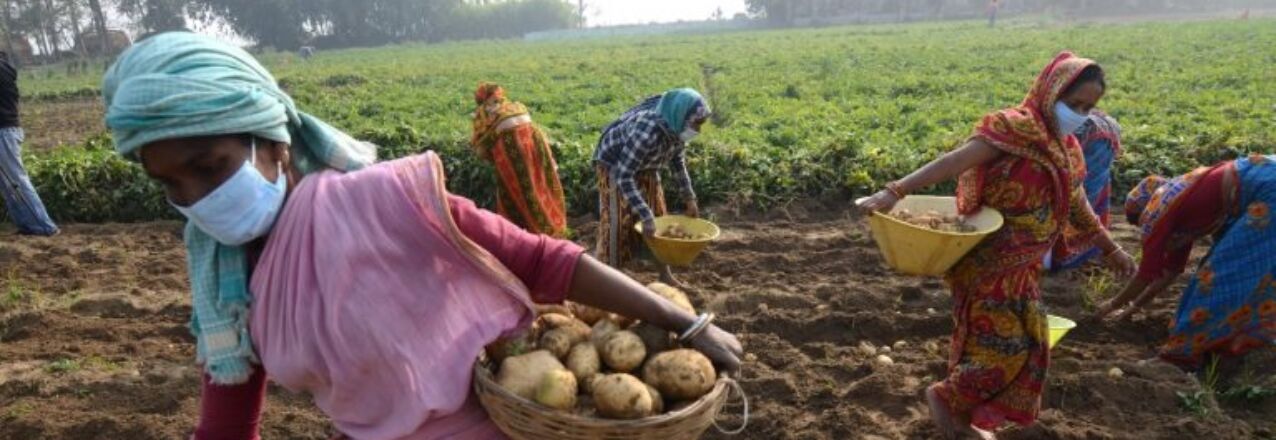
Invest in social norms and behavior change strategies: Without shifts in gendered norms, women will continue to face disadvantages in access to land and in agriculture programming. Good practices for changing gendered norms are increasingly being researched and documented. In the state of West Bengal in India, recent USAID programming to increase women’s participation in PepsiCo’s potato supply chains has been accompanied by changes in social norms — with promising results. Challenging gender norms can put women and girls at greater risk of gender-based violence (GBV). Practitioners should conduct risk assessments at the outset of any community engagement, directly engaging with both women and men to identify and mitigate the potential for and incidences of GBV.
Design interventions with an intersectional lens: Women are not a homogenous group, and benefiting women overall requires applying intersectional analysis to avoid excluding or causing unintended harm to women who are most marginalized, including indigenous and migrant women, and women from ethnic, religious or other minority identities. Women’s partnership status and whether a partnership is legally or socially recognized are often important determinants of women’s land tenure. USAID has produced several sectoral intersectional analysis frameworks, and the global public health sector provides numerous examples as well.
Rely on national and local gender experts: Gender norms are complex and contextual in nature, and practitioners should rely on and learn from local gender experts and organizations. Strong partnerships with local organizations also allow for the long time horizons needed to gain trust and make progress on shifting norms within communities.
Support capacity building for USAID staff and partner organization staff: Gender skills building is frequently needed for practitioners to gain the knowledge and confidence needed to address gender issues adequately. Providing time and resources to enable reflection and growth will yield better and more long-lasting impacts for gender equality.
Strong governance of land is foundational to sustainable agriculture and sustainable development: Strengthening women’s rights to land is key to both. Ready solutions and promising practices are available to overcome the challenges women face to claim secure tenure rights.
Further resources to support integrating gender-equitable tenure approaches into agriculture and gender interventions.