
Land Rights: An Important Tool in the Fight Against Hunger

Guest Author: Colin Christensen, One Acre Fund

Today, with up to 811 million people going to bed hungry, the world is well off track from our collective SDG2 goal of achieving “zero hunger” by 2030. As climate change makes weather patterns more unpredictable, an estimated 78 million more people will face chronic hunger in 2050 relative to a baseline where there is no climate variability. With hunger rates rising globally, it is critical to consider the role of securing land rights as an important but often overlooked tool to help combat the fight against hunger. 

Today, nearly 1 billion people globally have insecure rights to land, a great proportion of whom are smallholder farmers. Empowering smallholder farmers to grow more food has often offered the most direct path to solving the hunger crisis, given that hundreds of millions of smallholders around the world produce 60 to 80 percent of the already limited domestic food supply in many countries. However, smallholder farmers face a variety of challenges not only stemming from environmental constraints (such as precipitation, temperature and extreme events) but also from a range of systemic barriers that limit their ability to grow enough food. Farmers often lack sufficient cash to buy needed inputs like fertilizer and seeds and adequate credit for banks to lend to them. In addition, input distribution networks, which can be geographically limited, can fail to reach more remote areas where many smallholders live. Information networks that are critical for farmers to make key decisions about planting often lack information on weather patterns, soil health, and market demand to help maximize the return on their investment. 

The good news is that through increasing access to financing, input distribution, technology, and training, many of these dynamics and investment constraints can be partially overcome. Still, these “traditional” interventions often depend on, and can even overlook what could be a key leverage point to ending hunger: securing land rights. At One Acre Fund, we have seen preliminary indications that the farmers we serve invest significantly more in land that they own compared to land that they rent. For example, a survey with our clients in Rwanda found that these farmers were more likely to apply techniques that would increase their soil productivity on land that they owned compared to land that they rented. From the survey, 73 percent of respondents said that they only applied agricultural lime on land they owned, and 82 percent said they only engaged in terracing (a technique that increases farmability and land productivity of sloped fields) on land they owned. In these cases, maize yields were 30 percent higher on owned land compared to rented land. In addition, the same survey found that 94 percent of farmers planted trees only on land that they owned, which highlights the potential value of land ownership to meeting important goals related to climate adaptation and mitigation.  

One Acre Fund has just launched a multi-year project with Landesa to further explore the relationship between food security and land tenure and investigate possible solutions to addressing key gaps in land tenure. Finding these solutions is critical: one World Bank report found that 90 percent of Africa’s rural land remains untitled today, and is “susceptible to land grabbing, expropriation without fair compensation and corruption.” Given these challenges—which are even more dire for women farmers who face higher rates of exclusion from formal titlesit makes perfect sense that a smallholder farmer might be reluctant to invest in what should be her most important asset.

Solving this problem of securing land tenure and formal property rights is certainly not an easy task, as it involves navigating some complex political dynamics and cultural norms. But just because it is difficult does not mean it should be ignored. Today, the hundreds of millions of hungry people around the world deserve as comprehensive an effort as possible to achieve a zero-hunger future, and these efforts should not overlook the importance of secure land rights. Addressing this problem is a critical piece of  our anti-hunger tool-kit.

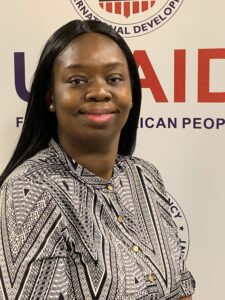
Women’s Land Rights Champion: Catherine Tembo, Ph.D.

This series features Women’s Land Rights Champions within USAID to learn more about their work This month’s Champion is Catherine Tembo, Ph.D., USAID/Zambia’s Natural Resources Specialist in the Economic Development Office. 

Catherine Tembo, USAID/Zambia

Tell us about yourself.

I currently serve as USAID/Zambia’s Natural Resources Specialist in the Economic Development Office. My work involves providing technical program support, Interagency, donor, and host country government coordination on sustainable landscapes. With the understanding that secure land and resource rights are a cornerstone of economic growth and poverty reduction, part of my work involves strengthening land and resource governance for economic growth, and food security. Through my work, I support initiatives that help reduce deforestation, increase sustainable development, and a range of other natural and community resource benefits.

During my ten years of working with the Agency, I have had an opportunity to manage land- related programming. I have supported USAID’s assistance on land-related issues as the Activity Manager for the Tenure and Global Climate Change (TGCC) activity, which aimed to increase tenure security while also supporting agroforestry extension services. I have also served as Activity Manager for the Integrated Land and Resource Governance (ILRG) activity, which is undertaking initiatives to support land tenure security in Zambia, as well as improved planning, customary governance, women’s economic empowerment and natural resource management. 

Why are women’s land rights and resource governance important to your work? And to other USAID development work?

Women’s land rights and resource governance are critical as they provide economic security for families and communities. Generally women have been known to contribute a greater proportion of their agricultural and natural resource based income to their family and improve food security. An insecure household is a threat to sustainable natural resource management.

What are some of the biggest challenges in helping women secure land rights and what are some things being done to overcome them?

My work of promoting women’s land rights has not been without challenges. Women have been marginalized for a long time and it is only now that they are trying to get out of their cocoons. With our support and working in partnership with the Zambian Government and the traditional leadership, we are seeing an increase in women owning land. In addition, more women are now taking up leadership positions in various natural resources management committees.

What are some of USAID’s successes in the area of women’s land rights?

We have recorded a number of successes with regards to women’s land rights. Traditional leaders are shifting gender norms and strengthening women’s land rights. We have Zambian Chiefs championing gender equality in land and natural resources governance. We have supported Zambia’s National Land Policy, which strives to ensure that 50% of the available land for alienation is allocated to women and encourages Chiefs to allocate land to women, and we have supported the development of customary gender guidelines. We have supported capacity-building activities focused on gender integration and community natural resource governance in Zambia, particularly with civil society and private sector partners. Furthermore, we have worked closely with traditional leaders (both men and women) to open them up to being champions and promoting women’s land rights. 

Anything else you want to share?

I must say that I have enjoyed every bit of working on land related matters here at the Agency. I appreciate every aspect of the work that I do, especially since my work includes empowering women in land and improving resource governance – this always puts a smile on my face.

We Need Land-Use Planning to Prevent Deforestation at the Agricultural Frontier — And It’s Harder Than You Think

This blog originally appeared on Climatelinks

By Daniel Evans

Global sustainability initiatives like the UN Sustainable Development Goals have a land problem: How to achieve multiple land-intensive goals when there is only so much land to go around. Urgent needs for land, especially in developing countries, include protecting and restoring carbon-rich forests, conserving habitats to preserve the diversity of life on Earth, and producing enough food to sustain human populations.

With agriculture driving deforestation, global climate protection and biodiversity conservation goals seem to collide with the drive to produce more food. Researchers warn of an impending “food security-biodiversity-climate” crisis and “looming land scarcity.”

Land-use planning can help meet these challenges. When successful, land-use plans allocate land efficiently and equitably. Planners assess the suitability of land parcels for different uses, put available land to its “best” use, meet diverse needs of multiple stakeholders, and create a lasting governance framework for people to resolve conflicts.

But how effective is land-use planning? How often does it work as a tool to sustainably manage land? More specifically, how effectively does national land-use planning prevent agricultural expansion into forests?

A new paper from the ProLand project addresses this question by reviewing available evidence: National Land-Use Planning to Prevent Deforestation at the Agricultural Frontier: A Synthesis of the Evidence and a Case Study from Cameroon.

The paper finds that land-use planning can be effective, but there have been only a few cases where evidence shows that it has worked, largely because few developing countries have established the foundations needed for national land-use planning to succeed.

Cameroon is a notable exception. Cameroon’s land-use planning efforts to protect its rainforest reduced deforestation in a 2.4-million-hectare area where agricultural expansion is the principal threat. Cameroon’s experience highlights steps that other governments should consider taking, as well as common challenges that practitioners are likely to encounter, and that donors should anticipate.

Ultimately, the paper identifies five important conditions for land-use planning success:

  • Land-use planning should be authorized by laws or regulations with mechanisms to enforce compliance.
  • Land-use planning should be based on information that permits a thorough assessment of land resources in the planning area.
  • Participants should have technical and managerial capacity to design and implement land-use plans.
  • Financial resources for planning and implementation are essential.
  • Land-use planning should include broad participation of multiple stakeholders.

The paper also addresses key challenges. Successful land-use planning critically depends on good governance. But many governments in developing countries have low capacity to design land-use plans or assure adherence to the rule of law and transparent and equitable implementation. Land-use planning might require decades of investment supported by donors, reveal broad weaknesses in governance, and bring to light divergent objectives between donors and the governments they support.

National land-use planning can help achieve multiple, land-intensive development goals, but development practitioners should be prepared for a long, costly process and be ready to provide consistent support for good governance.

Women Farmers Get the Recognition They Deserve

An innovative USAID-PepsiCo partnership is supporting women potato farmers in India to see farming as a future

Last year, if you had told Bulti Porel that she would become an official potato supplier for multinational food, snack, and beverage corporation PepsiCo and expand her farming enterprise in the process, she would have been incredulous. Women are not generally recognized as farmers in West Bengal, India’s second largest potato-producing state. People see them as day laborers, and men see them as simply ‘helpers’ on family farms. Customarily in this region, women do not control land or make decisions about production, and are not included in farming skills training. As a result, independent farming is not a future many West Bengali women can look forward to.

This is changing for some women, thanks to a U.S. Agency for International Development (USAID) and PepsiCo partnership that is making the business case for women’s empowerment in the potato supply chain in West Bengal. Over the past two years, the partnership developed the capacity of PepsiCo’s local staff to empower women by supporting them with access to land and by providing them with the skills and knowledge to recognize and enhance their contributions to potato farming. PepsiCo’s sustainable farming training materials were adapted for women farmers through a gender-responsive and participatory approach to language and concepts.

Bulti Porel acquired skills through a series of agronomy training sessions tailored for women in 2019 that encouraged her to increase the area of her land and grow more potatoes in the second season. More than becoming a potato supplier, Bulti is increasing her knowledge of sustainable agriculture practices and making the decisions about what happens on her farm.

“My husband feels that I am taking care of farming activities, and now we buy seeds in my name. This is a great recognition I received from my family and this has happened only because of the training I received,” she said.

Potato farmer Namita Khan said that attending the training sessions gave her greater confidence to independently manage her potato farming and led her to encourage other women in her village to attend. Intentionally reaching women in the supply chain has a multiplying effect since women are more prone to share newly-acquired skills with their family members, neighbors, and fellow laborers.

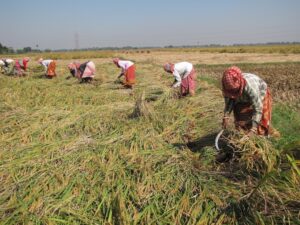
Row of Indian women farmers in field
The USAID-PepsiCo partnership has trained over 1,000 potato women in best agricultural and sustainable farming practices in West Bengal. Photo credit: Landesa.

Assisting Women Access Land

Access to land is a challenge for women in West Bengal, particularly those from the scheduled tribes and castes or religious minorities. The partnership is addressing this barrier by supporting women’s groups to lease farmland to produce potatoes and enter the PepsiCo value chain as independent suppliers. 

“I was not comfortable and told her to stay away from this activity. How is it possible that women can farm on their own?” Azijul Rahaman, a husband asked.

At first, Rahaman was apprehensive about his wife, Anwar Begum, participating in a land leasing group and tried to dissuade her. The local male aggregator, who consolidates potatoes from a range of producers to supply larger quantities to PepsiCo, helped persuade him to trust his wife and her ambitions, showing the importance of engaging influential men in the supply chain to champion women’s empowerment.

Since these discussions, Begum and her group, Eid Mubarak, have already made two potato harvests and embraced their role as formal suppliers. In fact, in 2020-2021, Eid Mubarak managed the first and only women-led PepsiCo demonstration farm in West Bengal, showcasing agricultural technology, sustainable farming practices, and women’s leadership in farming.

Promising Results in Empowering Women

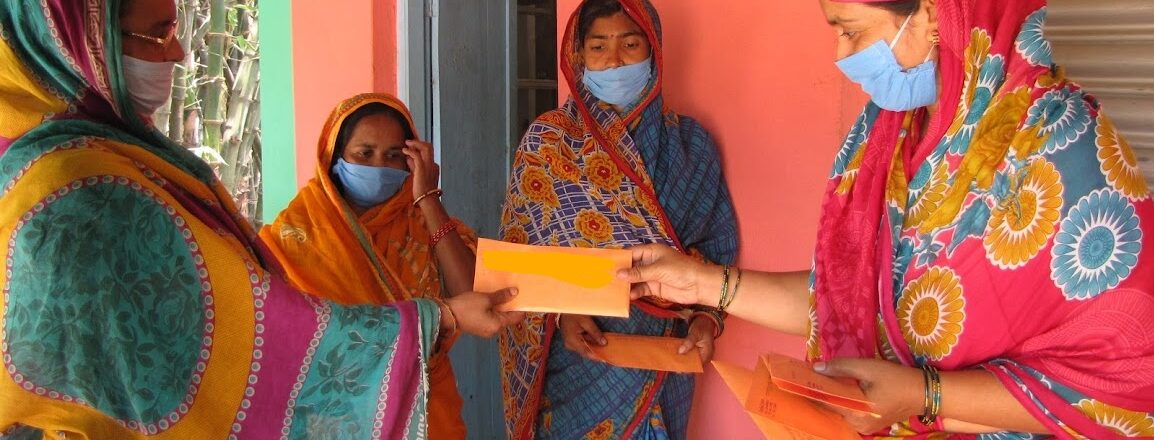
Over the past two years USAID and PepsiCo have delivered training to over 1,000 women farmers on climate-smart, regenerative agriculture practices. With increased access to information and resources, women have gained confidence, mobility, collective agency, income, and decision-making power in their families. 

The partnership is doing more than empowering women farmers, it is shifting discriminatory gender norms that for generations have kept women out of the formal economy. Couples like Bulti and her husband are setting powerful positive examples in their villages that women can manage farming operations and men value their wives as equal partners. The perceptions of women’s roles in potato farming are changing in households and communities, and women are increasingly recognized as farmers in their own right.

USAID and PepsiCo will continue to build upon these results. Over the next two years, the partnership will reach more women farmers with regenerative agriculture technical training and support more women’s land leasing groups. The partnership is also creating opportunities for farming couples to reflect on gender roles, supporting women-led demonstration farms, and promoting women’s participation in male-dominated spaces such as seed distribution and visits to PepsiCo factories. These activities are critical to shift discriminatory gender norms and model positive behaviors that promote gender equality in the supply chain.

Empowering women in West Bengal has opened an important pathway to expand PepsiCo’s farming supply base. The four-year USAID partnership will build upon these promising results and continue to demonstrate that empowering women can promote women’s agency, increase income for families, and help PepsiCo meet its economic, social, and environmental goals. 

A factsheet with Key Results of the first two years of the USAID-PepsiCo partnership in West Bengal is available here.  

Read the story of Shyamal Pal, Potato Aggregator and Long-Time Champion of Women’s Empowerment.


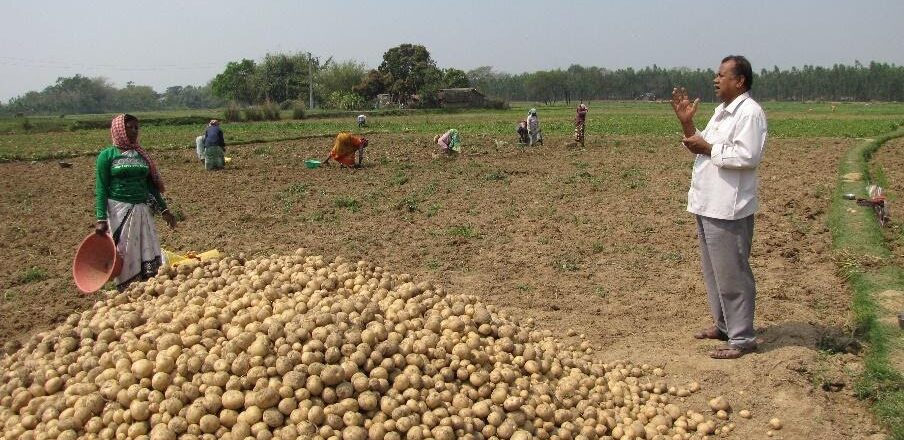
Shyamal Pal, Potato Aggregator and Long-Time Champion of Women’s Empowerment

Shyamal Pal is a PepsiCo aggregator based in the Balitha village in West Bengal, India, and long-time champion of women’s empowerment. In his experience as an aggregator for over 15 potato seasons, he understands the importance of building relationships and maintaining frequent communication with the farmers in the area.

Shyamal has been an advocate for gender equality and women’s rights since the 1990s. He was elected as a village panchayat (village council) member, where he recognized the importance of addressing the barriers that women face in accessing economic opportunities. 

As a council member, Shyamal played a key role in implementing land reforms through the distribution of vested [government] land among the most marginalized, poor families. “My experience working with women’s groups then helped me comprehend that economic opportunities are crucial for women to have a voice and exercise their rights. I will always cherish that memory,” he explains.

In 2019, when activities of the USAID-PepsiCo partnership began, Shyamal was eager to work with a women’s land leasing group. The women’s group leased one acre of farmland for growing potatoes. Working under the USAID-PepsiCo partnership, the women overcame adverse conditions, including erratic weather patterns, and still made a profit. 

“This never-before-seen phenomenon, a group of women running their own farm, drew the attention of the entire village here and had an encouraging effect on other women’s groups,” he explains. “I believe that with technical support, women can do everything required for successful farming.” 

In September 2021, PepsiCo recognized Shyamal’s efforts to increase women’s participation in the supply chain. Every year PepsiCo acknowledges aggregators who excel in business performance metrics like seed sales, yields, and quality. Shyamal was the first potato aggregator recognized by PepsiCo for his role in promoting women’s empowerment.

Shyamal looks forward to working with more women’s land leasing groups in the next potato season, demonstrating the importance of engaging existing male champions to drive women’s empowerment in agriculture value chains.

In Her Own Hands: Empowering Rural Women Farmers in Mozambique

A USAID partnership with agriculture company Grupo Madal is improving productive land use and providing new economic opportunities

By: Thais Bessa, Gender Advisor, USAID Integrated Land and Resource Governance (ILRG) program

Joana Albrinho Ajudante and her neighbors started growing rice, sweet potatoes, and cassava on land that is owned by the Mozambican agricultural commodity producer Grupo Madal in 2017. Her small plot (0.06 hectares or 1/7 of an acre), which was not being used by the company, provided enough food for her family, but due to its small size and insecure land arrangement, she never had the opportunity to expand and earn enough income to help support her husband and three children.

Rather than evicting the farmers who had encroached upon its lands in the province of Zambézia, Grupo Madal is partnering with USAID to create a program that allows 1,300 farmers from adjacent communities to farm 1,000 hectares of the company’s land. With USAID’s support, Grupo Madal is also piloting a program that will allow another 2,000 people from 14 communities adjacent to Grupo Madal’s farms to become contract farmers and produce cash crops on their own land. In addition to the right to use the land, the programs provide inputs, extension services, and guaranteed market for cash crops, ensuring that land, which was formerly unused, is now productive and generating income for farming families and the company. 

In many rural communities in Mozambique, women often face restrictive gender roles, unequal decision-making power, and limited access to resources such as financing and land. Ownership and control over assets are central to women’s economic empowerment and their ability to contribute to local, national, and global economies. For many women, the most valuable of these assets are the land and natural resources from which they earn a living, provide for their families, and invest in their communities. Evidence suggests that strengthening women’s land and resource rights can have a positive impact on their bargaining power and decision-making, particularly around important household-level decisions such as expenditures for children’s health and education and intergenerational transfers, including inheritance.

As a part of USAID’s priority on women’s economic empowerment, the USAID Integrated Land and Resource Governance (ILRG) program is supporting Grupo Madal to integrate a strong focus on gender equality, social inclusion, and women’s empowerment in land allocation policies and procedures and in how the company engages with smallholder farmers. More than 85 percent of the 3,300 farmers participating in the ingrower and outgrower programs are women. Gender-responsive extension support is giving these smallholder farmers the assistance and confidence that optimizes results for them and the company. 

Under the USAID and Grupo Madal partnership, Joana has secured the use of a half hectare plot of land (1.25 acre), and she is eager to increase production, earn more income, support her family, and invest in other productive endeavors. “I am waiting to sign the contract with the company to start producing on the land. With the money I will get from sales, I will also be able to buy cowpeas from other producers and sell them to Madal as a way to create another business,” she said. Farmers like Joana are producing coconuts, beans, and other commodities to be sold to Grupo Madal, while also growing subsistence crops for their families, increasing food security in the rural communities. 

Advancing women’s decision-making opportunities

ILRG is also supporting Grupo Madal’s plan to expand their network of community extension facilitators to better reach, benefit, and empower the new farmers. In February 2021, using an open and transparent process, Grupo Madal recruited seven community members, four women and three men, with farming experience and communication skills to reinforce the work of the company’s extension officers and increase engagement within their communities. Joana was selected to be one of the facilitators. 

Most Grupo Madal extension agents are men, and having women engaged as community facilitators has improved the company’s ability to reach women farmers. This community-based extension model promotes women’s empowerment, as it inspires other women by increasing not only technical skills, but also their self-esteem and confidence. Together with the other extension agents and community facilitators, Joana participated in a training focused on addressing harmful gender norms, gender-based violence, and how to approach extension services in a gender-responsive way.

Every day, Joana improves her farming skills and builds upon her decade of farming experience. By joining the extension network, she has increased her knowledge about gender issues, human rights, and social norms. Her extensive knowledge of local customs, traditions, and language allows Joana to share information with communities in a relaxed and informal way. Community members see Joana as a trustworthy friend, neighbor, and more and more as a successful farmer.

In Her Name: Securing Land Tenure for Women in Zambia

(Please note: This blog includes sensitive content regarding violence. It was originally published by the International Institute for Environment and Development here.)

By: Thais Bessa, Global Gender Advisor, USAID Integrated Land and Resource Governance (ILRG) program

While Ruth was still mourning the sudden loss of her husband, his younger brother arrived on her three-acre farm to deliver a deadly threat: she must leave her home and farm or he would kill her and her children.

“He came with an axe,” she recalled. “I was so afraid. I had seven young children and there was nowhere to go and no way for me to feed them except for the farm.”

Taking agricultural land from widows is common across much of the world, including in sub-Saharan Africa, where most land – around 90% − is undocumented. When land is documented, the property is often registered in the name of men, who are considered ‘heads of the household’. Women are left off the documentation, and when their spouses die they regularly lose access to the family land.

In Zambia, laws on state-administered land stipulate that women and their children should inherit land, but in rural areas – such as the Eastern Province, where most of the land is regulated by customary rules − these laws do not apply. Land is divided into chiefdoms and regulated by customary rules.

Recognising women as landowners

The United States Agency for International Development (USAID) funded Integrated Land and Resource Governance (ILRG) Program is helping to resolve long-standing tensions over customary rights and promoting gender-responsive practices to encourage joint land registration. To do this, USAID is strengthening the capacity of local land documentation organizations in Zambia’s Eastern Province like the Chipata District Land Alliance and the Petauke District Land Alliance.

Through the ILRG Program, USAID has equipped these organizations with pioneering participatory methods and socially inclusive technologies like USAID’s Mobile Approaches to Secure Tenure (MAST) to document land in areas under customary laws. The MAST approach is designed for inclusive land documentation, with provisions to include persons of interest, which ensures that the process does not inadvertently simplify the representation of rights or consolidate collective rights into an individual one. Over the past six years, USAID’s Integrated Land and Resource Governance program and the two local partners have documented the land rights of more than 30,000 parcels of land in Zambia, including 155,000 rights holders, nearly half of whom are women.

Leading by example

To complement the MAST approach, USAID integrated gender considerations into every step of the land documentation process. At the community sensitization stage, when partners explain land documentation steps and benefits, they also provide information on gender equality and social inclusion. Enumerators from partner organizations, who collect and verify data from each land parcel and landowner, were trained on gender equality, women’s land rights and gender-based violence. In addition, the Chipata and Petauke District Land Alliances engaged a gender specialist or focal point. Enumerators were encouraged to examine their own biases and how to find socially acceptable ways to encourage the participation of women and youth.

A series of practical guidance tools were developed for enumerators and other field staff involved in the documentation process. These practice ‘notes’ cover topics like gender-sensitive language, gender sensitization of communities and household members, best practices on speaking with traditional leaders about gender, and gender-responsive conflict resolution. The practice notes are useful since they detail specific gender barriers and concrete solutions for each step of land documentation, such as organizing meetings and boundary walks around women’s care taking responsibilities, ensuring that registration forms have space for more than one landowner, and collecting sex-disaggregated data.

The USAID approach also involved working with chiefs and other traditional leaders to promote meaningful participation of women in local land committees and gender-sensitive conflict resolution. In Zambia’s Eastern Province, USAID has focused on traditional leaders, also referred to as indunas, to influence changes in gender norms and behaviours in relation to land ownership and access practiced in their chiefdoms.

With USAID support, the Chipata and Petauke District Land Alliance staff developed their capacity to talk about gender equality at community meetings, centered on the benefits of secure land tenure for men, women, boys, and girls. In addition, staff were encouraged to reach out directly to women and men for one-on-one sensitization sessions. These dialogues offered a safe space for people to voice concerns and catalyzed getting women’s names on land documentation, marking significant progress for women in societies where speaking in front of men or speaking up in public is discouraged.

Securing land, securing futures

Following a one-on-one sensitization session with a land expert from the Chipata District Land Alliance, Ruth approached the local land committee to share how her brother-in-law was threatening to take her land. The committee intervened on her behalf and allowed her to assert her right to the farmland. Ruth and her children received a land certificate naming them as the owners.

“When I got the certificate and I settled back on the land, my brother-in-law came shortly after to threaten me once again,” recalled Ruth. “But this time I was not scared, I had a certificate and it says the land belongs to me and my children. I am a landholder because it has the signature of our chief,”  explained Ruth.

Land certificates and the broader documentation and dispute resolution processes are approved by local chiefs, reinforcing local validity and showing the importance of engaging influential stakeholders to ensure women’s safety and secure land tenure beyond having a certificate in hand.

Over the past six years, this work has shown that making land documentation gender-responsive requires a range of complementary approaches: inclusive technology, developing partner capacity, practical and detailed field guidance, and gender sensitization of communities and traditional leaders. This can empower women to assert their rights so they are included in land certificates, and change customary law, helping women like Ruth to feel confident that ownership of their land will be secure to support their livelihoods – and the livelihoods of their children – into the future.

INRM Digest, September 2021: Democracy and governance

Democracy is going backward in many places USAID works. The V-Dem Institute reported in 2020 that Latin America and the Asia-Pacific have reverted to a level of democracy last seen 30 years ago, while 60 percent of sub-Saharan countries are classified as “electoral autocracies.” Participatory natural resource management (PNRM) stands out as a potential means to counter democratic backsliding. Previous USAID work and well-known examples like community forest groups in Nepal and conservancies in Namibia support the proposition that PNRM can help achieve positive democratic outcomes.

See below for some updates on INRM’s work with USAID on PNRM and participatory land mapping. We also share some relevant resources from across USAID that explore land and resource governance, approaches to reduce corruption, and other governance issues.

In this digest:

INRM’s current governance work

  • PNRM could play a role in mitigating democratic backsliding
  • Participatory land mapping can help strengthen local governance
  • HEARTH and INRM creating common indicators for cross-sectoral MEL

Additional USAID resources on governance

Read the full digest here.

Finding a Way to Secure Land Rights

In 1959, the Colombian government passed legislation to create national forest reserves and protect its many natural resources. The law, known as the Ley Segunda, helped to establish several national parks and protect forests from illegal logging and mining. However, for local communities and municipal governments, the law has had a lesser-known consequence: the proliferation of an informal property market.

The entirety of the Santa Rosa del Sur municipality—located in Bolívar in Colombia’s Caribbean region—is protected as a part of the larger Magdalena Forest Reserve. A lack of clear land rights has not helped the municipality deal with activities like illegal gold mining and illicit cropping. Due to the municipality’s geography, only residents in urban areas are allowed to title their land and enjoy the benefits of formal land ownership.

Colombia lost more than 300,000 ha of natural forest in 2020, according to Global Forest Watch (Photo: Jair Beltrán Hernández)

Searching for Inspiration

An estimated half of the municipality’s population lives on rural land protected under Colombia’s forest reserve law. The other half—the urban half—does not face this obstacle and is allowed to process property titles for their parcels. Inspired by a USAID-supported municipal land office in nearby Ovejas, Mayor Mendoza also wants to take advantage of one of the few opportunities he has to increase legal property ownership in his municipality. By embedding a local land office in his administration, Mendoza can formalize public properties in the name of the municipality as well as private properties for urban residents.

“The forest reserves represent a major obstacle because we can’t formalize rural properties. And since we can’t formalize rural properties, we don’t have legality,” explains the mayor of Santa Rosa del Sur, Fabio Orlando Mendoza.

Over the last year, the USAID-funded Land for Prosperity Activity has coached Mendoza and his administration on how to set up the Santa Rosa del Sur Municipal Land Office. Although this municipality is not one of the Activity’s targets, USAID included it in its training sessions with other municipalities within the Montes de María region, providing the mayors with best practices. Mendoza’s first step was to hire the core team: a lawyer, social worker, and specialist in topography. With no financing from USAID, Mendoza rearranged the municipal budget and found a way to put the office together.

An effective local land office needs at least three key employees: legal, social, and cadaster experts.
“Other mayors need to understand that the budget will always be insufficient for a mayor of a municipality like ours, so it’s important to search for allies that can help develop your community.” —Fabio Orlando Mendoza, Mayor of Santa Rosa del Sur 

Delivering Land Titles

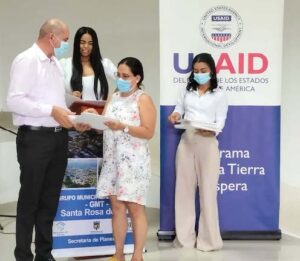
In August, the land office made history and delivered the first 19 property titles to families living in Santa Rosa del Sur’s urban center. Nine of the 19 families are registered as victims of the conflict, and 13 are women-headed households. Mendoza presided over a virtual ceremony in the municipal building and delivered the property titles to the new landowners, all wearing masks. In addition, his newly formed land formalization team titled 11 public properties including parks, recreation centers, and two schools.

“If we can help our residents access land titles, in time, the municipality can benefit from the property taxes. For these families, a property title means they can access credit, they can improve their homes, and they can strengthen their businesses,” explains Mendoza.
Santa Rosa del Sur titled 19 private properties and 11 public properties including parks, recreation centers, and two schools.
“If we’re all committed to our communities, then our main goal is seeing our municipality grow. And secure land tenure helps municipalities grow!”

Path of Self-Reliance

The mayor of Santa Rosa del Sur is not the first one to realize the benefits of a local land administration. Since 2016, USAID has supported more than a dozen municipal land offices that have delivered thousands of land titles, both public and private. In the Montes de Maria region (Sucre and Bolívar) there are three active Municipal Land Offices in Ovejas and San Jacinto (Sucre) and in Carmen de Bolívar (Bolívar).

Depending on the situation, USAID supports these offices with a combination of knowledge sharing, as well as financial and material support, to help them improve their capacities. However, as the concept spreads among Colombia’s rural municipalities that have never played a role in land administration, more and more mayors are seeing the opportunity to improve the lives of their residents while also increasing their tax base. For municipalities like Santa Rosa del Sur, USAID is less the implementer and more the coach.

Shifting local land policies

Mayor Mendoza continues encouraging his team and plans to deliver between 50 and 100 land titles every three months. Before his term ends in 2022, he hopes to have delivered a large portion of the 6,500 urban parcels in the municipality.

“After five years, we see a shift in the strategy. Today, more municipal leaders are interested in making the commitment to set up a local land office. In the end, they are the ones responsible for the whole process and not USAID,” says Carlos Martinez, regional director based in Montes de María, for the USAID Land for Prosperity Activity. “This is a great message for other mayors out there.”


Fabio Orlando Mendoza, Mayor of Santa Rosa del Sur
“We are confident. We are doing the awareness raising, the property surveys, and all the work with landowners ourselves. The families are motivated and happy, because this is the first time that they have seen this type of action in our municipality.”

This post originally appeared on USAID Land for Prosperity Exposure site

USAID Advancing Gender Norms Change for Increasing Women’s Land Rights

In recent years, countries around the world have adopted and strengthened laws that support women’s land rights, creating a foundation for greater gender equality. While this is good news, we know that women need more than laws and policies to fully realize their rights and have an equal say in decision-making about the management of land and natural resources. .

For many women, the ability to make decisions about land and natural resources depends on the support from their family and community. Whether a woman is a wife, a widow, a single daughter or a divorcee, her ability to benefit from legal rights to land in much of the world is influenced by the social norms, beliefs, and practices of  those around her.   

USAID is working to better understand and change social norms to empower women and increase gender equality in the land and resource governance sector. Recently, two of USAID’s land sector programs, Communications, Evidence, and Learning (CEL) and Integrated Land and Resource Governance (ILRG), completed a collaborative workshop on social and gender norms change. This was done in coordination with USAID’s Passages Project (2015-2021), which provides technical assistance and capacity building to projects that seek to understand the role of social norms in their programs.

The workshop tackled issues such as: (1) why social norms matter to achieving gender equality and women’s empowerment in the land sector; (2) why it is important to assess social norms at the outset of a project, and what are the best ways for doing this; (3) how to design social norms interventions; (4) how to measure normative shifts in complex environments; and (5) what are some of the ethical concerns and considerations related to social norms interventions.

Learnings from the workshop were recently published in a technical brief for USAID Missions and implementing partners: Gender Norms and Women’s Land Rights: How to Identify and Shift Harmful Gender Norms in the Context of Land and Natural Resources. The brief introduces key social norms concepts and tools to identify and shift harmful norms in the context of land and natural resources. It also provides resources for programs in the land and natural resource sector to better understand and identify gender norms, design and implement norms-shifting activities, and monitor shifts. The new resource provides practical guidance that helps  USAID, donors, and international development practitioners  grapple with this complex issue and improve the chances that land rights programs will incorporate effective normative change interventions that increase the support from women’s  families and communities when it comes to exercising rights to land.  

For more information on USAID’s work on women’s land rights, please visit www.land-links.org/gender-equality.

Three-way Collaboration among USAID Projects Passages, ILRG and CEL

The Passages Project seeks to build the evidence base and advance global knowledge and capacity for the design, implementation, and evaluation of norms-shifting approaches with an eye towards sustained and scalable programs.

The Integrated Land and Resource Governance (ILRG) program supports USAID Missions to implement activities to strengthen land rights, support inclusive land and resource governance, build resilient livelihoods and improve gender equality and women’s empowerment.

The Communications, Evidence and Learning (CEL) program provides USAID with an integrated approach to knowledge generation, dissemination, and applied best practices to strengthen land, urban, and local sustainability programming. CEL was awarded funds in 2019 to further design and implement field-based programming across five countries to generate evidence and work with local partners to strengthen women’s land rights under the Land Evidence for Economic Rights, Gender and Empowerment (LEVERAGE) activity.

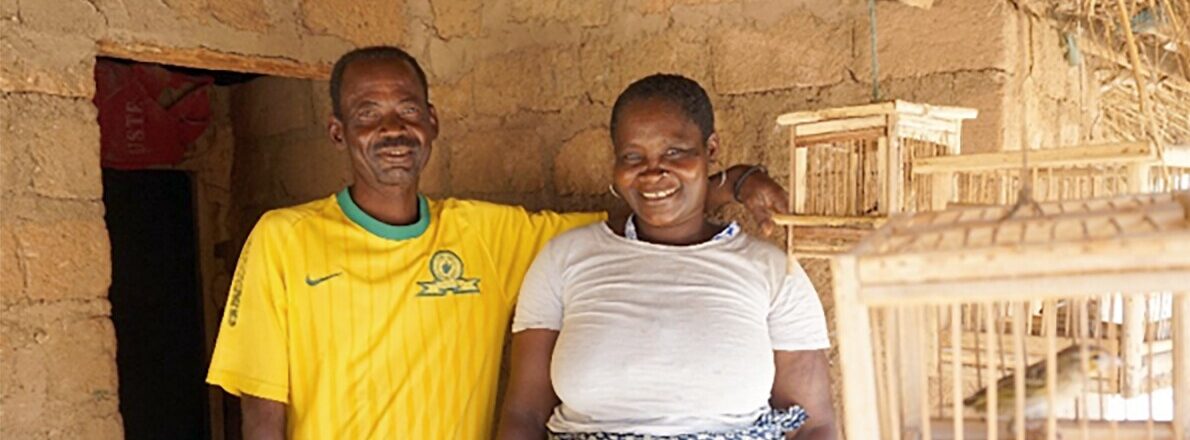
Photo: Gabriel Chiposse and Lydia Wahiya, husband and wife in Namalapa Village, Mozambique. Credit: R. Singer for USAID ILRG