

With the support of USAID and the government, the National Federation of Coffee Growers is supporting the titling of 300 coffee farms in Cauca.
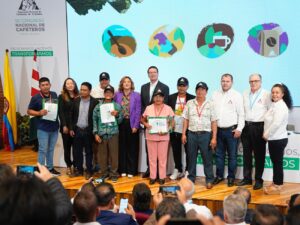 The end of the year brought good news for coffee growers in Northern Cauca. Seven families from Caldono received property titles to their coffee farms. Some of the families had initiated proceedings 10 years ago and had given up hope of ever obtaining a registered land title.
USAID’s Land for Prosperity Activity launched the initiative with support from the National Land Agency and in partnership with the National Federation of Coffee Growers (FNC). The partnership marks a milestone in Northern Cauca as the first time that a private sector stakeholder invests in the formalization of rural property. The strategy is expected to reach 300 families in Caldono who lack a land title to their coffee farms.
The FNC has committed more than $30,000 USD in investment and is providing workspace, logistical support, and valuable knowledge of the municipality.
Coffee growers who own farms with legal certainty are more likely to invest their own resources in improving coffee production and processing. Above all, secure land tenure reduces tension around land in Cauca, a region where for years, land conflicts have delayed rural development and the delivery of state services.
“The most important thing that we can do for our coffee growers is protect their property. My recommendation is to move forward with companies and the government, seeking policies that facilitate land formalization through taxes. Coffee growers pay taxes, with this strategy, we can find several actors that can help.”
-Gerardo Montenegro, Technical Manager of the National Federation of Coffee Growers.
In addition to strengthening the farmer’s connection to their land, a registered land title reduces the chances of forced displacement and influences the decision to continue to grow coffee as the main economic activity and contribute to Cauca’s economic development.
The facilitation of private sector investments in clarifying and documenting rural property is an innovative strategy to strengthen land rights and rural value chains like coffee. The strategy is aimed at companies and organizations with corporate social responsibility objectives or specific interests in key value chains. The strategy requires stakeholders to co-invest a minimum of 15 percent of the project cost and raises awareness about the role of land tenure in rural development.
Coffee in Cauca
In Cauca, over 380,000 people representing 94,000 families depend on the coffee sector for their livelihood. In Caldono, an estimated 5,000 families cultivate coffee on 4,700 hectares and produce 8,000 tons of coffee per year. For these coffee growers, which include Misak and Nasa indigenous communities, coffee is more than an economic activity, it is a livelihood.
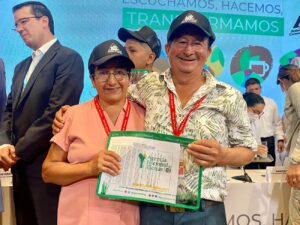 In Caldono, 66 percent of parcels are informally owned, indicating that some 1,900 coffee-growing families do not have a property title. Alba Ituyán and Ameiro Mosquera are coffee growers who started the land titling process almost ten years ago. Thanks to USAID and the National Coffee Federation, in 2023, they received a joint land title to their coffee farm.
“In 2014, we started a titling process. Thanks to USAID’s Land for Prosperity Activity, we obtained the land title in two months and this farm is officially ours.” said Ameiro Mosquera, a coffee grower from Caldono.
At the title delivery event, Colombia’s Minister of Agriculture and Rural Development, Jhenifer Mojica, reminded the audience of the government’s responsibility to boost sustainable agricultural development.
“With the Agrarian Reform we will apply instruments of land administration and put productive land to work,” she said.
Cross-posted from USAID Exposure
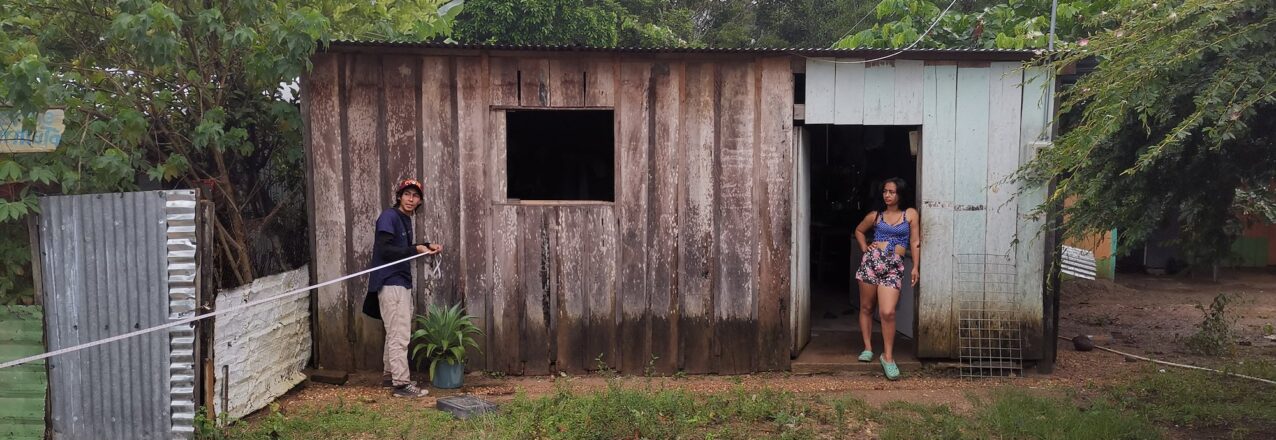
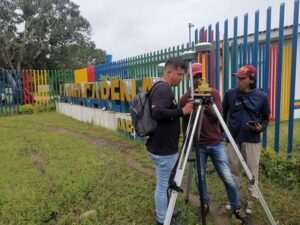 In each of the nine participating municipalities, USAID has trained public officials to give residents information about land titling and property issues. Jhojan Smith is an engineer working in La Macarena’s municipal administration, and when Meta’s regional team comes to work, he helps them reach the community.
 Now that Raúl Moreno is the official owner of his property and has a registered land title backed by the government, he can support his family in other ways.

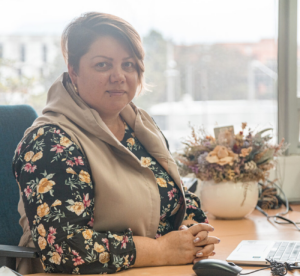 Since signing the 2016 Peace Accords, the government of Colombia has transformed rural land administration by adopting a model that puts the onus of formalizing rural property on government land agencies like the National Land Agency (ANT). With the support of USAID’s
 We have already used it, for example in the units that LFP delivered in Fuentedeoro and Puerto Lleras, we have already delivered land titles. In Santander de Quilichao we are going to identify the people and parcels that need to be formalized, that need land administration or legal tenure. We are going to make the processes quicker, more consistent, and especially produce results faster. What we aspire to is to avoid what happened to us in previous parcel sweeps, which were very long processes, too long for a single municipality, so we can gradually make progress.
 Yes, we have implemented many changes, not only in the processes but also in simplifying forms, consolidating information collection tools, and issuing guidelines that are clear, not just for ANT employees but also for the parcel sweep operators. For example, before the ANT had 32 attention routes for land formalization, and we simplified the processes to 24 routes. Everything LFP has done to support the ANT with Rural Property and Land Use Planning translates to the possibility for a dignified life for rural Colombians.
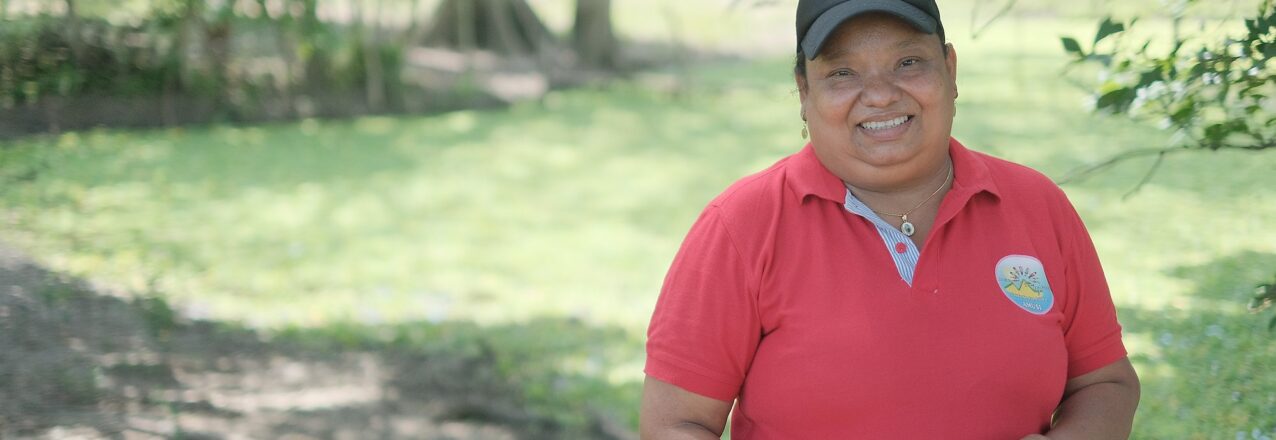
 Luz Mery Valdez is an iconic woman, who is defying gender stereotypes through her work as a cassava and yam farmer in the Montes de María region of Colombia. She works with the Association of United Women of San Isidro (AMUSI) in the municipality of El Carmen de Bolívar.
 What have been the most visible changes since women have participated in farming activities?
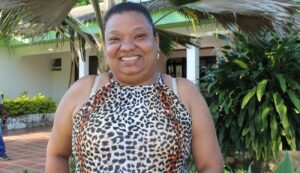 What would you say to other women?
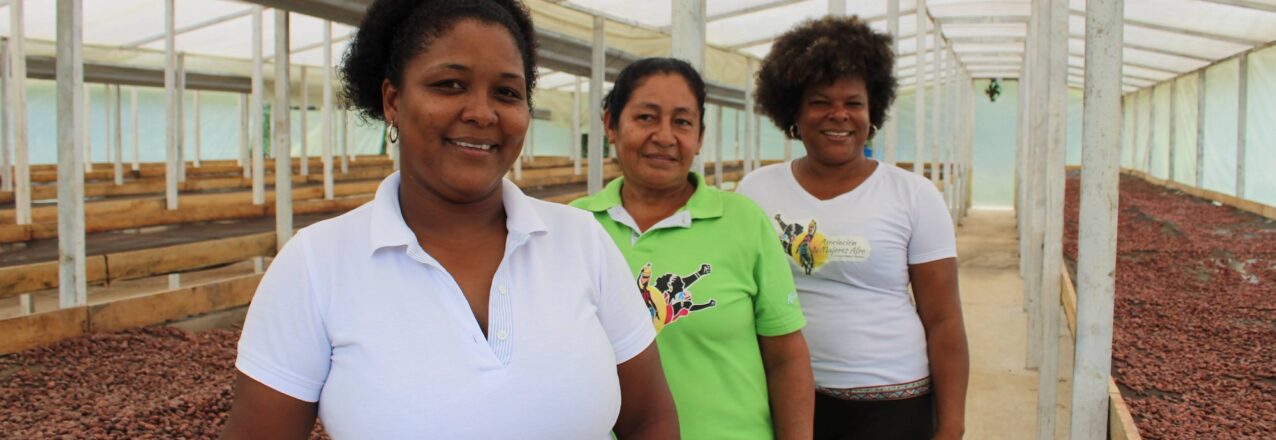
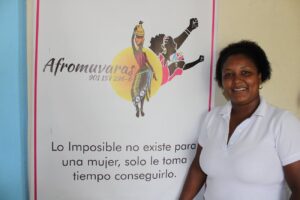 As part of the 16 days of activism to end violence against women and girls, LFP talked to Judith Rodríguez, a member of
 In the Community Council, you share the land between members. Do you think the women who own land individually or jointly with their partners are as protected as you?
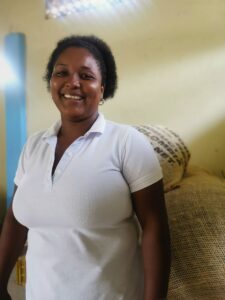 There are laws to stop men from selling common properties without the consent of their partners. Do you think there is a need to talk about these laws more widely?