

This interview with Patricia Malasha, USAID/REFS, is part of USAID’s Land and Resource Governance Division’s Women’s Land Rights Champions series, which profiles staff across USAID Missions and operating units who are working to advance women’s land rights.
Tell us about yourself
 My name is Patricia Malasha, and I am a Gender Specialist whose focus for the past 30 years has been on working with women and men to advance gender equality and ensure women have access to land rights and land ownership. I am currently the Country Coordinator for the USAID-funded Integrated Land and Resource Governance Program II (ILRG II) in Zambia, which supports inclusive natural resources management and women’s access to and control of land. I also served as a gender specialist on USAID’s ILRG activity from 2018-2023. My project supports land documentation in customary areas that host 90 percent of land in Zambia, and engages with stakeholders to support inclusive land tenure and resource governance systems.
Why are women’s land rights and resource governance important to your work? And to other USAID development work?
A majority of Zambian women depend on agriculture for their livelihood, and yet less than 22 percent of them own land and property in their country. Despite women having the legal right to own land, systemic challenges and cultural biases deny them the opportunity to enjoy the social and economic benefits associated with land ownership. Through ILRG, USAID has advanced gender equality in Zambia, breaking through structural and cultural barriers so that women gain the power to own land and make decisions about the use of their land. Through our programming, we speak to women and men, hear their views, and leverage their perspectives to design the right interventions for promoting women’s land rights. As a result, 50 percent of women that we work with have their names included on a land certificate. Through this work, we are changing the perceptions and realities for women, making them owners or co-owners of the land rather than just workers on it. This positively changes their social and economic status and gives them the confidence to reshape their role in their familial and community development.
What are some of the biggest challenges in helping women secure land rights and what are some things being done to overcome them?
In Zambia, cultural rules dictate that land belongs to men. These norms and rules are hard to shift away from, and challenging these norms often leads to social rejection or gender-based violence for women. Helping women to understand the importance of being included on land certificates and convincing men to accept women as landholders takes a lot of time and resources. Under ILRG I and now ILRG II, we ride on the local context, using positive influence to achieve success. A traditional saying we often use: “umucele ukufina baumfwa kubausendapo,” means that “the weight of salt is known only to those who have carried it.” We apply this to our work by talking to men and women to help them understand harmful norms, their meaning, as well as what we can change and the impact our interventions can have on individual lives. As a first step, we hold dialogues with traditional leaders (as influencers) and families to increase the acceptability of women as land holders. We then identify and work with women and men within the communities to become role models to champion the benefits of women’s land ownership. Eventually, communities realize these benefits, and more people join in the efforts to include women on the land ownership certificates.
What are some of USAID’s successes in the area of women’s land rights?
Using a holistic and transformative approach to promote women’s land rights ensures that USAID’s approaches are informed by a complete analysis of the barriers, norms, and the power dynamics in land documentation. ILRG II’s approach also helps to build an understanding of the risks and devise mitigation measures. As a result, USAID succeeded in documenting 40,000 parcels in nine customary areas for 170,000 people, 41 percent of which included women as newly registered landholders. In addition, 50 percent contained names of women on the land certificate as joint landholders.
Is there anything else you’d like to share?
ILRG II has developed tools and documents on the work to support women’s land rights. We share our stories to motivate others to learn and build on these efforts.
Our resources are available at: https://tenuresecurity.org/project/integrated-land-and-resource-governance-ilrg-ii/

 The majority of
  With support from USAID and Colombia’s mapping authority
  Following a multi-day training on land surveying concepts and how to use GPS tablets, the novice land surveyors first documented the forty something homes and buildings in their community, including the maloca where the community gathers for traditional ceremonies. After that, in small teams, they ventured into the forest surrounding their community to document the natural and cultural resources that are vital for their survival and growth.
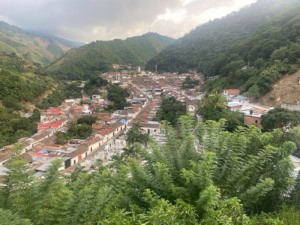 Since 2000, Catatumbo has been synonymous with the presence of illicit crops and a drug trafficking corridor. In this region, which borders Venezuela and includes 10 municipalities from Norte de Santander, there are an estimated 30,000 hectares of coca.
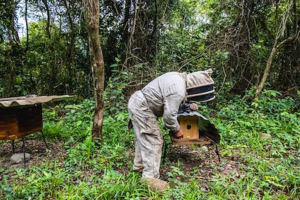 Recent studies show that Colombians are eating more and more avocados. Over the last five years, consumption has risen from 6 to 10 kg per person, per year. The trend bodes well for regions like Catatumbo, where conditions are apt.
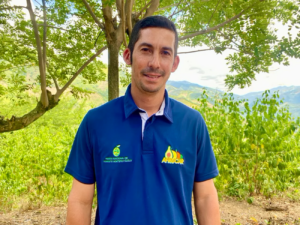 “The avocado is a highly profitable crop and brings income to families. We have been replacing illicit crops with avocado,” says Diomar Contreras, avocado producer from the Afrucar association in El Carmen, Norte de Santander.
 “We need knowledge, we need training, and these partnerships allow us to know what the producers need to be able to sell to larger markets. That is why we need to come together, so that smallholder farmers can reach big clients and offer that added value that formal markets require.”
 For decades, rural communities in Colombia have faced challenges related to not owning the land they live on. The lack of secure tenure has consequences and keeps thousands of families from accessing government programs and subsidies that could improve their opportunities for success.
 In 2024, Carlos received the registered land title to his farm in San Jacinto, Bolívar, thanks to USAID’s support to increase land formality in rural areas affected by the conflict. In San Jacinto, experts surveyed 3,700 parcels and delivered some 1,100 cases to Colombia’s National Land Agency for titling. So far, the government has issued over 600 land titles to farmers like Romero.
 Secure land tenure is still just part of the larger picture to improve rural development. For Carlos, a property title means being able to peacefully cultivate yams, but it does not immediately make him a more successful farmer.
 Carlos Romero’s wife, Luz Dary, also benefits from the strategy, first by being included as landowner on the land title, but also thanks to the accompanying social outreach strategy to improve the understanding of women’s rights. The role of women as caregivers is just as important as the role of the men who work the land. In rural areas, women are almost exclusively responsible for caring for children, senior citizens, and people with disabilities; as well as for guaranteeing the food security of their families.
 I am a Senior Gender Advisor with the USAID Bureau for Resilience, Environment and Food Security (REFS). I have been with USAID for about 6 years. Before joining the Agency, for over a decade, I worked at the International Center for Research on Women, last as a Senior Economist. That is where I first started working on women’s land and property rights as a key priority not only for increasing women’s economic security and wellbeing, but also for increasing their empowerment across many spheres of their lives. One of the first research projects I worked on explored the linkages between women’s land tenure security, access to housing, and human health and well-being in South Africa and Uganda. In this work, we explored the impact of secure land and property on women’s ability to protect themselves from HIV and reduce gender-based violence (GBV). Together with colleagues, I also developed one of the early survey instruments to better understand and measure women’s rights to land and assets. The tool helped analyze relationships between different types of land ownership and women’s perceptions of longer-term security of their land and assets and ability to make decisions over their land and assets. Finally, I had the privilege to work with grassroots organizations across East Africa and support the development of paralegal programs that raised awareness about women’s land rights, supported community-level conflict resolution, and enhanced women’s access to justice.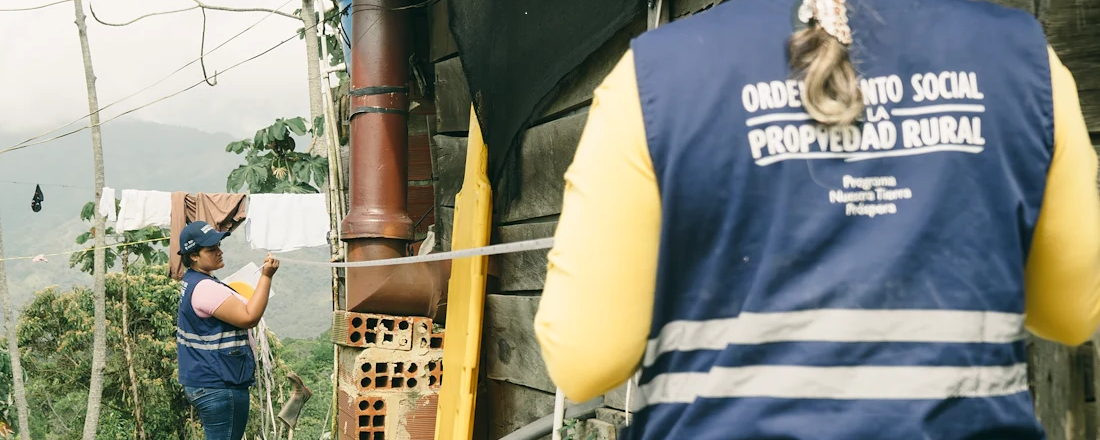
 In this interview, Diomara Montañez, the mayor of Sardinata, talks about the community expectations, the transition to licit economies, and what a property title means to the people of Sardinata.
 What does a property title mean to the residents of Sardinata?
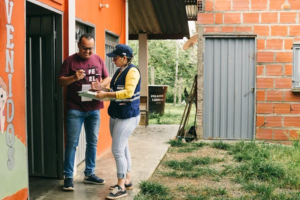 The government is designing a transformation strategy for the region that includes Sardinata. What does that strategy include?
 How has the USAID-supported municipal land office improved land administration and the sustainability of a formal land market in Sardinata?
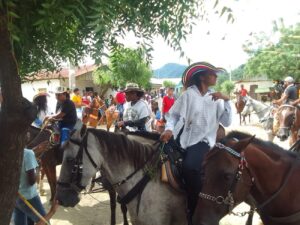 Central to the oral history of the Santo Madero community is the legend of a miraculous tree that fell in a violent storm only to reappear a few days later, upright and green. The event, which reflects the magic realism that Colombia is known for, has evolved into a vital part of local folklore and is celebrated by the Afro-Colombian community every year.
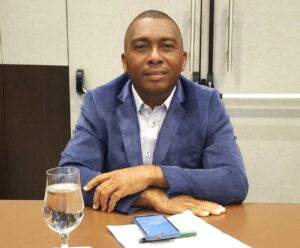 “For black communities, the ancestral territory is an ancient issue that was not born in Colombia. The Colombian government has to guarantee land rights so that Afro-Colombian and indigenous communities can maintain their culture and carry out their traditions,” he explains.
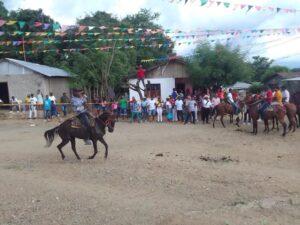 Santo Madero is nestled in the Montes de María region of the Caribbean where thousands of people were caught in the conflict and subjected to extreme violence and massacres. For more than a decade, residents regularly faced threats and extortion, leading to the loss of income and jobs based on agriculture and prompting many to search for a new life in nearby cities. By 2010, many feared that the traditions of the Palenque diaspora would be lost forever.
 In 2016, in the wake of the historic Peace Agreement, USAID began working with the
  USAID has designed and utilized protocols that include free, prior and informed consent (FPIC) and the designation of an ethnic liaison delegated by the community.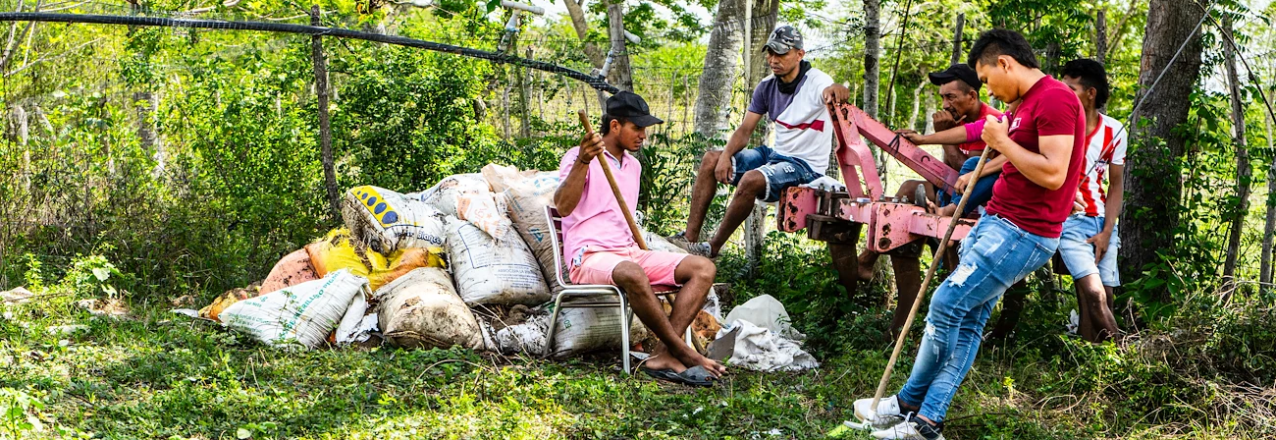
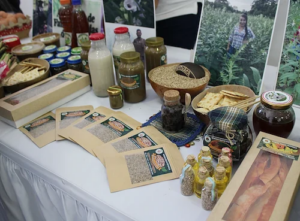
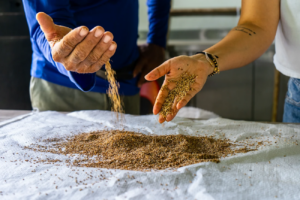 In 2018, José Hernández, the founder of gourmet exporter SumaPaz Foods, discovered the secrets of Colombia’s sesame in the hills of Montes de María in the Caribbean region. In the municipality of Córdoba Tetón, SumaPaz began working with families involved in sesame for generations. In 2023, USAID’s Land for Prosperity Activity facilitated a Public-Private Partnership (PPP) that includes SumaPaz, government agencies, and over 600 families from the region.
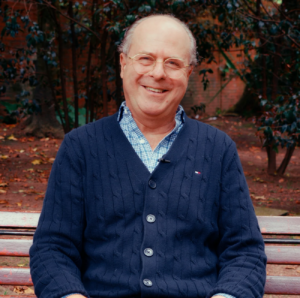 In Colombia we have special water and biodiversity conditions, and we want to preserve this wealth. We also have communities with a lot of needs, and this natural wealth can improve their quality of life. We believe that the best way to protect our ecosystems is to produce food organically.
 Colombia has different ecosystems and microclimates that give food different nuances and flavors. For example, our sesame is very well liked in Germany, where they want a sweeter and less astringent sesame for baked goods. It also works very well to make oil. The chapter of Colombian coffee has already been written, but right now we are writing the chapter on Colombian sesame.
 We can grow. The European market is growing and we also want to look to the USA. According to our analysis, we have the capacity to export at least 2,000 metric tons per year right now. This year, we could export 350 tons, or 18% of our annual capacity. And if one day we manage to produce and export 2,000 tons, by then the demand would have probably grown even more.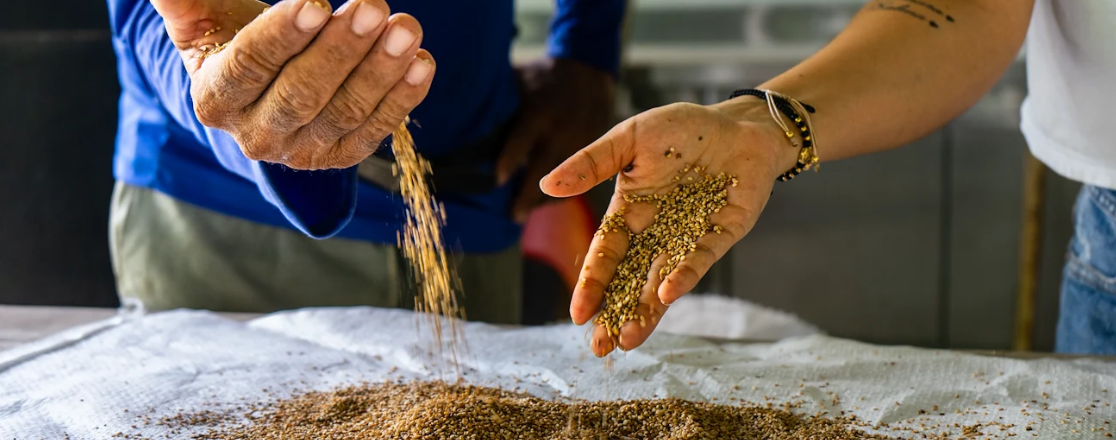
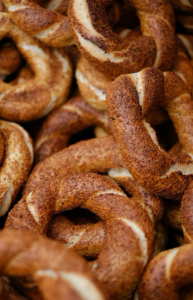 For thousands of years, sesame seeds have been a key ingredient for a wide variety of Greek foods, from tahini to sesame bar snacks to Greece’s most popular street food, the indistinguishable, sesame-covered rings known as koulouri.
 The story of sesame in this region of Colombia mirrors the ugly violence that engulfed it in the early 2000s, when the leftist group FARC expanded its control of the region and the rise of paramilitarism caught rural communities in the middle, leaving villages full of victims in its wake. Rebels and paramilitary groups moved through rural towns stealing the communities’ most important assets: livestock.
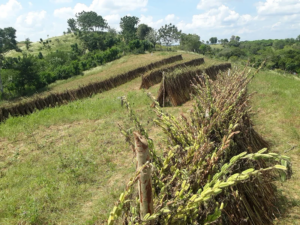 To help rebuild these communities, USAID facilitated a Public-Private Partnership (PPP) that includes SumaPaz, government agencies, and over 600 families from the region. The PPP was signed in 2023 and is valued at nearly USD $1.8 million. The PPP’s objective is to increase production and processing of artisanal sesame, promote organic certification, and establish sustainable market channels, especially in high value markets like Europe and USA.
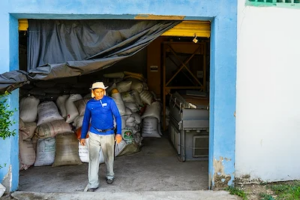 With organic certification under their belt and technical support from SumaPaz, sesame farmers have already exported four containers of high-quality sesame to buyers in the European market. Each container equals approximately 18 tons of sesame for gourmet food buyers in Greece and Germany.