

A guest post by Dr. Steven Lawry, Global Lead, Land Tenure & Property Rights, DAI
A recent systematic review—funded by the U.K. Department for International Development (DFID)—of quantitative and qualitative literature on the effects of tenure formalization in developing countries in Latin America, Africa, and Asia, confirmed theories that formal registration of individual land rights increases investment, productivity, and household consumption.
However, productivity did not rise as much on African farms as on farms in Asia and Latin America. Differences in short-term gains were considerable, with 5 to 10 percent average gains in Africa, compared to 25 to 35 percent gains in Latin America and Asia.
The muted impact of formal registration of individual land rights in sub-Saharan Africa might have to do with pre-existing institutions, wealth effects, and a lack of investment in complementary institutions and reforms. Future research should examine whether the observable implications of these hypotheses are evident in cases of reform in Africa, Asia, and Latin America, keeping in mind broader welfare considerations. A modest productivity gain in the Africa studies does not in itself mean that there are not positive welfare effects associated with formal registration of land rights. For example, in Africa, tenure security may have increased agricultural investment for food for the household, but not enough to generate agricultural products to sell in the marketplace. There may also be social benefits associated with the reduction in land-related conflicts or validation of the property rights of women and other vulnerable individuals. Of course, a thorough assessment would evaluate such benefits in comparison to those associated with alternative modes of property rights recognition, including statutory recognition of customary tenure.
The presentation of this research is at 8:30 – 10:00 am on Tuesday, March 25 during a session on impact evaluation of land tenure interventions at the World Bank’s annual Land and Poverty conference.
Read Impacts of land property rights interventions on investment & productivity: A systematic review.
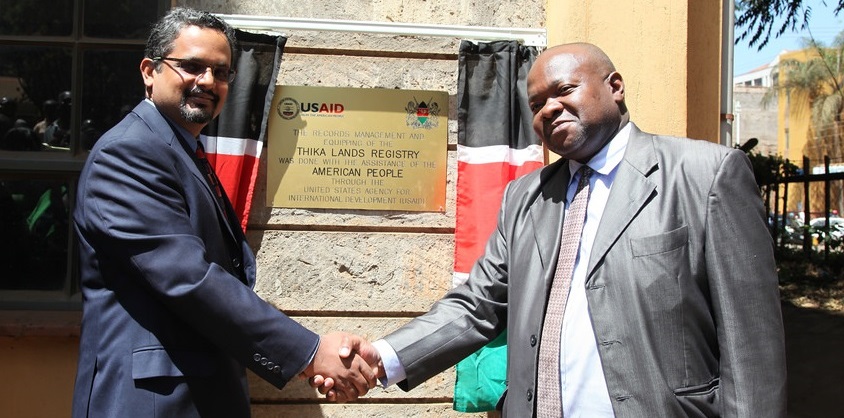
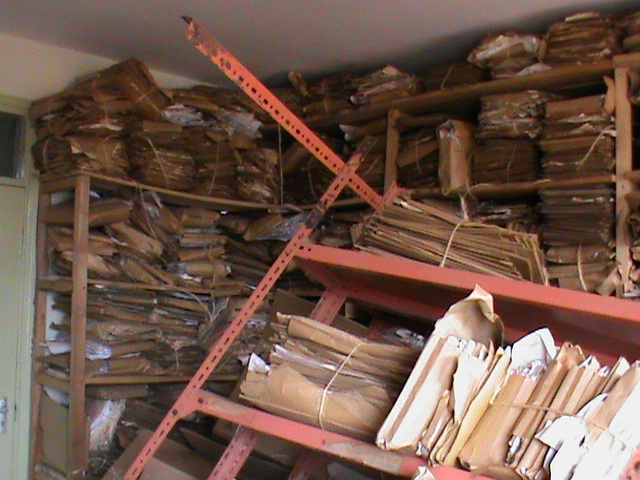 In many of Kenya’s land registries, decades of paper files were piled on top of each other, leaving them vulnerable to accidental damage and loss as well as intentional manipulation, theft, and destruction. In 2012, through KTI, USAID helped the Nakuru Lands Registry organize and store over 100,000 paper records that had been piled in the registry’s storage rooms and halls. USAID also assisted the land registry with inventorizing land records electronically. The electronic inventory made routine land transactions dramatically faster by enabling the staff to conduct searches, check title details, and edit records. A
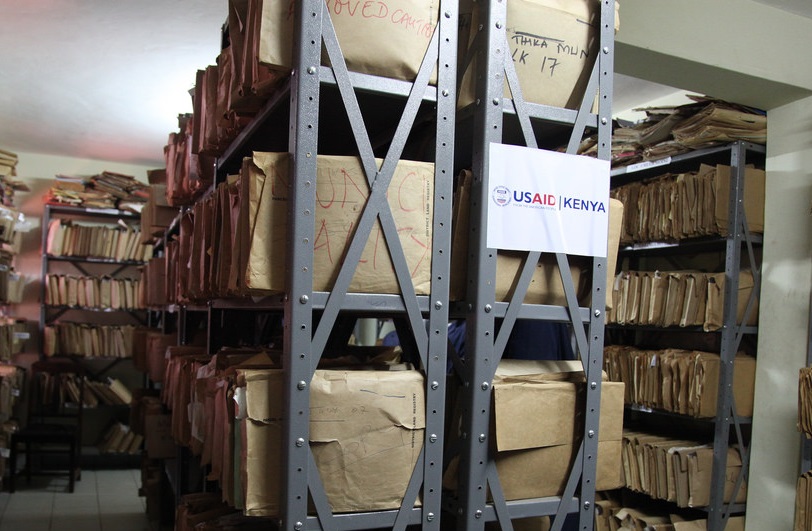 Staff at the Kilifi Lands Registry noted: “We are now able to meet our service charter goals. We should be able to find a person’s file (complete a request) in 4 days. Before we improved our filing system (with KTI grant), we could never locate files. We could take days [looking for] files and it was very frustrating for people who had to come back day after day.”