

By Esther Obaikol
Originally published .
In fragile and conflict-affected situations (FCAS), land is not a technical afterthought. It is the ground on which people seek safety, rebuild livelihoods, negotiate belonging, absorb climate shocks and decide whether return is possible.
Land governance reform is therefore not peripheral to resilience, peacebuilding, climate adaptation, or inclusive growth. It is part of the institutional core of all four.
This is not a new message for land practitioners. The land sector has long documented the links between land, conflict, displacement and peace, including through the Land Portal’s work on land and conflict, including recent discussions on do-no-harm and dispute resolution.
What is changing is the policy and financing environment around that evidence. The UK’s 2026 development reset points to a sharper focus on fragile and conflict-affected states, systems support, local solutions, expertise and investment logic. In this context, land governance propositions framed narrowly as technical support will be difficult to defend. Those framed as practical systems reforms for resilience, stability, women’s rights, climate adaptation and responsible investment are more compelling.
The recent Mercy Corps Resilience & Adaptation Learning Facility report, Land governance to promote resilience in protracted crises and fragility contexts, draws on programme experience across fragile settings, to shows how weak land governance can intensify conflict risk, undermine resilience investments, and reduce the durability of livelihood, restoration and natural resource management gains. It also argues that land governance support must be differentiated by fragility context, tenure regime and land use, and grounded in conflict analysis, political economy analysis, inclusive participation and realistic sequencing.
This matters because land reform, especially in FCAS, never merely records rights. It redistributes authority. Registration, certification, restitution, dispute resolution and formalisation shape who counts as a legitimate claimant, which institutions are treated as authoritative, whose memory of dispossession is recognised, and which groups are included in recovery and development. The same intervention can reduce one dispute while reproducing another if it is layered onto unresolved displacement, incomplete records, competing authorities, gendered power relations or mobility-based tenure systems.
What this means for land governance practitioners
For land governance practitioners, the first implication is simple: do not start with the cadastre as the first (or only) step in tenure reform. Start with conflict, power and legitimacy. In acute or highly contested settings, the most appropriate entry point may be dispute management, protection of housing, land and property claims, safe evidence preservation, trauma-aware engagement, and temporary arrangements that prevent further harm. In structurally fragile contexts, programmes can begin to address negotiated access, resource sharing, mobility corridors, customary and statutory interface, and inclusive local governance. In more institutionally stable settings, land administration, regularisation, climate-smart land use planning and investment safeguards may become feasible – but still only if they are conflict-sensitive.
The second implication is that legal pluralism must be treated as a design condition, not a residual problem. Customary rights, family claims, women’s secondary rights, seasonal pastoral access, host community claims, displacement histories and informal urban occupation are not anomalies waiting to be tidied up by a title. They are often the real tenure system. Fit-for-purpose technology, participatory mapping and incremental registration can help make these claims visible, but only when embedded in legitimate governance, accessible grievance mechanisms and safeguards against elite capture.
The third implication is that gender-equitable land reform cannot stop at the legal procedures and regulations. In FCAS, women’s claims are often mediated through marriage, kinship, widowhood, displacement status, or customary authority. A reform that records household land without addressing intra-household bargaining, social norms, documentation gaps and enforceability may formalise exclusion rather than correct it. Gender-responsive land governance must therefore combine legal recognition with dispute support, local accountability, women’s participation, accessible information and protection against retaliation.
What this means for humanitarian actors
The shifts required, however, are not only in the land sector. Humanitarian actors also need a stronger land lens. Land can still feel like “a development issue” rather than a humanitarian one. In practice, it is both. Shelter, settlement planning, cash programming, food security, livelihoods, WASH infrastructure, natural resource access, return, relocation and durable solutions all carry land implications.
For humanitarian actors, five practical shifts follow:
- Treat land as a protection and do-no-harm issue from the outset, not as a recovery concern to be deferred.
- Include land questions in rapid assessments, conflict sensitivity analysis and accountability systems: ask who owns, uses, governs and contests the land on which assistance will be delivered
- Never assume that apparently “empty” land is unclaimed; it may support seasonal users, pastoral routes, women’s collection rights, sacred sites, future return claims or host-community livelihoods.
- Build referral pathways to housing, land and property support, legal aid, mediation and legitimate local dispute resolution rather than trying to resolve complex land claims through project delivery teams.
- Support local institutions, but scrutinise who they represent and who they exclude – especially women, youth, minorities, tenants, migrants, IDPs, refugees and returnees.
The point is not that humanitarian agencies must become land administrators. It is that they need enough land literacy to avoid doing harm, enough partnerships to refer problems safely, and enough programme flexibility to adapt when land governance risks emerge. Likewise, land governance programmes in FCAS must become more fluent in humanitarian realities: speed, protection, displacement, trauma, insecurity, weak documentation and the need for incremental rather than perfect solutions.
The forthcoming LANDac conference on “Land, Conflict and Peace”, including land at the humanitarian-development-peace nexus, is therefore timely. The next step is to move beyond recognising that land matters in crisis, toward practical operating principles that both sectors can use: conflict-sensitive land diagnostics, minimum housing, land and property safeguards, responsible data practices, trusted referral pathways, gender-responsive dispute support, and realistic sequencing from emergency response to durable institutions.
In FCAS, land is an asset, a livelihood, an identity, a memory, and a political claim. Humanitarian action and land governance will both fall short if they treat it as a sectoral side issue. The question is no longer whether land belongs in humanitarian and peacebuilding conversations. The question is how quickly those conversations can change practice.
Esther is a Ugandan lawyer with over three decades of accumulated work experience in land governance, including 20 years in leadership positions at national, regional, and global levels. She has 27 years’ experience in land governance, 21 years in piloting innovations in gender, land, and tenure security, 17 years’ experience in organizational development & management, partnership, and network building, as well as experience in environmental governance focusing on legal and social research, monitoring and evaluation, and policy advocacy. Throughout her career, Esther has worked in conflict and post-conflict contexts in sub–Saharan Africa. She is currently the Land Governance Advisor in the FCDO Land Facility Decision Support Unit.
Related project: The Land Facility.
Republished from the original Land Portal article under Creative Commons Attribution 4.0 International.
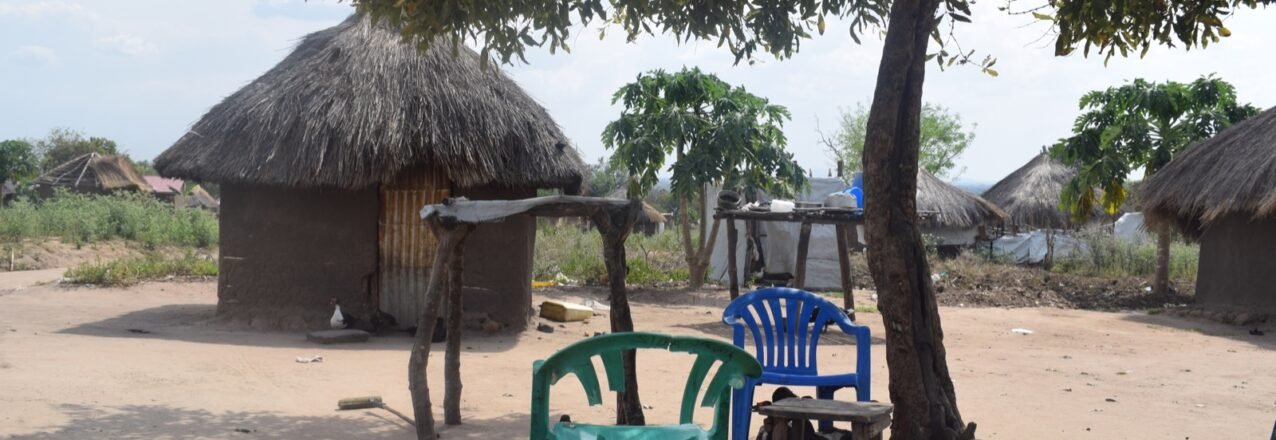
Context photograph by Edezu Solomon, Wikimedia Commons, CC BY-SA 4.0. Resized.
