

By Enrico Neumann, Joseph Holden, Nicole Naysmith
Originally published .
This blog is based on a learning session convened by the Land Facility programme’s Quarterly Learning series, which shared trends and emerging lessons from new research by the Decision Support Unit on land programme evaluations over the past decade. The session brought together experts from the Cadmus research team, Enrico Neumann and Joseph Holden, as well as Dr Lauren Persha, Principal Research Scientist from NORC at the University of Chicago (formerly the National Opinion Research Center) and Christina Ketter from GIZ. Together, they explored key themes and trends emerging from the research, as well as gaps and lessons that can be applied to future evaluations.
Quick read
- The analysis reviewed over 230 studies and closely examined 50 evaluated land programmes funded by major international development agencies.
- Most programmes and evaluations focus on land titling, using rigorous quantitative methods like randomised controlled trials (RCT)s, while land governance reform receives less attention.
- The research suggests a notable gap in the systematic consideration and analysis of the complexities of political economy and institutional structures and incentives.
- Our discussion also brought out the importance of collaboration between evaluation teams and implementers and the need for more flexible, adaptive evaluation strategies that allow for timely adaptations while programmes are being implemented.
Background and evaluation insights
The Decision Support Unit commissioned this research to draw out relevant lessons for the Land Facility and the land evaluation community more broadly, with a particular focus on what is relevant for international development programming contributing to land governance reform.
A shortlist of 50 land programmes operating in the past decade were found with evaluations available. Evaluations were classified into three categories (impact, performance, and process), with some programmes having multiple types; about one-third had both impact and performance evaluations.
- For the 50 programmes analysed, two-thirds (62%) had a performance evaluation, while a quarter had an impact evaluation. Less than one-in-eight programmes had a process evaluation.
- Impact evaluations have been rigorous and insightful, mainly focusing on higher-level outcomes and impact at household level (including on tenure security, investment, income, and gender equity). However, evaluation approaches often do not systematically consider the political economy context in which land programmes are necessarily embedded.
- All programmes in the sample included rights registration and formalisation activities (e.g., demarcation, titling, mapping).
- Most programmes also addressed land administration policy; a smaller share focused on demand-side measures (still 80%), and about two-thirds included complementary measures.
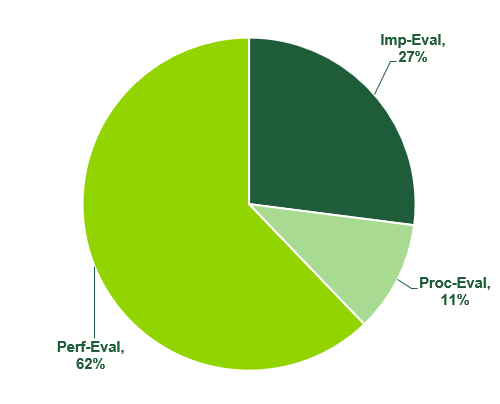
Figure 1: Share of all evaluations of each type
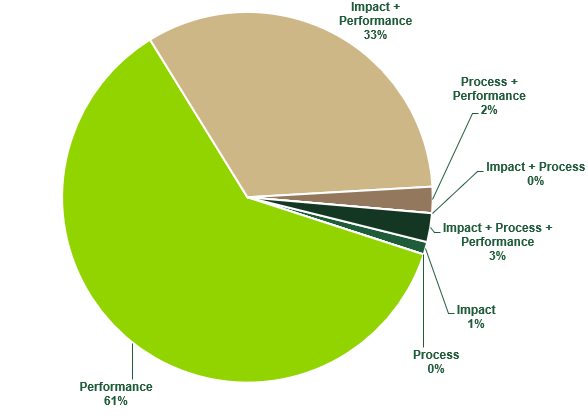
Figure 2: Share of programmes with different mixes of evaluation
Addressing a significant gap
The work found an impressive body of literature, with USAID and MCC in particular commissioning a range of substantive and long-term impact evaluations that have made significant contributions to the evidence on the link between land titling, tenure security, and social and economic outcomes at the community and household levels. This evidence has provided a significant contribution to justifying and demonstrating the value of land interventions across the past decade and going forward.
With respect to land governance reform, the research found that most programmes had a larger focus on land titling, with policy and regulatory reform components and interventions to improve land administration being more secondary. Evaluations appropriately mirror this structure and broadly focus on the effects of land titling, applying mostly quantitative approaches and often using a very rigorous research design that allows evaluators to deduce causality through robust studies, such as RCTs.
While this approach is appropriate to evaluate land titling-focused programmes, it doesn’t lend itself as well to understanding how and why changes to land governance reform come about, for example by considering political economy factors and systems changes. Whilst included in some evaluations of programmes with components focused on land governance reform, we find that policy and regulatory changes and institutional adaptations are rarely systematically reviewed or evaluated.
This is a significant gap. The evaluation community can contribute to shaping the field of land evaluations by pioneering approaches to analysing and evaluating land governance reform processes through structured systems thinking and Thinking and Working Politically (TWP), to better recognise and incorporate political and contextual dynamics into evaluation design and implementation.
Insights from a decade with USAID
Dr Lauren Persha shared related insights from her work with USAID over the past decade, including reinforcing the strong focus on impact evaluations in the land sector and on associated methods such as RCTs and quasi-experimental designs.
These evaluations are notable for their depth and rigour, primarily assessing household- and community-level impacts, including household tenure security, land disputes, and local governance, often within the context of land governance reforms. Many programmes also targeted sectors such as economic growth and climate, with about half including a natural climate solutions component. The body of evidence shows positive effects on tenure security and dispute reduction, though outcome trends for land-based investments, agricultural productivity, environmental outcomes, and women’s empowerment remain more mixed and context-dependent.
Lauren highlighted key gaps, including limited evidence on land markets, land-based income, household well-being, cost-effectiveness analyses, and evaluations of higher-level governance structures and their links to local reforms.
Two important lessons identified are the need for closer collaboration between evaluation teams and programme implementers to support adaptive programming, and the utility of follow-up studies to address emergent or unanswered questions. Additionally, mixed-method approaches and qualitative insights were crucial for understanding why and how impacts occur.
Lauren suggested that future programmes can benefit from flexible evaluation strategies that include rapid learning cycles and feedback loops throughout implementation. Large-scale evaluations can also be combined with targeted in-depth studies to address emerging questions, which can often be accomplished at lower cost and offer faster delivery for learning needs.
Insights from GIZ
Christina Ketter, an advisor on the Global Programme Responsible Land Policy at GIZ, discussed her organisation’s focus on process-oriented evaluations. These are designed for adaptive steering, allowing real-time adjustments and ongoing learning during implementation. She shared an example from Uganda showing that RCTs demonstrated strong short-term impacts; however, short evaluation windows make it difficult to identify transformational changes. She also noted that internal reviews can lack objectivity, highlighting the importance of external perspectives to reduce bias.
Lessons learned from GIZ’s work show that short project cycles and evaluation periods limit the ability to capture systemic and long-term impact. Qualitative assessments often provide richer operational insights than formal, compliance-driven evaluations. Christina emphasised the importance of progress reviews as standard tools for adaptive steering, especially in long-running programmes, while combining these with mechanisms that generate aggregated impact evidence for donor reporting and public communication.
She shared key lessons, including the need to invest in evaluations that examine how national policies influence local implementation and outcomes. These use both qualitative and quantitative methods to gather operational learning and measurable impacts, and to formalise mechanisms that turn thematic deep dives into actionable guidance for all participating countries.
This experience suggests that, in primarily focusing on administrative aspects and elements that are not easily quantifiable, there are challenges related to timeframes, funding, and other factors. In the future, smaller impact evaluations could potentially be implemented for a set of higher-level interventions, requiring effective coordination with implementation teams.
Next steps
The team from the Land Facility Decision Support Unit is exploring what this research means for future programmes, identifying gaps and next steps, and will share a learning brief in early 2026. Based on the evidence gathered and lessons learned throughout this research, there is considerable scope for land programmes and the evaluation community to shape the field of land evaluations through new approaches and help make interventions more relevant, effective, and sustainable.
Related project: The Land Facility.
Republished from the original Land Portal article under Creative Commons Attribution 4.0 International.
Download the Land Facility practice brief Insights from Land Evaluations.
Read the full May 2026 research report, including the Tanzania, Mongolia, and Uganda case studies.