

By Land Facility
Sustainable land use
Article 6 of the Paris Agreement on carbon markets and countries’ Nationally Determined Contributions (NDCs) count on strategic land-use to reduce emissions. Any action involving afforestation, reforestation, carbon credits, etc. assumes that there is land where that project can legally take place for the long term and that the people living on, using or investing in that land respect the land tenure systems that are in place and adhere to international standards.
Secure tenure
Indigenous Peoples, local communities and people of African descent are proven stewards of earth’s land and biodiversity, yet only about 11% of those lands are legally recognised. Securing land tenure – and the governance systems that support it – is a political and financial priority at COP30.
Transparent markets
Stable supply chains start with stable communities. By investing in stronger land governance systems, governments and the private sector can buffer against climate shocks and prevent losses that stem from land disputes
Originally published by the Land Facility on .
Related project: The Land Facility.
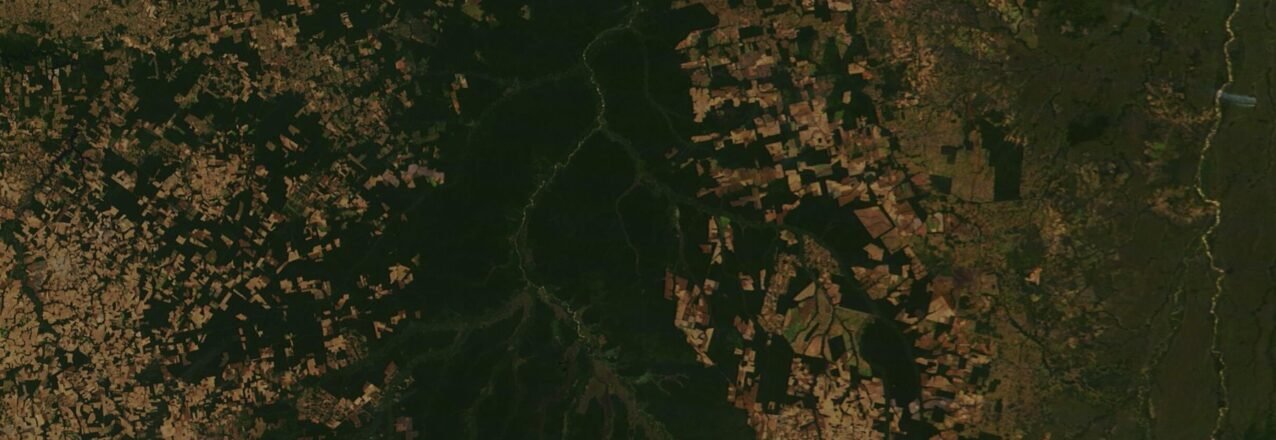
Forest cover in Xingu Indigenous Park and the surrounding agricultural landscape in Mato Grosso, Brazil. NASA Terra/MODIS image, 9 July 2020, credited to the MODIS Land Rapid Response Team, NASA Goddard Space Flight Center. U.S. public domain. Web copy resized. Image source. U.S. public domain.

Article text republished under a Creative Commons license.