

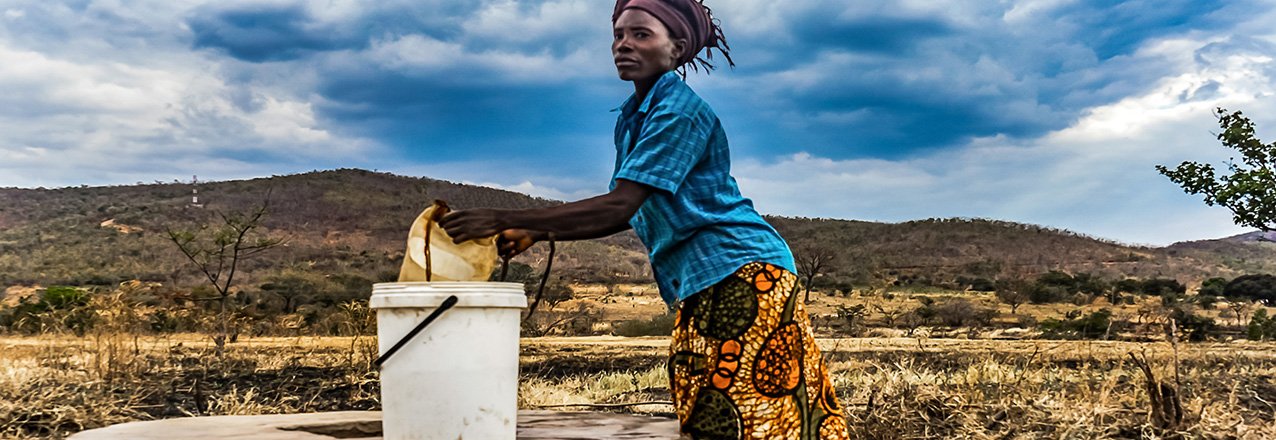
With population growth, environmental change and increased pressure on global water resources leading to shortages and rising conflict over this scarce resource, the time for an increased focus on water tenure is at hand. In most cases, formal water rights have traditionally been linked to formal land tenure rights and thus strengthening land rights can directly strengthen water rights.
Water tenure can be understood as ‘the relationship, whether legally or customarily defined, between people, as individuals or groups, with respect to water resources.’ Water tenure arrangements are often, but not always, expressed in terms of ‘water rights.’ The fundamental challenge is how to ensure that people have access to this most basic resource while also ensuring food security, promoting economic growth and safeguarding both livelihoods and the environment. Secure water tenure is key to delivering this access.
Photo Credit: Sandra Coburn / The Cloudburst Group
Water tenure resources for governance professionals
To explore the subject further, start with FAO’s overview of water tenure. It explains how rights to use water can arise through formal legal instruments, customary practice, and informal arrangements. The overview also discusses Indigenous Peoples’ rights and the protection of ecosystem functions. FAO’s assessment approach considers the different users of a resource, the purposes for which they use it, and the institutions governing access. These distinctions offer a useful starting point for examining whose rights are recognized in a particular setting.
Related tools and topics
The archived Water and Conflict Toolkit provides a programming perspective on water security, sanitation, and hygiene in fragile and conflict-affected contexts. Read it alongside the natural resource management overview to connect water access with wider questions of tenure, biodiversity, and resource governance. When using archived materials, check the original publication date and the geographic context before applying a recommendation. Compare the source’s assumptions, intended audience, and evidence with the setting you are studying. The original overview above and these additional resources provide complementary entry points into the archive.