Expanding Public Revenue through Inclusive Land Valuation and Taxation

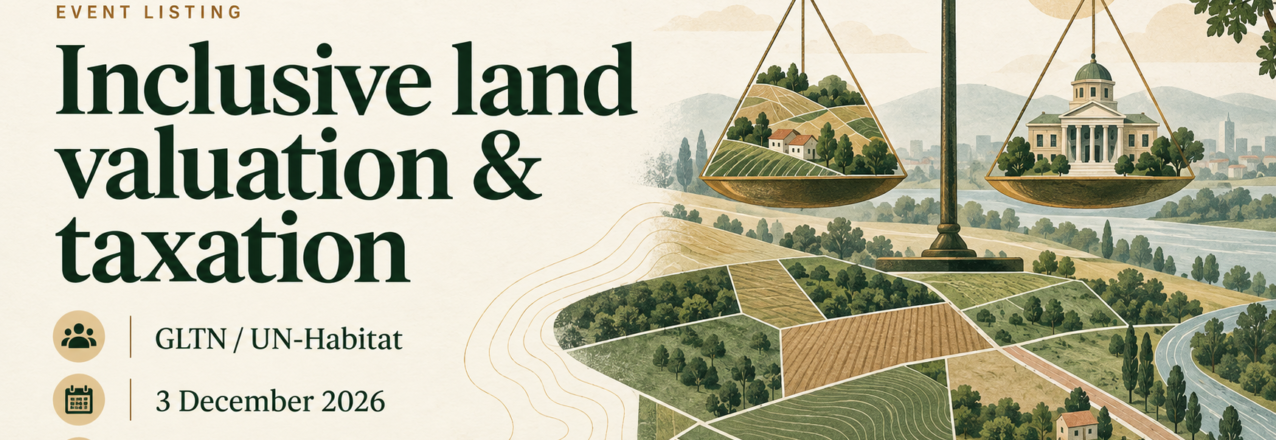
The Global Land Tool Network has announced a webinar on inclusive land valuation and taxation, scheduled for December 3 2026. Its focus places public revenue alongside the question of whose land interests are recognized in valuation systems.

GLTN’s published guidance explains why valuing unregistered land matters for taxation, transfers and land administration. It also draws attention to social, cultural and environmental dimensions of value. These issues make the announced session relevant to public authorities, valuers and organizations working on equitable land governance. Keep this date in your calendar and use the organizer’s registration link for participation information. The online session begins at 14:00 EAT (UTC+3).

Format  Online webinar

Register for the webinar

Gender-based violence as an impediment to women’s land rights

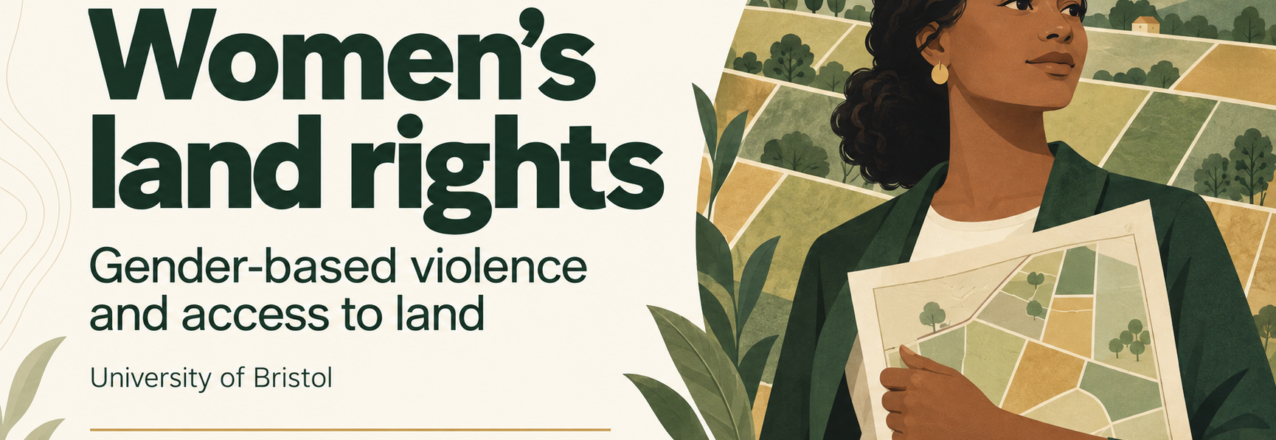
The University of Bristol’s Centre for Gender and Violence Research will host a free online seminar with Susie Jacobs on November 11 2026. The session examines how violence can prevent women from claiming land and exercising control over it.

Drawing on studies from different regions, Jacobs will consider disputes within households and kinship networks, where intimidation and violence may be less visible than attacks linked to large land acquisitions. The seminar also asks whether formal recognition of land rights can reduce women’s exposure to violence.

For land professionals, this offers a useful opportunity to examine what secure tenure means in everyday life. It connects the design of land interventions with the conditions women face when asserting claims.

Book a place through the university’s registration form. The published session time is 13:00–14:00; confirm the time zone when booking.

Format  Online seminar

Book a place

Regional perspectives on land tenure and family farming

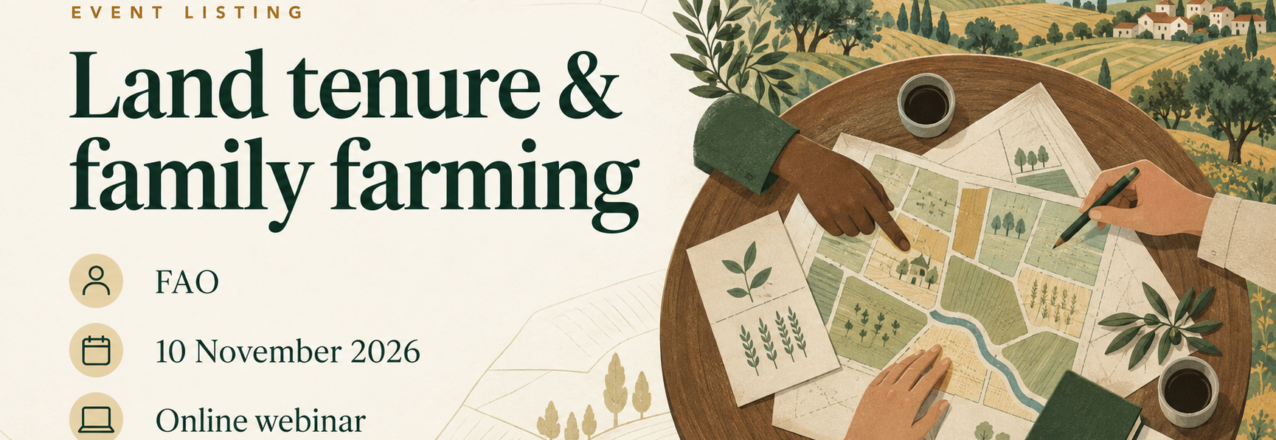
FAO’s concluding Asia-Pacific webinar on land tenure and family farming will bring together the priorities emerging from its regional series. The session is intended to help shape shared policy messages and continued cooperation.

The wider regional conversation addresses how institutions, evidence and inclusive dialogue can improve access to land. For family-farming organizations and land-rights practitioners, this creates a useful connection between local experience and policy development. It also offers a point of reference for researchers and public officials following the relationship between secure tenure and rural livelihoods. The webinar takes place online on November 10 2026, from 14:00 to 15:30 GMT+7. Registration is available through FAO.

Format  Online webinar

Register for the webinar

HEKS/EPER Land Forum 2026 Powered by variability

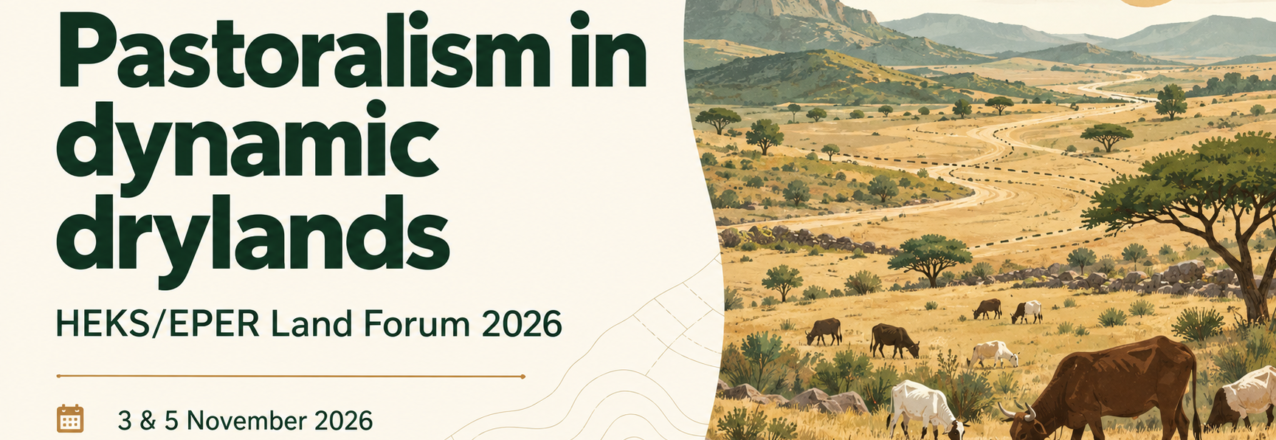
HEKS/EPER and Vétérinaires Sans Frontières Suisse will convene the 2026 Land Forum online on November 3 and 5. The forum explores how pastoral communities respond to changing environmental conditions, and how institutions and climate adaptation programs can support their approaches.

The first session examines pastoralists’ experiences and knowledge across regions. The second turns to project practice, governance and institutional support. Together, they provide an opportunity for the land community to consider how decisions about access to resources interact with livelihoods and adaptation. These questions are relevant to practitioners working on pastoral land governance, community participation and development policy.

Both sessions run from 14:00 to 16:00 CET. Presentations will be mainly in English, with interpretation in French, Spanish and Portuguese. Register through the organizer’s Zoom link. The published program includes contributions from pastoralist networks and practitioners across Latin America, East Africa and West Africa.

Format  Online

Register for the Land Forum

View the developing program

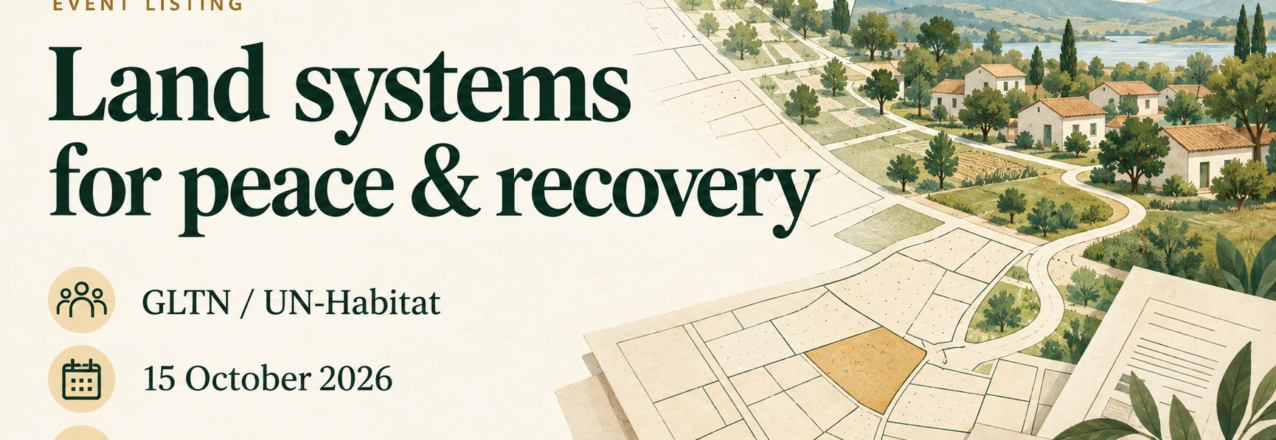
Strengthening Land Systems for Peace and Recovery

The Global Land Tool Network has announced an online session on strengthening land systems for peace and recovery. The theme connects land governance with the challenges facing communities affected by conflict and displacement.

Land records, functioning institutions and protection of housing, land and property rights can matter throughout recovery. UN-Habitat’s work highlights how existing tenure insecurity can complicate return, restitution and dispute resolution. This webinar is therefore a relevant date for practitioners working across land administration, humanitarian response and peacebuilding. It is scheduled for October 15 2026. The webinar begins at 14:00 EAT (UTC+3); advance registration is available through Zoom.

Format  Online webinar

Register for the webinar

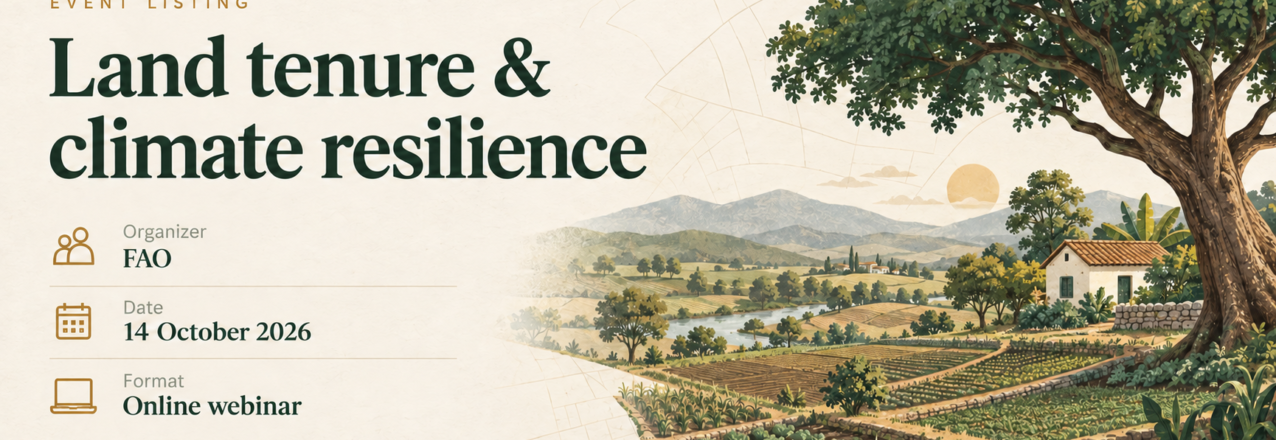
Land tenure for climate resilience and sustainable agrifood systems

Secure access to land matters for the choices family farmers can make as climate pressures grow. This FAO webinar connects tenure security with climate resilience, bringing customary and collective rights into the discussion of sustainable agrifood systems.

The session forms part of an Asia-Pacific exchange on land governance and family farming. It is relevant to people working across agricultural policy, community land rights and climate adaptation. Across the region, changing land uses and unequal access to resources make these connections increasingly important. The webinar offers an opportunity to consider land governance alongside farming and environmental priorities. Join online on October 14; advance registration is available.

Format  Online webinar

Register for the webinar

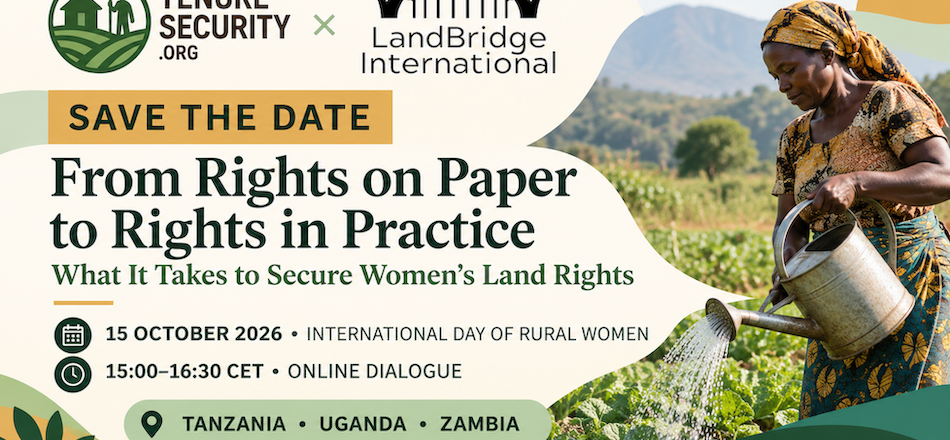
From Rights on Paper to Rights in Practice

Watch the webinar recording

What It Takes to Secure Women’s Land Rights

What stands between having a right to land and being able to document and exercise that right?

On October 15, the International Day of Rural Women, TenureSecurity.org and LandBridge International will bring together practitioners working on women’s land rights in Tanzania, Uganda, and Zambia for a conversation about the barriers that remain after laws, policies, and land-registration processes are in place.

The discussion will explore a deceptively simple idea: sometimes the final steps matter.

Fees, administrative requirements, travel, information gaps, institutional constraints, and social norms can prevent women from completing land documentation processes. But removing one barrier does not necessarily resolve the others.

Through experiences from three countries, we will ask what targeted “last-mile” assistance can accomplish, where its limits lie, and what practitioners are learning about the wider challenge of turning recognized rights into secure rights in practice.

Date: October 15, 2026

Time: 15:00-16:30. Central European time (CEST)

Format: Online | 90 minutes

Speakers

Neil Sorensen, Founder, TenureSecurity.org (Moderator)

Rania Ahmed, Co-founder, LandBridge International

Ailey Kaiser Hughes, Co-founder, LandBridge International

Amanda Richardson, Co-founder, LandBridge International

Christine Kajumba, Research Manager, Associates Research Trust Uganda

Kamiji Malasha, Gender Specialist, LandBridge International

Lungowe Chintu, Women’s Land And Resources Rights Advocate, Women’s Land and Resource Rights Platform

Mustapha Issa, CEO, Tanzania Land Tenure Assistance

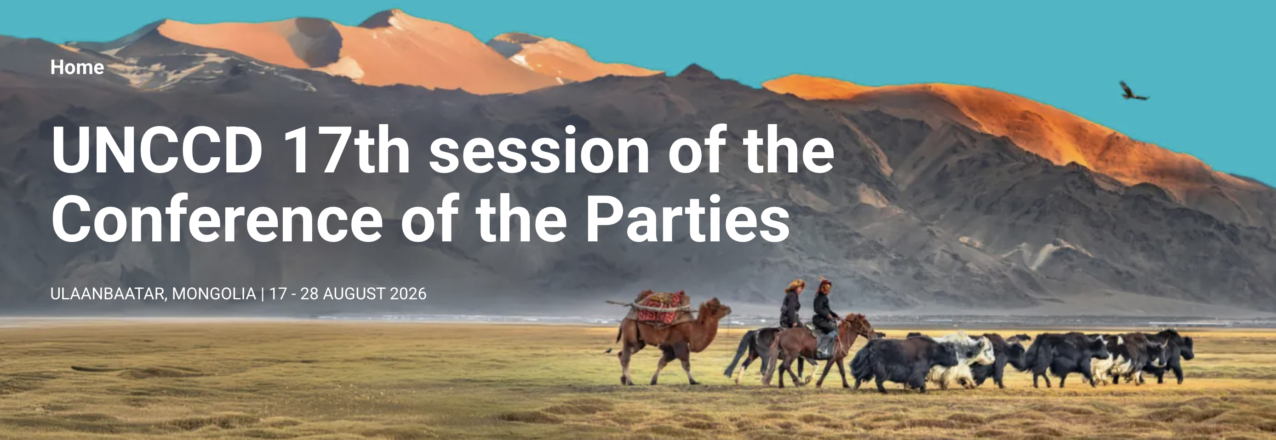
UNCCD 17th session of the Conference of the Parties

The 17th session of the Conference of the Parties (COP17) to the United Nations Convention to Combat Desertification (UNCCD) will be hosted by Mongolia in its capital city, Ulaanbaatar, from 17 to 28 August 2026 under the theme Restoring Land. Restoring Hope.

COP17 is expected to bring together delegates from UNCCD’s 197 Parties, alongside leaders from government, business and civil society, as well as scientists, youth, Indigenous Peoples, pastoralists and smallholder farmers. They will convene to forge solutions to the interconnected challenges of desertification, land degradation and drought, recognizing that restoring land is also essential to reducing instability, preventing displacement and strengthening human and national security in vulnerable regions.

“Land is our most vital infrastructure — underpinning food security, water, livelihoods and stability. When land fails, insecurity rises — through lost livelihoods, forced displacement and increased competition over scarce resources. With UNCCD COP17, Mongolia is offering the world a powerful message: Restoring Land, Restoring Hope is not only an environmental agenda, but a development and resilience priority. As drought intensifies and land degradation accelerates, the conference must drive practical, investable solutions — from restoring degraded land and soils to strengthening the land–water nexus — so that communities can thrive,” said UNCCD Executive Secretary Yasmine Fouad.

Land degradation is already affecting up to 40 per cent of the world’s land, with far-reaching impacts on food production, water availability, livelihoods and economic stability. COP17 offers a pivotal moment for countries and partners to strengthen implementation and mobilize greater investment in drought resilience and sustainable land management.

With a vast territory of 1.56 million square kilometers, Mongolia is among the countries most affected by desertification and land degradation, with nearly 77 per cent of its land already degraded. Hosting UNCCD COP17 in Ulaanbaatar will place international focus on land restoration priorities, including approaches that safeguard livelihoods, food security and ecosystems in dryland regions.

COP17 is taking place during the United Nations International Year of Rangelands and Pastoralists (IYRP 2026(, declared by the United Nations General Assembly and championed by Mongolia. This presents a major opportunity to accelerate action on the sustainable management, restoration and conservation of rangelands, while spotlighting the needs of pastoralist communities who depend directly on these ecosystems for their livelihoods.

Rangelands cover more than half of the Earth’s land surface, support the direct livelihoods of around 500 million people and provide one-sixth of the world’s nutrition needs, yet remain among the planet’s most overlooked and increasingly degraded ecosystems.

During the two-week conference, participants will engage in a high-level segment including ministerial dialogues, alongside multistakeholder forums and thematic discussions on science–policy integration, innovation and solutions, tools and technologies, and financing. In addition to formal negotiations, COP17 is expected to catalyze collective action on rangelands, resilience and water, as well as food systems and soil health.

In preparation for COP17, Mongolia has launched national initiatives linking land restoration with livelihoods and rural development, including the President-led “Billion Trees” National Campaign, initiated in 2021 and aiming to plant one billion trees by 2030. Mongolia has also expanded public engagement and youth participation through national dialogues and outreach activities, including the “Youth4Land” National Forum. Through the Mongolia Business Council, the COP17 Presidency has been engaging the country’s private sector in support of UNCCD’s Business4Land Initiative that aims to accelerate private sector action for sustainable land management.

Tenure on the Move: Launching a Legal Toolkit for Pastoral and Mobile Land Tenure Reform

In March 2026, RRI launched Moving Rights Forward, a collection of 8 case studies sharing unique insights into the lived realities of pastoralists and Mobile Peoples in Africa, Asia and Latin America. The analysis reveals the extent to which legal barriers persist in the recognition of their rights. On August 11, we’re turning research into action.

Join us for Tenure on the Move, where RRI, CAOI, ILEPA, MPIDO, and SWB will launch a legal guide on pastoralists’ and Mobile Peoples’ rights.

This webinar will provide an overview of the status of recognition of their rights and share direct policy and legal reform recommendations to influence national and global agendas at the upcoming UNCCD COP17 in Mongolia and beyond.

First Annual Local Capacity Strengthening (LCS) Policy Learning and Feedback Forum

One year after the launch of the Local Capacity Strengthening (LCS) Policy, USAID is excited to host the first annual Learning and Feedback Forum, which will take place virtually over six days between Tuesday, October 10, 2023 and Thursday, October 19, 2023. The Forum will help inform the direction of Policy implementation for the coming year and consists of 11 virtual one-hour sessions that are open to the public and USAID staff. View the full schedule and register here. Note the sector-specific session on Resilience, Environment, and Food Security on October 12  at 9 a.m. ET. Participants will have the opportunity to join constructive and transparent policy implementation discussions about how the LCS Policy is (or is not) affecting locally-led development in land and resource governance. Additionally, participants will learn about evidence-based guidance and resources to help ensure locally-led development is contributing to strengthening land tenure and property rights worldwide. For questions, e-mail LCSPolicyComments@usaid.gov.