
PRP Snapshot: July – September 2016

Women in Kosovo own a disproportionately small share of property. The USAID Property Rights Program (PRP) conducted a national survey in 2015, which among other things, revealed that only 16% of women in Kosovo own real property. Other research has corroborated these general findings. This situation poses a number of potentially negative consequences for women in particular and for Kosovo society in general. For the women, this can mean complete economic dependency on others; lost opportunities to pursue personal dreams and ambitions; and a reduced ability to help others in their families and in society. For the society, this means that women lack the opportunity to become entrepreneurs and create new businesses, to help the economy grow and to generate employment for others.

The reason why women own little property can be traced to patriarchal custom and traditions. Property has traditionally been passed on to male heirs only; and a daughter has traditionally been viewed as passing to their husband’s family. As a result of these practices, women in Kosovo typically do not inherit property from their parents, or they renounce their inheritance in favor of their brothers and sons. According to the same survey, only around 4% of women inherit real property from their parents. The most common reasons cited in the survey for this are adherence to traditional patriarchal values and accepted views on the appropriate roles for women (68% of women surveyed affirm this); a lack of knowledge of one’s legal rights; a reluctance to assert one’s rights; and a reluctance to deal with formal institutions.

To help address this, PRP is undertaking a number of activities designed to change common practices and social attitudes, using legal reforms and public advocacy. Here is one example of these efforts: to complement its ongoing national media campaign on TV, radio and social media to support women’s property rights (under the rubric, For Our Common Good, with 24 media products to date), PRP is conducting grassroots, community-level activities to bring this message to Kosovo citizens directly – with a particular focus on youth. PRP launched this national initiative with a visibility event in the municipality of Viti/Vitina, where PRP is carrying out a number of local initiatives to assist the local authorities to make it easier for their citizens to register their property.

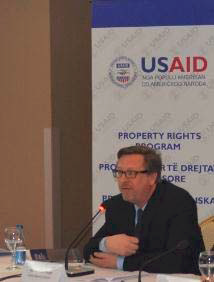
The event brought together a number of PRP initiatives and marshalled important national and local support. The US Ambassador, the First Deputy Prime Minister, and the Mayor of Viti/Vitina made remarks in support of women’s property rights. The launch event also featured an exhibition of local second-graders’ drawings on the topic, “Home and Family,” from a children’s art activity that PRP had organized in Viti/Vitina the previous month; and a video clip from that activity was presented at the launch event. (PRP is using these drawings in other aspects of its grassroots campaign.)

In addition, the launch event featured testimonials from two women from the community about their own positive experience in exercising their property rights and helping other women to do so.

The central feature of the launch event was a demonstration of Forum Theater, to show how art and other non-conventional media can be employed to raise social issues and advocate behavior change. The production addressed daughters’ inheritance, and following the dramatic presentation, local high school students made comments and posed questions to the characters in the play.

The event was very well attended and generated extensive national and local publicity.

PRP Snapshot: January – March 2016

Women in Kosovo own a disproportionately small share of property. The USAID Property Rights Program (PRP) conducted a national survey in 2015, which among other things, revealed that only 16% of women in Kosovo own real property. Other research has corroborated these general findings. This situation poses a number of potentially negative consequences for women in particular and for Kosovo society in general. For the women, this can mean complete economic dependency on others; lost opportunities to pursue personal dreams and ambitions; and a reduced ability to help others in their families and in society. For the society, this means that women lack the opportunity to become entrepreneurs and create new businesses, to help the economy grow and to generate employment for others.

The reason why women own little property is that they do not inherit property from their parents, or they renounce their inheritance in favor of their brothers and sons. According to the same survey, only around 4% of women inherit real property from their parents. The most common reasons for this are adherence to traditional patriarchal values and accepted views on the appropriate roles for women (68% of women surveyed affirm this); a lack of knowledge of one’s legal rights; a reluctance to assert one’s rights; and a reluctance to deal with formal institutions. To help address this, PRP is undertaking a number of activities to bring this situation to the attention of the public and to prompt reflection and a change of attitude about the right of women to own and use property. PRP has begun these efforts with a media campaign in Kosovo using TV, radio and the social media, For Our Common Good, under the auspices of the Office of the President of the Republic of Kosovo and in close cooperation with the Ministry of Justice of the Republic of Kosovo.

For this media campaign PRP has developed and produced in this Quarter a total of twenty media products. These include public service announcements (PSAs), news feature stories, and radio advertisements.

The media products have been designed for three different target audiences — women of ages 18-35; men of ages 18-35; and parents of ages 45-65 — because these groups have the most impact on attitudes and behaviors affecting women’s ability to exercise their property rights.

It should be noted that these media products target both the Albanian and Serbian communities within Kosovo, and feature interviews with Kosovo citizens as well as vignettes about Kosovo women who have used property to benefit themselves, their families and their communities. The appearance in these products of real citizens who speak their own minds and share their person experience gives their message an authenticity and a compelling appeal. These products are well received and have generated many positive responses and comments.

To complement this national media campaign PRP is developing a variety of other kinds of public outreach activities to help reshape the attitudes about women’s property rights, including local grassroots advocacy, connecting small business women with local role models and mentors, and other forms of outreach designed to gain the attention and interest of local communities.

TGCC Snapshot: Clarifying Traditional and Government Dispute Resolution Processes in Burma

Attendees at the June 2015 national workshop to review the 6th draft of the National Land Use Policy.

Over the past year, USAID and other donors have supported the government of Burma and civil society organizations on the development of the country’s first National Land Use Policy. In particular, donors have supported multi-stakeholder forums that give civil society and government a chance to constructively critique drafts and identify common solutions. This process has opened up dialogue between government and civil society on a variety of topics, including the rights of ethnic communities.

The draft policy would strengthen the rights of local populations by re-categorizing ethnic ancestral lands in accordance with the new land law and would halt the granting of concessions on existing categories, such as forest, farm, or fallow land, before completing the re-categorization. “(Through these forums) we have seen improvements in respect for ethnic rights. But there are still limitations,” said U Zaw Win Phyo, the chair of Resource Rights for Indigenous Peoples.

Civil society groups have welcomed the acceptance in the policy of traditional dispute settlement practices, and inclusion ethnic representatives in dispute-settlement procedures. Yet, questions around how traditional dispute resolution would interact with state processes remains contentious. “The traditional dispute settlement mechanism is recognized at the community level, but when the dispute is referred to the court, the mechanism should not contradict the existing judicial system. The decision will be made by the judge,” said U Tint Swe, the Director of the Forest Administration Department of the Ministry of Environmental Conservation and Forestry.

The multi-stakeholder forum held in June 2015 to discuss the 6th draft of the policy decided to send the inputs of ethnic organizations regarding the role of traditional dispute settlement to the Land Use Scrutiny and Allocation Central Committee, a government body led by Vice President U Nyan Tun. The Committee promised to update the draft in keeping with the decisions taken by the multi-stakeholder forum. The success of this process in raising and addressing contentious issues has been praised by both government and civil society, and is likely to act as a model for future policy processes in Burma.

PRP Success Story: Selection Of The ‘Courts of Merit’ Towards Improving Court Adjudication Cases

Synergies and joint efforts in improving the practices contributes towards processing and resolving in a more efficient manner the property cases in courts

Strengthening the laws and practices and procedures relating to property disputes and resolving them in a fair, efficient manner, accessible to all is key to advancing economic growth and enhancing confidence in the justice system in Kosovo.

To support this process, the USAID Property Rights Program (PRP) is working closely with the relevant judicial institutions in supporting the development and institution of court reforms in the judicial processing of property related cases.In this regard, a series of roundtable sessions have been

In this regard, a series of roundtable sessions have been organized and based on the review of the literature coupled with feedback received from interviewed judges in the courts of Ferizaj, Gjilan, and Gjakova, findings regarding the current state of property adjudication cases were formulated in a court assessment by the PRP.

Four ‘Courts of Merit’, the Basic Courts of Gjilan, Peja and Ferizaj with its Branch in Sterpce municipality were identified by the Chair of the Kosovo Judicial Council, the Presidents of the seven Basic Courts, the Supreme Court President and Court of Appeals President to serve as a vehicle to pilot reforms to improve judicial performance in the adjudication of property rights cases.

Aiming to implement and track the effect of changes, close coordination with the relevant judicial institutions in selection, design, and implementation of the ‘Courts of Merit’ will ensure that the vision set by the PRP and Kosovo Judicial Council (KJC) meet the institutional expectations for a participatory process with sustainable results. The success and sustainability of assistance will improve court processes to more efficiently resolve property related claims and disputes.

The USAID Property Rights Program will continue to build and maintain a collaborative working relationship with KJC and other judicial institutions to ensure ownership that leads the court reform process in Kosovo.

PRP Success Story: PSA Launch Event Features President and U.S. Ambassador

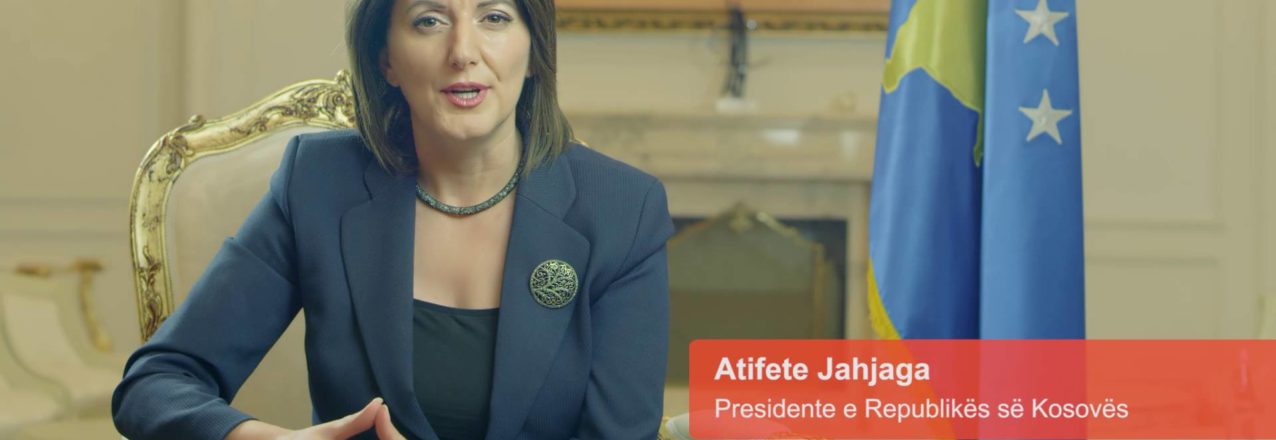
Efforts to change social attitudes and behavior often encounter deeply held beliefs and entrenched habits.  Identifying highly respected or charismatic individuals with such campaigns can help mitigate this challenge.  The USAID Property Rights Program (PRP) has taken its communications strategy further with the successful launch of its inaugural public service announcement (PSA) addressing the difficulties that women in Kosovo face in exercising their property rights – particularly in claiming their inheritance.  The launch event featured remarks by Kosovo President Atifete Jahjaga, U.S. Ambassador Greg Delawie, and Kosovo Minister of Justice Hajredin Kuçi. Over 130 persons attended the event, representing Kosovo governmental institutions, municipal bodies, civil society, donors and the public at large.

In her remarks, President Jahjaga made reference to another PRP-led effort, the development of a National Strategy on Property Rights, which is being developed in coordination with the Ministry of Justice.  Minister Kuçi reaffirmed his commitment to introducing safeguards to prevent the misuse of the right to renounce property inheritance.

This PSA featured a multi-generational story told from the perspective of a young girl describing the increasingly progressive treatment of property inheritance in Kosovo society.  This story was followed by a series of appearances from notable public figures in Kosovo society expressing their strong support for basic fairness and a recognition of the equal rights of men and women to own property.

In the upcoming months, PRP will continue this campaign, “Për Të Mirën Tonë” (“For Our Common Good”) to influence social attitudes and behavior related to the ability of women to exercise their property rights and to encourage women themselves to become more willing to exercise those rights on their own behalf. The campaign will employ a variety of media and approaches to disseminate these ideas, including TV and radio, newspapers, social media, interactive theatrical performances and other avenues for public outreach.

PRP Snapshot: April – June 2016

Women in Kosovo own a disproportionately small share of property. The USAID Property Rights Program (PRP) conducted a national survey in 2015, which among other things, revealed that only 16% of women in Kosovo own real property. Other research has corroborated these general findings. This situation poses a number of potentially negative consequences for women in particular and for Kosovo society in general. For the women, this can mean complete economic dependency on others; lost opportunities to pursue personal dreams and ambitions; and a reduced ability to help others in their families and in society. For the society, this means that women lack the opportunity to become entrepreneurs and create new businesses, to help the economy grow and to generate employment for others.

The reason why women own little property can be traced to patriarchal custom and traditions. Property has traditionally been passed on to male heirs only, and a daughter has traditionally been viewed as passing to their husband’s family. As a result of these practices, women in Kosovo typically do not inherit property from their parents, or they renounce their inheritance in favor of their brothers and sons. According to the same survey, only around 4% of women inherit real property from their parents. The most common reasons cited in the survey for this are adherence to traditional patriarchal values and accepted views on the appropriate roles for women (68% of women surveyed affirm this); a lack of knowledge of one’s legal rights; a reluctance to assert one’s rights; and a reluctance to deal with formal institutions.

To help address this, PRP is undertaking a number of activities designed to change common practices using legal reforms and public advocacy. Here is one example of these efforts: PRP worked closely with the Agency for Gender Equality to draft an administrative instruction under the Law on Gender Equality that makes it possible for spouses to register their property jointly. PRP also facilitated discussion and coordination between the AGE and other relevant government bodies, such as the Kosovo Cadastral Agency and the Ministry of Finance. In addition, PRP produced an animated video (in Albanian and Serbian versions) for Kosovo television to inform the public about the administrative instruction and provide guidance on how they can register property jointly.

The animated video was unveiled at a round-table on the administrative instruction that was sponsored by the AGE and chaired by the Prime Minister, with remarks by USAID Mission Director James Hope.

This work, and the production of the animated video, complement PRP’s media campaign underway, for which PRP has developed a total of 24 media products for television, radio, and social media, under the rubric, For Our Common Good, under the auspices of the Office of the President of the Republic of Kosovo and in close cooperation with the Ministry of Justice of the Republic of Kosovo.To complement this national media campaign PRP is developing a variety of other kinds of public outreach activities to help reshape the attitudes about women’s property rights, including local grassroots advocacy, connecting small business women with local role models and mentors, and other forms of outreach designed to gain the attention and interest of local communities.

To complement this national media campaign PRP is developing a variety of other kinds of public outreach activities to help reshape the attitudes about women’s property rights, including local grassroots advocacy, connecting small business women with local role models and mentors, and other forms of outreach designed to gain the attention and interest of local communities.


PRP Success Story: Kosovars for Equal Property Rights

It is important to convey believable role models and behaviors, and focus group discussions with audiences revealed their need to hear messages and stories from real, respected, and reliable sources.

Interventions that encourage societal changes in knowledge, attitudes, and behaviors, combined with strong policies and legal enforcement, will support the achievement of a key USAID objective – improved access to and ownership of land and property in practice, especially for women.

The USAID Property Rights Program (PRP) is implementing an innovative communications strategy that employs participatory approaches and best practices for social and behavior change.

Using survey data from the National Baseline Survey for Property Rights, a report commissioned by PRP to provide a better understanding of the knowledge, attitudes, and practices of Kosovo citizens on property rights issues, PRP organized nine Focus Group Discussions (FGDs) in collaboration with CSO partners in three major regions of Kosovo to develop in a participatory manner messaging designed to reach to the following targeted audiences: (A) married or widowed women ages 18-45 with brothers; (B) married men ages 18-45 with sisters and/or daughters; and (C) parents ages 45-65 with grown children.

The focus groups discussed their individual media viewing habits, famous persons whom they consider to be respected and trustworthy, and other issues.  Participants were quite candid regarding the impact of tradition on attitudes about inheriting and transferring property.  Through the course of this lively discussion, the groups voted on their preferred tagline for the general campaign and identified the messages that best represented them.

The preferred tagline for the Campaign is:

‘For Our Common Good: Kosovars for equal property rights’

The messages receiving the most votes from each target group are:

Women’s Message: ‘Keep your and your family’s inheritance – it’s your right!’

Men’s Message: ‘We support women’s property rights because it’s right for our families.’

Parents’ Message: ‘We support our daughter’s right to inherit just as our son’s. Do you?’

This valuable information will be used to shape PRP’s upcoming media campaign, which will be developed and carried in close cooperation with the Office of the President, the Government of Kosovo as well as donors and CSO partner organizations under the rubric, ‘Për të mirën Tonë’ (‘For Our Common Good’).  The campaign will inform citizens of their rights, court, and procedures related to property rights, the importance of joint titling of land and property assets, and the importance of keeping one’s inheritance.


LRDP Monthly Highlights: May 2017

The Land and Rural Development Program (LRDP) is a five-year task order funded by the United States Agency for International Development (USAID) under the Strengthening Tenure and Resource Rights (STARR) Indefinite Quantity Contract. LRDP is intended to assist the government of Colombia to strengthen its institutional capacity to develop tools, systems, and skills that will enable it to fulfill its mandate to resolve land issues at the heart of Colombia’s decades-long internal conflict.

Program Highlights

Dairy Field School – Milk-PPP partners launched the dairy farmers’ field school for milk producers in Meta, and welcomed several new partners to the alliance, which now reaches over 100 dairy farmers from six dairy associations.

99% Time Reduction – A new IT system allows LRU staff to easily monitor the status of land restitution claims and the implementation of restitution rulings.

2nd Land Office – A municipal land office in Santander de Quilichao (Cauca) becomes the country’s second such office and allows the local administration to title publicly owned lands, become a link with the National Land Agency, and promote land formalization.

51 Restitution Rulings – Study analyzes gender inclusion in 51 restitution rulings involving women, and delivered a list of recommendations for the LRU to ensure rulings are more responsive to women.

The USAID Land and Rural Development Program (LRDP) supports the government of Colombia to build the institutional architecture needed to effectively govern land in rural areas. At the national level, the program troubleshoots institutional policies and procedures that prevent GOC entities from administering land in an efficient and cost-effective manner. At a regional level, the program delivers packages of overlapping land and rural development interventions that increase access to the land and productive assets restituted families need to earn a livelihood.

News from the Program

Meta’s Milk APP partners launched the dairy farmers’ field school for milk production for the more than 100 dairy farmers in Meta. The school—which is run by Meta’s government with the support of LRDP, Alquería, and the Nature Conservancy—teaches farmers about issues relating to sanitary, biological, and chemical risks. Also, new actors: Sena, Colombian Agricultural Institute, Nature Conservancy, and two new producer associations from the Ariari region signed onto the PPP. In Cauca, USAID facilitated a commercial agreement between indigenous Nasa farmers in the municipality of Jambaló and the Colombian firm Comfandi, which guarantees the purchase of one metric ton of lulo every two weeks. In return for a steady supply of high-quality fruit, the company will increase the purchasing price by an average of 30%, from 1,750,000 to COP2,250,000 (US$700-900) per ton. This agreement currently benefits 8 families, which could reach 17 families in the coming months. Also, the Cacao APP in Montes de María mobilized more than $613,000,000 COP (US$245,000) from the Ministry of Agriculture to plant 36 ha for 36 families, and Fedecacao delivered technical assistance and training to 70 cacaoteros in the region.

Colombia’s second municipal land office was officially launched in Santander de Quilichao, Cauca. The land office establishes a local link with the National Land Agency and allows municipal leaders to title publicly owned lands (e.g., schools) as well as some private parcels. In addition, USAID supported the creation of the Municipal Formalization Plan, outlining the status of 30,000 parcels in the municipality. The land office recently began the formalization process for a public parcel in La Chapa, where the mayor plans to build a water treatment plant that will serve several villages. The Ovejas (Sucre) land office, the first such office supported by USAID, issued 105 land titles to vulnerable residents in the center of Ovejas in the period. Over 90% of the recipients are women. Both offices promote a culture of formalization that serves as a model for other municipalities.

USAID carried out study on the inclusion of women and women’s issues in restitution rulings. The program analyzed 51 restitution rulings that benefit 110 women in Tolima and Montes de María, synthesizing a number of findings regarding the extent to which judges included gender-specific reparations in their rulings, as well as whether these reparations are being effectively implemented by relevant government entities. The analysis revealed that despite legislative and institutional progress, there are still some worrying trends concerning women’s enjoyment of the benefits of land restitution. Based on these findings, LRDP prepared a set of recommendations for the Land Restitution Unit and other entities with the goal of making their actions more responsive to women.

A new electronic information system reduces processing time by 99 percent for the Land Restitution Unit. With USAID’s support, the Land Restitution Unit launched a new web-based information system for its 28 offices throughout Colombia. This new tool allows restitution staff to easily monitor the status of land restitution claims and the implementation of restitution rulings. Previously, this information was kept on Excel files and was cumbersome to track and manage, in addition to being more susceptible to errors and mismanagement. With this online tool, staff are experiencing a 99% reduction in the time needed to track the status of a restitution claim, which in turn contributes to a more efficient restitution process for victims and their families.

PRP Success Story: Strengthening Gender, Property and Economic Opportunity in Kosovo

“USAID is committed to assist the Ministry of Justice’s efforts to institute safeguards that will help prevent women from being pressured to renounce their rights to inherit property because ensuring that women have equal rights to property helps empower women to engage in Kosovo’s economy and contribute to its growth” – Mr. James Hope, USAID Mission Director

Promoting equality between girls, boys,  men, and women in Kosovo is crucial to ensuring sustainable progress and prosperity.

However, even though the laws addressing gender and property in Kosovo meets modern standards, there are inconsistencies within the legal framework which make the interpretation and administration of these laws often difficult and unclear.

In recognition of this challenge, the USAID Property Rights Program (PRP) is working closely with the Government of Kosovo as well as donors and CSO partner organizations in supporting the development of a multi-faceted reform effort to be undertaken by the Ministry of Justice, line ministries and agencies which aim to better clarify how women can access and retain their rightful ownership to property.

Continuing its efforts to Enhance Women’s Rights to Use Property in Practice, the Program publicly released a report on ‘Gender, Property and

Economic Opportunity in Kosovo’, highlighting a range of issues currently preventing women from effectively exercising their property rights, and in some cases limiting business opportunities for women which would otherwise be available to them.

This activity is in line with the Minister’s reform initiative to develop legislation that will provide stricter safeguards against undue pressure and coercion experienced by women to renounce their rights to inherit property.

Moreover, efforts to secure the property rights of more than half of Kosovo’s population not only strengthens the rule of law, but it also helps to promote the country’s economic growth.

Increasing the efficiency and accountability in the adjudication of property rights cases, enhancing communication and outreach activities to begin to change cultural attitudes and behaviors and improving administrative processes at the municipal level requires joint efforts with partner organizations assisting the Ministry and other government agencies involved with property rights matters in Kosovo.

Supporting the Ministry’s initiative is at the core of USAID’s Property Rights Program assistance to strengthen and protect women’s rights to property. The continued promotion of economic opportunity for women through land will encourage a larger share for them in the growing prosperity in Kosovo.


LGSA Success Story: Surveyor’s Association Finding Its Footing

Presentation of APLSUL legal documents to J. Josephus Burgess, Interim President by Archie Bawo, LGSA Land Administration Specialist. Photo Credit: Archie Bawo / USAID LGSA

Surveying and mapping plays a very important role in an effective land administration system. As Liberia strives for an improved land administration system that meets global standards, efforts are being made to establish a professional land surveyors association to collect and provide spatial information. Their services form a significant part of the land information infrastructure and management component of the land administration system.

A key transition in this process of institutionalizing surveyors is the legal transformation from the Cadastral Surveyors Association of Liberia (CASUAL) to the Association of Professional Land Surveyors of Liberia (APLSUL). Since USAID’s Land Governance Support Activity (LGSA) began actively engaging and supporting APLSUL, the association has started taking key, progressive steps in ensuring that it transforms the association as reforms take place within the land governance system.

Motivated by LGSA’s support, APLSUL members have started pledging their support in the forms of tangible commitments to the association, by paying four months of their dues in advance, some making additional financial contributions for the operations of the association, while one donated 5KVA generator for use at the new office. Office space has been procured and an ad-hoc elections commission has been established by the association to supervise APLSUL’s upcoming special general elections slated for April 25, 2016. Furthermore, the association is in the process of developing a code of conduct and grievance procedure, which will be adopted during the Electoral Workshop on April 9, 2016. This, and the associated publicity campaign, will assist in increasing public confidence in the profession as it provides a necessary mechanism for reprimanding its members and other surveyors for professional malpractice, thereby becoming a self-regulating professional organization.

APLSUL has also begun a massive public relations and visibility campaign through radio talk-shows, newspaper articles, and banners placed in public locations. This campaign publicly conveys the Association’s transformation, which will help to increase the public’s confidence in the profession.

Finally, APLSUL is also in the process of paying arreears and renewing its membership to the International Federation of Surveyors (FIG), to lift the expulsion of Liberia from the membership of that international body. Maintaining its membership will allow members to stay current on new developments and innovation in geometrics that could enhance their profession and possibly open opportunities for assistance with the training needs of surveying and mapping in Liberia.