

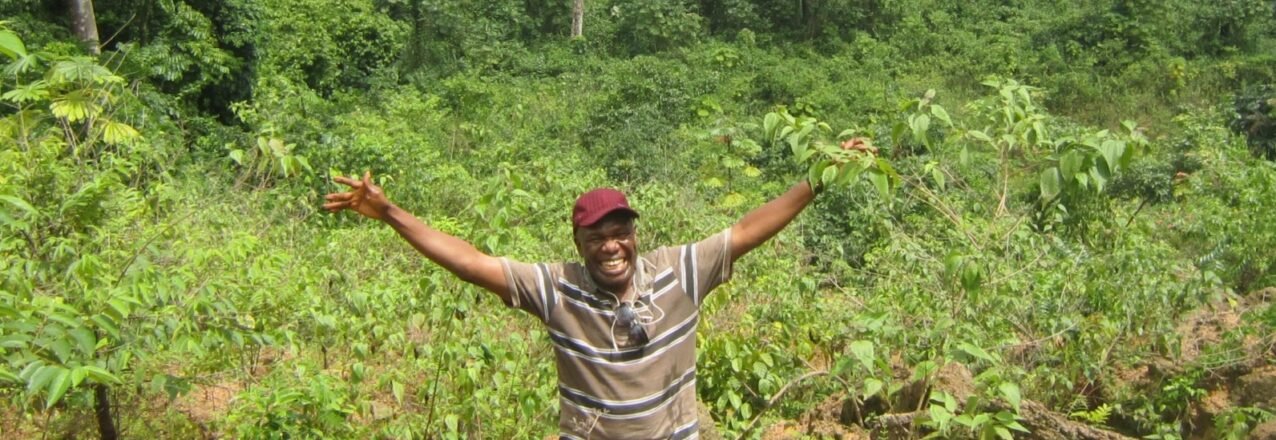
Dr. Moses M. Ama explains how forest communities in Nigeria’s Mbe Mountains helped shape a land rights plan and what it will take to put it into practice.
In northern Cross River State, Nigeria, nine communities have managed a shared forest since 2007 through the Conservation Association of the Mbe Mountains. With support from the Wildlife Conservation Society, they help protect a forest corridor for the critically endangered Cross River gorilla. The same landscape is now a focus of the state’s work to clarify customary land rights. (WCS Nigeria)
Cross River State was an early endorser of the Intergovernmental Land Tenure Commitment (ILTC), launched in Belém, Brazil, at COP30 in November 2025. The collective goal is to extend tenure rights across at least 80 million hectares in tropical forest countries by 2030 and strengthen protection and governance across another 80 million hectares where tenure rights are already recognized. The commitment concerns Indigenous Peoples, local communities, and people of African descent. (Commitment text)
A year later at COP31 in Antalya, Türkiye, a November 17 session co-organized by the Global Land Alliance will review implementation. The session is part of the Land Tenure Plan to Accelerate Solutions, which brings governments, rights holders, funders, and technical partners together to identify what support is needed. Funders have separately pledged US$1.8 billion for forest and land tenure from 2026 through 2030. (COP31 program)
On November 8, I spoke with Dr. Moses M. Ama, a Nigerian specialist in forest management, governance, and climate change. He has worked with the Global Land Alliance on Cross River State’s implementation plan. I asked what communities wanted from the plan and what it would take to put their priorities into practice.
The questions and answers were edited for length and clarity.
Why do secure land rights matter in the Mbe Mountains?
People depend on their ancestral lands for farming, for gathering forest products other than timber, and for cultural practices. Those long-standing ties to the land are part of what drives communities to protect the forest and its wildlife while pursuing local development.
When communities are unsure where their rights apply, especially where their lands meet protected areas, conservation rules can feel like restrictions imposed on resources they have traditionally managed. That can weaken local participation. Communities are better placed to protect forests over the long term when their rights are secure, they help make decisions, and they have a fair stake in the benefits.
What has moved forward since Cross River State endorsed the ILTC?
We have moved from a political commitment to developing and reviewing an implementation plan. The technical working group brought together government institutions, civil society organizations, and academics to refine it. We took the proposals to communities in the Mbe Mountains for review. Farmers, women, traditional leaders, and other community representatives identified land rights concerns that the plan needed to address.
The plan sets out how the state could document customary boundaries, involve communities in decisions, and give people a way to raise grievances. Some boundaries remain poorly documented. Communities have raised questions about where customary lands meet protected areas. Some have asked to expand enclaves where they can live and farm within forest reserves. These issues have to be worked through with the communities and the relevant authorities.
Trust also affects whether people will take part. Some communities have expressed concern about the limited benefits they see from timber harvesting in their area, including royalty payments. When people are unsure what they are entitled to and how those benefits are shared, their confidence in conservation initiatives can suffer.
What are communities asking for, and how have they shaped the plan?
People want their customary boundaries to be clear and their traditional institutions to have a recognized role. They have asked for formal registration and certification of customary lands to strengthen the legal recognition of ancestral rights. They also want protection against arbitrary restrictions and clear arrangements for sharing benefits.
Communities ask how protecting the forest will support local development and livelihoods. They want the interests of women, young people, farmers, and people who gather forest products to count in decisions about how land and resources are used.
The consultations and community review sessions helped us bring those priorities into the plan. Community feedback is also shaping how we strengthen processes for free, prior and informed consent. People should continue to have a say as decisions are made and have a role in monitoring what happens on their lands.
What did the Global Land Alliance contribute?
The Global Land Alliance helped us get to the Mbe Mountains and speak with people directly. We were able to bring community representatives together and hear what they wanted the plan to address. That fieldwork helped put customary land rights and a role for communities in forest governance at the center of the plan.
The Alliance brought technical expertise as well as support for those consultations. Continued support could help communities map their customary lands, strengthen local governance, and help the institutions involved work out how to recognize rights in practice.
What would it take to deliver lasting tenure security by 2030?
We need to map boundaries with communities and document how customary tenure works in each place. That will help the authorities develop ways to recognize legitimate community rights within Nigeria’s legal framework. The bodies responsible for land administration, forestry, environmental protection, and community development need clear responsibilities for carrying out the plan.
Community participation should be part of routine forest governance. Women, young people, farmers, and traditional leaders need a meaningful role in decisions. We should apply the Gender Action Plan across relevant land and forest programs and give community monitoring teams the training and equipment they need to track what is happening in the forest.
Restoration, monitoring, and livelihood programs need dedicated budget lines, especially where forests face significant pressure. Cross River State should put this work into its development plans and forestry programs and connect it to climate finance so it can continue beyond short grants. We also need resources to share what we have learned with other states and work toward a national dialogue on land tenure.
What should climate leaders know about Nigeria’s forest communities?
Forest communities are among the most important partners in protecting forests. Their livelihoods, histories, cultures, and customary ties to the land are bound up with how forests are managed. Community stewardship is one of our greatest assets. If we want to protect biodiversity and meet our climate commitments, we have to protect the rights, dignity, and livelihoods of the people who depend on forests.
This interview is part of the Global Land Alliance’s COP31 communications, with TenureSecurity.org as communications partner.
Additional public background
FCLP report on the 2025 Calabar land tenure workshop
Global Land Alliance on its support for the land tenure commitment