
Overview
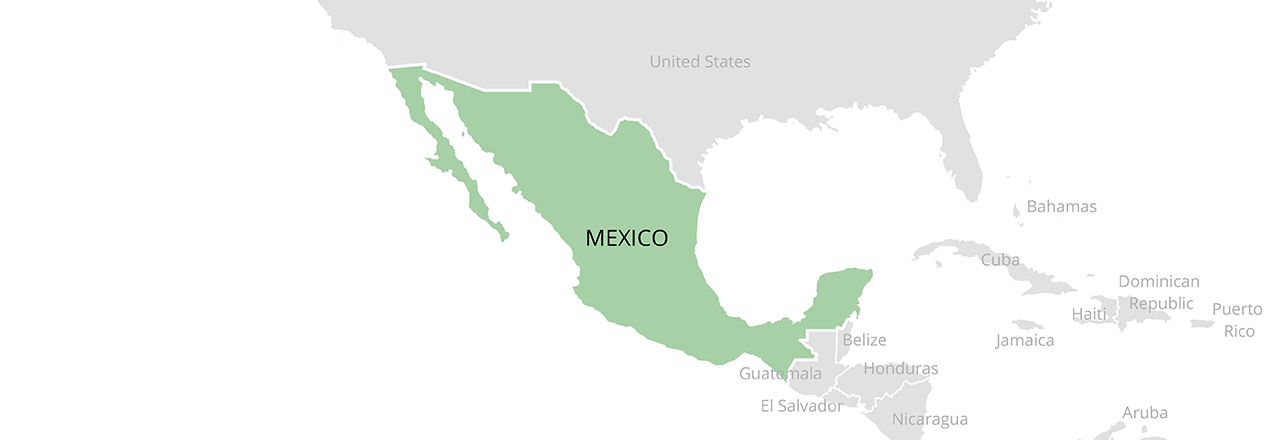
Mexico’s land system includes private property, public land and extensive social property held by ejidos and agrarian communities. The Mexican Revolution and subsequent land redistribution established much of this system. A 1992 constitutional and statutory reform changed the rules governing ejidal land, but did not automatically privatize it or dissolve community institutions.
Land governance is closely tied to Indigenous and Afro-Mexican rights, agricultural livelihoods, community forestry, water scarcity, mining, urban expansion and violence. The Agrarian Law establishes rights and procedures, while actual security depends on local participation, records, dispute resolution and the ability to exercise rights without intimidation.
Historical Context
Colonial dispossession, large estates and the Mexican Revolution shaped the demand for agrarian redistribution. Article 27 of the 1917 Constitution provided the basis for land reform, and ejidos and agrarian communities became central institutions for rural landholding. Distribution created collective entities alongside individually assigned parcels, settlement areas and common-use lands.
The 1992 reform ended the constitutional basis for mandatory redistribution and enabled new forms of transfer and, under specified procedures, conversion of some ejido parcels to full private ownership. Certification programs mapped and documented rights, but social property remains a major part of the national land system. The effects differ among ejidos and regions.
Legal and Institutional Framework
Constitutional Articles 2 and 27, the Agrarian Law and related environmental, water and sectoral laws govern land and resource rights. Ejido assemblies make major decisions under statutory procedures. The National Agrarian Registry records social-property rights; the Agrarian Attorney’s Office provides assistance, and agrarian tribunals adjudicate disputes.
The September 2024 constitutional reform recognizes Indigenous peoples and communities as public-law entities with legal personality and their own assets, and recognizes corresponding rights for Afro-Mexican communities. It also addresses consultation and the equal participation and land rights of Indigenous and Afro-Mexican women. These constitutional guarantees require effective implementation.
Ejidos and Agrarian Communities
An ejido commonly includes individually assigned parcels, common-use land and a settlement area. An assembly of recognized members is its highest decision-making body, with representative and oversight bodies. Agrarian communities have their own legal status and collective institutions. A person who lives or works in an ejido is not necessarily a recognized ejidatario or comunero; membership, possession and use can carry different rights.
Articles 81–83 of the Agrarian Law require an eligible assembly decision before individual parcel holders may choose dominio pleno, or full ownership, under the prescribed procedure. Conversion of a parcel does not automatically change the legal status of all other ejido land. Common land, parcel rights and assembly decisions should be examined separately.
Indigenous and Community Tenure
Indigenous territorial relationships can encompass forests, water, sacred places and customary institutions beyond individual plots. Some Indigenous communities hold land as agrarian communities or ejidos; Indigenous identity and a particular form of agrarian registration are related but not identical. Community authorities and local rules vary across the country.
The 2024 reform requires consultation and good-faith cooperation through representative institutions before legislative or administrative measures that may significantly affect Indigenous communities, with the aim of obtaining consent or agreement as specified in the Constitution. A consultation’s legality and effectiveness depend on timing, information, representation and the particular circumstances; holding a meeting alone is not proof of meaningful participation.
Women’s Land and Property Rights
Women may inherit, hold and exercise agrarian rights, yet formal recognition and participation remain unequal. Land may pass through male relatives, women may be recorded as possessors rather than members, and care work, migration and social expectations can limit attendance and influence in assemblies. Women who farm or use common resources are not always represented in land decisions.
The national territorial and urban development program, citing the agrarian registry, reports that women represented 27.5 percent of people with agrarian rights in 2023. This is a registry measure, not the share of all women who use land. In October 2026, SEDATU published the Centli guide to women’s agrarian and forest rights and procedures.
Land Administration and Data
The National Agrarian Registry records ejido and community documents and rights, while state public property registries handle private property. Cadastres, municipal plans, environmental information and water concessions are maintained by different institutions. A parcel’s legal status and an updated record of its holder are necessary for many transactions but do not settle all land-use or resource conflicts.
Registration programs can clarify boundaries and support succession, yet people without recognized membership or complete documents may be left out. Accessible services, transparent assembly records and effective correction and appeal procedures are important. Data should distinguish members, possessors, residents and actual resource users rather than treating them as interchangeable.
Land Conflicts and Displacement
Disputes arise over boundaries, inheritance, common lands, infrastructure, extractive concessions and land-use change. Some are longstanding conflicts between agrarian communities; others involve private interests or public projects. Insecurity, organized crime and attacks on environmental and land defenders can prevent people from cultivating land, attending meetings or seeking remedies.
Displaced households may lose access to fields, documents and community networks even when their legal rights remain. Agrarian tribunals and local agreements are important, but their effectiveness depends on access, impartiality and enforcement. Protection and remedies should include women, tenants and non-member users as well as recognized rights holders.
Urban Land and Housing
Urban growth has transformed land at the edge of metropolitan areas, including ejido land near cities. Informal subdivisions, speculative development and infrastructure gaps can expose households to eviction, flood risk and poor services. Conversion of agricultural or common land can generate value while also changing community access and governance.
Municipal land-use plans, cadastral data and agrarian decisions need to be coordinated. Regularization should protect residents and address competing claims without encouraging hazardous construction. Affordable housing, transport, water and drainage are central to the practical security of urban tenure.
Agriculture and Pastoralism
Mexico’s agriculture ranges from small rain-fed maize and mixed farms to irrigated export production and livestock ranching. Ejido parcels, private farms, leases and informal agreements coexist. Water, credit, market access, labor and roads influence productivity as much as formal title. Migration can leave older people and women managing land while succession remains unresolved.
The 2022 agricultural census reported that 56 percent of open-field agricultural production units had up to two hectares planted. It also found that production units directed by women averaged 8.8 hectares compared with 14.7 hectares for those directed by men. These figures describe production units, not a complete distribution of ownership. Pastoralists and livestock keepers also rely on shared pasture and water access.
Water and Irrigation
Water availability varies sharply between humid regions and arid or heavily urbanized areas. Irrigation, industry, cities and ecosystems compete for surface and groundwater; over-extraction and pollution affect both water quality and reliable access. Infrastructure and allocation decisions can favor users with more resources or administrative capacity.
On December 11, 2025, Mexico published a General Water Law and amendments to the National Water Law. The decree entered into force the following day. It addresses the human right to water and changes aspects of the water framework; implementation, regulations and the treatment of particular concessions must be assessed under the applicable provisions. Formal recognition does not itself guarantee safe and regular household supply.
Forests and Community Forestry
Many forests are held or managed by ejidos and communities. Community forestry can generate income and employment through timber and non-timber products while supporting collective governance. Local enterprises differ in capacity, and sustainable outcomes depend on forest management, markets, technical assistance and equitable internal decision-making.
Deforestation and degradation can result from agricultural expansion, illegal logging, fire, infrastructure and land speculation. Protected areas and payment programs can help conserve forests, but restrictions and benefits should be negotiated with rights holders and users. Women and non-member residents may contribute to forest livelihoods without equal influence in assemblies.
Climate Change and Carbon
Drought, heat, floods, hurricanes and wildfire affect agriculture, cities and forests. Climate adaptation requires resilient water systems, disaster planning, ecosystem management and secure land access. Exposure differs by region and by household resources; Indigenous and rural communities can face high costs when decisions restrict access to land or water.
Mexico submitted its third nationally determined contribution in November 2025. Forest and carbon initiatives should distinguish commitments and project projections from verified results. Agreements need to address collective decision-making, land and carbon rights, costs, monitoring and equitable distribution of benefits.
Mining and Extractives
Mexico produces a range of minerals, including silver, gold and copper. Mining can generate revenue and jobs but also affect water, land, waste management and nearby communities. A federal mineral concession and rights to occupy the surface are different legal questions, and a project may require agreements and other approvals.
Reforms published in May 2023 changed laws governing mining and water concessions. In June 2025, the Supreme Court’s First Chamber upheld the challenged reforms in a case brought by a mining company. The decision should not be treated as resolving every dispute about every concession. Community consultation, environmental assessment and access to remedies remain crucial.
Investment and Political Economy
Agriculture, tourism, energy, infrastructure and mining can bring investment to territories governed by private owners, ejidos, communities and public bodies. Negotiating power is often unequal, and the distribution of rents depends on who has information, representation and recognized rights. Land conversion can benefit some members while affecting others who rely on common resources.
Due diligence should identify the legal status of land, assembly authority, Indigenous and community rights, water demands and existing users. Contracts and compensation should be understandable and transparent, with independent advice and accessible grievance mechanisms. Consultation and the formal validity of an agreement are closely related but distinct matters.
Governance Priorities
Priorities include stronger recognition of women’s agrarian rights, reliable records and succession, effective agrarian justice and protection of land and environmental defenders. Community decisions should include affected rights holders and users, with particular attention to Indigenous and Afro-Mexican women.
Integrated land and water planning, sustainable community forestry and transparent extractive governance can support livelihoods and resilience. Progress depends on implementation and accountability as well as the text of laws.
Sources
Land law and Indigenous rights
- Agrarian Law, Chamber of Deputies.
- Constitutional reform on Indigenous and Afro-Mexican peoples, Official Gazette, 2024.
- National Territorial and Urban Development Program 2026–2030, Official Gazette.
- Centli guide to women’s agrarian and forest rights, SEDATU, 2026.
Agriculture, water and climate
- 2022 Agricultural Census: Additional results, INEGI, 2024.
- General Water Law and amendments, Official Gazette, December 2025.
- Mexico’s third nationally determined contribution, UNFCCC, 2025.
Mining
- Decision on the 2023 mining and water reforms, Supreme Court, June 2025.
Update Log and Confidence
October 2026: Profile updated to address the 2024 constitutional reform, the 2025 water law, ejido governance, women’s agrarian rights, climate and mining.
Confidence: High for the cited enacted reforms and court announcement; moderate for implementation and local land conditions, which vary among states and agrarian communities.