


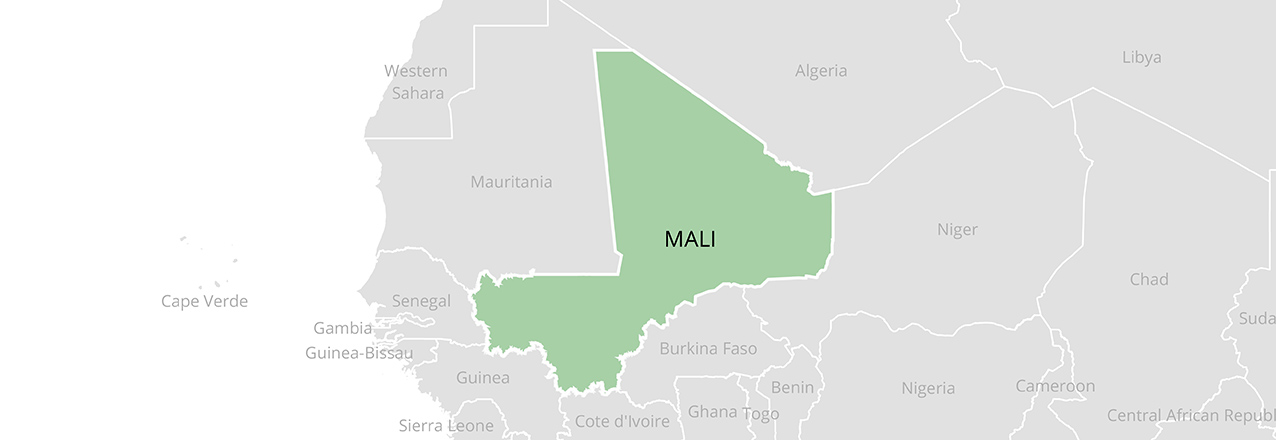
Overview
Mali’s land governance is shaped by the Sahel’s variable rainfall, the Niger and Senegal river systems, mobile livestock production and a long history of customary land management. Farmers, herders, fishers and households collecting forest products can hold overlapping rights in the same landscape at different times of year. Written law recognizes several kinds of interests, but administrative capacity, unequal bargaining power and insecurity affect whether people can exercise them.
The Agricultural Land Law of 2017 and the 2020 land ordinance, amended and ratified in 2021, are central to the current framework. A customary-rights attestation, an agricultural possession record and a registered land title are different instruments. Conflict and displacement make safe access and the ability to resolve competing claims as important as documentation.
History and Political Context
Customary arrangements have long organized access to fields, pasture, water and village spaces. Colonial and post-independence registration systems added formal categories and state administration without replacing everyday local practice. Decentralization assigned roles to territorial authorities, but resources and powers have not always matched their responsibilities.
Conflict since 2012 and political upheavals in 2020 and 2021 have affected state services, movement and livelihoods. In January 2024 Mali’s transitional government announced the termination of the 2015 peace agreement arising from the Algiers process, as recorded in a letter transmitted to the UN Security Council. The announcement and the continued security crisis are distinct from the resolution of local land disputes.
Legal Framework
The 2023 Constitution protects property and provides for expropriation for public utility with fair and prior compensation. The 2017 Agricultural Land Law applies to agricultural spaces and recognizes individual and collective customary rights, family land and village living spaces. It provides for documentation and local land institutions.
The state-property and land framework was revised through Ordinance No. 2020-014 of December 24, 2020, and Law No. 2021-056, which amended and ratified the ordinance. The land authority’s summary describes implementing decrees and the possibility of converting duly established agricultural attestations into a land title. The 2000 code should not be presented as the sole current framework.
These laws must be read together. A registered title provides a particular form of ownership evidence; recognition of customary agricultural rights does not make every attestation identical to a title or automatically eliminate competing claims.
Customary and Community Tenure
Families, lineages, villages and pastoral groups manage land under diverse local rules. A household may cultivate a field, another may graze animals after harvest, and a community may use nearby woodland or water. Access may be obtained through inheritance, a loan, a lease or a relationship with a local host. The terms and authority to grant a right vary by place.
The 2017 law includes agricultural land of rural communities, family land and village living spaces. An attestation of customary holding can document a claim without making every seasonal user an owner of the same parcel. Community participation, boundary identification and attention to overlapping rights are necessary before a document is issued or land is transferred.
Land Administration and Records
State land and cadastral services, communes, village or fraction land commissions and customary authorities have different roles. The agricultural land law provides for local records of holdings and transactions. An analysis of the law describes the roles of village authorities, commissions and mayors in documenting customary holdings and possession.
The land authority explains that duly established agricultural attestations may be converted into a land title under the land law. An attestation, a local register entry and a title are separate stages, with different legal effects. Mapping or issuing a document should not erase a tenant’s, woman’s or herder’s interest that is absent from the named holder’s record.
Distance, cost, language, security and limited local staffing can prevent people from using formal procedures. Public information on fees and records, accessible objections and protection of evidence are important, especially where displacement has separated families from their land.
Women and Youth Land Rights
Women produce food, manage household resources and use trees and water, but their access to land is often mediated by family relationships. A woman may cultivate a plot without being able to transfer it or retain it after a change in marital circumstances. Practices and inheritance rules vary; it would be inaccurate to say that no woman has customary rights anywhere in Mali.
Article 13 of the Agricultural Land Law provides that at least 15 percent of land developments undertaken by the state or territorial authorities are allocated to women’s and youth groups and associations in the area concerned. This is a provision about qualifying public developments, not a requirement that 15 percent of all land be given to individual women. Implementation depends on identifying beneficiaries, providing usable land and ensuring that groups can retain the benefit.
Women and young people need a voice in village commissions and household decisions as well as access to documents, water, inputs and markets. A certificate in a family’s name does not by itself establish how benefits and decisions are shared within the family.
Pastoralism and Mobility
The Pastoral Charter of 2001 recognizes pastoral activity and addresses movement, access to pasture, water points and routes. It permits cross-border transhumance subject to the laws and agreements of the countries concerned. The charter does not guarantee safe passage across a conflict zone or remove the need to respect crops and local rules.
Seasonal mobility links dry-season and rainy-season resources. Routes, resting places, post-harvest fields and water points can be as important as a single grazing parcel. A government report on 2025 consultations describes a review of the charter and proposals for amendment. A review is not itself a new enacted charter.
Conflict, blocked routes, cultivation and infrastructure can restrict movement and increase pressure on remaining resources. Agreements between farmers and herders need clear seasonal rules, crop-damage procedures and trusted mediation. They should include mobile users who may not be present when a parcel is surveyed.
Inner Niger Delta and Shared Resources
The Inner Niger Delta is a vast seasonal floodplain supporting fishing, crops, livestock and biodiversity. Water levels change where people can cultivate, fish and graze during the year. The Convention on Wetlands describes the delta’s ecological and livelihood importance. A holding that appears unused in one season may be critical to another group later in the year.
Access to flooded pasture, channels and fishing grounds depends on local institutions and negotiations as well as formal law. Irrigation, upstream water use and changes in flood timing can alter those arrangements. Planning should identify downstream users and the effects of a project on water and mobility, not just the area occupied by construction.
Agriculture and Irrigation
Rainfed farming, irrigated rice, livestock and seasonal work support rural households. Millet, sorghum and other crops are adapted to different ecological zones, while the Office du Niger area is important to irrigated agriculture. A household may combine farming with herding, fishing or migration for work. Access to irrigation water, maintenance and markets can determine whether a land right yields a livelihood.
The World Bank’s irrigation-project completion report describes rehabilitation of irrigated areas and support to water-user organizations. A rehabilitated hectare is a project output, not proof that all users have secure tenure. Allocation rules, water fees and the ability of women and smallholders to participate remain important.
Conflict and Displacement
Armed violence, criminality, local disputes and climate shocks have displaced households and restricted movement. The IOM Central Sahel dashboard reported 414,524 internally displaced people in Mali in April 2026 within its regional monitoring framework. This dated figure should not be treated as a count of people displaced only by land disputes.
Displaced families may lose documents, leave livestock or fields behind, or find their homes occupied. Hosts and current occupants also have legitimate needs. Safe return requires security, services and a fair way to address competing claims; local integration or relocation may be preferable for some households. UNHCR describes the pressures on displaced and host communities.
Violence involving farming and herding communities has multiple drivers, including armed actors, unequal power, weak justice and competition over resources. Climate variability can aggravate tensions, but it does not explain every incident or justify collective blame.
Disputes and Acquisition
Boundary disagreements, inheritance, loans, crop damage, access to pasture and commercial allocation can lead to disputes. Village commissions, customary mediators, communes and courts have different roles. A process that is locally accessible may nevertheless exclude women, tenants or people displaced elsewhere; a formal court may be costly or unsafe to reach.
Article 13 of the 2023 Constitution provides for fair and prior compensation for expropriation for public utility. The land authority’s guidance states that certain state-land allocations involving established customary rights require those rights to be addressed first. Legal safeguards do not establish that every affected person receives timely or adequate compensation in practice.
Valuation should identify crops, trees, buildings, access to shared resources and livelihood losses, as applicable. Notice and an opportunity to contest a decision are important for both the named holder and other affected users.
Urban Land and Housing
Bamako and other cities face growing demand for housing and land, including on formerly rural or peri-urban areas. Formal titles, municipal records, customary transfers and informal sales can overlap. Buyers may encounter multiple claims, while tenants and long-term occupants may have little influence over subdivision or redevelopment.
Land registration can improve certainty, but a program that formalizes one claimant without hearing others can intensify a dispute. Serviced plots, transparent planning and affordable procedures are needed alongside records. Relocation should consider access to work, transport, schools and water, not just the availability of a parcel.
Water and Fisheries
The Niger and Senegal rivers, wetlands, wells and seasonal water points support drinking water, farming, livestock and fishing. A land document for one field does not necessarily describe the access rights of fishers, downstream irrigators or herders. Water-sharing rules and maintenance responsibilities are essential where resources are seasonal or infrastructure is shared.
Water development can improve production while changing flood patterns, fishing grounds or routes to pasture. Consultation should include users upstream and downstream and assess the timing of water use. Pollution from mining or settlements can reduce the value of an otherwise accessible source.
Forests and Natural Resources
Woodlands and trees provide fuel, fodder, food, shade and income. Rights to cultivate a field and to harvest a tree or collect products may be held by different people. Clearing for farming, fuelwood demand, drought and insecurity can affect regeneration, while conservation restrictions can place costs on households that rely on those resources.
Restoration should identify existing land and tree users, define access and maintenance responsibilities, and explain how benefits will be shared. A map showing tree cover is useful for planning but does not establish the rights of the people who collect products or graze beneath the trees.
Climate and Carbon
Drought, variable rainfall, floods and land degradation affect crops, livestock, fisheries and settlements. Mali’s updated nationally determined contribution was submitted in 2021 and is listed in the UN climate registry. National commitments and project goals should not be confused with completed results.
Restoration or carbon projects may restrict grazing, harvesting or cultivation. Agreements should identify existing users, the duration of restrictions, monitoring, benefit sharing and dispute procedures. Displaced and mobile users need a way to participate even when they are away from the project area.
Mining and Gold
Gold is central to Mali’s exports and public revenue, and artisanal mining provides income for many households. The Mining Ministry lists Mining Code Law No. 2023-040 and a separate local-content law. Decree No. 2024-0396 sets out implementation conditions for the 2023 code.
The Extractive Industries Transparency Initiative explains that the code provides for a 10 percent state stake and an option for a further 20 percent, with an additional 5 percent possible for Malian private interests in relevant new projects. The combined potential 35 percent is not an automatic 35 percent state ownership in every mine. Fiscal terms, permits and agreements must be assessed for the project concerned.
Mining rights and surface land use are distinct. Industrial or artisanal activity can affect fields, grazing, water and health beyond the mining site. Transparent consultation, compensation where applicable, safe handling of hazardous substances and rehabilitation are necessary to protect affected communities.
Investment and Political Economy
Commercial farming, irrigation, mining and urban development can produce revenue and employment while changing access to land and water. The authority to allocate land depends on its legal category and the applicable procedure. A project should identify customary holders, tenants, seasonal users and neighboring communities before deciding that land is available.
Access to officials, documents and legal advice is unequal. Customary leaders can help manage local rights, but they may not represent all women, youth, tenants or displaced users. Transparent agreements, public notice, fair valuation and accessible remedies help ensure that development does not concentrate benefits while transferring costs to less powerful households.
Sources
Law and land administration
- Constitution of Mali, 2023; Agricultural Land Law, 2017; Law No. 2021-056 on the land ordinance.
- Land authority, legal history and procedures; Pastoral Charter, 2001.
Livelihoods and displacement
- IOM, Central Sahel displacement dashboard; UNHCR, Mali.
- Convention on Wetlands, Inner Niger Delta; World Bank, irrigation project completion report.
Mining and climate
Update Log
October 2026: Updated the land and mining frameworks, constitutional context, customary and pastoral rights, displacement, irrigation and climate analysis. Humanitarian figures are attributed to their reporting date and scope.
Confidence Assessment
High confidence: The cited Constitution, agricultural land law, pastoral charter and mining legislation support the legal distinctions described. Moderate confidence: Local access, institutional capacity and the practical effect of rights vary across communities and are affected by insecurity. Displacement figures are dated estimates, not a record of individual land claims.