


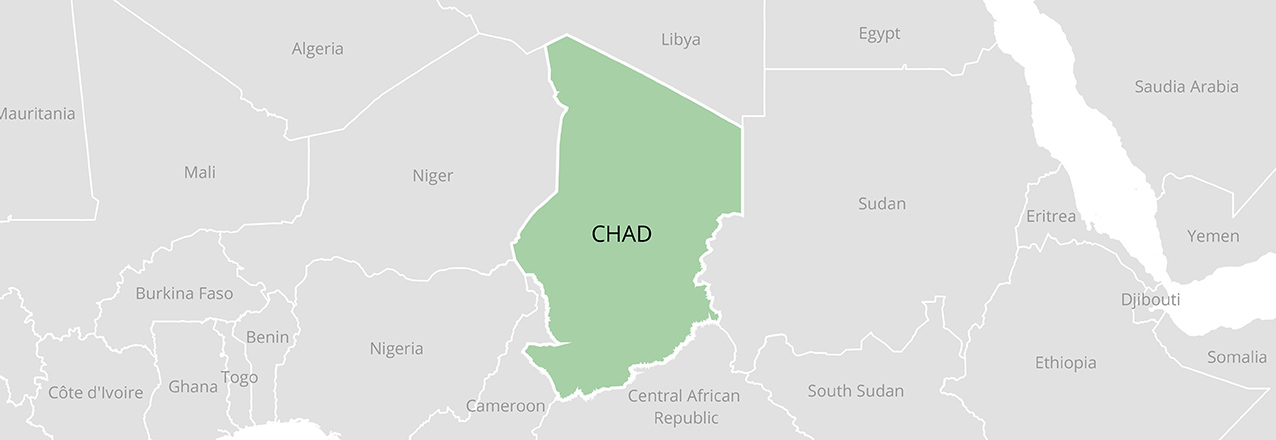
Overview
Chad’s land governance is shaped by the interaction of state law, customary institutions, mobile livestock production and a changing climate. Across the Sahara, Sahel and more humid south, communities depend on fields, grazing routes, seasonal water, forests and fisheries. Rights often overlap: a field may be cultivated during the rains, grazed after harvest and crossed by herds moving between water and pasture.
Land conflicts are not simply a consequence of scarcity. Access to authority, the recognition of customary rights, insecurity, investment decisions and unequal bargaining power influence who can use resources and seek redress. Reform efforts offer opportunities to recognize these relationships while strengthening accountable administration. FAO, Improving Local Governance in Chad.
Key Issues
- Protect customary and shared rights, including seasonal pastoral mobility, when land is registered, allocated or developed.
- Strengthen women’s secure access to land and their voice in local institutions and decisions.
- Address violence and disputes through fair local agreements, effective public protection and accessible justice.
- Plan for refugees, displaced people and host communities together, with clear and equitable arrangements for land and water.
- Improve transparency in urban development, land acquisition and extractive investment.
Country Context
Chad extends from the Sahara in the north through the Sahel to the Sudanian agricultural zone in the south. Livelihoods vary across these zones and combine crop production, herding, trade, fishing and gathering. Mobility and reciprocal access arrangements help people respond to seasonal changes in rain and pasture. Agricultural and pastoral communities are not mutually exclusive categories: many households both cultivate crops and keep livestock.
Armed insecurity, displacement, floods and drought affect the choices available to land users. The World Bank’s landscape assessment describes major ecological differences across Chad and the need to tailor restoration to local conditions.
Legal Framework
The core land legislation includes Laws No. 23, 24 and 25 of July 22, 1967, and implementing decrees concerning state property, land ownership, customary rights and limitations on land rights. Law No. 24 establishes registration and land titles while also addressing customary rights. Formal registration and the rights people exercise under customary arrangements are related but not identical; absence from the register does not mean that land is unused.
Other relevant instruments include the 2018 agro-sylvo-pastoral and fisheries orientation ordinance, ratified in 2019, and rules governing forests, water, environmental protection and extractive activities. A local agropastoral management charter cites the orientation ordinance and calls for participatory management. Local agreements must be read alongside national law and their geographic scope.
Land Policy and Reform
A multistakeholder process has developed a national land policy and reviewed a draft land and state-property code. In April 2026, FAO reported that a revised policy version, incorporating comments from government review, was continuing through the adoption process; an action-plan budget had been prevalidated. Earlier public reporting described government adoption in 2025. These accounts refer to different stages or versions, so the policy should not be treated as a completed new land code.
The 2024 action-plan workshop identified updating the draft code, strengthening administration and improving urban and rural planning as priorities. Those proposals are not themselves enacted rules. Successful reform would need clear implementing responsibilities, financing and mechanisms to protect rights already exercised on the ground.
Land Tenure
People acquire and use land through inheritance, family allocation, customary arrangements, purchase, state allocation and other channels. Registered title is a strong formal record, but many rural arrangements are maintained through local knowledge and community recognition. A person may hold a right to cultivate without owning every tree, grazing resource or water source on the same land.
State-domain rules and procedures for establishing formal ownership can disadvantage people whose use is seasonal or not recorded. Surveyors and decision-makers should establish who uses a place in different seasons and for what purpose before describing it as vacant or allocating it to a new user. World Bank project safeguards framework.
Customary and Community Tenure
Customary institutions may allocate family fields, manage common resources and mediate disputes. Rules vary among communities and have changed with migration, markets and pressure on land. Authority can be legitimate and locally accessible while also reflecting inequalities of gender, age or status; local recognition should be accompanied by participation and avenues for appeal.
Shared grazing grounds, livestock corridors, wells, forest products and fishing areas cannot always be reduced to individual plots. Their boundaries and use can change with rainfall and flood cycles. Recording these rights requires consultation with resident and mobile users, including people absent when a survey team visits, and attention to the rules governing access rather than only permanent occupation.
Women’s Land Rights
Women cultivate food, manage livestock and collect water and forest products, but their access to land can depend on family relationships, marriage or allocation by male relatives and local authorities. Inheritance and customary practices differ by community. A right to farm a plot for a season may be valuable while remaining vulnerable to withdrawal, especially after divorce or a spouse’s death.
Legal reform, registration and local agreements can strengthen women’s rights when women are directly consulted, named on relevant documents and able to raise objections safely. Secure access also requires attention to water, fuelwood, markets and the time needed to use a plot. FAO’s local governance project identifies women and young people among groups facing insecure tenure.
Land Administration
Formal land administration involves national and local public bodies, land registries and survey services, while customary authorities remain central to everyday allocation and dispute settlement. Procedures can be costly or difficult to navigate, especially outside cities. Records may be incomplete and users may hold different forms of evidence, from formal titles and administrative papers to family histories and community testimony.
Registration can help when it is affordable, transparent and preceded by careful adjudication. It can also crystallize unequal claims if women, tenants, pastoralists or displaced people are excluded from mapping. In 2026, Kadaster reported preparations for a participatory recording pilot in N’Djamena’s seventh district and rural Linia; a pilot is not a national roll-out.
Land Data and Observatory
Reliable information on rights, land use and disputes is needed to identify overlapping claims and evaluate reform. Cadastres typically show registered parcels better than seasonal routes, shared resources or informal agreements. Maps should indicate their date, method and limitations, and communities should be able to review and correct them.
The University of N’Djamena’s land observatory combines research, training and policy engagement. FAO reported in October 2026 that it was testing indicators on conflicts, women’s rights and tenure security and developing participatory monitoring. Evidence is most useful when it informs decisions and communities can see how it is used.
Land Conflicts
Damage to crops, blocked livestock corridors, disputed wells and overlapping claims can trigger disputes. Conflict becomes more dangerous when armed actors, local power imbalances or weak protection and justice systems turn a disagreement into violence. Climate variability and land-use change add pressure but do not by themselves explain every incident.
Amnesty International’s 2025 research documents violence between farmers and herders in southern Chad during 2022–2024 and examines official responses. Durable prevention requires impartial investigation and accountability, negotiated access rules, functioning early-warning systems and participation by both resident and mobile users. Mediation cannot replace protection from serious violence.
Displacement and Refugees
Conflict in Sudan and insecurity elsewhere have brought refugees and returnees to Chad while violence and disasters have displaced Chadians internally. UNHCR’s July 2026 dashboard counted approximately 2.28 million forcibly displaced people in the categories it tracks, including about 1.56 million refugees and asylum seekers and nearly 219,600 internally displaced people in the Lake region. These are dated operational figures and include distinct groups.
Access to shelter, farmland, grazing, water and fuelwood is often negotiated with host communities and authorities. Agreements should clarify duration, permitted uses and dispute procedures, while protecting both hosts’ existing rights and displaced people’s safety. Women-headed households, people without documents and those returning after long absences may need particular assistance. Pressure on services is real, but refugees should not be treated as the cause of conflicts that also reflect governance and financing gaps.
Urban and Peri-Urban Land
N’Djamena and other towns are expanding into agricultural and peri-urban land. Demand for housing, roads and public services can generate competing allocations, overlapping documents and rising prices. Residents may rely on informal sales or occupancy documents that do not provide the same protection as registered title. Flood exposure and poor drainage add risks for people living in low-lying neighborhoods.
Public works and redevelopment should provide timely notice, accessible records, fair valuation and remedies for affected owners and occupants. Participatory mapping can reveal tenants, vendors and other users who might otherwise be omitted from an inventory of structures or titles. Urban growth requires both secure tenure and investment in basic services.
Agriculture and Pastoralism
Farmers grow millet, sorghum, maize, rice and other crops, with cotton and market gardening important in some areas. Livestock production ranges from local herding to long-distance transhumance. Grazing after harvest can support exchanges between farmers and herders, while crop residues and manure link the two systems. When corridors are cultivated or water points enclosed, herds may be forced onto fields, increasing the risk of damage and confrontation.
Protecting mobility requires connected routes, dry-season reserves, accessible water and negotiation across administrative boundaries. Local agreements should include women, young people, customary leaders and visiting herders. The Lake Chad recovery project reports rehabilitation of more than 2,400 hectares of polders in Chad; fair allocation and maintenance are as important as physical works.
Investment and Land Acquisition
Agricultural, infrastructure and extractive investments may create employment and public revenue, but they can also displace users or interrupt access to common resources. The existence of a state allocation or project boundary does not establish that there are no preexisting customary interests. Assessments should identify affected households, seasonal users and downstream communities before land is committed.
Public disclosure of boundaries, contracts and compensation criteria makes it easier to assess who benefits and who bears costs. Compensation should address the value of lost crops, trees and structures as well as access to productive replacement land and resources. The Chad–Cameroon petroleum project illustrates the importance of consultation and compensation: a World Bank Inspection Panel notice recorded community allegations concerning these issues; allegations are not findings of fact.
Water and Fisheries
Water access is inseparable from land tenure. Wells, ponds, rivers and Lake Chad support domestic use, irrigation, livestock and fisheries. The 1999 Water Code treats water resources as collective property within the state’s public domain and provides for declaration or authorization of uses within the legal framework, with respect for customary law.
Lake Chad’s extent changes seasonally and between years. Farming, fishing and grazing often follow shifting shorelines; claims based on a fixed map can miss these uses. Access to a well is also meaningful only if herders can reach it along a safe corridor. Basin-level coordination and local agreements can reduce competition, while accounting for upstream withdrawals, environmental flows and the needs of neighboring countries.
Forests and Trees
Trees and wooded lands provide fuel, fodder, building materials, food, medicine, gum arabic and shade. Women and men may use the same landscape differently, so restricting collection can alter household income and labor even where farmland remains accessible. Forest management should distinguish customary use from commercial extraction and reflect the rules applicable to protected areas.
The 2008 law on forests, wildlife and fisheries establishes a framework for conservation and sustainable use, including public participation. Effective restoration needs clear local rights to manage and benefit from trees, protections against arbitrary removal and arrangements for grazing. Tree planting alone is not a substitute for maintaining natural regeneration and local governance.
Climate and Carbon
Rising temperatures, variable rainfall, floods and drought affect crops, pasture, water and infrastructure. Adaptation depends on mobility, diverse income sources, access to land and the ability to recover after shocks. Restoration can improve soil and water retention, but restrictions imposed without local agreement may reduce access to grazing or collected products.
The World Bank landscape assessment maps different ecological risks and restoration opportunities across the country. Climate and carbon initiatives should identify who uses land and trees, explain any restrictions and benefit-sharing arrangements, and provide accessible grievance mechanisms. Carbon payments do not automatically establish or extinguish land rights.
Oil and Mining
Oil has been central to Chad’s exports and public finance since production began in the Doba basin. The pipeline to Cameroon connects oil fields to export infrastructure across a long corridor. Wells, roads and pipelines occupy land and can affect farms, water and settlements; temporary disturbance and cumulative impacts deserve attention alongside the area permanently acquired. USAID historical profile; World Bank country overview.
The 2018 Mining Code governs mineral activities and addresses mine closure and rehabilitation. Artisanal and industrial operations raise different issues of safety, water contamination, land access and enforcement. Mining permits should be assessed together with land rights and environmental requirements, and affected communities need information about remedies and closure commitments.
Political Economy
Land administration operates in a context of unequal access to authority and resources. Influential investors or livestock owners may be better positioned than small farmers, mobile herders or displaced people to obtain documentation or shape decisions. Revenue from extractive projects is a national economic resource, but it does not automatically compensate communities where land and water are affected.
Improving governance requires accessible information, impartial institutions and credible follow-through on complaints. The World Bank notes the economy’s reliance on oil and exposure to conflict and climate shocks. Diversification and land reform are connected: sustainable investment depends on reliable rights and transparent public decisions.
Priorities for Action
- Recognize and map shared and seasonal rights alongside household plots, with meaningful participation by mobile users.
- Support women’s rights to acquire, inherit, use and defend land and resources, and include them in local decision-making.
- Protect corridors and water points, strengthen local agreements and ensure independent responses to violence.
- Plan land and services for displaced people and host communities through transparent, locally negotiated arrangements.
- Make land and investment records accessible, monitor compensation and environmental commitments, and fund practical implementation of reform.
Sources
Laws and official instruments
- Law No. 24 on land ownership and customary rights (1967), FAOLEX.
- Water Code, Law No. 016/PR/99, FAOLEX.
- Law No. 14/PR/2008 on forests, wildlife and fisheries, FAOLEX.
- Mining Code, Ordinance No. 004/PR/2018, FAOLEX.
- Local agropastoral management charter, FAOLEX.
Land policy, research and development
- National land policy action-plan budget workshop, FAO, April 2026.
- Council of Ministers report, February 2025.
- Land policy action-plan workshop, FAO, 2024.
- Improving Local Governance in Chad, FAO.
- Land observatories and land reform, FAO, 2026.
- Participatory land recording pilot, Kadaster, 2026.
- Project environmental and social framework, World Bank, 2024.
- Strategic Landscape Restoration for Resilience in Chad, World Bank.
- Lake Chad recovery project, World Bank, 2026.
- Chad country overview, World Bank.
- Petroleum project inspection request: notice of registration, World Bank Inspection Panel.
Displacement and human rights
- Forcibly displaced persons dashboard, UNHCR, July 2026.
- Research on farmer-herder violence in southern Chad, Amnesty International, 2025.
Historical reference
Update Log
October 2026: Updated the legal and policy framework and expanded coverage of customary and pastoral rights, displacement, land conflicts, urban land, climate, water and extractive industries.
Confidence Assessment
High confidence in the cited legal texts and dated institutional reports. Moderate confidence in generalizations about local practice and implementation because rights, institutions and security conditions differ across regions. Displacement counts are operational estimates at the dates shown. The status of the revised land policy is described according to the latest cited institutional account.