

This interview with Altaf Afridi, USAID/Pakistan, is part of USAID’s Land and Resource Governance Division’s Women’s Land Rights Champions series, which profiles staff across USAID Missions and operating units who are working to advance women’s land rights.
 Tell us about yourself.
My name is Altaf Afridi. I work as a Development Assistance Specialist at USAID/Pakistan. Currently, I manage the Land Registration in Merged Areas (LRMA) project. I am a governance specialist and have designed and managed governance projects throughout my career. In addition to managing LRMA, I also supervise another USAID governance project called Merged Areas Governance Program implemented by UNDP. Prior to my role at USAID, I worked as a Governance Officer at the Pakistan Resident Mission of the Asian Development Bank (ADB). At ADB, I managed the implementation of a large loan program called Decentralization Support Program and implemented a number of supporting technical assistance projects.
Why are women’s land rights and resource governance important to your work? And to other USAID development work?
Pakistan ranks among the world’s lowest in gender equality and women’s rights. This is especially true for the tribal regions, which recently merged into the Khyber Pakhtunkhwa (KP) Province. Here, as per the tribal code, land is owned collectively by tribes, sub-tribes, and clans. Women do not have any role in decision making in this patriarchal and conservative society. Therefore, they have virtually no control over land. To address this, USAID/Pakistan is assisting the provincial government of KP in establishing a land registration system with special emphasis on women’s access and control over assets.
What are some of the biggest challenges in helping women secure land rights and what are some things being done to overcome them?
In 2018, the Parliament of Pakistan passed a constitutional amendment to merge the Federally Administered Tribal Areas (FATA) along the Pakistan-Afghanistan border into the neighboring Khyber Pakhtunkhwa (KP) Province. This region is now known as Merged Areas (or Merged Districts) and is part of KP Province. Historically, this particular region was governed through uncodified tribal traditions and was not under the legal jurisdiction of Pakistan law.
The cultural norms and traditions prevailing in Pakistan in general, and in Merged Areas in particular, pose the biggest challenge in helping women secure land rights. Although the Government of Pakistan has legislated extensively to ensure clear inheritance and land rights pathways for women, local men and women are mostly unaware of these laws. The government has lacked the capacity to raise sufficient awareness to effectively implement the new laws.
USAID/Pakistan, through LRMA, is helping the Government of Pakistan bolster communications about the land laws and provide community outreach that educates local communities about the importance of women’s land rights. Because literacy is low, LRMA is developing and disseminating easy-to-understand communication products like thematic songs, radio programs, Public Service Announcements, illustrations, instructional videos, and live sessions featuring youth from Merged Areas.
LRMA is also building capacity within the Government of Pakistan to support implementation of the new legislation. LRMA has been conducting a review of the relevant laws, regulations, and policies, and has been recommending relevant amendments to help increase uptake and effectiveness of the laws. LRMA has also been designing and delivering trainings and developing materials like manuals and posters to help raise awareness among government staff, as well as providing equipment and hardware where required.
What are some of USAID’s successes in the area of women’s land rights?
LRMA is USAID/Pakistan’s first and only activity on land rights and there have been several successes. LRMA has conducted capacity building activities for relevant government officials as well as sessions with community leaders to raise awareness of women’s land rights.
In addition, the project also recently signed a memorandum of understanding (MOU) with the KP Province Ombudesperson, who is entitled to take action when women’s land rights are denied. As a result, LRMA has set up a legal library in the Ombudsperson’s office to support the capacity of the pro bono lawyers working there. To fill the information gap and inform the public about the new role of the Ombudsperson, LRMA has provided ten “knowledge corner” kiosks to showcase printed information, education, and communications materials on women’s land rights, including inheritance rights.
LRMA has also developed a video documentary that features two case studies about women litigants who have experienced barriers in registering their property. The documentary will be widely disseminated through two Pashto language satellite/cable TV channels (with wide outreach in Merged Areas) and through various social media platforms.
Is there anything else you’d like to share?
The project is still new. We look forward to sharing more substantial results down the road.
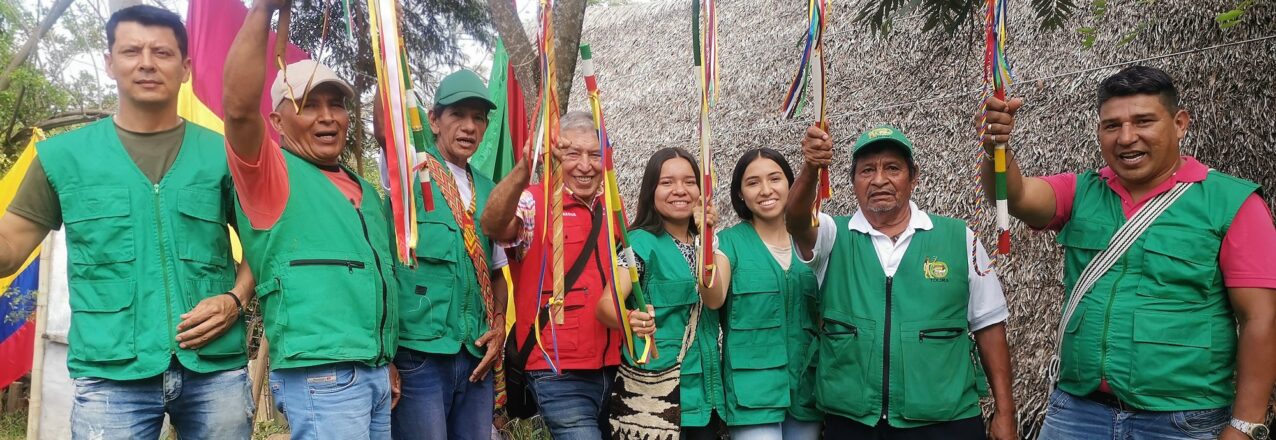
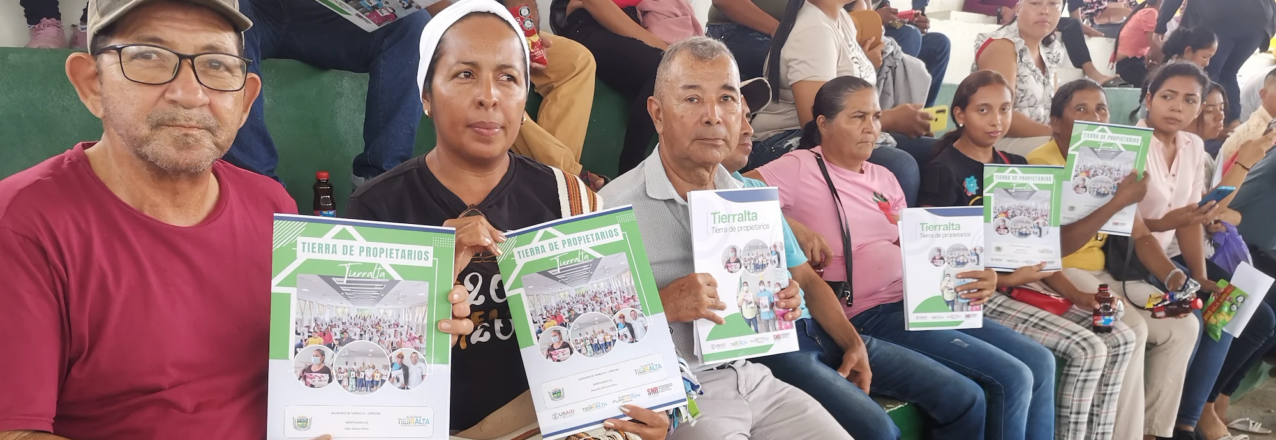
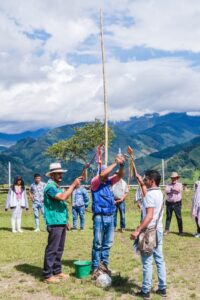 Eleven ethnic Pijao communities in the municipality of Chaparral, Tolima, took part in Free, Prior, and Informed Consent (FPIC) sessions and agreed to participate in the implementation of Rural Property and Land Administration Plan (POSPR) being carried out by USAID Land for Prosperity with support from the Colombian government.
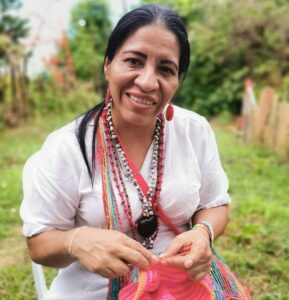 “This is a great opportunity for indigenous communities to advance the process of establishing collective landholdings, strengthen our family bonds, and ensure the persistence of the Pijao culture,” says Maria Ximena Figueroa, Pijao social leader from the Matora de Maito Pijao community.
 “There is confusion in the community around land formalization, ranging from ideas that the government is coming to take our land to ideas that the government is finally making reparations,” says Luis Fernando Guerrero, the current governor of Matora de Maito.
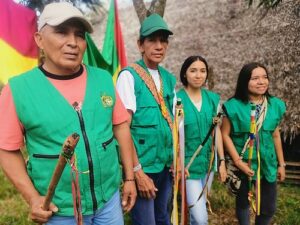 In 2010, Matora de Maito purchased a three-hectare parcel to build their maloca, or community meeting center, near the urban center of Chaparral. “The problem is that we still don’t own a larger piece of collective land where we can work together and use the land the way we always have,” explains the group’s governor, Luis Fernando Guerrero.
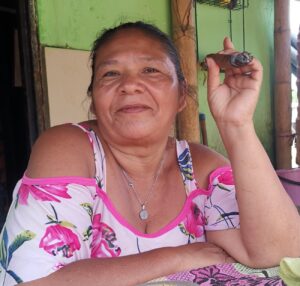 “We all want a collective territory where we can record our own history and leave a legacy for our children. Our communities need assistance with the application for a resguardo.” says José Walter Cano, Governor of the Pijaos en Evolución, a group of 26 Pijao families.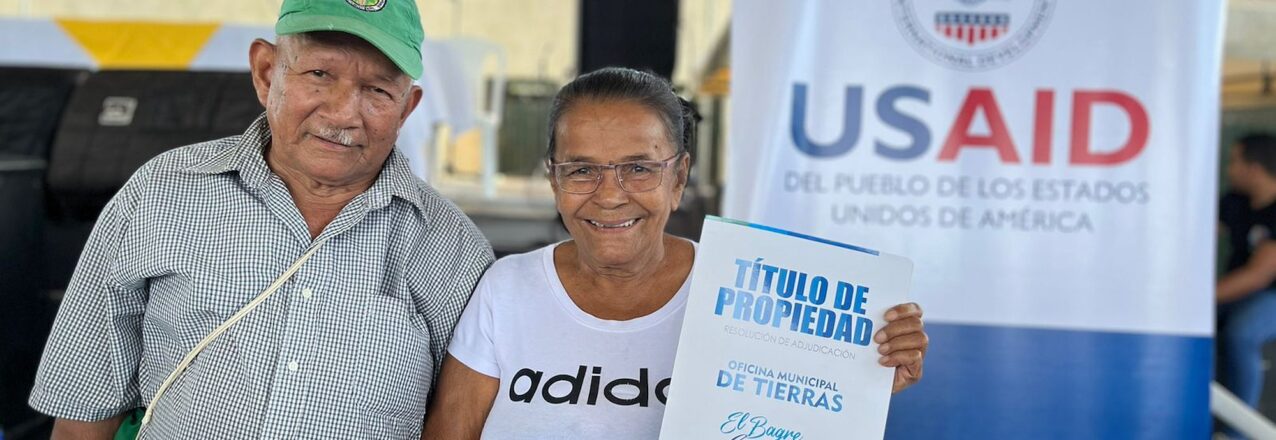
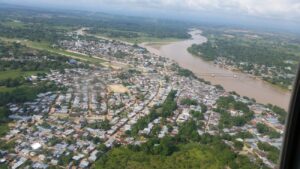 El Bagre is synonymous with gold mining. In fact, before El Bagre was a municipality, it formed part of neighboring Zaragoza and was a place where people had been mining gold for hundreds of years. For the last several decades, Colombian mining firm Mineros has carried out alluvial mining across large swathes of the gold-rich land. According to experts, El Bagre is one of Antioquia’s highest gold producing municipalities and depends on gold for 80-90% of its revenue.
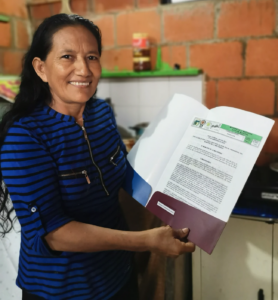
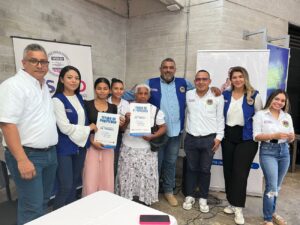 In May, El Bagre’s Land Office delivered 90 property titles to residents, bringing the total number of land titles delivered to more than 500 since the office was created.
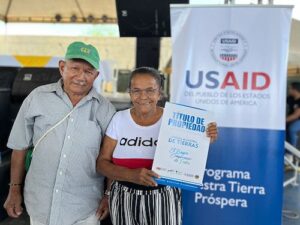 “Nobody believed the Municipal Land Office would help them with land titling services for free. But once we delivered more than 150 land titles at our first event in 2021, people gained confidence in what the administration is trying to do,” Gomez says.
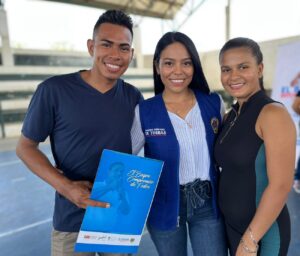 El Bagre’s Municipal Land Office is also facilitating housing subsidies for new homeowners with a registered land title who qualify for the program. In 2023, the MLO helped 66 homeowners access government subsidies offered by Antioquia’s departmental government, permitting low-income residents to improve their flooring, bathrooms, and kitchen.
 Since 2016, Colombia’s property registry authority, the Superintendence of Notaries and Registers (SNR) has worked with Municipal Land Offices (MLOs) to register and deliver thousands of land titles to owners all over the country. In this interview with
  What objectives and challenges do you have in the SNR?
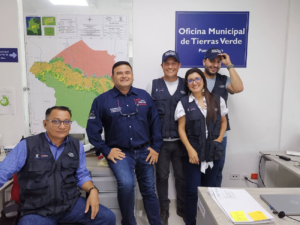 How do Municipal Land Offices facilitate the work of the SNR?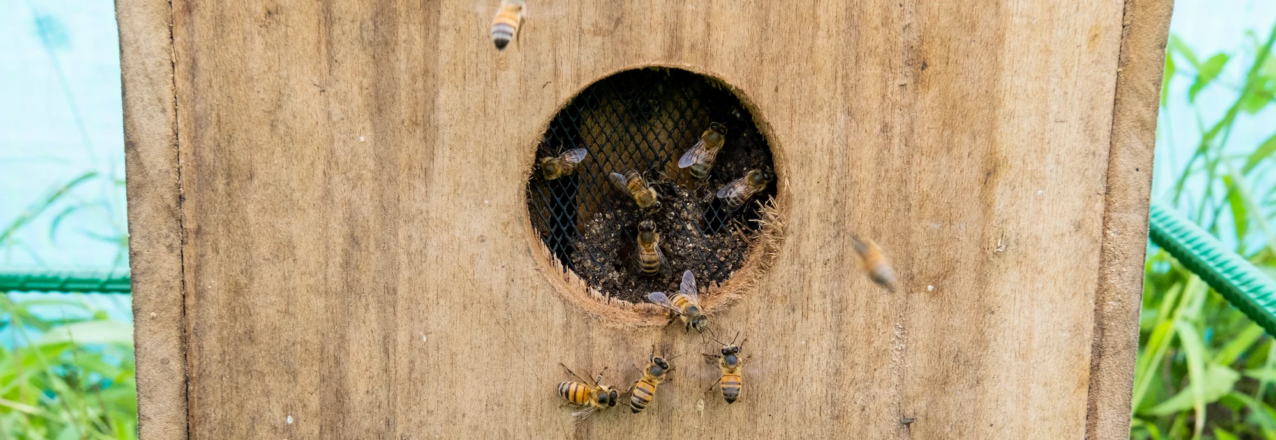
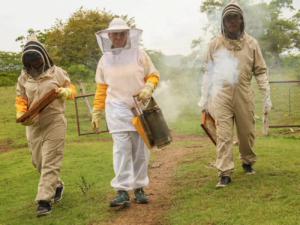 In the Montes de María, a sub-region of the Colombian Caribbean region characterized by the abundance of its tropical dry forest, great stories of resilience have been consolidated thanks to the art of beekeeping.
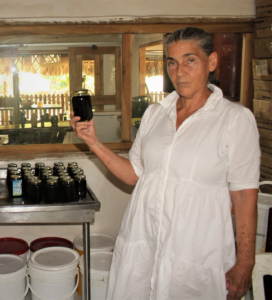 Everybody who has tasted it, says Tomasa’s honey is unparalleled. Tomasa Calonge partners with only the
 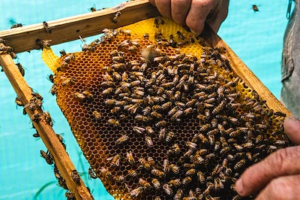 A public private partnership (PPP) in the honey value chain facilitated by Land for Prosperity will give Tomasa and over 680 beekeepers in the Montes de María region the chance to offer quality honey products to people across Colombia. The PPP, valued at more than US $1.1 M, is netting investments from a wide range of public institutions and supports 22 beekeeper associations.