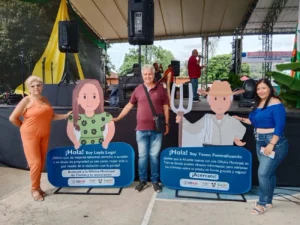


Gender equality initiatives are giving women in rural Tumaco an opportunity in Colombia’s cacao value chain and the means to transform their communities
“You can’t go if lunch is not ready.”
“Where are you going? Your place is at home with the kids.”
These are some of the things that women in a rural village of Tumaco, Nariño, hear their husbands saying when they want to go out with friends to socialize.
Women in Tumaco, apart from being victims of the armed conflict, have also been victims of several types of gender violence. Stereotypes around the obedient roles that they must play at home, inequality in the access to land, discrimination in the workplace, and exclusion from the decision-making processes are common.
This constant scenario is what motivated five brave Afro-Colombian women to come together in the park of San Luis Robles, a village located in rural Tumaco, to discuss their role in the development and growth of their territory. That day, in 2018, under a cloudy sky, these women recognized the need for women’s empowerment, mutual support, and the vindication of their rights in order to improve their communities.
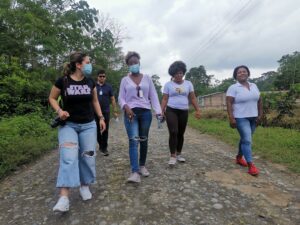

What started as informal discussions about a better future for women, resulted in the creation of Afromuvaras, a business initiative of female cacao producers that belong to the Afro-Colombian Community Council Rescate las Varas. Today, Afromuvaras is comprised of 586 women entrepreneurs from 10 villages, including craftswomen, housewives, singers and soccer players. Each woman sees in cacao an opportunity to apply their knowledge in a vocation different from housework.

“Not just our husbands, the main challenge is ourselves, because we do not believe in ourselves or recognize our own capacities. Here women think that their only role is to be at home and that this is what they should do until they die”, said Ana Ponce, a producer of Afromuvaras.
With the support of the municipal administration and USAID, and with an increasingly strong and viable economy based on cacao, women in Tumaco are demanding gender equality. Ana Ponce and the women of Afromuvaras are motivating others to fight for their rights and leave a clear path for future generations.
Strong evidence of this paradigm shift is Tumaco’s Secretary of Women’s Affairs, which was created in 2021 to work with local women on strengthening women’s rights and access to land. Thanks to a robust strategy aimed at rural women, the Secretary is raising awareness about different forms of gender violence and empowering women to make decisions that contribute to reversing this situation.

“When we are with women in our workshops and we hear them say, “I have to put up with so much from him because I depend economically on him” or “if I report him, who will sustain me?”, we explain to them that these are examples of patrimonial and economic violence.”
-Patricia Castro, the Secretary of Women’s Affairs in Tumaco
 A boost for economic development
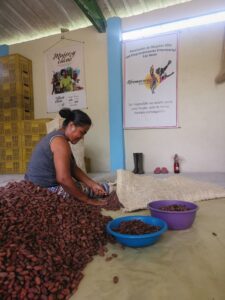
In 2021, USAID, through its Land for Prosperity Activity, facilitated the creation of a cacao Public-Private Partnership (PPP) in the region that aims to strengthen producer associations like Afromuvaras so they can improve the quality of their grain and access new markets. In 2020, Afromuvaras installed a cacao processing center, a key meeting point where the women come together for the post-harvest process and to define the marketing strategy.
The women from Afromuvaras are aware of the importance of continuing to modernize the cacao production process, so they can offer international buyers a premium product. Still, producing high-quality cacao is one of their biggest challenges.
Under the PPP, they established commercial relationships with CacaoHunters, experts in cacao and one of the country’s biggest buyers and exporters. Today, CacaoHunters buys dry cacao from Afromuvaras at a premium price that recognizes quality.
To leverage the market linkages with CacaoHunters and other buyers, the PPP is also supporting the implementation of traceability models, being led by other partners such as Microsoft, Logyca, the Agency for Rural Development, and USAID.
“With the traceability system, we will be able to know each step of the process. To know which cacao comes from which farm, what the conversion rate was, and how long it took. And as a producer I will be able to know how much I am producing and what quality it is,” explains Johanna Rodríguez, co-founder of Afromuvaras.
Tumaco is being increasingly recognized for its cacao, which has an artisan touch from these Afro-Colombian women and their knowledge of best processing practices. “Today, clients are asking for cacao with certain characteristics, and thanks to the traceability system I can negotiate better conditions because I know the quality of my product,” says Rodríguez.
 Customer service
Before the PPP, the women from Afromuvaras hardly had an email address. Thanks to USAID and Microsoft support, the association inaugurated a digital center in the center of San Luis Roble at the end of 2021. The digital center, installed with support from the Land for Prosperity Activity, offers the women entrepreneurs a valuable chance to connect with their clients in real-time to share strategic information about their product and build trust around their value proposition.
The center offers free internet to the entire community. In rural Tumaco, young people are the most interested in using these opportunities to further their education and access information. Senior citizens also come to the center to learn how to use the internet.
The women from Afromuvaras are strengthening their association by modernizing the production of high-quality cacao. However, they also want to be known for their support to the community, especially to young people that already have a committee inside the association so that they can learn about cacao production and promote generational change.
“An association also becomes attractive to clients when, apart from a certified quality, they can see that there is a social and environmental commitment that has a positive impact on the community.” – Oberman Torres, secretary of the Technical Secretariat of the cacao PPP in Tumaco.
Today, Afromuvaras are producing 2-3 metric tons (MT) of cacao each month and want to increase production to 5 MT. This goal, essentially doubling production, will only be possible by improving modernization, traceability, and the capacity of their members with up-to-date technology. With improved production of high-quality cacao, Tumaco will be known halfway across the world.


“Nothing is impossible for a woman, it just takes time to achieve it”
Learn more about Afromuvaras (en español) here
Tumaco, San Andres de Tumaco, Narino, Colombia
© 2022 Land for Prosperity
Cross posted from Land for Prosperity Exposure site

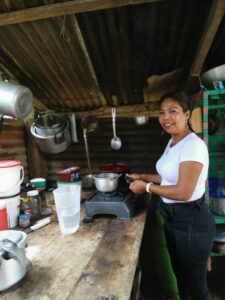

 Ana Espitia has made improvements on her childhood home, located in Valencia, Córdoba in Northern Colombia.






 A massive property sweep
 Helping to bring the massive titling endeavor is a team of more than 100 land formalization experts that coordinates with community leaders and triangulates information to the ANT and other agencies. The team is composed of land surveyors, legal experts, and social workers who are well into year two of operation.


 Cáceres has long been of strategic importance to USAID and the government, and this attention has led to a cluster of initiatives. Joint efforts in the territory go beyond the municipality-wide land formalization campaign. USAID’s comprehensive rural development strategy is also developing the capacity of rural producers, such as honey producers in Bajo Cauca, and engaging the private sector to invest in conflict-affected municipalities. By focusing on general issues in rural development, USAID land tenure programming addresses property-related challenges while opening financing routes to reach underfunded areas. This approach bridges the gap between a land title and rural development and helps the government achieve its goals to build self-reliance and promote a more stable, peaceful, and prosperous Colombia.
 Nuevo Jerusalem paints an accurate picture of how towns are created in today’s Colombia: through invasiones or informal settlements created by internally displaced people (IDP). Colombia is home to a population of more than 6 million IDP—second only to Syria—and has the unfortunate distinction of being the world’s country with the highest number of IDPs and the least number of refugee camps.


 How can Municipal Land Offices support Puerto Libertador?


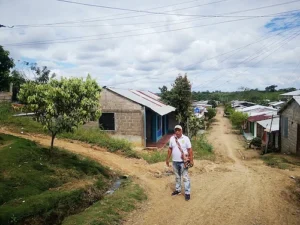
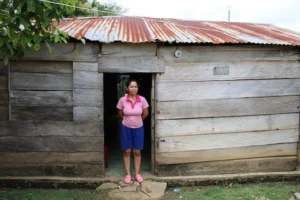

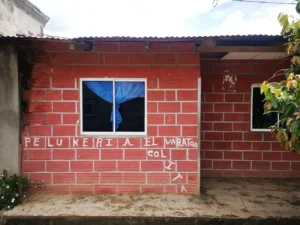 USAID provided the mayor and his council with expertise and consulting to get the ordinance across the finish line. As part of the negotiation, the council agreed that newly formalized landowners would be exempt from taxes in 2022 and will only begin paying property taxes in 2023.
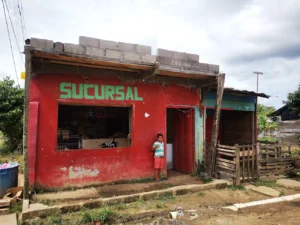 The Story of Tax Collection
 Foundational Diagnostics
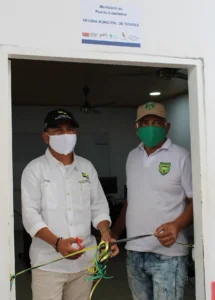 The Municipal Land Office’s first task is carrying out a diagnostic of Puerto Libertador’s existing properties. The analysis has revealed that at least 3,600 parcels are able to be formalized by the office, including 240 public parcels that should be formalized in the name of the municipality, such as schools, health clinics, municipal parks, and city buildings.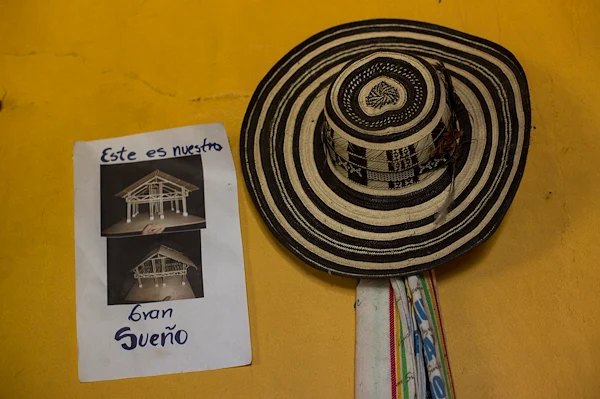
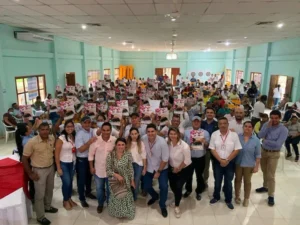
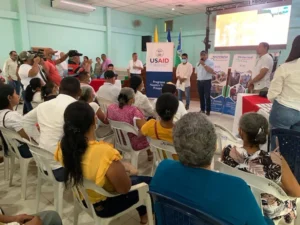
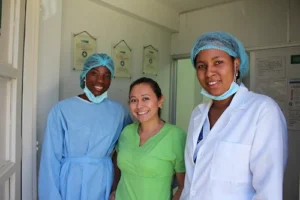
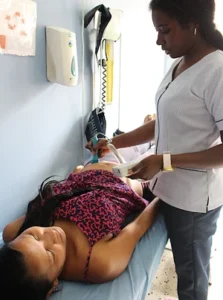
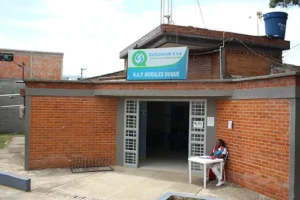
 “By supporting the Municipal Land Office and land formalization, USAID is also supporting rural development, a in this particular case, improving the local health clinic,” said Héctor Sepúlveda, LFP’s Regional Coordinator of Bajo Cauca Antioqueño, where Valencia is located.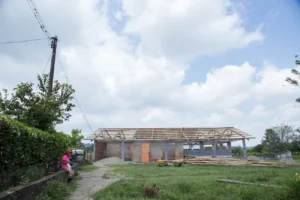
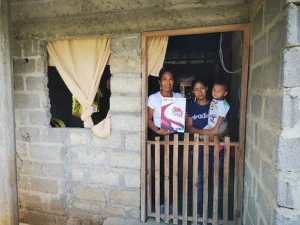


 “Fuentedeoro is the kind of place where people won’t open the door to strangers or give out personal information. People do not feel safe, and with the recent presidential elections, there is still a lot of uncertainty in the air.


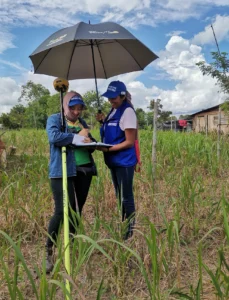
 Large land formalization campaigns rely heavily on social workers and outreach, and community liaisons like Luz Estela Velandia are one of the most effective ways to ensure participation. Trusted and motivated neighbors can fill the spaces where the government has been absent. Many in Fuentedeoro have long distrusted the government and believe land titling is just a ploy to take their land away. To overcome this information barrier, Velandia mobilizes her neighbors through neighborhood Whatsapp groups, where she can quickly reach 150 families living in her village.